Horticulturists are by nature, nonconforming. I happen to find it difficult to conform to what makes us nonconforming. Trends are fleeting. Old technology that has worked for decades or centuries is still best. Although I am not totally against chemicals, I find that almost all are unnecessary for responsible home gardening. Pruning is underappreciated, and fixes many problems.
These sorts of primrose almost seem to be synthetic because of their bright but simple color.
The cartoon shades of red, yellow, blue, purple and nearly orange of primrose, Primula acaulis (or Primula vulgaris) are still partying strong. They do not seem to be aware that, although perennials that could regenerate next autumn, they are likely to be replaced with warm season annuals soon. The cute flat-topped trusses of half inch to inch and a half wide flowers are short, but stand up above the even shorter two to five inch long leaves.
Modern gardens are shadier now than they ever have been. Ranch houses that were popular through the middle of the last century had those classic big eaves that shaded wide margins close to the homes. Prior to that, tall Victorian houses made big shadows. Modern houses though are even bigger. To make matters worse, lots and garden spaces are smaller and surrounded by ominously tall fences; so there is less space that is not shaded by something sometime during the day.
This is why small trees, sometimes known as ‘micro-trees’, are so popular. They are all that fit into some small gardens without creating too much shade for other plants. Large shrubbery, like some of the larger types of pittosporum, and some of the smaller types of podocarpus, often function quite nicely as small scale trees. Where not too shaded, pineapple guava and New Zealand tea tree are just as effective. They only need to be allowed to develop upper canopies with adequate clearance, while their lower limbs get pruned away, instead of getting pruned to stay down low as shrubbery typically does.
Camellia, hydrangea, aucuba, Japanese aralia, Oregon grape and Heavenly bamboo (Nandina spp.) are appealing shrubby plants for shady locations. Camellias and hydrangeas of course provide impressive blooms during their respective bloom seasons. Camellias also have the advantage of excellently glossy dark green foliage all year; but hydrangeas are bare and need pruning in winter. Oregon grape and Heavenly bamboo, which are actually related, are more subdued but look more woodsy in bloom, and sometimes provide interesting berries afterward. Aucuba and Japanese aralia do not need showy flowers because their foliage is so bold. Japanese aralia has bigger and bolder leaves, but common types of aucuba are spotted with gold.
Balsam (Impatiens spp.), which is already one of the most popular warm season annuals that is beginning to get phased in as the weather gets warmer, is not quite as colorful in the shade as it is with better exposure, but can be impressive nonetheless. Cyclamen takes shade as well, but will actually be getting phased out through late spring and summer. Cyclamen is actually a perennial that can stay in the garden (if it is not in the way of anything else) to regenerate next autumn. As weather gets warmer in spring, caladiums and coleus can provide remarkably colorful foliage for shady spots through summer and early autumn.
Various types of ferns, although devoid of flower color, provide distinctive and often bold form and foliar texture. Australian tree ferns can actually get quite large and eventually function as small trees. Baby tears is a finely textured perennial ground cover that spreads as far as it has moisture. It can actually get to be invasive.
Wow, I forgot how big this lemon tree was. It got pruned down during the past three years, partly for containment, and partly to repair structural damage.
Almost all of the fruit trees that I encounter are or were neglected to some degree.
Many were planted a long time ago by someone who was able to maintain them at the time, and perhaps for many years, but then relocated, passed away, or just got too elderly as the trees grew and required more work.
Many were planted by those who simply enjoy gardening around their homes, and wanted to grow some fresh fruit, but were not aware of how intensive the maintenance of most of the fruit trees is, or how to execute such maintenance properly.
Many were planted by so-called ‘gardeners’ or so-called ‘landscapers’ who had no intention of actually ‘maintaining’ them, or believed that they could ‘maintain’ them with motorized hedge shears and a blower . . . just like they ‘maintain’ everything else.
Pecan is the State Tree of Texas. Bluebonnet is the State Flower of Texas. Less natively, jalapeno pepper, Capsicum annuum, is the State Pepper of Texas. It is naturalized there from Central and South America. Jalapeno pepper is merely one of countless varieties of the species though. Furthermore, it comprises several and various culinary subvarieties.
Jalapeno pepper typically grows as a warm season annual vegetable. It has potential to be perennial. Overwintering is likely more work than annual replacement though. Mature plants can grow almost three feet tall. They may produce nearly two dozen fruits through summer. They crave sunny and warm exposure, rather rich soil, and consistent watering.
Mature fruits, or jalapeno chile peppers, are firm and crisp. They should be between two and four inches long, and as wide as an inch and a half. Their smooth and glossy skin is deep green, but can ripen to red, orange or rarely yellow. Red fruit is preferable for some culinary application. Jalapeno pepper may be the most familiar of the ‘hot’ chile peppers.
Squash eventually depletes particular soil nutrients.
Maya Angelou likely enjoyed gardening. She said, “In diversity there is beauty and there is strength”. That is how the healthiest of ecosystems, including home gardens, function. Vegetable gardens are generally diverse. However, each group of a particular vegetable is rather homogenous. Crop rotation can compensate with diversity through the seasons.
Crop rotation is growing different vegetables in particular places from season to season. It is the same as growing particular vegetables in different places from season to season. Distinctly consumptive vegetable plants should relocate each season. Less consumptive sorts may perform adequately in the same place for years. Diversity makes it interesting.
Each type of vegetable plant consumes particular nutrients from the soil. Eventually, they can deplete their soil of these particular nutrients. Crop rotation allows them to utilize the nutrients they need from undepleted soil instead. Meanwhile, other vegetable plants can grow in the vacated soil. These different types of plants utilize different types of nutrients.
For example, tomato plants notoriously deplete the soil of particular nutrients. Corn does the same. However, each depletes different nutrients. Therefore, corn can be satisfied in soil vacated by tomato plants. Likewise, tomato plants can be satisfied in soil vacated by corn. Furthermore, each promotes the restoration of the soil nutrients needed by the next.
Crop rotation also disrupts proliferation of several pathogens that infest vegetable plants. Dormant spores of bean rust disease overwinter in the soil beneath infested bean plants. They efficiently infest any receptive bean plants to occupy the soil during the next spring. However, they can not infest plants that are not related to beans, such as pepper or okra.
Summer vegetables should be situated accordingly as they return to vegetable gardens. Tomato, pepper and eggplants are related, so should not grow where any grew last year. The same applies to bean and pea. Squash and cucumber are related also, but are less consumptive. They may perform adequately within the same soil for more than one year. Several summer and winter vegetables are related.
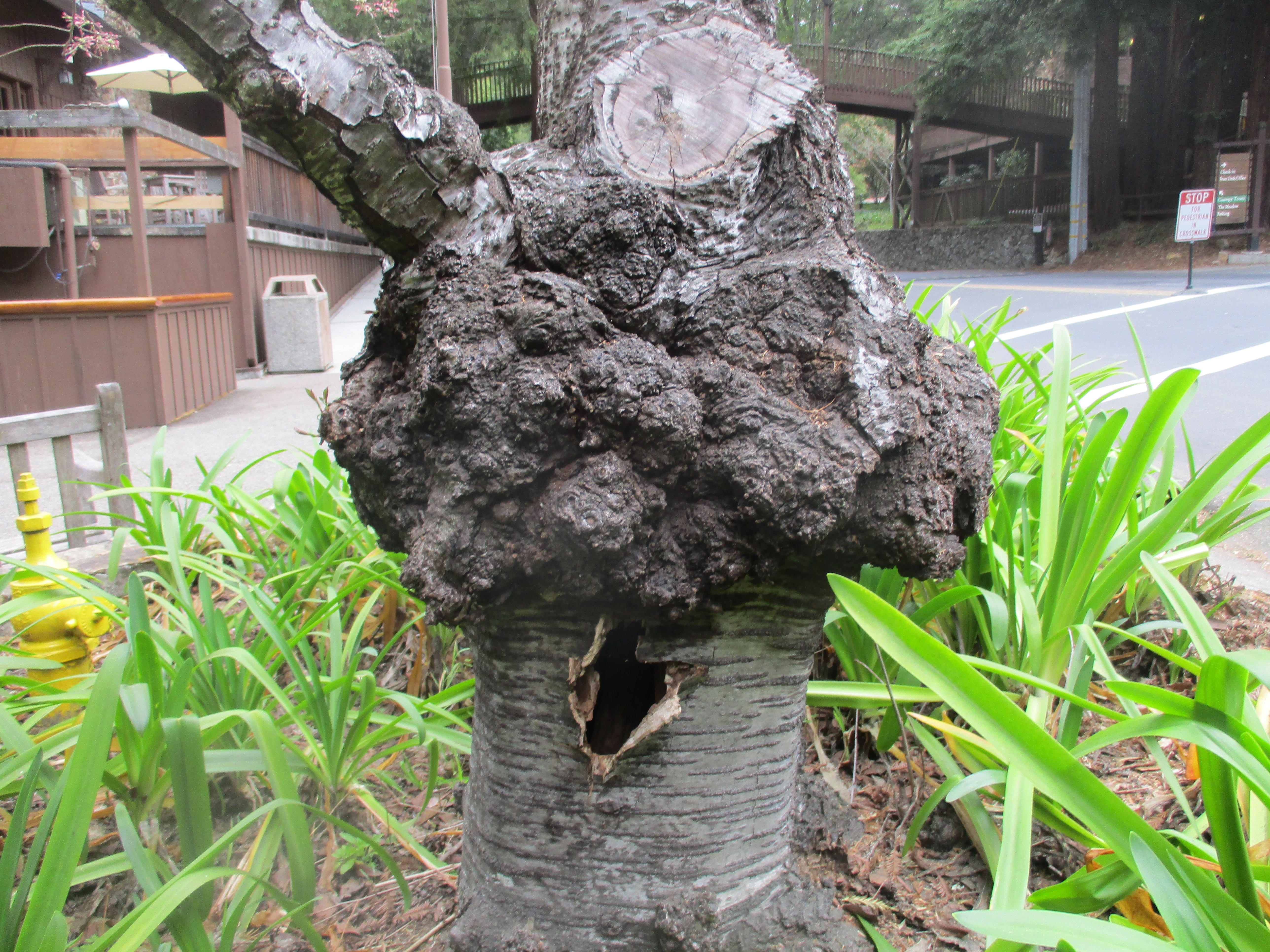
It really looks like something erupted from within!
That was a scary movie back when horror movies really were scary! The first appearance of the baby alien was the creepiest part and one of the scariest scenes! It is too disturbing and gory to describe here. Those who have seen it may have noticed how it might seem to be weirdly relevant to the cavity that opened in the rotting trunk of this deteriorating flowering cherry tree.
With a bit more distance, the rotting trunk looks sort of like an associate of ‘H. R. Pufnstuf’ after an interaction with a baby alien. If you can remember who H. R. Pufnstuf was, you probably shouldn’t. He starred in his own television show for children on Saturday morning in the 1970s. It was disturbingly weird and perhaps even inappropriate for the children it was intended for.
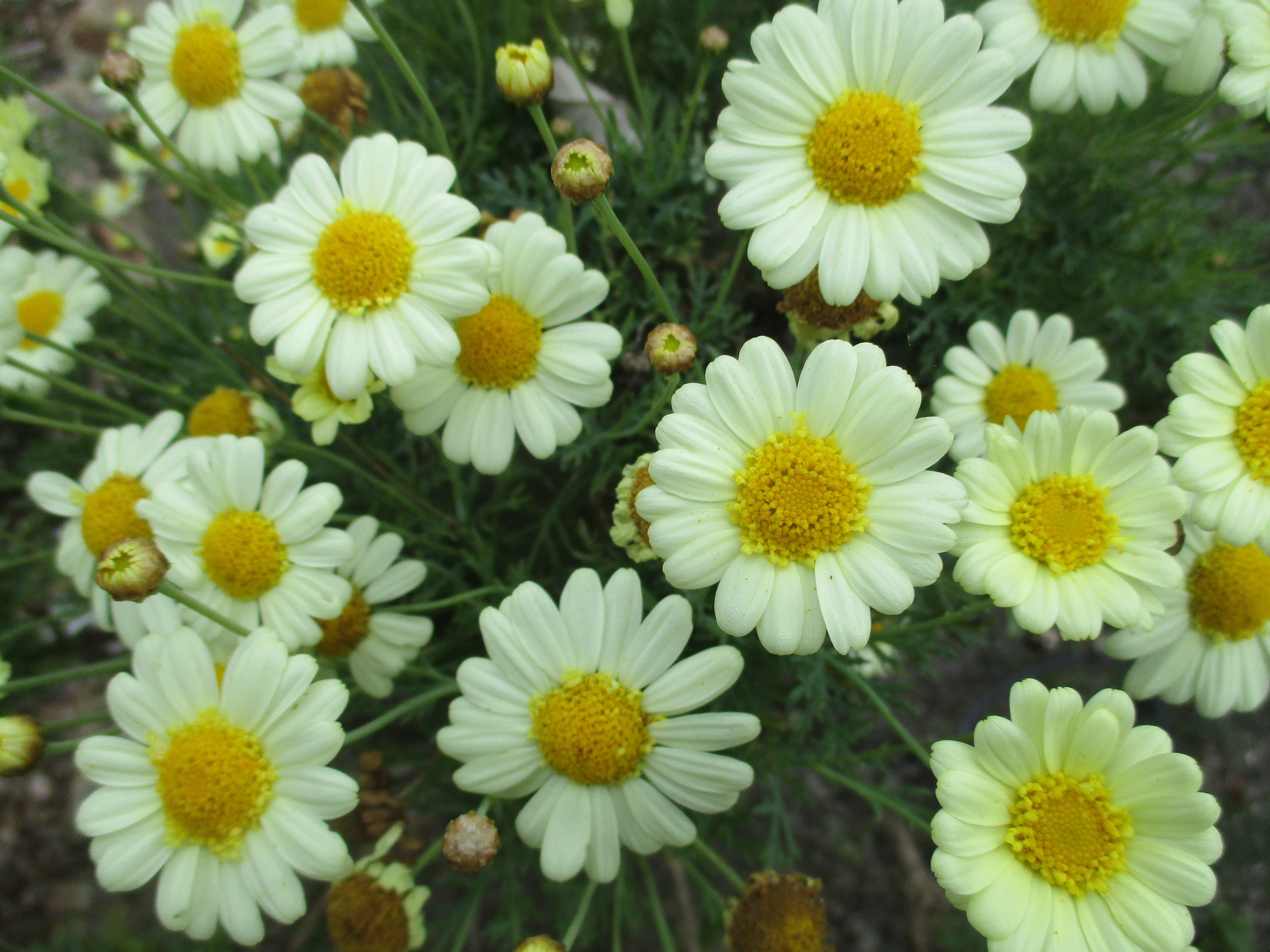
These daisies are rarely without some degree of bloom.
There is not as much difference between the seasons here like there is in other climates. It might seem like we get only summer, with a briefly cooler and slightly rainy time of ‘not summer’. I can recognize the changing of the seasons because I am familiar with them. Those acquainted with more normal climate mind find our subdued seasons to be rather boring, and restrictive.
People from climates with more extreme weather and more pronounced seasons might not expect mild weather and mild climate to be restrictive or limiting. They tend to notice what grows here that would not survive out in gardens through colder winters, such as bougainvilleas, tropical hibiscus and so many of the popular succulents. Even more tropicals survive farther south.
What they do not notice are what does not do so well here. Although stone fruit…
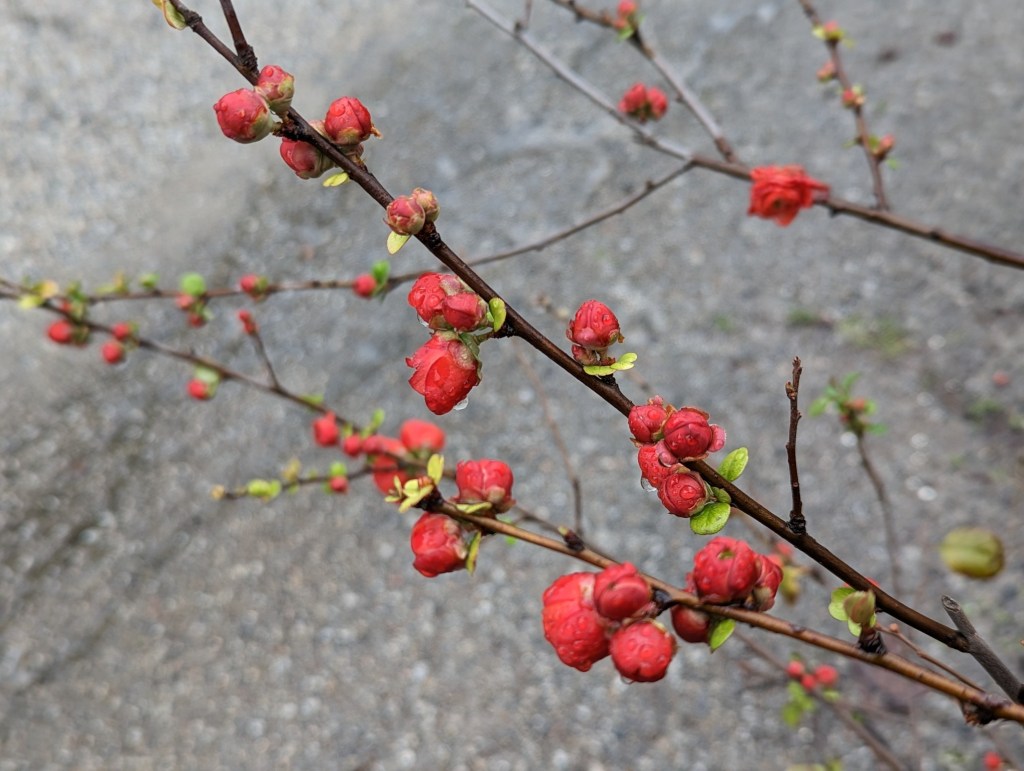
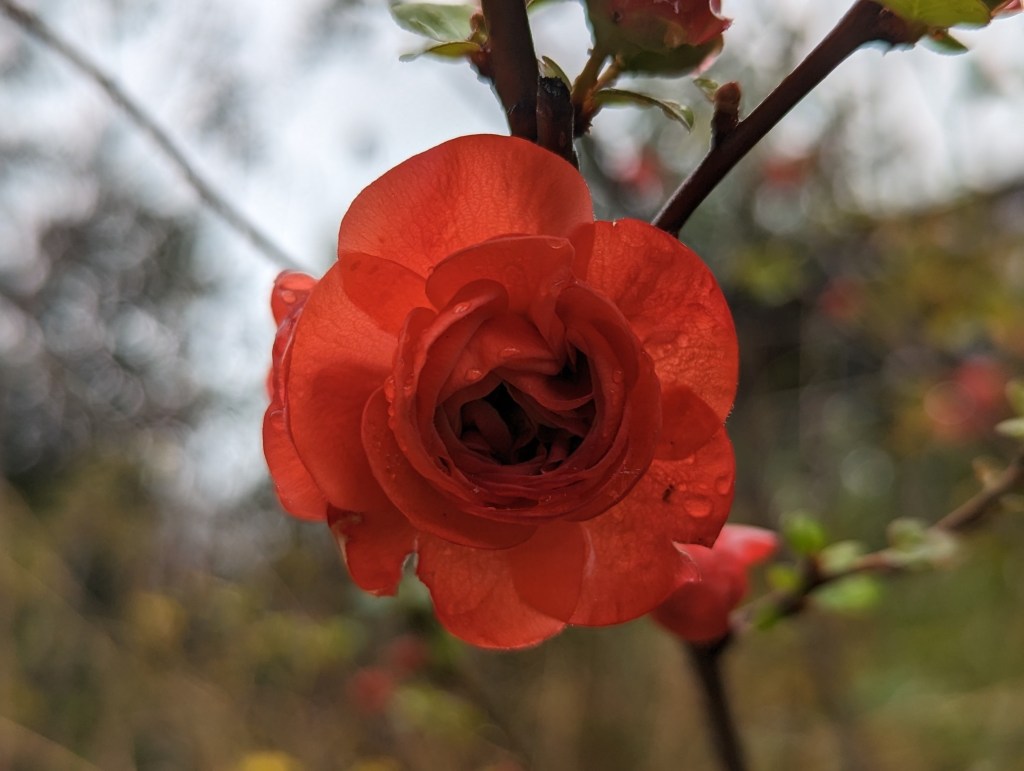
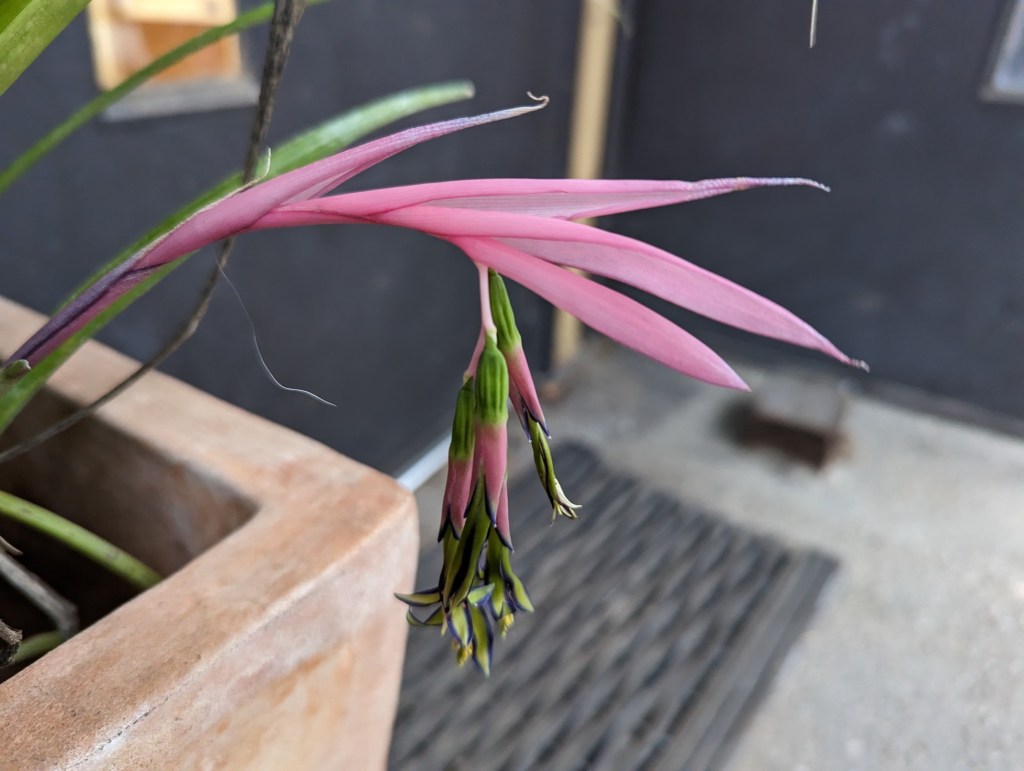
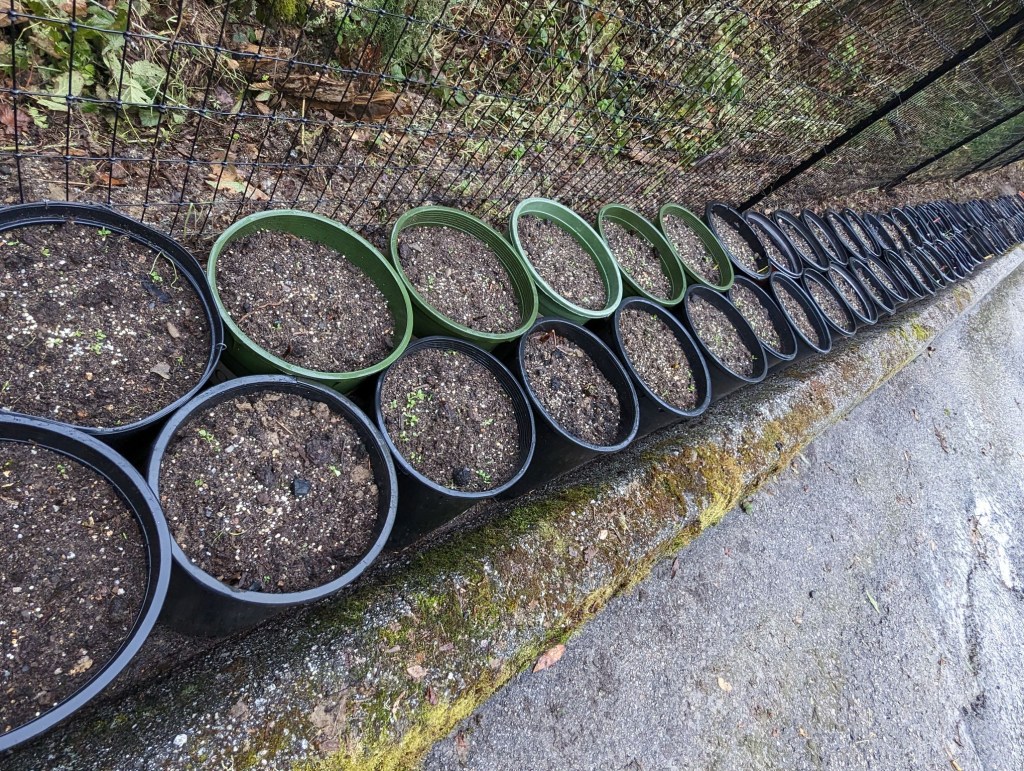
The weather was major news here again. After the only snow for most regions here since 1976, and the most flooding since 1982, torrential rain and more flooding was predicted for yesterday. Fortunately, the rain was not torrential enough to cause flooding. Prior to the rain, I was trying to plant what needed planting so that it would get soaked in well. I split and planted some overgrown Kaffir lily, and split and canned way too many canna. Flowering quince and queen’s tears provide a bit of floral color for this ‘Six on Saturday’.
2. Chaenomeles speciosa ‘Double Take Orange’, flowering quince, like many early spring and late winter flowers, got delayed by the very unusually cool and rainy wintry weather.
3. Chaenomeles speciosa ‘Double Take Orange’, flowering quince is a modern cultivar of a traditional flower. I am none too keen on modern cultivars, but I am fond of tradition.
4. Billbergia nutans, queen’s tears is an unimpressively palid and grassy bromeliad that blooms with these sillily pendulous flowers. Actually though, these silly flowers are cool.
5. Clivia miniata, Kaffir lily was recycled from another landscape, rather than Craigslist. It was crowded within a planter box, so now has more room to grow and be happy here.
6. Canna of various cultivars has become excessive! There are eighty-eight #5 cans of it! At least a dozen more are expected later! Most cans contain enough rhizomes for at least two cans; merely because there were not enough empty cans when I split and canned the dormant rhizomes. I should field grow them somewhere else. At least they will be pretty for this summer.
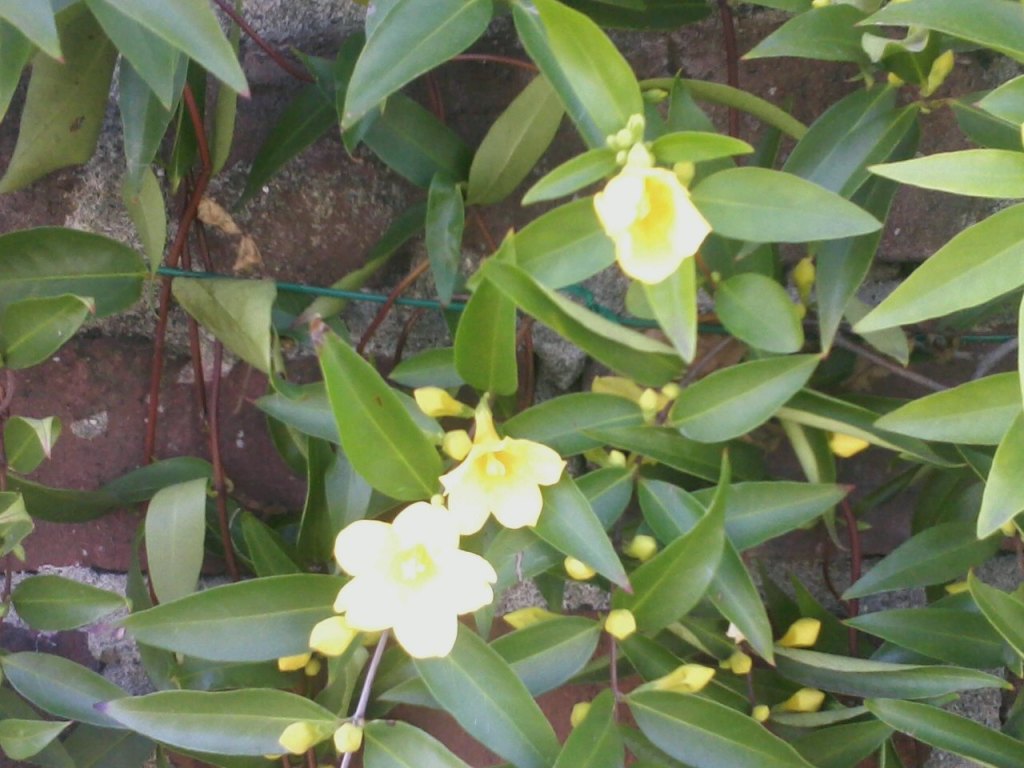
It is the Official State Flower of North Carolina!
Along with lilac vine (Hardenbergia), daffodil and some acacia trees, Carolina jessamine, Gelsemium sempervirens, is one of the first flowers to bloom late in winter. The small, loose clusters of inch long and wide tubular flowers are as bright yellow as those of the various acacia and daffodil, though not nearly as abundant, and actually barely abundant enough for their pleasant fragrance to get noticed. They provide nice contrast for the deep purple of lilac vine, particularly since both are complaisant vines that are often grown together. These twining vines can be kept below first floor eaves, but barely reach second floor eaves if allowed to grow wild. Leaves are about half an inch wide and two or maybe three inch long. Because Carolina jessamine is toxic, it should not be grown where children or inquisitive puppies might eat it. Incidentally, Carolina jessamine is the state flower of South Carolina.
Bloom is not really early. Frost and unusually torrential rain just happen to be late.
Again this year, the excellent weather that makes gardening so much fun even through winter has the potential to become a problem. Winters are innately mild here, and like this year, are sometimes mild and warm enough to prompt many plants to bloom much too early. Many of the fruit trees and their ‘flowering’ (non-fruiting) counterparts are already finishing bloom as if it is the middle of spring, even though the equinox is about two weeks away. This should not be a problem for the flowering cherries, plums, pears and apples (flowering crabapples), but is risky for the many trees that should produce fruit.
The problem is that, despite the weather, it really is winter and early spring, so could potentially rain while fruit trees are blooming. The rain can batter the blooms, or cause them to rot before they set fruit, compromising or even eliminating the fruit production for the following summer. Trees that are not blooming, or just barely showing ‘color’ of the first few blossoms, should be safe. Also, the trees that bloomed earliest and have already set fruit should likewise be safe, as long as the weather does not stay rainy too long, which it almost never does here. Trees that are in full bloom when it rains are the most sensitive to damage.
It is impractical to cover mature trees with plastic sheeting to protect them from rain. Even if it is possible to get the sheeting over the trees, it knocks much of the bloom or developing fruit off anyway. Also, if the sheeting is not removed when the rain stops, it can trap humidity, which can rot the blooms that were so carefully protected from the rain. (Although, high trees hold the plastic high enough from the ground to allow for good air circulation.)
Small trees are easier to cover, but do not produce enough fruit to worry about. In other words, it would be easier to buy fruit at a market, or to get it from friends and neighbors with different varieties (that bloom at different times) than to put too much effort into protecting trees from the rain. In most situations, it is best to just accept that fruit trees will sometimes have ‘off’ years when they either do not produce, or produce only minimal quantities of fruit. The good news is that trees that lose some but not all of their fruit often produce best.
Plum bloom is not resilient to late frost or rain.


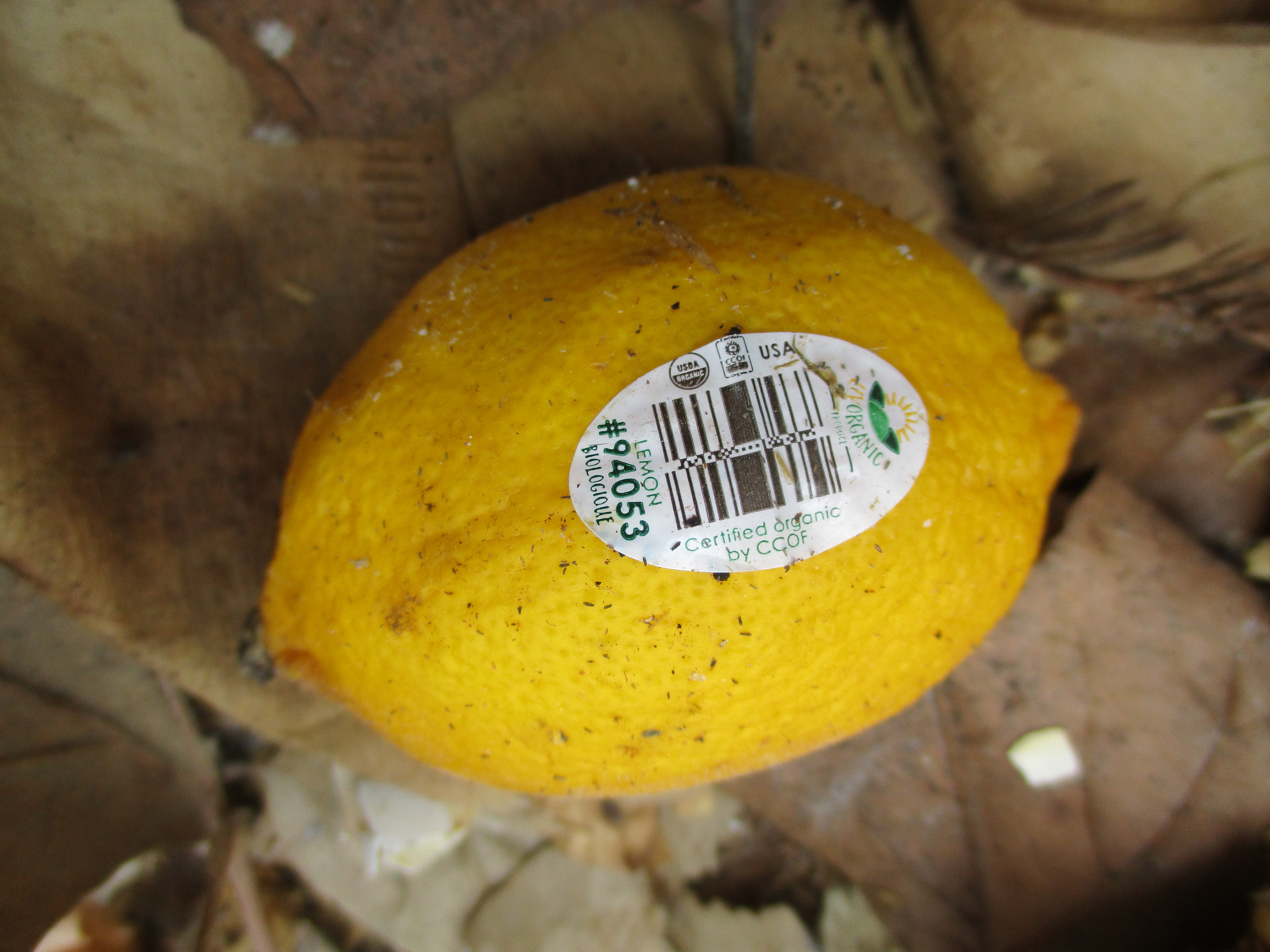 “Hello – my name is LEMON.”
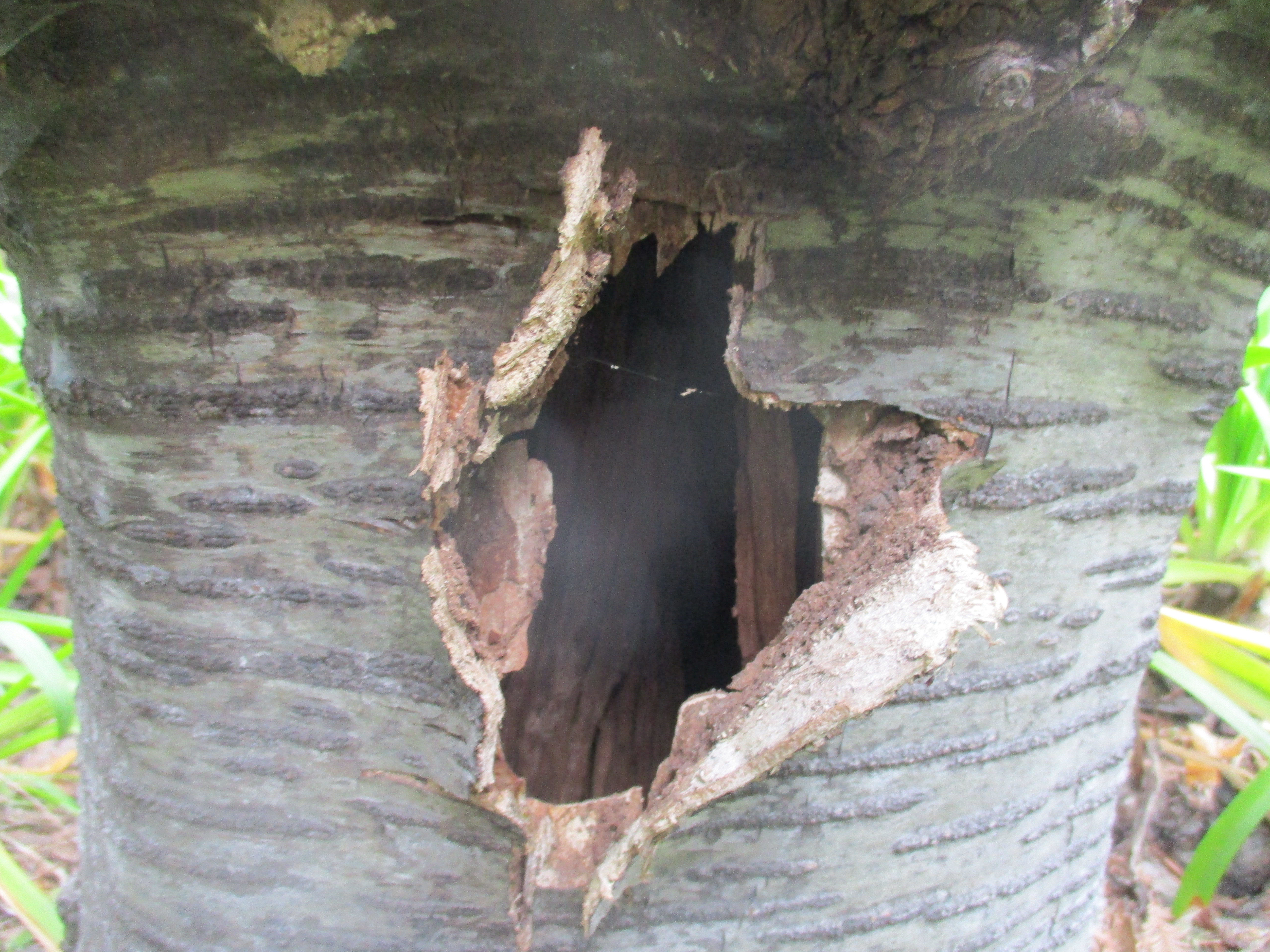 It really looks like something erupted from within!
  So, it is both rotten and…
 These daisies are rarely without some degree of bloom.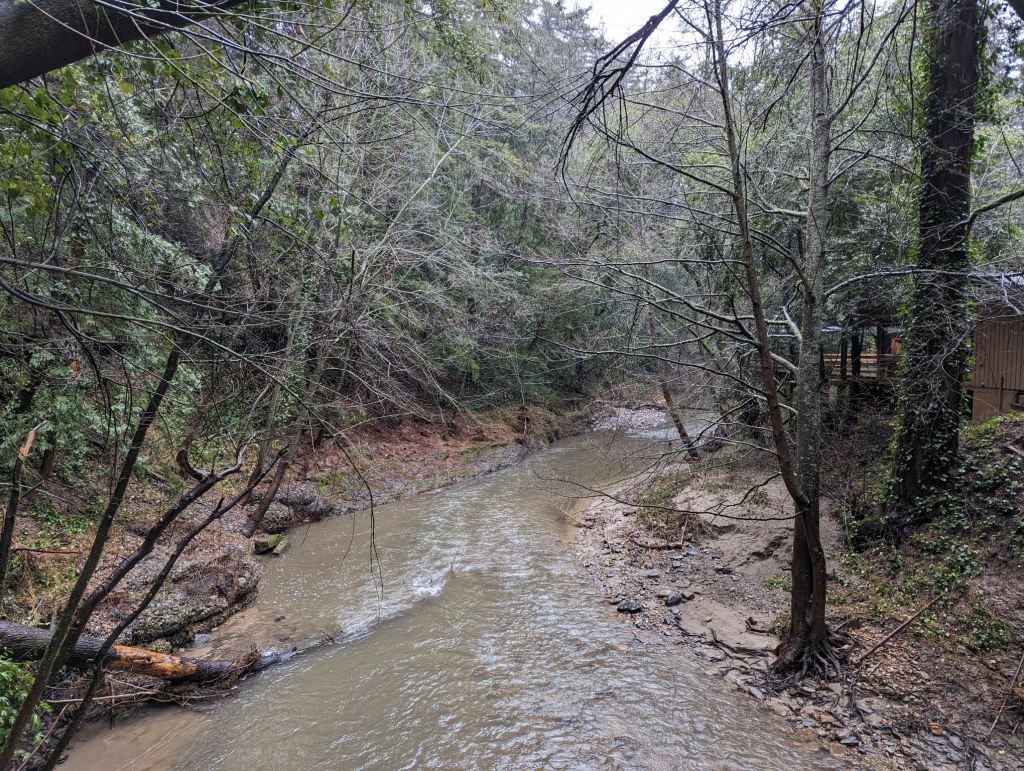



 Tony Tomeo