Horticulturists are by nature, nonconforming. I happen to find it difficult to conform to what makes us nonconforming. Trends are fleeting. Old technology that has worked for decades or centuries is still best. Although I am not totally against chemicals, I find that almost all are unnecessary for responsible home gardening. Pruning is underappreciated, and fixes many problems.
Artificial seems to be no worse than the real deal.
There is no right answer. For lawns that is. Horticulturists who actually enjoy horticulture . . . and are not specialists of turf . . . loath them. (Yes, there are horticulturists who are specialists of turf.) We merely tolerate them because they are so useful for so many applications, and they do happen to be very visually appealing within or in the foreground of interesting landscapes.
After all, lawns are the vegetative green carpeting that covers otherwise bare ground without interfering with the flow of pedestrian traffic. For parks and other public paces, it is better than other types of ground cover, mulch, pavement or lowly mown naturalized weeds that would grow if nothing else were there to occupy the space. For athletic fields, there are no alternatives.
They are just so unnatural. Most plants in our garden are…
Floral fragrance is likely the primary asset of sweet box, Sarcococca ruscifolia. However, the splendidly glossy and evergreen foliage is as appealing as that of any of the various boxwoods. It is darker and richer green, with orderly arrangement on nimble and arching stems. Individual leaves are small but larger than boxwood leaves, and with pointier tips.
Sweet box blooms during winter, with deliciously fragrant but tiny pale white flowers that are not much to see. They are unlikely to get credit for their impressive fragrance without close investigation for its source. Vigorous plants may produce a few rich maroon berries that contrast delightfully with the rich green foliage. Cut stems work well with cut flowers.
Because it is naturally an understory species, sweet box not only tolerates partial shade, but actually prefers it. Harsh exposure fades its foliage. The dense foliage on wiry stems adapts to low hedging. It is better with alternating cane pruning to remove old stems and promote fresh basal growth. Overgrown specimens respond quite favorably to coppicing. They grow to three feet high.
Oregon gardens get to display superior peony bloom for spring and summer. That is one of several advantages of winter chill. Some plant species appreciate a bit more chill than they can get here. It enhances their performance. However, chill also limits winter bloom. Not many plants want to bloom while the weather is cool, and pollinators are less active.
That is one of several advantages of mild winter weather. It allows flowers that bloom for autumn to bloom a bit later. It allows a few of the flowers that bloom for spring to bloom a bit earlier. There is not much time between the last flowers of autumn and the first flowers of spring. Winter bloom is not as important here as where winters are longer and chillier.
Even if less important here, reliable winter bloom might be a bit more challenging. Some plants that bloom for winter in other climates might be hesitant to bloom for winter locally. After all, they prefer to bloom while the weather is cool. Mild chill might be unsatisfactory. Cool season annuals are unpredictable, but are likely the most reliable for winter bloom.
Of the popular cool season annuals, cyclamen is actually perennial. If not removed at the end of its season, it goes dormant for summer, and regenerates for subsequent winters. It does not bloom as profusely as it originally did, but adds color to mixed small perennials or ground covers that do not bloom for winter. Some types of primrose are also perennial.
A few perennials bloom sporadically and randomly throughout the year, including winter. African daisy and euryops daisy typically do not bloom as much as they do during warm weather, but can. Euryops daisy may actually bloom best during winter. Bird of Paradise flowers mature so slowly that those that begin during autumn might finish through winter.
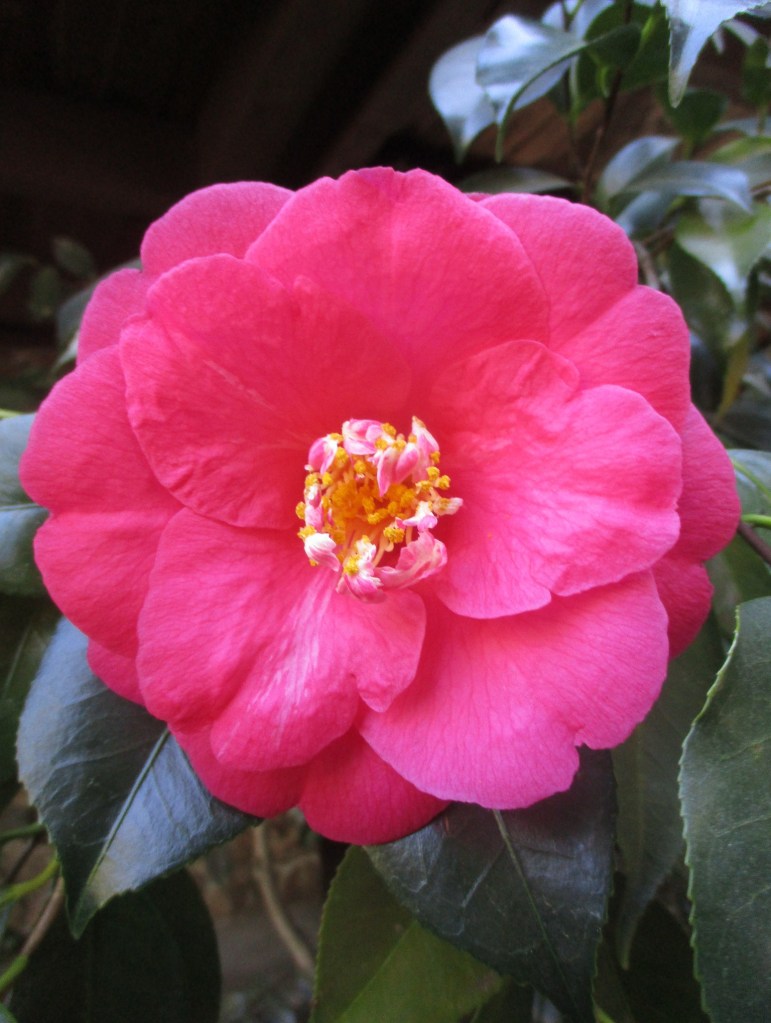
Witch hazel, daphne, heather, mahonia and winter jasmine bloom for winter, but perhaps not as impressively as for other climates. Some camellia bloom abundantly while others bloom sporadically. Bergenia may bloom later here than for other climates. Forsythia and some spring bulbs, especially daffodil, bloom so early that they seem to bloom for winter.
These and a few others that I procured after this article posted have provided me with too many cuttings. I shared most with neighbors. However, all these rooted cuttings are still quite small, after a few years.
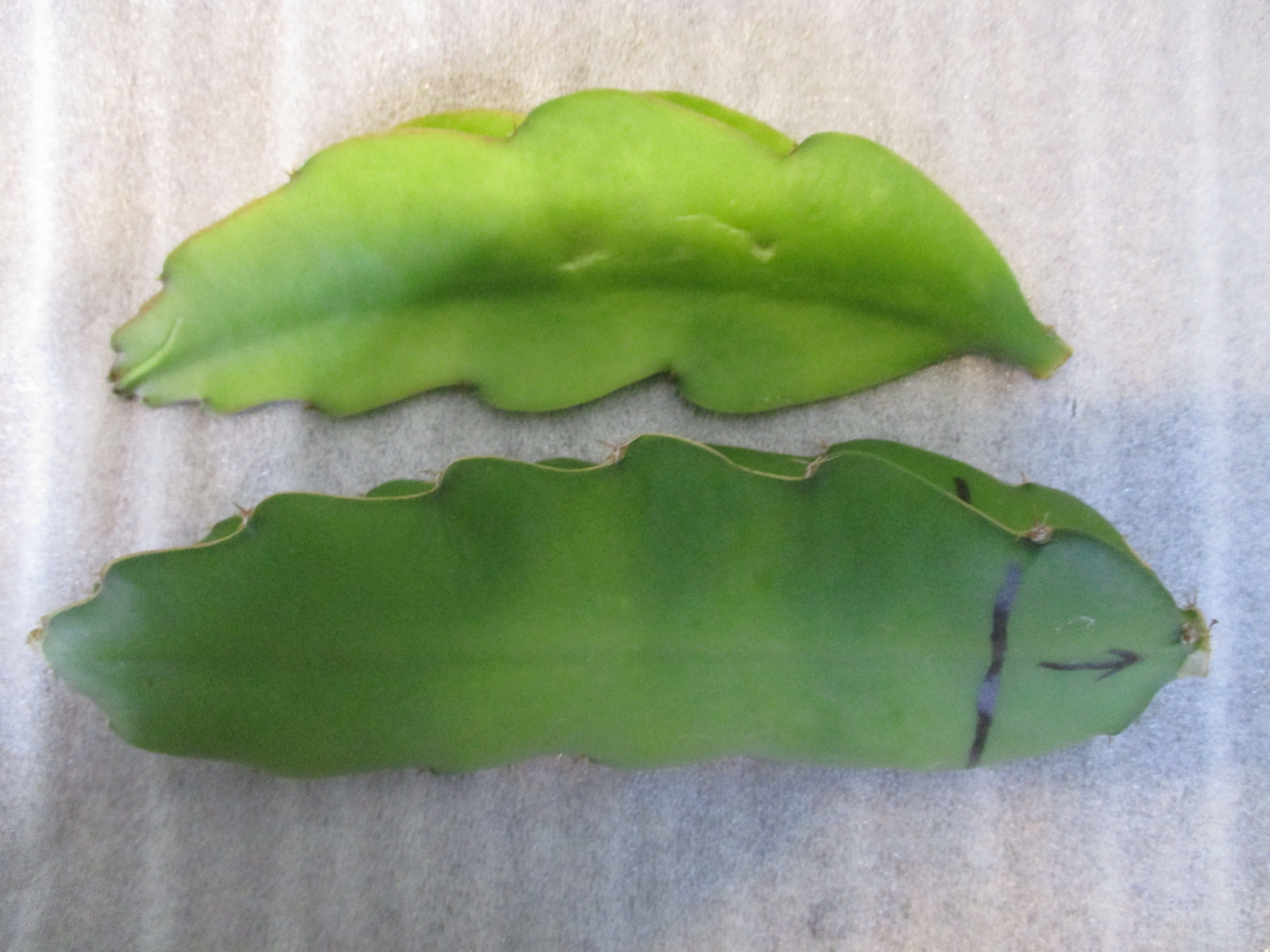
Dragon fruit became a fad on the West Coast of California several years ago. They were probably always around, but had previously been rare. When they inexplicably became more popular and common, they did so down south first. Their popularity migrated to the Santa Clara Valley a few years later. It probably will not go much farther though, since they are sensitive to frost.
It is not a bad fad, at least relative to most others. Dragon fruit, which is also known as pitaya, happens to be very easy to grow and propagate from cuttings. Locally, it needs protection from frost, but no more than other popular tropical plants. It recovers from minor frost damage quite efficiently. Pruning scraps can be rooted and grown as more plants for friends and neighbors.
Of course, I dislike fads. I am not impressed by the fruit, which might lack flavor…
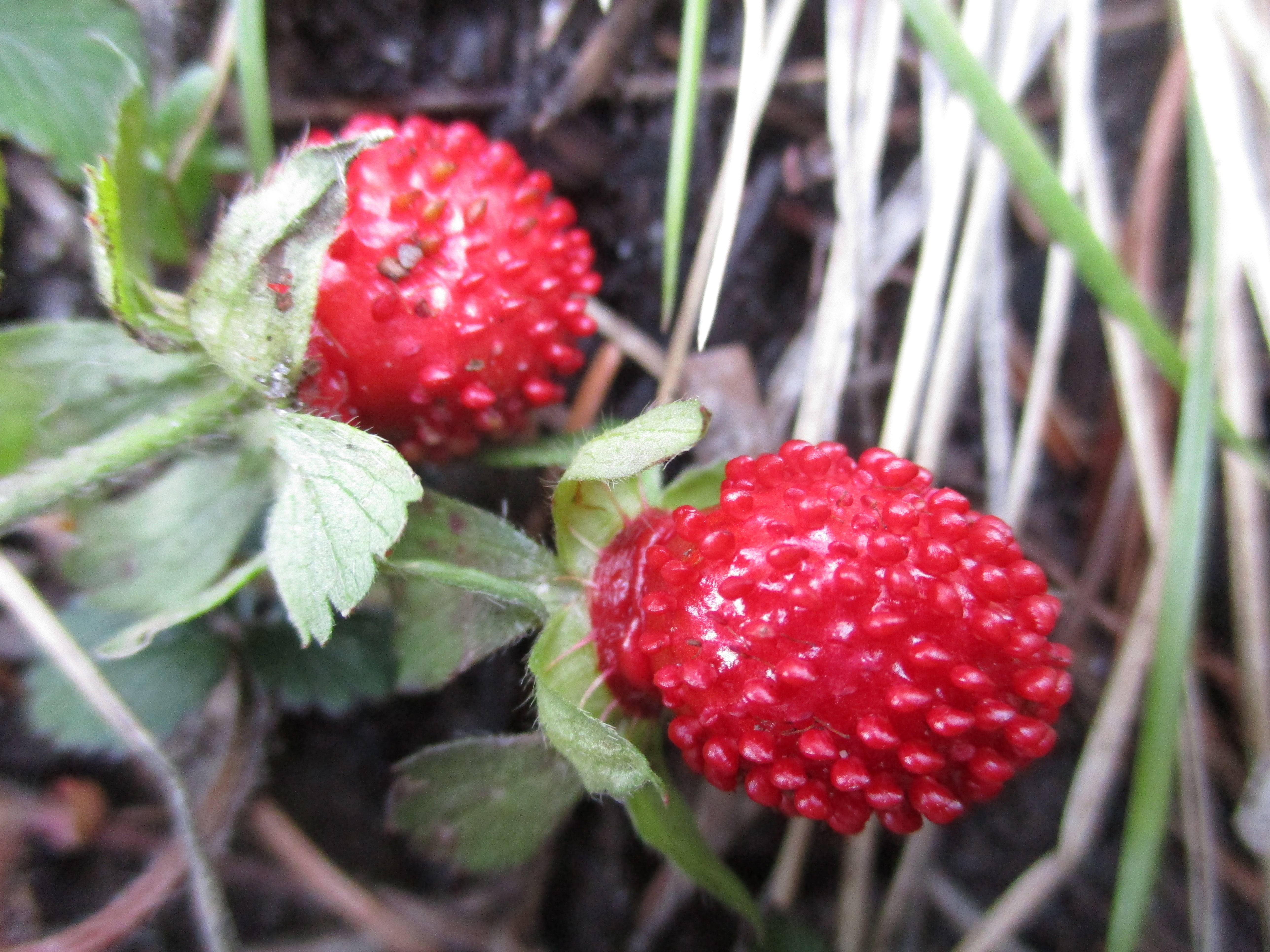
The roses were relocated after this article posted, and are doing reasonably well in their new landscape. The fake strawberry were left behind and not salvaged. Perhaps I should give them more consideration.
Under a bank of carpet roses that I am none too keen on, this grubby ground cover competes with more aggressive weeds. To me, it looks like common mock strawberry, Potentilla indica. I never gave it much though. It seemed to me that whoever had installed cheap and common carpet roses on that bank would have employed a comparably cheap and common ground cover.
The ground cover was more prolific in open spots that were too narrow for more of the roses, and from there, seemed to have migrated under the roses as a second layer of ground cover. It would not have been installed underneath intentionally. It did not occur to me that it may have grown from seed like so many other weeds there, or migrated in from the surrounding forest.
The white flowers did catch my attention though. I was not…
Bloom has been conspicuously absent from my Six on Saturday posts for the past several weeks. Severe weather had prevented me from performing my horticultural obligations, and then prevented me from processing pictures after resuming my obligations. As I was able to post last week, I merely posted six pictures of why I neglected to share pictures of horticultural relevance for previous weeks. Finally, I can share a few pictures of some of the bloom that I have neglected. I am impressed that some of it survived so much severe weather. Incidentally, the weather has been totally awesome since the storms stopped as suddenly as they started. Zayante Creek flows as it typically does for this time of year, as if nothing happened. The water seems to be unusually clear.
1. Camellia japonica cultivars are sufficiently numerous here for a month or so of Six on Saturday. Some bloom profusely but briefly. Some bloom sporadically for a long season.
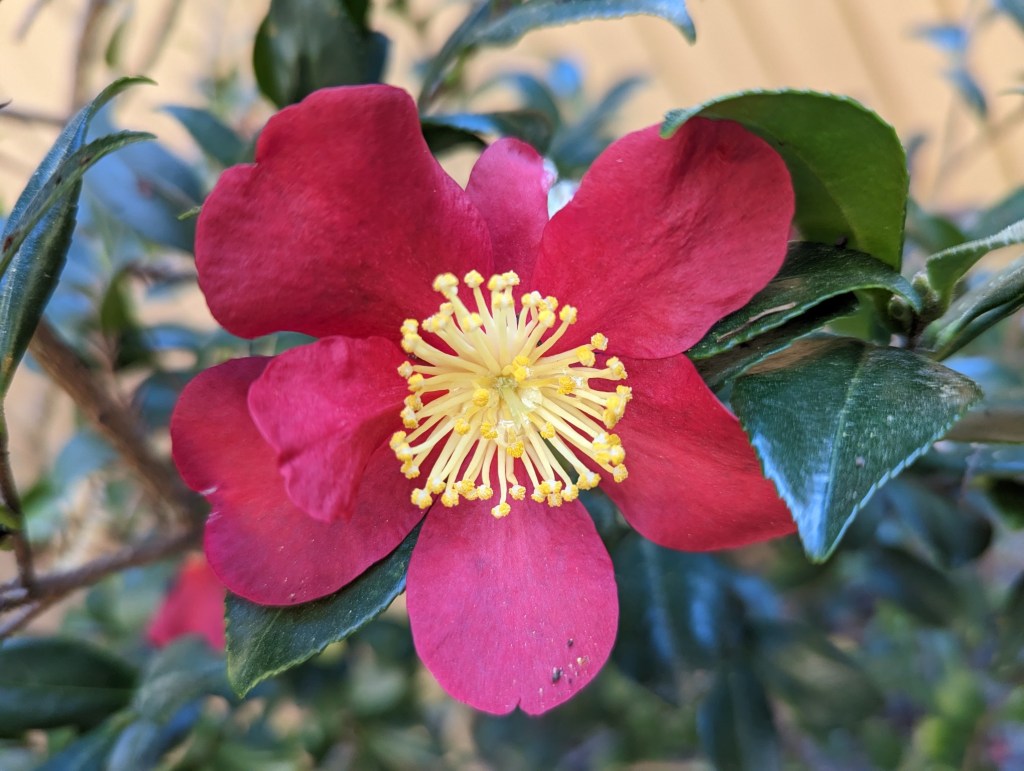
2. Camellia sasanqua cultivars are less numerous, but might be sufficient for two weeks of exclusive Six on Saturday presence. This one is ‘Christmas Cheer’ blooming a bit late.
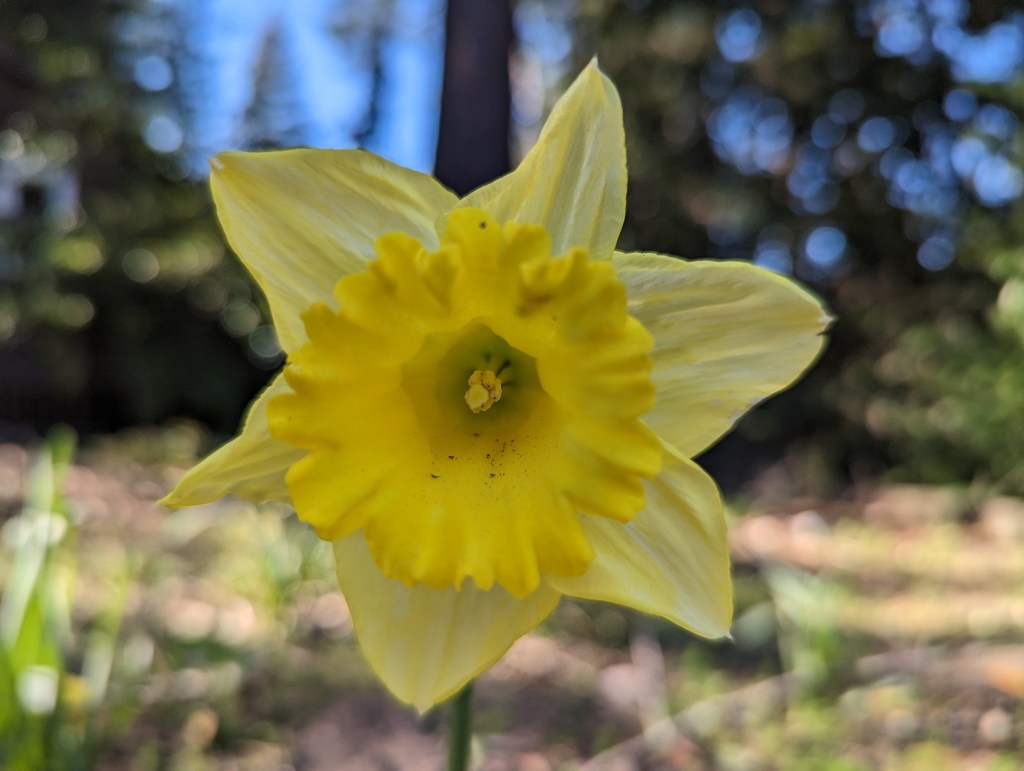
3. Narcissus is too botanically complicated for species designation. This is possibly ‘King Alfred’. Experts might be able to identify its species or hybrid. I know it only as daffodil.
4. Iris X germanica is also botanically complicated. This unidentified cultivar wastes no time recovering from seemingly early division last September. I am very pleased with it!
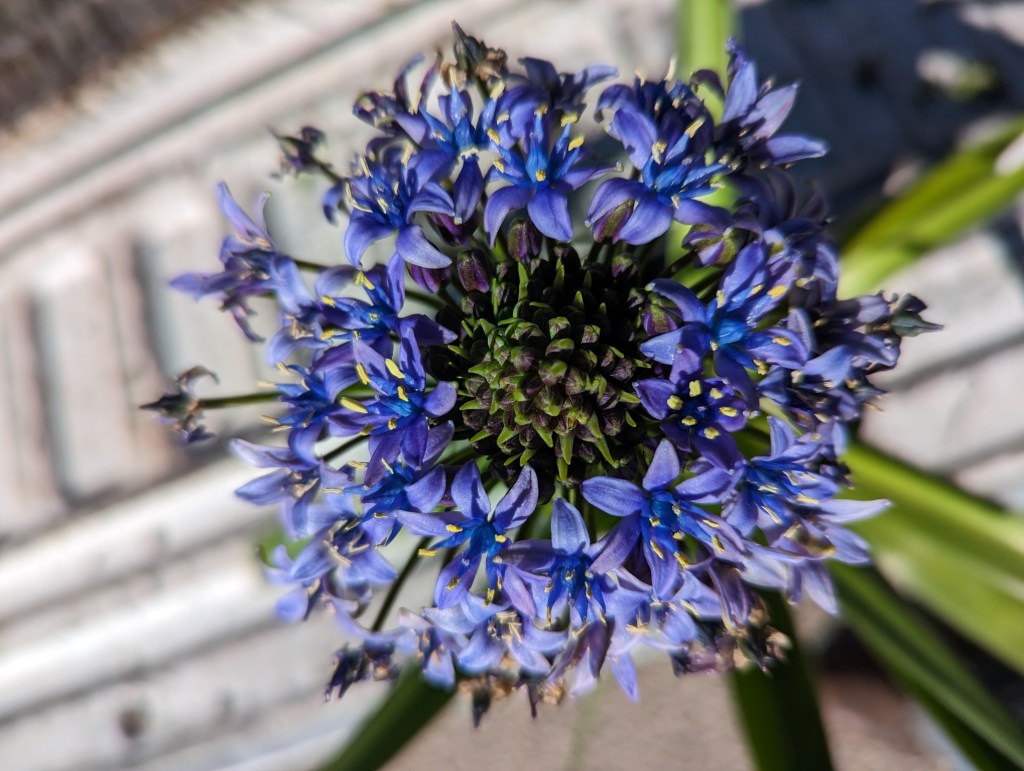
5. Scilla peruviana, squill was still canned when we noticed it blooming! We neglected it while busy with the weather. The best is now planted. The rest awaits gopher mitigation.
6. Rhody is very pleased that his crew has been able to resume their normal duties, such as providing treats and petting, without all the stress associated with the severe weather.
Amy Carter had the most boss treehouse in an Atlas cedar.
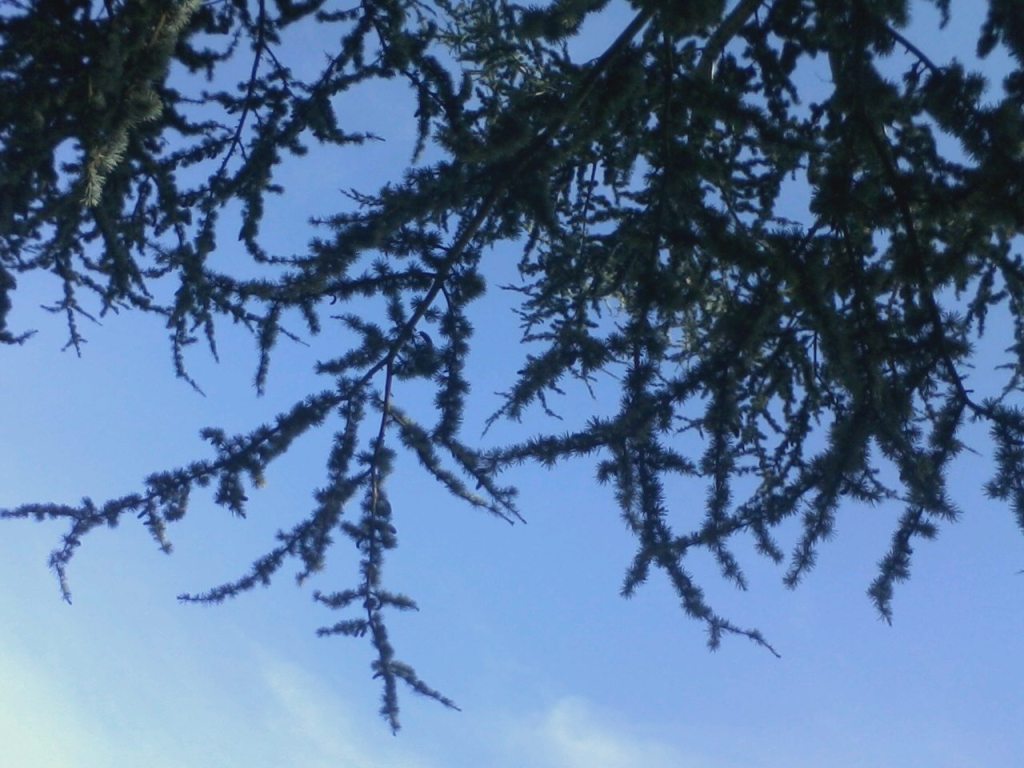
My generation can remember when Amy Carter, the daughter of former President Carter, got a treehouse built in a mature Atlas cedar, Cedrus atlantica, at the White House. It was so cool that it was ‘boss’! Besides being more luxurious than a typical treehouse, it was designed by President Carter to not damage the tree even slightly.
Here in the west, most Atlas cedars are cultivars (cultivated varieties) with blue foliage that often rivals that of Colorado blue spruce. Most have strictly horizontal or angular limbs with stiff, densely foliated branches. Some are so pendulous (weeping) that they need to be staked to be kept off the ground. They actually look great trained along the tops of retaining walls, even without staking, with their blue foliage cascading over. Others are strictly upright and narrow. Colorado blue spruce may have better color; but Atlas cedar has more interesting variation of form.
It is also better adapted to the local Mediterranean climate than spruces and other conifers are, and gets much larger. Mature Atlas cedars can get as tall as a hundred feet, with trunks as wide as five feet.
Before I was in kindergarten, my great grandfather gave me a few seeds from the nasturtiums in his garden in Sunnyvale. I really can not remember ever not growing nasturtiums since then. My first nasturtiums were the basic yellow and orange. In high school, I added some ‘Jewel Mix’ to see what other colors there were. As they too reverted back to the basic yellow and orange, I tried a few other varieties, and eventually realized that nasturtiums really are as excellent as I always thought they were.
‘Amazon Jewel’ is the first climbing nasturtium that I tried in many years. I typically do not like climbing types because they provide so much overwhelming foliage with fewer flowers. Yet this past year, I actually wanted the foliage to frame an exposed picture window through summer. By the middle of summer, the twining (annual) vines had already climbed string to the top of the window, and wanted to climb farther. Their bright yellow through orange, and even reddish orange flowers peeking in the window seemed to violate the privacy within, but were a pleasant bonus nonetheless.
‘Buttercream’ appealed to me because it was the closest to a simple white nasturtium that I had ever seen; and white is my favorite color. As the name implies, it is actually very pale yellow. It is striking because it is not striking. Who would expect such a profusion of pastel from a nasturtium? It means that there is no excuse for those who do not like flashy colors to shun nasturtiums. ‘Creamsicle’ is a bit more colorful with various shades of orange ranging from soft pastel to almost bright orange; another score for those don’t like the colors of a pinata.
‘Copper Sunset’ is as brightly colored as traditional nasturtiums, but only in coppery shades of orange uncluttered with yellow or red. ‘Cherries Jubilee’ is various shades or red and rich reddish pink.
In the past many years, the seeds for all my nasturtiums and almost all of my other flower seeds, as well as many herb and vegetable seeds came from Renee’s Garden at www.reneesgarden.com . Few other seed suppliers market nasturtiums. Those that do have only very basic nasturtium varieties. Renee’s Garden specializes in all sorts of cool heirloom varieties, even those that may be stigmatized as old fashioned. (Aren’t ‘heirloom’ and ‘old fashioned’ the same?)
Of course I tried other flowers besides nasturtiums. Clarkia, feverfew and chamomile have actually naturalized over the past few years in areas of the garden that get a bit of water. The clarkia is almost a native, so is venturing even farther. The ‘Maximilian’ sunflower is perennial, so bloomed more impressively this past summer than it did in the previous summer.
This bender board does nothing that the curb should not do.
The truth of this bender board is that it is not necessary. Seriously, what it is supposed to accomplish there that the curb should not already be doing? That stake wedged between the curb and the bender board to the upper left makes it seem even sillier than it already is. I realize that bender board is designed to bend, but this just draws attention to bad design. Perhaps this is one of those rare situations in which the stake should be on the inside, with the bender board screwed onto it, like might have been the intention for the unattached stake to the lower right. Heck, the curb does almost all of the work of holding the bender board in place anyway.
The dyed chipped wood to the upper right of the bender board seems to rely on the bender board for containment. That would be a realistic application for bender board in a situation that lacks a curb. For this situation, the curb should be adequate. If the soil below the chips is too high, it should have been excavated to a lower level prior to the installation of the chips. As one can see in this picture, such excavation would have been minimal.
Bender board certainly has practical application, such as separating chips like these from turf grass or ground cover. It might contain or provide a neat edge for vigorous ground cover. However, it does nothing that a curb does not already do. In some landscapes it merely adds another component to an innate tripping hazard. It gets dislodged or damaged if vehicles drive over it, or if enough people trip over it.
Unfortunately, for so-called ‘landscape professionals’ it is too easy to install; and such installation is too lucrative. Simplicity is much less lucrative.
It may not seem like much to take notice of. Sweet olive, Osmanthus fragrans, resembles glossy privet, but is neither as glossy nor quite as richly green. The dense and evergreen foliage can work about as well for a formal hedge though. It is even better as a small and billowy tree. It gets at least as high as ground floor eaves, and can reach upstairs eaves.
The primary allure of sweet olive is its delightfully pervasive and fruity floral fragrance. Its small and slender clusters of tiny pale white, yellow or gold flowers are mostly obscured by foliage. For those who are unfamiliar with it, the fragrance might be difficult to identify. Bloom is most abundant before and after summer. Sporadic bloom happens at any time.
Because sweet olive is more olfactorily appealing than visually appealing, it works quite nicely as in informal hedge behind prettier plants. It can stay narrow between windows of neighboring homes that are a bit too close together. If enough flowers are available, they might flavor tea and confectionery. A cultivar with variegated foliage is unfortunately rare.

 Artificial seems to be no worse than the real deal.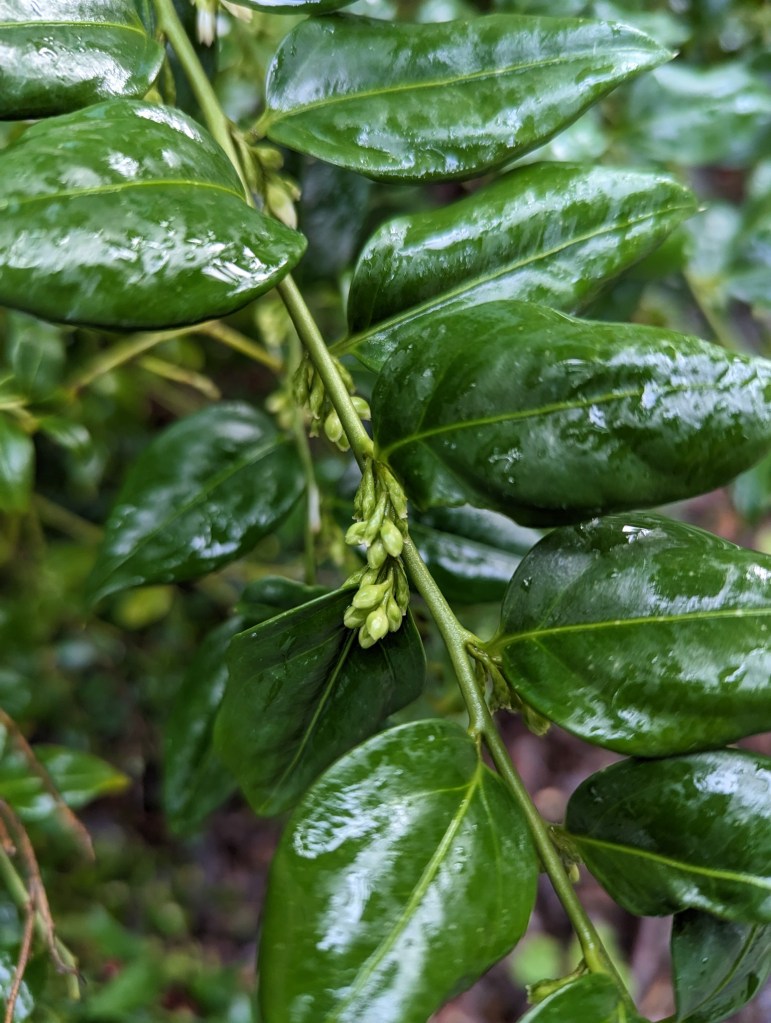
 Oh, the SHAME!
  Wild strawberries are worth salvaging.




 Tony Tomeo