Six on Saturday: Rhody’s Roady IV (not Hedera) – Carson

Carson is Rhody’s Roady. Like most of the vehicles here, he is named after a place. Beau is named after ‘Beau’lder Creek (Boulder Creek) (although his name was actually derived from Hobo). Lee the Chrysler was named after Bever’Lee’ Hills (Beverly Hills). Roy was named after Gil’Roy’ (Gilroy). So, Carson is named after Carson City in Nevada. He took Rhody and I to the Pacific Northwest on vacation. We returned two and a half weeks ago with only a few pictures. These six are some of the last, which were taken during the last two days, as we drove back. The drive was totally excellent!

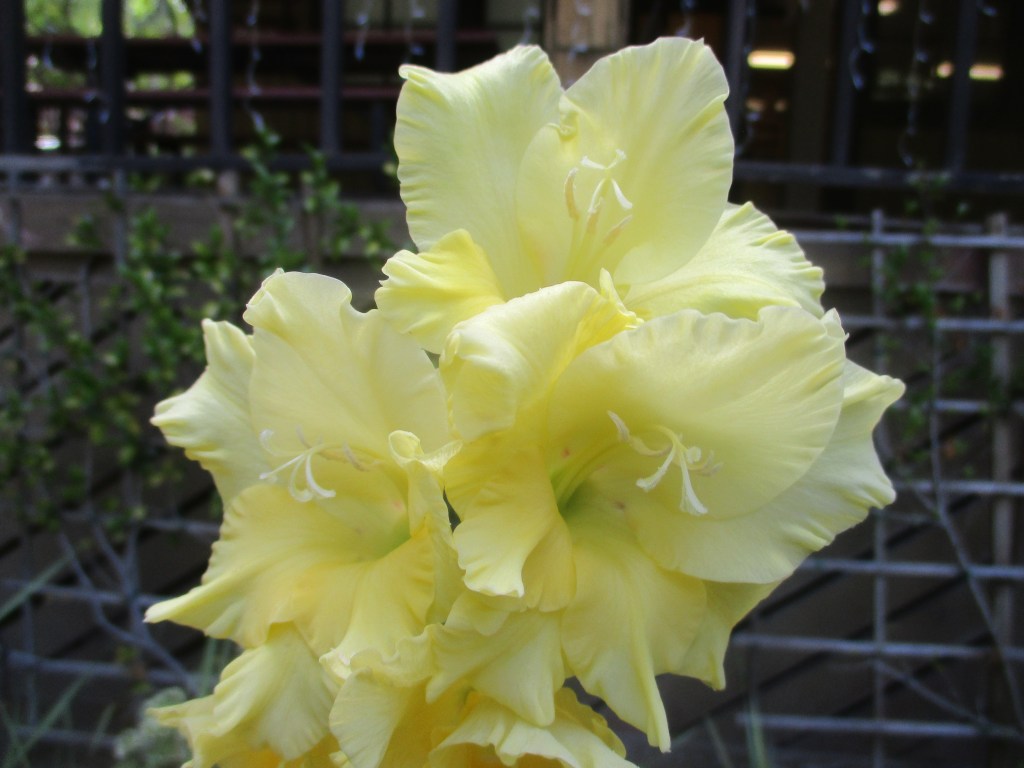
1. Douglas fir grows wild everywhere we went. Red maple is not native, but is very happy in a neighbor’s yard. This could have been a good picture if not photobombed by Carson.

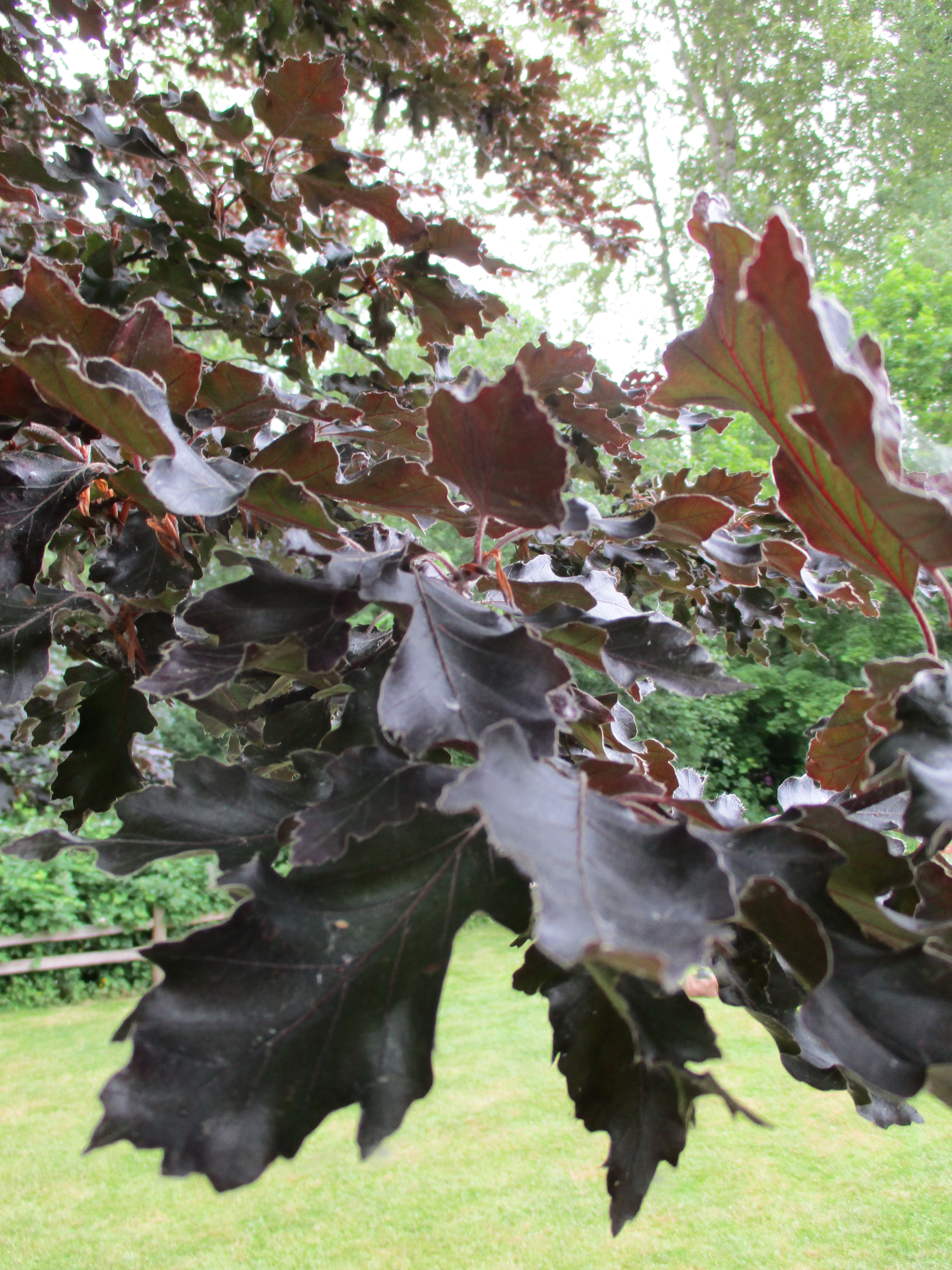
2. Oregon white oak is likewise native to almost all the regions that we traveled through. However, we did not see many. Although uncertain, I think that these are some of them.

3. Mount McLoughlin is visible from only several miles of Highway 5. It seems to be too visible though. Scenery is obscured by dense forests elsewhere in the Pacific Northwest.

4. Mount Shasta is even more visible for many miles of Highway 5, not only because of a lack of dense forest, but also because highway 5 gets nearer to it. This was at a rest stop.

5. Apple trees were still being pruned where we stopped for the night on the return trip. The trees to the left are finished. The vigorous trees to the right are about to get pruned.

6. Orchard House was our lodging for the night. It was as grand as Cedar Lodge! Rhody, of course, is near the lower center of this picture. Carson, Rhody’s Roady, is to the right.

This is the link for Six on Saturday, for anyone else who would like to participate: https://thepropagatorblog.wordpress.com/2017/09/18/six-on-saturday-a-participant-guide/

Flannel Bush

Abundant golden blooms are really spectacular, but because of irritating foliar fuzz, flannel bush should be enjoyed from a distance.

There is no way to say it delicately. Flannel bush, Fremontodendron californicum, is not easy to work with. It grows rapidly and rampantly with awkward form to about ten feet high and broad, but then starts to deteriorate when only about twelve years old. It can deteriorate even sooner if well irrigated. The fuzz on the foliage and young stems is irritating to the skin, especially during warm weather, so is very uncomfortable to handle. Otherwise, for out of the way spots, flannel bush is a striking native plant with impressively abundant bright golden yellow bloom this time of year. Neglected plants that do not get pruned or watered seem to be happier and more colorful, and can get older and much larger.

The Stakes Could Be High

Some unfortunate trees become so reliant on staking and straps that they are never able to support their own weight.

The irony of landscaping and gardening to bring nature closer to the home is that it is so very unnatural. Plant specie are imported from all over the world, grown in synthetic environments, and then expected to perform in unfamiliar climates and soils far from home. Most plants have been bred for optimal retail appeal at the expense of their natural adaptations.

Trees grown in nurseries need to be staked tightly to develop the sort of straight trunks that branch at just the right height to be marketable. In the landscape, trees need to be staked because they have become so dependent on the stakes that they grew up with. Eventually though, trees need to learn how to carry their own weight.

When new trees get planted and staked loosely with heftier stakes that stand up to wind, old tightly bound nursery stakes should be removed since the tight binding interferes with trunk development. By the time trees gets planted, the nursery stakes are probably nearly rotten through at the ground anyway. The new heftier stakes should not hold trees tightly in place, but simply be there to keep them from getting blown over.

Straps should likewise not be tightly bound, but instead allow for a bit of motion with the breeze. Straps should cross over in a ‘figure eight’ pattern between trees and their stakes, so that trunks do not rub so abrasively against the stakes. Most trees need only two straps each, or two pairs of straps if two stakes are used, with support up high, and lower support to prevent outward bowing. If there are no branches to hold straps in place, straps must be nailed or otherwise attached to the stakes.

Some sturdy trees, like well developed redwood trees and small magnolias, may not need stakes. Palms and yucca certainly do not. However, limber trees like the various eucalyptus may need more support than just two straps. The problem is that many trees become dependent on their stakes and will not develop strong trunks if they do not need to.

It is better to prune maturing staked trees to limit weight and wind resistance (that might cause them to blow over) than to provide more support with heftier stakes. If a maturing young tree is relying on stakes and straps for support, it needs to be pruned. A young unstaked tree that begins to lean from the weight of its canopy should likewise be pruned until it regains its posture without getting staked and bound. Trees should never be tied to other trees, buildings or anything else that can be damaged by the tension.

Horridculture – Pale Clivia Syndrome

Since writing this, I found a small clump of three shoots of clivia growing wild outside of our landscapes. I dug and canned the three separately before the vegetation was cut down in the area. Although I will not be disappointed if they bloom yellow, I hope that they are rich orangish red.

tonytomeo's avatarTony Tomeo

P90417Back in the good old days, Kaffir lily, Clivia miniata, which is probably most popularly known simply as ‘clivia’, bloomed with big round trusses of exclusively bright reddish orange flowers. It was such an excellent color that no one thought to change it. Flowers of feral plants that sometimes grew from seed were potentially more orange and less red, but were flashy nonetheless. There was no need, and minimal potential, for ‘improvement’.

Then the allure of the ‘rare’ happened. Yellow Kaffir lilies had previously been so rare that very few had seen them. Once the rest of us became aware of their existence, many of us wanted them, only because they were so rare. However, after seeing them, some of us came to the conclusion that they were rare because no one wanted them when the species was first introduced, and cultivars with the best color were selected and…

View original post 150 more words

Heath

Heath prefers rich and acidic soils.

For Scotland, various species and cultivars of heath, Erica, may be as common as lily of the Nile is here. It has become somewhat popular in the Pacific Northwest and the North Coast of California also. It is likely less popular locally because it prefers acidic soil, and cooler and moister climates. Here, it appreciates regular watering and shelter from wind.

Mature heath is generally less than five feet tall, with densely mounding form. Only a few rare species get significantly taller. Most popular cultivars stay lower. Some creep slowly over their ground without getting more than half a foot deep. Their small and very narrow leaves are no more than half of an inch long, and almost resemble small spruce needles. 

Even with such a fine texture, this evergreen foliage is delightfully woodsy. It is generally dark forest green. Some cultivars produce ruddy, yellow or gray new foliage in spring. Of these, some retain their rich foliar color through much of the year. Tiny heath flowers that bloom most abundantly through winter or spring are white, pink, red, or purplish.

Cultivars Are Merely Cultivated Varieties

Cultivars are distinct within their species.

Nomenclature is simply the technique of naming. Botanically and horticulturally, it is also a precise method of classification. Large classifications divide into smaller and exclusive classifications, which likewise divide. Botanical families divide into many genera, which likewise divide into many species. Some species divide further into varieties or cultivars. 

For example, Schwedler maple is within the Sapindaceae family. This family divides into many genera including the maple genus of Acer. (Genera is plural of genus.) This genus divides into varied species, including the Norway maple species of platanoides. Norway maple divides into more cultivars, including ‘Schwedlerii’, which is the Schwedler maple. 

Therefore, the botanical name of the Schwedler maple is Acer platanoides ‘Schwedlerii’. Family names are omissible. Genus names justify capitalization. Species names do not. Both genus and species names appear in italics. (Incidentally, genera are more ‘genera’l than ‘speci’fic species.) Single quotation marks contain names of varieties and cultivars.

Varieties are, as their designation implies, variants of a species. Some are dwarf, like the dwarf pampas grass. Some bloom with atypical color, like the maroon Texas bluebonnet. Their variations are natural and at least somewhat inheritable. Cultivars are varieties that can not perpetuate naturally, so are reliant on cultivation. They are ‘cultiva’ted ‘var’ieties.

Some cultivars developed from breeding. Others are naturally occurring mutants that are desirable enough to perpetuate. Because their unique characteristics are not inheritable, perpetuation is artificial. Seed of cultivars that originated as mutants lacks any desirable mutation. Seed of extensively bred cultivars is genetically unstable, or may not be viable. 

Most cultivars therefore rely on cloning for perpetuation. Propagation by cutting, grafting, division, layering and tissue culture, generates genetically identical copies of an original. Although it is illegal to propagate patented cultivars for profit, most common cultivars are too old for patents. Many perennial cultivars, such as iris and canna, proliferate naturally. 

See Anemone

Several more were added to the landscape as winter was finishing. They certainly are pretty. I hope that at least some will be reliably perennial.

tonytomeo's avatarTony Tomeo

P90414This really is something that I did not expect to see. It may not look like much. It is just a raspy anemone with bites taken out of it, blooming later than it should. What is so impressive about it is that it was not planted here last year. It was planted during the previous year, then bloomed on time last year, and then died back like anemones normally do. I did not plant it, of course. It is in a planter where volunteers contribute whatever they like.
In case you are wondering why I am writing about it as if I did not expect it to bloom again, I didn’t. For whatever reason, anemones typically bloom well only once here, in their first season after they get planted. They may produce foliage for the following season, or maybe even several seasons, but very rarely bloom again. It annoys me…

View original post 150 more words

Knucklehead

Crape myrtles are certainly not my favorite, but both their bloom and autumn foliar color are exquisitely colorful. Although pollarding enhances bloom and foliar color, it is not so appealing while visible through winter.

tonytomeo's avatarTony Tomeo

P90413KThis is the beginning of one of several new knuckles on a pollarded crape myrtle tree that was pollareded for the first time just this past winter. It was quite a mess of thicket growth that was too congested to bloom well. It is also located in a confined situation where it could not just be groomed, pruned up for clearance, and then just left to develop a larger canopy higher up. Pollarding will both contain it, as well as invigorate healthier growth.
New shoot growth now emerging from the ends of limbs that were pruned back last winter will elongate and eventually bloom through spring and summer. Next winter, after all the colorful autumn foliage has defoliated, the tree will get pruned back to these same knuckles to repeat the process. Stems will get cut back as neatly as possible, leaving no stubs, but such pruning causes knuckles to…

View original post 150 more words

Six on Saturday: Rhody’s Roady III – Oregon

Oregon, which is one of the most excellent states in America, was merely a drive through state with this trip. We spent our first night just south of the Southern Border of Oregon, and then spent our second night on the North Shore of the Columbia River, which is the Northern Border of Oregon. I really should have planned to spend more time in Oregon, particularly between Portland and Astoria. Well, I also should have stayed longer within the regions of Ilwaco. Anyway, our return trip was just as efficient, within only two days. We stopped at many of the rest stops on Highway 5 though.

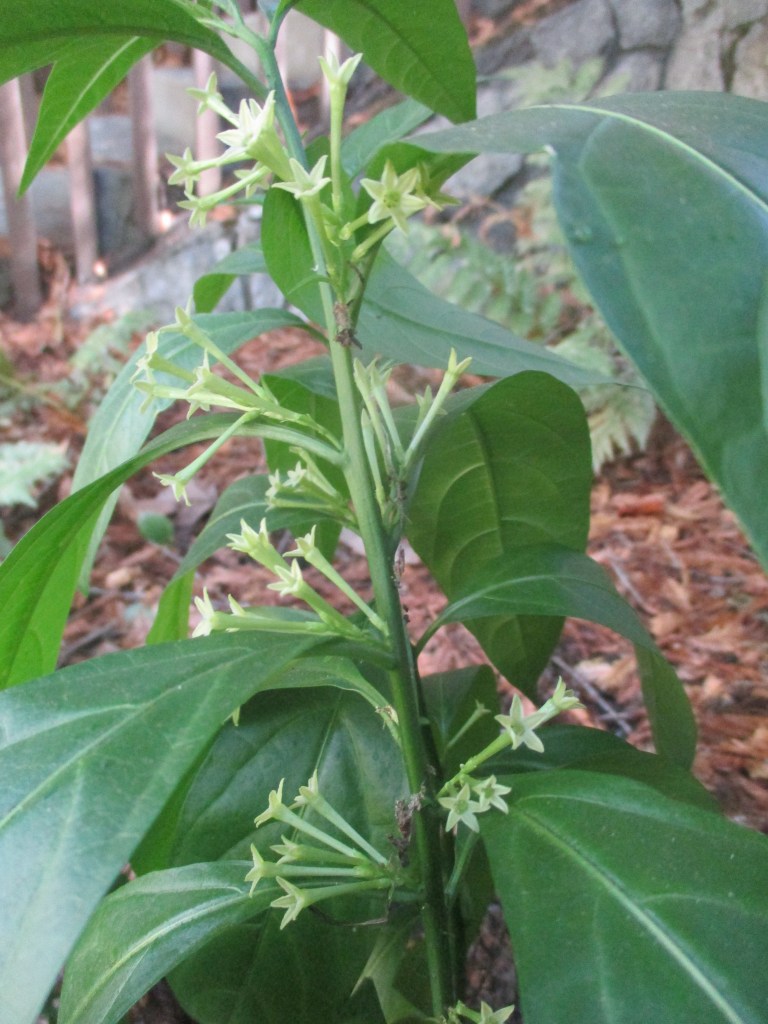
1. What is this? I saw it at various places north of California. I do not remember where I first encountered it. It may have been just across the border, in the Siskiyou Mountains.

2. Oregon grape is nothing special at home. It gets shabby and only blooms sporadically. I wondered why that grumpy wannabe nandina is the Oregon State Flower. This is why.

3. Western red cedar grew on top of a tree stump and dispersed its roots mostly between the decaying wood and bark, so now stands on its roots above decayed bits of the stump.

4. Grove of the States; what a splendid idea! However, a few State Trees do not live here, so required substitution. Furthermore, many were replaced with random or wrong trees.

5. Douglas fir, which is the Oregon State Tree, grows wild locally, so the specimen within the Grove of the States is exemplary. It is not visible in this picture of its plaque though.

6. Rocks are still a ‘thing’. This one was at the base of a tree that I believe to be a mature Oregon white oak. Goodness; we stopped so much that I do not remember where this is.

This is the link for Six on Saturday, for anyone else who would like to participate: https://thepropagatorblog.wordpress.com/2017/09/18/six-on-saturday-a-participant-guide/

American Dogwood

Before foliage develops, this American dogwood is a cloud of profuse pink bloom in a partly shaded and sheltered garden.

The state tree of Missouri produces the state flower of North Carolina, which are both the state tree and state flower of Virginia, but no so exploited by the state that it seems to be named for! The American dogwood, Cornus florida, is such a classic American tree that last year, young trees were given to Japan to commemorate the gift of Japanese flowering cherry trees from Japan a century earlier.

Profuse early spring bloom is not what it seems to be. Tight clusters of minute flowers would not be much to look at, but are surrounded by four big white bracts (modified leaves) that really put on an impressive show before green leaves develop. Many modern varieties have pink or nearly brick red bracts, and a few get variegated foliage as bloom dissipates. Foliage can get quite colorful just before it falls in autumn.

In the wild, American dogwoods are ‘understory’ trees that are happiest in forests of larger trees that shelter them from harsh sun exposure and drying wind. In relatively arid western climates, they want rich soil, regular watering and partial shade at least after noon. They are sensitive to reflected glare and wind, as well as alkalinity and salinity. (Too much fertilizer will roast the foliage.) Since American dogwood trees rarely get more than fifteen feet tall in cultivation, they are proportionate to sheltered atriums. Wild trees do not get much taller than thirty feet.