Horticulturists are by nature, nonconforming. I happen to find it difficult to conform to what makes us nonconforming. Trends are fleeting. Old technology that has worked for decades or centuries is still best. Although I am not totally against chemicals, I find that almost all are unnecessary for responsible home gardening. Pruning is underappreciated, and fixes many problems.
Batman and Robin were here!
. . . well, not quite. It is decoration for summer camp. We never know what we will find in the landscapes that we maintain here. Those who work at camp arrive before guests, so that they can get ready, and of course, to decorate. Guests only started to arrive two weeks ago. It makes our work more interesting, as we try to work around the traffic and events, but it is SO gratifying to see so many guests enjoy the facilities that we maintain! Those who work at camp enjoy being here too. It is obvious in all the work they put into preparation. It gets pretty wild and colorful, as I was reminded when I found what had been done in a grove of coast live oak just outside of one of the main auditoriums. Last year, I pruned and groomed the trees…
Incandescent light bulbs were the standard form of electric lighting for more than a century after their invention. It took a while for fluorescent and halogen lamps to become popular; and by the time they did, high intensity discharge (HID) lamps had already become available. Nowadays, light emitting diode (LED) lamps seem to be replacing all sorts of electric lighting.
For a brief time in the late 1980s, high intensity lamps that were being used for large scale applications and street lamps became a fad for exterior household lighting. They worked nicely for driveways, so many of us believed that they would work just as nicely for night lighting of home gardens and patios. By that time, most of us had realized that the sickly yellowish glare of the sodium vapor type of high intensity lamps that were so common as street lamps was not at all appealing around the…
The biggest lawn where I work for part of the week was formerly a pond. It was installed above an extensive drainage system to compensate for the natural saturation of the soil. A relatively small pond remains at the lowest corner of the large lawn to contain some of the runoff, which gets pumped back onto the lawn for irritation. However, this pond had drained and became overwhelmed by vegetation many years ago. Only recently, after the removal of the overwhelming vegetation, the pond was restored by the simple closure of its drainage gate. It is developing into a different sort of riparian ecosystem from what it was for the past several years, which was different from what it was before that.
1. Cattail and Himalayan blackberry overwhelmed this area many years ago. We knew it as the corn dog orchard because of the cattail bloom. This is what remains of the cattail.
2. Cottonwood appeared several years ago. They grew in a small grove of several slender trunks, perhaps from a single root system of a primary tree. These two are flooded now.
3. Knotweed proliferated on the margin of the newly flooded pond. Some got submerged where it grew while the water was lower. I hope that it dies like the submerged bramble.
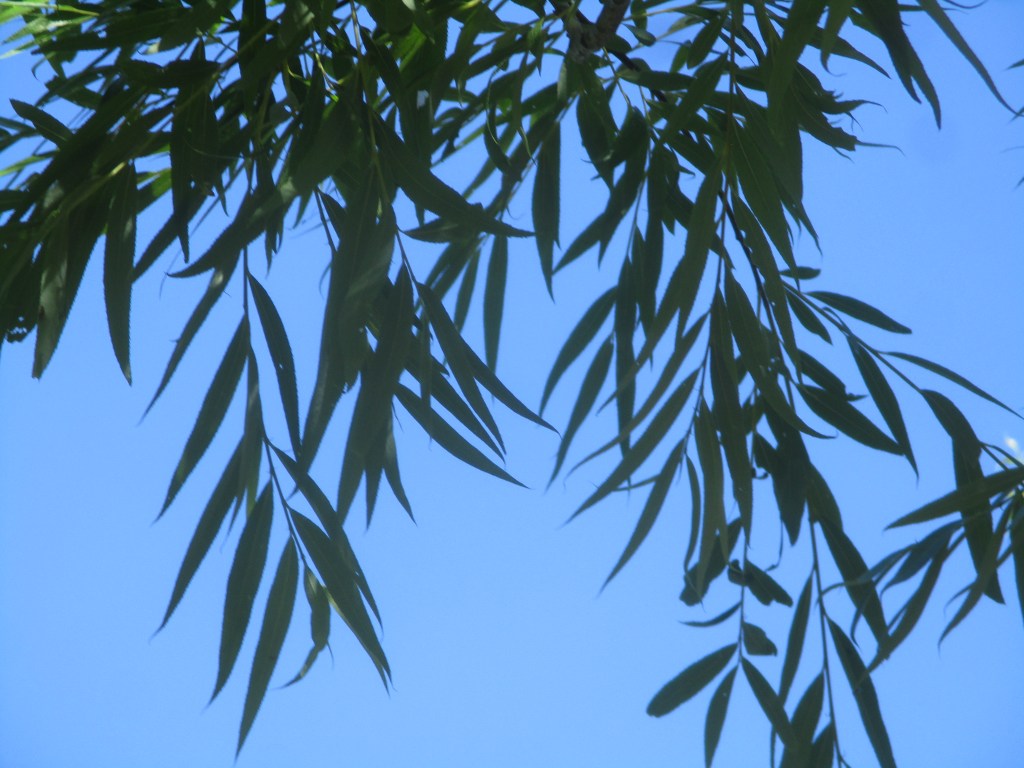
4. Weeping willow enjoys the swampy situation here. The newly flooded pond might not bother it much. The soil is naturally saturated within a minimal depth from the surface.
5. Water lily seems happy here too, although one of the six that were installed is missing. One specimen has about twenty leaves. I could not take a picture of it without reflection.
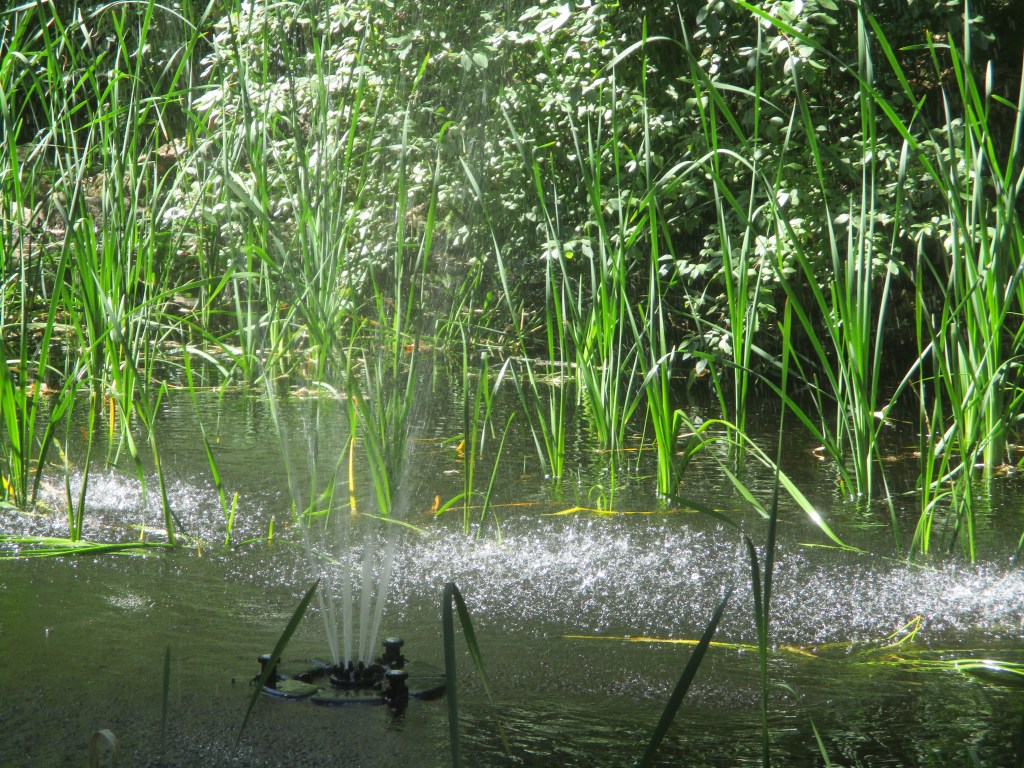
6. Fountains are supposed to dissuade proliferation of mosquitoes. I do now know what to think of it. Everyone else (except mosquitoes) likes it though. That is more important.
Due to an inability to locate some of my old articles from nine years ago, I will recycle articles such as this, which already posted to this blog four years ago, through June and at least part of July.
Pink, red or white are the only choices. There happens to be a darker shade of red. Yellow throats are more conspicuous in white flowers. Otherwise, there is not much variation of color amongst the various mandevillas. The flowers are very similar in both color and form to those of related oleander, but are larger. Some are as wide as three inches. Small flowers can have pointed petals.
Mandevilla vines are surprisingly vigorous and sneaky. The lower portion of a mature plant may seem to be rather tame while it extends aggressively twining vines into trees above. Vines on small trellises can get congested on top. Pruning upper growth helps to even out growth and bloom. Exposed vines are likely to get killed back by frost in winter, but should regenerate efficiently.
The evergreen foliage is quite glossy. Some varieties have interestingly rippled leaves. Partial shade is best for rich…
Due to an inability to locate some of my old articles from nine years ago, I will recycle articles such as this, which already posted to this blog four years ago, through June and at least part of July.
The temptation is unbearable. The catalog of Adelman Peony Gardens, either in print or at www.peonyparadise.com, shows how spectacular peony blossoms can be. There are one hundred and seventy-eight exquisite pictures of the cultivars available for mail order on online purchase. The only problem, and it is a big one, is that peonies are recommended for USDA Zones 2 through 8.
So maybe some of us in Zone 9 might conveniently neglect to read that part of the catalog. Maybe some of us believe that since peonies can not read that part of the catalog, they might not mind getting cheated out of the winter chill they need for good dormancy. Somehow, many of us are able to grow peonies where they have no business growing. Perhaps we should keep that a secret.
So many more plants are available online and by mail order than can be found in…
The easier name is ‘dawn redwood’. I just used the big and fancy Latin name because that is how landscape designers with something to prove say it. If the big name does not impress clients, an explanation of how rare it is, and that it is one of only a few deciduous conifers, will likely do the job. Even back when it was still a fad, I got the impression that was its main function; to impress clients.
It is not even a particularly practical tree. If it gets too big for its situation, it is difficult to contain without disfiguring the canopy. Because the priorities for most were conformity to a fad and to dazzle a client, not much thought went into their appropriateness to their respective landscapes. Consequently, many went into landscapes that were not big enough for them. Although deciduous, dawn redwood does not even get good…
Several of the fifty or so species of Yucca are difficult to distinguish from similar species. Some are varieties of species, rather than distinct species. Some are naturally occurring hybrids. Curve leaf yucca, Yucca recurvifolia, is supposedly a naturally occurring variety of mound lily, Yucca gloriosa var. recurvifolia (or tristis). Alternatively, it could be a hybrid.
As if that is not confusing enough, its physical characteristics are variable. Foliar color is typically grayish, but might be simple olive drab like that of many other species of Yucca. Its typically pliable evergreen leaves that curve downward as they mature can be almost as rigid as those of common mound lily. Stout but upright trunks may or may not develop.
Curve leaf yucca is remarkably resilient. Actually, unwanted specimens can be difficult to eradicate. Small bits of rhizome can generate pups for many years after the removal of a primary plant. Occasional watering is appreciated through the warmest summer weather, but may not be necessary. Old colonies can get ten feet tall, and occupy significant area, but quite slowly.
‘Mediterranean’ translates as an adjective that describes being at the middle of the Earth. Those who inhabited that region many centuries ago considered the Mediterranean Sea to be central to their World. That was long ago and far away. Nonetheless, climates here and now are somehow Mediterranean. Maybe semi arid climates of Italy are Californian.
Mediterranean climates are temperately warm with dry weather through summer. Rain is almost exclusive to a rainy season between autumn and spring. Although rain can briefly get abundant during the rainy season, the average annual rainfall is modest. Humidity is minimal for much of the time. Arid warmth is more comfortable than rarely humid warmth.
Desert climates accumulate less than ten inches of rain annually. Local climates receive more than fifteen inches of rain annually. They are therefore not sufficiently arid to qualify as desert climates. Technically, they are only semi arid chaparral climates. This climactic designation is perhaps more appropriate than the regional designation of Mediterranean.
Native plants and plants that are native to other chaparral climates are naturally pleased with the local climate. However, some initiate at least partial dormancy to survive through the long and arid summers. They may bloom early, but then partially defoliate for several months. Some delay dormancy if watered. A few dislike watering. It is unnatural for them.
Most plants in home gardens are not native to chaparral climates. They require watering to compensate for aridity during summer. Minimal humidity accelerates evaporation from foliar surfaces, which increases the demand for moisture. In conjunction with warmth and wind, aridity can desiccate foliage. Like people and pets, plants must maintain hydration.
Humid warmth that is less comfortable for people and pets is more comfortable for plants than arid warmth is. Humidity inhibits evaporation from foliar surfaces so plants consume less moisture. Incidentally, most pathogens, such as fungal diseases, bacterial diseases and most insects, also prefer warm humidity. People and pets seem to be in the minority.
This is why I do not bother growing greens in the garden just yet. Wild radish grows here wild; and there is way too much of it. Most but not all of it gets mown in meadows or cut down with weed whackers on the edges of roadways. There is no need to cut down that which is out of the way. Besides, we could not cut it all even if we wanted to. There is wild turnip and mustard too. All are prolifically naturalized and invasive exotic species. These radishes do not make the distended roots that garden varieties of radishes are grown for. Nor to the wild turnips make distended turnip roots. They, as well as the mustard, do make good greens though. They may not be quite as good as fancier garden varieties, but I can’t beat the price, or get any other type of vegetable for…
Since posting this three years ago, I dug and canned two perennial pea that bloom white. I split one into three copies, and gave the other away. It was easy. I suppose I could do it again, and perhaps can one that blooms lighter pink, like in the upper picture.
Generally, that is how they are. Almost all perennial pea flowers bloom with the same bright purplish pink color of the bloom in the picture below. That is, of course, before their pods develop, but you get the point. We sort of know what to expect from them.
As I mentioned in the ‘Six on Saturday‘ post last week, from which the picture below originated, variants like the pink bloom in the picture above are sometimes observed. The rare clear white flowers are my favorites. There might be fluffier double flowers too; although, in my opinion, the single flowers are prettier and look more like pea flowers should look.
I also mentioned last week that, although perennial pea has a sneaky way of growing where it is not wanted, it typically does not grow reliably from seed sown intentionally where it might actually be desirable. I have tried…




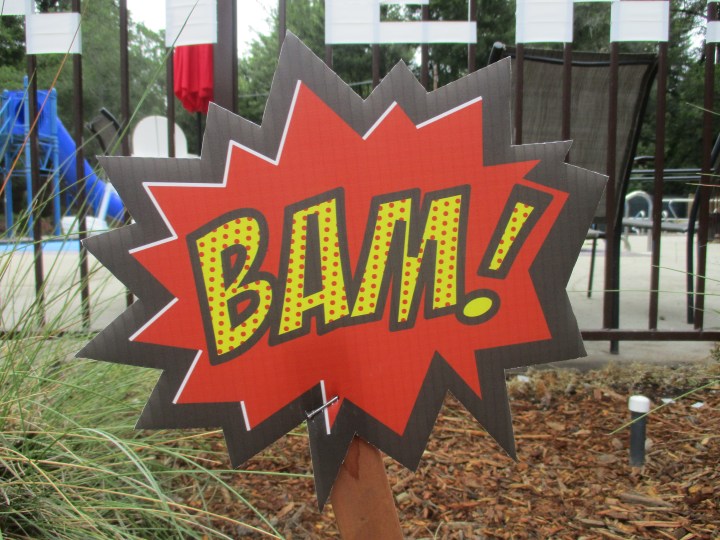
 Batman and Robin were here!
 Incandescent light bulbs were the standard form of electric lighting for more than a century after their invention. It took a while for fluorescent and halogen lamps to become popular; and by the time they did, high intensity discharge (HID) lamps had already become available. Nowadays, light emitting diode (LED) lamps seem to be replacing all sorts of electric lighting.



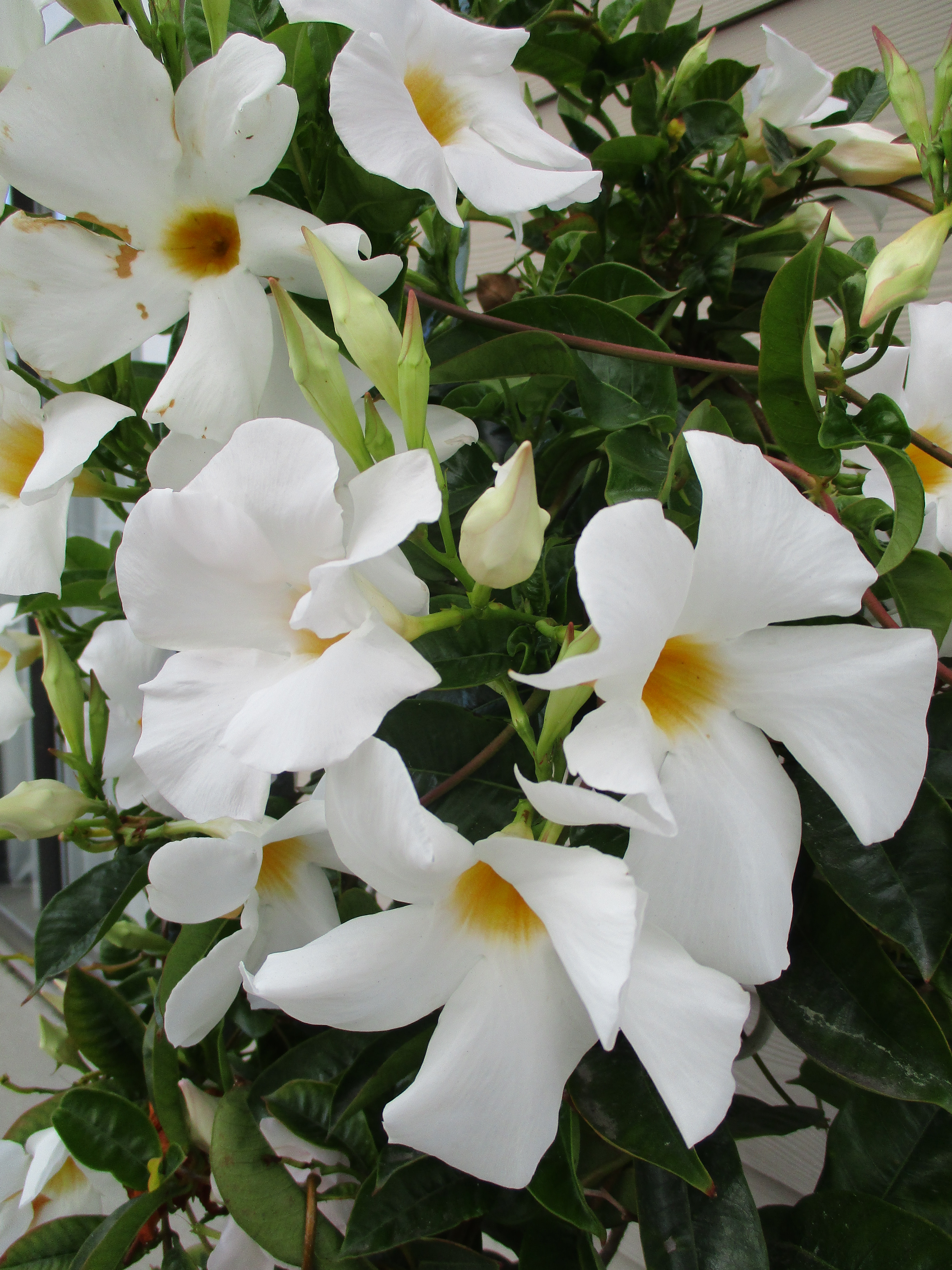 Pink, red or white are the only choices. There happens to be a darker shade of red. Yellow throats are more conspicuous in white flowers. Otherwise, there is not much variation of color amongst the various mandevillas. The flowers are very similar in both color and form to those of related oleander, but are larger. Some are as wide as three inches. Small flowers can have pointed petals.
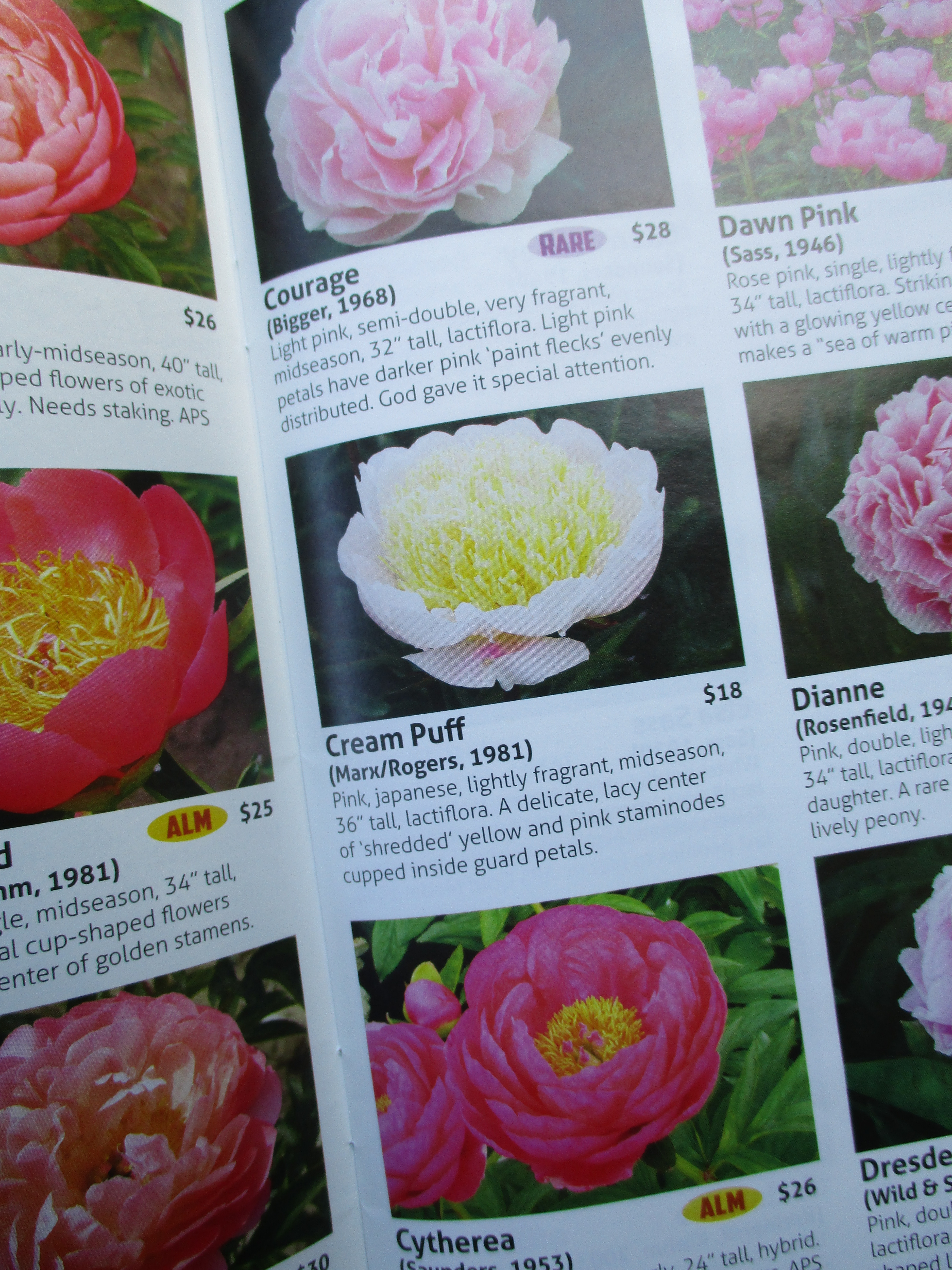 The temptation is unbearable. The catalog of Adelman Peony Gardens, either in print or at
 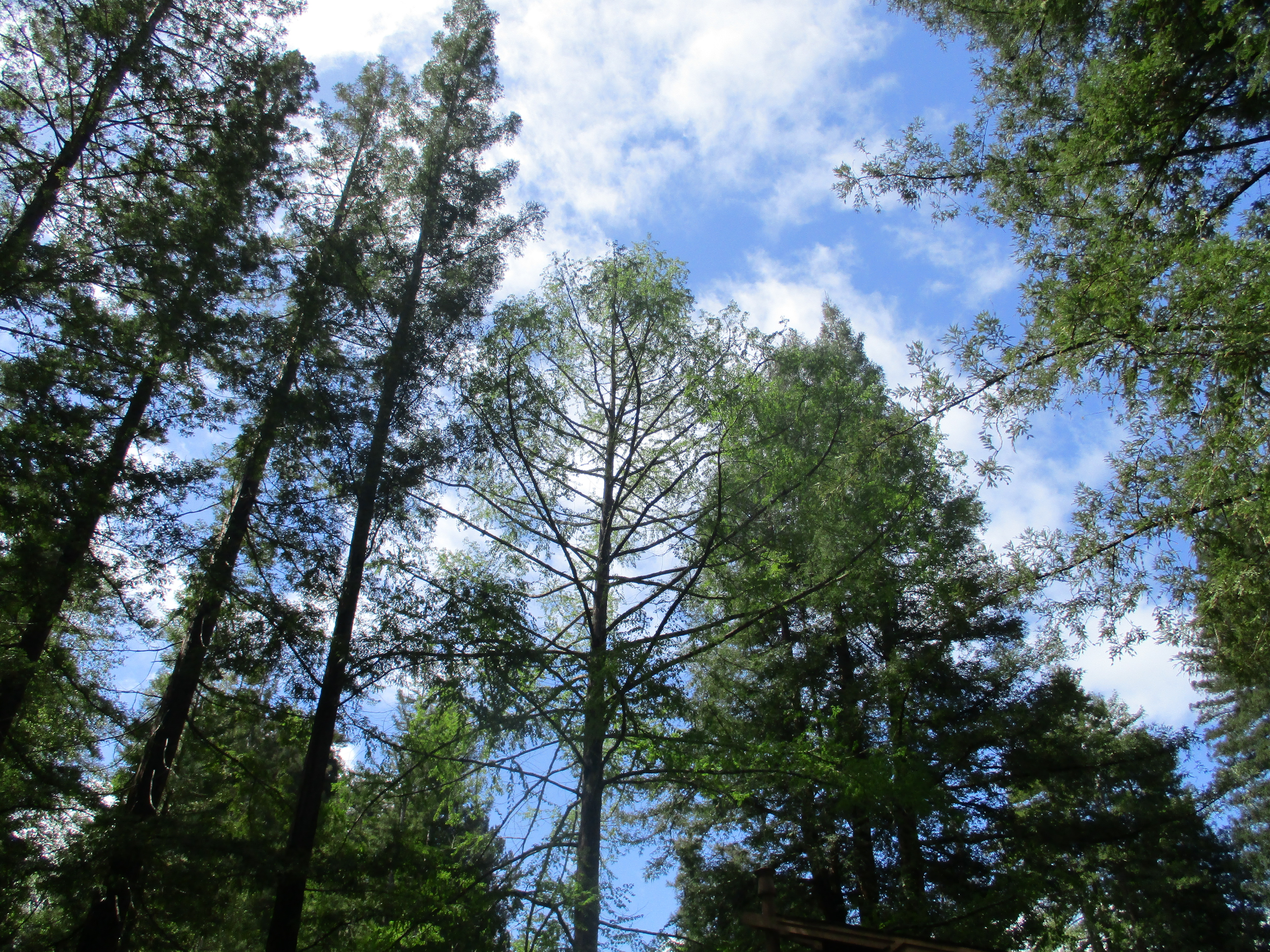 The easier name is ‘dawn redwood’. I just used the big and fancy Latin name because that is how landscape designers with something to prove say it. If the big name does not impress clients, an explanation of how rare it is, and that it is one of only a few deciduous conifers, will likely do the job. Even back when it was still a fad, I got the impression that was its main function; to impress clients.
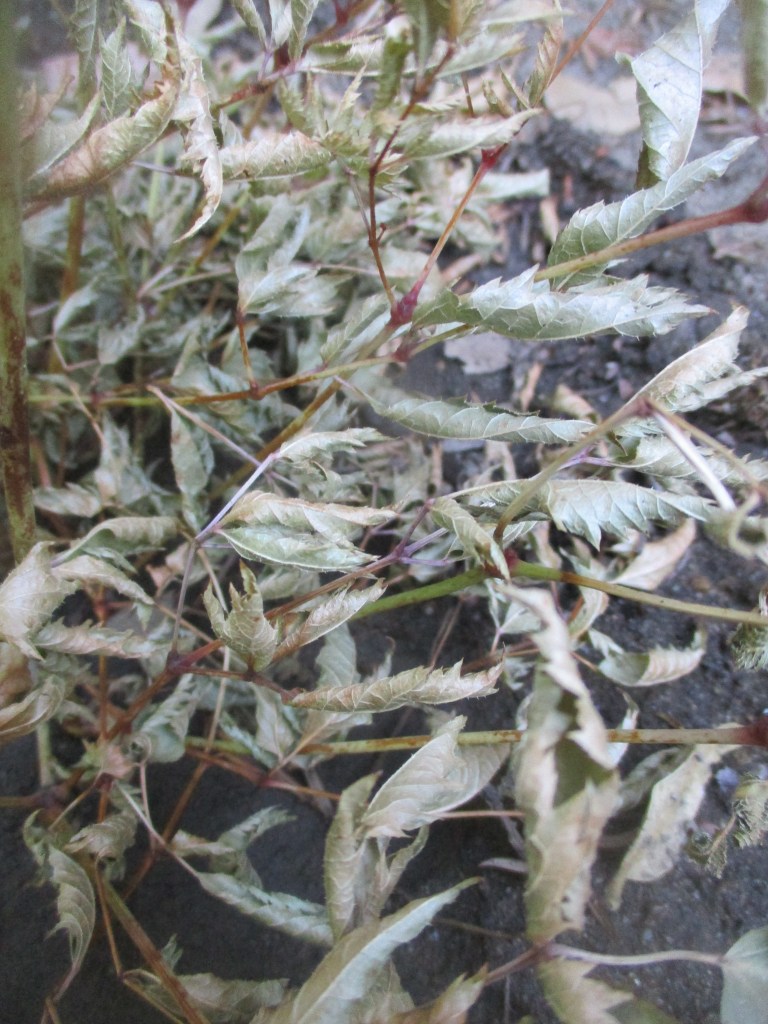
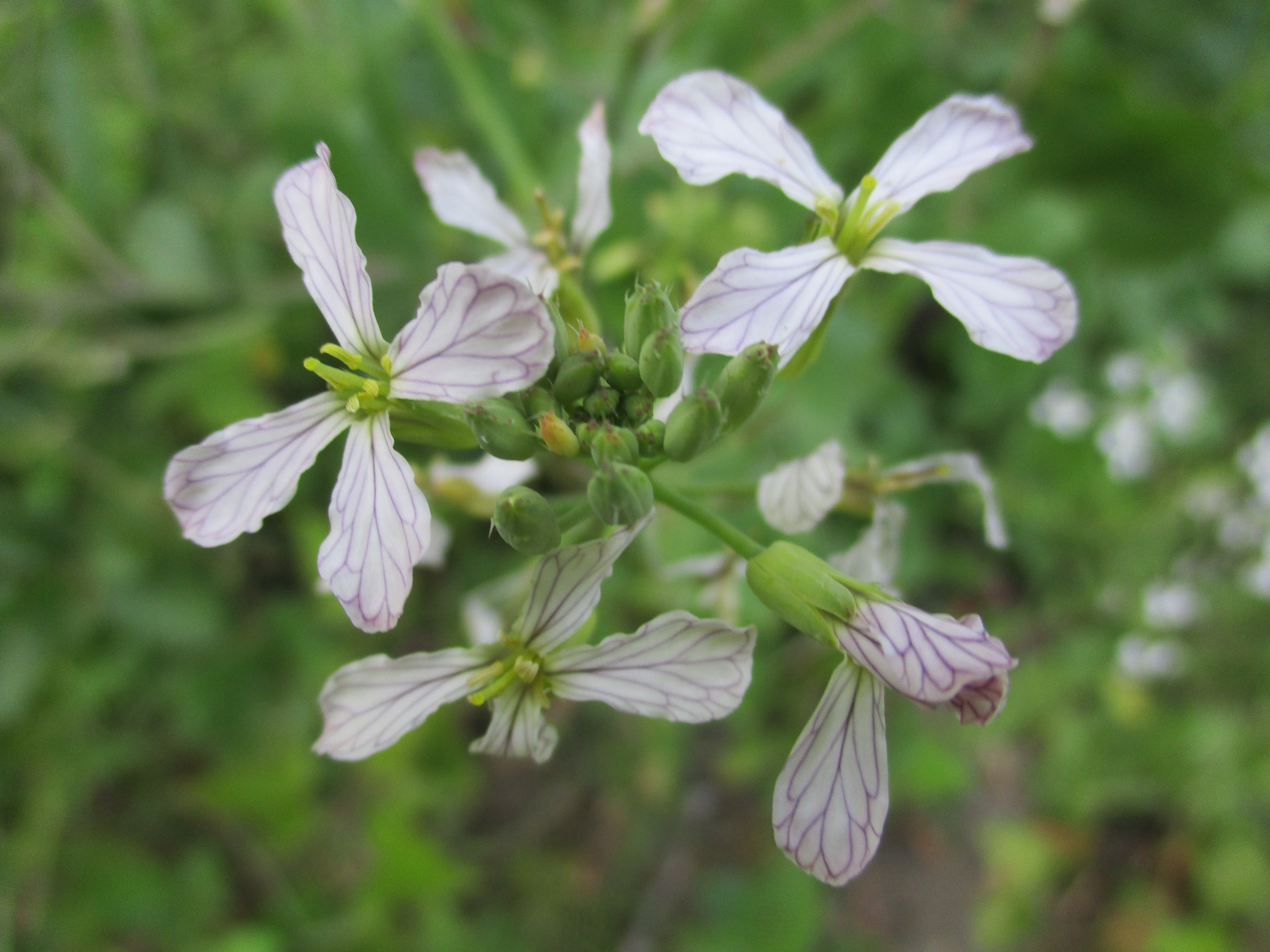 This is why I do not bother growing greens in the garden just yet. Wild radish grows here wild; and there is way too much of it. Most but not all of it gets mown in meadows or cut down with weed whackers on the edges of roadways. There is no need to cut down that which is out of the way. Besides, we could not cut it all even if we wanted to. There is wild turnip and mustard too. All are prolifically naturalized and invasive exotic species.
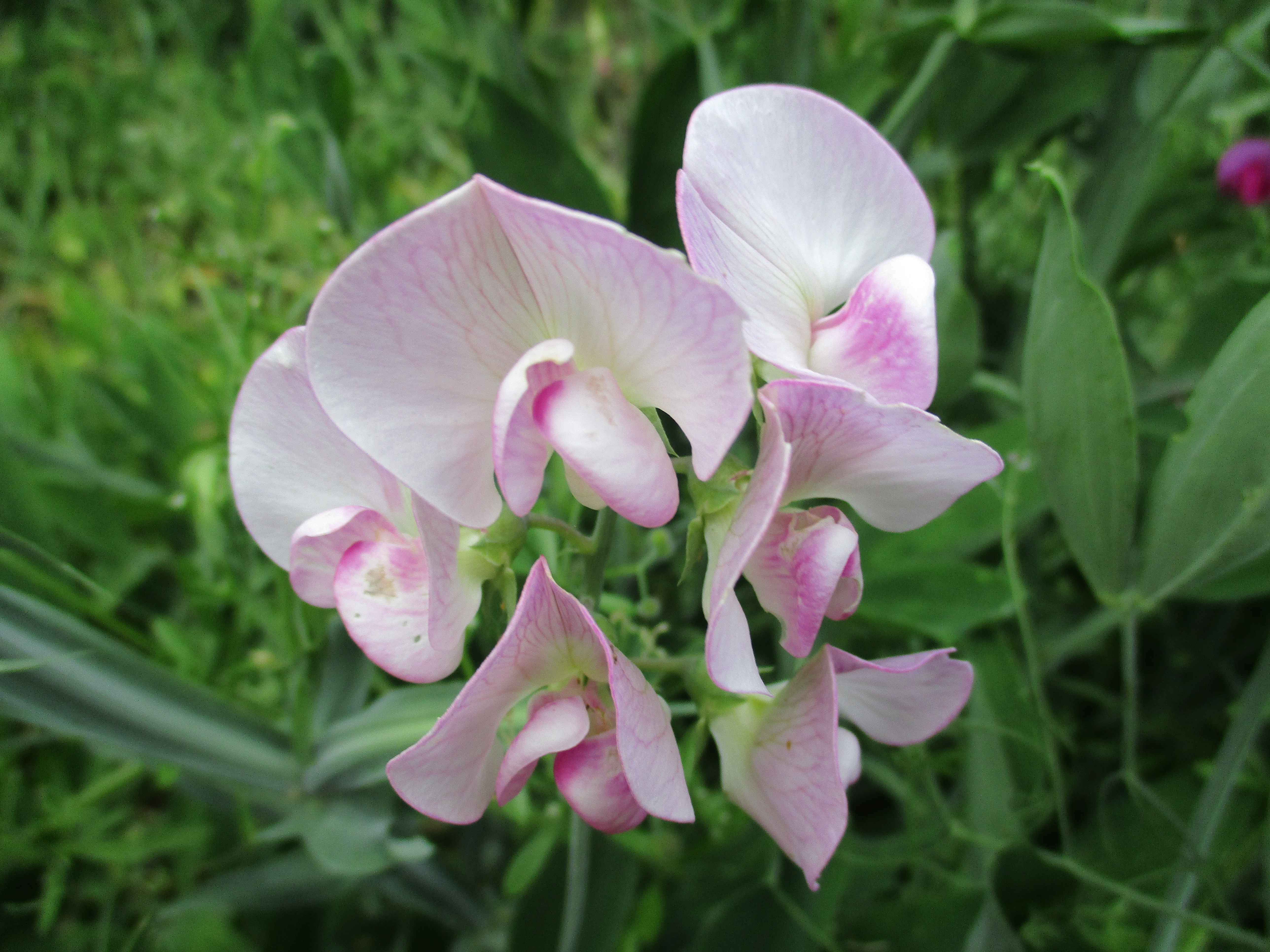 Generally, that is how they are. Almost all perennial pea flowers bloom with the same bright purplish pink color of the bloom in the picture below. That is, of course, before their pods develop, but you get the point. We sort of know what to expect from them.
