Horticulturists are by nature, nonconforming. I happen to find it difficult to conform to what makes us nonconforming. Trends are fleeting. Old technology that has worked for decades or centuries is still best. Although I am not totally against chemicals, I find that almost all are unnecessary for responsible home gardening. Pruning is underappreciated, and fixes many problems.
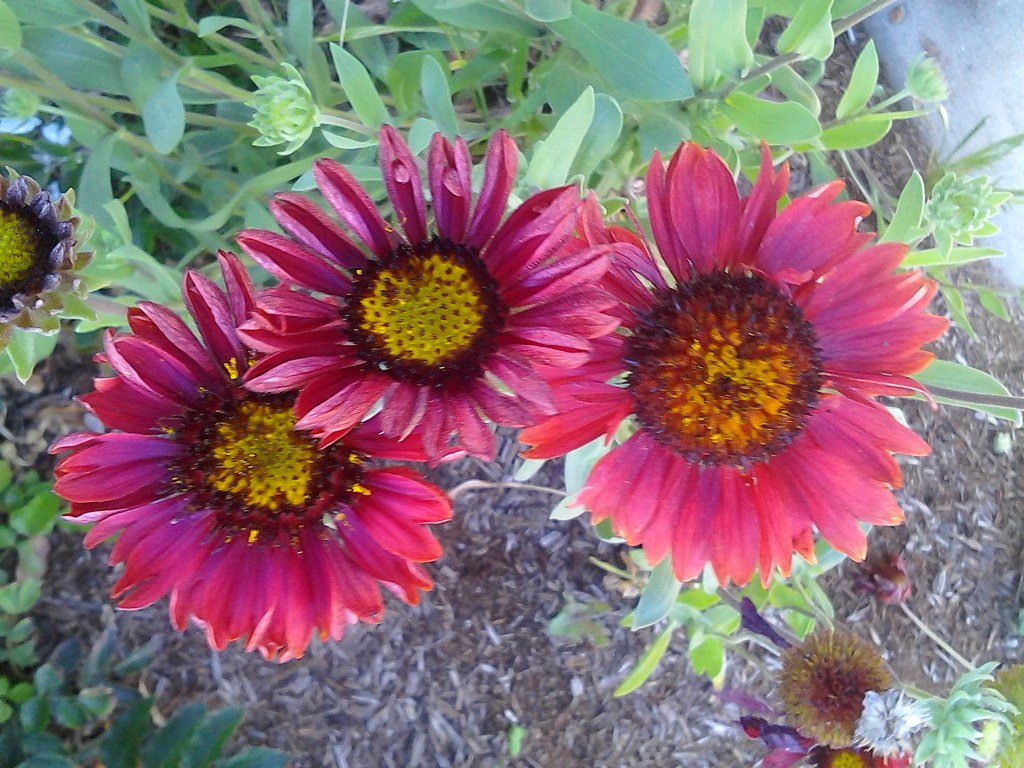
The bright colors and patterns of blanket flower, Gaillardia, resemble those of blankets made by native American Indians. The daisy flowers are typically two different shades of red, orange, yellow, brown or yellowish white. Not many varieties bloom with single colors. Taller varieties can get almost two feet tall, with slender but sturdy stems that are good for cutting. The narrow leaves are mostly basal, so do not crowd bloom.
The more popular varieties of blanket flower are perennial. Healthy plants can slowly get quite broad, and can self sow their seed to spread a bit farther. Annual varieties can not get as broad, but often self sow more efficiently than perennial types do. Once it gets growing, blanket flower does not need much water. However, regularly watered plants are already blooming. Modestly watered plants wait until summer.
Parkstrips, those narrow spaces between curbs and sidewalks, are among the most awkward spaces in the garden. In urban areas with significant traffic, they are commonly paved over. Some neighborhoods, especially downtown neighborhoods, do not have parkstrips at all. Suburban neighborhoods though, often have wider parkstrips.
The difficulty with parkstrips is that there is so much happening around them. Cars get parked on one side. Pedestrians pass by on the other side. Driveways need to be kept clear at each end. Water meters and perhaps other subterranean utilities must be accessible.
Street trees are common features in parkstrips. They should have complaisant roots that will be less likely to displace the surrounding pavement and curbs, and high branch structure for adequate clearance above truck traffic on the roadways below. Ideally, street trees should conform with the neighborhood, and are often quite uniform. Selection of street trees should be a community effort where practical.
All other plants that go into parkstrips should be adaptable to confinement within the limited space available. They should not extend over curbs or sidewalks where they can scratch parking cars or be obtrusive to pedestrians. Parkstrip landscapes must also stay low enough so that they do not obstruct the view from cars backing out of driveways.
Because people regularly walk past or through parkstrips, thorny plants like cacti and roses should be kept back from the edges, or preferable not put into parkstrips at all. Large agaves and yuccas (with rigid leaves) are simply too big and dangerous for narrow parkstrips.
Contrary to the trend of planting vegetables in weird places, parkstrips are not good places for them either. The main problem is what dogs like to do in parkstrips. The second problem is that the good produce that might be out reach of dogs is within reach of everyone else walking or driving by. Reflected glare from all the surrounding pavement is a problem for plants that do not like harsh exposure.
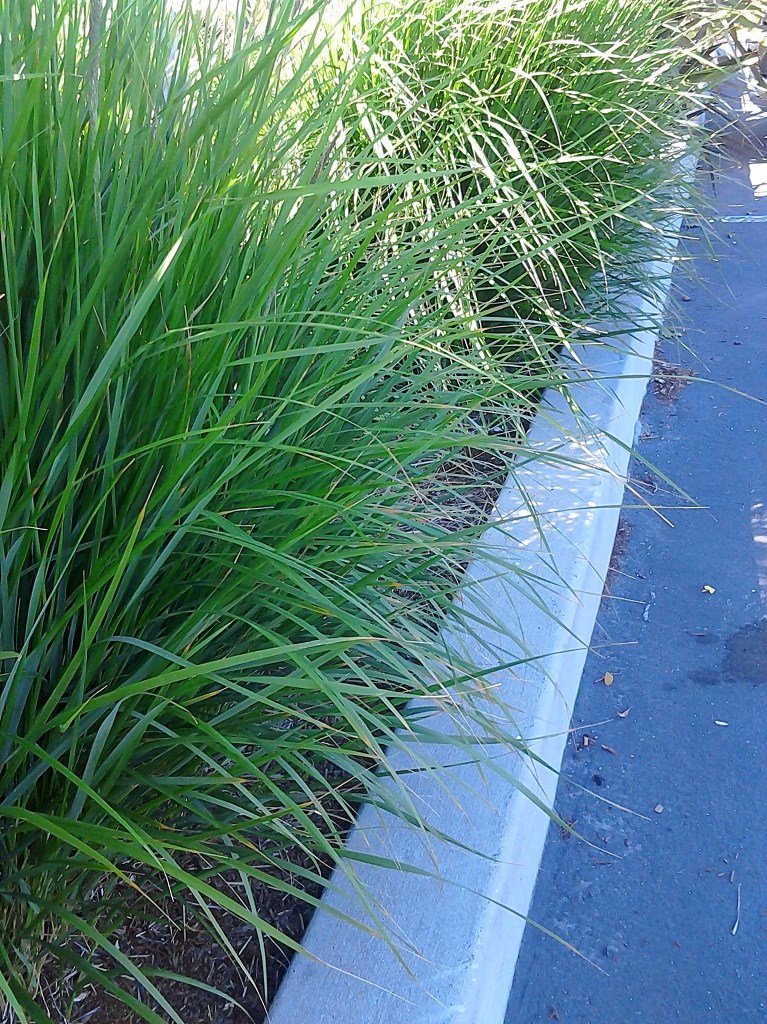
Really, there are far more limitations on parkstrip landscaping than there are options. Turf grasses or tough ground cover that tolerates traffic, like trailing gazania, may seem to be a mundane, but they are practical. At least ground cover can be punctuated with clumping perennials like African iris, lily-of-the-Nile or blanket flower.
Pluots, plumcots, apriums and peacharines! Who comes up with this stuff?! Aren’t good old fashioned plums, apricots, peaches and nectarines good enough? Who decides that these weird hybrids are somehow better than their parents? Some of them are actually quite weird, or downright ugly. Several do not even look like they would taste good. It may be an acquired taste; but I have all the good taste that I need without acquiring any more.
Some old classic cultivars (cultivated varieties) of fruit were develop centuries ago. More have been evolving from those ancestors since then. Some were intentionally bred from parents with desirable qualities. Others just grew incidentally where their seed fell, and were found to be somehow better than their parents. Some were merely discovered as natural occurring mutants, and perpetuated for their superior qualities. It is a slow process. So, putting two different kinds of fruits together, or…
Strictly formal boxwood hedges are traditional components of old formal rose gardens. In California, Japanese boxwood, Buxus microphylla, had always been more popular than English boxwood, which may be more common where winter is cooler. Although it grows too slowly for high hedges, it gets high enough to obscure gnarled lower growth of roses.
Mature plants are generally less than three feet tall and wide, although they can get a bit larger if they get a chance. The oval and glossy evergreen leaves are only about half an inch or an inch long, but relatively thick, so are very conducive to formal shearing. Foliar texture is nicely dense but not too congested. Gray or pale brown bark is seldom visible.
Old fashioned Japanese boxwood, which remains the most common in old gardens, has a somewhat light or yellowish green color. Modern cultivars are darker green. A common problem with old formal hedges is the addition of modern cultivars or even other species to fill gaps. The darker foliage will not conform to the lighter foliage, so ruins the formality.
There are rules to hedging. For example, hedges should be uniform and exclusive to just a single cultivar. A modern ‘Green Beauty’ boxwood will never conform within a hedge of more yellowish old fashioned boxwood. Hedges should also remain within confinement. It is important to shear them back from obtrusion into walkways and other usable spaces.
It is not as simple as it seems to be. That is why so few hedges get proper maintenance. Almost all occupy and therefore waste more space than they need. Most have wide tops that shade out narrower lower growth. Moreover, many plants that are not components of hedges all too commonly succumb to inappropriate shearing too. It is sheer shear abuse!
Even if done properly, only hedges and a few other plants are conducive to shearing and hedging. It is an aggressive procedure that compromises form, texture and bloom cycles of involved plants. For hedges, that is not a problem. They need not bloom, and adapt to a refined hedged form, which is more desirable than their natural shrubby form would be.
However, it is important to not unnecessarily shear plants that bloom, or provide intricate foliar texture or form. Shearing deprives rhododendron of young floral buds. It ruins foliar texture of Heavenly bamboo, and foliar form of Japanese maple. It is acceptable to shear boxwood only because it responds by generating such appealingly uniform foliar growth.
With proper scheduling, it is possible to shear only a few blooming plants without ruining all of their bloom. Aggressive shearing after the early bloom of oleander and bottlebrush leaves them with space to grow enough to bloom again during autumn. Without sufficient space to grow, they will require subsequent shearing, which will ruin subsequent bloom.
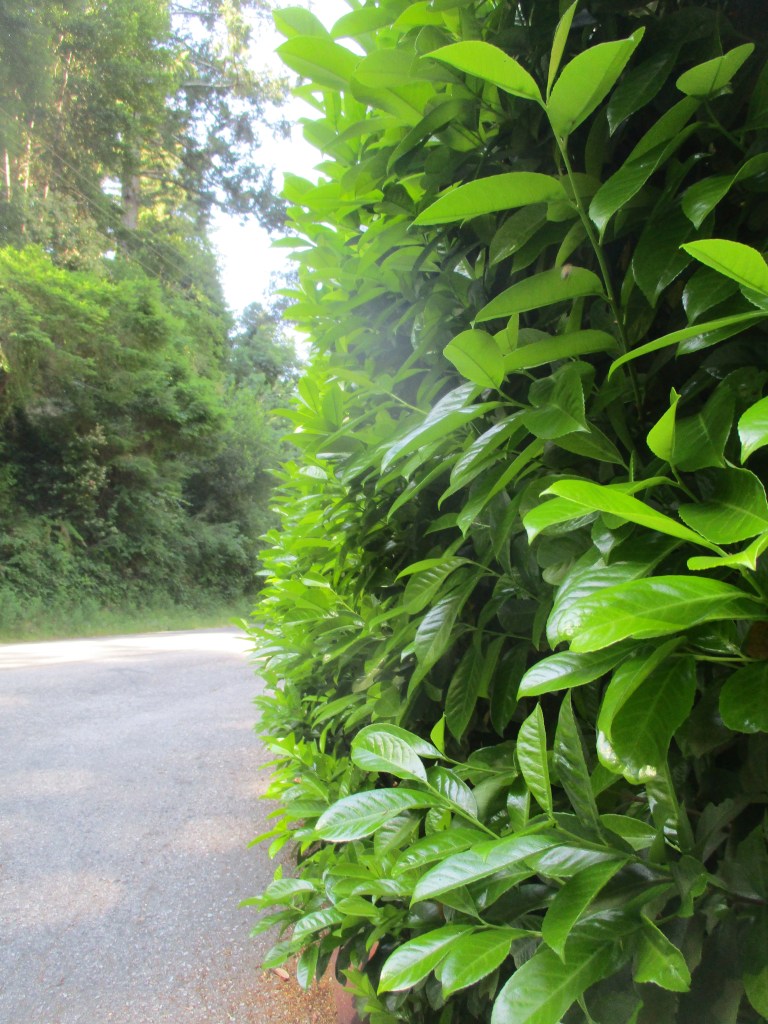
It is better to shear some of the simpler hedges, such as privet and boxwood, shortly after winter. They regenerate lush growth immediately afterward, and do not mind two or three annual shearings. The last shearing should be early enough to allow a bit of growth prior to autumn. Photinia generates appealingly bronzed new growth in response to shearing. Also, frequent shearing inhibits potentially undesirable bloom.
It takes quite a bit of effort to collect just a few of the native hazelnuts, and even more effort to separate them from their hard shells. A few can go a long way though. Once dried and perhaps roasted, they can be ground with finely ground coffee. One nut sufficiently flavors a pot of espresso.
Not just any nuts, but precisely the sort that I recently discussed with a colleague, as I explained how they do not grow here. The nuts that is. The big thicket forming shrubs that are supposed to produce them not only grow here, but are a relatively common native. I just rarely see even a single nut on them. I sort of wondered how they mange to procreate with such rare seeds that invariably get taken by unconcerned rodents or birds.
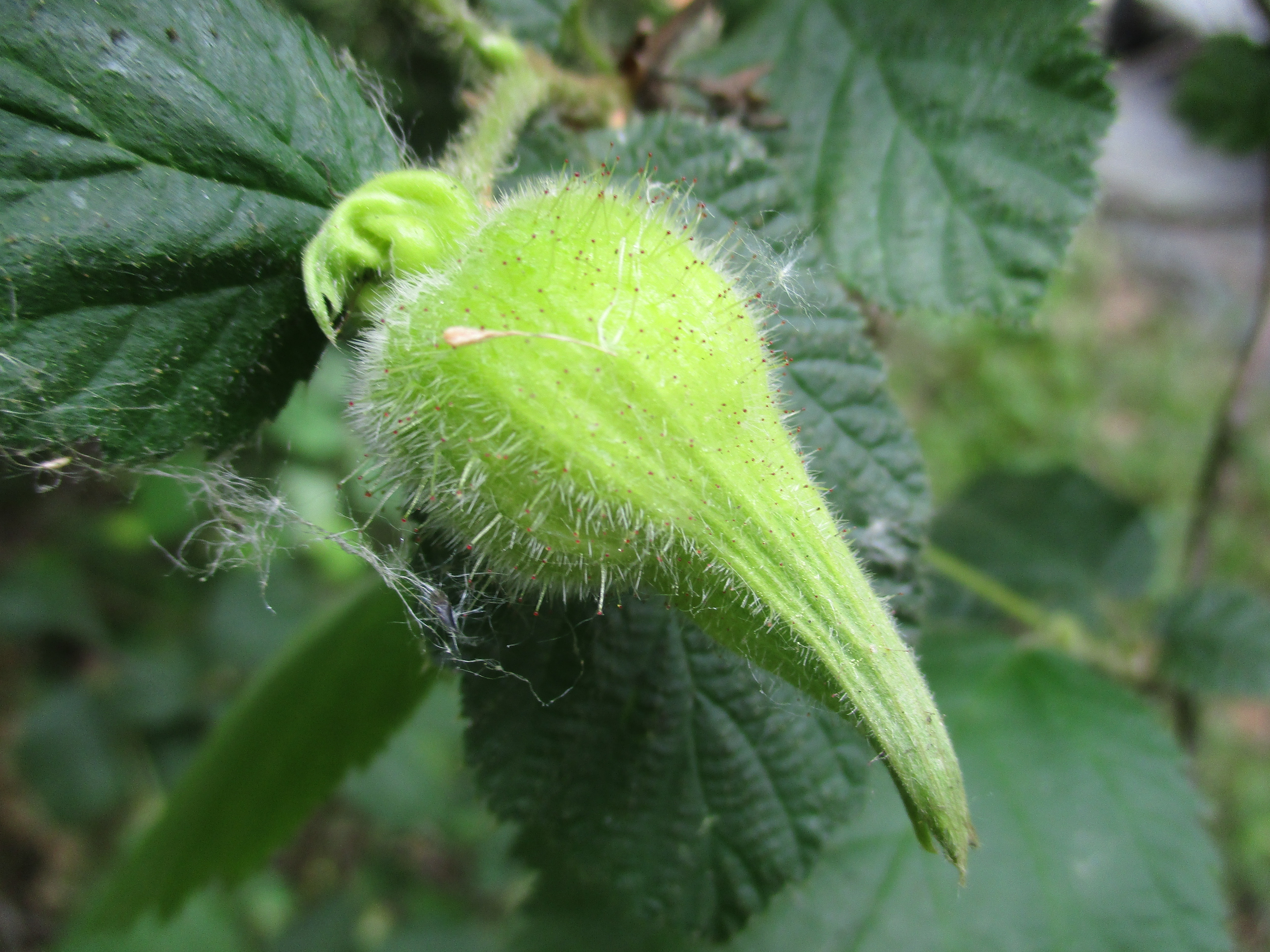
They are the beaked hazelnut, Corylus cornuta. You can see why they are known as such. The elongated nut husks look like Big Bird. The very rare nuts within are quite small with good rich flavor, like hazelnut concentrate, and develop only on the biggest and most distressed old hazelnut shrubs. However, the young and healthy hazelnut shrub that produced the nut in this picture actually produced quite a…
What a delightful surprise! It happens sometimes here in the rose garden. It may not look like much, as a short stemmed single lily floret that is mostly overwhelmed by the English lavender that I held back with my boot for this picture. It should be three feet tall or so, with several florets. The surprise is that no one planted it. Well, at least no one planted it recently. This rose garden has more history than is obvious from what blooms here now. Old pictures show that it was formerly an extravagant perennial bed, with an abundance of canna, dahlia, penstemon, pelargonium, Shasta daisy, Japanese anemone, various iris, and of course, various lilies. Lower annuals were cycled through the seasons at the front edge. Only a few roses bloomed against the low wall at the rear. Soil was likely regularly amended with compost and fertilizer. Someone put significant effort…
The iris that live in my garden will likely always live in my garden. Each one has history. I got my first Iris pallida from my great grandmother’s garden at about the time I was in kindergarten. Less than twenty others have been added since then, because I am so very selective. I must be. Otherwise, my garden would fill with iris which I would be obligated to perpetuate. These four iris pictured here are at work, although #4 originated from my garden, where the two other white iris that are not pictured here live. All finished bloom a while ago, so these are old pictures.
1. Dicentra formosa, which I believe is Pacific bleeding heart, blooms at about the same time as the bearded iris. Some of the colonies are quite broad under the redwood forests.
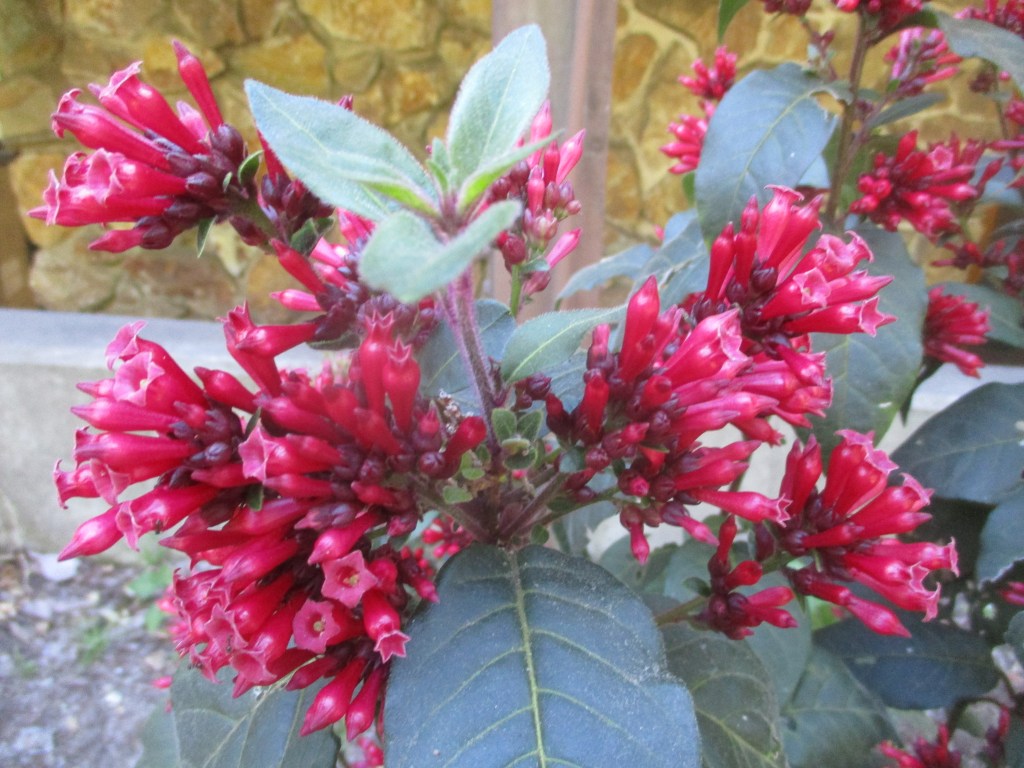
2. Cestrum fasciculatum Newellii ‘Ruby Clusters’ could do without either its first variety name or its subsequent cultivar name. I did not select it, but am getting to appreciate it.
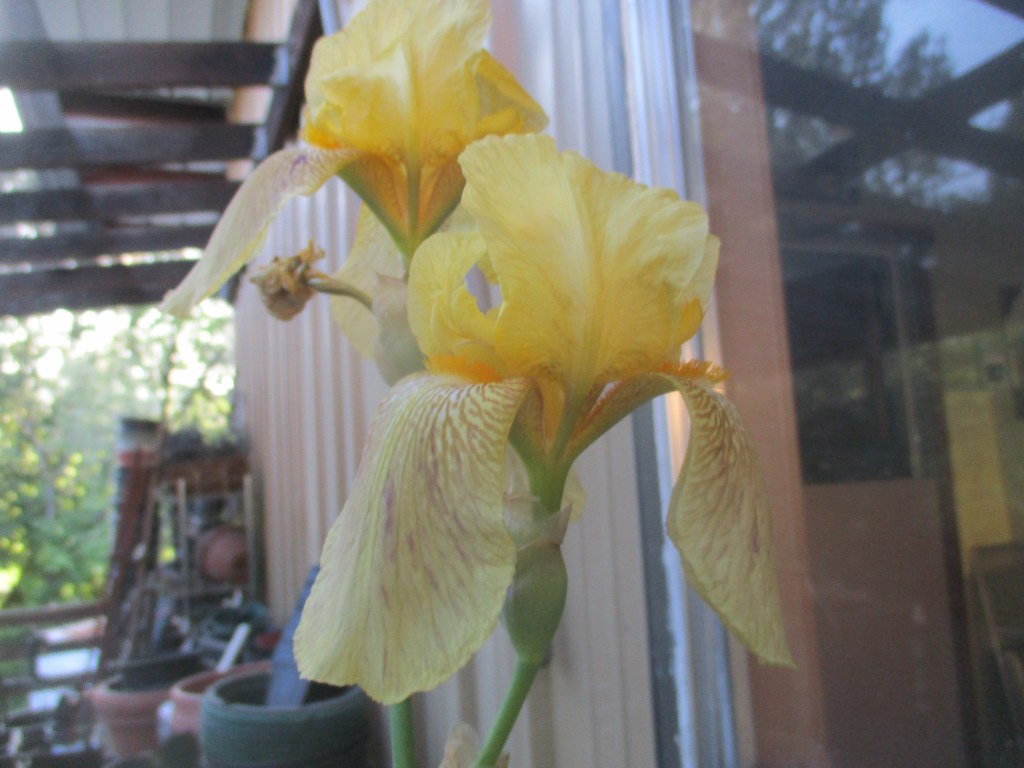
3. Yellow iris appeared next to a debris dump many years ago. It could have grown from a scrap, or could be feral. It seems wimpy. It got canned, but should have been relocated.
4. White iris seems prettier at night. During the day, it seems to be slightly grayish, with oddly pale yellow beards. I believe that it is feral. Two other cultivars are perfectly white.
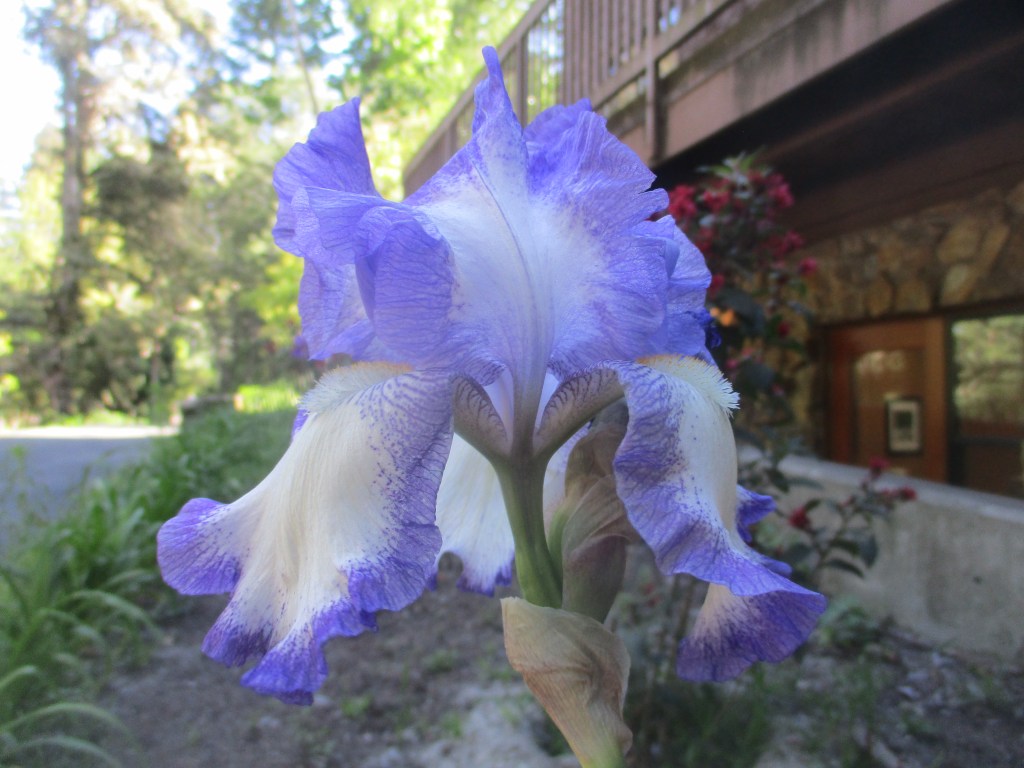
5. Blue iris, with both dark and light blue, could actually be a cultivar. It is impossible to be certain. The flowers are simple and not ruffled. The stems are tall, but a bit too lanky.
6. White and blue iris, of these four, is the most likely to be a cultivar. Lanky stems could be a result of neglect. I hastily interred the rhizomes last autumn just to keep them alive.
Pittosporum eugenioides leaves have distinctively wavy margins.
Large shorn hedges or informal screens are the more popular functions of Pittosporum eugenioides. It works like a modern and more relaxed option to privet. What few garden enthusiasts know is that it can alternatively be allowed grow into a small tree, either as a standard (on a single trunk) or with multiple trunks. It grows rather efficiently to more than twenty feet tall and about half as broad while young, and as it matures, can eventually get about thirty feet tall and broad.
The glossy leaves have appealingly wavy margins and distinctively pale midribs. The slightly fragrant flowers are only pale yellow, and are not abundant among young trees. Big old trees often bloom enough in autumn to be pleasantly fragrant. Stems and foliage are lemony fragrant when pruned or shorn. However, the common name of ‘lemonwood’ (or tarata) is not so common locally for Pittosporum eugenioides.
Foliage is often employed to obscure views. Evergreen shrubbery or trees can provide privacy in the garden or for windows. It can just as easily hide unappealing buildings in the distance, or driveways where cars get parked. Unfortunately, too much foliage often obscures desirable views or interferes with lighting.
There are all sorts of reasons to control greenery that might otherwise get overgrown. Overgrown shrubbery and trees not only hides the architectural appeal of a home, but can also be a security risk by concealing windows and doors that burglars might break into, and by obscuring security lighting and street lights. Too much shade prevents lower plants from getting the sunlight they need.
The best way to limit overgrowth is by selecting plants that stay proportionate to their intended functions. For example, shrubbery below windows should naturally stay lower than the lower windowsills. Shade trees for areas where views should stay open should have high branch structure and relatively bare trunks. Well, most of know that this does not always happen.
The options are limited for greenery that wants to get larger than it should. Obviously, it can be pruned regularly; but this may be more work than it is worth, and can cause disfigurement Some plants can be pruned less frequently if pruned more severely, but will be bare and potentially unsightly for quite a bit of time. Overgrown plants can alternatively be removed and replaced with plants that are more proportionate to intended functions.
An option that is not often considered is an ‘updo’. Trees and large shrubbery that are obtrusive to views or lighting can be pruned up and over what they are being obtrusive to. For example, lower growth of large pittosporums that is covering low windows can be pruned away to expose bare inner trunks supporting higher growth. The lower trunks can be appealingly sculptural without being too concealing. This works nicely for large shrubbery like viburnum, bottlebrush, oleander, photinia and pineapple guava.
Street trees that interfere with street lights (or marquis on storefronts) may need to be updo pruned a few times for adequate clearance, but these procedures are much less work, are less disfiguring to the affected trees, and produce more appealing results than keeping trees down.


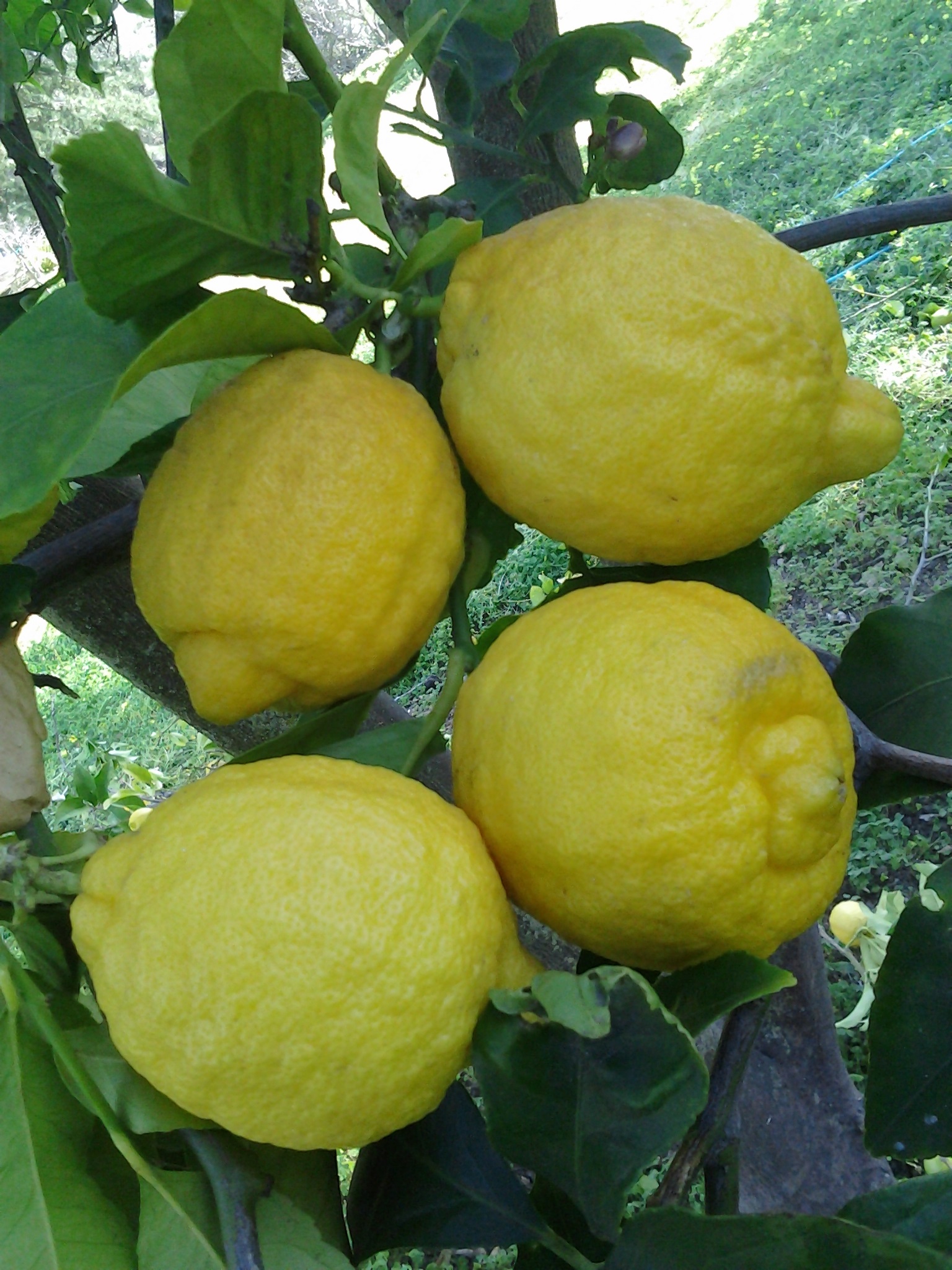 Pluots, plumcots, apriums and peacharines! Who comes up with this stuff?! Aren’t good old fashioned plums, apricots, peaches and nectarines good enough? Who decides that these weird hybrids are somehow better than their parents? Some of them are actually quite weird, or downright ugly. Several do not even look like they would taste good. It may be an acquired taste; but I have all the good taste that I need without acquiring any more.

 Not just any nuts, but precisely the sort that I recently discussed with a colleague, as I explained how they do not grow here. The nuts that is. The big thicket forming shrubs that are supposed to produce them not only grow here, but are a relatively common native. I just rarely see even a single nut on them. I sort of wondered how they mange to procreate with such rare seeds that invariably get taken by unconcerned rodents or birds.
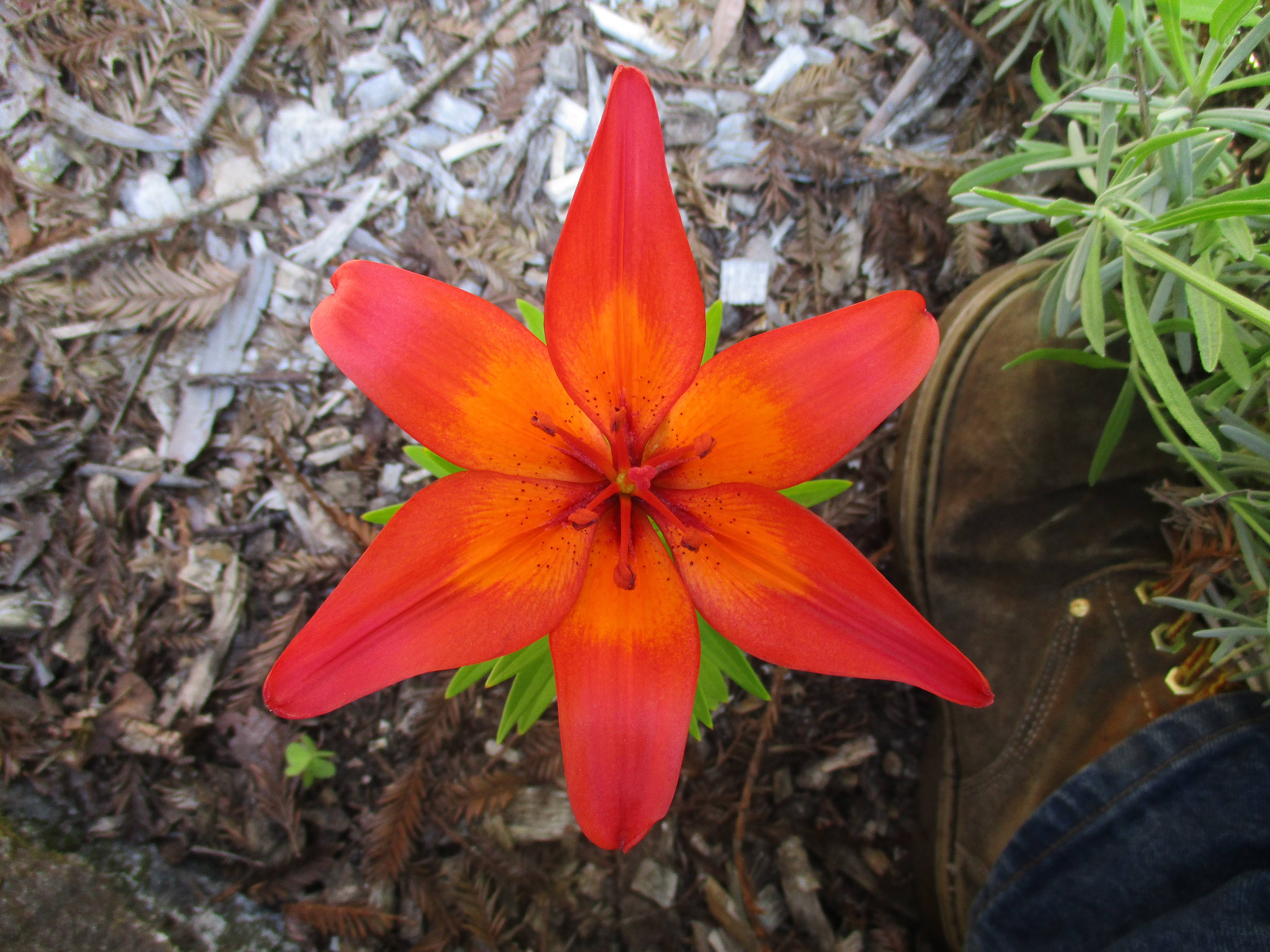 What a delightful surprise! It happens sometimes here in the rose garden. It may not look like much, as a short stemmed single lily floret that is mostly overwhelmed by the English lavender that I held back with my boot for this picture. It should be three feet tall or so, with several florets. The surprise is that no one planted it. Well, at least no one planted it recently. This rose garden has more history than is obvious from what blooms here now.