Horticulturists are by nature, nonconforming. I happen to find it difficult to conform to what makes us nonconforming. Trends are fleeting. Old technology that has worked for decades or centuries is still best. Although I am not totally against chemicals, I find that almost all are unnecessary for responsible home gardening. Pruning is underappreciated, and fixes many problems.
This is a recycled picture that still annoys me. There was another that I did not want to use because it happens to be from a landscape that I sometimes work in.
The picture that I did not use shows a variety of annuals in a half wine barrel that is set on cobble stone that fills a square that is about five feet by five feet that was cut out of an asphalt paved area.
So:
The area was paved to function as a patio.
A square was cut into the pavement perhaps because there was too much pavement.
The square was filled with stone because there was too much exposed soil where there should have been pavement.
A half wine barrel of various annuals was installed on top of the stone as if a square filled with stone was not adequately in the way. The half wine barrel…
It is unfortunate that most live Christmas trees grow too large for compact home gardens. Japanese black pine, Pinus thunbergii, which is very rarely available as a live Christmas tree, does not get much taller than twenty feet locally. Although it can slowly get about as broad, its sculpturesque branch structure adapts to pruning for containment if necessary.
Japanese black pine is a notably versatile pine. Most pines are excurrent (with a primary central trunk) or develop another similarly uncompromising form. Few are as cooperative with such casual form and relatively contained size as the Japanese black pine is. In the wild, it grows taller than a hundred feet. Yet, it is also very popular for bonsai and niwaki.
The evergreen foliage is richly deep green. The paired needles are about four and a half inches long, and perhaps stiffer than they appear to be. The cones are about two or three inches long, and nicely symmetrical. Fresh foliage and fresh or dried cones are useful for home decor. Even young trees have handsomely flaky bark, which darkens with rain.
Poinsettias, Christmas cacti, cyclamen, various forced bulbs and several other seasonal potted plants are again becoming popular. It happens annually prior to Christmas. Heath, heather, rosemary, English holly with berries, and delightful compact conifers have been gaining popularity for many past years. Seasonal potted plants are increasingly diverse.
Unfortunately, few survive for long after Christmas. Forced bulbs exhaust their resources. Cyclamen are likely to rot after a month or so. Very few retire to a garden. Poinsettia gets too lanky in the garden to be a favorite. Most seasonal plants simply succumb to neglect. After their primary performances, they are no longer interesting enough to justify tending.
In reality, some of these seasonal potted plants are little more than cut flowers with roots. These roots allow them to live longer than cut flowers, but their ultimate fate is the same. Wreaths, garlands and various seasonal cut greenery likewise serve a purpose, but only temporarily. Without roots, it all lacks any potential to retire into a garden after Christmas.
Christmas trees are really not much different. Although there are several different sorts of Christmas trees, they fit into similar categories as cut foliage and seasonal potted plants. Obviously, they are seasonal. They need not last much longer than Christmas. Although, some have a potential to do so, few survive or function for more than a few Christmases.
Contrary to popular belief, and their expense, cut Christmas trees are generally the most practical Christmas trees. They are essentially a very substantial sort of cut foliage. They grow on farms like any other foliage and vegetables. After such a tree serves its purpose, it resigns to compost or green waste recyclery. A freshly cut tree can replace it next year.
Large potted Christmas trees may seem to be more practical, but require maintenance to remain as appealing as they are now for another year. Despite the expense, few last that long. They want to get out of confinement, so that they can grow as trees. Pre-decorated small trees are Italian stone pines. They grow much too big for contained home gardens.
It can be annoying to write such pleasantries about a species that I am none too keen on. Actually, we recently added one to our landscapes, and will be adding several as street trees where height is limited by utility cables.
It is certainly not my favorite small tree. Actually, in most situations, I rather dislike it, which is why I sometimes accidentally spell it without the first ‘e’. It is a cop out; a micro tree that too often ends up where a larger and more respectable tree would be more appropriate. They are not shade trees. They are not not big enough for freeway landscapes or to be street trees on wide boulevards. They are not immune to diseases and insect infestations; and they commonly drop honeydew from aphid or scale infestation, and lose their bloom to powdery mildew. They are not ‘low-maintenance’, and really should be pruned more than they are, but will get you in trouble with the neighbors if you prune them as aggressively as they should be pruned. They are popular because of their potential for remarkably flashy bloom, and because they do not get…
We do not get much frost here. This picture of the view through the windshield of one of the work vehicles was taken more than a week ago, while the humidity and the temperatures were still quite low. The sparse and angular pattern of the frost on the windshield is a result of the minimal humidity. There will be more frost later in winter, although there will not be nearly as much as most other climates get. After a cool Monday morning last week, the weather got a bit warmer, or really just less cool. Rain started about midnight between Tuesday and Wednesday, and continued through the day and into the night. More rain is predicted to start after noon next Tuesday, and continue through Thursday. There will be no frost during this weather pattern. Frost happens here only between rainy weather. One might think that since we do not…
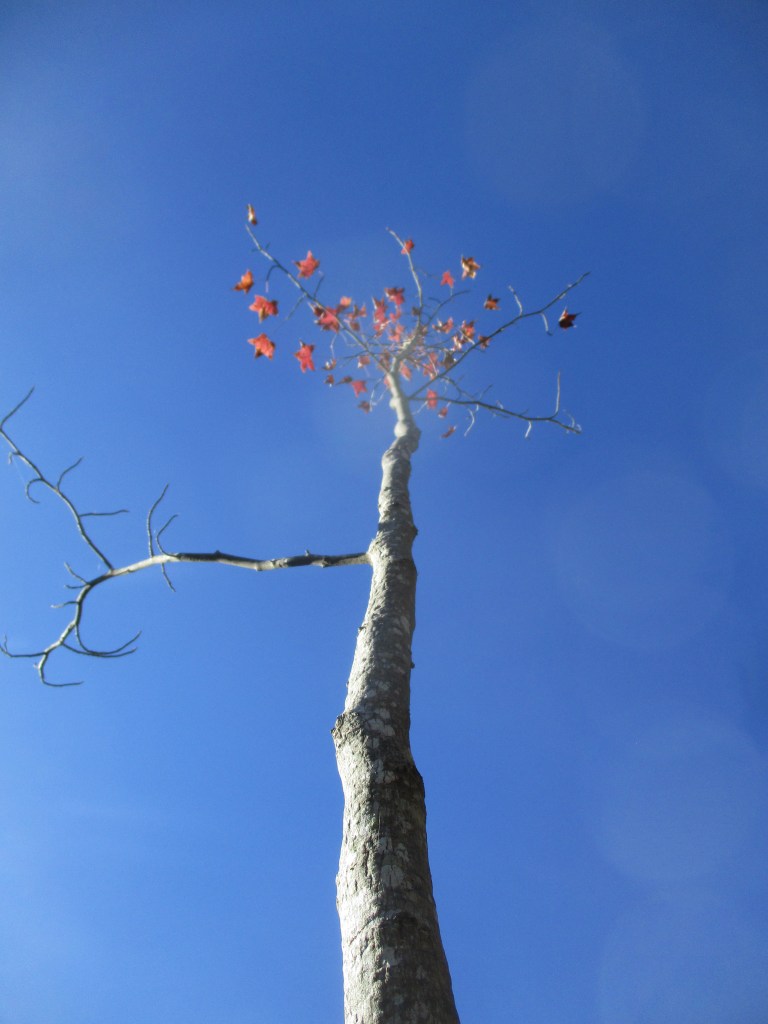
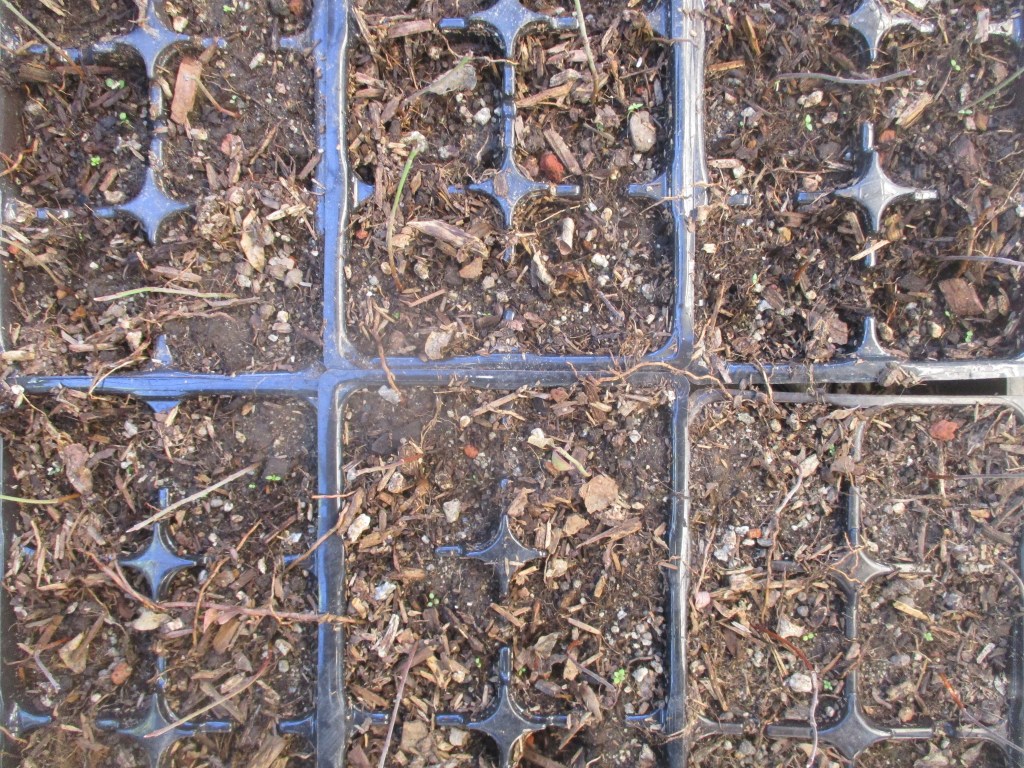
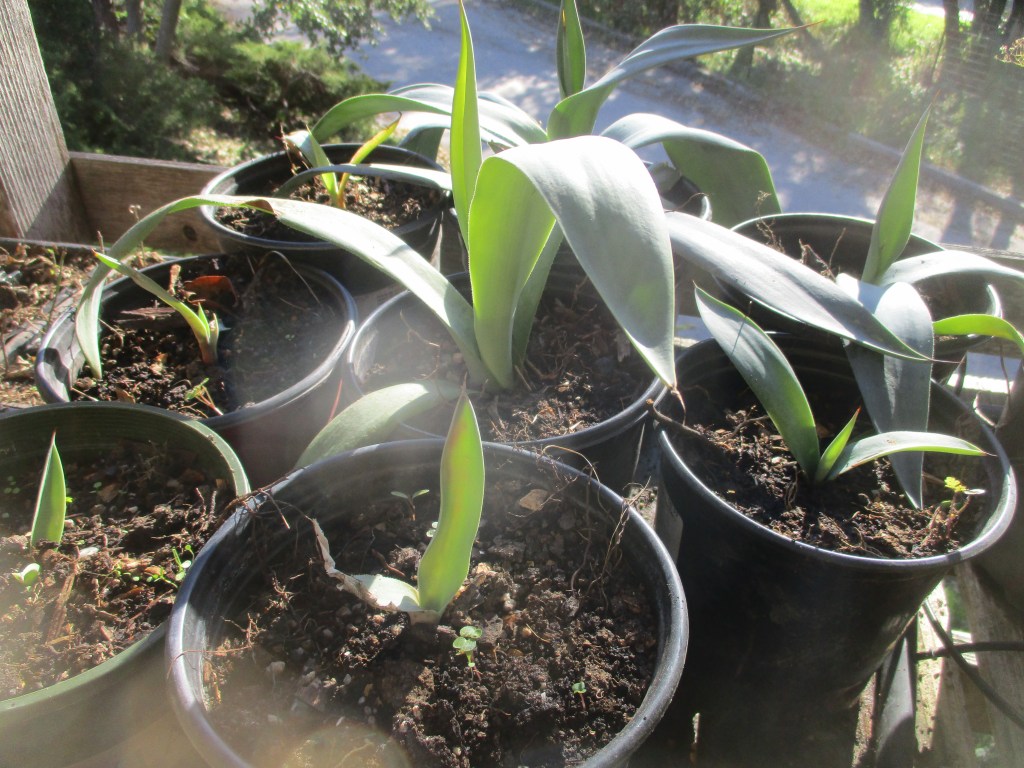
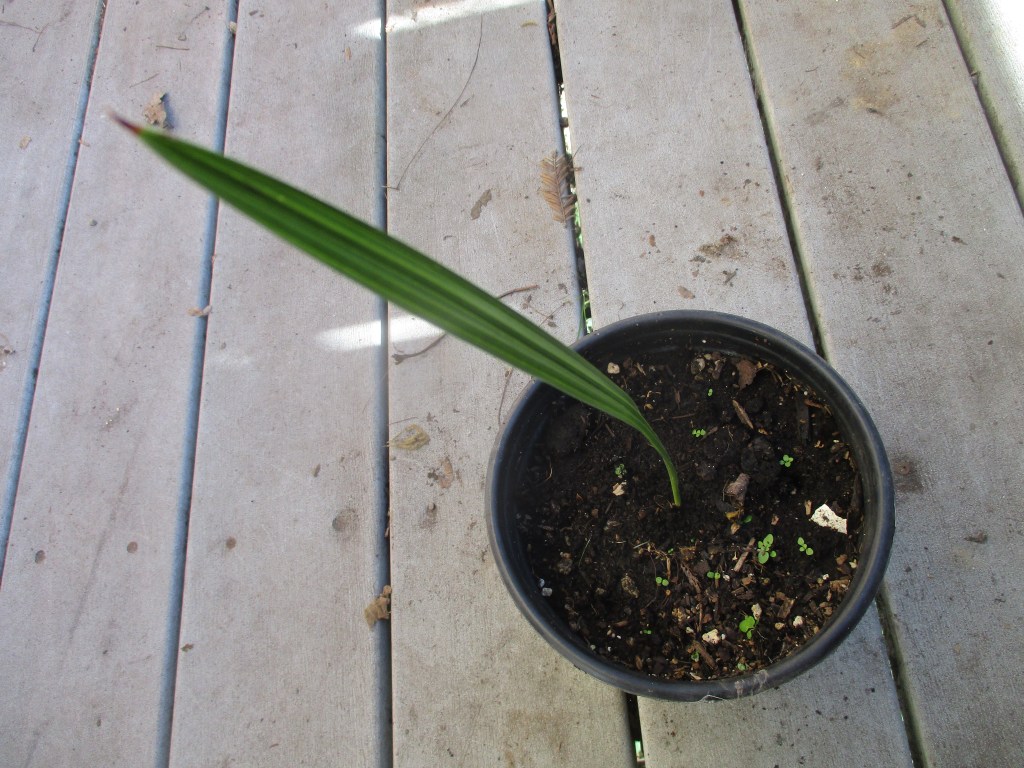
Recycling can be a bad habit. We accumulate more material here than we can use back out in the landscapes. Some gets shared with friends and neighbors. Of these six, all but the Agave (#4) grew from seed, so are not cultivars. Although the Agave grows from genetically identical pups, no one know what species it is! Fortunately, around here, we are not too discriminating.
1. Liquidambar styraciflua, after pruning to compensate for severed roots, has only a few twiggy branches, but is more than sixteen feet tall! What a homely sweetgum! Was it worth recycling?
2. Liquidambar styraciflua grew from seed where it could not stay. It is twice as tall as the eight foot bed of the pickup is long. The roots are now contained in a squatty #15 (fifteen gallon) can.
3. Cornus florida, flowering dogwood, was significantly more prolific with seed than the sweetgum. We wanted to recycle just a few seedlings, but got eighty four. Each cell contains a seedling.
4. Agave of an unknown species was removed from one of the landscapes a few years ago, but has been trying to regenerate since then. We dig and can the pups, but cannot give them all away.
5. Phoenix dactylifera, date palm, grew from seed in a compost pile. There are about seven of them. It is impossible to predict which will be female, or what the quality of their fruit will be like.
6. Acer platanoides, Norway maple, might be invasive, even here. A few that grew from seed in one of the landscapes were therefore removed, but not discarded. I used them as understock for the much more desirable and noninvasive ‘Schwedler’ cultivar last year. The scions, which are above the yellow tie, did not take. I must now try again, or pollard them so they produce no seed.
This is the link for Six on Saturday, for anyone else who would like to participate:
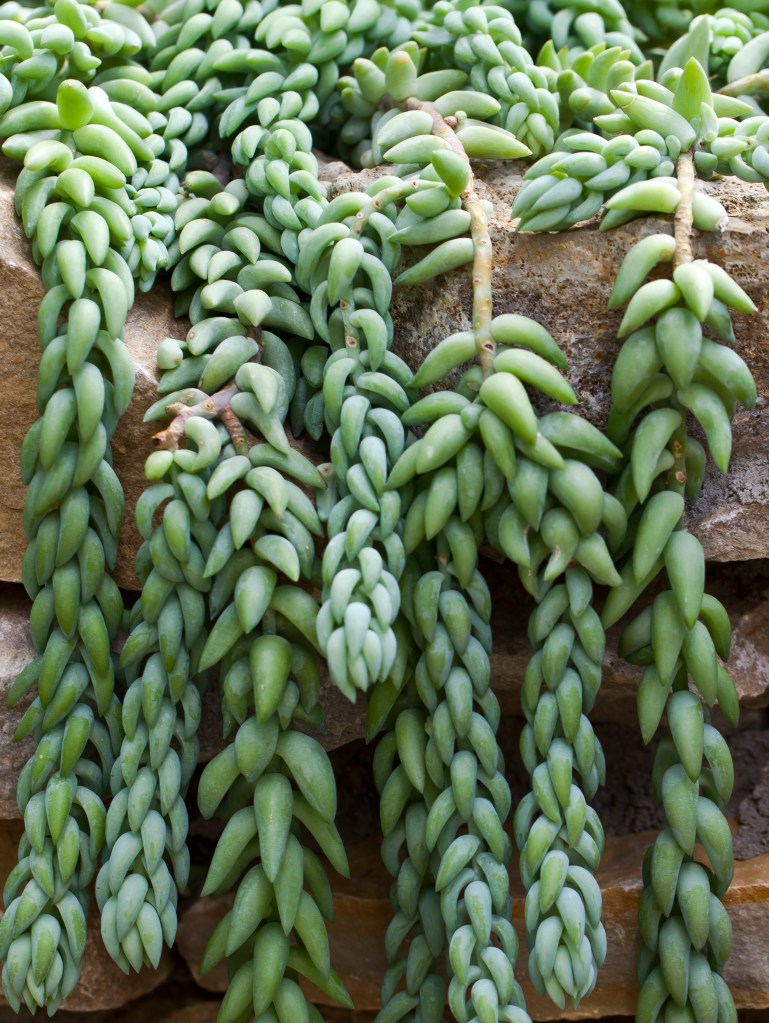
Burro’s Tail is old fashioned, but can also be contemporary.
Back when big spider plants or Boston ferns suspended in fancy beaded macrame were all the rage through the 1970’s, burrow’s tail, Sedum morganianum, was an unusual but also trendy succulent perennial for sunny spots in the home or sheltered and slightly shaded spots in the garden. The refined foliar texture and light bluish green color contrasted nicely with the big and deep green leaves of comparably trendy philodendrons. The thin stems are too limber to stand up, but cascade excellently. Plants in the garden that get pruned back while dormant in winter can easily get two feet long through summer. Without pruning, big plants can get longer than six feet. Pruning scraps and even the small but plump leaves can be rooted and grown into new plants. It is impossible to prune or even move burro’s tail without dislodging some of the leaves anyway. Watering should be regular but not excessive, but then minimal for plants in the garden through winter.
Most potted plants would prefer to be in the ground, . . . if possible.
Potted plants can be a problem any time of the year. Some want more water than get. Most get too much water or do not drain adequately. Large plants get constricted roots if pots are too small. The roots of some plants get cooked in exposed pots that collect too much heat from sunlight. Besides, too many pots just seem to be in the way in otherwise useful spaces on decks, patios and anywhere else trendsetting landscape designers want to put them.
Now that the weather is getting cool and rainy, potted plants are not as active as they were during warm weather. Many are dormant. Although few demand the attention that they got during warmer weather, plants still need to be tended to appropriately through autumn and winter.
Cool season annuals, which are also known as ‘winter’ annuals, should get groomed as long as they are performing in the garden, just like warm season annuals get groomed through summer. Deteriorating flowers should be plucked from pansy, viola, primrose, Iceland poppy, calendula, dianthus, stock, chrysanthemum and cyclamen because they can mildew and spread mildew to developing flowers and foliage. Unplucked cyclamen and calendula can develop seed which diverts resources from bloom.
Pots that are out in exposed areas will not need to be watered while they get enough water from rain. The problem is that many that do not drain adequately can get too much water from rain and stay saturated. Dormant and defoliated plants do not need much moisture at all. Even evergreen plants do not need as much as they do while active during warm weather, because cool and humid weather inhibits evapotranspiration (evaporation from foliar surfaces).
Potted plants under eaves also need less water while the weather is cool and humid, but need to be watered nonetheless because they are sheltered from rain. Plants in hanging pots typically drain and dry more efficiently, so probably want a bit more water. Even a few sheltered small plants in the ground may occasionally want to be watered during rainy weather if they do not extend enough roots where they can get moisture from rain beyond the sheltered area. Sheltered plants are actually the most likely to be neglected because watering does not seem so important when it is raining.
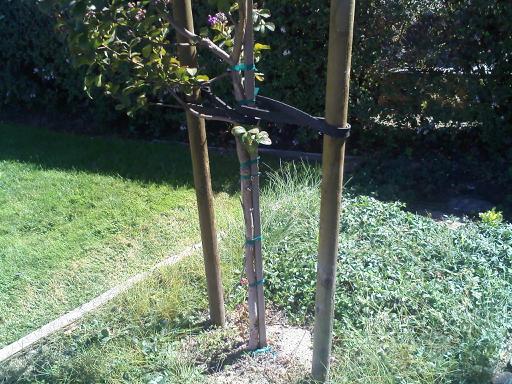
Embarrassingly, I have bound disfigured trees to straighten their trunks after they are already installed and actively growing in their landscapes (no longer within nursery production). It is risky, and requires attention to detail, but can be effective if done properly. Of course, that sort of binding, although cringe worthy, is very different from neglect such as this.
Stakes are temporary. That is what so called maintenance ‘gardeners’ do not seem to understand. Stakes should not stay any longer than necessary, so need to be removed sooner than later, depending on their function. Stakes that are left too long can interfere with the healthy development of the trees and vines that they were intended to help.
Nursery stakes are used either to straighten the trunks of developing trees, or to support climbing vines. They must be removed when the trees or vines that they worked for get installed into the landscape, or as soon after installation as possible. Some flimsy trees may need their stakes for more than their first year.
The problem with leaving trees bound to their nursery stakes for too long is that they rely on the stakes for support as they grow, so do not put much effort into supporting their own weight. The…
Not all palms are trees. Some lack trunks, so develop more as shrubbery. Some develop many slender stems, like bamboo. The thin canes of most rattan palms sprawl onto other vegetation for support, as vines. Mediterranean fan palm, Chamaerops humilis, develops multiple stout trunks, but grows so slowly that it can function as big sculptural shrubbery.
Old trunks can eventually get as high as twenty feet, and generally lean randomly. If they get too tall, smaller and more vigorous trunks can replace them. (An arborist can remove the bulky and thorny old trunks.) New trunks develop from basal pups, which can can get too densely foliated without occasional thinning. Removal of such pups might be difficult.
Mature trunks might be as wide as ten inches, with dense coats of basal petiole fiber and thorny petiole stubs. Thorough grooming can eliminate the stubs. However, petioles that suspend the evergreen palmate leaves are outfitted with the same wickedly sharp teeth. Leaves are about two feet wide. Atlas Mountain palm, Chamaerops humilis var.(iety) argentea has strikingly silvery foliage, and grows even slower.

 This is a recycled picture that still annoys me. There was another that I did not want to use because it happens to be from a landscape that I sometimes work in.
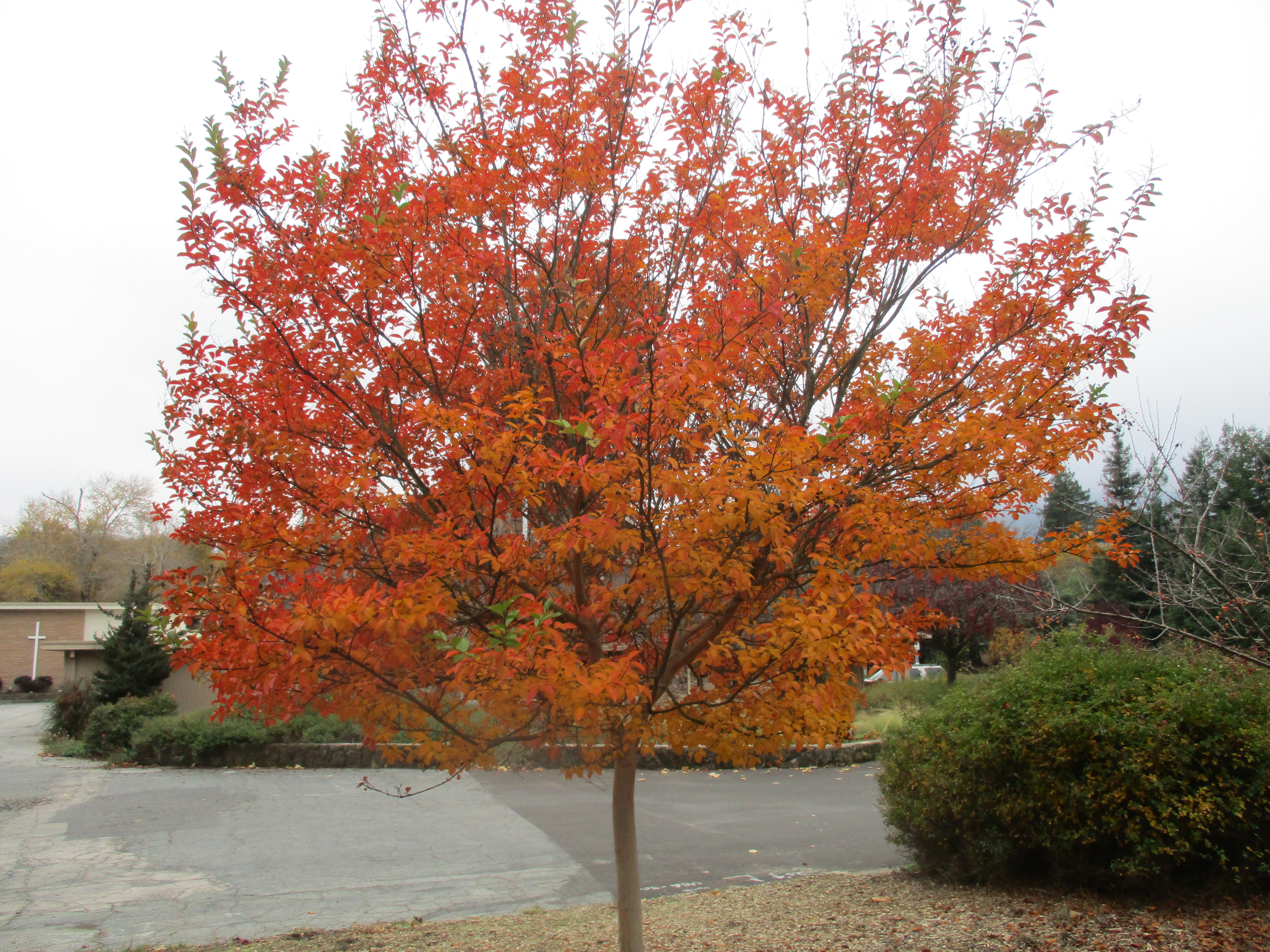 It is certainly not my favorite small tree. Actually, in most situations, I rather dislike it, which is why I sometimes accidentally spell it without the first ‘e’. It is a cop out; a micro tree that too often ends up where a larger and more respectable tree would be more appropriate. They are not shade trees. They are not not big enough for freeway landscapes or to be street trees on wide boulevards. They are not immune to diseases and insect infestations; and they commonly drop honeydew from aphid or scale infestation, and lose their bloom to powdery mildew. They are not ‘low-maintenance’, and really should be pruned more than they are, but will get you in trouble with the neighbors if you prune them as aggressively as they should be pruned.
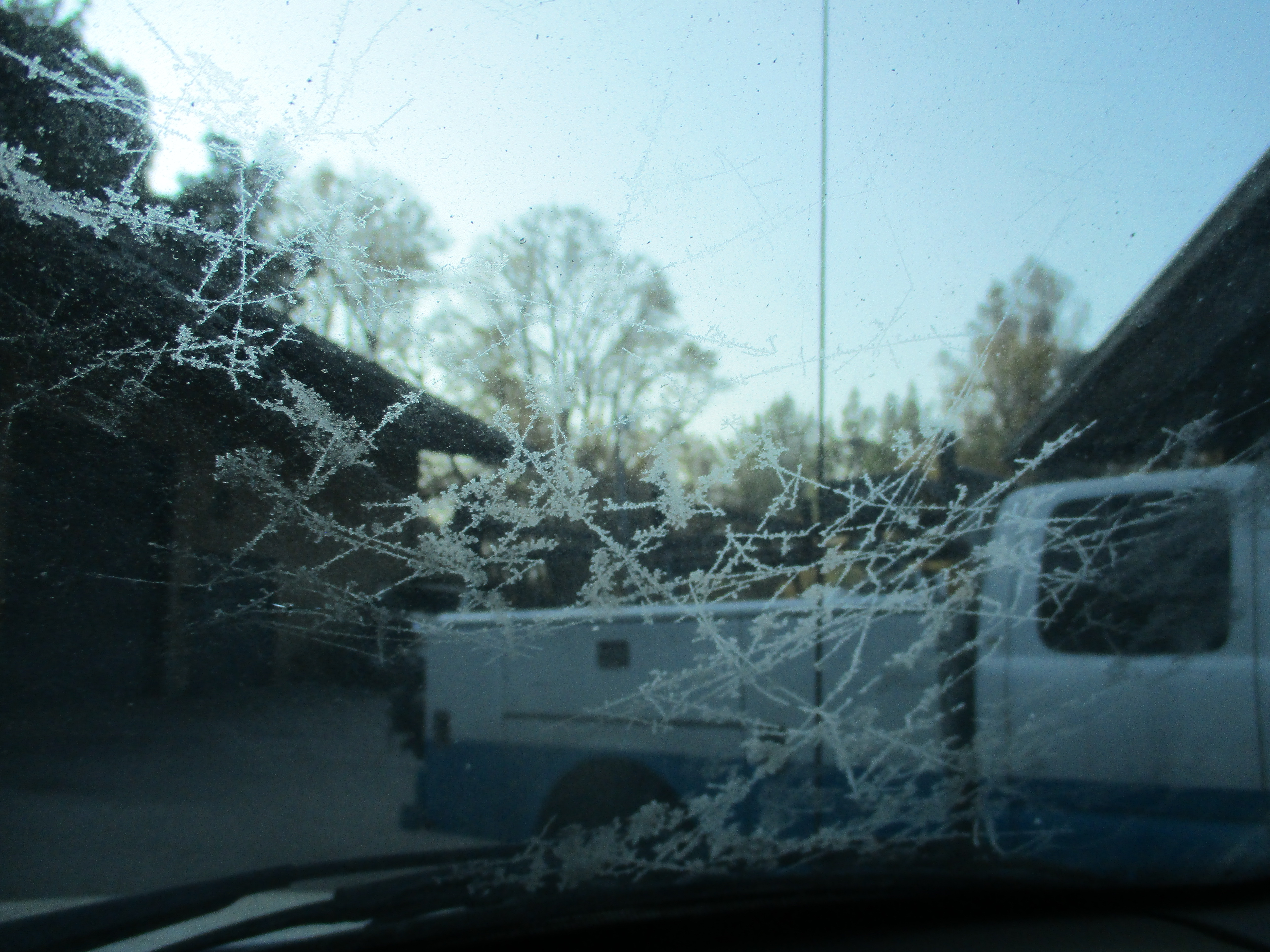 We do not get much frost here. This picture of the view through the windshield of one of the work vehicles was taken more than a week ago, while the humidity and the temperatures were still quite low. The sparse and angular pattern of the frost on the windshield is a result of the minimal humidity. There will be more frost later in winter, although there will not be nearly as much as most other climates get.