Get Bare In Winter

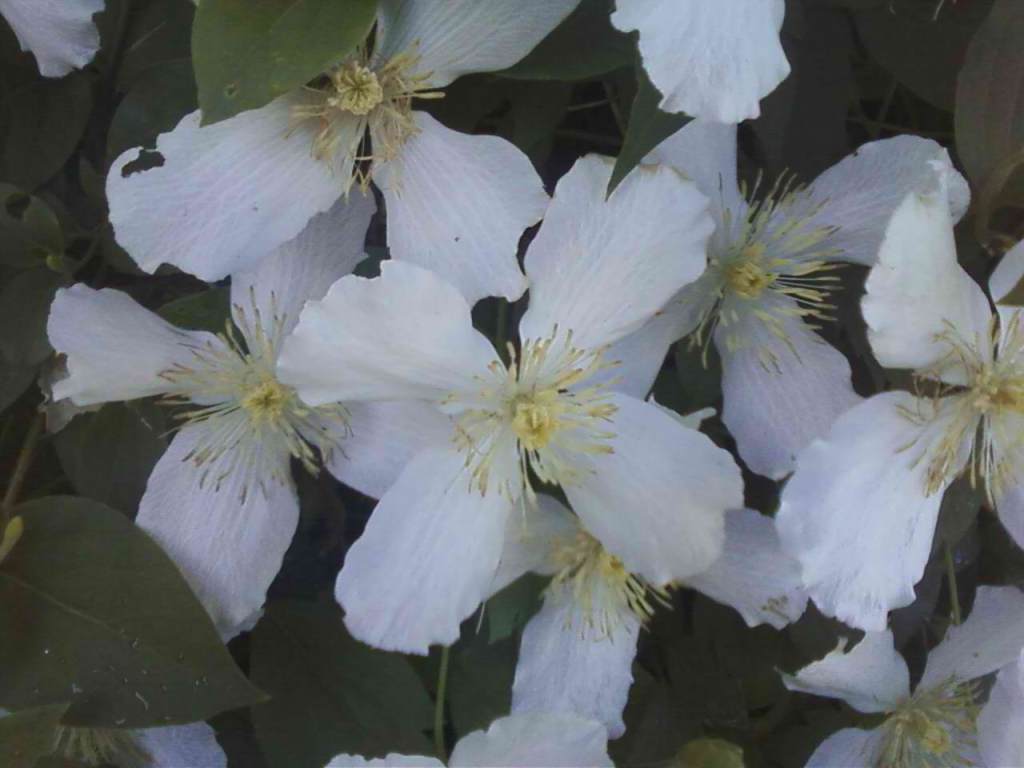
Besides the popular deciduous fruit trees and roses, several deciduous ornamentals, like these clematis vines, are also available bare root.

It may not seem like the middle of winter is a good time for much gardening, but now that any unsold Christmas trees have been removed from nurseries, bare roots plants are moving in. They should be available through the rest of winter, until warming spring weather prompts bloom and emergence of new foliage.

As the name implies, ‘bare root’ plants have bare roots. They are not contained within potting media (soil) in cans or pots. Some are wrapped in coarse sawdust to keep roots moist and contained without much weight. Others are simply heeled into damp sand at nurseries where they can be dug and wrapped when purchased.

Without cumbersome cans, bare root plants occupy less space in nurseries, so many more varieties of fruit trees, grapes, roses, berries and various ornamentals can be available bare root than could be available as standard canned stock during the rest of the year. Bare root plants have the added advantage of costing about half of what canned stock costs.

The main advantage of bare root plants though, is that they waste no time getting established in the garden. The process of getting dug, transported and replanted is done while plants are dormant. When they wake in their new homes in the spring, they immediately start to disperse new roots into the surrounding soil.

If bare root plants can not go directly into the garden once they arrive home, they should be heeled into damp soil or mulch and watered. If planting will be delayed only for a day or two, they can instead be put in a bucket of water to submerge the roots. Plants that are packaged in bags of damp sawdust can wait for more than a week in the shade.

Planting holes need not be any larger than the roots of the bare root plants. If soil is disturbed too deeply, it will only settle and possibly cause new plants to sink. Graft unions (which are evident as kinks low on trunks of trees, or where rose plants branch) should stay above the surface of the soil. Backfill soil should be amended only minimally, or not at all. Too much amendment inhibits root dispersion. (Roots may not want to leave amended soil.) There will be plenty of rain through winter. However, new plants should be soaked twice after planting to settle soil around the roots.

Finally, damaged or unnecessary stems can be pruned off. Bare root fruit trees come with more stems than they need, for padding in transportation, and to allow more options for pruning.

Horridculture – Clearance

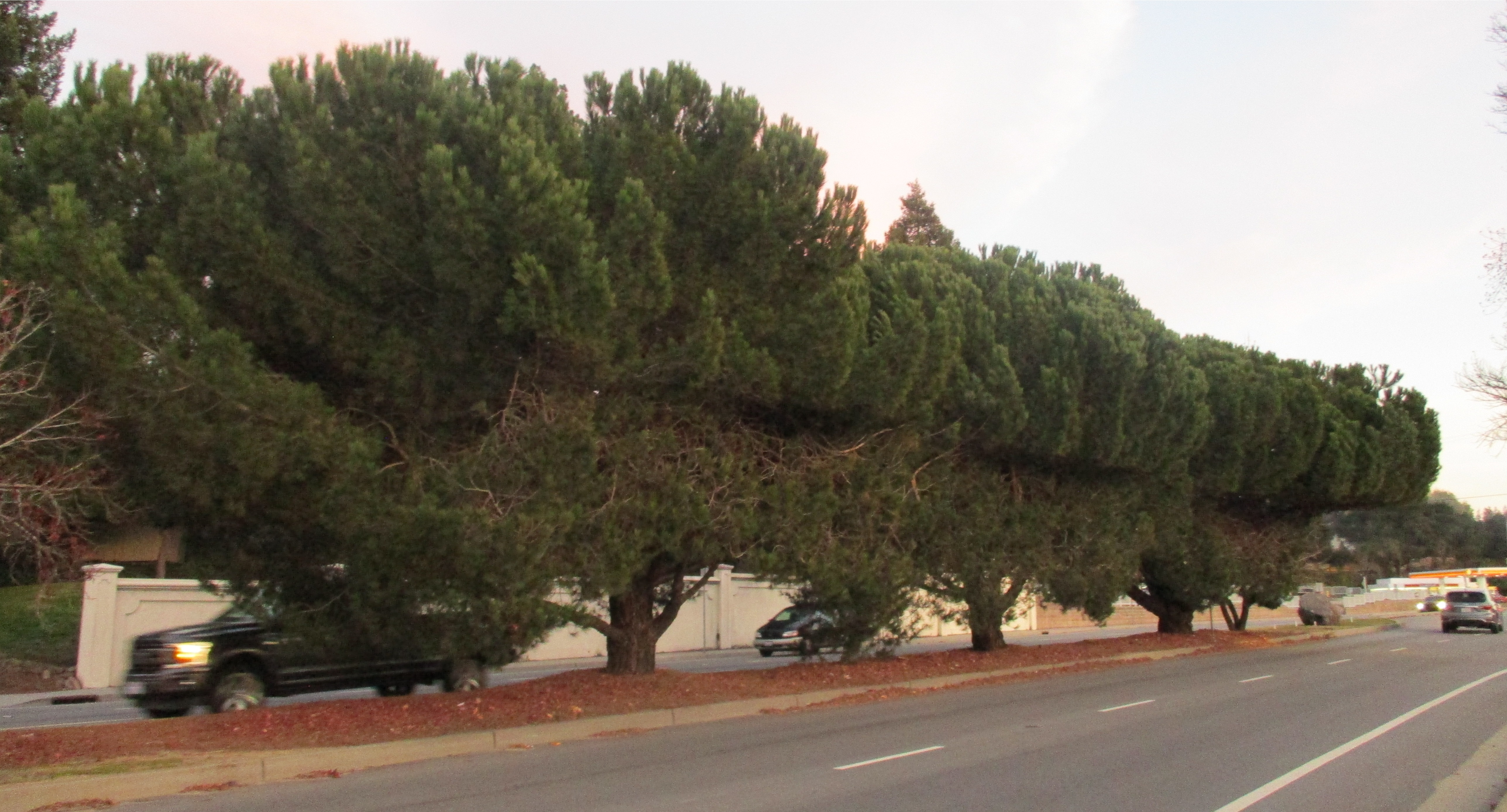
After three years, the Italian stone pines in the illustration are in no better condition.

tonytomeo's avatarTony Tomeo

P90102Many arborists mark certain lengths on their pole saws and pole pruners. When stood upright, these marks designate the standard heights for minimal clearance pruning. Not so many need to mark the height of minimal clearance for walkways, since they will prune away anything that is within reasonable reach with hand tools from the ground. The minimal clearance above parking spaces is not so easy to guess at, so is more likely to be marked on poles. So is the minimal clearance over roadways, where the lowest limbs must be high enough to be out of the way of campers and freight trucks.
Clearance to the sides is determined by the location of the curb, but even that might need to be modified at sharp turns, or where the roadway slopes significantly away from the center. Clearance must similarly be a bit higher over dips in a roadway, where the…

View original post 297 more words

Persimmon

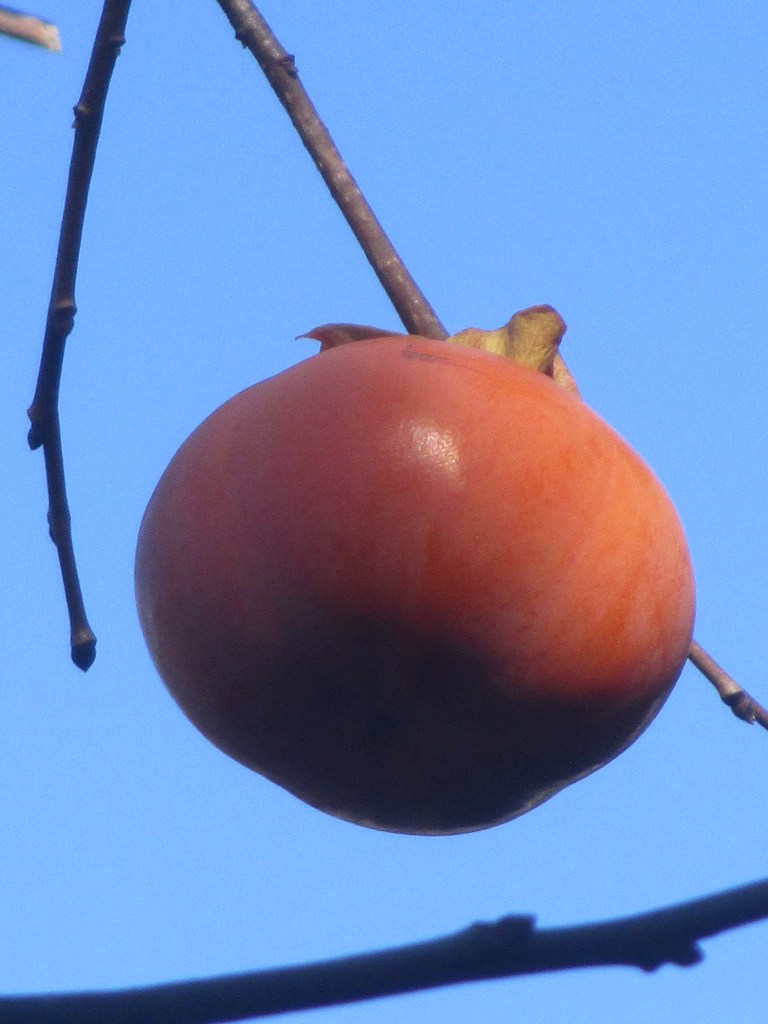
Ripe persimmon is surprisingly sweet.

Most other deciduous fruit trees provide delightfully profuse spring bloom as well as fruit. Persimmon, Diospyros kaki, does not. It compensates though, with brilliant orange foliar color for autumn. Defoliation reveals comparably bright orange ripe fruit. The awkwardly bulky fruit may look silly on lanky limbs of otherwise bare trees, but they sure are yummy! 

Persimmon trees will not require a pollinator to generate an abundance of fruit. However, according to some experts, paired trees of different cultivars produce more abundant fruit of slightly better quality. Abundance is not necessarily an asset though. Unfortunately, all that very perishable fruit ripens at the same time. Fruit is inedible before completely ripe.

Mature persimmon trees can get big enough to become moderate shade trees. If they do, their abundant fruit will be too high to reach, and will generate a horrendous mess when it falls. Although they are handsome trees, they should probably stay relatively short and compact. New trees should be planted while dormant during winter, preferably bare root.

Dormant Pruning Promotes Fruit Production

Persimmon trees get pruned after harvest.

While they are dormant through winter, deciduous fruit trees require specialized ‘dormant pruning’. Exceptions are rare. Most need major pruning that might seem to be excessive. Without such pruning, fruit trees produce more fruit than they can sustain. Excessive fruit is very likely to be of inferior quality, beyond reach, and heavy enough to disfigure limbs.

Dormant pruning limits the volume and weight of fruit that can develop during a following season. By eliminating structural deficiencies and maintaining compact form, it improves the structural integrity of trees. It eliminates diseased stems, and concentrates resources into healthy stems. Dormant pruning concentrates resources into less but better fruit too.

Dormant pruning is necessary because of extensive breeding to improve the quality and quantity of fruit that fruit trees produce. The ancestors of modern cultivars of fruit produce either smaller or less abundant fruit that they can generally support in the wild. However, even some wild fruit trees will produce better fruit with pruning to concentrate resources.

The many various types of fruit trees need various types of specialized dormant pruning. Unfortunately, such trees, which are so commonly available from nurseries, do not come with instructions. It is important to be aware of the sort of maintenance any particular fruit tree will require, prior to incorporating it into a garden. Some dormant pruning is extreme! 

The various stone fruits are the most popular deciduous fruit trees. They are of the genus ‘Prunus‘. Their fruits contain single large seeds, or ‘stones’. This includes apricot, cherry, nectarine, peach, plum, prune, almond and all their hybrids. They need the most intense dormant pruning. (Almond nuts are stones of leathery fruits that are the hulls of the nuts.)

Although uncommon within the mild coastal climates of Southern California, pome fruits, primarily apple and pear, are very popular too. They require specialized dormant pruning that is very different from what stone fruits need. Likewise, persimmon, pomegranate, fig, mulberry, currant, kiwi, grape and cane berries, each need customized dormant pruning.

Winter

Since the date today does not coincide with the date on which this article posted three years ago, it is now five days into winter instead of two as prefaced in this article.

tonytomeo's avatarTony Tomeo

P80110We are now two days into it. Is it any different than three days ago, the last day of autumn? Not really. Even in harsher climates, the changes from one season to the next are gradual. Like the phases of the moon, the seasons are constantly phasing out of the previous, and into the next. The dates of the first and last days of each season, which are determined by the position of the Earth within its orbit around the sun, are technicalities.
Seasons in the Southern Hemisphere are of course opposite of what they are here. That seems odd to me. The calendar is the same there as here. It seems obvious to me that winter and all seasons should be determined by the same dates there that they are determined by here. If winter began last Friday here, it should have done the same there, on the the…

View original post 150 more words

Electric Snow

What is a white Christmas ‘really’ all about?

tonytomeo's avatarTony Tomeo

P81230It was one of the more common types of snow in the Santa Clara Valley in the early 1970s.

In school, we made paper snow by folding paper squares in half and then into thirds (so that they were folded into sixths), and then cutting notches and slices out of them. They unfolded into the prettiest and laciest snowflakes!
In Westgate Mall, snow was blown by small fans about the new models of Singer sewing machines that were magically suspended in big acrylic spheres. We children could not get into the spheres, so were left wondering if the snow within was as cold and wet as we were told it was, and why it was necessary to demonstrate that the new sewing machines were resistant to weather. Our mother did her sewing inside.
We sort of suspected that the snow around the Nativity at Saint Thomas of Canterbury and other…

View original post 319 more words

Six on Saturday: Rhody Hates Pictures

Six on Saturday is cancelled for Christmas. I should have remembered that. Well, I already posted my Six on Saturday, as well as these extra Six.

. . . .

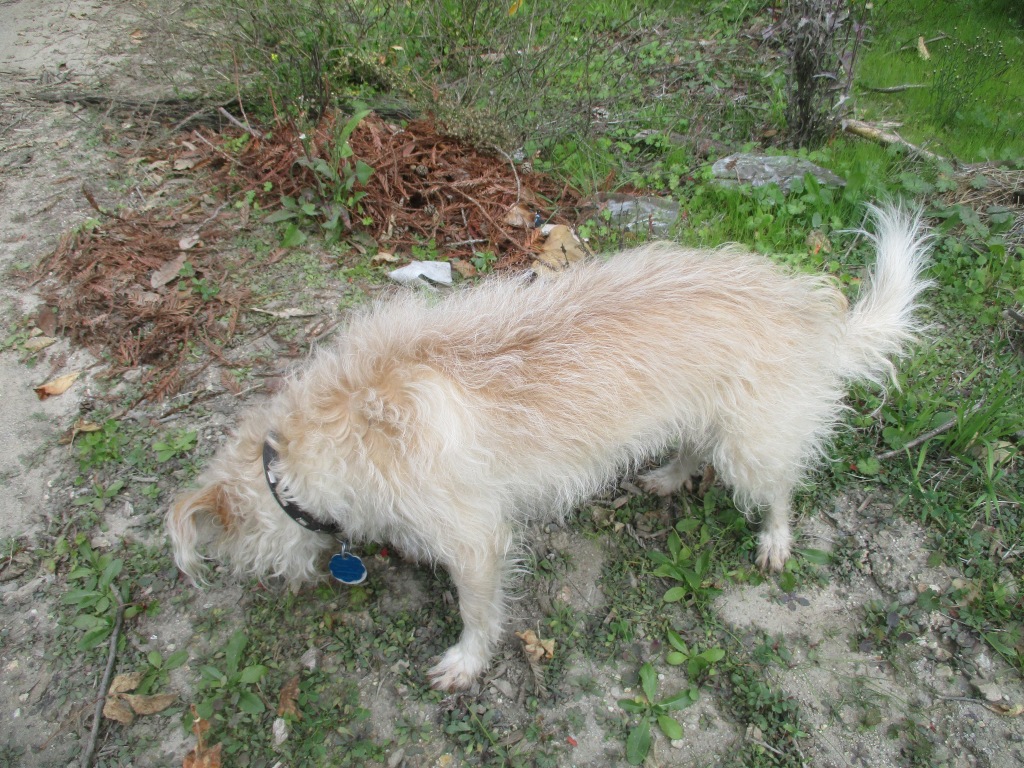
Rhody is who everyone who comes to my blog really wants to see. I would share more of his pictures, but there simply are not many. He dislikes getting his picture taken, so does not cooperate. These six pictures demonstrate that splendidly. This is not my real Six on Saturday for today. I submitted them a moment ago. I just added these because Rhody is just that popular, and because I did not know what else to do with these six silly pictures that do not conform to any particular horticultural topic.

1. If only I could get a few simple candid pictures of Rhody before he notices the camera.

2. Oops! It is too late now. He gets so annoyed when he sees me aiming a camera at him.

3. Then I get ‘the look’, which, as one can imagine, means that he is even more annoyed!

4. Now he is contemplating where he will hide each left boot of every pair of boots I own.

5. Again I get ‘the look’, but a bit more resigned. He just wants me to finish and go away.

6. Now he just does not care. He knows I will take pictures anyway. He does as he wants.

This is the link for Six on Saturday, for anyone else who would like to participate:

Six on Saturday: San Jose

Oh drat! I should have remembered that Six on Saturday is cancelled for Christmas! Well, here are mine anyway. I suppose I could have saved these and the next six for next week, but they are not so great anyway. I should get a better six for then.

. . . .

Christmas is a very important Holiday that is worthy of themed pictures. Unfortunately, I can not provide. The few pictures that I managed to get within the past few days simply do not qualify. Rain was a splendid event. I then went to San Jose on a wild goose chase. A neighbor gave me a very delightful Christmas gift when I returned. Ultimately, I got to work with the little Memorial Tree in Felton Covered Bridge Park.

(Rhody, incidentally, prompted me to add another abbreviated Six on Saturday immediately after these.)

1. Rain was sufficient to fill creeks early in the week. This is the San Lorenzo River under Felton Covered Bridge. San Jose gets gritty through summer, but should be rinsed now.

2. Clear blue sky lacked any scrap of the clouds that shared all their rain not so long ago. Although that San Jose skyline is not much to look at, the Diridon Station behind me is, which is why there are no trees to obscure the scenery. I should have taken pictures of it.

3. This old mural within the Diridon Station depicts how the Santa Clara Valley looked a very long time ago, with only a few oaks set sparsely over an otherwise empty chaparral.

4. Mexican fan palms are likely what most outsiders expect to encounter here. These are to the south of Arena Green Park where Los Gatos Creek flows into the Guadalupe River. 

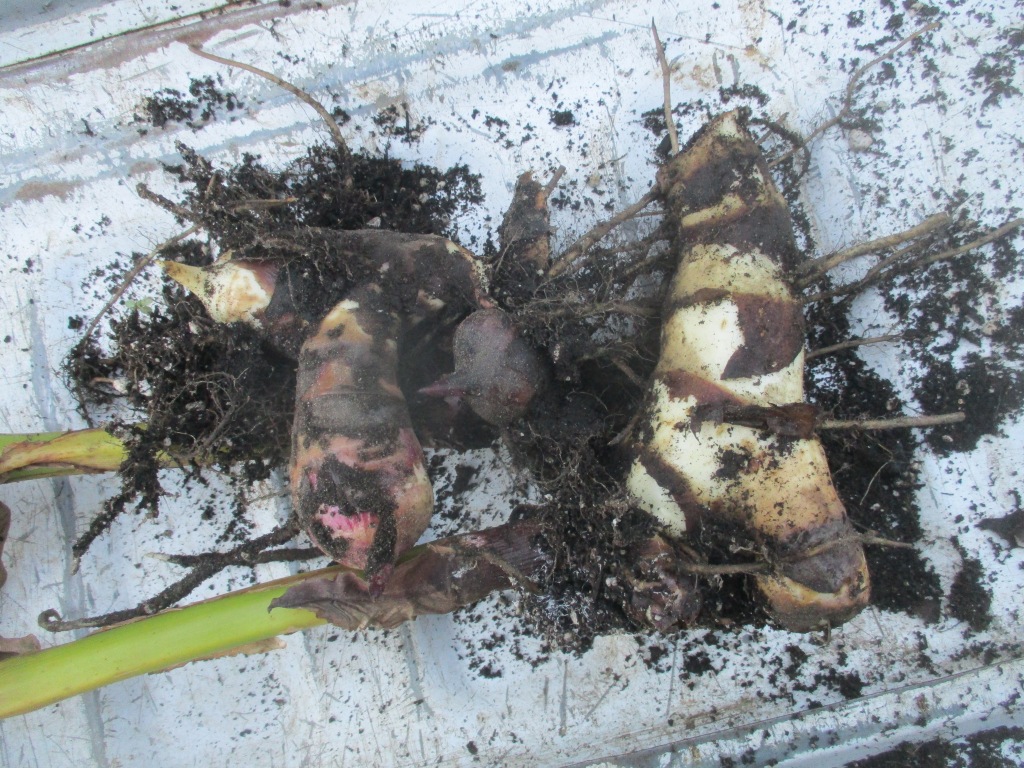
5. Back at home, I was pleased to procure several rhizomes of what I believe to be achira, Canna edulis, from a neighbor, along with a lot of seed! Canna rhizomes are edible, but achira rhizomes are the largest and tenderest. These are nearly as big as small potatoes.

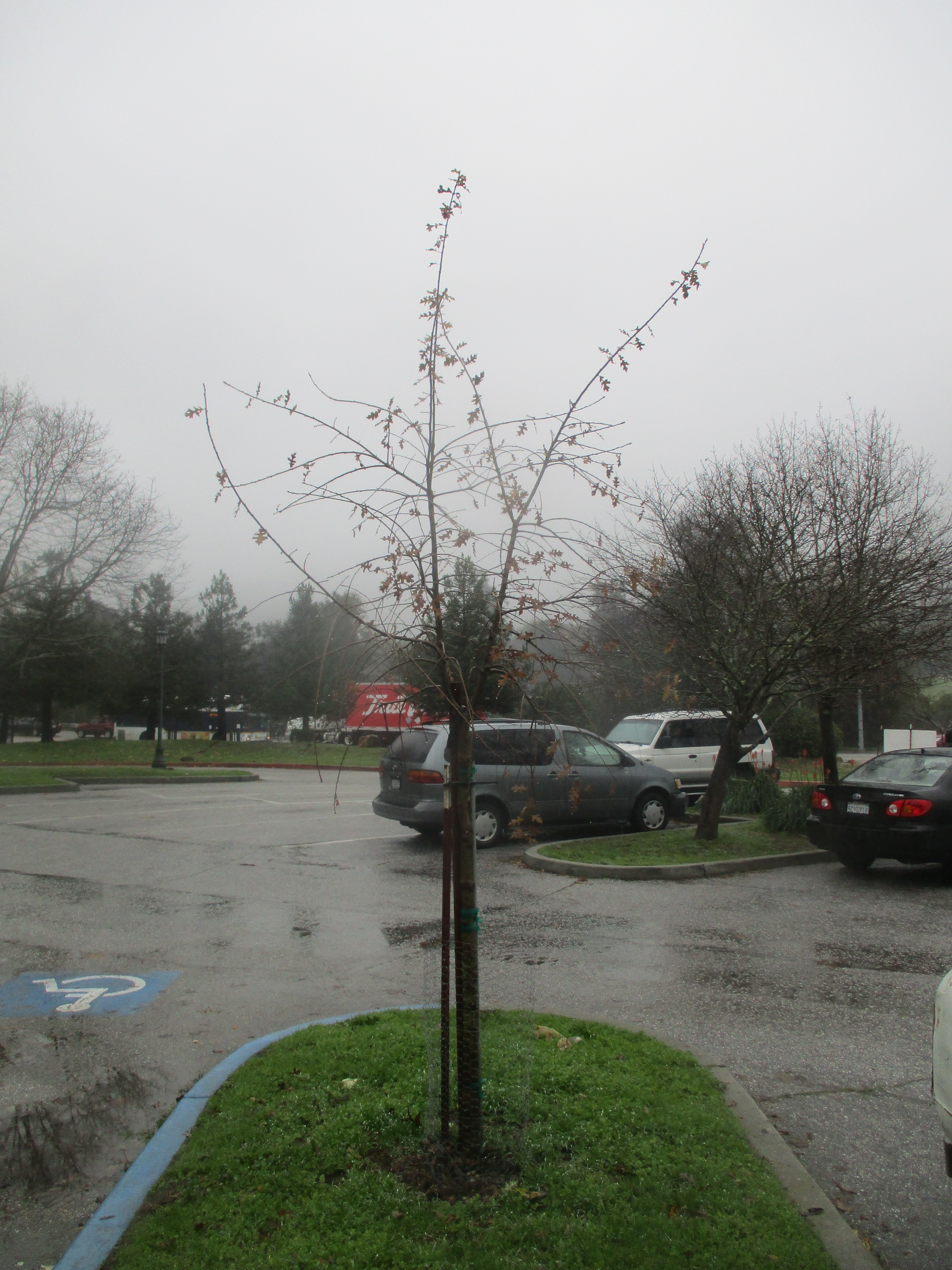
6. Rain resumed and dissipated again before I pruned the little Memorial Tree in Felton Covered Bridge Park for winter. The last of the binding of the trunk was finally removed.

This is the link for Six on Saturday, for anyone else who would like to participate:

Miscanthus Grass

For those who like pampas grass but lack space, miscanthus grass has similar texture, and moves softly in a breeze.

Even as the flower spikes and perennial foliage start to deteriorate over winter, Miscanthus sinensis provides distinctive texture and the element of motion if there happens to be a breeze. Mature specimens can be about six feet tall and broad. The feathery flowers are pale purplish pink when they first appear, then fade to light tan. ‘Zebrina’ has yellow stripes across their slightly wider leaf blades. ‘Variegata’ has white margins.

The Fruits Of Our Labor

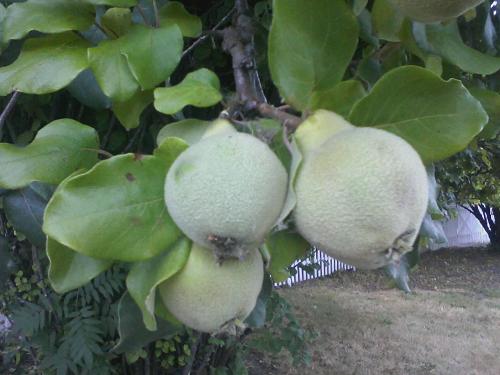
Quince and other fruit used to be much more common in home gardens.

The vast orchards of the Sacramento and San Joaquin Valleys are there for a reason. California is one of the best place in the world to grow fruit trees. However, whether they are in vast orchards or compact urban gardens, even the happiest and healthiest of fruit trees need considerable and specialized attention.

Most of the classic deciduous fruit trees have been bred and selected and bred some more over the past many centuries to produce unnaturally large and abundant fruit. Consequently, most are unable to support the weight of all the fruit that they are capable of producing. This is why it is so important for them to be pruned while dormant through winter.

Pruning improves the structural integrity of fruit trees, and limits the abundance and weight of the fruit produced during the following season. With a bit of planning, pruning can keep much of the fruit within reasonable reach so that those picking it do not need to go dangerously high on ladders. Annual winter pruning also promotes vigorous spring and summer growth that is more resistant to disease.

Apricots, plums, prunes, nectarines, peaches and cherries are all related ‘stone’ fruits (of the genus Prunus), so need various degrees of similar pruning. Peaches need more aggressive pruning because the fruit is so heavy. Cherries and almonds need less pruning because the fruit is lighter. (Almonds can grow beyond reach because the nuts get shaken or knocked from the trees instead of picked.) Regardless of the extent of pruning, the ‘four D’s’, which are ‘dead, dying, damaged and diseased’ stems, should be pruned from all deciduous fruit trees.

Vigorous stems that grew last year need to be thinned and cut back but not removed completely since they are the stems that will bloom and develop fruit next year. The stems that grow from them this year will get pruned next winter to produce the following year. Apples, pears and quinces require similar pruning of their vigorous upper growth, but produce much of their fruit on lower ‘spur’ stems that do not elongate much and may never need pruning.

Fig trees are probably the most tolerant of pruning mistakes, since they produce fruit twice each year. Overly aggressive pruning may compromise their first phase of fruiting, but promotes the second phase. Light pruning does the opposite, compromising the second phase by allowing excessive production of the first phase.

Winter pruning of deciduous fruit trees will undoubtedly seem harsh to a beginner. Trees will need more pruning each year as they grow. Fortunately, pruning becomes more familiar with experience, and as the results of pruning can be observed over time. It is among the most important of gardening tasks for those who grow fruit trees, so is really worth studying more thoroughly.