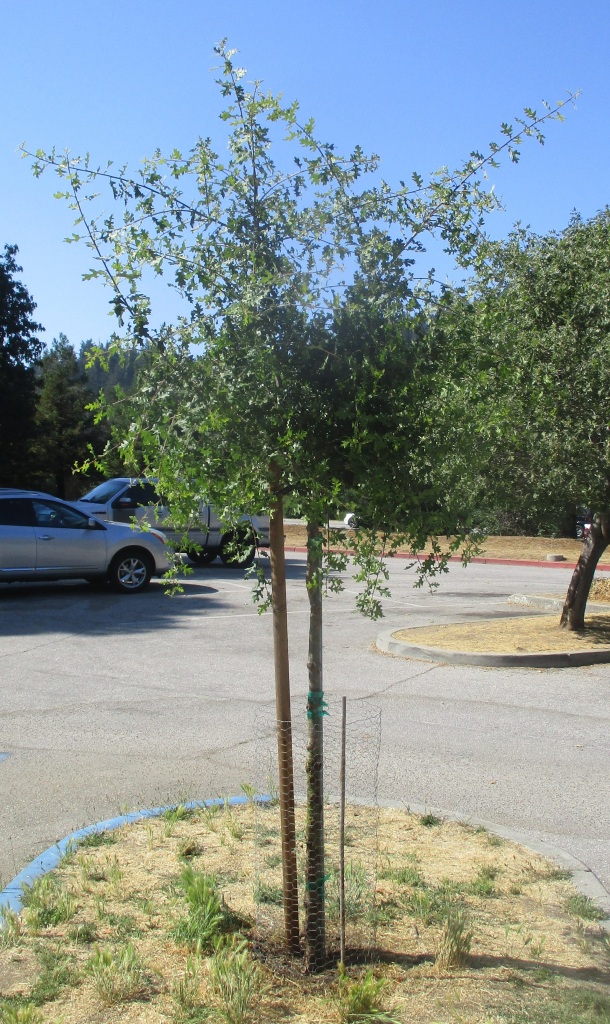
Horticulturists are by nature, nonconforming. I happen to find it difficult to conform to what makes us nonconforming. Trends are fleeting. Old technology that has worked for decades or centuries is still best. Although I am not totally against chemicals, I find that almost all are unnecessary for responsible home gardening. Pruning is underappreciated, and fixes many problems.
Skyscrapers are already very efficient. They fit more usable floorspace into their ‘footprint’ than any other type of building does. They conserve energy that gets used for heating and cooling by exposing less of that floorspace to the outside weather. For all that usable floorspace, they need only a single roof. Think about it. A relatively short ten story building contains as much floorspace as ten single story buildings that occupy the same area individually, but collectively occupy ten times as much area! Nine of those stories loose heat during cold weather, and collect heat during hot weather, only around the exterior walls. Only the top floor loses and collects heat through the roof, and only if there is not an upper utility ‘attic’ floor that insulates it. Ten single story buildings of the same area are all exposed on top, as well as all the way around. Of course…
Although it shares the same common name, Hypericum beanii is not the same sprawling Saint John’s wort that is now so aggressively naturalized within some local ecosystems. It is shrubbier and much more docile. Mature specimens get no more than three feet high and wide. It should be evergreen here, but can get sparse through cooler winter weather.
Bloom begins in the middle of summer and continues at least to early autumn. Cheerfully bright yellow flowers are two inches wide, with five rounded petals around fuzzy centers. The light green and oblong leaves are about two inches long. Stems are rather wiry, and can eventually get shabby. Coppicing as winter ends stimulates fresher vigorous growth.
Saint John’s wort prefers sunny and warm exposure. It is otherwise not very demanding. Regular watering enhances bloom. Yet, established plants can survive without watering. Where coppicing (cutting back to the ground) in late winter is not a problem, Saint John’s wort performs well as a low hedge, or unshorn border. Frequent shearing inhibits bloom. Rust is a potentially bothersome fungal disease.
Seasonal changes keep gardening interesting. Like colors of a rainbow, seasons are not as distinct as their dates on a calendar imply. Each evolves into the next. Spring evolves into summer. Late summer is presently evolving into autumn. It happens like red evolves into orange on a rainbow. It is amazing that plants can monitor the changes so precisely.
Even if plants could monitor calendars, they would not. They are too busy monitoring the daily duration of sunlight. That is how they identify primary seasonal changes. Of course, they monitor the weather also. That is how they know more precisely when to react to the seasonal change. Plants are aware that it is now late summer, and they know what to do.
Most but not all plants bloom during spring or summer, so finish by late summer. By now, they prefer to prioritize seed production. Some continue to produce fruit to entice animals who eat it and disperse its seed within. However, some plants prefer to bloom late. Some bloom during autumn or winter. Some are so late that they are early during the next year.
Therefore, there is more to provide floral color through late summer and into autumn than cool season annuals and late blooming perennials. Butterfly bush, plumbago, bee balm, lion’s tail, Saint John’s wort and various salvia are now blooming for late summer. Some might continue into autumn. Oleander and euryops might bloom sporadically until winter.
Strangely, some flowers that bloom for late summer or autumn are from tropical climates. Because equatorial or tropical climates are not as cool during winter, or may lack winter, shortening days are not such a deterrent to bloom. However, many tropical plants bloom sporadically, rather than profusely within a particular season, and may be unpredictable.
Princess flower, mandevilla, hibiscus and angel’s trumpet may bloom at any time prior to winter chill, but may not. Those that do so may not repeat the process annually. Fuchsias are a bit more reliable for late bloom with flowers that are generally more interesting than colorful. Blue hibiscus looks more tropical than it is, with potential for late summer bloom.
When they became a fad in the 2000s, it was one of the very few fads that was actually sensible for California. Agaves certainly are not for every landscape, and certainly do not suit everyone’s taste, but they are ideal for the climate here. In some regards, they are more practical than the more popular of the native specie that tend to be scrubby looking and short lived. Agaves really should have become trendy a long time ago. The problem with the fad, like so many other fads, is that it caused the object of desire to be overly popular for a while. Many agaves consequently got planted into situations where they did not belong. Landscape designers often forced them into the gardens of clients who did not know what they were, or did not even like their bold style. To show them off most prominently, designers often put the…
It is quite natural. Death, I mean. Every living thing does it at one time or another. Even the oldest bristlecone pines that live for thousands of years eventually do it. The Monterey pine in this picture did it quite efficiently. The three crows perched on top make it look extra dead. You know, not merely dead, but very dead. If this tree were in my own garden, I would be totally saddened by its death, but there is nothing that I could do about it. The smaller dark objects suspended in the now dead limbs are pine cones. Monterey pine starts to produce pine cones at a young age, and of course, produces more with age and increasing size. As mature trees begin to deteriorate, they produce even more cones as they concentrate their resources into seed production for the next generation. This elderly tree knew that death was…
Is a cat burglar a kitty who steals things, or someone who steals from kitties? There are a few kitties here, and, apparently, a burglar. I determined that two of the kitties are appropriate for Six on Saturday because they have horticultural names. The burglar is less appropriate, and is gone anyway. I am quite annoyed that someone came here, likely during the day, and stole from us. A small hesper palm that I grew from a seedling, two specimens of golden bamboo, and a larger Mexican fan palm got taken.
1. Cat – Black Jack, like the oak, Quercus marilandica, has a good horticultural or arboricultural name. He is a solid black Maine coon cat, and is no more cooperative for a picture than Rhody.
2. Burglar – Hesper palm, Brahea armata, lived here, in the blank spot on top of the wall. Golden bamboo, Phyllostachys aurea, lived right behind it and in the blank spot four cans to the right.
3. Cat – Pepper, like a species of Caspicum, has a good horticultural name too. She looks something like a penguin with a bit of brown, but is no more cooperative for a picture than Black Jack.
4. Burglar – I know I brought back more shoots of this unidentified species of Aloe from my downtown planter box. At least these four remain. They will get groomed and return to the planter.
5. Canna – This also came from the downtown planter box. It needed to be removed to facilitate the repair of a few broken tiles. It will eventually return with the Aloe. This bloom is a surprise.
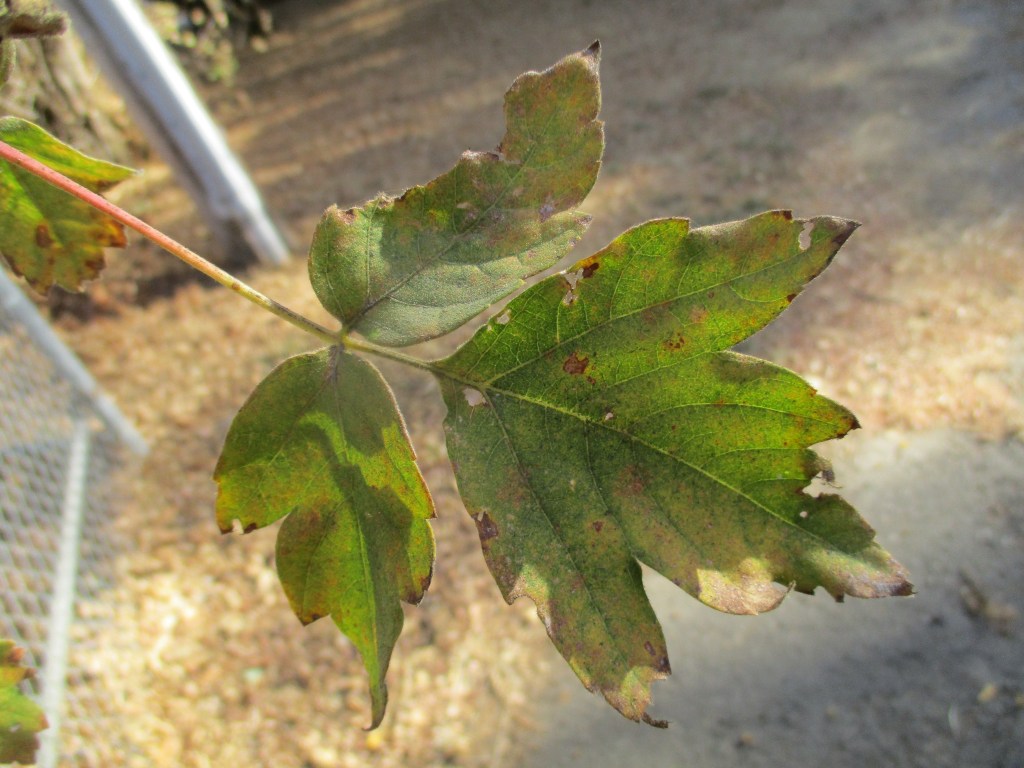
6. Vine maple – Acer circinatum is still healthy and reasonably happy after getting yanked from its landscape by a backhoe during the warmth of summer. I did not expect it to survive so well.
This is the link for Six on Saturday, for anyone else who would like to participate:
A flower that is so prominent in American culture should have a more appealing name than black-eyed Susan. Even the Latin name, Rudbeckia hirta, sounds bad. Is Becky really so rude? Did she hirt Susan? Well, black-eyed Susan is good enough to be the state flower of Maryland, and is one of the most popular of flowers for prairie style gardens of the Midwest. After all, it naturally grows wild in every state east of Colorado. Here in the West, it is a light-duty perennial that is more often grown as an annual. As a cut flower, it can last more than a week.
In the wild, the three inch wide flowers of black-eyed Susan are rich yellow with dark brown centers, and can stand as high as three feet. The typically smaller but more abundant flowers of modern varieties can be orange, red or brownish orange, on more compact stems. Gloriosa daisies are fancier cultivars, with larger flowers that are often fluffier (double) or patterned with a second color. Individual plants do not get much wider than a foot, with most of their rather raspy foliage close to the ground. All black-eyed Susans bloom late in summer or early in autumn.
Black-eyed Susan, sunflowers and a few of the late warm season annuals and perennials are still blooming, and a few will continue into autumn. By that time, cool season annuals can move in; and some of the deciduous trees, shrubs and vines that turn color for autumn will be doing so. Realistically though, this can be the leanest time of year for color in the garden. Even some of the foliage that is colorful through spring and summer has faded.
There are certainly plenty of flowers in season now. However, not many are colorful. Honeysuckle vine is pleasantly fragrant as it bloom in random phases until the weather gets cooler, but the flowers are only pale yellowish white. Some melaleuca trees bloom profusely enough to make a mess, but are just as pale, and do not even provide fragrance; although some have pretty light pink flowers. Abelia flowers are pink and abundant, but are really not all that flashy against their bronzy foliage.
Some of the more colorful flowers are not quite as reliable. Princess flower, hibiscus, blue hibiscus and mandevilla certainly can bloom in late summer or autumn, but sometimes bloom earlier than expected, so have nothing left for later. The bright red flowers of blood red trumpet vine are quite impressive, but only if they are not obscured by the accompanying foliage. Some roses bloom in phases as late as the weather will allow, but actually, most are done by now.
Fuchsia and angel’s trumpet likewise bloom in a few phases once they get started, but unlike the many cultivars of roses, they are much more reliable for a late bloom phase. Escallonia blooms late with small but colorful flowers, but only if they have not been shorn in the past few months. Shearing deprives them of the blooming stem tips that they had worked most of the year for.
Butterfly bush, tree mallow, cape plumbago, bee balm and several varieties of sage and salvia are among the most reliable plants for late summer or autumn bloom. Even without multiple bloom phases, they just naturally bloom at the end of their growing season, before winter dormancy.
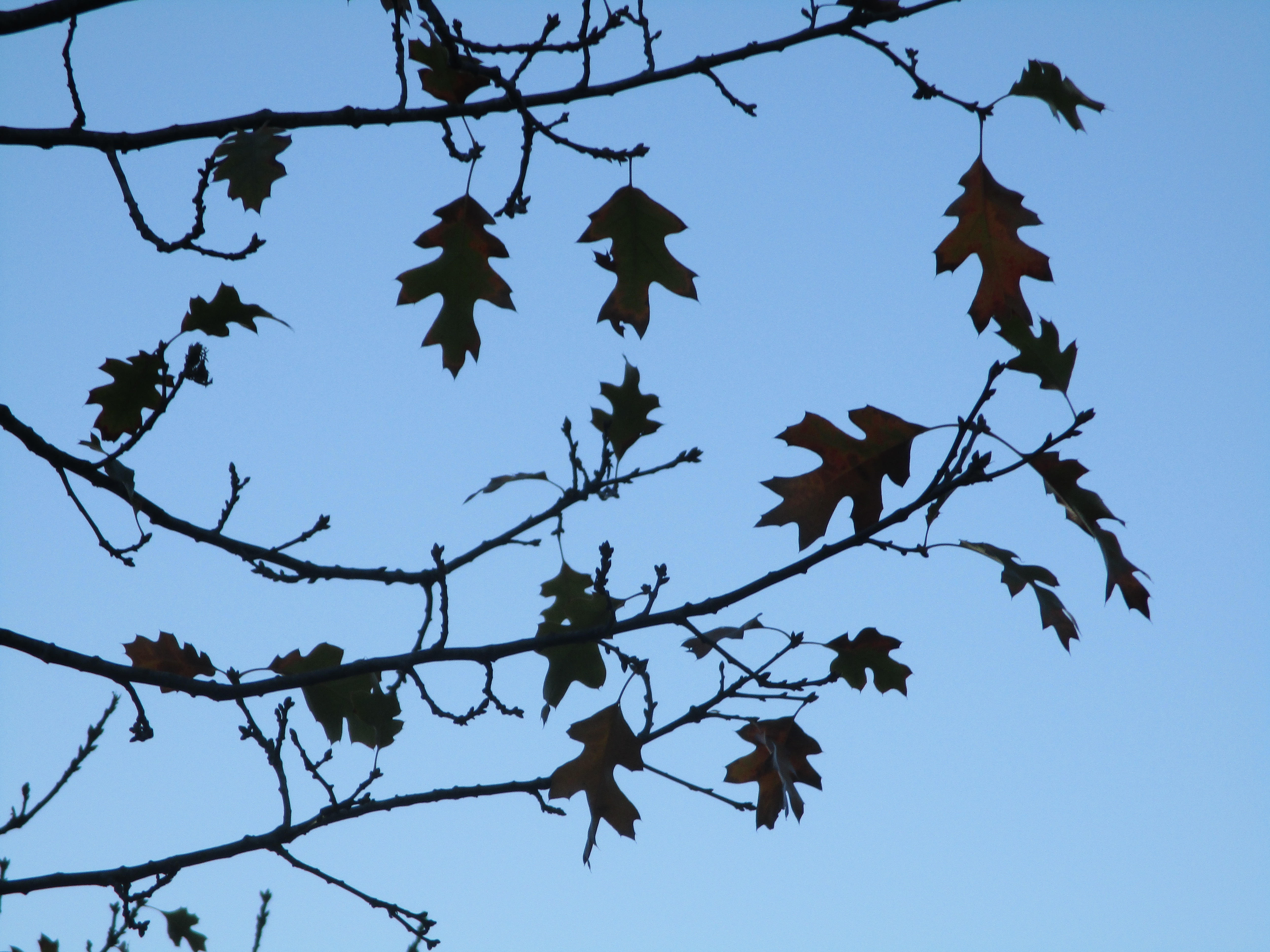
This rant may not go in the direction you expect it to. The pictures suggest that this would be about the bad vegetation management crews who severely disfigure trees that get too close to utility cables. It is not.
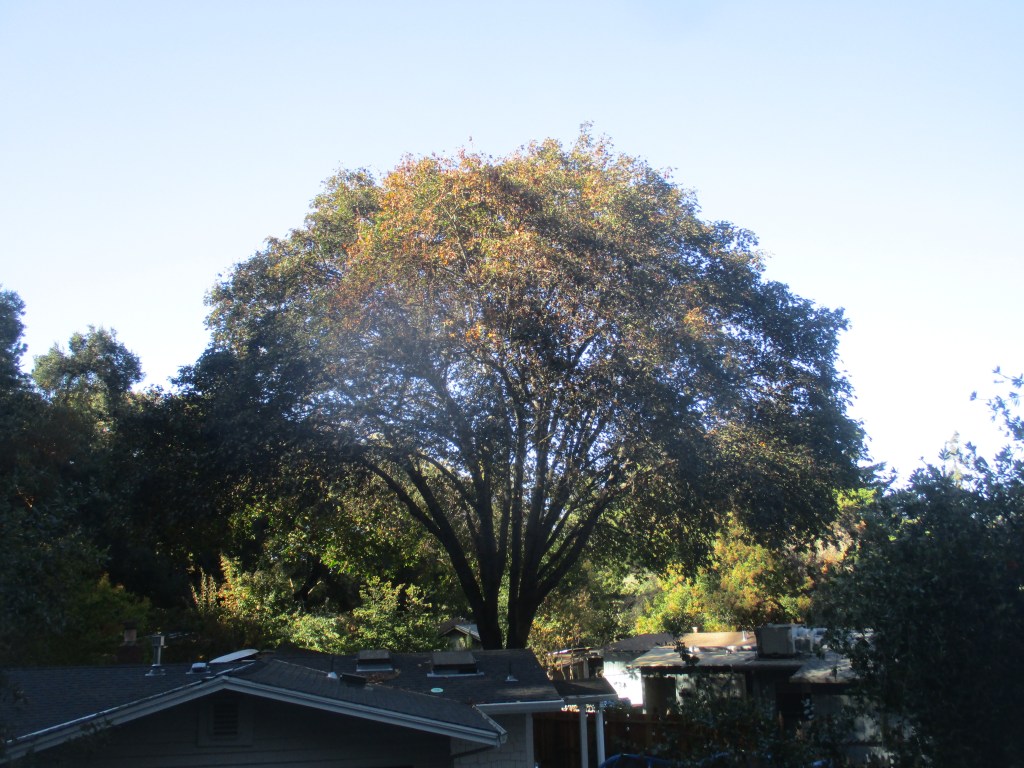
This is about horticultural ‘professionals’ who plant trees where they will encroach into utility cables, with no regard to what might eventually be done to them in order to keep electrical service reliable and safe. The native oak in these pictures likely grew from seed, so unless someone knows the squirrel who buried the acorn, there is no one to blame. Many of us who enjoy home gardening are sometimes not aware of how tall and wide particular trees can get when we plant them. Horticultural ‘professionals’ should know better! That is what they charge so much money for when they design a landscape. Palm trees are the worst! They grow…
Most who enjoy four o’clock, Miribilis jalapa, do not grow it intentionally. It tends to sneak into gardens from outside, and then bloom too delightfully to be unwanted. It naturalizes, but not aggressively enough to be a weed. New seedlings develop tuberous roots during their first year. They regenerate to produce abundant seed as early as their second year.
Flowers are supposed to open at 4 o’clock. They may open earlier during warm or humid weather. They remain open through the night, and perhaps for part of the morning. Floral color ranges through white, yellow, orange, red, and many tints of pink. Flowers might be striped or spotted with the other colors. Individual plants might bloom with various colors.
Mature four o’clock plants do not get much taller than three feet. They might sprawl twice as broad. Rich light green foliage is quite full, and obscures unexpectedly soft and lanky stems with knobby nodes. Bloom continues through most of summer, but decreases with increased seed development late in summer. All growth above ground succumbs to frost.