Horticulturists are by nature, nonconforming. I happen to find it difficult to conform to what makes us nonconforming. Trends are fleeting. Old technology that has worked for decades or centuries is still best. Although I am not totally against chemicals, I find that almost all are unnecessary for responsible home gardening. Pruning is underappreciated, and fixes many problems.
Without bloom, the richly vibrant foliar colors of coleus, Coleus scutellarioides, rival floral color of other warm season annuals. Striking foliar patterns are as exquisite as any floral display. Growth is efficient through the warmth of spring. Foliage might last until autumn. Late in its season, spikes of tiny blue flowers can be trimmed off to promote more foliage.
With bright ambient sunlight, coleus is more perennial as a houseplant. However, it may get persistent with pesky bloom as it matures. Some who grow it prefer to let bloom, and then prune it back afterward. Recovery from such pruning can be slow. Vegetative stems, without bloom, root easily as cuttings even in water. New cuttings can replace old plants.
Coleus foliage is intricately variegated with countless combinations of green, chartreuse, yellow, orange, red, burgundy, pink, white and brown. Variegation can be symmetrical or random. Leaf margins may be deeply lobed or just serrate. Modern cultivars might be no better than old fashioned sorts. Mature plants can get as tall and broad as about two feet. Some stay lower.
Houseplant culture is a unique type of horticulture. It involves almost no gardening. Most houseplants live exclusively indoors. Many inhabit homes and offices that lack gardens. Only a few fortunate sorts get to occasionally enjoy mild weather in home gardens. Such indulgences are generally brief and sheltered. Most houseplants are innately vulnerable.
Of course, no houseplant is native to domestic situations. Every houseplant lives outside somewhere. Most are from lush tropical rain forests, where they must compete with other foliage for sunlight. Many are understory plants that naturally live within the partial shade of bigger tropical vegetation. That is why they adapt so efficiently to partial shade inside.
That is also why most houseplants actually want to live inside here. They do not like the chill of winter, even if mild. Many or most succumb to minor frost if too exposed. They are simply unaccustomed to it. Since they adapt to shelter and partial shade inside, they are also sensitive to direct sunlight exposure. Foliage that becomes too exposed can scorch.
Tolerance of weather is as regional for houseplants as it is for garden plants. That is one commonality of gardening and houseplant culture. The various species of Ficus that are common trees in landscapes of Los Angeles are strictly houseplants in San Jose. They tolerate the minor winter chill of Los Angeles, but not the slightly cooler frost of San Jose.
Some ferns are popular houseplants because, like tropical plants, they generally tolerate partial shade. However, many are less tolerant of the minimal humidity of home interiors. Regular watering can compensate. Irregular watering might be distressful for some ferns. Fortunately, most ferns can recover from brief desiccation, even if their foliage dies back.
Succulents are completely different. The are intolerant of partial shade, and crave sunny and warm situations. They are nonetheless popular for houseplant culture because they generally tolerate minimal humidity. Cacti prefer aridity, and are very susceptible to rot in damp conditions. Succulents wilt to warn before they succumb to deficiency of moisture.
The biggest, tallest and oldest trees in the World are all native to California. The biggest trees are the giant redwood, Sequoiadendron giganteum. The tallest trees are the coastal redwood, Sequoia sempervirens. The oldest trees are the bristlecone pines, Pinus longaeva. The biggest and the tallest are two of only three specie of redwood in the World, and except for a few coastal redwood that live barely north of the Oregon border, both are endemic only to California. Most of us know that the coastal redwood is the state tree of California. However, some believe that California is the only state with two state trees, which are the two native specie of redwood.
This gives arborists from California serious bragging rights.
Most of the arborists whom I work with are very familiar with the coastal redwood. Not only is it the most prominent tree in the Santa…
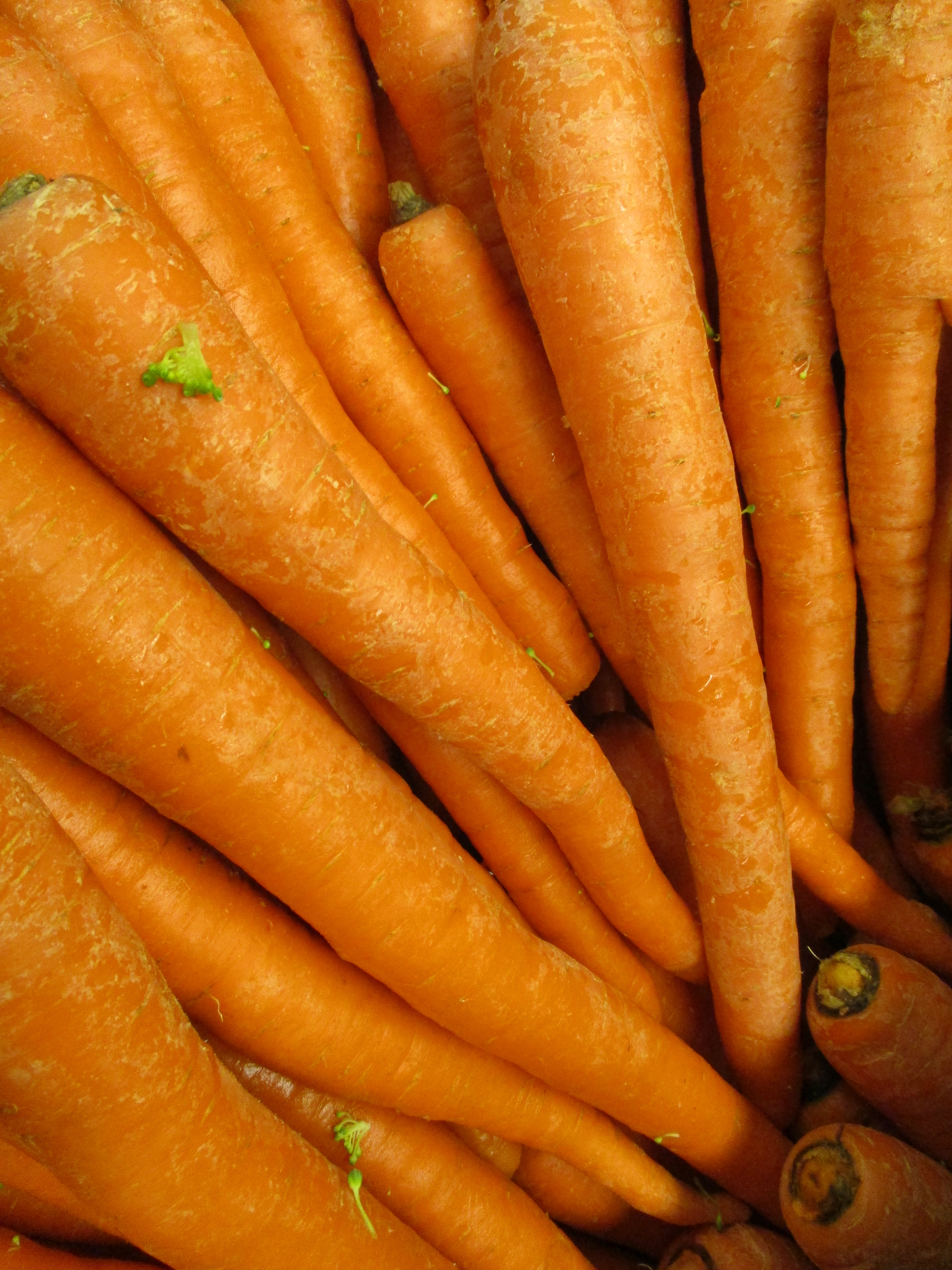
How can anyone eat them? No only do people eat them, but many people enjoy them, and some even consider them to be their favorite vegetable!
Carrots are ridiculously bright orange. They try to make themselves appealingly colorful like summery flowers or oranges. Something that grows underground has no business being that bright orange! About the time that typically bright orange California poppies became available in sickly purple, pale white, orangish red and a few other colors, carrots with the same colors also became available! Coincidence? I think not. Carrots have that distinctively weird texture. Radishes have that perfect crunch. Beets are firm but cook up so nicely. All of the various root vegetables have the perfect texture that works for them; except for carrots. They try to mimic radishes, but are not as succulent and crisp. They are a bit more firm like turnips, but they can not get…
Well, I can not argue that ‘everything is as it should be’. Turkeys serve more of a purpose than food, although I can not figure out what their other purpose is. Coleus are so delightfully colorful that those with more discerning taste than mine enjoy new and ‘improved’ cultivars. Many of those same people with discerning taste also enjoy Japanese maple too much to consider options. Both my blue and white lily of the Nile are still the best! Yes, but . . .
1. Turkey belongs in an oven, or perhaps in a freezer. She should not be doing this at the shops as I write. At least she is not somewhere else shredding flowers or pulling up irrigation emitters.
2. Coleus reminds me why I dislike most modern cultivars. I would find this to be more appealing if I did not know what this is, or if I did not know the potential of good old fashioned coleus.
3. Coleus should look like this, which is more similar to how it looked when it was popular as a houseplant decades ago. My kindergarten teacher grew one like this in our classroom back then.
4. Vine maple should be more popular than Japanese maple is. I realize that Japanese maple is much more interesting and diverse. However, now that it is very popular, it is almost mundane.
5. Lily of the Nile should also bloom red, for a red white and blue bloom on Independence Day. There are plenty that bloom blue here. The first that will bloom white were added a month ago.
6. Rhody should cooperate when I need his help with an illustration. I needed a picture of mulch. I had visions of a stylish model in a Halston dress, leaning on a fender of a new 1972 Electra.
This is the link for Six on Saturday, for anyone else who would like to participate:
Creeping thyme is pleasantly aromatic, but not quite as flavorful as culinary thyme.
Trendy landscape designers like to set flagstone walkways slightly out of step to compel visitors to the garden to stroll through a bit slower. Between the stones, it is in style to grow creeping thyme, Thymus spp., as a very shallow groundcover that relinquishes its delightfully herbal aroma with any misstep. It stays too low to trip on, tolerates a bit of trampling, and needs only minor trimming where it creeps a bit too far onto stones or pavement. Creeping thyme can also be plugged into retaining walls of broken concrete or stone. The grayish green foliage is very finely textured. While the weather is warm, minute lavender flowers bloom in subdued phases that come and go slowly. Some varieties have more pinkish flowers, lighter green foliage or exhibit different aromas.
Blue must be unpopular with the more common of pollinators. After all, colorful flowers are designed to attract some sort of vector to exchange pollen. It seems that most pollinators like yellow. Red and pink (which is actually a tint of red) seem to be more appealing to hummingbirds. Butterflies seem to really like pink and orange. Many flowers that seem to be white actually use infrared to attract bees, or ultraviolet to attract nocturnal moths. Other white flowers rely on wind, which is not discriminating about color.
Of the primary (red, yellow and blue) and secondary (orange, green and purple) colors, the only color that is more uncommon than true blue is green. That is probably only because green flowers do not contrast much against green foliage, so would be harder to find. Many blue flowers, like thyme, lavender, blue potato bush and jacaranda, are closer to purple. Some blue and purple color is probably only incidental, and in conjunction with invisible (to humans) ultraviolet coloration or patterns.
Except for purplish blue jacaranda, there are no substantial trees to bloom blue. Empress tree is flashy, but is even more purplish. However, most ceanothus, including a few that can grow as small trees, are famous for their clear blue bloom. Plumbago, blue hibiscus, echium and rosemary are blue blooming shrubbery. Creeping rosemary is a nice groundcover. Hydrangea has the potential to bloom blue, but often turns purplish or pink because of soil alkalinity. Lilac and wisteria vine can be lavender, pink or white, as well as ice blue.
There are several perennial and annual salvias and lupines that bloom blue. Russian sage, catmint, carpet bugle, campanula, perennial statice and lily-of-the-Nile are some of the other familiar perennials for blue flowers. Delphinium should probably be more familiar. Grape hyacinth and various iris bloom briefly but spectacularly with some of the richest shades of blue. Even though there are not many blue flowers to choose from, there is quite a bit of variety.
Annual statice, aster, zinnia, bachelor button, nierembergia, nigella, pincushion flower, forget-me-not and cineraria are uncommon annuals that are enjoyed by those who crave blue. Petunia happens to be one of the most popular of warm season annuals that also happens to produce some excellent blues. Later, brightly colored pansy and primrose can be just as flashy as popular cool season annuals.
Before I continue, I should mention that I have worked for some of the BEST horticultural professionals in the entire Universe! Seriously! I have worked for the single most excellent nurseryman EVER, and not one, but a FEW of the most excellent arborists EVER! YES, I am bragging! I can write about some of them another time.
I have also worked for some of the worst, including those who were involved with the maintenance of landscapes associated with various residential sites that were in the process of being renovated or demolished and redeveloped at the old Fort Ord. They engaged in more unethical activity at Fort Ord than I can write about in just a few articles. For now, I will just rant about one such incident. Back in about 2007 or 2008, I was asked to go out to investigated a distressed ‘Marina’ madrone on Abrams Drive. The subject…
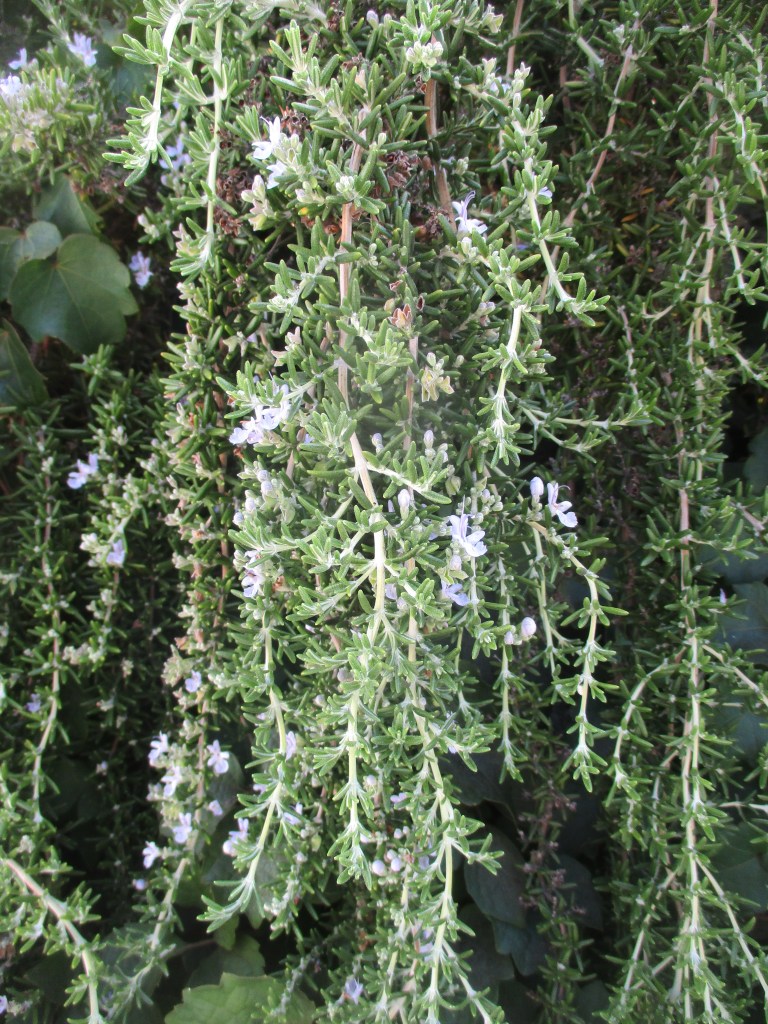
It is as familiar for culinary application as it is for home gardens, even with its new name. Rosmarinus officinalis is now known as Salvia rosmarinus, but the common name is still just rosemary. Like many Mediterranean culinary herbs, it is a member of the Lamiaceae Family. Since it is native to Mediterranean regions, it is quite happy within local climates.
While many culinary cultivars of rosemary are shrubby or upright, the most popular home garden cultivars are trailing types. Trailing rosemary disperses its woody stems laterally, but can eventually get deeper than two feet. Shrubbier cultivars get at least twice as high in less time. The finely textured dark green foliage is evergreen and pungently aromatic.
Bloom is generally most profuse from late spring through the middle of summer, but may never really stop. It can continue in sparser sporadic phases whenever the weather gets warm, and even throughout the year. The tiny flowers are various shades of blue. Purple, white and pale pink bloom is very rare. Bloom is appealing to bees and other pollinators, including hummingbirds.
Gardening is unnatural. Most popular plant species are not naturally native. Cultivars are products of unnatural selection and breeding. Most plants like unnatural watering. Some enjoy unnatural fertilizers. Removal of their detritus is unnatural. So is the replacement of their detritus with mulch. Actually, most of what happens in the garden is quite unnatural.
Ironically, gardening is how many of us incorporate more nature into our lifestyles. Much of our effort compensates for what plants naturally crave but unnaturally lack. Watering is necessary for plants that get rain through summer within their natural ecosystems. Mulch might be nice for plants that naturally benefit from the decomposition of their own debris.
In nature, most plants benefit from their own debris. They enjoy the nutritiously decaying organic matter and enhanced moisture retention. Their shallow roots enjoy the insulating effect on the surface of the soil. Debris of some plants excludes other competitive plants. Mulch is not a perfect substitute for such detritus, but partly compensates for its removal.
Although it would likely be an asset to the plants that produce it, the detritus produced by most plants can not stay in the garden. Much of it is too abundant. Some is too shabby or too coarsely textured. Some might become combustible as it accumulates. Diseases can overwinter in some types of debris. Mulch is more sanitary, neater and less combustible.
Most mulches are organic matter of one sort or another. Compost does not last long as a mulch, but is appreciated by most plants. Uncomposted chips from a tree service occupy nitrogen as they decompose, but are more effective for inhibiting weed growth. Products that are available as mulch at garden centers are more refined, but also more expensive.
Some dense ground cover plants perform something like mulches. Many consume more moisture than they retain though. Also, they can retain bits of potentially infectious debris that falls from diseased plants above. Nonetheless, they insulate the surface of their soil, and inhibit or exclude weeds. Gravel over ground cloth is inert, but requires no watering.



 How can anyone eat them? No only do people eat them, but many people enjoy them, and some even consider them to be their favorite vegetable!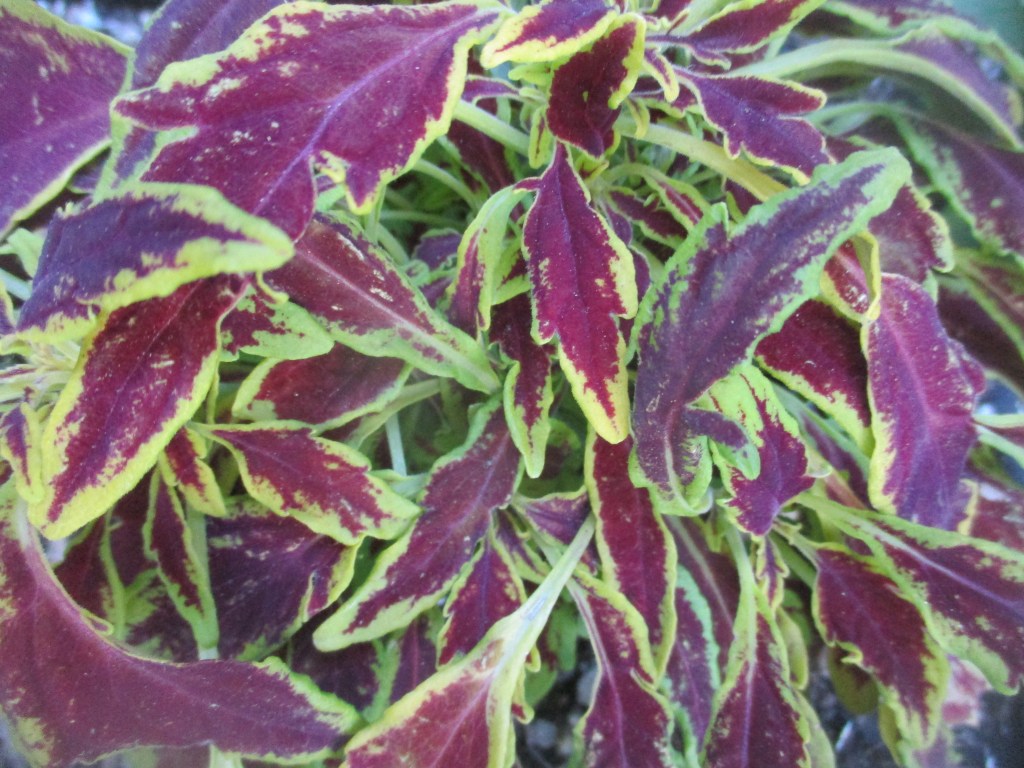




 Before I continue, I should mention that I have worked for some of the BEST horticultural professionals in the entire Universe! Seriously! I have worked for the single most excellent nurseryman EVER, and not one, but a FEW of the most excellent arborists EVER! YES, I am bragging! I can write about some of them another time.