Horticulturists are by nature, nonconforming. I happen to find it difficult to conform to what makes us nonconforming. Trends are fleeting. Old technology that has worked for decades or centuries is still best. Although I am not totally against chemicals, I find that almost all are unnecessary for responsible home gardening. Pruning is underappreciated, and fixes many problems.
California buckeye resembles related horse chestnut.
Chaparral climates are not easy without irrigation. The long summers are warm and arid. California buckeye, Aesculus californica, knows what to do if it can not stay hydrated out in the wild. It simply defoliates. Yes, it goes bare right in the middle of summer. If it does it early enough, it refoliates after rain resumes in autumn, only to defoliate again for winter.
This ‘twice deciduous’ characteristic is likely why California buckeye is not more popular for unirrigated landscapes of other natives. Shade is an asset through warm summers. In coastal, riparian or irrigated landscapes, the original spring foliage lasts through summer to defoliate in autumn, like that of most other deciduous plants. It may get shabby though.
Nonetheless, California buckeye is a delightful small tree, typically with a broad and low canopy suspended by a sculptural branch structure. Not many get more than twenty feet tall, although some get twice as tall. Bark is strikingly pallid gray. The elegant leaves are palmately compound. Six inch long trusses of tiny white flowers are sweetly fragrant in spring.
Roots are innately mysterious. They consume much of the resources that plants require. They stabilize the stems above them. Few plants can survive without them. Yet, roots are very secretive about their work. Almost all are invisibly subterranean. Consequently, they get minimal consideration. A lack of consideration is a root cause of many root problems.
Every plant species has distinct environmental preferences. Some plants require full sun exposure. Others tolerate or prefer partial shade. Some are more discerning than others. Similarly, plants that naturally disperse their roots extensively dislike confinement of their root systems. Small plants and some riparian plants are more adaptable to confinement.
Annual bedding plants and many small perennials perform well within pots, planters and small spaces because they do not need to disperse their roots extensively. Some woody plants with fibrous root systems, such as azalea, boxwood and andromeda, can adapt to confinement also. Occasional pruning can keep them proportionate to their root volumes.
Most of the popular succulents perform remarkably well in confinement. Some types that disperse their roots extensively if necessary will adapt to confinement by dispersing their roots only as far as they must. If they get all they need within a pot, they need not go any farther. However, succulents that are endemic to dry desert regions are not as adaptable.
Desert plants can survive warm and dry summers because they disperse their roots very extensively. They can not do so within the confinement of pots and planters. This should not be a problem that systematic irrigation can not compensate for. Unfortunately though, these same plants are too susceptible to rot if their roots are damp during warm weather.
So, some plants that are the most resilient in the ground are the least resilient in pots. Of course, this is not an absolute rule. Yuccas from tropical and temperate climates perform well either in the ground or in pots. Those from desert climates are likely to rot in pots. In general, drought tolerance and container gardening are two fads that are not compatible.
Three years after this presently recycled article posted, these trees have not yet been cut down. They must be very soon. They got to bloom one last time (again), but are unable to support the weight of their own trunks any longer.
The ‘politically correct’ designation for them now is ‘flowering cherry’. We all know what it means, but it is not quite as accurate. After all, they all flower. Fruiting cherries can not make fruit without flowering first. The old fashioned designation as ‘fruitless cherry’ is more accurate, but not so appealing. Besides, after half a century, the work of these two deteriorating old fruitless cherry trees has not been in vain.
We are not certain what cultivar they are. I think of them as ‘Akebono’ because that is what I am familiar with. However, those who have been acquainted with them longer know them as ‘Yoshino’. The tree structure seems to be more similar to that of ‘Akebono’. The bloom seems to be more similar to that of ‘Yoshino’. My Mother happens to like ‘Akebono’, so if she ever asks, I know what to say. However, I would tell my…
This recycled article might seem like it would conform to the ‘Horridculture’ meme for Wednesday, but is merely about a disease that looks worse than it actually is.
This unhappy native white alder, Alnus rhombifolia, had been deteriorating for quite a while. White alders do not last long even in the wild. A few nearby have already been removed. This one is next. They were nice and shady when the landscape was new. Nicely maturing sycamores and a bigleaf maple can take over for this one now.
As bad as it looks, this nasty stain had nothing to do with the imminent doom of this tree. It developed only recently, and very quickly. It is not nearly as bad as it looks. If the tree were not to be removed, it could survive with this problem for quite a while. Other healthier trees can live with it for many years or indefinitely, and some actually recover.
It is ‘flux’. More specifically, it is slime flux, which is also known as bacterial wetwood. The obvious symptoms are this…
Every once in a while, I accumulate a few random but perhaps interesting pictures that do not conform to a common theme. ‘Six on Saturday’ is an ideal venue to avoid wasting such pictures. I could have gotten six more pictures of rhododendrons like I did last week, but that would have been mundane. I happen to both like and dislike the miniature rose in picture #3, and wanted to show it off. The conjoined roses are just wrong. The removal of the exemplary California lilac was wrong too, but could not be avoided.
1. Rhododendron are mostly finished with bloom. This pinkish watermelon red bloom was still quite garish when I got this picture about a week and a half ago. A few are still blooming today!
2. Rhododendron are abundant, which is why I share too many pictures of them. I will not do it this season. After the Six last week, and the one above, this yellow blushed white one is the last.
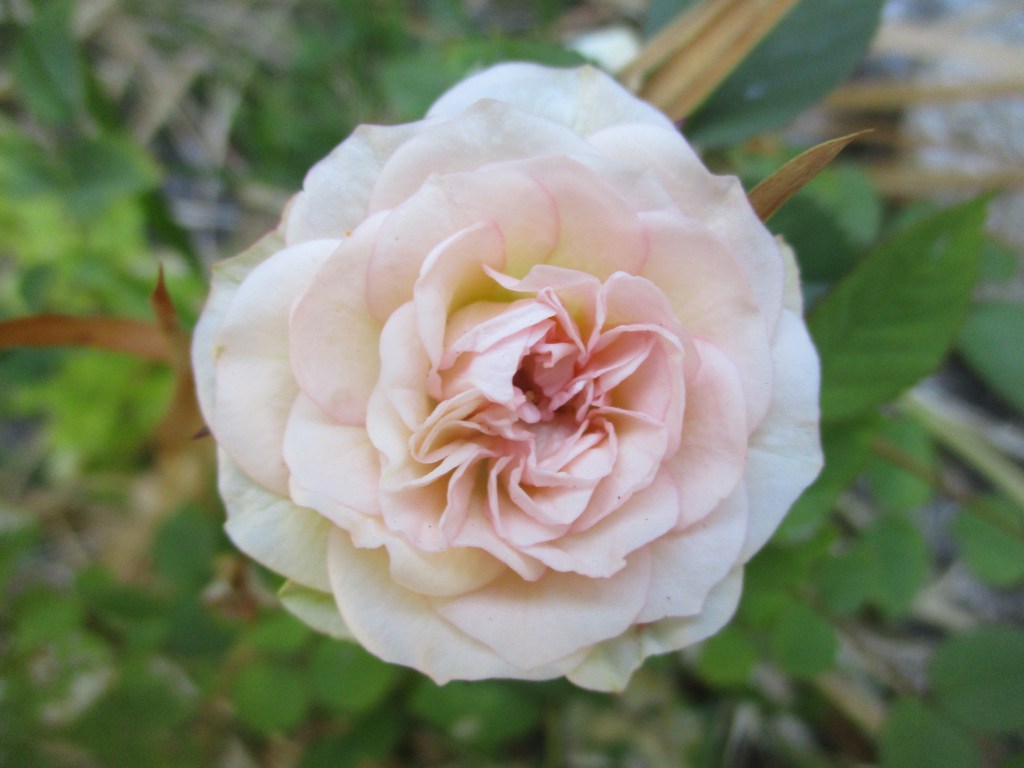
3. Rose blooms on the edge of the most prominent of our landscapes, but we did not plant it. No one know where it came from. We can not remove it because it is likely important to someone.
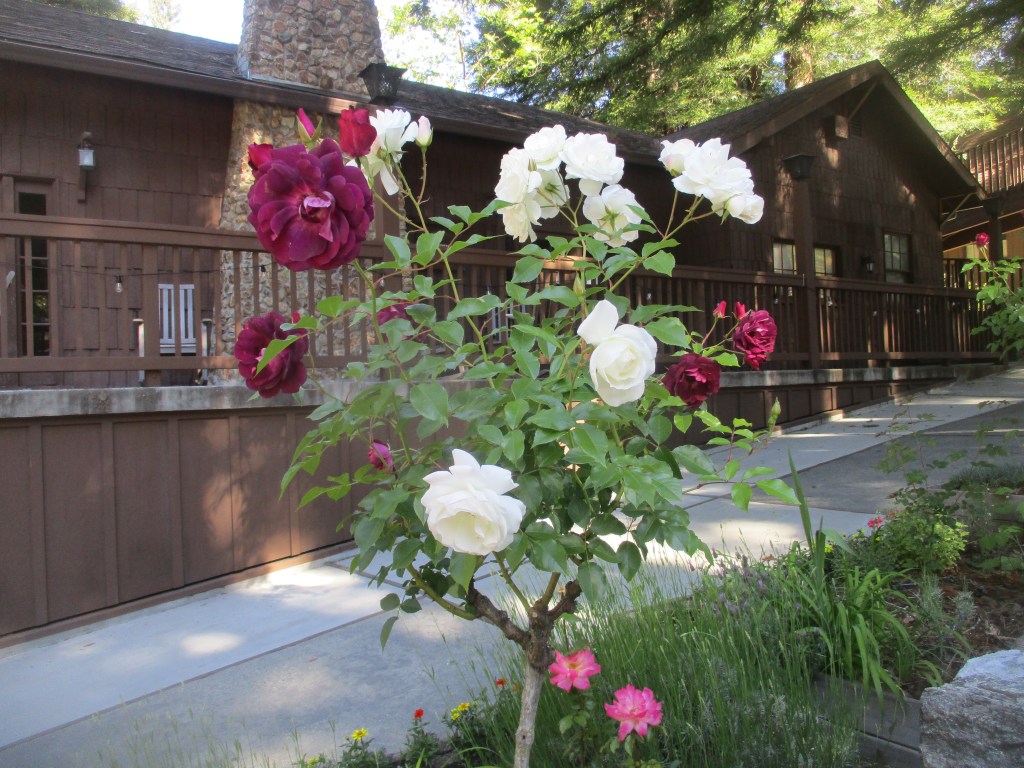
4. Rose aberration that I mentioned two weeks ago blooms just across the road. I believe that these are Iceberg and Burgundy Iceberg grafted together on the same rose standard (tree). Gads!
5. California lilac might be a common Ceanothus thyrsiflorus. This is an exemplary specimen, but grew where it overwhelmed an important star magnolia. It finished bloom, and is gone now.
6. Turkey chicks are just a few of a big herd of a dozen or so! It is a long story. Momma Turkey ran off after a random jogger, and left them staring at me for answers. She fortunately returned.
This is the link for Six on Saturday, for anyone else who would like to participate:
Of the several junipers that were too common decades ago, the golden pfitzer juniper, Juniperus X pfitzeriana ‘Area’, was the one outfitted with cheery, bright yellow new foliage each spring. Similar but more compact varieties that are more popular now were rare back then, or simply not yet invented. Contrary to the stigma, golden pfitzer juniper is a very tough shrub, which is why so many from decades ago remain in older gardens, and new plants can sometimes be found in nurseries. Once established, they need very little water, or none at all. A bit of partial shade is tolerable, but inhibits color. Angular branches radiate outward, with the finely textured foliage drooping only slightly at the tips. Mature plants get wider than six feet, and taller than four feet. Crowded plants can stand taller than six feet. Golden pfitzer juniper can technically be shorn as hedges, but are so much more appealing if selectively pruned to maintain their natural form. They are at their best where they have space to spread out naturally without pruning.
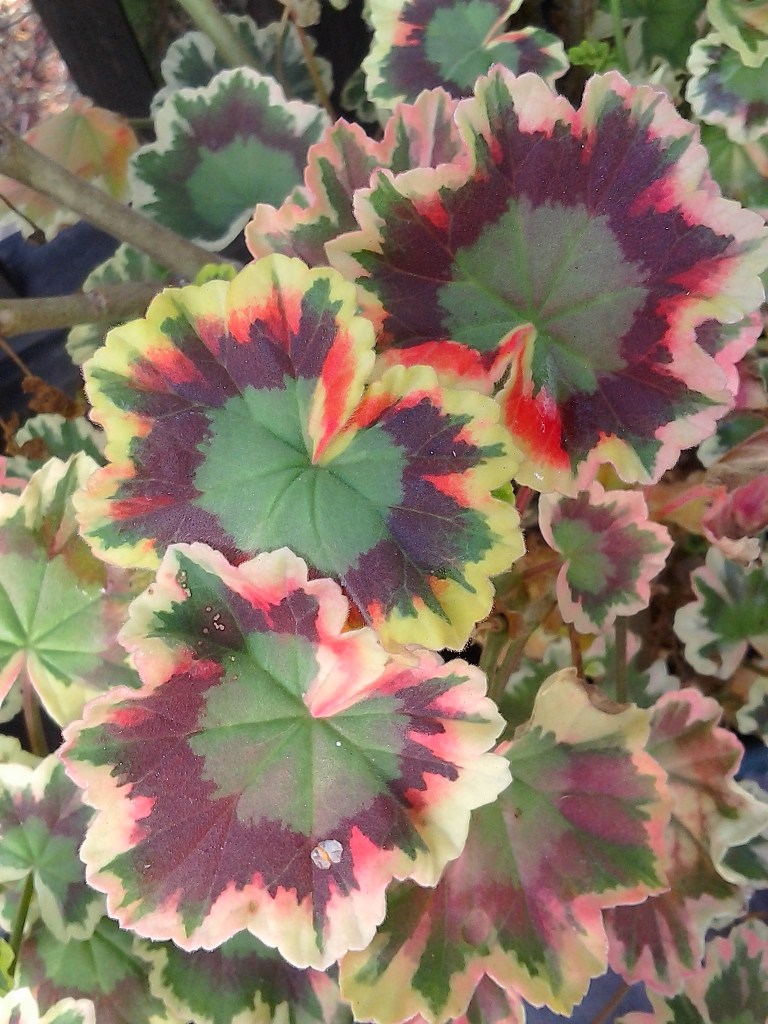
Flowers get all the credit for color. They certainly are the most colorful features in the garden, as well as the most fragrant. However, foliage can do so much more than simply provide green. It can be hued with yellow, red, blue, purple, bronze, gray, or variegated with white or yellow. Plants with colorful foliage can range in size and function from small annuals and perennials to shrubbery, vines and even trees.
Hydrangea, hosta, ivy, English holly and various pittosporum are some of the more popular plants for white variegation, and are often variegated with yellow. Euonymus can conversely be variegated with white, but is usually variegated with yellow. New Zealand flax can be variegated with pink, bronze, brown or gold. Box elder is a good sized deciduous tree that can be variegated with white, or alternatively frosted uniformly with gold as new foliage emerges in spring. There is even a variety that has slightly purplish or smoky colored new foliage.
Silver mountain gum, silver Mediterranean fan palm, lamb’s ears, artemesia and the various dusty millers have remarkably silvery foliage. Silver mountain gum can grow into a mid-sized tree with a stout trunk. Lamb’s ears is a low perennial. Olive trees, some junipers and the various lavenders have gray foliage. Colorado blue spruce and some agaves have striking blue color.
Various purple leaf plums and Japanese maples are famous for their purplish foliage. Smoke tree and some beech have even darker purplish foliage. Some New Zealand flax and cannas can be just as purple or comparably bronze.
Actually, New Zealand flax and cannas, as well as junipers known for blue or gray foliage, can alternatively be bright yellow. Golden arborvitae, golden honeylocust and golden Monterey cypress really stand out nicely against darker green.
Colorful foliage tends to be most colorful as it develops freshly in spring, and tends to fade somewhat through summer. Gold junipers can actually fade to basic green by autumn. Shade inhibits most types of coloration, but can show off variegation better. There really is so much variety with colorful foliage that it is impossible to generalize.
Finally, a recycled article that ‘almost’ conforms to the ‘Horridculture’ meme for Wednesday. I do find the unpleasant stigma of junipers to be objectionable.
Oh, the stigma of juniper never gets old! No matter how many cool new cultivars get introduced, and how many specie get rediscovered, they are still though of as those nastily prickly ‘tams’ that were too common in the 1950s. Even some of us who really like junipers dislike tams, not only because they share their stigma with all other members of the genus, but also because they really are nasty and prickly, and not as useful as their overuse would suggest. Are they deep ground cover or shallow shrubbery? They might work for a few years, or maybe many years, but they eventually crash into each other or other plants and pile up into a dense thicket that can not be pruned without being deprived of all dignity.
In the neighborhood where I primarily work, we have a ‘do not plant’ list. Such lists typically cite specie that are…
Almost all photinia in local landscapes is Fraser’s photinia, Photinia X fraseri, which is a thornless and fruitless hybrid of two species that are now rare. Some of the old fashioned photinia are thorny. Some produce copious berries that can get messy, or feed birds who can get messy. More modern cultivars of Fraser’s photinia are becoming more available.
Fraser’s photinia is popular as a shorn evergreen hedge. New foliage that develops after shearing is richly reddish bronze, and fades to dark green. Bronze color is best in spring, after late winter shearing. Summer shearing stimulates a repeat performance, although it may not last as long before the foliage fades to green. Shearing enhances foliar density.
Unshorn photinia can develop into small trees as tall as fifteen feet, with new growth that is a bit less richly colored than that of shorn photinia. It also blooms, often profusely, with big and rounded trusses of tiny creamy white flowers. Bloom is not impressively colorful. Floral fragrance is objectionable to some. All photinia types are susceptible to fire blight.
Mowers are for mowing lawns and shallow ground cover. Blowers are for blowing debris from pavement, decking and other flat surfaces. The names of these tools suggest these particular functions. Those of us who use such tools tend to be aware of their limitations. Why are simple concepts of shearing and the associated tools so difficult to understand?
‘Mow, blow and go’ gardeners are not so bad if they simply mow, blow and go. They tend to the two most significant but also least pleasurable tasks in the garden, and then leave before causing problems. Most are also qualified to add bedding plants or shear hedges. However, some will shear anything that is within reach of their powered hedge trimmers.
Shearing is for hedges or shrubbery that is strictly foliar. There are few exceptions. Such shearing should be performed properly, and only for the few plants that are conducive to it. The process promotes foliar density, but also generally inhibits bloom. For hedges that function as living fences in the background of more interesting plants, this is no problem.
Otherwise, shearing plants that are not conducive to it ruins appealing form, and inhibits or prevents appealing bloom. Privet and photinia perform well as shorn hedges because their dense evergreen foliage is their primary asset. Their bloom is actually undesirable. Their natural forms are unremarkable, but their shorn forms can be remarkably practical.
Frequent or untimely shearing prevents lemon bottlebrush and oleander from blooming. However, shearing immediately after a bloom phase stimulates new growth to bloom for a subsequent phase. New growth only needs an opportunity to mature and bloom before removal. Such potentially blooming stems need extra space to extend prior to blooming.
As practical as it is for hedges, shearing ruins the foliar texture of other plants. Heavenly bamboo is worthlessly shabby without its naturally intricate foliar texture. Juniper retains good color, but becomes boringly plain. Rhododendron and hibiscus become disfigured and can not bloom. Each of these plants and all others are discriminating about pruning. Few are agreeable to shearing.


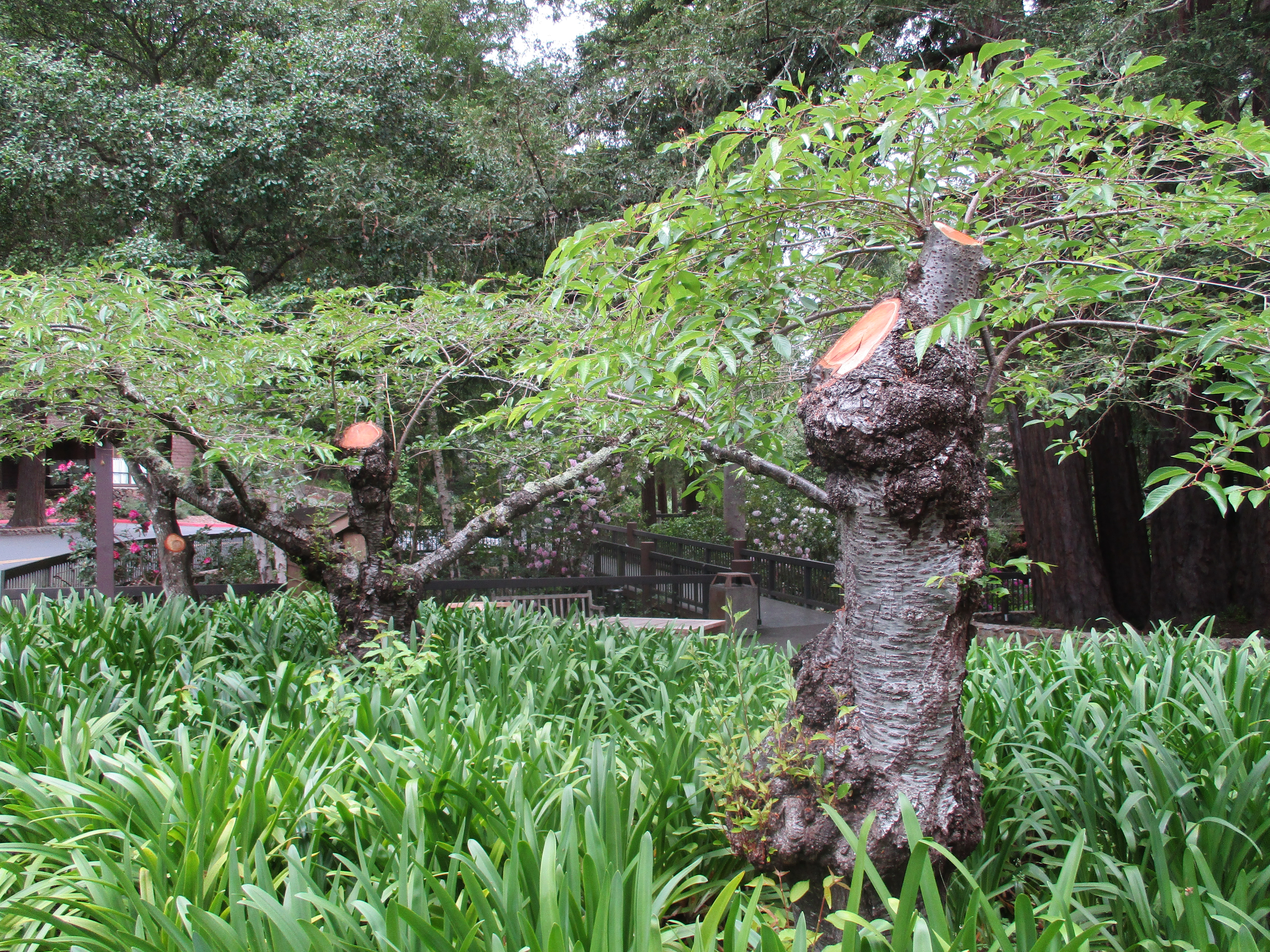 The ‘politically correct’ designation for them now is ‘flowering cherry’. We all know what it means, but it is not quite as accurate. After all, they all flower. Fruiting cherries can not make fruit without flowering first. The old fashioned designation as ‘fruitless cherry’ is more accurate, but not so appealing. Besides, after half a century, the work of these two deteriorating old fruitless cherry trees has not been in vain.
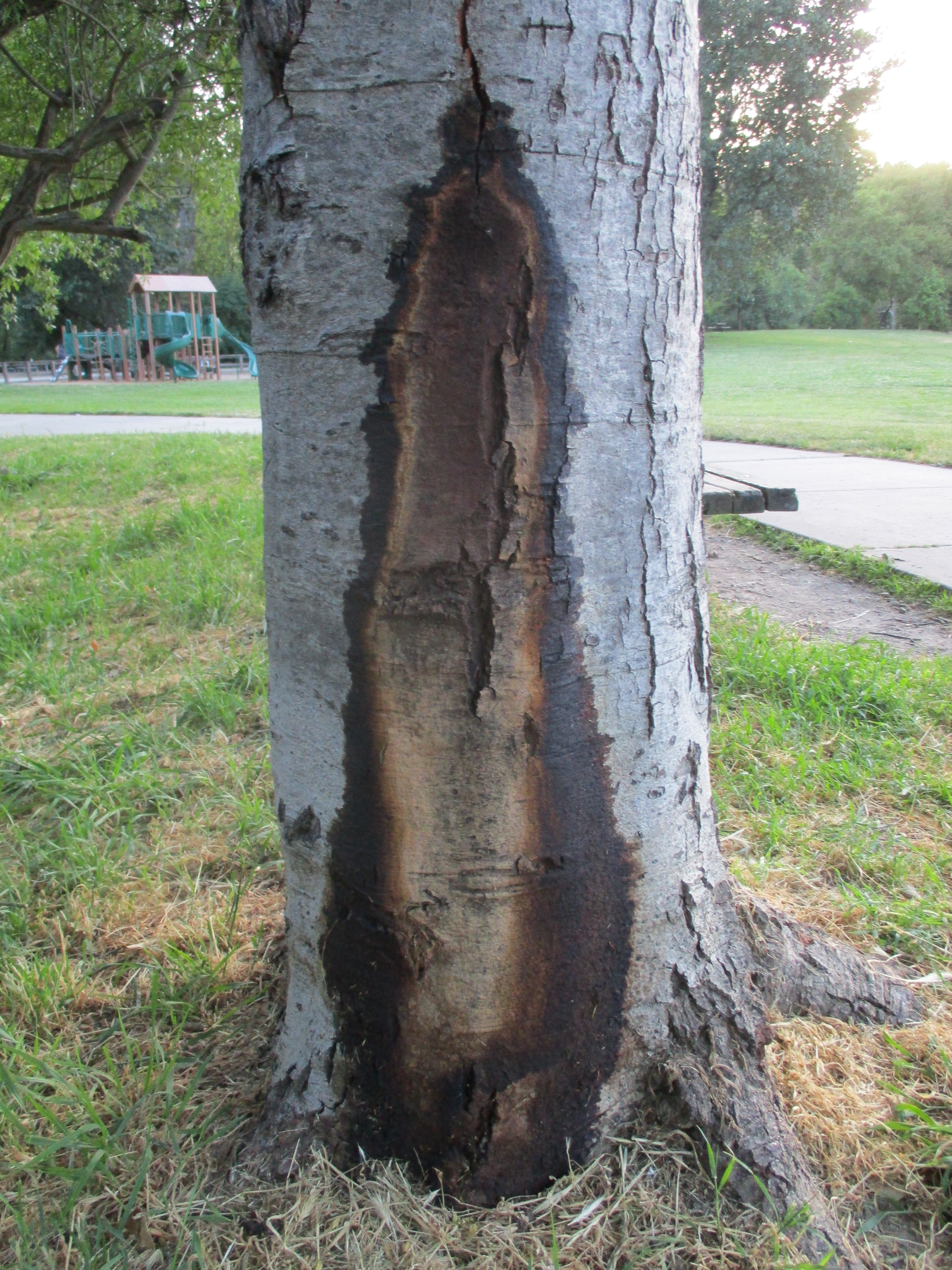 This unhappy native white alder, Alnus rhombifolia, had been deteriorating for quite a while. White alders do not last long even in the wild. A few nearby have already been removed. This one is next. They were nice and shady when the landscape was new. Nicely maturing sycamores and a bigleaf maple can take over for this one now.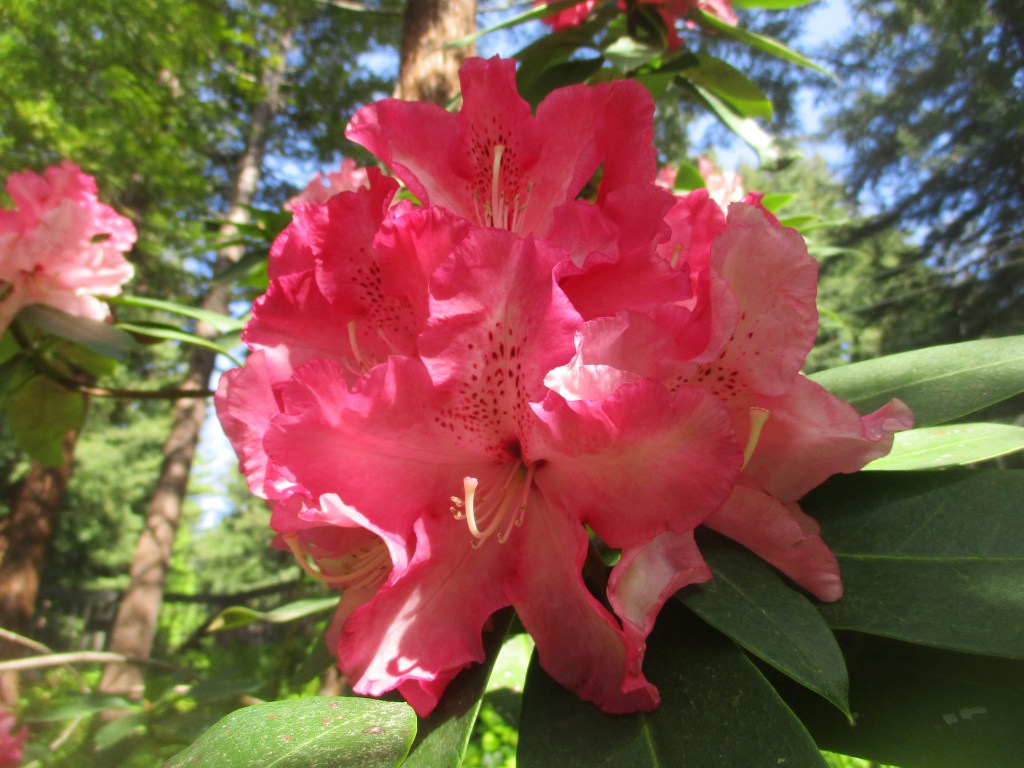



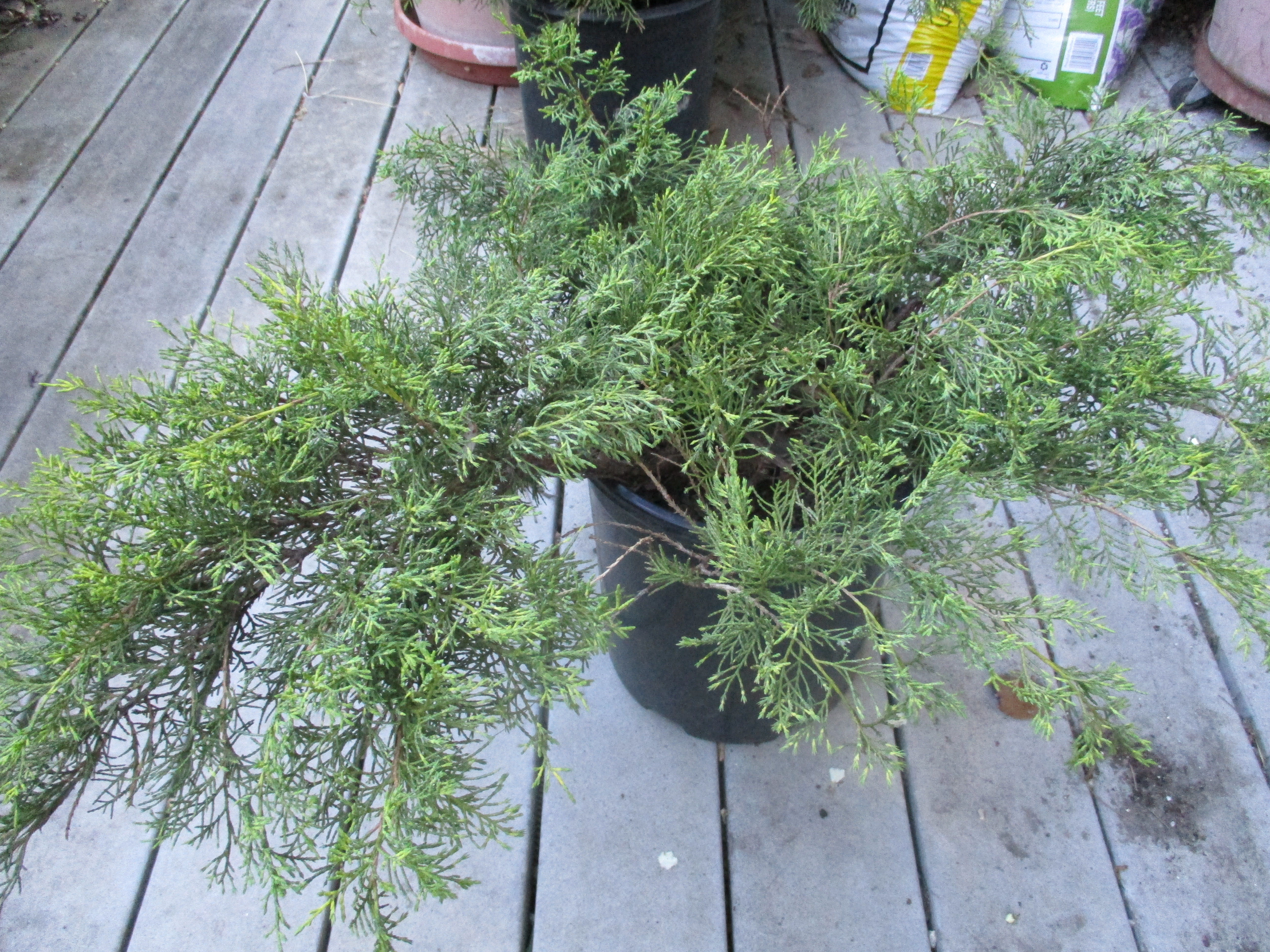 Oh, the stigma of juniper never gets old! No matter how many cool new cultivars get introduced, and how many specie get rediscovered, they are still though of as those nastily prickly ‘tams’ that were too common in the 1950s. Even some of us who really like junipers dislike tams, not only because they share their stigma with all other members of the genus, but also because they really are nasty and prickly, and not as useful as their overuse would suggest. Are they deep ground cover or shallow shrubbery? They might work for a few years, or maybe many years, but they eventually crash into each other or other plants and pile up into a dense thicket that can not be pruned without being deprived of all dignity.


