Horticulturists are by nature, nonconforming. I happen to find it difficult to conform to what makes us nonconforming. Trends are fleeting. Old technology that has worked for decades or centuries is still best. Although I am not totally against chemicals, I find that almost all are unnecessary for responsible home gardening. Pruning is underappreciated, and fixes many problems.
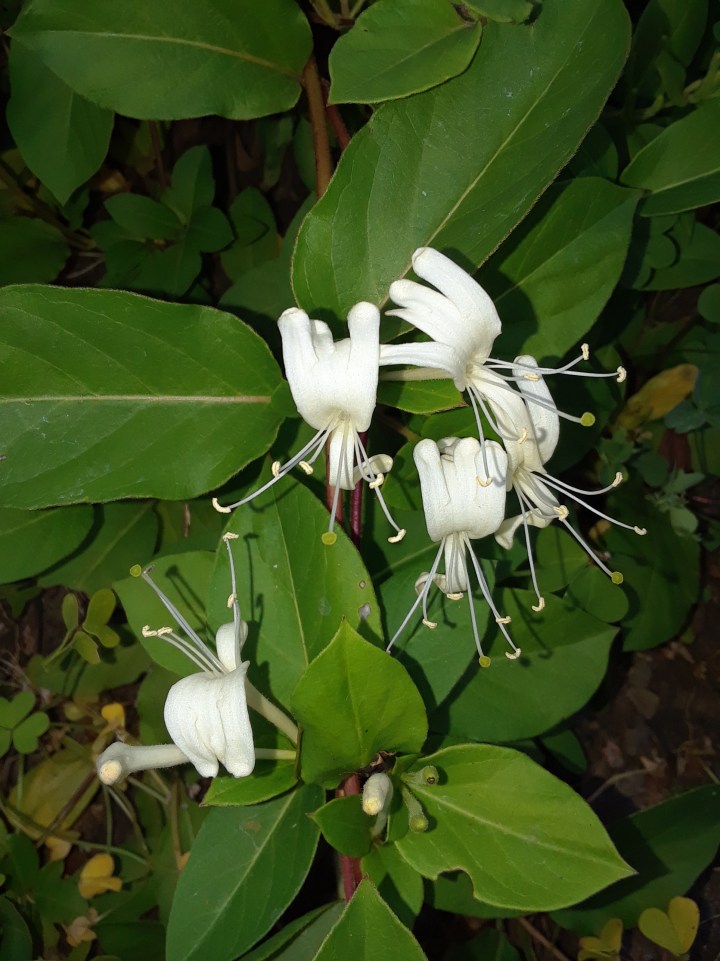
This is no ordinary honeysuckle. It is quite less than ordinary. It is not available in local nurseries. No one here wants it. Although it might be available from nurseries that provide native plants within the native range of this honeysuckle, most of those who find it in their garden probably do not want it there. After all, there are plenty of more desirable honeysuckles to grow. Some have more fragrant bloom. Some have more colorful bloom.
As you can see, this honeysuckle is not very impressive. It is about as shrubby as it is vining, and does not get very big. The small white flowers lack fragrance, and are not very abundant.
What I like about this honeysuckle is that it came all the way from Oklahoma. ( https://tonytomeo.wordpress.com/2017/11/19/oklahoma/ ) It is native there. I do not remember what honeysuckle it is at the moment. I brought it back…
Since this recycled article posted three years ago, the fleabane has been removed from my planter box downtown because it was just a bit too aggressive there. It climbed over the succulents and looked sloppy through summer. At work, it still acorns stone walls where nothing else survives.
Is it really supposed to be the bane of fleas? If so, why? I learned it as Santa Barbara daisy. Is it native there, or was a particular variety of it named for Santa Barbara? Is it a weed? Is it native? Is it a native of somewhere else in California that merely naturalized here? There are so many questions about this simple little flower that is growing wild under a cyclone fence at the backside of a motorcourt at work.
Whether it really is native or not, or whether it is a straight species or a selected variety of one, fleabane happens to do well in drought tolerant landscapes composed of native plants. It naturally spreads out to form shallow but wide mounds. If it gets cut back in its off season, it comes right back. Although it dies after only a few years, lower stems typically…
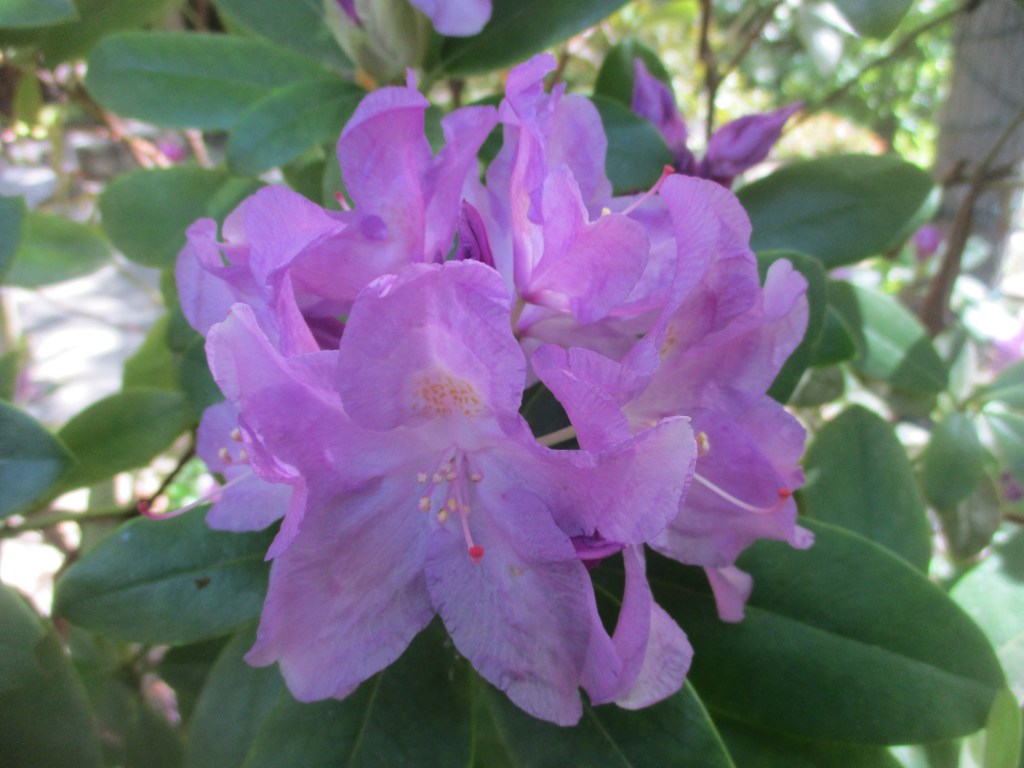
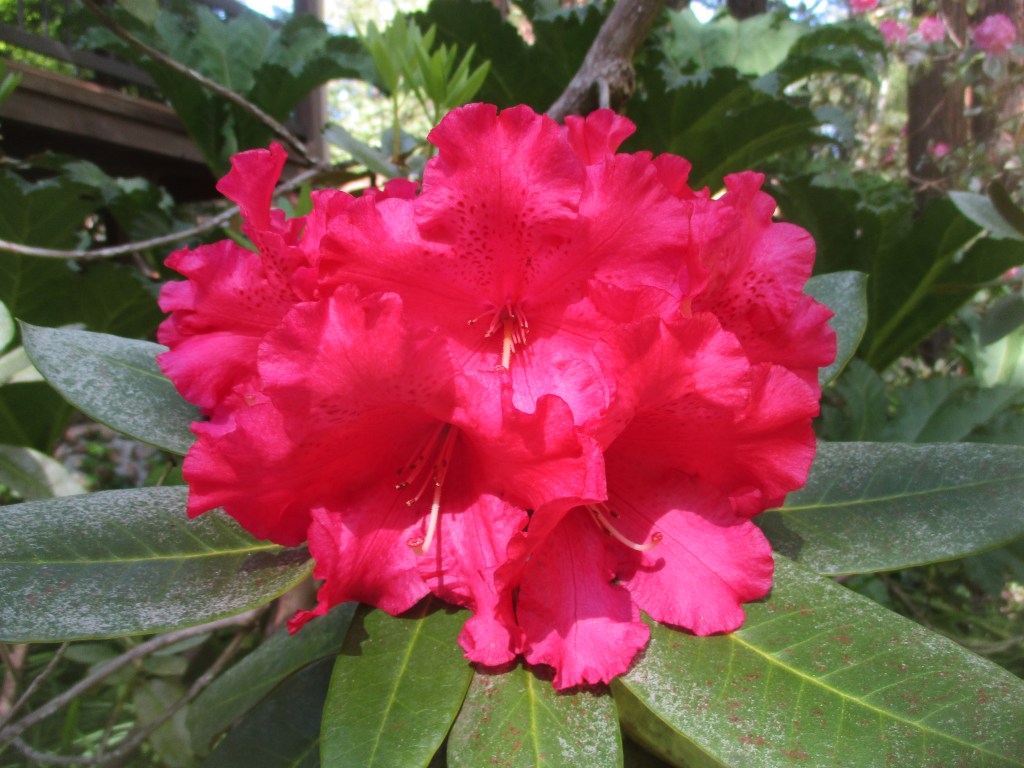
This is more than Rhody Approved. These are SIX rhodies that I approve of. (I do not know what Rhody thinks because I did not ask.) These pictures were taken early last week. All this bloom is deteriorating now, with only the latest bloom lingering. Most of the rhododendrons here are quite mature. Their identities are unknown. Does it really matter?
1. Trude Webster looks something like this, but should stay lower. The specimen that produced this bloom is more than twenty feet high! It is a lanky tree that bends from the weight of bloom.
2. I have no idea what this is. I am not certain about the identities of any of the rhododendrons here; but this one is different. I really do not know what it even resembles! It certainly is pretty.
3. Rhododendron ponticum is a simple species of Rhododendron, rather than an extensively bred cultivar. Unlike its progeny, it is somewhat uncommon in cultivation. This just might be one.
4. Anah Kruschke is what I thought this resembled last year. It looks nothing like it now. I suppose that it could be another specimen. Anah Kruschke is common, so must be here somewhere.
5. Taurus is what I designated this one as, although I doubt that it really is. It is a big and sprawling specimen, with the simplest and brightest red bloom. It happens to be one of my favorites.
6. Lord Roberts blooms with rich burgundy red like the velour upholstery of the 1978 Electra I learned to parallel park with. If you can parallel park an Electra, you can parallel park anything. Anyway, I do not know what cultivar this is, but I know it is not actually Lord Roberts. Its foliage is not right. Nonetheless, without a good white rhododendron, this is my favorite of these six.
This is the link for Six on Saturday, for anyone else who would like to participate:
Where it had been left to develop naturally in old freeway landscapes, shiny xylosma, Xylosma congestum, grew as small trees. The largest are significantly taller than twenty feet. They can be pruned up to expose their nicely flaking bark on sculptural trunks and stems. The evergreen foliage is shiny and rather yellowish green, somewhat like that of camphor tree. The slightly serrate leaves are about two inches long or a bit longer. The tiny and potentially fragrant flowers are rarely seen, and not worth looking for. In refined landscapes, shiny xylosma is popular as a shorn hedge. Xylosma congestum ‘Compacta’ has denser growth, and can be kept only a few feet high if necessary. Vigorous shoots can have nasty thorns hidden in their deceptively gentle foliage. Once established, shiny xylosma does not need much water. It prefers full sun exposure, but will tolerate a bit of shade.
All the wrong plants get shorn. Mow, blow and go gardeners are known for shearing everything that they can reach into creepy and unnaturally geometric shapes, usually flared out at the top, and bulging obtrusively into otherwise usable space. Yet, functional formally shorn hedges are passe and almost never shorn properly.
First of all, a formal hedge should be uniform, which means that all the plants that comprise it should be the same, and planted at the same distance from each other. Any plants within a formal hedge that die should be replaced with the same plant. A single English boxwood plant added to a Japanese boxwood hedge will always stand out with a different shade of green and growth pattern. Seedlings of other plants that grow up into a hedge should be removed before they become part of it.
Secondly, a formal hedge should be contained within defined boundaries. It should get neither too tall, nor too deep (from front to back). A fat hedge wastes space. There is no excuse for a hedge to encroach obtrusively over walkways, driveways or patios.
The vertical faces of a hedge should be completely vertical or slope very slightly inward at the top, but should certainly not slope outward to shade lower growth. A slight inward slope is more important on a northern face of plants that are sensitive to shade.
Hand pruning hedges (with hand shears) produces the best finish, but takes quite a bit of time for big hedges. Shearing with typical hedge shears cuts leaves as well as stems, so can cause foliage with large leaves to look a bit tattered for a while. Hedges that grow fast may need to be shorn twice or more annually. Some hedges can get shorn back aggressively once annually, and then allowed to fluff out evenly through the rest of the year. Bottlebrush and escallonia hedges can bloom nicely and evenly if shorn only once annually.
Glossy and wax leaf privet are among the most traditional of formal hedges. Glossy privet can get quite tall, but wax leaf privet actually has glossier foliage. Photinia and shiny xylosma have a bit more color, but want a bit more space (from front to back). Boxwoods make very nice small hedges. Pittosporums are available in various shapes and sizes. Pittosporum eugenioides gets quite tall, and can be kept quite lean. Pittosporum tobira is shorter and wider.
Seriously, I am not making this up. ‘Drunk Stick’ is what the Spanish name of ‘palo borracho’ translates into. It is one of the few common names of the tree I know only as floss silk tree, Chorisia speciosa or Ceiba speciosa. Yes, it sounds crazy, but not as crazy as what the trunk and limbs looks like. One can speculate why it is known as ‘drunk stick’. I am not certain that I want to know.
The trunk in the picture is that of a small tree still in a #5 can. Larger trunks are no better. They are fat and green, and outfitted with these weird conical thorns. The thorns are not too terribly sharp like those of hawthorns or cacti, but they are terribly stout. Seriously! They are like made of wood! As the green trunk grows, it becomes distended, but only makes more thorns to…
It is rare in nurseries, but common in and near old gardens. Jupiter’s beard, Centranthus ruber, was popular at least a century ago, and is now naturalized. It migrates so liberally, and transplants so easily, that there should be no need to purchase it. Those who grow it in established colonies may be happy to share. Specific cultivars can be elusive though.
Bloom is typically pinkish red, but can be brick red, purplish red, purplish pink, pale pink, or white. Individual flowers are tiny, but abundant, in rather dense and somewhat conical trusses. Bloom begins in spring and becomes more profuse until warm summer weather. A cool situation can inhibit primary bloom, but promote sporadic bloom through summer.
Jupiter’s beard prefers sunny exposure. Although a bit of shade can preserve foliar color and extend sporadic bloom through summer warmth, it compromises profusion of bloom. The slightly rubbery evergreen foliage of bloomed stems deteriorates slowly. Removal of older stems after bloom eliminates shabby growth, and also promotes fresh new growth.
The small bouquet of only four roses that I shared last week was my first for In A Vase On Monday, and should have been my last. I do not intend for this to become a habit. I just happened to encounter a few cheap and trashy flowers right outside that I thought I could assemble for a picture. If I had planned this better, I would have gotten some more interesting flowers from work, and perhaps a more appropriate vase.
Common florist cyclamen should be finishing bloom now that the weather is warming. I am none too keen on how florist cyclamen is used as an expensive cool season annual, so started planting ‘used’ plants into some of the landscapes where they can grow as cool season perennials. They go dormant through summer, and then regenerate during autumn. I do not know why the specimen that produced these few rich red flowers was not planted with the others. It got potted instead, and is now in the recovery nursery.
Mosquito shoo geranium is a bit perplexing also. I got a few cuttings of what I thought was a more appealing scented geranium several years ago. I thought that those cuttings desiccated while I was in Southern California for several days. A few months later, mosquito shoo geranium appeared where the cuttings had been, and grew like a weed. I do not know if it grew from a surviving cutting, or from seed that blew in on the wind and just happened to land there. The specimen that provided these few flowers grew as a second generation seedling.
Flowering maple, although not naturalized, grows from seed near specimens that were intentionally planted. They are remarkably variable. The specimen that provided this single flower, as well as several other small specimen, were taken from a neighbor’s garden that could not accommodate all of them. We intended to add them to our landscapes, but have not done so yet.
The tiny vase is a ‘shooter’ bottle that formerly contained an ounce of some sort of tequila. A few of the same were found in the ivy of one of the landscapes at work. I like them because they are glass rather than plastic like the more common vodka shooter bottles. Also, they are adorned with that distinctive blue agave motif, which sort of makes them more horticulturally oriented.
The dusty shelf and glare on the glossy white background are no accident. The vase was placed on the sill below a whiteboard in our meeting room at work, just inside from where the flowers were collected. It seemed like an appropriate venue at the time, although I can now see that I could have done better.
In A Vase On Monday, which is also known simply as IAVOM, is graciously hosted by Cathy of Rambling in the Garden. Anyone can participate. Simply arrange flowers or other material from the garden in a vase, and share pictures of it with commentary and a link back to Rambling in the Garden. Also, leave a comment at Rambling in the Garden with a link back to your post.
Shade trees are no longer appreciated like they had been. Only half a century ago, they were important components of suburban landscapes. Big deciduous trees shaded broad lawns and sprawling roofs during the warmth of summer. They defoliated to let warming sunlight through during winter. Now, modern architecture would not accommodate them.
Sunlight has not changed. Human interaction with it has. Modern homes are significantly taller, so create bigger shadows. They are closer together, with less garden space that is not within their bigger shadows, or shadows of adjacent homes. Higher fences intended to compensate for the minimal proximity of adjacent homes contribute even more shade.
Gardening can be difficult within the limited space and abundant shade of modern home gardens. Small evergreen trees or big shrubs that obscure unwanted scenery above the fences can also obscure much of the sunlight that manages to get past the infrastructure. Substantial vegetation in neighboring gardens can get close enough to be influential too.
The primary part of modern homes that is not excessively shaded is the roof, which is not used for gardening. Trees that are proportionate to modern home gardens are not much taller than associated modern roofs. Modern attics are fortunately insulated so efficiently that shade is not important. Besides, many modern homes are outfitted with solar panels.
Walls and windows of modern homes are efficiently insulated as well. Warming sunlight during winter is therefore not as much of an advantage as it is for older homes, although it is appealing within sunnier homes. Ironically, the utility cables of many modern homes are subterranean, so will not interfere with trees that get too big for their confined spaces.
Regardless of their functions within their landscapes, even small trees can develop roots that are sufficiently aggressive to displace pavement and deck suspensions, particularly since they are likely to be close to them where space is limited. Turf grass that is thin and wimpy because of insufficient sunlight is more susceptible to lumpiness of surface roots. Because of proximity, neighboring gardens must be considered too.
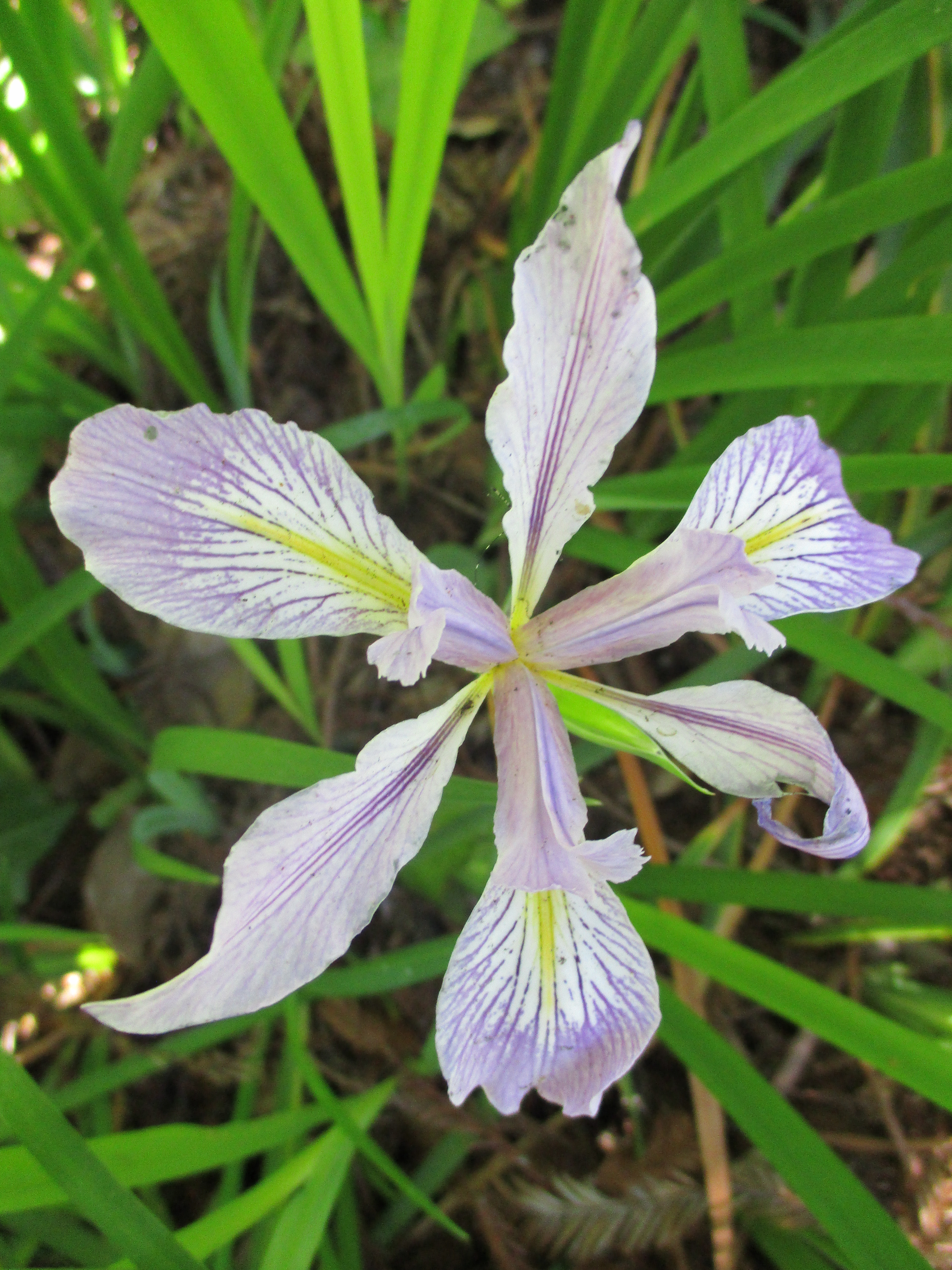
It is not as if the previous article about it was inadequate. https://tonytomeo.wordpress.com/2018/05/05/san-francisco-iris/ I really did not want to get into the habit of writing so many sequels. However, something happened to necessitate this update.
I found what seems to be a REAL San Francisco Iris, right here in the Santa Cruz Mountains. Except for being somewhat etiolated from the shade of the surrounding redwoods, it looks very similar to the San Francisco iris I picked on the Montara Peaks when I was in high school! This one happens to be a bit lighter blue than most, but is certainly well within the color range of the flowers that I remember. Most were probably a bit darker blue, but many were lighter, and some were very pale blue.
It is impossible to know if it was planted in this spot that had been landscaped in the distant past, or merely…

 Erigeron karvinskianus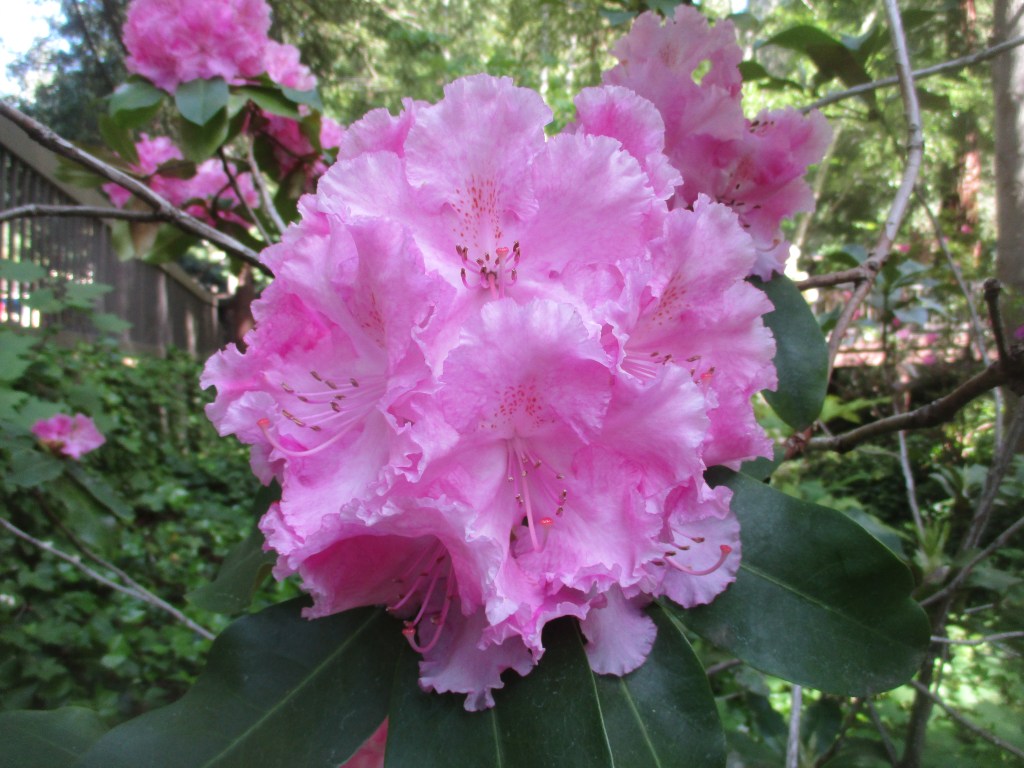




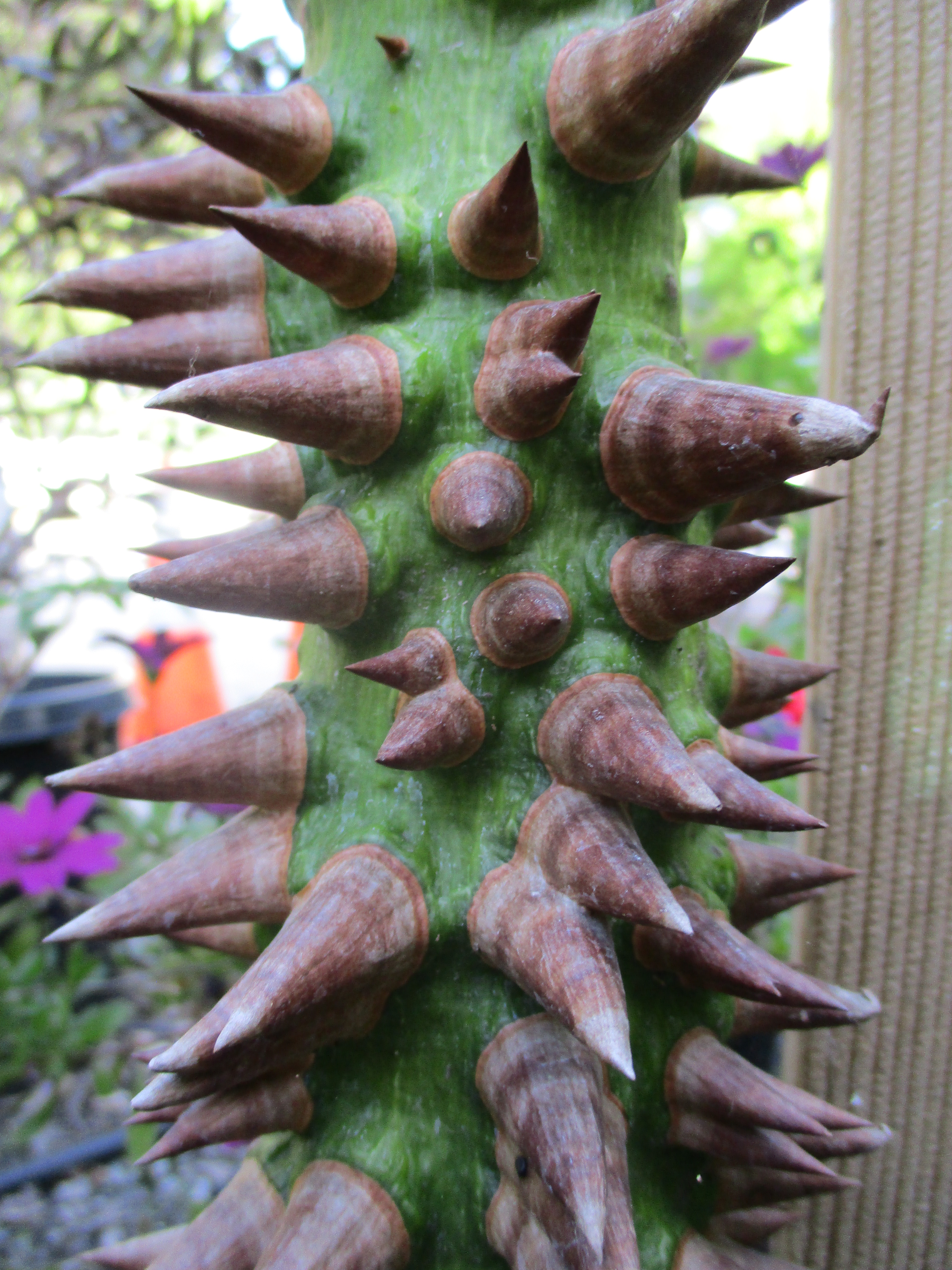 Seriously, I am not making this up. ‘Drunk Stick’ is what the Spanish name of ‘palo borracho’ translates into. It is one of the few common names of the tree I know only as floss silk tree, Chorisia speciosa or Ceiba speciosa. Yes, it sounds crazy, but not as crazy as what the trunk and limbs looks like. One can speculate why it is known as ‘drunk stick’. I am not certain that I want to know.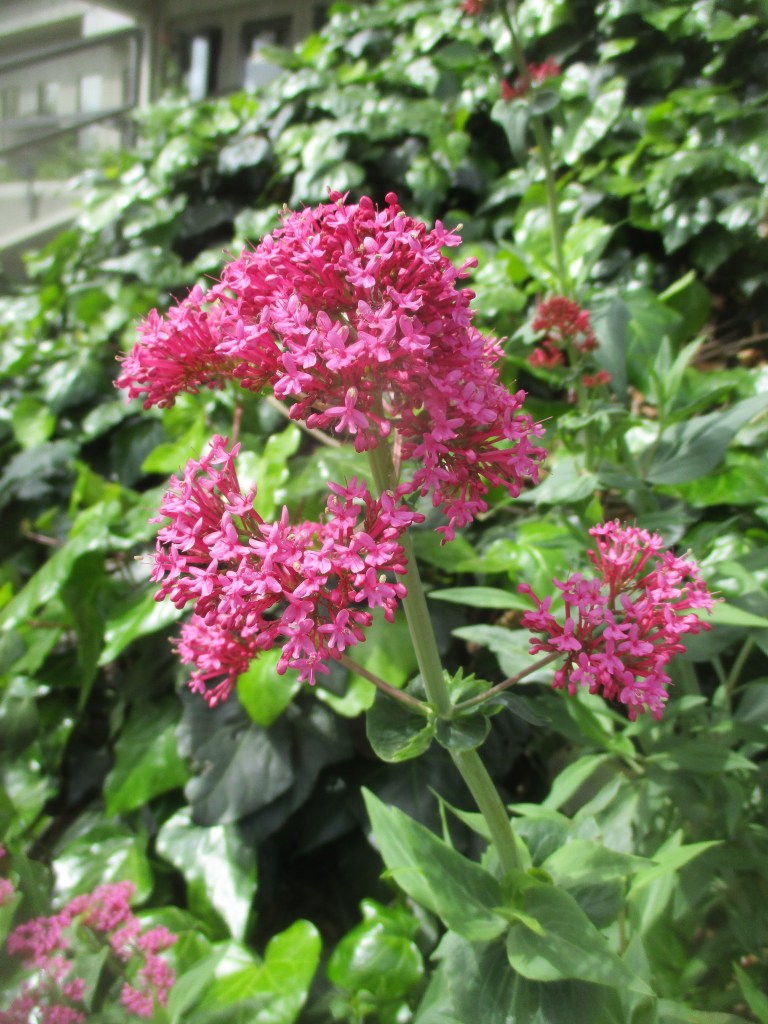


 It is not as if the previous article about it was inadequate.
