Horticulturists are by nature, nonconforming. I happen to find it difficult to conform to what makes us nonconforming. Trends are fleeting. Old technology that has worked for decades or centuries is still best. Although I am not totally against chemicals, I find that almost all are unnecessary for responsible home gardening. Pruning is underappreciated, and fixes many problems.
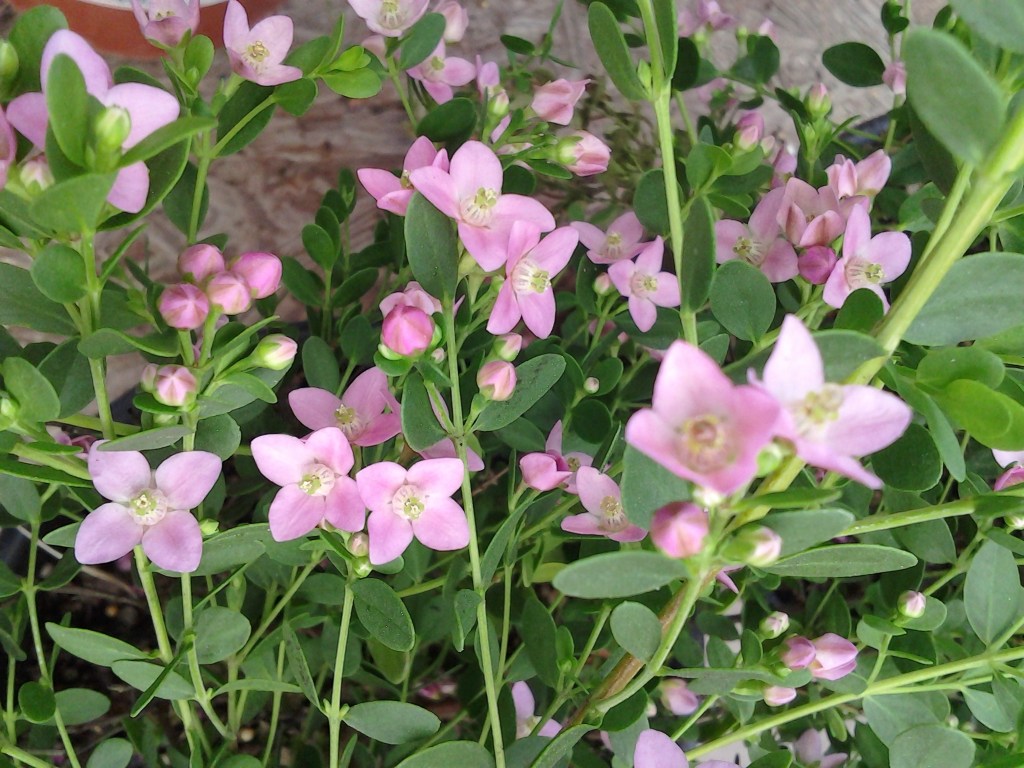
Boronia may not be completely new to west coast gardens, but ‘Shark Bay’ boronia, Boronia crenulata ‘Shark Bay’, might not be immediately recognizable as a relative of the more familiar types that have wispy foliage and contrasting brownish red flowers. Instead, it has more substantial light green leaves and soft pink flowers. The foliage and flowers are similarly tiny, just not as finely textured. Bloom is sporadic throughout the year, and becomes more abundant as winter ends and spring begins.
‘Shark Bay’ boronia likes somewhat regular watering, and to be in full sun amongst other plants. Harsh exposure or too much glare (such as from pavement or exposed walls) can fade foliage. Light shade is not a problem, but too much shade inhibits bloom. Because it grows rather slowly and does not get too big, ‘Shark Bay’ boronia does well in containers, and plays well with annuals and complaisant perennials. Mature plants do not get much more than two feet high.
It is safe to say that any remaining frost damage can be pruned away. Frosted foliage and stems were only left through winter to help insulate inner stems from more damage by subsequent frost, and to avoid stimulating new growth that would be even more sensitive to frost. Now that there is no threat of subsequent frost, and surviving but damaged plants are growing anyway, there is no reason to retain unsightly frosted foliage. The few plants that do not regenerate probably did not survive.
Spring is the busiest time of year for most plants. By now, most have either bloomed or will be blooming soon. Early spring bulbs have already finished. Later bulbs will be blooming soon enough. Deciduous plants that were bare through winter are developing new foliage. Evergreen plants are likewise growing new foliage to replace older foliage that will get shed later in the year.
If necessary, flowering cherry, flowering crabapple, lilac, forsythia and mock orange (Philadelphus) can be pruned as they finish bloom. Flowering cherry should not need much; but flowering crabapple might be in need of aggressive structural pruning. Some of the older canes of lilac, forsythia and mock orange can be pruned to the ground, where their replacement canes are probably already emerging.
Overgrown or disfigured oleander, photinia, bottlebrush, privet, pittosporum and juniper that need restorative pruning can be pruned now. They recover most efficiently in early spring, and have plenty of time to develop plenty of new growth before they slow down again next autumn. If pruned much earlier, they would have stayed bare longer, since they would not have grown much through winter. Besides, almost all pittosporum are susceptible to disease if fresh pruning wounds are exposed to rainy weather.
Seed can be sown for any of the warm season vegetables and flowering annuals, such as zucchini, corn, okra, nasturtium, lupine and sunflower. Tomato, pepper, eggplant, petunia, marigold and busy Lizzie (Impatiens) can likewise be grown from seed, but are easier to grow from small cell pack plants. Cuttings of jade plant, iceplant, sedum and all sorts of succulents, as well as divided pups of aloe, agave and yucca, really get going well this time of year.
Shady applies to more than trees. It applies to many of those who are hired to maintain trees and landscapes. In my career, I have worked for some of the best arborists, nurserymen and other horticulturists. In fact, some of my colleagues, particularly a landscape designer, two nurserymen and at least three arborists, happen to be legendary. I would say that I don’t mean to brag, but that would be inaccurate. I will write about some of them sometime. This here is not about them.
Sadly, I have had the misfortune to work with some really shady characters and businesses. They may seem to be more professional than the real professionals who take their professions very seriously, but it is all for show. I can tell you all about the brochures, and use all the buzz words, but it is all a lie. From sustainability and planting natives to save…
Its narrow native range stays near to the North and Central Coast of California, including Carmel. However, its nomenclature is all over the map. The genus is Ceanothus. After that, the species name might be any combination of thyrsiflorus, griseus or horizontalis, or omitted. ‘Carmel Creeper’ is its cultivar name, with or without the species designation. It is certainly no horror movie starring Clint Eastwood. Carmel Creeper is one of the more practical ceanothus. It spreads out laterally as a deep and densely foliated groundcover. With room to sprawl, it can stay less than three feet tall. Shiny evergreen foliage remains after the fuzzy denim blue bloom of early spring. Individual leaves are distinctly rounded. Like all native ceanothus, or California lilac, California creeper ceanothus does not want much water once established. It dislikes major pruning too, so prefers areas where it can sprawl freely. Partial shade inhibits bloom and foliar density. Birds enjoy the cover. Bees enjoy the bloom. Unfortunately, even happy plants may not live longer than fifteen years.
Native plants are obviously happy with local climates and soils. Otherwise, they would not be native. They had been living here long before the first landscapes. They survived without irrigation, fertilizer or any maintenance. Regional varieties adapted to regional environmental conditions. Some of such varieties became cultivars that are now familiar. A variety is, more or less, a naturally occurring variant. Unnatural selection and breeding produced some varieties. Generally, varieties are genetically stable enough to replicate for at least a few generations. A cultivar is a cultivated variety. It is unable to replicate by natural processes, so propagates by cloning. All clones are genetically identical copies. Most cultivars grow from cuttings. Some cultivars of exotic (nonnative) plants are grafts. (Not many natives are conducive to grafting.) Regardless of technique, propagation of all cultivars is vegetative (without seed). Seed of some cultivars can produce plants that are similar to the parents, but not indistinguishable. Some will likely be completely different. Honestly, most native plants are not as appealing in home gardens as their cultivars are. Some are desert or chaparral plants, which can get scraggly through summer. Some are sparsely foliated with irregular branch structure. Like the majority of exotic plants, several native plants benefited from some degree of refinement. It is a fair aesthetic compromise. This is partly why landscapes of native plants look nothing like forests or unlandscaped areas. The dense and strictly conical form of ‘Soquel’ redwood is very different from that of wild trees. ‘Carmel Creeper’ ceanothus is greener and more densely foliated than wild counterparts. ‘Ken Taylor’ flannel bush is likewise unnaturally dense, low and mounding. The other primary reason that landscapes of native plants are so different from the wild is that they typically include species from other regions. Some of the penstemons that are popular as native plants throughout California are actually only native to the Siskiyous. Limiting landscapes to true regional natives would produce very different results.
As excellent as the weather has been, it is difficult to imagine that the San Lorenzo River was so high at about this time three years ago when this article posted.
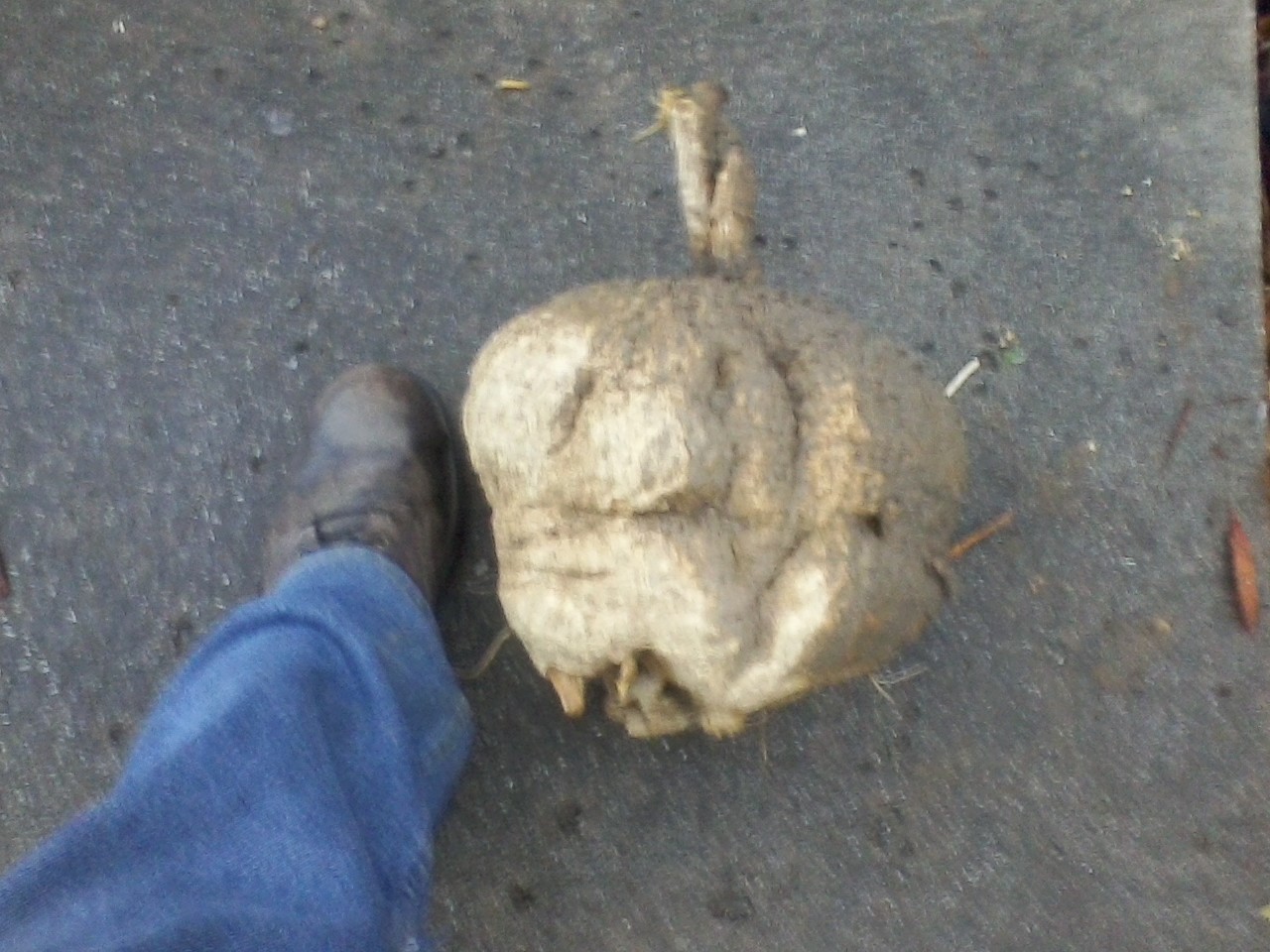
It really is as big and ugly as it looks. That is a size 11 boot next to it to demonstrate how big it is. We can not eat it. There is no need to put it back into the river. It is not moving. It was alive, and still is. It is the distended tuberous root of a wild cucumber, of the genus Marah, which is also known as ‘manroot’ because of how big it can get. That stub protruding from the top (toward the top of the picture) is the remnant of a stem. A few thin roots protrude from the lower half, with thicker root stubs at the bottom.
(Apologies for the delay posting this. From my perspective, it posted not long after midnight this morning. Only now I notice that it did not really appear.)
Rhody is the color of ‘maple cream’. That is Valspar color 3003-4B. It is lighter that the color of a maple bar, but certainly not white. Nonetheless, some people think that Rhody is white. For these Six, it would have been sufficient. Actually, it is mere coincidence that four subjects are white, and that the two that are not are such pale pink that they are more white than Rhody is.
Incidentally, Rhody is absent for this Saturday.
1. Camellias should not be trees. The flowers of this one are too high, and the growth is too sparse. It is pretty nonetheless. It was actually taller before getting pruned down a bit last season.
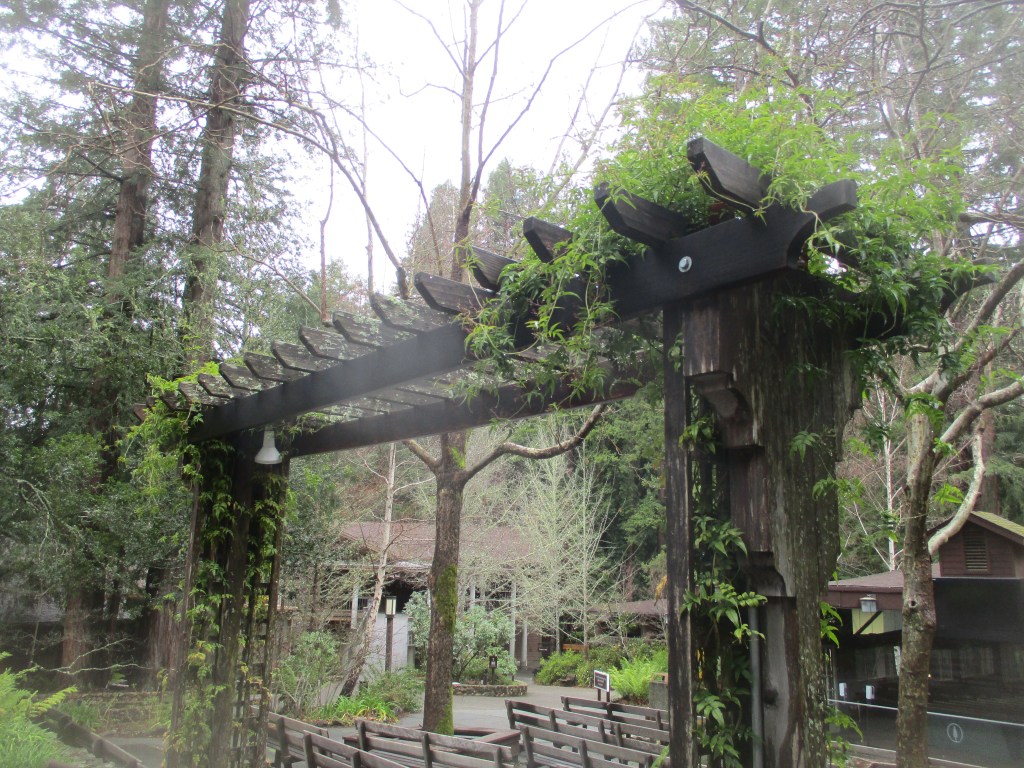
2. Pink jasmine does not cooperate. It got pruned back after bloom last year, in an attempt to stimulate growth across the top of the arbor. Instead, it just gets bunched up in the top corners.
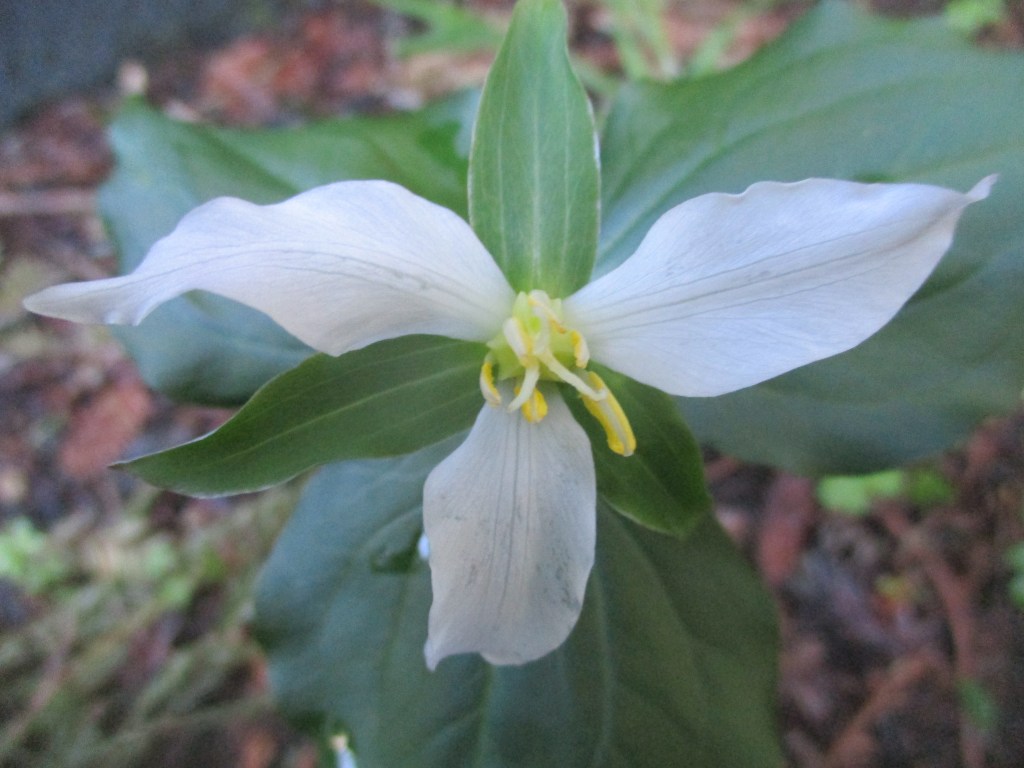
3. Trilliums are uncommon wildflowers of shady redwood forests. White trilliums are so rare that, if I could figure out how to do so, I would like to move these to a more prominent situation.
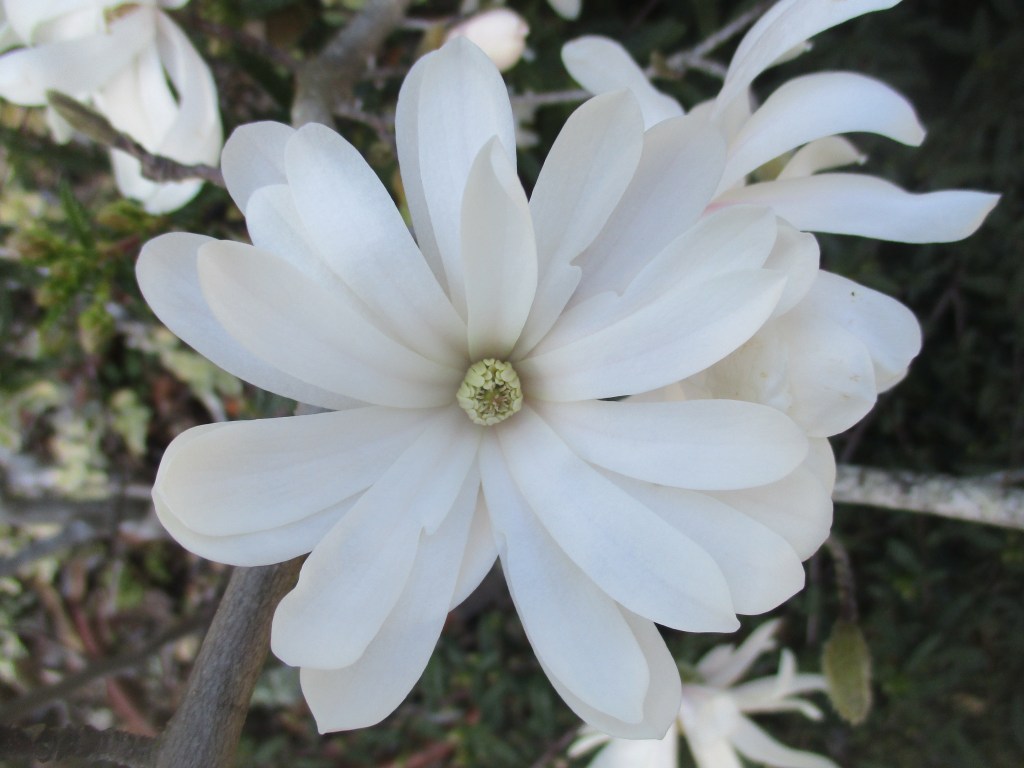
4. Star magnolia has never bloomed so well. It was originally in an uncomfortable situation, and then needed to be relocated during the middle of summer. It is recovering slowly but steadily.
5. White birches partly in a white pickup did not go far like this. A nearby neighbor wanted them removed. The two unloaded above the wall here live in front of the building to the right now.
6. Snow is extremely rare here, but sometimes happens up at Bonny Doon, where this car came from. It looks like winter! Bonny Doon is not far away, but at a significantly higher elevation.
This is the link for Six on Saturday, for anyone else who would like to participate:
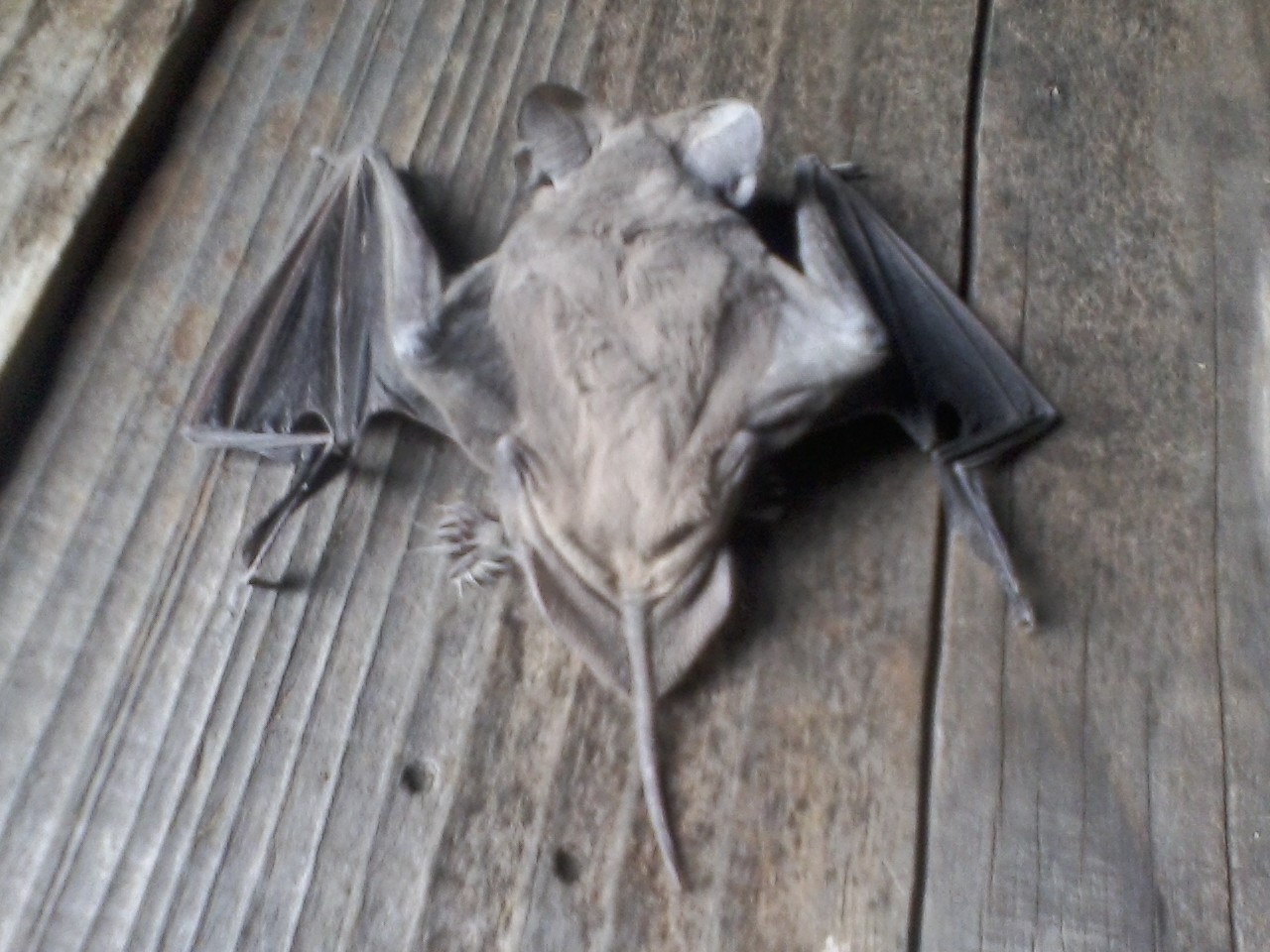
It showed up in a conference room at work, and needed to be removed. The young lady who found it motionless on the floor did not want to handle it, so I took it outside and laid it on top of a utility panel, hoping that it might fly away. After only a few minutes, it was gone. I did not see a cat or anyone else who would have eaten it; so I am hopeful that it flew into a nearby riparian area to find some insects to eat, and to recover from being trapped inside.
I have no idea what happened to it, or how it ended up in such a bad situation. It was on the floor below a skylight…
Colorado must really like blue. Not only is the state tree the Colorado blue spruce, but the state flower is the Colorado blue columbine, Aquilegia caerulea. However, the flowers are not always blue, and in fact, are often white or various shades of pink or soft yellow, or a combination of two colors. The many other specie and hybrids of columbine add even more shades and combinations of richer shades of blue, red, yellow, orange and purple. The distinctively lacy foliage is somewhat bluish. A few varieties have chartreuse foliage.
Although potentially perennial, most columbine do not reliable regenerate after winter dormancy, so are instead grown as spring and summer annuals. Flowers are not as abundant as those of other annuals, but are interesting close up, and very attractive to hummingbirds. Mature plants stand about a foot tall, so work nicely in pots surrounded by lower and more colorful annuals like lobelia and alyssum. Columbine prefers partial shade and rich soil. Plants in full sun tend to be more compact and seem to be a bit faded. Incidentally, some parts of the plants are toxic.
The differences between nurseries and garden centers within big box type home improvement centers should be more obvious. Contrary to all the fancy marketing, a big box garden center really is just another of many departments within a larger home improvement center. A good nursery specializes in plants, and only plants. A sales representative in a big box store might have been selling paint or refrigerators last week. A nurseryman in a real nursery works regularly and more exclusively with horticulture.
It is probably safe and most likely significantly less expensive to obtain common and resilient plants from big box garden centers. Crape myrtles (ick!), oleanders, pittosporums, junipers and photinias seem to be healthy regardless of their respective origins. However, more unusual varieties of more unusual plants, or plants that are likely to be damaged by a bit of neglect, are either unavailable or likely to be of inferior quality in big box garden centers. Only the most common and resilient cultivars (varieties) of rhododendrons, flowering cherries, flowering dogwoods and fuchsias are marketed. If they get damaged, the damage may not be noticed by the possibly undiscriminating staff.
Nurseries are not only able to maintain their stock better, but can maintain a much more extensive selection of different types of plants. The more finicky types of ferns, columbines, azaleas and Japanese maples are no problem. Experienced horticulturists are familiar with the plants that they work with, and can make recommendations for those who might need help with selection. The prices are often more expensive, but are justifiable to those wanting specific plants that can not be found elsewhere.
A few wholesale nurseries that procure nursery stock for the landscape industry are open to the public for retail. Their retail (not wholesale) prices can be comparable to those of big box garden centers. The selection is different, which means that they lack many plants, but have a few others that the big box garden centers lack. They have plenty of horticultural expertise, but not much sales staff.




 What is it?!?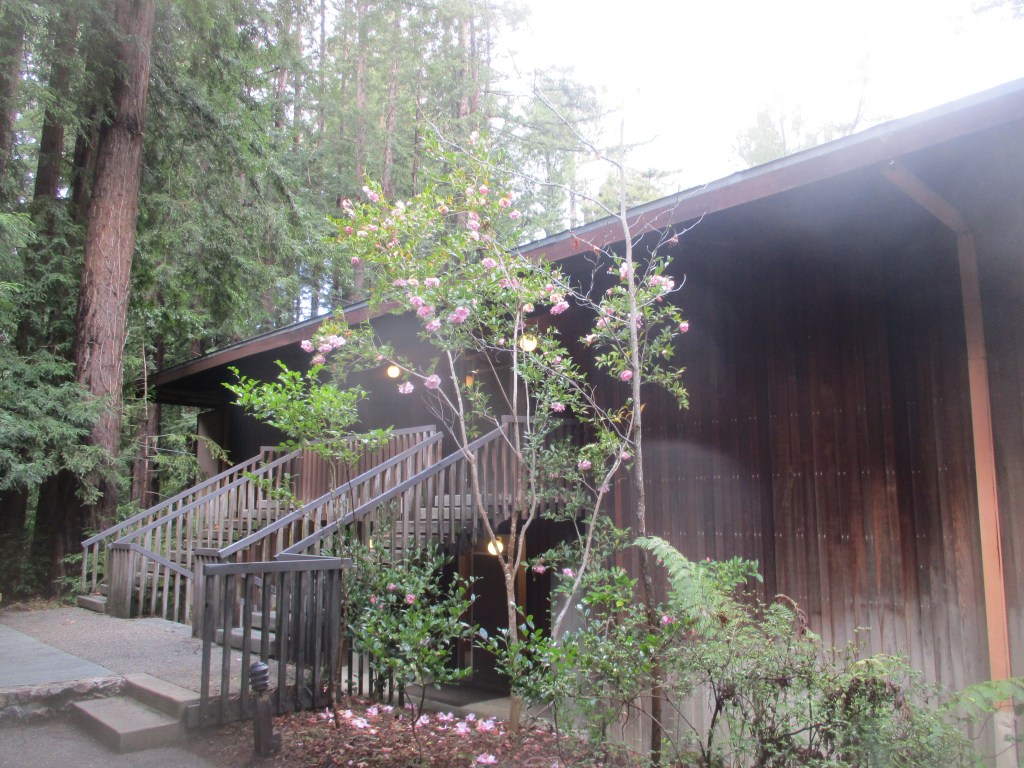


 He or she; let’s just go with ‘it’ – has no name that I am aware of. It might be an acquaintance of Pepe. (