Six on Saturday: Frozen

It was unusually cool yesterday morning. Deciduous trees are a bit more colorful. Some are defoliating. It is looking more like autumn. The soil is still damp from a little bit of rain more than a week ago. Although there is no more rain in the forecast, this rainy season could start at any time now. This is the time for autumn planting, and will soon be the time for dormant pruning.

As much as I like enjoy this weather and this time of year, I can understand why people get annoyed by it in climates where it starts sooner, lasts longer, and gets significantly cooler.

1. Frost on the windshield is not uncommon during winter. It is uncommon prior to winter though. It is also uncommon in the relatively warm (less cool) area where this vehicle was parked.

2. Frost on the roofs is a bit unexpected so early as well. It had covered this roof thoroughly, but is melting now that the sun is coming up. The weather really did not ‘feel’ as cold as it looked.

3. This contraption does not seem so ridiculous now. It insulates an exposed water main, to hopefully protect it from freezing. Water pipes seldom freeze here. Nonetheless, it is a possibility.

4. Dogwood colors well for autumn, even when the weather is not so cool. The species does not perform so well in the Santa Clara Valley, just a few miles north. Notice the frosty roof beyond.

5. This young birch is already defoliated! Actually, it is a formerly canned specimen that is a bit distressed from planting on November 8. Other birches are still wearing bright yellow foliage.

6. Turkeys return annually, precisely on the morning after Thanksgiving, after disappearing for about two or three weeks. Who knows where they go? Their stupidity might be exaggerated.

This is the link for Six on Saturday, for anyone else who would like to participate:

https://thepropagatorblog.wordpress.com/2017/09/18/six-on-saturday-a-participant-guide/
Burro’s Tail

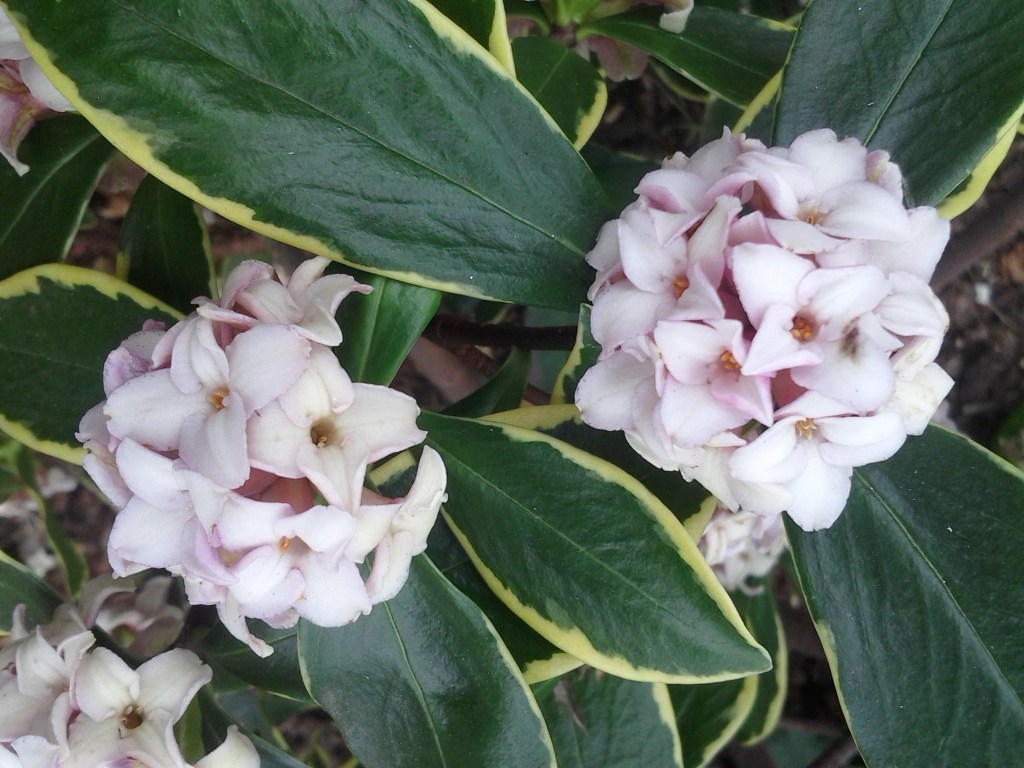
My pictures are missing, so I found this one online without copyright protection. It demonstrates the cascading habit of burro’s tail.

Back when big spider plants or Boston ferns suspended in fancy beaded macrame were all the rage through the 1970’s, burrow’s tail, Sedum morganianum, was an unusual but also trendy succulent perennial for sunny spots in the home or sheltered and slightly shaded spots in the garden. The refined foliar texture and light bluish green color contrasted nicely with the big and deep green leaves of comparably trendy philodendrons. The thin stems are too limber to stand up, but cascade excellently. Plants in the garden that get pruned back while dormant in winter can easily get two feet long through summer. Without pruning, big plants can get longer than six feet. Pruning scraps and even the small but plump leaves can be rooted and grown into new plants. It is impossible to prune or even move burro’s tail without dislodging some of the leaves anyway. Watering should be regular but not excessive, but then minimal for plants in the garden through winter.

Potted Plants Need Work Too

Potted plants do not have much soil volume to work with.

Potted plants can be a problem any time of the year. Some want more water than get. Most get too much water or do not drain adequately. Large plants get constricted roots if pots are too small. The roots of some plants get cooked in exposed pots that collect too much heat from sunlight. Besides, too many pots just seem to be in the way in otherwise useful spaces on decks, patios and anywhere else trendsetting landscape designers want to put them.

Now that the weather is getting cool and rainy, potted plants are not as active as they were during warm weather. Many are dormant. Although few demand the attention that they got during warmer weather, plants still need to be tended to appropriately through autumn and winter.

Cool season annuals, which are also known as ‘winter’ annuals, should get groomed as long as they are performing in the garden, just like warm season annuals get groomed through summer. Deteriorating flowers should be plucked from pansy, viola, primrose, Iceland poppy, calendula, dianthus, stock, chrysanthemum and cyclamen because they can mildew and spread mildew to developing flowers and foliage. Unplucked cyclamen and calendula can develop seed which diverts resources from bloom.

Pots that are out in exposed areas will not need to be watered while they get enough water from rain. The problem is that many that do not drain adequately can get too much water from rain and stay saturated. Dormant and defoliated plants do not need much moisture at all. Even evergreen plants do not need as much as they do while active during warm weather, because cool and humid weather inhibits evapotranspiration (evaporation from foliar surfaces).

Potted plants under eaves also need less water while the weather is cool and humid, but need to be watered nonetheless because they are sheltered from rain. Plants in hanging pots typically drain and dry more efficiently, so probably want a bit more water. Even a few sheltered small plants in the ground may occasionally want to be watered during rainy weather if they do not extend enough roots where they can get moisture from rain beyond the sheltered area. Sheltered plants are actually the most likely to be neglected because watering does not seem so important when it is raining.

Holy Guacamole!

This old article does not conform to the ‘Horridculture’ meme for Wednesday like ‘Anti-Community Garden’ would have; but I already reblogged that article, so can not do so again. (It can be found at https://tonytomeo.com/2017/12/09/hate-destroys/ .) At least this article is more amusing.

tonytomeo's avatarTony Tomeo

P71202.jpgHorticulturists have a way of making all those long Latin names sound easy to pronounce. Lyanothamnus floribundus ‘Asplenifolius’ – Syzigium paniculatum – Metasequoia glyptostroboides. I do not know why proper pronunciation of their names is so important. They have no ears. They can not hear if we simply call them ‘Earl’. Even if they could hear, they would not respond.

Communication with other people is probably more important. Yet, we are so often unable to spell something as seemingly simple as the sound of a palm frond falling to the ground. Does it sound like “whoosh”, or “splat”, or some combination of both? What do the Santa Anna Winds sound like as they blow through a grove of Aleppo pines? What does a red flowering gum full of bees sound like?

Heck, Brent could not even tell me what an incident that he heard in his own backyard sounded like…

View original post 399 more words

Arizona Cypress

Arizona cypress can be strikingly blue.

If Hetz blue juniper grew as a tree, it might look something like Arizona cypress, Cupressus arizonica. The evergreen foliage of modern cultivars is almost as blue as blue spruce. Older trees that grew from seed (not cloned) can exhibit significant genetic variability, and are more grayish green than blue. Some are stout and shrubby. Taller specimens might exhibit sculpturally irregular form.

In the wild, Arizona cypress is even more variable, with as many as five distinct varieties. Some varieties are sometimes classified as separate species. Shorter types may get no taller than a two story house. Taller types get twice as tall, and as wide as thirty feet. Trunks can get two feet wide. Smooth Arizona cypress has patches of distinctively flaking bark over shiny chestnut brown bark.

Arizona cypress are best where they can develop their natural form. They prefer no more than minor pruning of awkward stems. Although, none seem to mind grooming to eliminate dead or aging stems. Modern cultivars are more conducive to minor pruning than older trees. Some cultivars supposedly make nicely dense shorn hedges. Furthermore, shearing enhances the blue foliar color.

Evergreens Make A Mess Too

Big evergreen trees make big messes.

Nature is messy. It is that simple. Leaves, flowers, fruits and stems regularly fall from vegetation onto the ground. Animals contribute their mess too. Insects and microorganisms seem to eliminate most of the mess. In reality, they merely accelerate the process of recycling the mess back into more mess. Decomposing organic matter sustains viable vegetation as it perpetuates the process.

Natural mess serves many other purposes as well. It really is an important component of ecology. It retains moisture and insulates the soil. Many plants drop foliage that inhibits the germination of competing plants. Many merely smother competing plants with their mess. Several, particularly locally, produce combustible debris to incinerate their competition in the next convenient forest fire!

Obviously, the sort of mess that is so beneficial in nature is not so desirable in home gardens. Even if weed suppression and moisture retention are appealing, combustibility is not! Neither is any mess that vegetation deposits onto hardscapes, roofs or lawns. Such mess becomes more apparent as deciduous trees defoliate this time of year. Most produced no other mess since last year.

As messy as deciduous trees are, they are generally no messier than evergreen trees. They just happen to defoliate within a very limited season, rather than throughout the year. Some evergreen trees shed more in a particular season, typically as new foliage replaces the old. Otherwise, they shed slowly and persistently throughout the year. The mess seems like less, but is just prolonged.

Both evergreen and deciduous trees serve their respective purposes. Evergreen trees obscure unwanted scenery all year. Deciduous trees provide cooling shade for summer, and allow warming sunlight through for winter. The misconception that deciduous trees are necessarily messier should not exclude them from home gardens. Deciduous trees are often the most appropriate options.

Every species and cultivar of tree is unique. Many deciduous trees actually are messier than some evergreen trees. However, most are not.

Too Late For Pie

Shortly after this article posted three years ago, a leaky pipe was exposed, and has since been repaired.

tonytomeo's avatarTony Tomeo

P71203Just a few feet downhill from where the old valley oak had lived for centuries (https://tonytomeo.wordpress.com/2017/09/11/goodbye-to-an-old-friend/), a pumpkin vine appeared shortly after the big oak stump was ground out. That was in late September, so was much too late for it to do much; or so I thought.

The vine grew very quickly! It is hard to say if it got water from a leaking pipe. A valve manifold that is visible in front of the stump in the original picture is completely obscured by the foliage of the vine in the second picture. With all the heavy work that was done right on that spot, it would have been very easy for a pipe or exposed valve to get damaged. (Water from a previously leaky pipe or valve could have contributed to the demise of the tree, by promoting the development of excessively heavy foliage that caused…

View original post 165 more words

Felton Covered Bridge

Ha! This old article shows how less uptight I was about blogging three years ago.

tonytomeo's avatarTony Tomeo

04Now that I have been watching a few other blogs for three months, I notice that some people write some very interesting or at least entertaining articles about topic that are not directly related to the main topic of their respective blogs. Most are just like old fashioned slide shows (remember those?) with cool pictures from around the neighborhood, travels, home projects, or whatever might be interesting. I have not done this yet; but I happen to have a bit of free time at the moment, so thought that I would post these three pictures of the historic Felton Covered Bridge. Although I am technically from Los Gatos, my home is in the Santa Cruz Mountains between Los Gatos and Felton. I also have history in Felton, since my grandparents and my Pa used to live here.

In an attempt to keep this post relevant to horticulture, I should mention…

View original post 326 more words

Six on Saturday: After The Fire

Much of my work for the second half of the week is still affected by the CZU Lightning Complex Fire of last summer. Combustibility of the forest is a major concern. Vegetation management is now a priority. Fire roads must be cleared. Trees that are too close to buildings or hang over roofs must be removed. I am not accustomed to condemning trees at such an accelerated rate.

Resources have been reallocated. Some maintenance has been deferred. Even without fresh seasonal annuals, flowers continue to bloom, but I am not out there to see much of them.

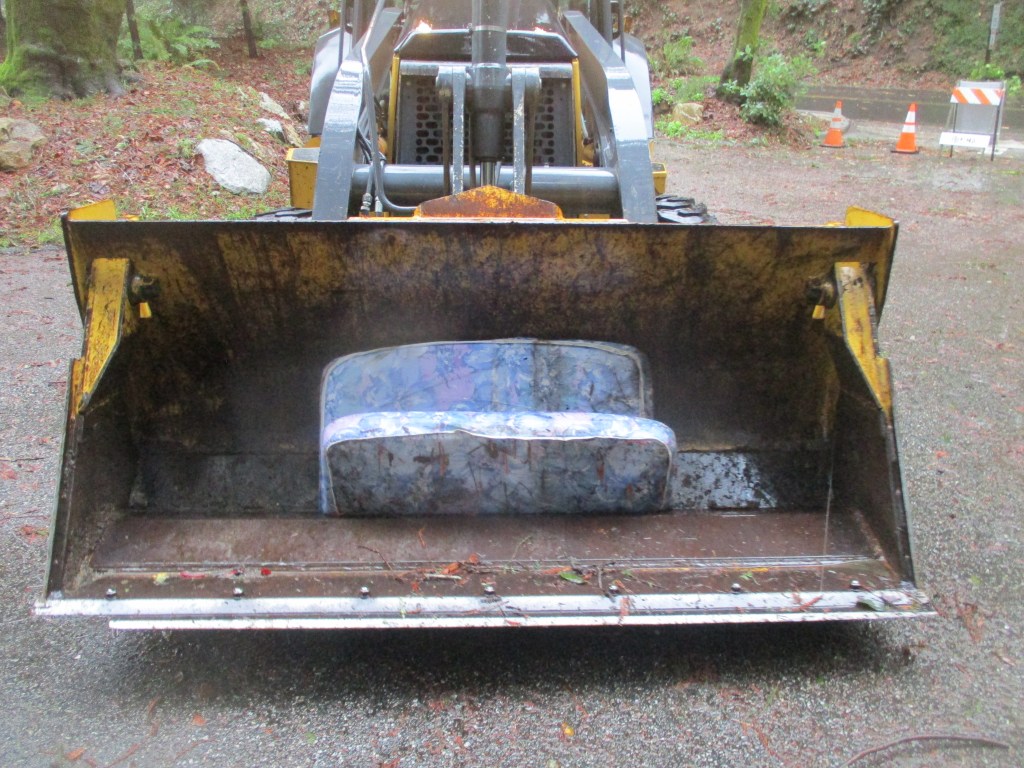
1. Charred remains of a neighbor’s home fill a bin that should otherwise be filled with greenwaste. Even common trash would be better. The forest smells burnt rather than like fallen leaves.

2. Perennial pea roasted during evacuation, before I flagged a rare white bloomer for relocation while dormant in winter. Although briefly regenerating, they all look the same without bloom.

3. Nightshade is not a bothersome weed. It is just unappealing. It somehow looks gloomy. I suppose that it could be pretty in the right situation, perhaps in a vase with some autumn flowers.

4. Muppets do not grow here. This is just a wet and deteriorating thistle of some sort. It should have been cut down before bloom. More significant vegetation management is now a priority.

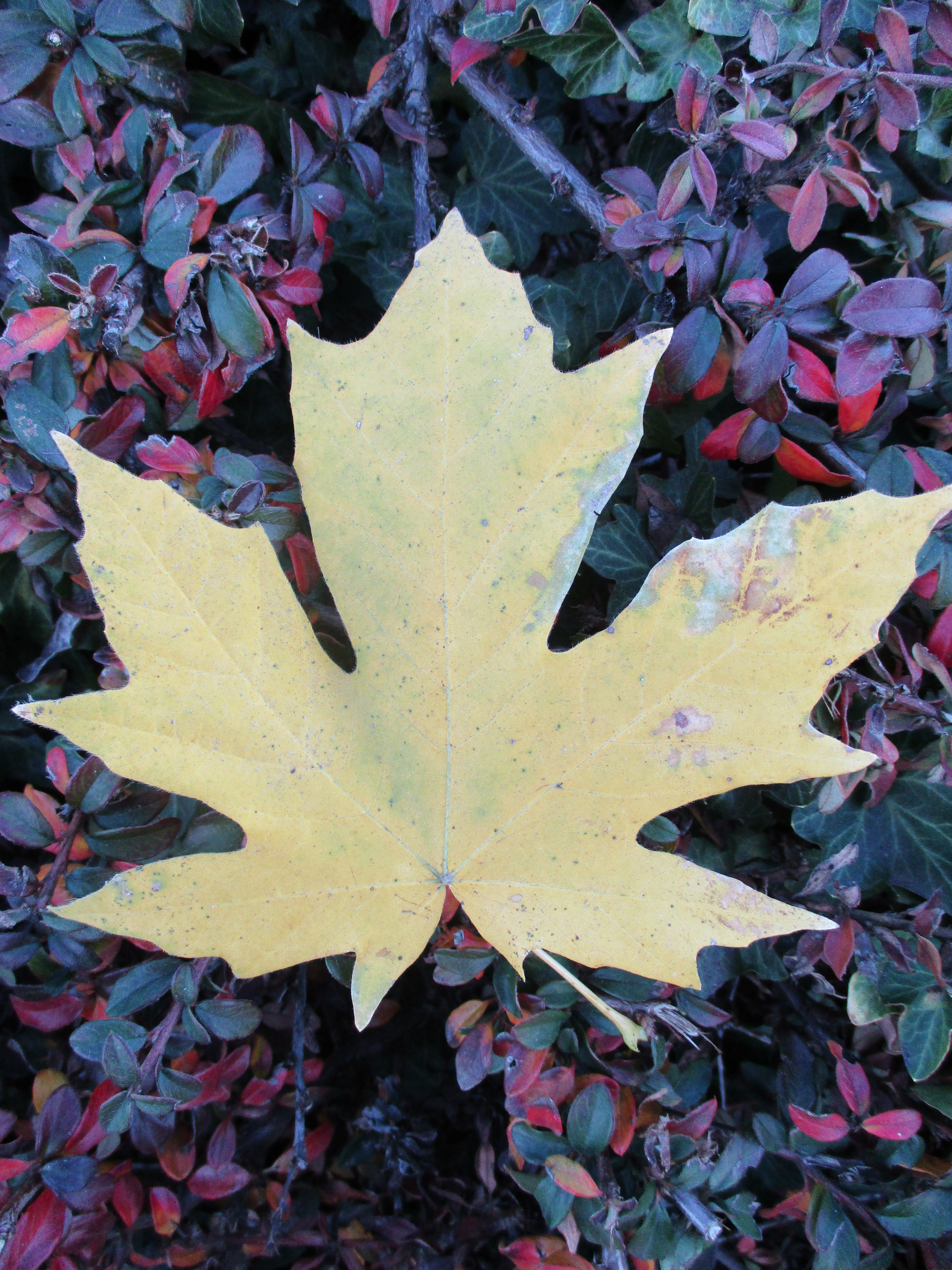
5. Cottonwood colored well for autumn. Bigleaf maple and birch are just as colorful. Sweetgum is still mostly green, but ultimately develops the best variety of color. It really is autumn here.

6. Mud proves it! From Tuesday morning to Wednesday morning, it rained for the first time since spring. The few dirty raindrops during the Fire do not count. Anyway, the rain was grand!

This is the link for Six on Saturday, for anyone else who would like to participate:

https://thepropagatorblog.wordpress.com/2017/09/18/six-on-saturday-a-participant-guide/
Angel Wing Begonia

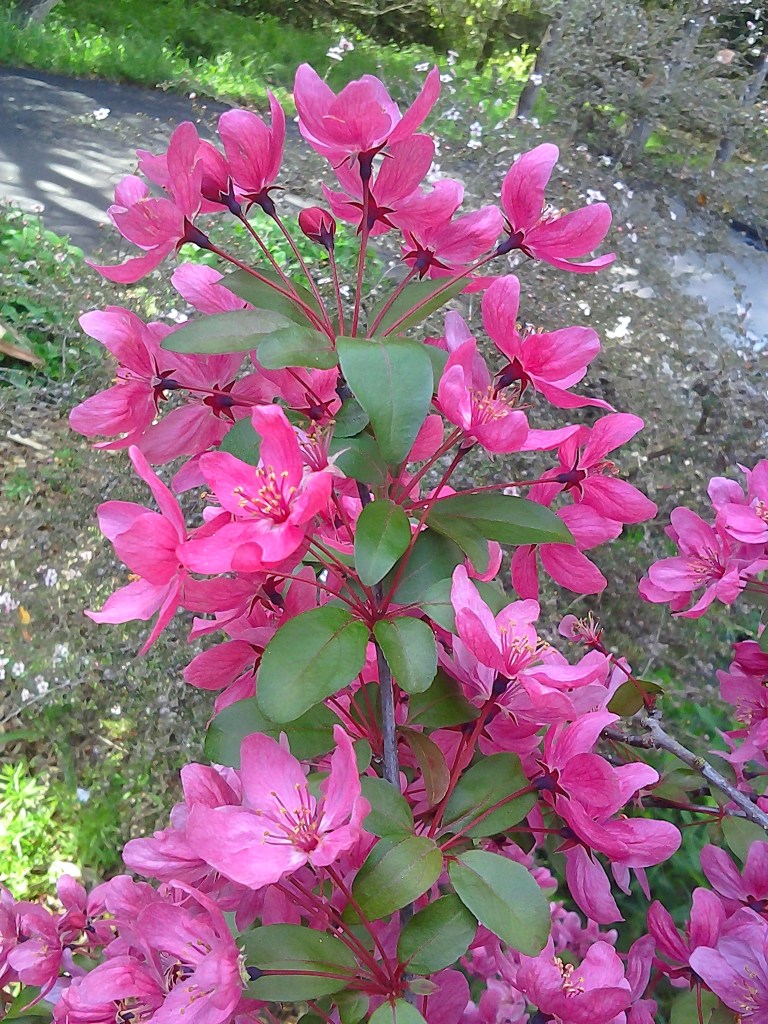
This is not the common Angel Wing begonia. I just found it online, in the pictures that are not protected by copyright. I could not find my picture. Storage has been a problem.

The simple pink or sometimes red or white flowers of angel wing begonia are not as flashy as those of other begonias, and are not abundant enough to provide much color. During warm weather, they are merely a minor bonus to the striking foliage. As the name implies, the big and angularly lobed leaves are shaped like wings of angels. Upper surfaces are glossy and dark green with irregular silvery spots. Undersides are even glossier and reddish bronze. With support, the lanky cane stems can get more than twelve feet tall. However, because older tall canes produce runty foliage, they are often pruned out to promote more vigorous and lushly foliated young canes.

Because they are sensitive to frost, and also because they are ideal houseplants, angel wing begonias are typically grown in containers. They like rather regular but not excessive watering, and rich potting soil. Abundant sunlight enhances foliar color; but harsh exposure roasts foliage. Partial shade is not a problem.