 Well, that is certainly a contradiction of terms. One might say it is an oxymoron. Decades ago, it really was how we classified what we now know more simply as ‘deciduous conifers’. There are not many of them. Ginkgo is a gymnosperm like conifers are, but is not really a conifer. Otherwise, there are only five other types of deciduous conifers, which defoliate through winter.
Laryx is a genus of about a dozen species that are known collectively as larch. Taxodium includes two species known as bald cypress, as well as a third evergreen species. Pseudolaryx amabilis, known as golden larch, Glyptostrobus pensilis, known as Chinese swamp cypress, and Metasequoia glyptostroboides, known as dawn redwood, are all three monospecific genera.
Some species of larch are common within their respective natural ranges. So are the bald cypresses. The others are quite rare. However, dawn redwood became a fad decades ago, so is not so rare in landscape situations. To those of us who expect all conifers to be evergreen, deciduous conifers seem to die suddenly in autumn. To some, it is not exactly a desirable characteristic.
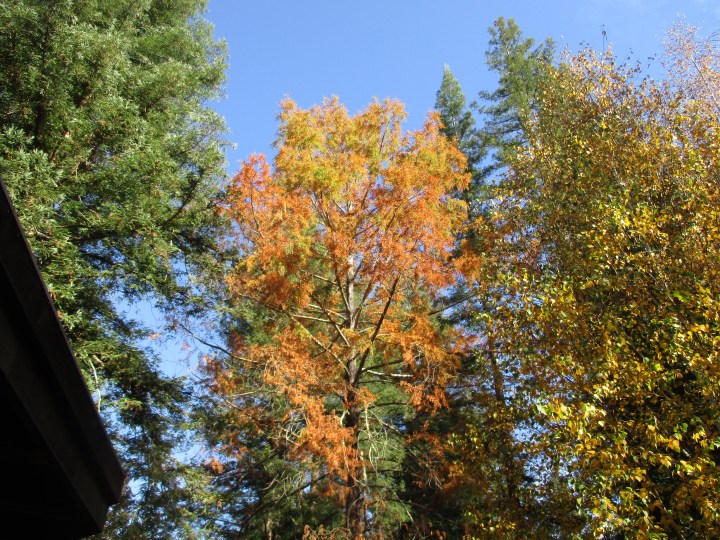
The dawn redwood above lives in our landscapes. The tall evergreen trees behind it are native coastal redwood. Obscured by the yellowing birch to the right, a small giant redwood (another oxymoron) represents the third and only other species of redwood. The fall color of this dawn redwood appeals to some, but to others, it looks like one of the native redwoods abruptly died.
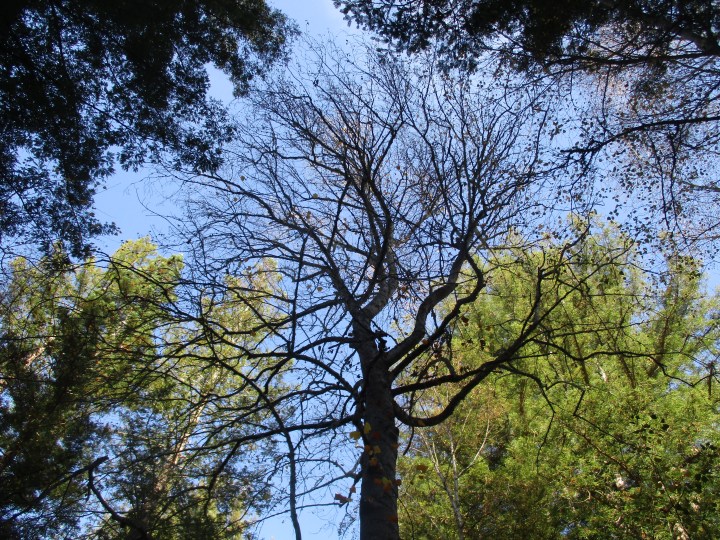
Our bald cypress below does not look so much like a dead redwood. The foliar texture and branch structure are quite distinct. The cinnamon brown fall color is actually rather appealing.
Of course, these pictures are nearly two weeks old. By now, both trees are likely bare because of the rain.




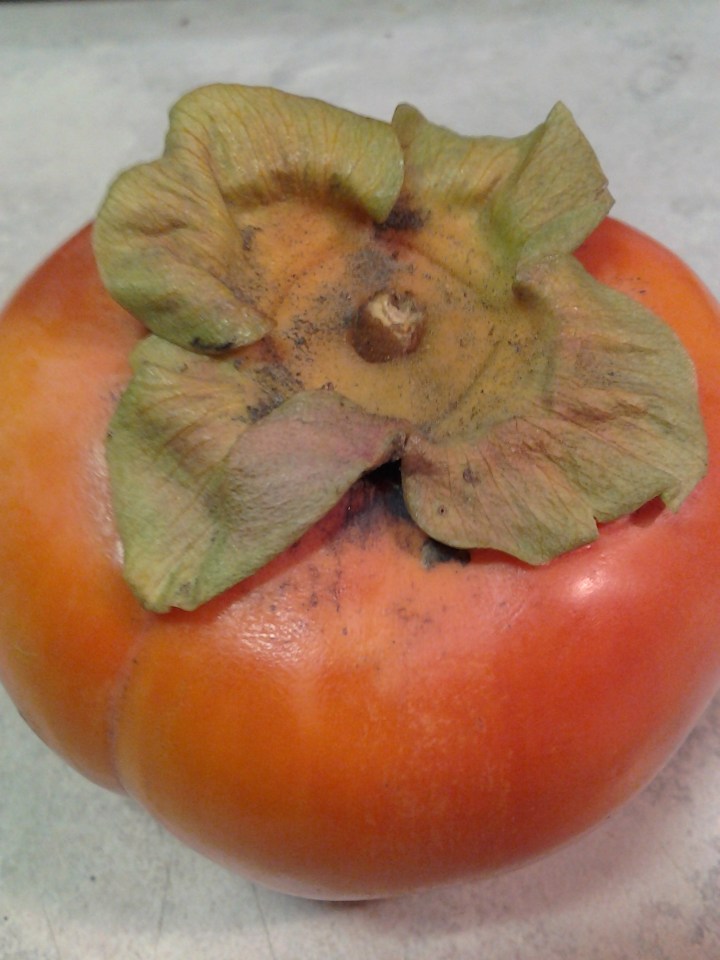 A mature persimmon tree, Diospyros kaki, is often too much of a good thing. The fruit is both big and abundant as it ripens this time of year. Much of the fruit in taller trees is out of reach. Nearly ripened but somewhat firm fruit can be picked and shared with neighbors for a while, but must be picked immediately once completely ripe. Otherwise, it falls and makes a squishy mess that can not be raked up! Nearly ripe fruit ripens easily off the tree. Individual fruits only need to be spread out in a single layer to limit molding.
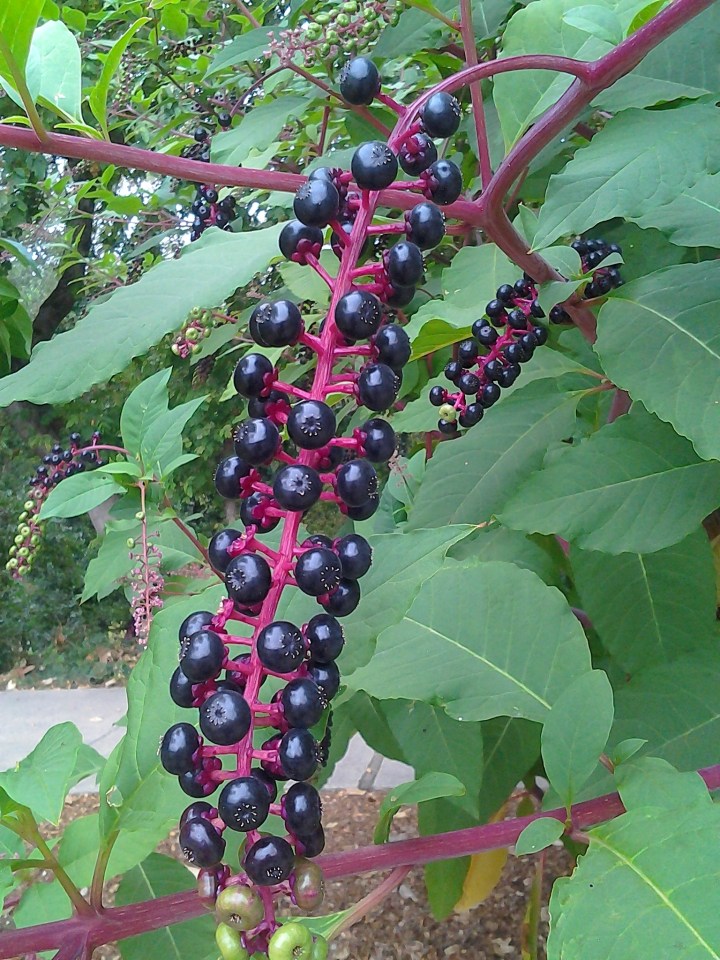 Before the colorful foliage of autumn falls and gets raked away, a few types of berries and fruit start to provide a bit of color to last into winter, or at least until birds and other wildlife eat them. Technically, the most colorful berries are actually intended for the birds, both those that overwinter and those that migrate south for the winter. The berries are designed by the plants that produce them to both entice birds, and to reward them for dispersing the seeds within.
 Bare root fruit trees will be available in about a month. It is probably my favorite time of year for going to nurseries. (Since I grow just about everything I want from bits of landscape debris, I do not often go to retail nurseries.) It is also rather frustrating to see what sorts of bare root material are popular nowadays, and what sorts are not. Horticulture has gotten so ridiculous!
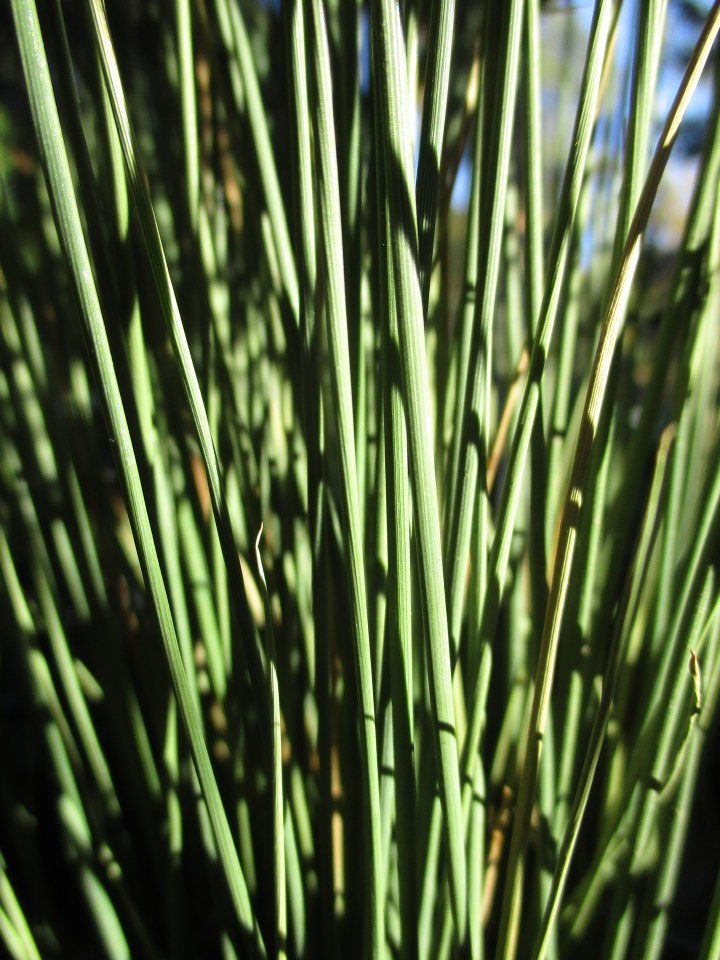 Not to be confused with the Canadian rock band from the 1970s, this rush, Juncus patens, is native to riparian areas between western Washington and San Diego County. It is also known as the common rush because it is, obviously, the most common species of the genus on the West Coast. It is only occasionally planted intentionally, but more often sneaks into well irrigated landscapes.
 Autumn is a time for planting partly because it is when many plants are beginning their winter dormancy. They are, or will soon be, less active than they would be at any other time of year. Some may not start to grow again until after winter ends. Others will want to secretly disperse their roots through the rainy winter weather, while merely appearing to be dormant from above the soil level.
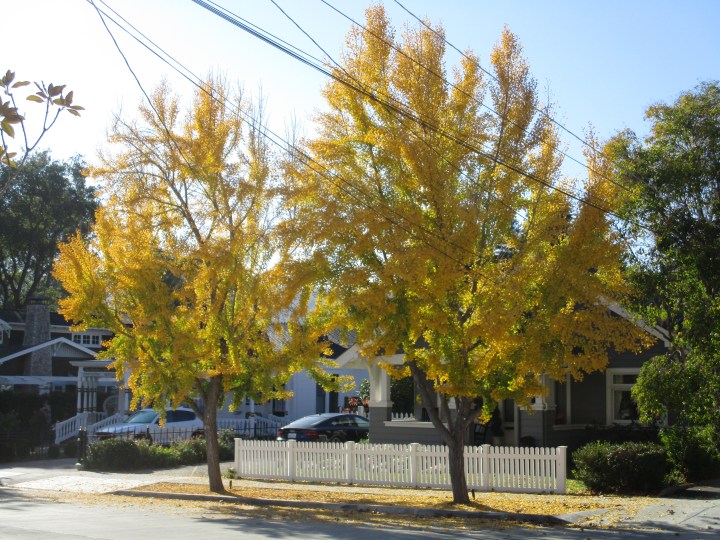 Much of my work involves street trees. They need more of my kind of attention than most other trees. They must conform to more restrictive limitations. They endure more abuse. They are the most prominent trees on urban properties. Because some are assets of their respective municipalities, they are more stringently protected by local ordinances than other trees are.
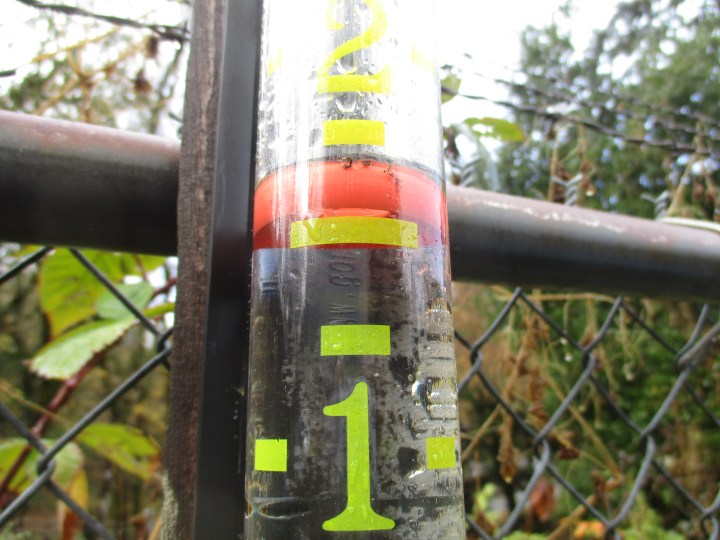
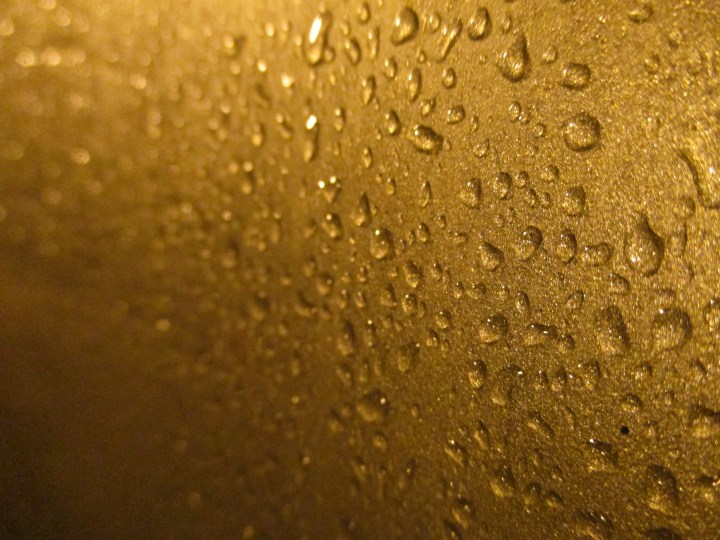 There have been only three hints at precipitation since last spring.