Although relevant to the same disdainful weed that I wrote about earlier in https://tonytomeo.com/2018/10/24/horridculture-weed/ this article is about a completely different topic. That is why it is not a sequel. Nor is it a rant. It is instead an explanation of why so many of us choose to not use marijuana. It was written by an admired colleague who has much more experience with such matters than I do, and is therefore much more qualified to write about it. So, for today, I will deviate from standard procedure by refraining from my typical Wednesday rant, and by posting an article written by someone else. In fact, you can ignore the title above. This article below already has one.

Should the followers of Christ use Cannabis? J.S.Wilkinson 2016
Cannabis seems to keep coming up in conversations people around me are having. Watching the current trends of well-meaning people giving themselves to substances that have been historically questionable brings me to the place where I must share my experience and my research.
Just because the government has made something legal doesn’t make that thing permissible. There’s a lot of examples I could cite … and I’ve been around long enough to know that “all that glitters is not gold”. I’m also one to say “the good is the enemy of the best”. Why settle for something counterfeit when you could have the genuine article?
Classically, the followers of Christ get there cues from the Scriptures, when debating whether or not an action or indulgence is permissible; but as we all know everything is subjective, even the meanings of the Scriptures. And we have seen how something written can be taken out of context and made to fit either side of an argument.
I have worked in one of the most prestigious medical centers in the world (for decades) and I’ve had the good favor to meet some of the top minds in, for example, pain research. I asked the senior research doctor of the “Pain-Clinic” “What do you think of medical marijuana?” He chuckled and said, “There is only one reason why anybody would want to use marijuana. It gets you stoned!” He went on to explain that the current trend of marijuana use in “medicine” was a direct result of the agenda to legalize the drug. He said that cannabis has no analgesic property, and the effect of using it only makes the user “complacent” (as well as stoned) “They no longer care they’re in pain” but the pain is not relieved! This particular Hospital has a strict no cannabis policy. Patients with “Medical Marijuana” cards are not permitted to bring their “Prescription” marijuana into the hospital with them. Psychiatric patients are dropped from treatment if it’s found they are using marijuana, even with a Doctor’s prescription. Here’s my question; if marijuana is so well thought of, why isn’t it universally adopted by the medical community? I’m sure the conspiracy crowd could run for miles with that one…
What do the scriptures say? The English word ‘pharmacy’ is clearly derived from a group of Greek words used to describe pagans (the dark arts) who used potions to encourage hallucinations for contacting the spirit world. The particular word ‘pharmakia’ found in Revelation 9:21, 18:23, 21:8 and 22:15 refers to Sorcerers. Please note: NOT ALL DRUGS ARE BAD! Followers of Christ are admonished not to practice sorcery or witchcraft, so it seems to go without saying that we should not be using drugs that are used in Pagan rituals and in Sorcery.
Let’s take a look at what spiritual practices have historically used marijuana in an entheogenic context – from Wikipedia:
According to the TeenWitch.com website “religious cannabis use occurs or has occurred in many of the world’s largest religions: Ancient Egyptian, Asatru (Norse), Assyrian, Australian (Aboriginal) , Babylonian, Bantu, Brazilian (Tribal), Buddhism, Canaanite, Celtic Druidism, Chinese (various), Dagga, Essenses, Etruscan, Gypsy (including Tarot), Hellinism (Greek), Hermeticism, Hinduism, Hottentot, Kemetic (ancient Egyptian), Mithraism, Persian, Polynesian, Pygmy, Rastafarian, Roman, Shamanic/Tribal religion, Shintoism, Sufi Islam, Tantra, Taoism, Thai, Theraputea, Wicca, Witchcraft, Zoarastrianism, and Zulu.
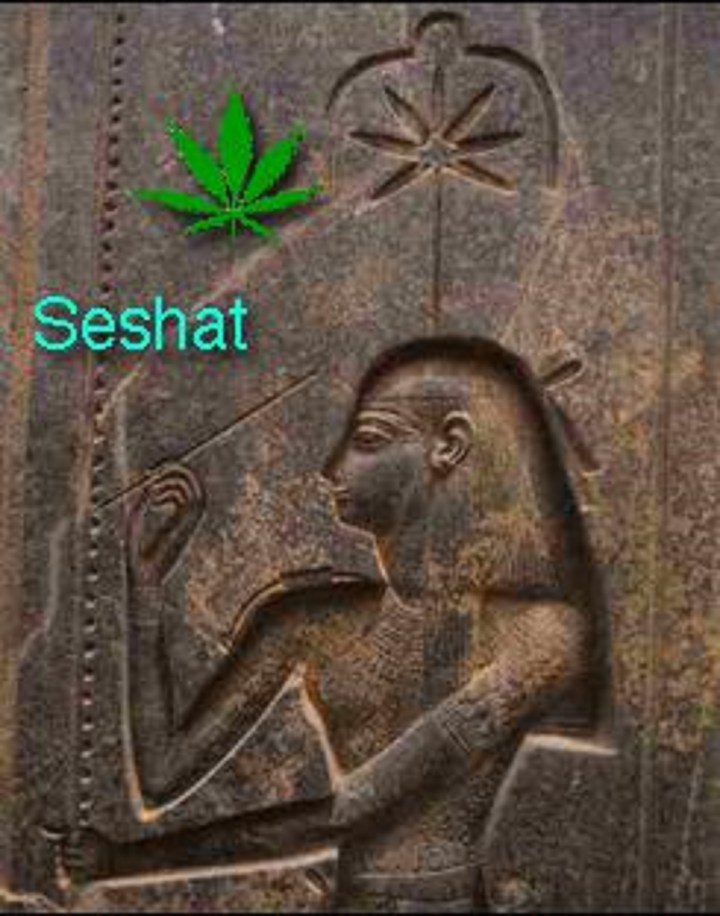
Here’s another great question: Is marijuana OK from a spiritual point of view?
This following quote is from a very astute article I found while researching this subject…
“This might sound a bit strange, but the aura quality of marijuana smokers is sticky, fuzzy, and open to entities.”
In this lengthy article from Cosmic Living, the author explains the many deceptions that play out in the minds of marijuana users, especially noting the presence of “entities”
Even the people in New Thought modalities are aware that someone or something is getting access to their souls when they open themselves with marijuana use!
My personal experience:
I first started using cannabis in 1970 at age 13. I began to fall away from my faith in Christ, and began to explore alternate spiritual realities. By the time I was 17 I had been introduced to several modalities including Native American Shamanism. This resulted in some very real and very serious trials of my faith in Christ, and the reality of alternate spiritual dimensions. When I turned 18 I attempted to quit all drug use and follow the way of Christ with a renewed zeal. Trying to do this on my own, without the indwelling presence (of the fullness) of the Holy Spirit proved to be too much for me. When I relapsed I felt so condemned that I proceeded to run long and hard away from God.
When I came to my senses 5 years later, I renewed my relationship with God through Christ. The very night I was to be given the full infilling of the Holy Spirit, I laid my marijuana out on the table before me and prayed; God, if you want me to stop using this, you could make it so it doesn’t affect me anymore (the chicken way out) or you could make it so I hate it and no longer find pleasure in it! I went off to my youth group meeting where the cheerful followers of Christ asked if anyone would like to be “Baptized in the Holy Spirit” I checked in with God and he said “you want that”…
After having the fullness of the Holy Spirit imparted to me, I no longer enjoyed the feeling I got from cannabis, the euphoria was replaced with a sense of dread and loathing. I was painfully aware of how I chose to leave the presence of the Holy Spirit by breathing in the marijuana. It was then that the Holy Spirit revealed to me that I had in fact invited a “familiar spirit” into my reality and Holy Spirit would not share my temple with another god! This happened in 1980, no one I met was teaching on this subject, it seemed to be common sense that followers of Christ don’t use marijuana. Here I am 36 years later, living in a time when even the elect are being deceived. Good friends and family members are at odds with me because I won’t back down.
If you feel that you would like to experience the freedom and fullness of the indwelling Holy Spirit and you’re ready to say goodbye to your cannabis friend, we can help you! J.S.Wilkinson
 It is no more in season now than the other stone fruits like apricot, cherry, plum and such, but this is the time of year that almond, Prunus dulcis, needs work. Established trees get pruned while bare and dormant. New trees, preferably bare root, get planted. The most popular modern cultivars available are self pollinating, and labeled as such. Old traditional cultivars require pollinators.
 Compared to canned (potted) nursery stock, bare root plants have a few advantages. They are less expensive, easier to handle, more conducive to pruning into a desired form, and they disperse roots and get established more efficiently. One more advantage that is not often considered is that they are easier to install into the garden. For some, it is as simple as poking a stick in the mud.
 Latin and the other languages used to designate botanical names can make the mundane seem compelling, and the unpleasant sound appealing. ‘Nasturtium’ certainly sounds better than ‘nose twister’, which refers to the reaction to the unpleasant fragrance of the flowers. Horticultural professionals can use such language to our advantage, and for more than designating real genera and specie. ‘Necrodendron’ certainly sounds more interesting than ‘dead tree’, and is less likely to offend tree huggers.



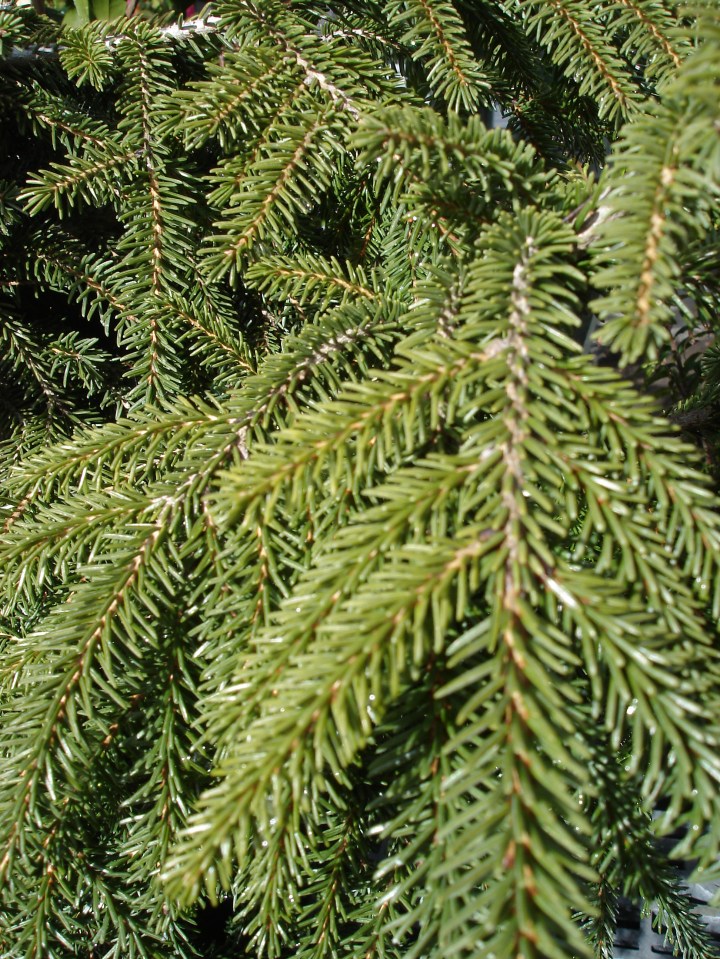 If it got as big as it does in the wild, Oriental spruce, Picea orientalis, would not fit into many home gardens. It can get more than a hundred feet tall! Fortunately, it does not often get much more than twenty five feet tall locally. Trees that compete with taller trees in forested landscapes might get to forty feet tall. Their symmetrically conical canopies get about fifteen or twenty feet broad.
 Conifers are the most prominent forest trees in North America, but are notably scarce in home gardens. Except for compact varieties of juniper (which were probably too common years ago) and arborvitae, most conifers are trees that get too big for residential gardens, and few adapt to regular pruning that might keep them contained. Almost all are evergreen, so block sunlight in winter.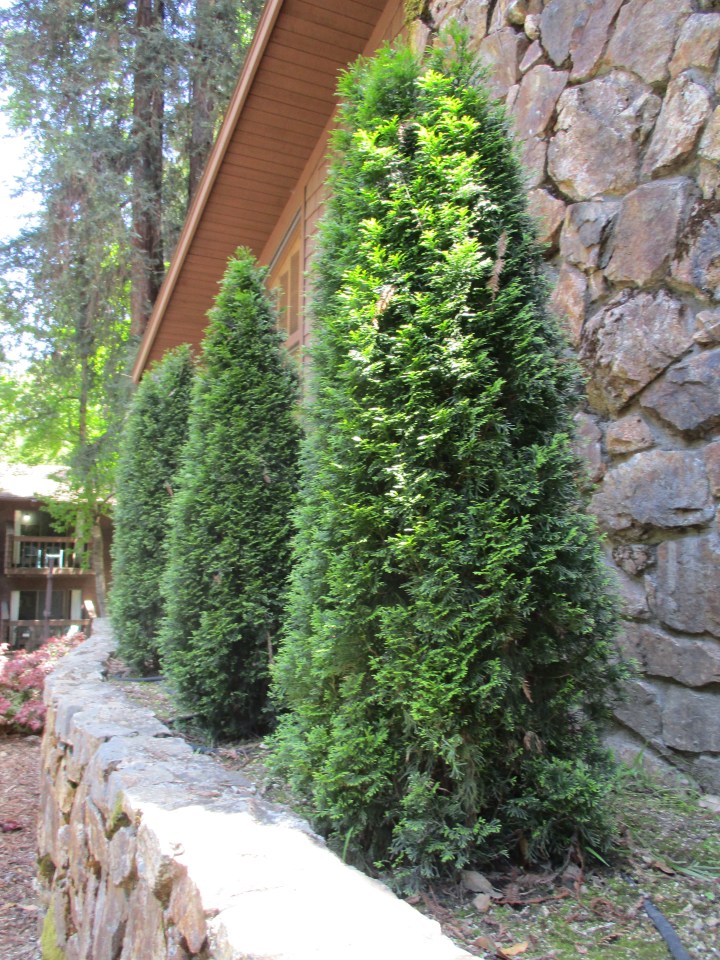
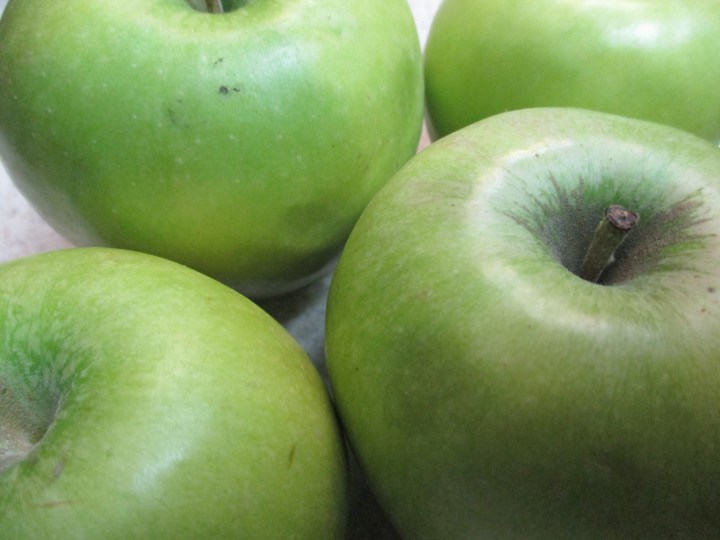 Some of us who enjoy gardening may not like to admit how useful the internet can be. There is a lot of bad information out there. There is also some degree of good information. It is impossible to fit much information about apples into just a few brief paragraphs. Therefore, the internet is likely the best source of information about the countless cultivars and specie within the genus of Malus.
 The vast orchards of the Sacramento and San Joaquin Valleys might make the impression that production of fruit is easy. The trees naturally bloom in spring, and develop fruit over summer, as if they do most of the work prior to harvest. In reality, those trees have been so extensively bred to maximize production that they need, among other maintenance, very specialized pruning in winter.
