More Smoke

P81110KFire has always been a part of life in most of California. That is why almost all native flora benefits from it, and has developed an efficient system and schedule for not only living with it, but exploiting it.
Within a few years after a fire, the pioneer species are the first to regenerate. They are aggressive, but short lived. Some are annuals. Others are trees that grow fast and then die out as the slower growing but longer lived trees dominate. Some of the longer lived trees might have been there all along, since they have developed ways of surviving fire.
Big valley oaks and coast live oaks that live out in the open away from other forest trees can survive for centuries because the grasses around them burn off fast and relatively harmlessly. Giant redwoods and some pines survive by standing high above the more combustible fuel below. Coastal redwood survives for centuries by being less combustible than other species. Desert fan palms protect their single terminal buds inside their massive non combustible trunks, while their beards of old dead foliage burns hot enough to incinerate competing species. There are too many ingenious ways that plants survive fire and even use it to their advantage to write about; but the point is that they know what they are doing, and they know how to live with fire.
This system of ecology has been disrupted, but not just by people cutting down too many trees and starting too many fires. The problem now is that not enough trees are getting cut down, and fires are unable to burn that which relies on burning.
In this region, pioneer species and an unnatural mix of forest trees moved in where the redwoods were harvested. This makes what had been less combustible redwood forest more combustible than it naturally is. It will take centuries for the redwoods to reclaim their territory and crowd out more of the hardwood trees. Also, because the redwoods regenerate with many trunks from each individual trunk that was harvested, even the redwoods are more crowded and combustible than they would naturally be. While they are still relatively young, their foliar canopies are low and intermingled with the other more combustible trees. It is certainly not possible to cut down enough trees to repair the damage, but protecting too many of the wrong trees and outlawing selective harvest of second growth redwood only promotes combustibility of the local forests.
Other forests, whether formerly harvested or not, experience similar problems. Because they are not burning as frequently as they used to, they are not being regularly purged and restored, but are instead becoming more crowded and combustible than they would naturally be. Diseases and pathogens are proliferating in the geriatric vegetation, and vegetation that succumbs provide more fuel, which also enhances combustibility.
Although there are many (MANY) more fires that are started by human activity now than there ever was naturally, such fires can not burn the vast areas that naturally occurring fires had naturally burned. There are just too many of us living and working here. Forests that are deprived of fire continue to proliferate more combustible biomass. Again, there is no remedy to this. Fires must be controlled and confined as much as possible.
Paradise is gone now. It burned on Thursday. Our region more than two hundred miles to the south is gray with abundant smoke from the Camp Fire that continues to burn there. Two other major fires burn in Ventura and Los Angeles Counties, more than three hundred miles to the south of here. Paradise Park just to the south of here was protected from the much smaller Rincon Fire that filled the Valley with harsh smoke for days after it was contained. Sadly, for this region, this is all part of nature.P81110K+

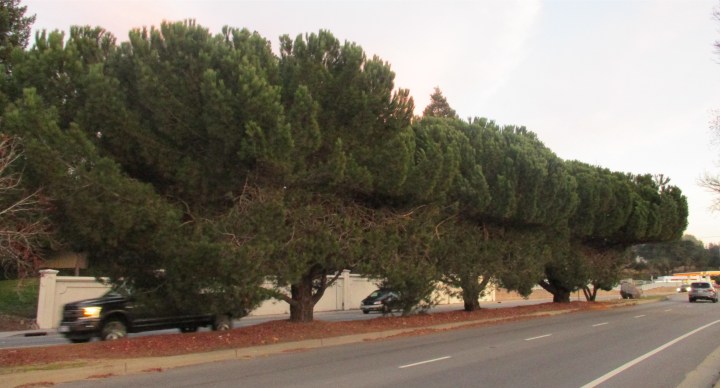
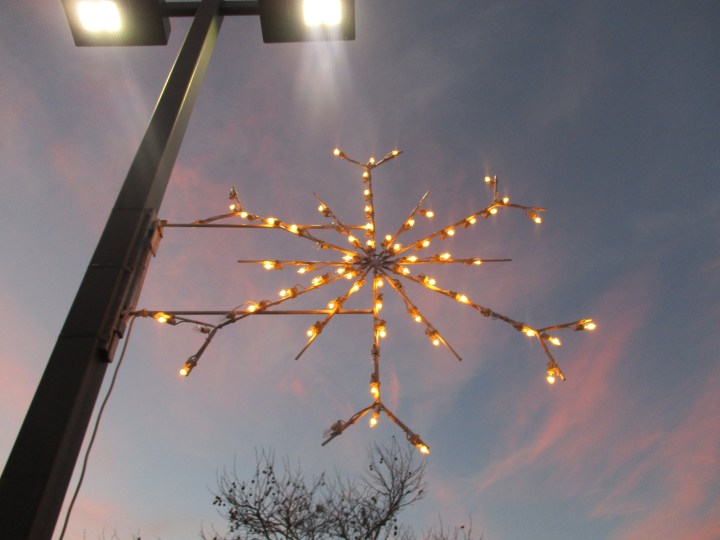
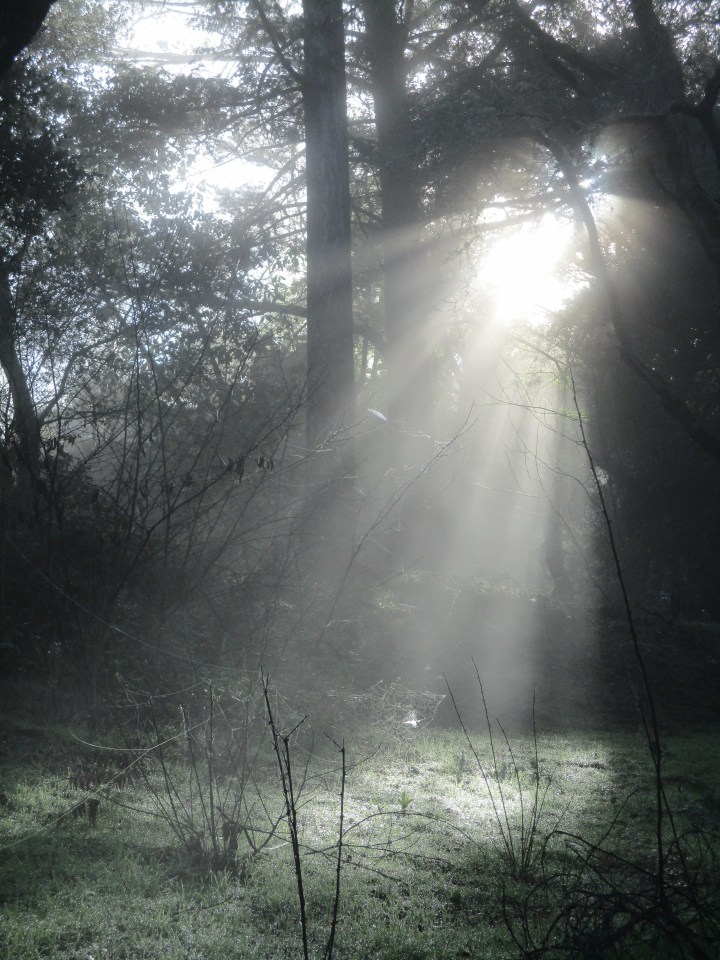
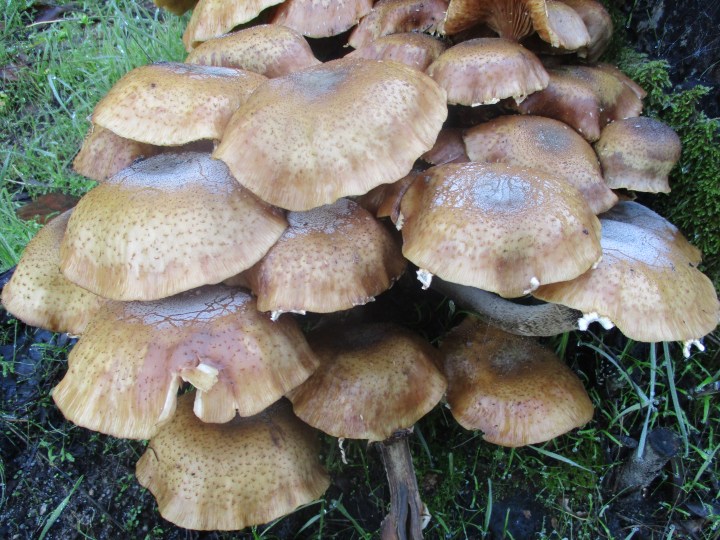
I do not remember on what days these pictures were taken. The first picture at the top was taken toward the sunrise, just prior to sunrise. The second picture above was taken later after noon, probably on the same day. The two pictures below were taken in the evening, perhaps on the day after. P81110K++P81110K+++

Six on Saturday: Tangly Cottage Gardening Journal


tanglycottage.wordpress.com is where you can find it. This is a blog about gardening, gardens, life, and of course, Skooter the kitty, in and around Ilwaco, in the very southwestern corner of Washington, where the Columbia River flows into the Pacific Ocean. Like so many blogs, it shares compelling insight about a culture and a region that might be very different from what one is accustomed to. Then again, it might be compellingly similar . . . or even unexpectedly familiar. You can decide for yourself.

I have been to Ilwaco only once, about twenty years ago. I spent the night in a campground there while driving from Silverdale, west of Seattle, to Saint Helens, north of Portland. It was certainly not a direct trip. That would have been a two and a half hour drive. I was on vacation, so drove around the Olympic Peninsula. I sort of intended on returning someday, but never did.

After all these years, it has been fascinating to read about the flora of the gardens of the region. When I was there, I was more interested in the native flora outside of town. Ilwaco still looks something like I remember it to look like, although I think that there is more landscaping downtown now.

A while back, I commented on Gladiolus papillio that was blooming in a planter box in downtown Ilwaco. I was impressed that it was such a reliable perennial species of gladiolus. I had been wanting to grow a species of gladiolus that was more perennial than than the common summer blooming bulbs that I am familiar with, but had not decided on which ones to try. Anyway, in response to my comment, the author of ‘Tangly Cottage Gardening Journal’ offered to send me a few of the bulbs! How could I refuse?

These six pictures are of those Gladiolus papillio bulbs that came from Ilwaco in Washington.

1. It is so excellent to get a package in the mail from such an exotic and far away place! It got here very fast. It was in my mail only two days after being postmarked on October 25.P81110

2. The contents of the package are even more excellent than the package itself! There were nearly fifty bulbs here! I planted them on the first of November, a bit more than a week ago.P81110+

3. The bulbs were planted in three groups of about a dozen, with two groups of about half a dozen between them. The first group is partly buried here because a bit of soil fell back into the hole before I got this picture.P81110++

4. This is how the same first group of bulbs looks completely buried. Aren’t they pretty? Never mind the calla. It is not vigorous enough to bother the Gladiolus papillio.P81110+++

5. This is the planting bed where the Gladiolus papillio bulbs were planted. They are up in back, in a row that extends from the left edge of the picture to the corner of the trellis with the espaliered camellia. The pinboard and mailbox in the top right corner of the picture are at the Post Office next door. I would have preferred to plant the bulbs in front of the Post Office, but there is no place to do so over there. I am pleased that these Gladiolus papillio were planted in a public space almost in front of the Post Office because that is where they originated in Ilwaco. As the proliferate, I intend to take a few to my downtown planter box in Los Gatos, and might even share a few with the lady who tends to the planter box next door to the Los Gatos Post Office.P81110++++

6. This is the Mount Hermon Post Office is next door.P81110+++++

This is the link for Six on Saturday, for anyone else who would like to participate:

https://thepropagatorblog.wordpress.com/2017/09/18/six-on-saturday-a-participant-guide/

Heavenly Bamboo

51111Good old-fashioned Heavenly bamboo, Nandina domestica, which can almost reach the eaves, can be difficult to obtain nowadays. More compact modern cultivars do not get much more than six feet tall, and some stay less than three feet tall. Foliage is airier in partial shade, but more colorful where more exposed.

As it begins to emerge in spring, new foliage is pinkish or reddish before greening. It slowly bronzes by autumn. Some cultivars turn ruddy or orangish, or even burgundy. Individual leaves are actually quite large, but are divided into many small, diamond shaped leaflets. Some cultivars have very narrow leaflets. Tiny white flowers bloom through summer. Bright red berries ripen through autumn.

Although unrelated, Heavenly bamboo grows like bamboo, with vertical canes developing from creeping rhizomes. Overgrown or deteriorating canes should be cut to the ground as they get replaced by newer canes. Otherwise, they become top-heavy and inhibit development of new canes. Foliage should not be shorn, since it is not much to look at without its naturally intricate texture.

Fall For Colors Of Fall

51111thumbMild winter weather on the West Coast limits the choices for autumn color. So many of the trees, shrubs, vines and perennials that get so colorful where autumn weather is cooler do not get so colorful here. Mild weather also allows so many more evergreen plants and plants that do not get colorful in autumn to thrive here than in harsher climates. Consequently, the tougher and more colorful plants are not so common.

Fortunately for those who appreciate autumn color, there are a few choices that do not mind mild weather. The three most reliable trees for autumn color are sweetgum (liquidambar), Chinese pistache and flowering pear. All three turn yellow, orange and red. Maidenhair tree (gingko) is just as reliable, and turns bright yellow, but lacks orange and red. (‘Saratoga’ gingko turns pale yellow.)

If the weather is right, fruitless mulberry, tulip tree, black walnut and the various poplars display clear yellow foliage. Eastern redbud can do the same, but is a small tree. Smoke tree and crape myrtle are large shrubbery or small trees that can get as colorful with yellow, orange and red as Chinese pistache does. Japanese maples have the potential to turn yellow or even orange, but more often turn dingy brown.

Grapevines and wisteria are vines that can be somewhat colorful if they hold their foliage long enough to get noticed. Boston ivy, which is actually more closely related to grapevines than to ivy, is the most colorful of the vines in autumn. Unfortunately, it can be too destructive to paint, wood and whatever else it grabs hold of to be practical for home gardens. It works nicely on indestructible concrete walls.

Heavenly bamboo, which seems to have appealing but distinct foliar color for every season, turns richer shades of reddish bronze through autumn. Some cultivars turn rich brown. Others become more purplish red or burgundy. Unlike other autumn foliage that sooner or later falls through winter, heavenly bamboo is evergreen, so hold its color until it get replaced by another color in spring. Unfortunately, there are not many other evergreens that turn color in such mild weather.

Horridculture – Blame

P81106The response to the brief article that I wrote about the smoke from a small and localized wildfire on Sunday is not easy to dismiss. The original article is at https://tonytomeo.com/2018/11/04/smoke/ . It is about the smoke from the small and localized Rincon Fire, and goes on to discuss how the clear cut harvesting of redwood more then a century ago enhanced the combustibility of the forest. It was shared to Facebook, including the Facebook page of Felton League.

The article did not blame anyone for starting the fire. I read it again just to be certain. I said nothing about arsonists, the homeless, homeless arsonists, or anything of the sort! Blame, in regard to the Rincon Fire, is not relevant to horticulture, forestry, arboriculture or anything that I write about.

We all know that there are mentally ill people who are homeless because they do not function well enough to maintain a domestic lifestyle. Some are potentially dangerous because they can do things, such as start fires, without thinking about it. There are also those who can accidentally start fires as they are just trying to stay warm when the weather gets cold out in the forests where they live.

Do we really believe that blaming and vilifying the homeless or mentally ill helps? Chasing them from their encampments and farther out into the forests, as so many suggest, only increases the innate hazards by relocating them into areas that are more inaccessible and more combustible. If we really are so concerned, we should want such hazards relocated to more localized and accessible situations. The severely mentally ill who can not manage a descent lifestyle simply should not be homeless.

Furthermore, what about the vast majority of fires that are caused by electrical malfunction? Why are we not wanting to outlaw electricity? What about the fires that are caused by sparks from lawn mowers and weed whackers? Shouldn’t such machines be outlawed? What about forest fires that start as house fires? Should we blame those who live in homes? Who do we blame for all those combustible trees that grow wild in the forests?

I intend to resume writing mostly and perhaps nearly exclusively about horticultural topics after today. It is what I am qualified to write about. I apologize for this deviation. If I eventually establish a blog regarding homelessness, I will be sure to share a link to it here.

German Primrose

81114Just like African marigold that was featured earlier is actually Mexican, German primrose, Primula obconica, is actually Chinese. As odd as it is, the common name is an improvement from the former name of ‘poison primrose’, which was derived from the potentially irritating sap of the unimproved species before it was bred to be less toxic, as well as more colorful and prolific in bloom.

Here where winters are mild, German primrose is a short term perennial that is mostly grown as a cool season annual. Most of us do not bother to keep them alive as their foliage deteriorates in warm spring and summer weather. It is easier to plant new ones next autumn. They want rich soil and regular watering until rainy weather takes over. Deadheading promotes subsequent bloom.

Foliage should not get much higher than six inches. Flowers stand a few inches higher, and can get almost as high as a foot. Individual flowers can be as wide as an inch, and they bloom with several others in domed trusses that might be a few inches wide. Bloom can be white or pastel hues of pink, lavender, blue, peachy orange, salmon, rose or soft maroon, some with white edges.

Mulch Suits Autumn Quite Naturally

81114thumbIt is silly for us to think that we know more about gardening that the plants who live out in the garden full time. We can help them along by giving them a bit more of what they need to survive, such as water and fertilizer. We can prune them to help them concentrate their resources into bloom and fruit production. Through it all though, we really need to be observant of what they do naturally.

For example, we water many plants through dry summer and autumn weather because we know that they are naturally endemic to climates that provide a bit of rain throughout the year, and that they can get dry without it. We fertilize them when they are actively growing because we know that is when they want it. Most deciduous plants get pruned in winter because they are dormant then.

This time of year, deciduous plants are defoliating in a very obvious manner. Evergreen plants are more subtle about shedding some of their foliage. Defoliation and shedding happens this time of year because plants do not need so much foliage, if any, when there is not so much sunlight for foliage to exploit. The days are shorter, and the sun is at a lower angle, so sunlight is less direct.

There are other reasons why winter defoliation is sensible. It makes deciduous plants more aerodynamic, and less likely to be damaged or blown down than they would be if they kept their foliage for wintery winds to blow against. Likewise, when the weather gets frosty, defoliated deciduous plants leave little to get ruined. What does all this suggest for seasonal garden chores for autumn?

Mulch, which can be spread at any time, is particularly timely for autumn, because that is when the garden expects organic material from above. Just like fallen leaves would do in the wild, mulch settles in through rainy winter weather, and helps to retain moisture after the rain stops next spring. It inhibits weeds that will want to grow as soon as the rain starts, and insulates perennials that grow slower or go dormant when the weather gets cooler. Mulch helps an unnaturally cultivated garden do what it wants to do naturally.

Smoke!

P81104K.JPGWhat a surprise. There was none when I went in to use the computer as the sun came up into a clear blue sky this morning. When I came outside just a few hours later, it was everywhere. It was so thick and so aromatic that it was obviously very close, but it did not smell like it was in the ponderosa pines around Scott’s Valley where I happened to be at the time. Once I got on the road back to Felton, I could see that besides the monochromatic ambient smoke that obscured the surrounding hills, a prominent and much thicker brown cloud of smoke hovered low over the San Lorenzo Valley. The smoke was even thicker in Felton, and obscures the range to the west where Bonny Doon is. As I write this in Felton Covered Bridge Park, ash is falling onto the computer screen.
The fire has apparently been burning since last night in the Pogonip, closer to Santa Cruz, and is now contained. Paradise Park has been evacuated. Highway 9 is closed between here and there. Sirens announce the arrivals and departures of firetrucks as they migrate into town from the south on Highway 9, and back south toward Santa Cruz on Graham Hill Road and Mount Hermon Road, as if even they can not get through on Highway 9. Heavy helicopters can be heard but not seen off to the south. A cumbersome airplane is circling the area.
There is not much of a breeze. It seems as if it has not gotten as warm as predicted for today. The smoke and sirens sets the mood. It is not good, even though we know that the fire is contained.
Fire is part of life here. Clear cut harvesting of redwood more than a century ago allowed more combustible specie to proliferate over the area and among the redwoods as they recover and regenerate. The forest is now more combustible than it has ever been, but can not be allowed to burn with so many of us living here. Without burning, it becomes more combustible.

Trees Hate Cars

P71028That is a myth. They do not hate all cars. They just hate particular cars.
I did an internship with arborists in the summer of 1988, and have never been able to get away from arboriculture. Even as a nurseryman, I still sometimes work for arborists, and inspect trees that they are concerned with. I have seen many of their subject trees that have fallen onto parked cars, homes and whatever trees fall onto. I have noticed particular patterns.
Trees are more careful with Buick, Oldsmobile, Pontiac, Chrysler, Volkswagen, Mercedes Benz, and Datsun or Nissan. I have seen them put considerable effort into avoiding these cars when dropping limbs or falling over. When I was in school in San Luis Obispo, I drove my neighbor’s 1969 Oldsmobile Cutlass out from under his Chinese elm that fell over it. The tree held itself up on limbs that landed on the opposite side of the driveway so that the car came out from under it completely unharmed. When I lived in town in Los Gatos, a massive coast live oak two doors down fell harmlessly into the front yard next door. The roots pulled up in front of and behind a Volkswagen GTI that was parked at the curb, and barely tossed an ounce or two of mud onto the hood. A few big olive trees did the same at a large condominium complex in San Jose during a windy storm, leaving nothing more than a bunch of leaves and olives on top of a classic Mercedes Benz sedan and an old Datsun B210. These are certainly not the only examples. This seems to be a common theme for these particular cars.
I can not say the same for Mercury, Plymouth, Jeep, Cadillac, Mazda, Toyota, Lexus, Honda, Subaru, Infinity or Volvo. I have never seen trees damage or avoid damaging them.
Damage to Ford, Dodge, Audi, Isuzu and BMW did not see to be targeted. It was the sort of random damage that one would expect from a tree innocently falling onto parked cars.
Both of the only two cars that I know of that were squashed while being driven were Lincoln Navigators. That is not a good statistic at all. One was hit by a falling Canary Island pine in Fremont. The other was clobbered by a Coast live oak in Saratoga. No one was hurt; but the cars were killed.
I have seen only one Chevrolet damaged by a tree, but it was vicious! It was one of only three coastal redwood trees in a landscape situation that I had ever seen fall, although ‘fall’ does not adequately describe what this tree did. Without enough wind to damage adjacent and notoriously structurally deficient California pepper and Chinese elm trees, this redwood seemed to jump out of the ground to land on top of an Astro Van about twenty feet away! I do not think the tree was targeting it because it was a Chevrolet. The tree obviously hated this specific Astro Van VERY much.
Acura seems to be the second most hated sort of car among trees. They are less common than Honda, but I have never seen a Honda damaged by a tree that it did not run into first. Yet, I have seen at least three Acuras destroyed by a coast live oak, a blue gum eucalyptus and a Monterey pine. That is an inordinate number!
The car that trees seem to hate most is Porsche! They are uncommon cars, and are probably less common than any other car that I have ever seen damaged or destroyed by trees. Yet, I have probably seen more of them destroyed than Acuras, including one that was attacked as blatantly as the Astro Van was attacked by the small redwood. The ONLY blue spruce that I have ever seen fall landed squarely down the middle of a new Cayenne, back when they were the first SUV that Porsche made. The densely foliated canopy enveloped the car so thoroughly that only the middle of the tailgate was visible.
It would be interesting to know if insurance companies have determined if any particular types of cars are more likely to be damaged or destroyed by trees than any other. I would think that if the trends that I have noticed are accurate, that insurance companies would be aware of them as well. I am also curious to know if other arborists have noticed similar trends.P80106

Neither Here Nor There

P81103KIs it coming or going? Autumn that is. It normally gets here last. We are typically only beginning to see the first foliar color of autumn while other parts of America get their first snow. We typically get a few more tomatoes out of our vegetable gardens long after most everyone else has pulled out their frosted tomato plants.
Well, we still got it. Tomatoes that is. The plant that produces these bright orange cherry tomatoes is looking a bit tired and pale, but the tomatoes are as good as ever. It probably will not last until frost. The plant might get pulled out when the tomatoes run out. Without bloom, that could be pretty soon. Frost does not happen until well into winter. Regardless, tired tomato plants say that autumn is coming.
We got foliar color too. This Japanese maple turned this nice garnet red quite some time ago. Sweetgum trees all over town are also well colored. They seem to be ahead of schedule, as if winter is on the way. Defoliating black oak trees say that autumn is going.
While the days are still pleasantly warm, with temperatures into the 80s, the nights get cool enough to color deciduous foliage. Warm days are quite normal for this time of year. So are cool nights. However, the two typically do not happen together for more than a few days. Warm days typically alternate with mild nights. Cool nights typically alternate with cool days.
Well, even in our mild climate, the weather is always full of surprises. We will enjoy it while it lasts. Autumn has always been a mere in-between season anyway. In the chaparral and desert climates of California, winter and the rain that comes with it will be welcome when they arrive.P81103K+