 Many towns display a Town Christmas Tree in a prominent and centrally located public space.
The Town Christmas Tree in Los Gatos is a now mature but formerly feral deodar cedar that grew by chance next to the railroad tracks where they passed through downtown a very long time ago. As the railroad tracks were removed, and the rail yard was redeveloped into the Town Plaza, the maturing cedar tree survived the process to become the most prominent tree there. Because it just happened to be a symmetrically conical coniferous tree in the most prominent spot in town, it was a natural choice for the Town Christmas Tree. It gets lit up and decorated for Christmas, and is where children can meet up with Santa Claus.
The Town Christmas Tree in Felton is the Featherstone Tree, which is a mature coastal redwood tree that happened to be planted right on the edge of Highway 9 a very long time ago by Mr. Featherstone, simply because he admired the species so much, https://tonytomeo.com/2017/10/05/big-tree-in-a-small-town/ . Like the Town Christmas Tree of Los Gatos, it just happened to develop into the right sort of tree in the right spot to become the Town Christmas Tree. It too gets lit up and decorated, although it is not as conical as it used to be.
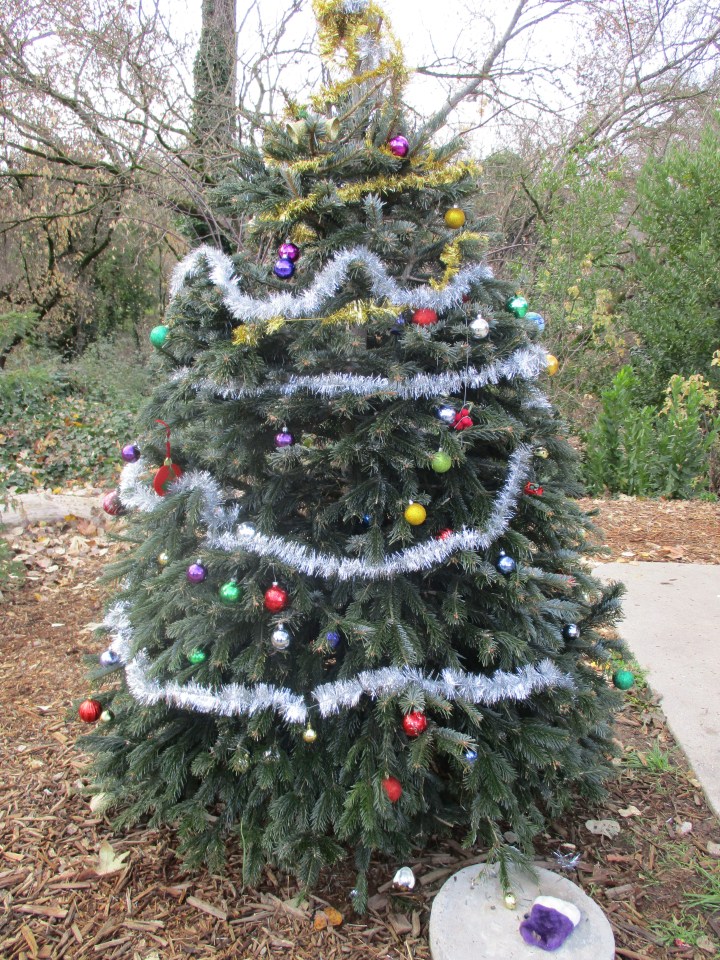
Last year, someone delivered a decorated cut Christmas tree to a picnic area in Felton Covered Bridge Park, where many of the Homeless Community congregate. No one knows who delivered it, or how he, she or they did so undetected. It was a rather fancy tannenbaum (fir) that was not cheap. Someone or a few someones put quite a bit of effort and expense into this unusual gesture, to share a bit of joy with others in the Community.
It was not like a Town Christmas Tree for the Homeless Community, as if the Homeless Community is somehow separate from the rest of Felton. It was more like a household Christmas tree for those who lack a house to live in. It certainly made the annual Christmas Luncheon for the Homeless Community there at the picnic area much homier.
 Just last Saturday, in the first of my two ‘Six on Saturday’ posts, I mentioned that I had never before seen the berries of barberry.


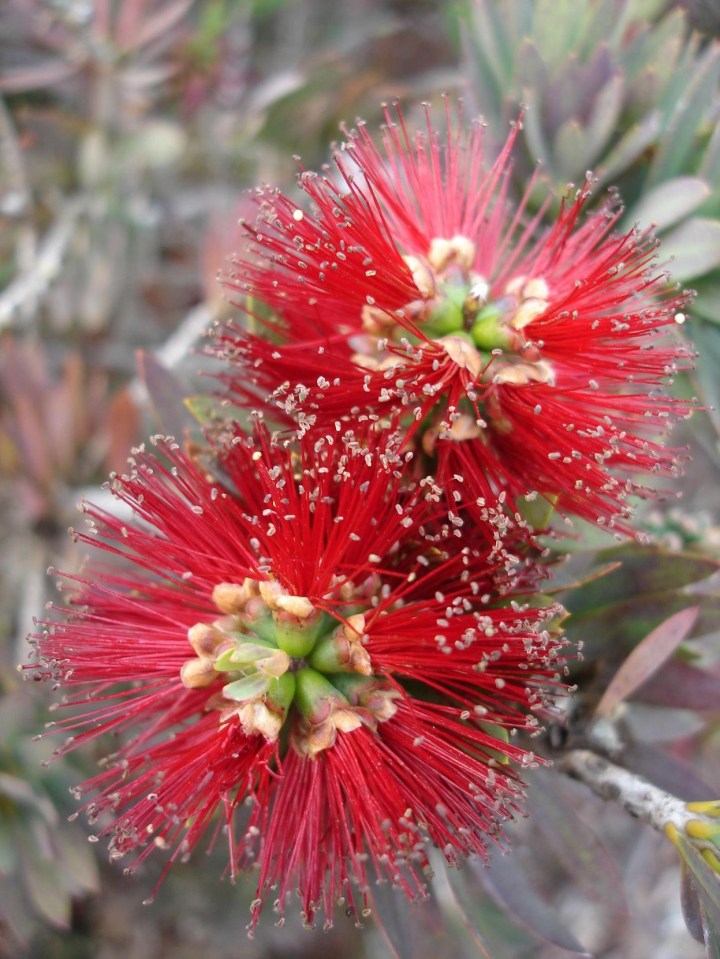 Where it has space to grow, classic lemon bottlebrush that was so popular in the 1960’s is still a practical and resilient large shrub, and is happy to bloom with bright scarlet flowers as long as the weather is warm. It is resistant to most diseases and pests, and once established, survives on annual rainfall. Its main problem is that it simply gets too big for many situations.
 Aside from all the seasonal raking and dormant pruning, there is not as much to do in the garden as there was earlier in the year. Lawns do not need much mowing. Hedges do not need much shearing. Untimely mowing and shearing can actually damage lawns and hedges. Watering, which was so important while the weather was warm, is now rare in the cool weather between rain.
 From the same landscape that, last autumn, was so dutifully deprived of its elegantly cascading rosemary and soon to be fiery autumn color of Boston ivy,

 Some might say it blooms very late. Others might say it blooms very early. Regardless, sasanqua camellia, Camellia sasanqua, blooms in autumn or early winter when not much else is blooming. The abundant two inch wide flowers can be pale pink, rich pink, white or red, all with prominent yellow stamens. Some are fluffy with many petals. Others have only a few. Alas, fragrance is rare.
 This would be a good topic for one of my rants on Wednesday, except that it is too silly for that.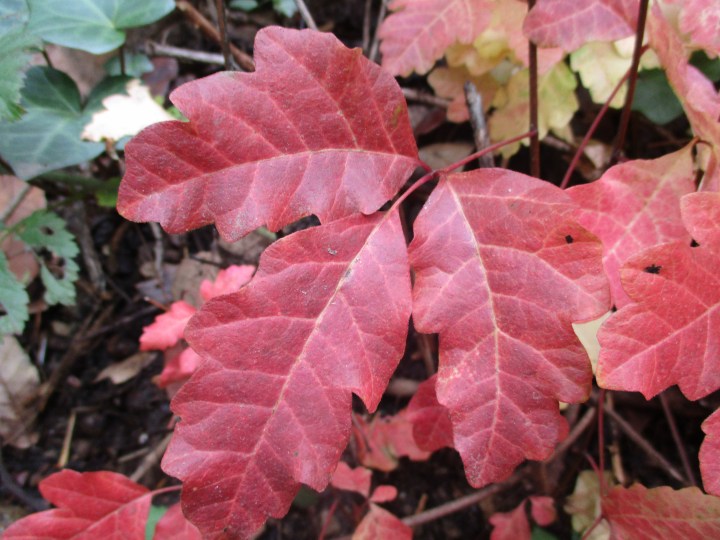
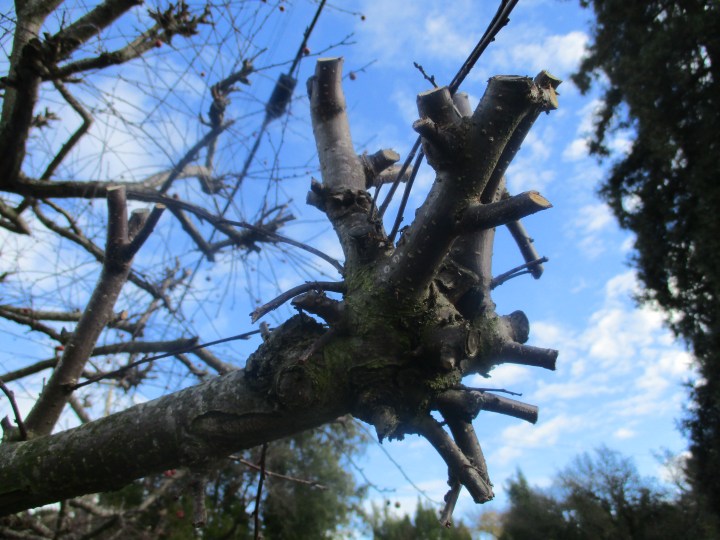
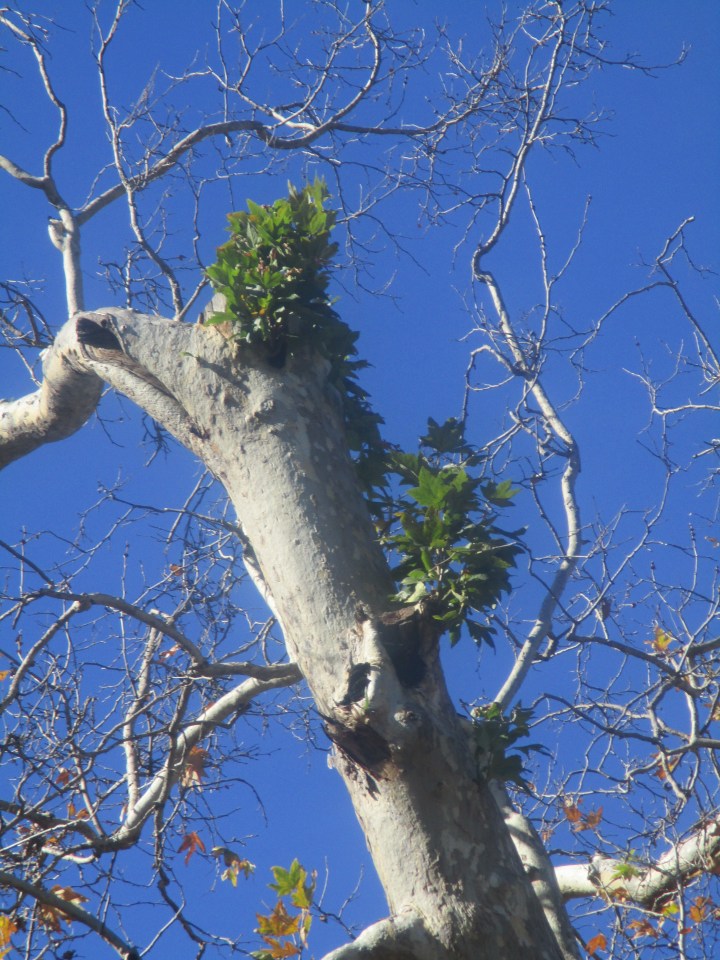 The tufts of small branches that so often develop where limbs were pruned from the trunks of a coast live oaks are sometimes referred to as ‘tumbleweeds’. They are about the same size as an average tumbleweed. By the time the get any larger, most of the smaller stems have subordinated and died out, leaving only a few more defined dominant stems, which will continue the process until even fewer or a single new branch dominates. Such tumbleweeds, as well as stems that originated from such growth, are weakly attached to the main trunks. They often get pruned off for the same reason that the limbs that were there before got pruned off, or because they are expected to be weakly attached. If they remain long enough, they can of course develop into new limbs.
