The flowering cherry trees are like something from Washington D C. They are remarkably happy in our particular location. The air is a bit cooler and a bit more humid than in the Santa Clara Valley. The redwood forest protects them from wind. These pictures were taken last Monday. Bloom is finishing now. The trees in the first picture are already mostly green with new foliage. Bloom was excellent while it lasted.
Azaleas are still in full bloom in the same area. Some are farther along. Others still have buds opening. They seem to be a bit late this year.
The Dutch iris is interesting because it is so uncommon here. In other locations, it blooms well only once, and then does not get adequate chill to bloom the following year. These Dutch iris are doing quite well near the ‘Kwanzan’ flowering cherry in the third picture, and have been blooming reliable for several years.
The pansies, which are actually easy to grow here, did not do as well as other plants that should not have done as well as they did. A few bare spots are evident. However, because they are partly shaded and cooled by the redwoods, pansies can stay in this spot near the flowering cherries in the first and second pictures until the weather gets too warm for them in summer. In other places not so far away, they would have been replaced by warm season annuals already.
1. flowering cherry – Some know them as ‘Yoshino’. Others think they are ‘Akebono’. I really need to find out what they are so that we can add more before these deteriorating old trees get removed.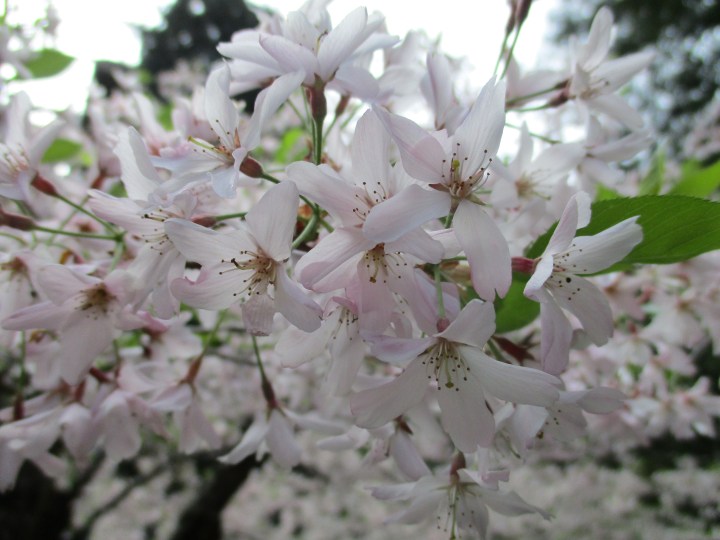
2. flowering cherry – Double flowers are not my favorite, but the clear bright white is. Again, we do not know what cultivar this is.
3. flowering cherry – This one is obviously ‘Kwanzan’.
4. azalea – This red azalea should be easy to identify, but no one really cares what cultivar it is.
5. Dutch iris – In our climate, this is impressively reliable bloom.
6. pansies – Yes, I know they are cliché; but they happened to be blooming near the flowering cherries, so I could not just ignore them.
This is the link for Six on Saturday, for anyone else who would like to participate:
https://thepropagatorblog.wordpress.com/2017/09/18/six-on-saturday-a-participant-guide/
 What an unappealing name! That is probably why so many of us know it simply as ‘wild onion’ or ‘allium’. Few of us bother to get sufficiently acquainted with it to know it by the species name of Allium triquetrum, which is actually not much more appealing than ‘onion weed’. It is not really wild, but has naturalized as an invasive exotic, or in other words, ‘weed’. At least it is a pretty weed.
 The Great Basin bristlecone pine of the eastern Sierra Nevada can live more than five thousand years. The giant sequoia of the western Sierra Nevada can live more than three thousand years. The familiar coastal redwood from the Coastal Ranges can live more than two thousand years. Besides impressive longevity, one thing that they all have in common is that they all eventually die.
 After all the years it was out there, someone, somewhere must have gotten good pictures of it. I never did. Nor did anyone I know. It was something of a famous landmark in Santa Clara.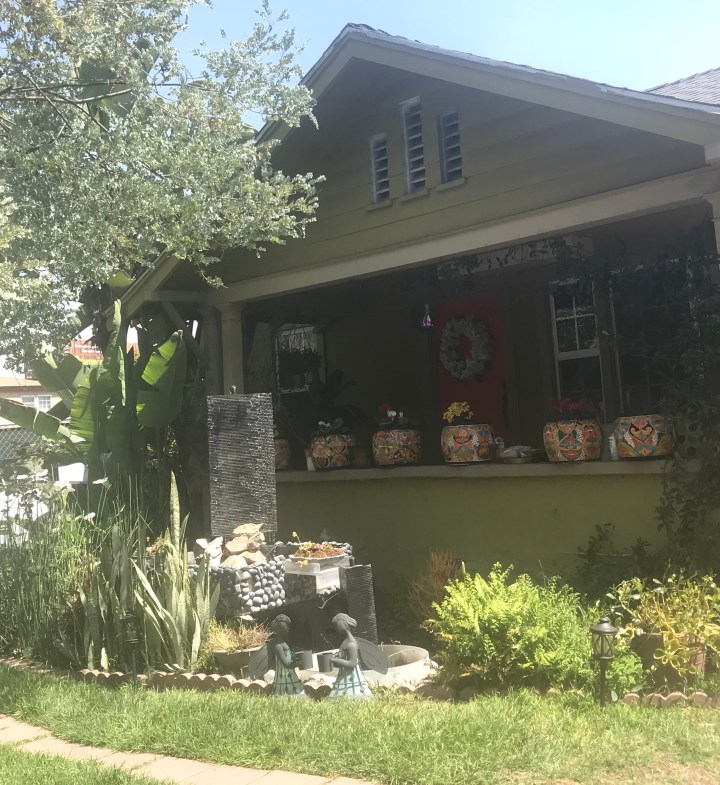
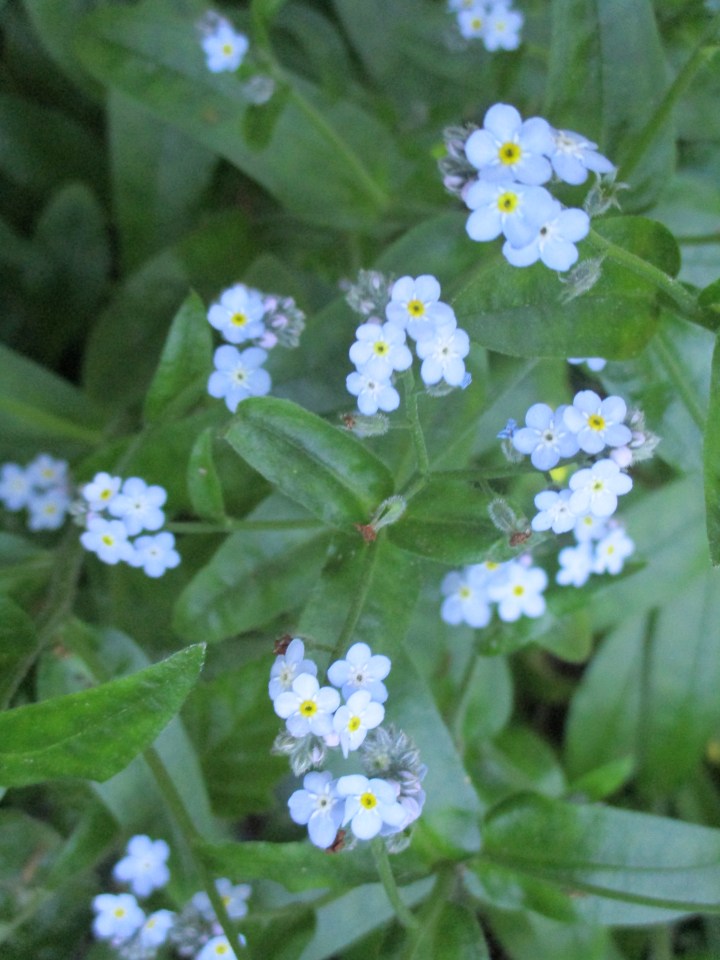 It is not easy to forget annual forget-me-not, Myosotis sylvatica. Even if it dies back early in the heat of summer, it will probably throw plenty of seed to regenerate through next winter, and bloom again by next spring. It can easily naturalize in damp or riparian areas, and might be considered to be a weed; but like nasturtium and foxglove, it is a polite weed that is not aggressively invasive.
 Daffodils, freesias, lilies, snowdrops and the various early spring blooming bulbs and bulb like perennials will be finishing soon if they have not finished already, leaving us with the annual question of what to do with the foliage after bloom. The plants will not bloom again until next year, and the remaining foliage might be unappealing without bloom. Much of it slowly deteriorates into summer.
 Wildlife and domestic animals seem to follow me everywhere I go. When Brent and I lived in the dorms at Cal Poly, our room was known as the Jungle Room, not only because of all the greenery, but also because every little bird that got knocked out while trying to fly through the big windows at the dining room was brought to our room to recuperate. A baby squirrel that weaseled into my jacket while I was out collecting insects for an entomology class lived with us for a while. There were two baby ducks that need a bit more explaining.


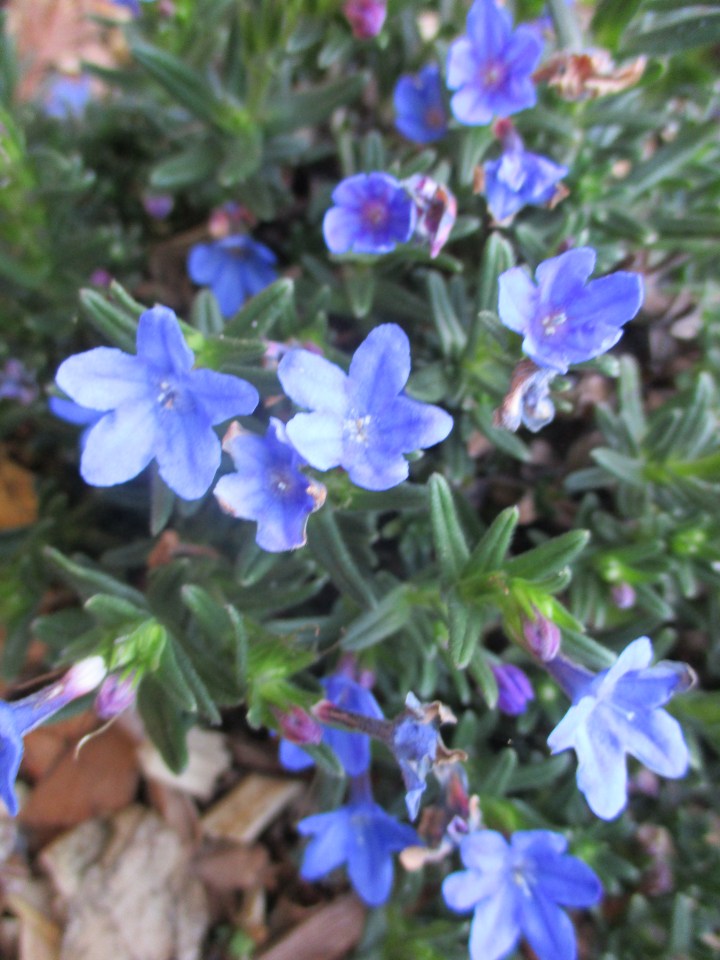
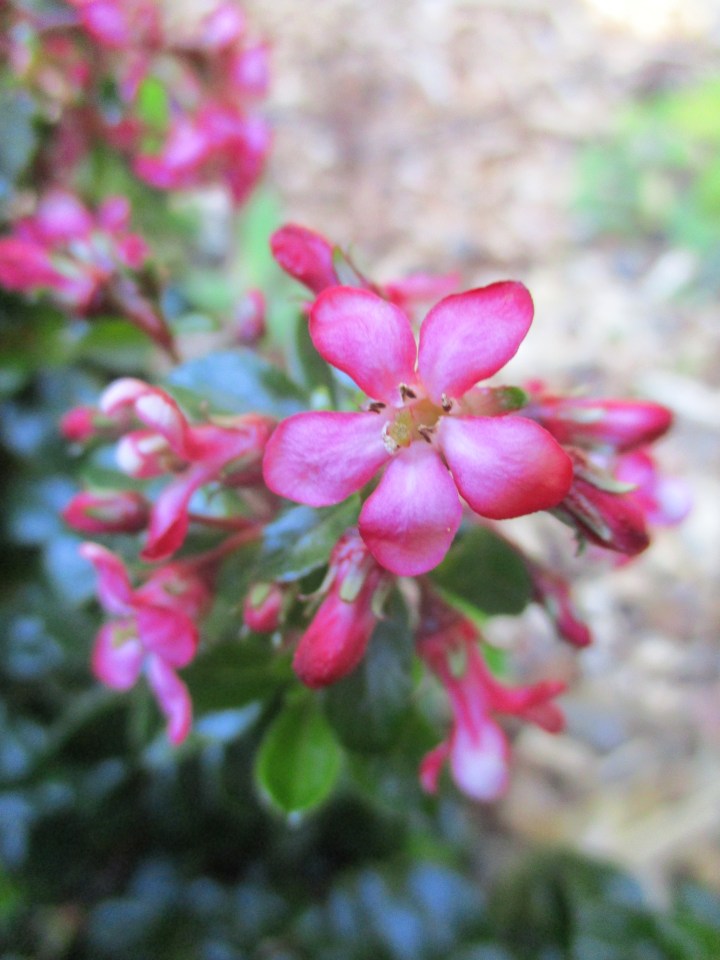
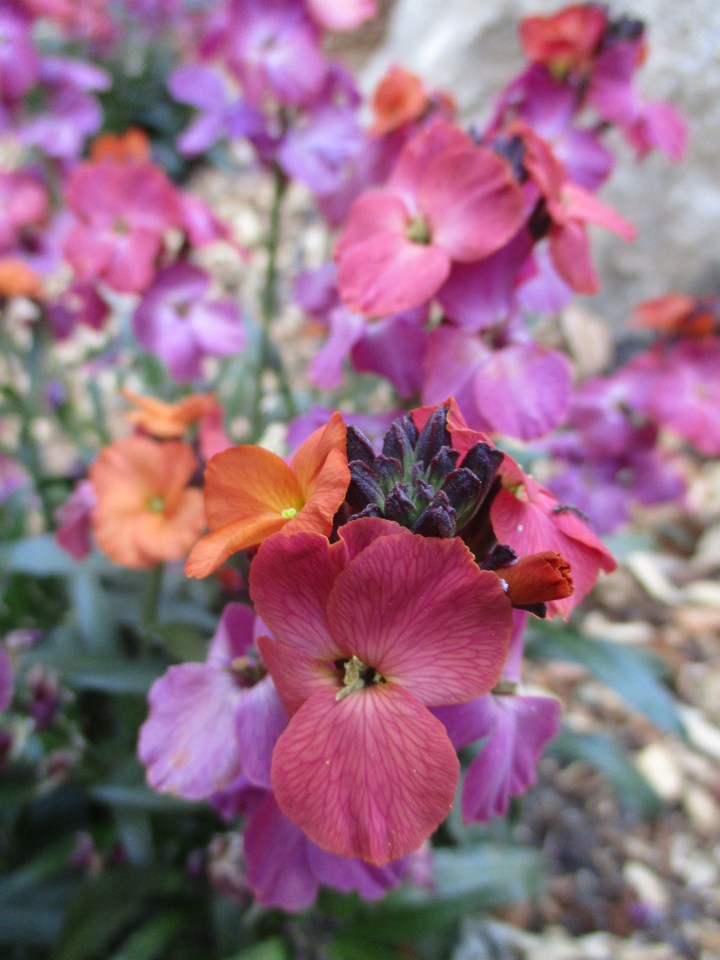

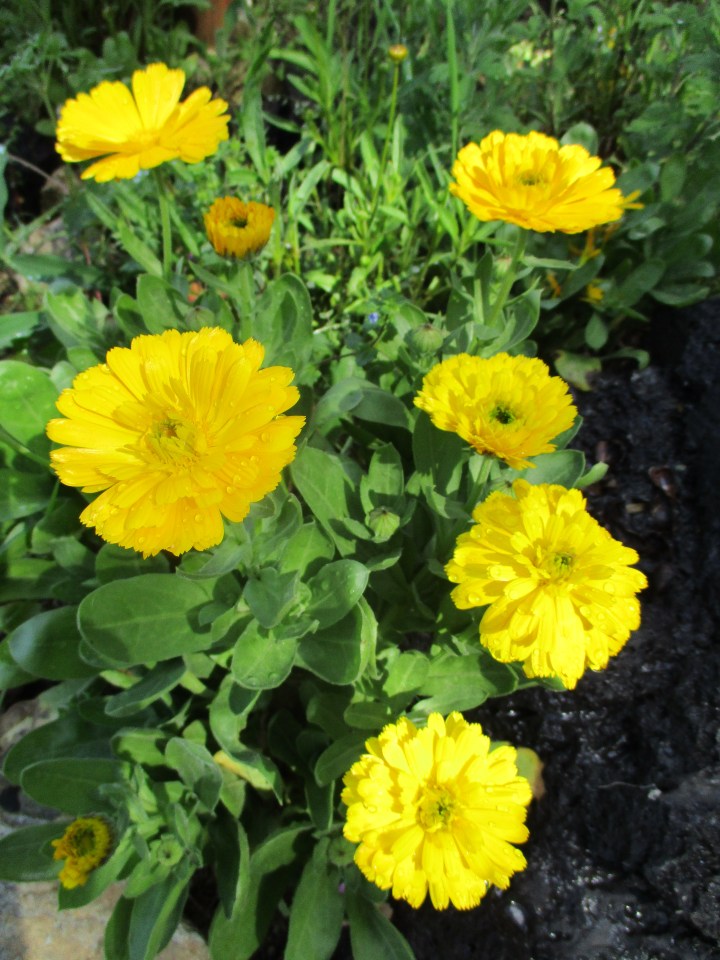 Just before the weather gets warm enough for real marigolds, and after the weather starts to get too cool and rainy for them, pot marigold, Calendula officinalis, is at its best. It can bloom at any time of year, depending on when it gets planted, but prefers cool and humid spring and autumn weather. It is not so keen on frost in winter, or the arid warmth of summer that real marigolds enjoy.
