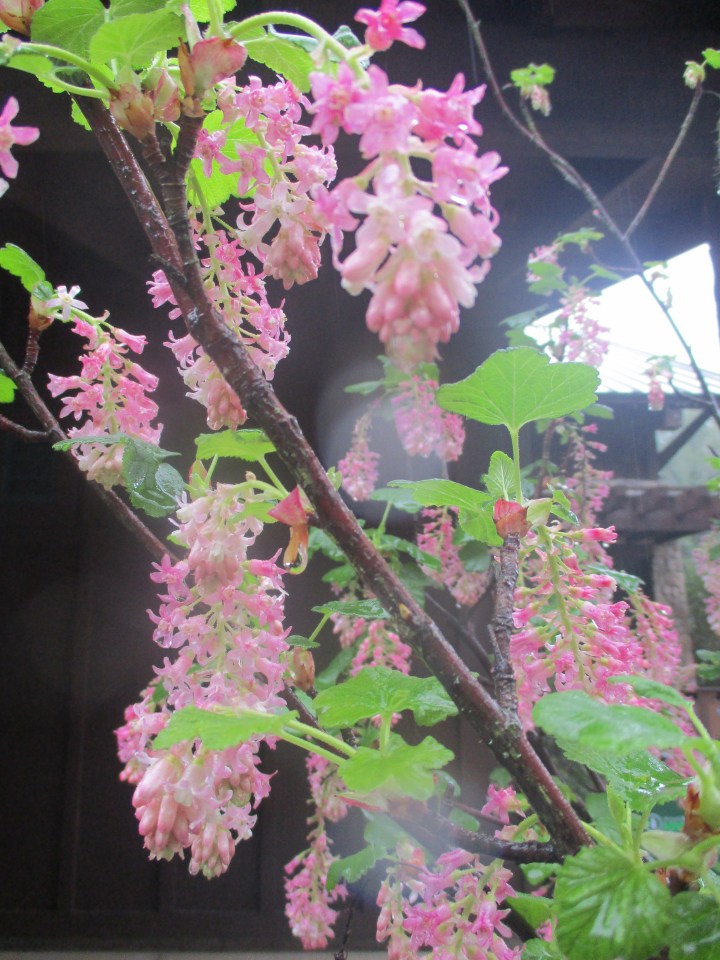
 We tend to think of currants as being from Europe, Russia or Eastern North America. The pink flowering currant, Ribes sanguineum glutinosum, is actually endemic to canyons and riparian sites of the coastal ranges of California. Because it is an understory species that lives in the partial shade of large trees, it is quite tolerant of shade, and even prefers a bit of shade rather than full sun.
Mature specimens might reach first floor eaves, and get as wide as six feet. Aging stems of maturing plants should be pruned out to promote growth of new stems. New plants should probably be staked loosely until they disperse stabilizing roots. Although tolerant of drought, pink flowering currant is happier with occasional watering, and will actually tolerate poor drainage through winter.
Pendulous trusses of tiny pink flowers bloom like small wisteria flowers late in winter or early in spring. They are mostly done by now. Small and sparse currants get eaten by birds almost before they get seen. The deciduous foliage turns only soft yellow before falling in autumn. The handsome and slightly aromatic palmate leaves look and smell almost like those of a scented geranium.
 They were not always houseplants. They came from somewhere else. Most came from shady tropical forests, which is why they have such big dark green leaves, and are so tolerant of shady home interiors. They are pretty good sports about tolerating the domestic lifestyles that we subject them to, but they would really prefer to be thousands of miles away, growing wild back home.
 ‘Fertilizer’ is a polite term for ‘recycled vegetation’.
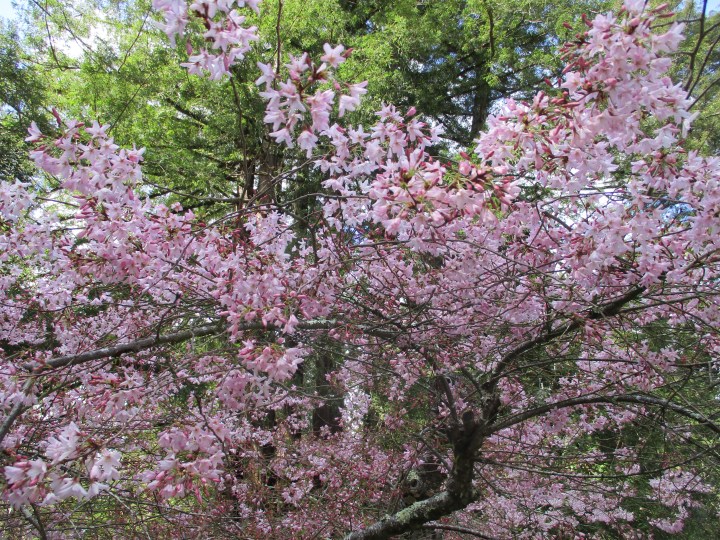 I would say that this is our own private Cherry Blossom Festival, but it really gets a crowd. These two old trees are at the edge of the main roadway through town, so several people driving by stop to take pictures. They may not seem to be very impressive compared to healthier flowering cherry trees, but they are what we have, and we are happy to get the bloom.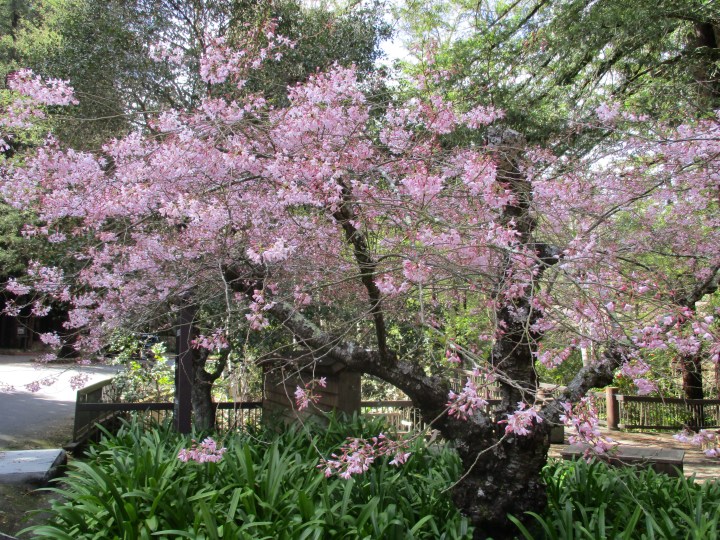

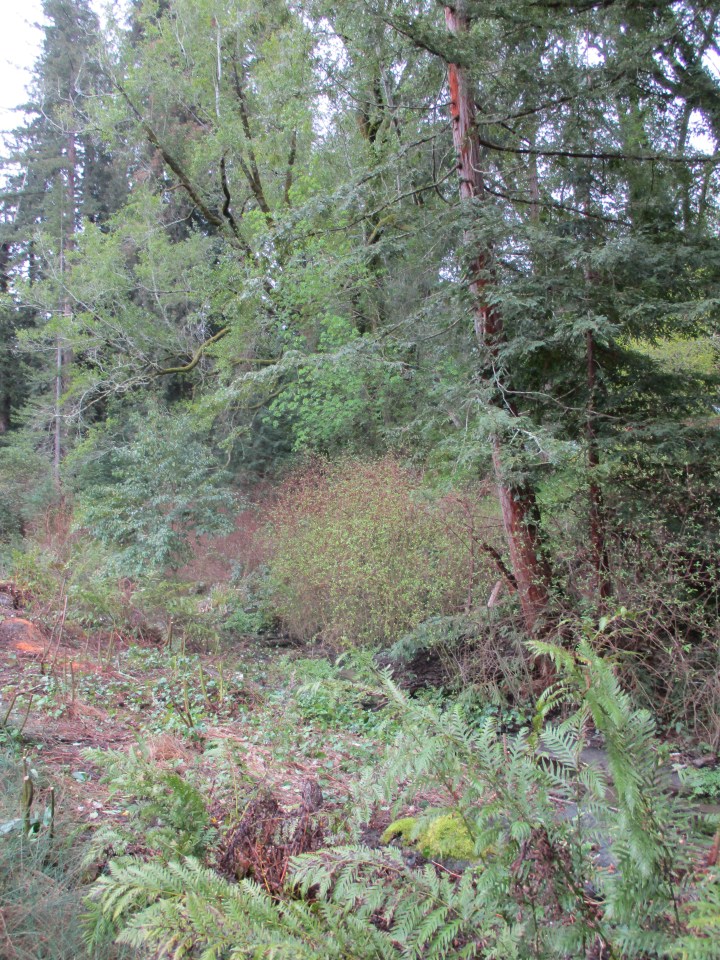


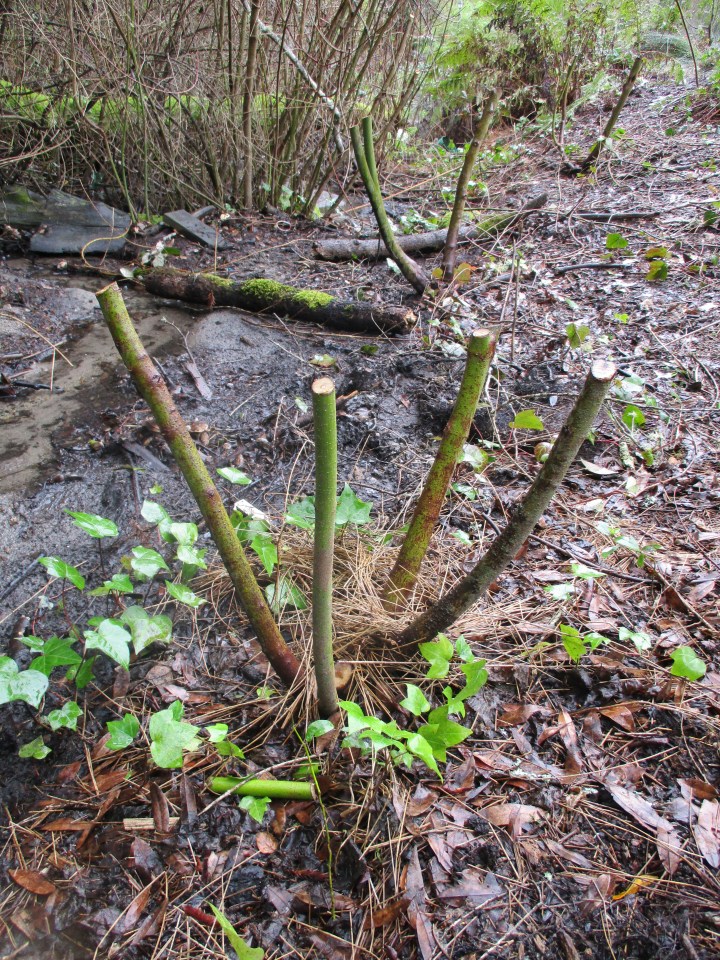
 What ever happened to Point Reyes ceanothus? It is such a nice low growing shrub, with small holly-like leaves, and cheery blue flowers in very early spring. It was quite popular when it initially became available, but now seems to be rare. Maritime ceanothus, Ceanothus maritimus, from San Luis Obispo County, is a similar species that presently seems to be getting more attention.
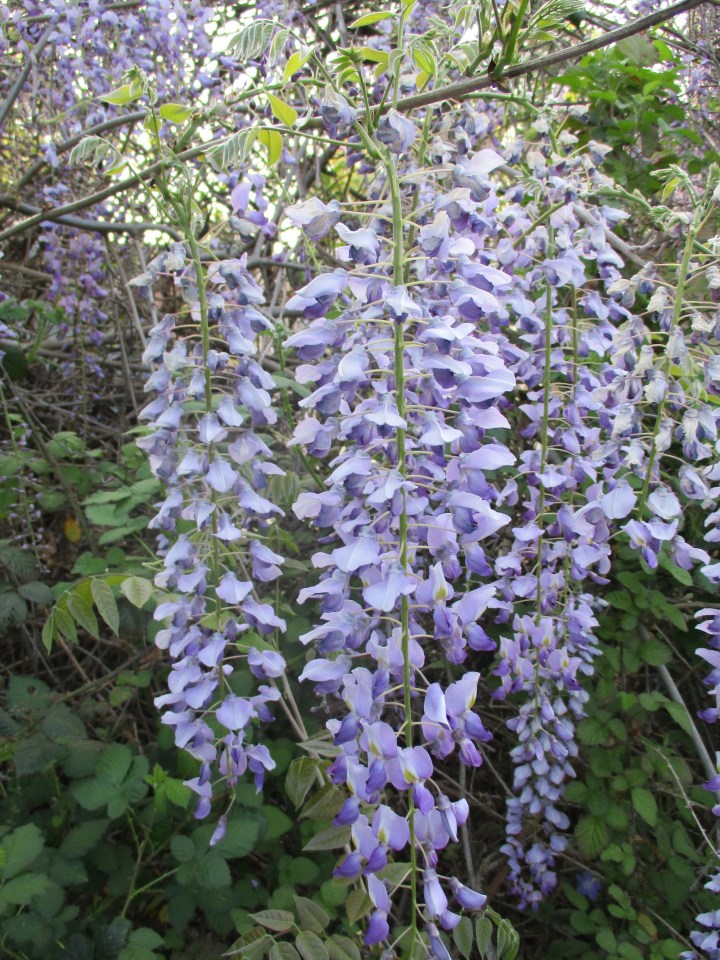 It is easy to see why there are optimum times to prune, and just as easy to see when pruning should not be done. Generally, deciduous plants prefer to get pruned while dormant and bare. They should not be pruned when actively blooming or making new foliage. Roots are of course not so easy to see. Do we really know what they are doing, or what sort of mischief they are getting into?
 Trona
Trona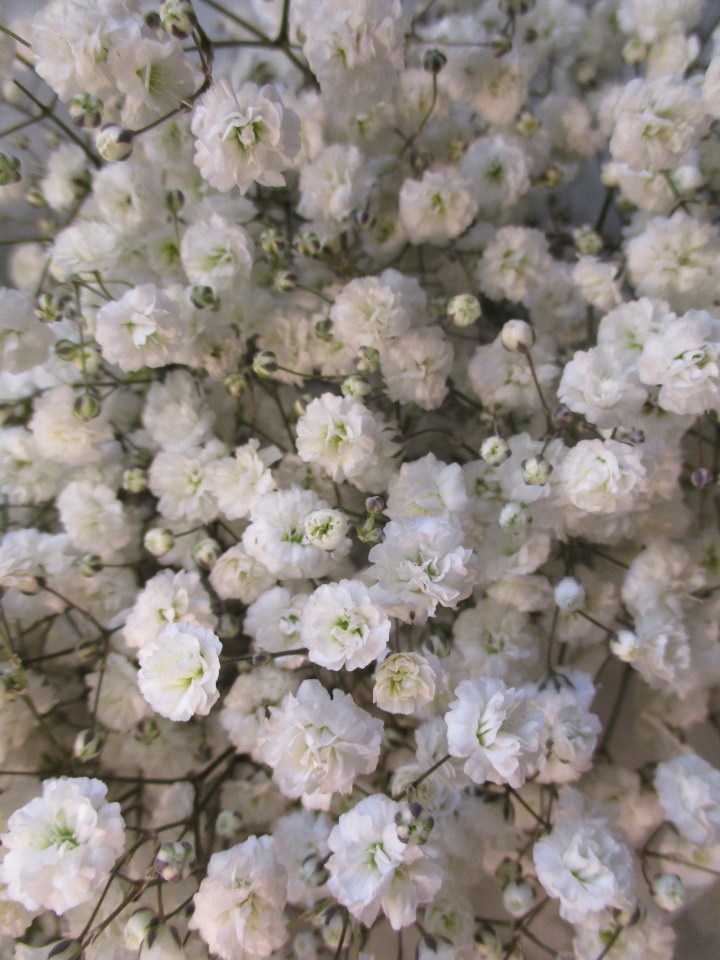 You might think that such a popular flower would be easy to get a picture of. Baby’s breath, Gypsophila paniculata, is everywhere, and almost a standard component of the mixed bouquets found in supermarkets. However, the flowers are so small and so sparsely arranged on thin stems, that they do not look like much in pictures. This picture is a closeup of a tightly bound bundle of bloom.
 There is no doubt that frost will return next autumn. It does that every year. Right now, we are more concerned that is should not return prior to that. It is now safe to plant plants that are sensitive to frost. Even if the weather were to somehow get cold enough to necessitate protection of frost sensitive plants, it will not be severely cold, and it will not last long. It is best to start now than to delay.
