It is certainly not as cold as it is in other regions at or north of this latitude. Nor is it unusually cold for this time of year. It is not stormy. We got only a few heavy but brief rain showers with a bit of small hail. A slight bit of snow fell only on the Summit of the Santa Cruz Mountains
The problem is that the weather had been so mild earlier, and at times, downright warm. Many plants were coerced into premature bloom. Some started to generate new spring growth. When the weather suddenly became more seasonably cool, many of the flowers and new growth got frosted and ruined.
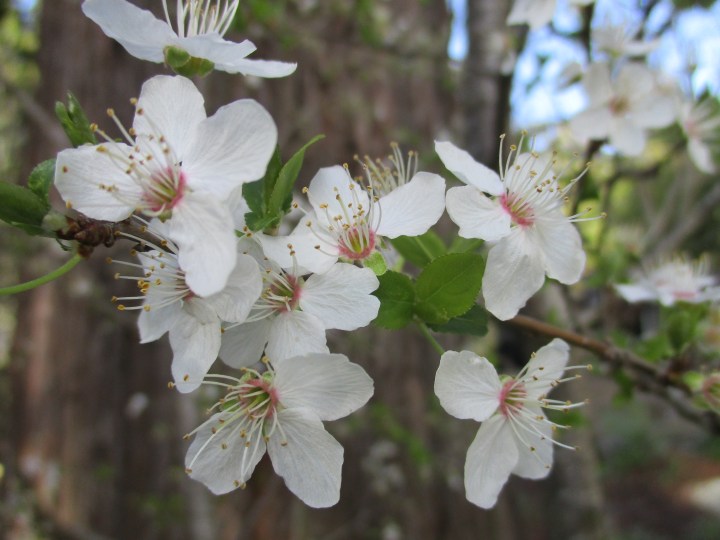
Fortunately, most of the deciduous fruiting trees seemed to know what they were being set up for, and abstained from bloom. So far, even the early blooming apricots, cherries, almonds prunes and plums are safe. The wild American plums bloomed, but not many of us use their fruit anyway. (I want some – both amber and red – for jelly, but there will be plenty of other fruit.)
Saucer magnolias were just beginning to bloom when the cool weather moved in. Now, some of the big pink flowers are spotting and melting before they open completely. Many of the camellias are succumbing to blight, and falling to the ground shortly after they open.
Weather is always risky, even in mild climates. Actually, our mild climate allows us to grow more of the plants that are sensitive to anomalies of the weather. Perhaps such anomalies would be less of a problem in harsher climates where the weather is naturally more variable. If so, it is probably a fair compromise. The problems with such a mild climate are still less significantly less than the advantages.



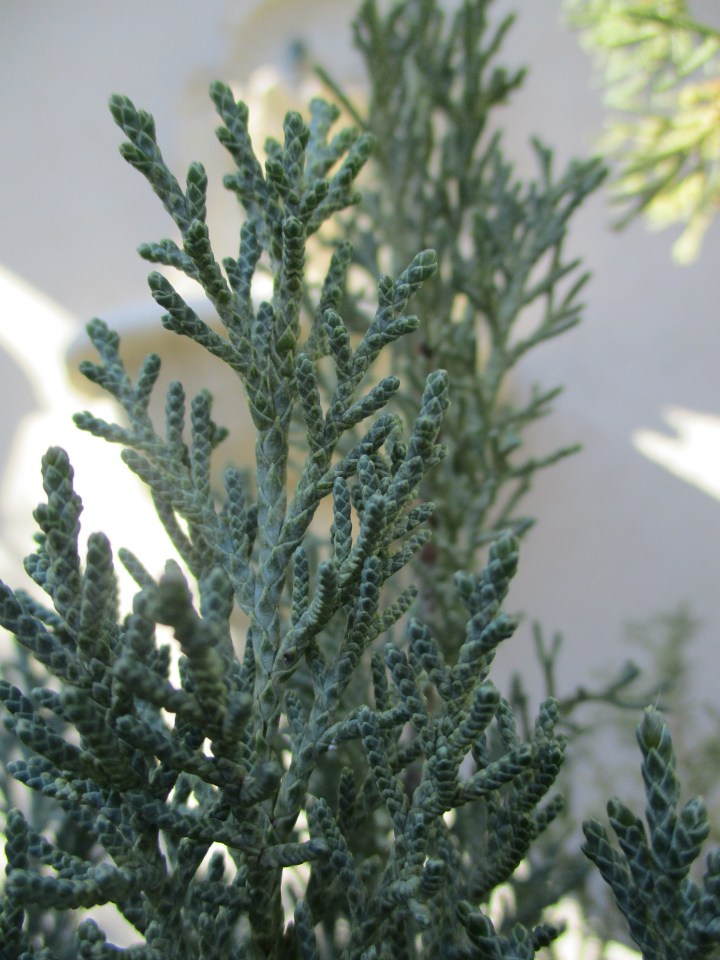 It is no coincidence that many plants with gray foliage are from mountains or deserts. Gray foliage is ‘glaucous’, which, like glaucoma, diffuses light. This helps to protect it from desiccation and scald when sunny weather is also hot, windy or arid. The glaucous foliage of Rocky Mountain juniper, Juniperus scopulorum, is what distinguishes it most from related North American junipers.
 This is getting to be cliché. “While they are dormant through winter”, plants tolerate all sorts of abuse that would offend them at any other time of year. It applies to planting bulbs and bare root plants. It also works for pruning deciduous fruit trees and roses. It is a predictable seasonal pattern. Most winter gardening is contingent on dormancy. Processing potted plants is no exception.
 Three or four might be better than two. Perhaps that is what this queen palm was thinking when it decided to get extras.
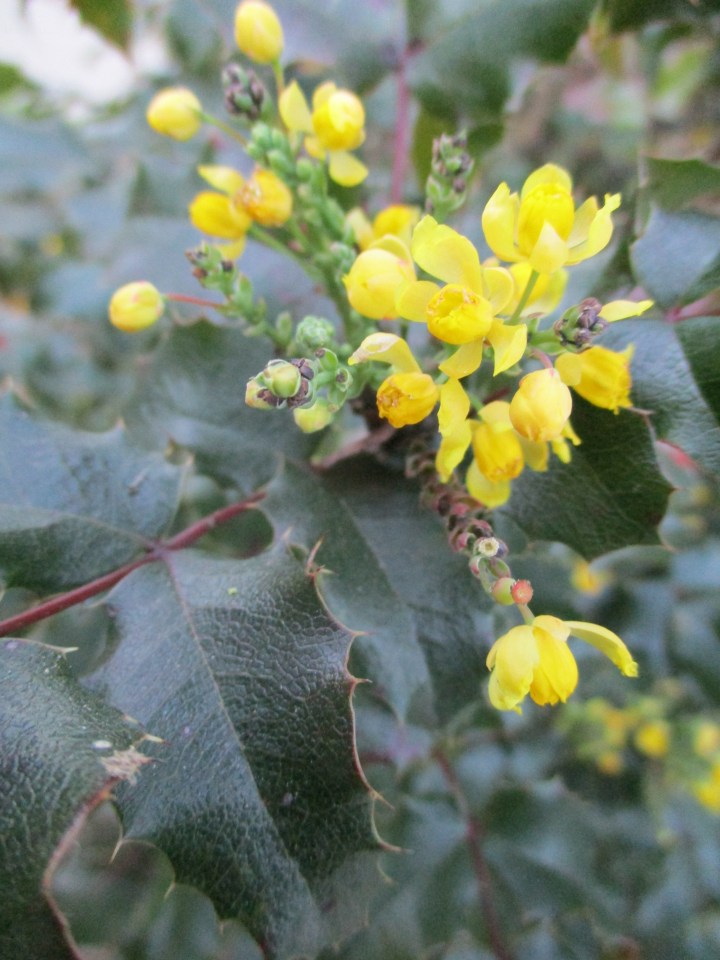 Oregon has good taste. Douglas fir, one of the most useful of timber trees in America, was selected as the state tree. Oregon grape, Mahonia aquifolium, was designated as the state flower. Although the tight clusters of tiny bright yellow flowers that bloom about now may not be as flashy as other state flowers, they contrast handsomely against the glossy and deep dark green foliage.
 Winter is the best time for major pruning of most plants. They do not mind it so much while they are dormant. However, there are exceptions. Winter pruning might be a bit too early for a few plants that are grown for their late winter or early spring bloom. It is best to wait until immediately after bloom to prune or trim flowering cherry, flowering plum, flowering crabapple and flowering quince.
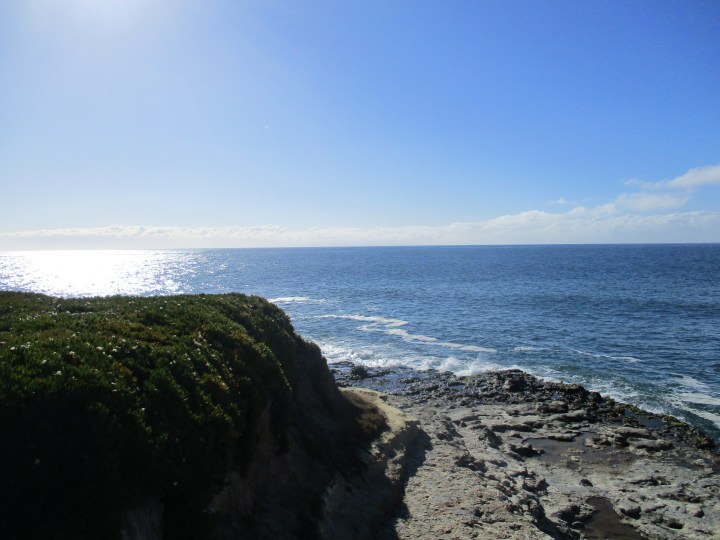 Between here and Hawaii, there is a whole lot of water. Between Hawaii and Australia, there is a whole lot more. Everywhere to the west and southwest of California, there is a lot of water. Unfortunately, none of this huge volume of water is useful for gardening. It is saline. It would kill plants.
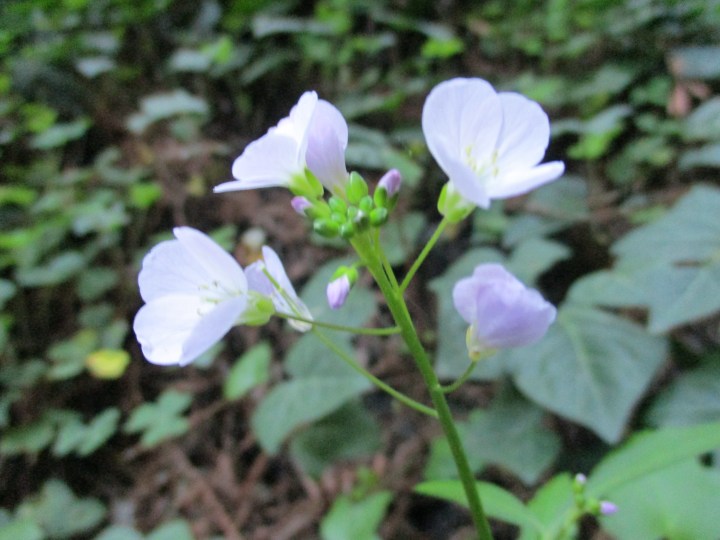 There are so many big trees in the Santa Cruz Mountains that keep most of us looking up. It is easy to miss much of the understory plants that grow on the forest floor.
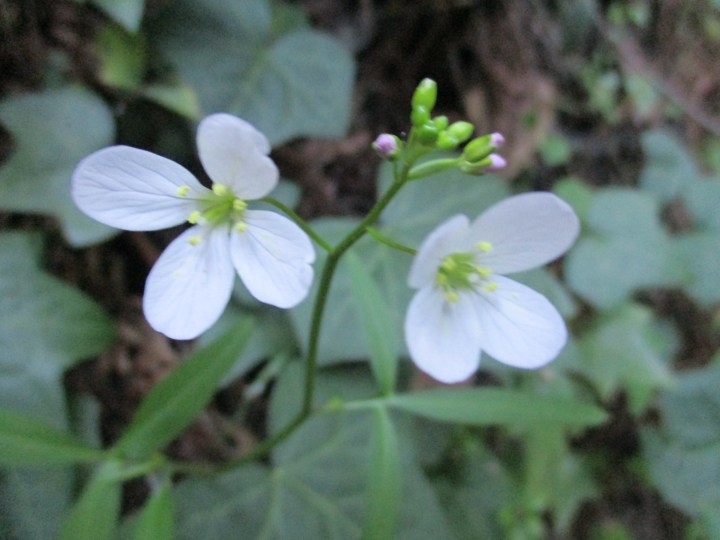 The flowers were not completely white. They were very pale hues of pink. The wood sorrel in the last picture was slightly more pinkish than the unidentified cruciferous (of the family Cruciferae) flowers of the first two pictures. Pale flowers, particularly those that seem to be adorned with barely perceptible patterns, are typically those that use infrared and ultraviolet color to attract pollinators that can see such color. If that was their intention, they would not look so bland to the pollinators whom they prefer to attract.