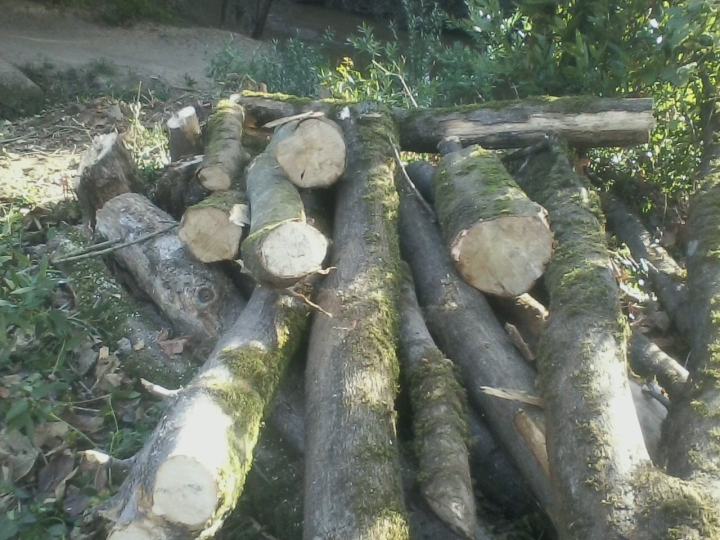
 There will be no more updates after this last one for the dead box elders that had been leaning onto the historic Felton Covered Bridge. ( https://wordpress.com/read/blogs/135014809/posts/747 ) They are gone. A pile of logs and some debris are all that remain.
Because the area is a protected riparian zone, the remaining debris and logs may have been left there intentionally, as an important component to the ecosystem. Nearby dead trunks that will not reach the Bridge when they fall also remain, as well as many other larger dead box elders several yards upstream.
For now, the Felton Covered Bridge is reasonably safe from falling trees.
We can only hope it stays that way.
Environmentalism has a way of complicating things.
Environmentalism should be more concerned with prioritizing the natural ecosystem than preserving vegetation that is interfering with it. Much of the exotic (non-native) underbrush and even a few exotic trees should be eliminated to allow at least some of the displaced native vegetation to recover. Where necessary and appropriate, environmentalism must also make accommodations for safety within an innately hazardous natural setting that happens to be very accessible to the public. More of the dead box elders should be removed or at least cut down to reduce the risk of falling limbs to those visiting the adjacent Felton Covered Bridge Park.
Preservation of assets like the historic Felton Covered Bridge is also important. Trees that are likely to damage the bridge should not be salvaged merely because they are within the protected riparian zone. Because the Felton Covered Bridge is such a landmark for tourists, the view of the Bridge is an important asset as well. Vegetation that would obscure this view should therefore be managed, so that it does not eventually obscure the view as it regenerates within the area vacated by the now absent box elders. There is nothing unnatural about open spaces. Old photographs demonstrate how visible the Felton Covered Bridge had been in the past, and how the flood of 1982 eliminated much of the obscuring vegetation within the riparian zone in a very natural way.
In many situations, planting new trees to replace those that are now gone is actually more unnatural than natural. It certainly does not contribute to the efficiency of a natural ecosystem. The installation of new sycamores, coast lives oaks and bay trees adjacent to the nearby Graham Hill Road Bridge are superfluous to new tree seedlings that appeared naturally in the area vacated by fallen box elders. They were planted with soil amendment, fertilizer and a synthetic polymer gel to retain moisture, and then protected from deer with stakes and mesh cages. They require unnatural supplemental irrigation until they get established, and are so close to each other and other trees, that they will become an unnaturally crowded thicket as they mature. There is nothing natural about such installations!
Nor are such installations inexpensive! They require resources that could be more responsibly allocated to more practical projects.
Environmentalism is another one of those very important concepts that has been compromised by extremism.

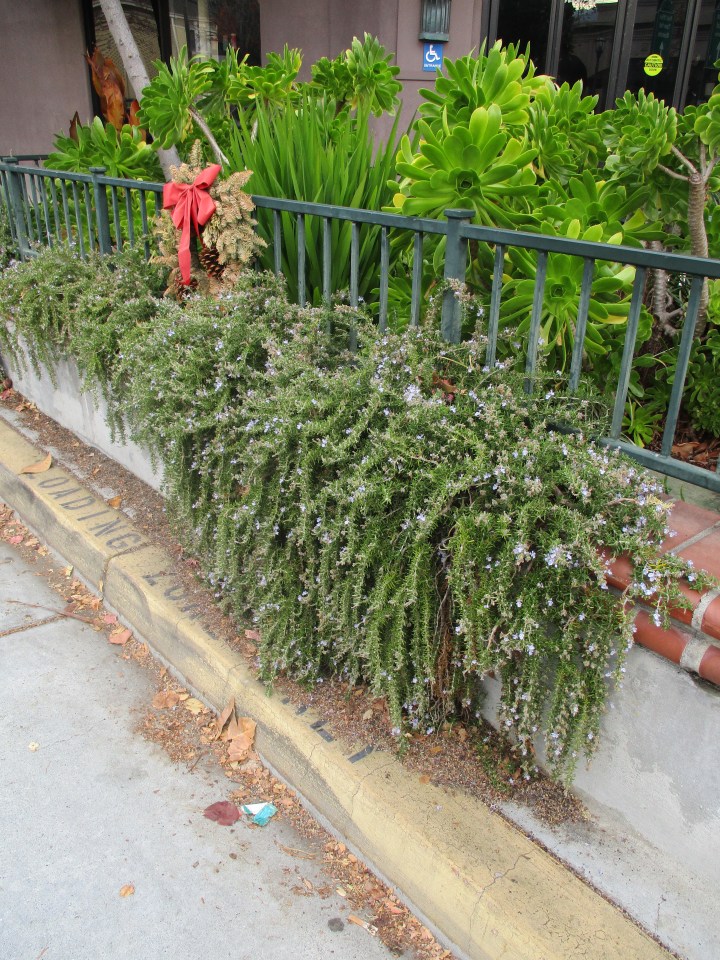 My little planter box downtown that I wrote about last week and earlier must be the weirdest garden that I have ever tended to. (
 It may not always bloom profusely, but sweet pea shrub, Polygala fruticosa, blooms sporadically through most of the year. Even when not much color is evident from a distance, a few flowers can likely be found on closer inspection. For some reason, bloom seems to be quite colorful now. Bloom phases should be more profuse in spring and summer. The pea flowers are soft purplish pink.
 Stormy winter weather always reminds some of us that our trees need some attention. Wind can break limbs. If the weather gets really nasty, trees can be destabilized by strong wind, particularly if the soil is moistened by rain. However, the truth is that arboriculture, which is the horticulture of trees, is important throughout the year. We just become more aware of it when weather threatens.


 This is no timid vine! Flame vine, Pyrostegia venusta, is related to the lavender trumpet vine and blood red trumpet vine, and is just as vigorous. Although it can not be recommended for tight spaces or small refined gardens, it excels at obscuring concrete walls. It only needs wires or stakes to be convinced to climb. If it gets too big, it can be cut back after bloom to regenerate quickly.
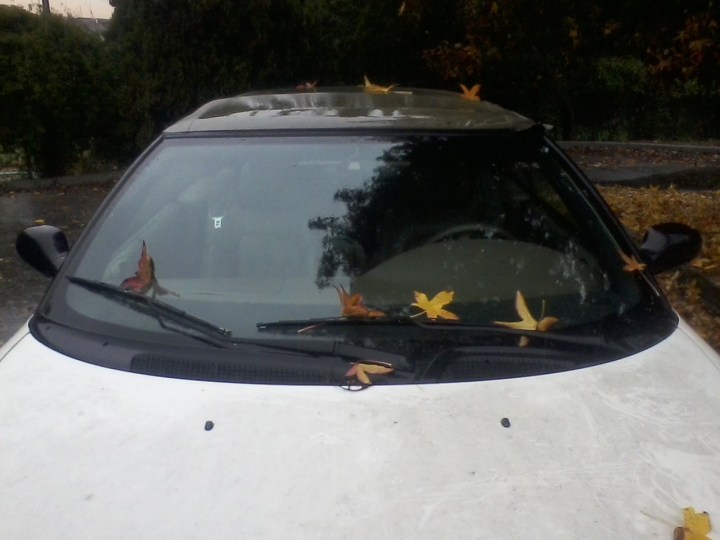 The old Chrysler looks different this time of year. Like dogs, cats, horses and deciduous plants, it adapted to the weather.
 Christmas tree lots at nurseries come and go at a good time. Cut and live Christmas trees become marketable just as retail sales of other items is declining. Although autumn is the best season to plant many things, not many of us want to be out in the garden as the weather gets cooler. As Christmas trees get sold and relinquish their space, bare root nursery stock becomes available.
 Australia, New Zealand and South Africa were the hip and trendy places to do internships in horticulture back in the late 1980s. Everyone who was anyone was doing it; which is sort of why I was not that interested in doing what everyone else was doing already, even if I could have afforded to go to any of those exotic places. I did my internship in Saratoga.