Floral Color Communicates To Pollinators

Flowers attract their pollinators with color.

Bloom is bountiful for spring. It is more abundant now than it will be at any other time of year. Early bloom has more time to produce more seed prior to autumn and winter. Also, it can most efficiently exploit its pollinators who are also most active in spring. The most prominent blooms appeal to such pollinators with floral color. Their effort is remarkable.

Most bloom within most natural ecosystems here relies on wind for pollination. Although very efficient, it lacks prominence. Some grasses seem to produce seed without evident bloom. Because such vegetation does not rely on pollinators, it has no need to advertise. Toyon produces tiny but prominently profuse flowers for both wind and insect pollination.

Most species within home gardens rely on pollinators rather than wind for pollination. At least their ancestors did. They originally developed both floral color and floral fragrance to attract pollinators. Extensive breeding enhanced color and fragrance, but also caused sterility for some. Others are not true to type. Their visual appeal became less practical.

Obviously, such visual appeal and associated practicality are subjective. Although less practical for procreation, enhanced bloom is more practical for home gardens. Most who enjoy flowers appreciate enhanced floral color and enhanced floral fragrance. They are unconcerned with how species that provide such bloom procreate. Looks are everything.

Besides, some pollinators can still enjoy most enhanced floral color. A few flowers are so genetically modified that they confuse some pollinators. A few insects die of exhaustion while trying to gain entry. Generally though, most get what they came for or safely leave without it. Many who enjoy gardening also enjoy pollinating insects and hummingbirds.

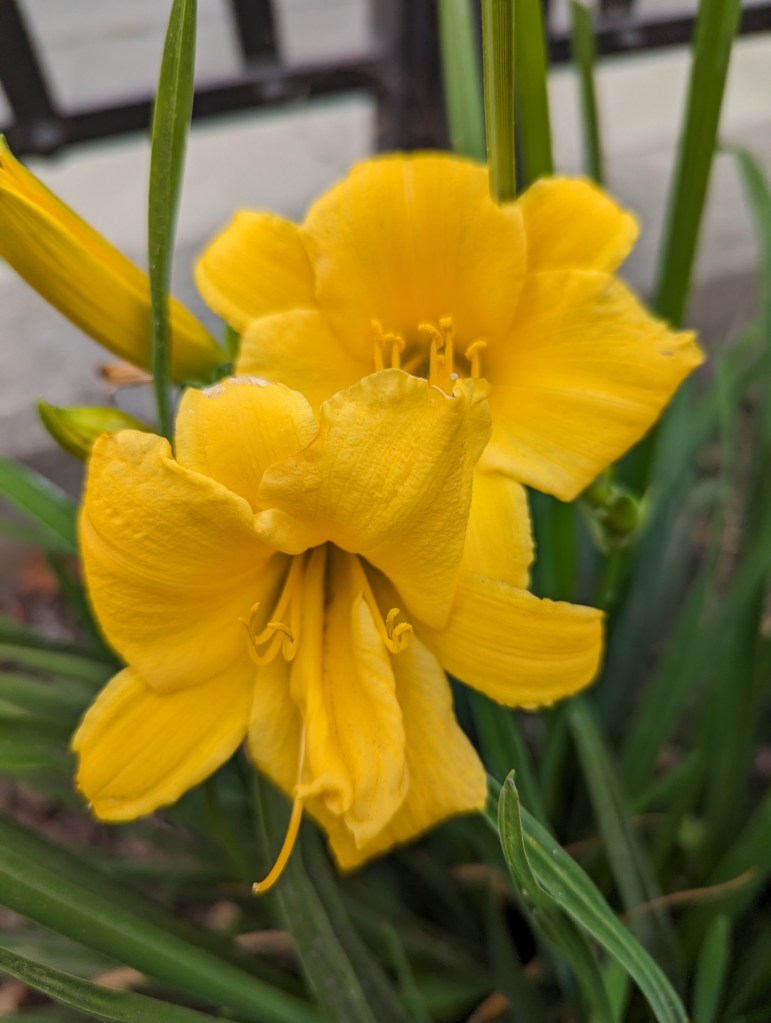
Ultimately, floral color is personal. Many garden enthusiasts prefer specific color ranges or specific colors. Many prefer an abundance of color. Some prefer more subdued floral color. Some prefer specific types of flowers to provide floral color. Bloom season may be another concern. Some want more winter bloom while nearby gardens lack floral color. Many prefer major spring bloom. Some like random bloom through the year.
Spring in Guadalupe Gardens & Wildflower Show (2010)

(This article is from 2010, so contains irrelevantly outdated information.)

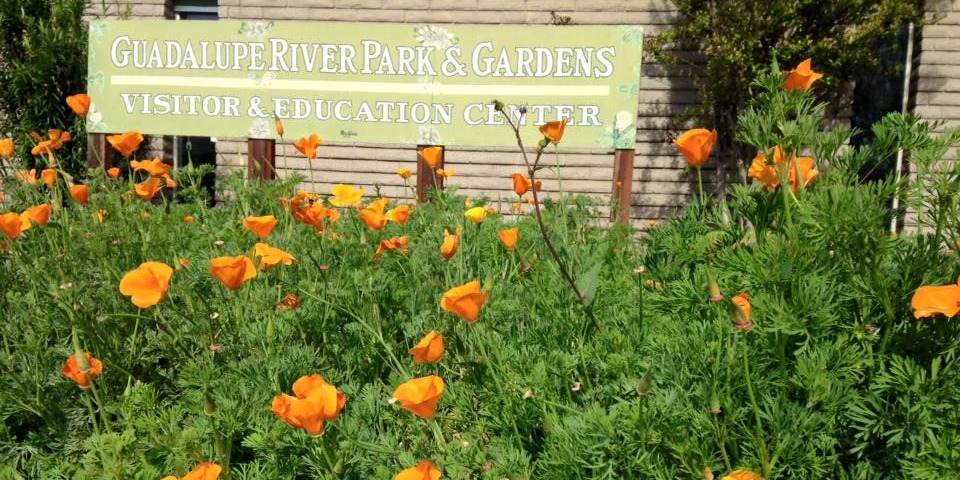
Now that the world renowned San Francisco Flower and Garden Show is over, it is time for an even more important horticultural event; Spring in Guadalupe Gardens, on April 24, between 10:00 a.m. and 3:00 p.m.. This celebration of Guadalupe Gardens, Earth Day and the Great Outdoors may not be as big and as fancy as some of those ‘other’ shows, but it is so much more important because it is local, centered around the Guadalupe Gardens Visitor and Education Center, which is located at 438 Coleman Avenue in San Jose.

My favorite part of Spring in Guadalupe Gardens is all the vendors of unusual plants. In past years, I found several fuchsias, aloes, cacti and weird tomato plants at Spring in Guadalupe Gardens. I never know what to expect until I get there. I hope to find unusual fig trees this year.

Spring in Guadalupe Gardens is also a great opportunity to meet with representatives of all sorts of gardening clubs. Gardening questions can be brought by the Master Gardeners of Santa Clara County’s Gardening Advice booth, where I will be working throughout the day. There will be workshops and lectures, music and entertainment, as well as fun activities for children.

Spring in Guadalupe Gardens happens to be at the same time as the peak of bloom in the Heritage Rose Garden, which is the largest public garden in the United States of America dedicated to the preservation of old roses. There will be tours in other gardens and trail walks too. If I did not need to work at the Gardening Advice booth, I would want to tour the Historic Orchard, which is literally a tree museum of the many fruit trees that once filled the vast orchards of the Santa Clara Valley.

Earth Care Recycling will host a free electronic waste drop off at the Visitor and Education Center to collect all sorts of computers, keyboards, monitors, televisions, stereos, radios, printers, fax machines, telephones, cell phones, DVD players and VCRs. (I thought mine was the last of the VCRs!) Proceeds benefit the Guadalupe River Park Conservancy.

Admission and parking are free. Just follow the signs from Coleman Avenue or West Taylor Street. More information about Spring in Guadalupe Gardens can be found at www.grpg.org or by telephoning 298 7657.

The unfortunate news about the Wildflower Show organized by the Santa Clara Valley Chapter of the California Native Plant Society and the Mission College Biological Sciences Department is that it will be at the same time (with another hour until 4:00 p.m.). The fortunate news is that it will continue the following day on April 25, so we all can attend both events! The Wildflower Show will be at Mission College in Santa Clara. Parking in lot C and admission are free.

More than four hundred specie of wildflowers and native plants will be displayed and accurately labeled. There will be free classes for native plant identification and wildflower gardening, and nature activities for children. Books, posters, seeds and note cards will be available for purchase. More information can be found at www.cnps-scv.org, or by telephoning 650 – 260 3450.

Shade Tolerant Species Genuinely Shine

Some species actually prefer partial shade.

Home gardens are getting shadier as bigger modern homes occupy smaller modern lots. Bigger homes make bigger shadows. So do their bigger fences that compensate for their minimal proximity to each other. Less space within their smaller gardens extends beyond their shade. Consequently, shade tolerant species have become more popular than ever.

Also, small trees have become more popular than large trees for small modern gardens. However, more of them are evergreen to partially obscure obtrusively close homes. Their shade lasts throughout the year, and is likely darker than that of deciduous trees. It could be too dark in some situations even for shade tolerant species. Even they need sunlight.

Realistically, shade tolerant species merely require a bit less sunlight than most species. No real vegetation can survive without any sunlight. Like it or not, artificial turf can be the most practical option for the shadiest of lawns. Some potted plants can cycle around the garden, to take turns in shade and sunlight. If so, they may not need to be shade tolerant.

Most shade tolerant species perform differently with shade than with better exposure. For example, some rhododendrons that tolerate shade bloom better with more sunlight. Most species with colorful or variegated foliage are more colorful with more sunlight. Likewise, sunlight enhances autumn color for some deciduous species. Shade is merely tolerable.

Also, some shade may be dynamic. Garden space below deciduous trees can be shady for summer, but sunny for winter. Below high evergreen trees, sunlight might get through at a lower angle through winter. Major pruning or removal of vegetation can improve sun exposure if necessary. Many shade tolerant species are adaptable to such modifications.

Most shade tolerant species are understory species. They naturally live below canopies of higher vegetation. Some have big leaves and dark foliar color to maximize absorption of sunlight. Ferns are famously tolerant of shade, although tree ferns can reach above it. Kaffir lily, cast iron plant and hosta tolerate shade also. Rhododendron, azalea, camellia, andromeda and hydrangea tolerate shade as well, but need a bit of sunlight to bloom.

Irrigation Resumes With Drier Weather

Spring gets progressively drier and warmer.

Spring, in several regards, is like autumn in reverse, or vice versa. Bloom increases for spring but decreases for autumn. Foliage increases for spring but decreases for autumn. The two seasons are in opposition. In this chaparral climate, the rainy season that began last autumn ends now. Irrigation that became redundant then becomes necessary now.

Diminishing rain is not the only reason that irrigation becomes more important for spring. Spring weather also becomes warmer and more arid, or less humid. Warmth and aridity increase evaporation of moisture that rain deposited not long ago. Increasing day length, intensifying sunlight and warmth accelerate plant growth. Such growth consumes water.

This need for moisture is progressive, though. Vegetation certainly requires more water as the weather becomes warmer and drier. However, it does not yet require as much as it will require later during summer. By then, the weather will be even warmer and drier, and the days will be even longer. Irrigation should increase accordingly in regard to weather.

Unfortunately, there are no simple formulas to determine how much irrigation is needed. Some vegetation with shallow roots may require frequent but moderate irrigation. Some vegetation with deep roots may prefer less frequent but more copious irrigation. Rain is possible at any time. It can briefly interfere with the most efficient of irrigation schedules.

Soil also affects irrigation. Sandy soils drain efficiently, but do not retain much moisture. This may not be a problem for some species that tolerate occasionally dry soil. It may be more of a concern for species that prefer more regularly moist soil, though. Dense soils retain more moisture, but do not drain as efficiently. Soil amendments can improve soils.

Manual irrigation is easier to monitor than automated irrigation, but can be tedious. That is why most irrigation is automated nowadays. Automation is more likely to be excessive than insufficient. Desiccation, wilting and other symptoms of insufficiency of irrigation are obvious. Symptoms of saturation may not become obvious until too late for remediation.

Weeding Season

Weeds pull up relatively easily while the soil is still damp from winter rain.

My garden may lack the sort of ‘riot of color’ that landscapers like to promote to achieve the other popular cliché of a ‘tranquil garden retreat’, but is the victim of a different kind of violence. The desirable plants and undesirable weeds are about as compatible as the terms ‘riot’ and ‘tranquil’ are. Recently, the weeds have been gaining ground in the ongoing battle between the two. In another heroic effort to help the plants that I want in my garden, I will soon venture onto the battlefield to do what I can to defeat the weeds. The native sky lupine, California poppy, California fescue and some sort of native iris would otherwise be displaced by the invading oat grass, oxalis, burclover and sowthistle.

Different weeds invade other areas. Perennial weeds like nutsedge, dandelion, Bermuda grass, bindweed and brambles (blackberry) are among the worst in most areas. Annuals like purslane and spruge can be just as troublesome though. I really dislike the various twining vetches, even though they are good for the soil. Pampas grass, giant reed, blue gum eucalyptus, black acacia and Acacia dealbata are the largest weeds and the most difficult to battle.

All of the weeds that I need to contend with pull out easily while the soil is still damp from winter rains. If I do not pull them now though, they will be difficult to pull as the soil dries. Broom, the nastiest weed in my garden, comes out relatively easily now, but is ridiculously hard to pull from dry soil. Brambles and poison oak also come out easier now like the rest of the weeds, but are of course always difficult to handle.

Sometimes, if I do not have enough time to pull all the weeds in an area, I at least like to keep them from spreading if possible. If I cut annual oat grass down with a weed whacker before it blooms and sets seed, it is unable to reproduce to replace itself before it dies at the end of its season. This also works for sowthistle. Dandelion is perennial, so does not die at the end of its season, but will not spread so aggressively without its flowers or seed.

This has not worked so well with other weeds. Spurge sets seed before I catch it. Yellow oxalis and nutsedge reproduce more profusely by offsets than by seed. Bermuda grass is a creeping perennial that does not mind if it loses its seed. Burclover and bindweed are so low to the ground that pulling them is the only option. Broom and the various weed trees may initially be deprived of their seed, but are harder to pull when they regenerate after getting cut back.

Regardless of what it takes, this is the best time of year to get weeds under control. Later in the season, they will have had time to set seed or get more established. As the soil dries and gets baked by the sun, pulling weeds, or in some cases, digging them, becomes more difficult.

Deadheading Redirects Resources For Growth

Deteriorating flowers lose their appeal fast.

Early spring bulbs that went into their gardens last autumn are now blooming. Some are already done. Some summer bulbs should begin to bloom as the last spring bulbs finish. A few of them might bloom as late as autumn. Ultimately, like the earliest of spring bulbs, all eventually finish. As they do, their deteriorating flowers will necessitate deadheading.

Deadheading is simply the removal of deteriorating blooms. For many species, it diverts resources from fruiting into other growth. Many species can utilize diverted resources for subsequent bloom. Many become more intent on blooming again after deprivation of any prior fruiting. Spring bulbs instead utilize all their diverted resources for new bulb growth.

For spring bulbs, it is the most practical response to deadheading. Most bloom only once annually. Therefore, they can not divert resources directly to subsequent bloom. Instead, they prioritize vegetative growth of bulbs to grow and bloom for the next spring. They are patient. Reproduction remains their priority. They merely regroup before another attempt.

Because of extensive breeding, many spring bulbs can not produce viable seed anyway. Of course, this does not prevent them from trying. Even seeding or fruiting structures that contain no viable seed can be unappealing. For them, deadheading is merely aesthetic. Some complicated hybrids that might produce viable seed are unlikely to be true to type.

Elimination of viable seed that is not true to type is as practical as it is aesthetic. Without deadheading, such seed can grow into feral progeny. Such ferals may be more similar to remote ancestors than to their direct parents. They can be aesthetically inferior, but more prolific. Eventually, less desirable feral bulbs may displace their more desirable parents.

Because they are small but abundant, some freesia avoid deadheading. Resultant ferals are more fragrant but less colorful with pale white bloom. They are more prolific, so might eventually displace their parents. Common grape hyacinth and snowflake are too florific to deadhead, but are true to type. Actually, they can become invasive in some situations. Montbretia are very likely to be invasive.

The San Francisco Flower and Garden Show (2010)

(This article is from 2010, so contains irrelevantly outdated information, but the link to the website below is accurate.)

The big Pacific maples outside my window never seem to get enough rest through the brief winters. Not too long ago, their leaves turned yellow and fell during autumn. Their branches were bare for only a short time through the middle of winter. Now their buds are popping open to remind me that it is now early spring. Gardening can no longer be put off because the weather is too cool and rainy to go outside, or for that matter, because it is too cool for the various plants to be actively growing and in need of much attention. Gardening now becomes a rush just to keep up with all that is going on, and to not miss out on the many excellent gardening events this time of year.  

The San Francisco Flower and Garden Show, the grandest of these events, has already begun and will continue though March 28 at the San Mateo Event Center. More than 70 seminars feature topics such as sustainability in the garden, edible gardening, new plants, garden design, container gardens and water conservation. Guests can also learn how to create bonsai, build trellises, grow orchids, prune properly and how to determine what plants are best for each garden. Sproutopia has fun and educational activities and entertainment for young children.

There are also many displays exhibiting everything from garden sculpture to victory gardens. The pocket parks and container garden display shows the potential of gardening with limited space, or with little time to devote to gardening. The Bonsai Society of San Francisco is exhibiting impressively mature bonsai specimens, and demonstrating bonsai techniques. Flower Lane exhibits floral design by California Garden Clubs. Hot Plant Picks displays some of the most recently introduced or developed plants. Some are still too new to be available in nurseries yet.  

Gardens for the Future, the twenty display gardens that are the most prominent component of the San Francisco Flower and Garden Show, illustrate themes ranging from simple and refined to opulent and lush. ‘Velvet Daggers3’ may be my favorite because it “suggests that we seek out new applications of simple technology” and “demonstrates the beautiful qualities of xeric plants” (yuccas perhaps!?). ‘Pulling Up Daisies’ defies conventional thirsty lawns and consumptive landscaping, suggesting evolution of environmental compatible landscaping with natives. “The use of native plants makes ‘Native Garden 3.0’ a model of sustainability.” These are merely three of my favorite gardens. There are seventeen others that are worthy of more theatrical descriptions! 

The San Francisco Flower and Garden Show will be open from 10:00 a.m. to 8:00 p.m., except on Sunday, March 28, when it will close two hours earlier at 6:00 p.m.. It is at The San Mateo Event Center, which is located at 2495 South Delaware Street in San Mateo. Admission is $20 for all five days, or $4 for youths sixteen years old and younger. Children four years old and younger are free. Student admission is $15 with valid student identification. After 3:00 p.m., or 2:00 p.m. on the last day, half day admission is $12. More information can be found at www.sfgardenshow.com

Force To Be Reckoned With

Flowering quince is conducive to forcing.

Winter flowering cherry, flowering quince, witch hazel and forsythia are finishing bloom. Later types of flowering cherry and flowering quince bloom immediately afterward. Lilac, redbud and weigela bloom only slightly later. Flowering crabapple extends the season of such flashy early bloom. It is relatively easy to force any of these for even earlier bloom.

Forcing is more popular where cool weather inhibits bloom through winter. It accelerates bloom simply by exposing it to home interior warmth. Bulbs that remain dormant in cold gardens bloom sooner in warm homes. Winter is the most popular time for forcing bulbs. It is now time to force formerly dormant deciduous stems to bloom a bit earlier for spring.

It is less wasteful to force deciduous stems to bloom than to force bulbs to bloom. Bulbs rarely survive because they exhaust their resources without replenishment. Those that do survive and have potential to bloom again may take a year to recover. Bulbs are not cheap. Deciduous stems are free, and are as disposable as other popular cut flowers.

The most popular stems to force are the fruitless counterparts of fruit trees. This includes flowering cherry, flowering crabapple and flowering quince. Flowering quince is actually not closely related to fruiting quince though. It also includes flowering apricot, flowering plum, flowering peach and flowering pear. Flowering pear is likely to smell badly though.

Stems from deciduous trees that actually produce fruit are just as easy to force. They are only less popular because they are not bred to be as pretty. Also, removal of their stems compromises fruit production. Those who plan to force such stems can leave a few extra during dormant pruning. Collection of stems should not damage or disfigure the source.

Stems are ready to force when their floral buds are just about to pop. Ideally, some buds should be slightly exposing their floral color within. A few flowers could be blooming. At that stage, bloom accelerates significantly in response to home interior warmth. Aridity can desiccate larger blooms. Otherwise, wisteria, dogwood, deciduous magnolias and perhaps azaleas are conducive to forcing.

Selection of Appropriate Trees

Many trees get too big for many situations. Trees should be proportionate to their spaces.

Japanese maples are among my least favorite of trees. There; I said it! Even though I can not think of any single species of tree that has so many distinct and fascinating cultivars, I am bothered by how Japanese maples have been denigrated by their own overuse. That which is naturally an understory tree (lives in the partial shade of larger trees), which should be thoughtfully selected for its individual form, texture and color, to function as a focal point specimen tree, has become too common and misused.

Every tree should be thoughtfully selected for its particular application. The ultimate size, shape, shade, potential mess, cultural requirements, root characteristics and foliar characteristics (evergreen or deciduous) all need to be considered. Japanese maples are certainly appropriate for certain applications, but not every application. The same goes for London plane, crape myrtle, Chinese pistache and any overused tree.

Crape myrtles and Japanese maples are popular partly because they do not get too big, and are proportionate to small spaces. However, they do not get big enough for other situations. Although a silver maple will not fit into an atrium as well as a Japanese maple would, it is a much better shade tree for a big lawn. Italian cypress can actually get taller, but its very narrow shape makes a minimal shadow. Monterey cypress gets broader, but the shade is too dark for lawn.  

Unfortunately, there is no such thing as a perfect tree. Jacaranda is of moderate size, has a good shape, and makes medium shade, but is quite messy, particularly over pavement. Silk tree is both messy and has aggressive roots that can break pavement, but just like jacaranda, it looks great and is not a problem surrounded by ground cover. Both are deciduous, so allow warming sunshine through in winter. An evergreen tree that would be better to obscure an unwanted view should not get so large that it also blocks a desirable view for a neighbor.

Palm trees are very different from all other trees in that they have no branches, only leaves. As they grow out of reach, they will need to be groomed by professional arborists. Palms only grow upward, and can not be pruned around utility cables. They will need to be removed if their trunks get too close to high voltage cables.

I certainly do not intend to convince anyone to not plant any trees. I merely want people to consider the variables involved with the selection of trees that are appropriate to each particular application. Trees are long term commitments. Problems caused by improper selection can be difficult or impossible to correct later.

Weeds Are Prolific And Invasive

Weeds are now growing vigorously everywhere.

Warming spring weather accelerates bloom and growth. Early spring bloom is now much more colorful than the best of winter bloom. Fresh foliage is already replacing defoliated deciduous foliage and faded evergreen foliage. Vegetation will soon be more active than they will be during any other time of year. Such vegetation unfortunately includes weeds.

Weeds are only weeds because they are unwanted. That is their only commonality. Most are exotic, or not native, but a few are native. Most are annuals, but a few are perennials, vines, shrubs or trees. Annuals grow from seed, but several of the others can perpetuate vegetatively. Some are appealing where appropriate, but migrate to where they are not.

Weeds become weeds because they are generally invasive. Many are aggressively so. They grow wherever they can, and compete with any desirable vegetation for resources. The most aggressive annual weeds begin growing before preferable species. They can overwhelm their slower victims. Several have bloomed and are already dispersing seed.

Exotic weeds are here for a variety of reasons. Some arrived inadvertently as seed in fur or digestive systems of livestock. Some were fodder for livestock. Many were originally desirable flowers for home gardens. A few were formerly useful as cover crops or erosion control. Many lack natural pathogens from their native ranges that limit their proliferation.

Regardless of their origins, weeds now necessitate weeding. They grow throughout the year, but most are most active as winter becomes spring. Obviously, they grow like their horticultural designation implies. Those that are not already dispersing seed should not get the opportunity to do so. Less weeding will be necessary later if more happens now.

Besides, weeding is easier while the soil is still evenly damp from winter rain. Roots are more pliable and less dispersed. They toughen and disperse as the season progresses. Rhizomes, stolons and other perennial weed parts are likewise easier to pull or dig now. Tilling might be more efficient for eradication of small but profuse young weed seedlings.