Warm Season Vegetables For Spring

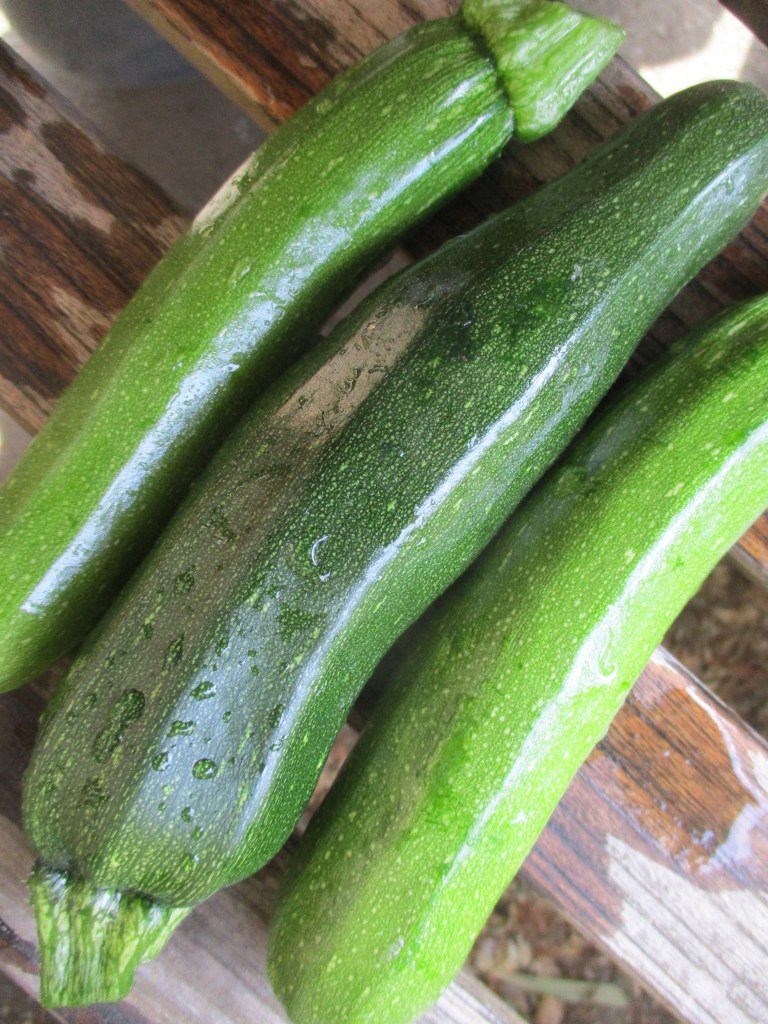
Frequent harvesting promotes continual zucchini production.

Warm season annuals for next spring and summer are already replacing the cool season annuals that bloomed so dutifully since last autumn. As this happens, it is also getting to be about time for warm season vegetables to replace cool season vegetables. Strangely continuous warm daytime weather since December accelerated this process somewhat.

Removal of cool season vegetables that are still productive is as unpleasant as removal of cool season annuals that are still blooming. Fortunately, most cool season vegetables are finished by now, or will be soon. Few linger into warm weather as some cool season annuals might. Regardless, warm season vegetables will need their garden space soon. 

Unlike most cool season vegetables, which actually are vegetative, the majority of warm season vegetables are actually fruits. The plants that produce them generally continue to bloom and produce more fruits throughout their respective seasons. Some, such as bush bean and determinate tomato, exhibit brief seasons. Many produce continually until frost. 

Therefore, indeterminate tomato, pole bean, squash, cucumber, many varieties of pepper and some varieties of eggplant need no replacement within the same season. Cucumber can get tired enough by early summer to justify replacement in midsummer though. Okra, as well as several varieties of eggplant and pepper, produce for relatively brief seasons.

Phasing prolongs production of warm season vegetables that produce only once or only for a brief season. For example, corn that matures so uniformly that it is ready for harvest simultaneously lasts only a few weeks in a garden. Phases for seeding that repeat every two weeks or so develop in two week cycles. As the first phase finishes, the next begins. 

Because so many individual plants are desired, and the seedlings do not transplant well, corn seed prefers direct sowing into the garden. So does seed for bean, root vegetables, and most greens. For tomato, pepper and eggplant, and perhaps cucumber and squash, small plants transplant well, and are not numerous enough in a garden to be expensive. Warm season vegetables grow slowly during cool weather, but accelerate as the weather warms.

Not all weeds are unwelcome.

Unplanned acacias certainly put on a show when they bloom. It is not easy to dislike something so impressively colorful.

Even the best tended gardens get weeds. Most weeds, particularly annual and perennial weeds, meet a quick demise by getting pulled out or sprayed with herbicide. A few shrub and tree weeds though, are sometimes allowed to mature into functional members of the landscape.

Many sneak into the garden by growing within overgrown or otherwise concealing shrubbery, where they can hide long enough to get established. Others are left to grow because they are recognized as desirable plants. The main problems is that many end up in situations where they eventually become problematic.

Mexican fan palms are distinctive trees. Unfortunately, many grow below utility cables, because that is where birds drop the seed as they eat the fruit. Unlike other trees, palms can not be pruned around utility cables, so must be removed when they get too tall.

Silk tree, black locust, tree of Heaven and various oaks, pines, acacias and eucalypti are some of the more common trees that can sneak into gardens. Sometimes, they happen to land in good situations. More often though, they get too close to foundations, eaves, pavement or other features that they damage as they grow. Like Mexican fan palms, they are easier to remove while young, before they become problematic.

Pittosporums, cotoneasters and privets are commonly seeded shrubbery with less potential for problems. The main problem with glossy privet is that it can be too prolific and aggressive, so that it can crowd out more desirable plants. Most pittosporums and cotoneasters that get seeded are from plants that are ‘straight species’ (not cloned cultivars or varieties). Those that happen to be from cultivar or variety plants will not be ‘true to type’, which means that they will be more like the straight species than like their parents.

The few fruit trees that can sometimes grow from seed have the same problem, since only some of the more genetically basic types may resemble their parents. Fancier types and (non-sterile) hybrids probably will not. Fruit trees that grow from root suckers of grafted trees instead of from seed will be nothing like the parents, and may produce useless fruit.

Pampas grass is a prolific and sometimes welcome perennial weed near untended parcels or forested areas where pampas grass has naturalized. Broom is a shrubby weed that is even more prolific, but never welcome.

Algerian and English ivy rarely grow from seed, but can be really nasty weeds if they get where they are not wanted. Bear’s breech (or breaches), Jupiter’s beard, calla, mint and various yuccas that were planted may be very difficult to eradicate if they are no longer desirable, or if they migrate into areas where they become problematic.

Late Pruning For Early Bloomers

Deciduous magnolias get pruned after bloom.

Winter is generally the best season for pruning. Obviously, it is when a majority of plants are dormant, and therefore most complaisant to such potentially invasive procedures. Of course, there are exceptions to this generalization. A few plants are dormant during other seasons. Some simply prefer late pruning to accommodate their bloom or fruiting cycles.

Late pruning is important for some of the same reasons that dormant or winter pruning is important. It controls growth and directs resources. Removal of superfluous or unwanted growth reallocates resources that such growth would otherwise consume, to more useful or productive growth. The primary difference is that late pruning happens after dormancy. 

Flowering cherry trees are very similar to fruiting cherry trees, but generate only copious bloom without fruit. Flowering crabapple trees likewise produce only their unique bloom, but without much fruit. Technically, both would prefer dormant pruning during winter. Yet, late pruning immediately after bloom allows them to first bloom as profusely as they can.

Fortunately, flowering but fruitless counterparts of fruitful trees require pruning that is less severe than what their fruitful relatives require. Comparably severe pruning would be too stressful for them after dormancy. However, flowering peach trees can endure harsh late pruning to stub their bloomed shoots. Stubs generate more shoots for bloom next spring.

Late pruning begins as early as spring blooming trees and shrubs finish bloom. Because of warm weather this winter, many are blooming early. Stems of some types work well as cut flowers, either while in bloom or immediately prior to bloom. Once the first few flower buds begin to show color, most buds on the same stem should continue to bloom inside.

Camellias supposedly prefer pruning during their bloom cycle, since they resume growth immediately afterwards. Because such pruning would ruin some of the bloom that is their primary asset, most camellias must tolerate late pruning after bloom. Dogwood, forsythia, redbud, and flowering quince, as well as flowering cherry and flowering crabapple, are likewise tolerant of these technically untimely techniques.

Vegetable gardening is still cool.

If leafy lettuces are running out, there is still a bit of time to sow some more seed before spring.

Last autumn, it was unpleasant to remove warm season vegetable plants to relinquish space for cool season vegetables, particularly since some still seemed to be productive. Now the cool weather that the cool season vegetables crave will soon be getting warmer. It is still too early for warm season vegetables, but it is time to get ready for them.

If space allows, seed for a quick last phase of certain fast growing cool season vegetables can be sown. Radishes, carrots and beets still have time to mature before the weather gets too warm, although the beets will be the small tender sort. There probably is not enough time to grow big beets for canning. Leafy lettuces can still be sown to replace what might be running out early. Large vegetable plants like broccoli, cauliflower and cabbage grow too slowly to mature before spring weather gets too warm, so will need to wait until next autumn.

Peas are odd vegetables that like to grow in autumn and spring, in between warm and cool (or cool and warm) season vegetables. The first phase of peas can be sown now, and followed by subsequent phases every two weeks or so until the weather gets too warm for them.

Even though it will soon be getting too warm for cool season vegetables, it is not yet warm enough to sow seed for warm season vegetables directly into the garden. Fast growing vegetable plants that get sown directly, such as beans, corn and most squash, will need to wait until the weather is warm enough for them to grow efficiently, and the cool season vegetables finish and get out of their way. However, seed for vegetable plants that can get planted as seedlings, such as tomatoes, peppers and eggplants, can be sown into flats or cell packs in greenhouses or cold frames.

Tomato, pepper and eggplant seed sown directly into the garden when the weather gets warmer will be more likely to get eaten by snails or succumb to rot as they germinate than seedlings that got an early start in a greenhouse or cold frame (although snails and rot are not problems in every garden). For those who do not want to start growing seedlings at home now, seedlings will certainly be available in nurseries when it is time to put them out into the garden. However, the advantage to growing them at home is that there are many more varieties of seed available from catalogs and online than any nursery could stock with seedlings.

Warm Season Annuals Are Hot

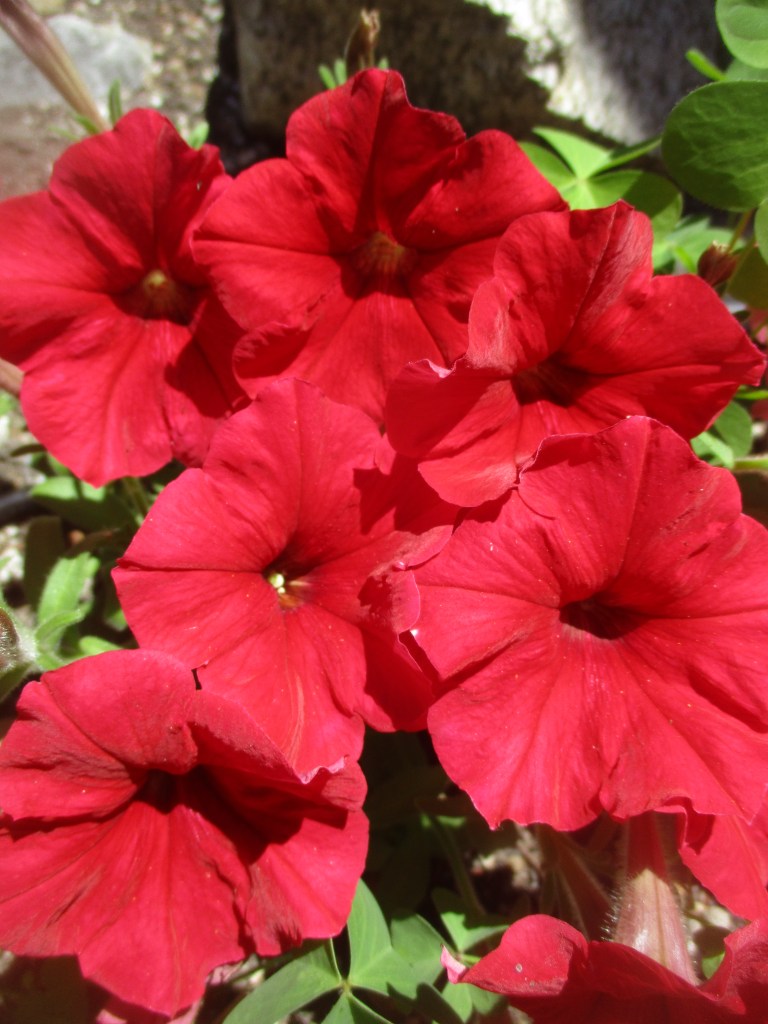
Petunia will enjoy warming spring weather.

Cool season annuals were cool just a few months ago. Now, it is getting to be about time to warm up to warm season annuals. They will become a hot commodity as winter yields to spring. Many begin to bloom with warming spring weather, and continue to bloom until autumn. Then, as the weather cools, they relinquish their space to cool season annuals.

Warm season annuals, or summer annuals (or warm season or summer bedding plants), are technically a bit early for a few regions. They should wait until after the last frost date, which might be later in the month for some climates. Even where frost is no threat, it may be too early to replace cool season annuals that continue to perform until spring weather. 

Warm season annuals only seem to be seasonable now because the weather has been so pleasantly mild and even warm. Some cool season annuals are already beginning to deteriorate, which facilitates their replacement. Warm season annuals might dislike cool nights and short days, but should appreciate the opportunity to disperse their roots early.

However, some degree of risk is associated with early planting of warm season annuals. Mild frost, although unlikely, is still possible in some climates, and could necessitate frost protection for vulnerable plants. Resumption of rainy and more typically wintry weather is more likely. Heavy rain can thrash fresh bloom. Sustained dampness can cause mildew.

Like warm season vegetable plants, warm season annuals can grow from seed or small plants from cell packs or little pots. Some prefer to grow directly from seed. Others prefer transplanting. Nasturtium, for example, prefer direct sowing. Petunia, which perform well after transplant as seedlings or small plants, are likely to languish if they grow from seed. 

Because seed take a bit of time to germinate, they can go into the garden slightly prior to the last frost date, and earlier than vulnerable seedlings. Similarly, they can start within a greenhouse early for later transplant. With proper scheduling, frost should no longer be a problem by the time seedlings emerge above the garden soil, or are ready for transplant. More variety is obtainable as seed.

My niece loves Reneesgarden.com!

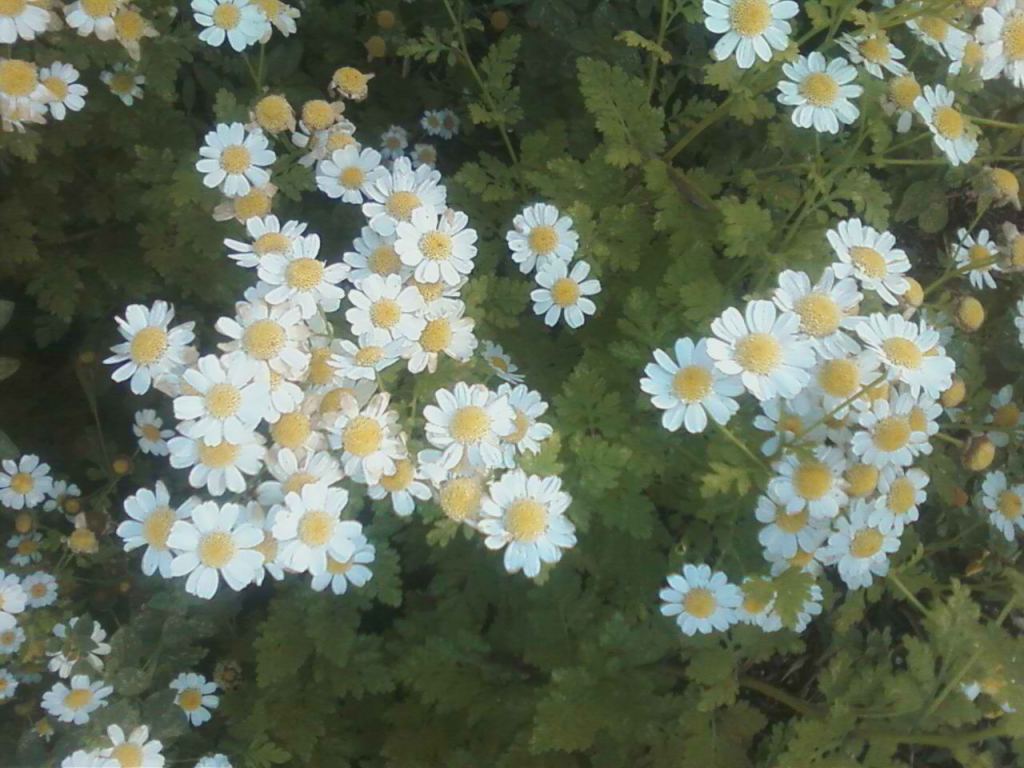
My neice finds seeds for most of her favorite vegetables, flowers and herbs, like this prolific chamomile, at Renee’s Garden.

Even after a few years of trying most of the seeds available from Renee’s Garden Seed catalog, my niece still wants to grow them all every year. Sadly, her compact garden and landscape designer father who thinks he owns it can not accommodate all the seeds that she wants. She is therefore forced to limit selection to her favorites and those that she has not yet tried.

‘Cupani’s Original’ and ‘Perfume Delight’ are still her favorite sweet peas because they are so very fragrant. The big softly blushed pale yellow flowers of ‘April in Paris’ are a close second. Although not as fragrant, I wanted her to try ‘Electric Blue’ for its shaggier darker green foliage and smaller but refined deep blue flowers.

Perhaps as a strategy for an alliance, my niece’s oppressive father planted ‘Buttercream’ nasturtiums, which was a new variety with semi-double cream colored flowers. She rebelled with the brilliant red shades of ‘Copper Sunset’. The softer orange shades of ‘Creamsicle’ was a diplomatic compromise.

Both could agree on the soft lavender and pink shades and white of ‘Gulf Winds’ alyssum, the rich deep pinks of ‘Mountain Garland’ clarkia, and the traditional ‘Mrs. Scott Elliot’ columbine, since all three are so complaisant with mixed annuals and perennials. Taller and more vigorous cosmos got their own space. ‘Dancing Petticoats’ provided a mixture of cheery pink shades. ‘White Seashells’ looked sharp against the deep green privet hedge.

Since utilitarian vegetable plants are inconsistent with such a designer landscape, my niece grew vegetables that are as flashy as foliage plants. I suggested richly colored ‘Scarlet Charlotte’ chard, with a bit of ‘Italian Silver’ that exhibits distinctive white petioles and veins. She went for the more colorful ‘Garden Rainbow’, ‘Neon Glow’ and ‘Bright Lights’.

Some (but not all) of Renee’s Garden vegetable seed mixes have a distinct advantage of color coding. The various seeds withing these mixes are dyed with different colors so they can be planted separately if desired. Since seed packets usually contain more seeds than are actually needed, vegetable seed mixes are a practical way to get fewer but enough of a few different types of seed in single packets.

More varieties of seeds are available from the online catalog of Renee’s Garden Seed at www.reneesgarden.com than at retail nurseries. Yet with so many fun varieties to try, the retail seed racks certainly have more selection than any garden really needs. If it were at all possible to try them all, my neice would have figured out how to do it already.

Warmth Accelerates Early Spring Bloom

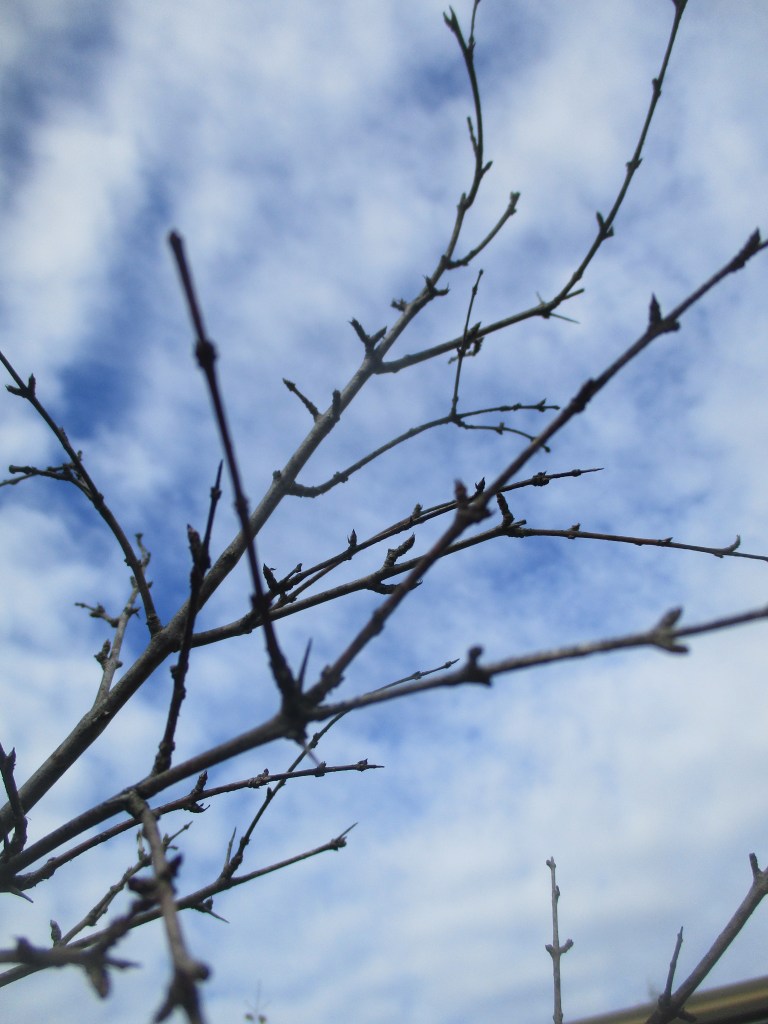
Deciduous fruit trees should remain dormant.

Unseasonable warmth and dryness has been great this winter. Such weather is often an advantage of this locally mild climate. Chill never gets too harsh. Rain does not continue for too long. However, even by local standards, the weather has been unusually dry and warm for quite a while. Although appealing to people, it can get disruptive horticulturally.

Obviously, a lack of rain eventually becomes a lack of moisture. Some evergreen plants, potted plants, ground cover plants and lawns may already need watering. Although rain, or lack thereof, does not affect availability of water from municipal sources, it determines when irrigation with such water becomes necessary. It will be sooner than later this year.

Obviously, warmth accelerates this process. It draws moisture both from intact evergreen foliage and the soil below. (Dormant deciduous plants still do not lose as much moisture without foliage.) Unseasonable aridity (minimal humidity) and wind intensify the effect of unseasonable warmth. Desiccation is not the worst consequence of the weather though.

Unseasonable or premature warmth might stimulate premature spring bloom and growth. This can be very disruptive for plants that rely on sustained chill to maintain their minimal dormancy requirements. Peonies that are marginal where they normally experience their minimal chill requirements might be dissatisfied with inadequate chill through this winter. 

Even for plants that do not require much or any chill, premature bloom can be vulnerable to normal aspects of wintry weather if and when it resumes. Flowering cherry trees might bloom during sustained warmth. Such bloom would be quite susceptible to damage from resuming winter rain. Resumed chill might stall premature magnolia bloom until it molds. 

Prematurely developing fruit, accelerated by unseasonable warmth, is also vulnerable to resumption of wintry weather. Heavy rain, which is still possible through the remainder of winter, can dislodge freshly pollinated flowers, or small fruit as it begins to develop. More developed fruit is vulnerable to rot or mold during cool and damp weather prior to spring.

Prune now for roses later.

Roses should be pruned before the end of winter. Here where winters are so mild, they can get pruned early.

Just like most of the modern fruit trees that were bred over the past few centuries to produce unnaturally large and abundant fruit, almost all modern roses have been bred for unnaturally large flowers. Production of such large flowers takes quite a bit of work. An excess of these large flowers is more than overgrown rose plants can keep up with. This is why roses should be pruned so aggressively while dormant in winter.

Pruning should be done before buds start to swell at the end of winter. Some people prefer to wait until the end of February. However, because winters are so mild here, buds are already starting to swell, and some are even beginning to grow. I actually prefer to prune early, as soon as roses are dormant and most of the foliage falls off easily when disturbed.

The objective of pruning is to remove as much superfluous growth as possible, in order to concentrate growth into fewer but more productive stems and flowers. Without pruning, roses naturally develop into rampant thickets of abundant but less productive stems. It is also good horticultural hygiene to remove all foliage from last year, since that is where fungal and bacterial pathogens overwinter. Leaves should be plucked from stems and raked from the ground.

Hybrid tea roses get pruned severely so that there are only three to six canes about two feet high. Healthy canes that grew from the base last year are the best. They should have fresh green bark, and preferably lack branches below where they get pruned. Older canes that are developing striations (rough bark texture) should be pruned out. Most floribunda roses can get pruned almost as severely, so that they have only five to a dozen canes.

Some grandiflora roses are allowed to get significantly taller. They develop most new canes on top of canes that were pruned during the previous winter, instead of from the base. Consequently, some stems can get quite old and tall before new basal canes develop to replace them. Climbing roses are likewise pruned less aggressively, since new canes grow from old canes.

Like most fruit trees, most roses are grafted. Therefore, ‘suckers’ (shoots from below graft unions) must be removed. Tree roses should not be pruned below the graft unions on top of their main trunks. Most carpet roses are not grafted, so do not develop suckers; but then, they do not require such specialized and aggressive pruning either.

Pollarding Pruning Techniques Remain Controversial

Pollarding is pruning to the extreme.

Olive orchards formerly inhabited some of the regions that became urban in California. A few orchard trees remained within urban gardens of the homes that encroached on them. Unfortunately, for those who did not utilize the abundant olives, these trees were horridly messy. Many decades ago, pollarding eliminated the mess without eliminating the trees.

Pollarding is extreme pruning that eliminates all but the main trunk and a few main limbs. It deprives olive trees of their ability to bloom, by eliminating stems of a previous season that would otherwise bloom during the next season. Fruit can not develop without bloom. For other trees that bloom only on older stems, pollarding eliminates bothersome pollen.

Pollarding has several other practical applications. It confines trees that would otherwise get too big for their respective situations. It enhances foliar color and texture for trees that display colorful foliage through summer, such as Schwedler and Princeton Gold maples. Red twig dogwood generates more colorful twigs, and more abundantly, after pollarding.

For agricultural purposes, pollarding generates lush vegetative growth of white mulberry to sustain silkworms, or other vegetation for livestock. It similarly generates long and thin willow stems for basketry. Various eucalypti rely on pollarding to produce juvenile foliage that is colorful and healthy enough for floral design, or aromatic enough for essential oils. 

Nowadays, pollarding is unfortunately passe and even vilified. Consequently, almost no arborists learn about it. Because it is technically disfiguring and potentially unsightly, it is undesirable for many situations. Annual repetition is needed to prevent bloom or fruiting. Otherwise, restorative pruning or more extreme pollarding eventually become necessary. 

For pollarding, proper technique is imperative. Such severe pruning must happen during winter dormancy. It would it be too stressful during vascular activity. Besides, bark would be very susceptible to scald if so suddenly exposed during warmer and sunnier weather. Pruning cuts must be very neat, and back to any old pollard cuts, without stubs to inhibit healing.

Only Arborists Specialize In Trees.

Big trees need real arborists. Even the best of gardeners should not be expected to perform major specialized arboricultural techniqes.

Just as most problems in landscapes are caused by maintenance gardeners hired to maintain the landscapes, many of the problems with trees are caused by those hired to fix such problems. Arboriculture, which is the horticulture of trees, really should be performed, or at least directed, by professional arborists. It is too specialized to expect it to be done properly by those lacking education and experience.

Even the few proficient gardeners who can perform most aspects of gardening well are not likely as proficient with proper arboriculture as arborists are, not only because it is so different from other gardening, but also because of the techniques and tools involved. Gardeners compare to arborists something like those who clean windows on skyscrapers. Custodians who clean windows on the highest floors from the inside probably would not want to clean the same windows from the outside like window washers do. There are just too many differences in the two related but vastly different types of work.

Arborists who are certified by the International Society of Arboriculture, or ISA certified arborists, are the most qualified to assess the health, stability and structural integrity of trees, and to then prescribe any necessary arboricultural procedures. These arborists have passed an examination of their arboricultural expertise, and maintain their certification by continued involvement with ISA educational seminars, workshops and classes.

Arborists and the tree service businesses that they are affiliated with are easy to find at the website of the ISA at www.isaarbor.com. They can be found directly by name, or regionally by city or ZIP code. The website is also an excellent resource for those wanting to learn more about trees and the importance of proper arboriculture.

Trees are the most substantial features of landscapes, and are really worthy of more respect than they commonly get. Structural problems or instability can be serious problems, not only to the affected trees, but also to anything around them that might be damaged or destroyed by falling limbs or even entire trees. Proper arboriculture helps to keep trees healthy and reasonably safe for many decades or centuries.