Perennial Plants Perform For Years

Perennial pea is similar to sweet pea, but as the name implies, it is perennial.

‘Perennial’ is a simple adjective that describes something that last for more than a single year. Horticulturally, it is not this simple. After all, every plant that is not an ‘annual’, which completes its entire life cycle within only one year, is technically a ‘perennial’. Those that develop lignified (woody) parts instead conform to such categories as tree, shrub or vine.

Even these categories are not as simple as they seem to be. Palms are trees, but without woody stems. Technically, they are merely very large perennials. Some consider them to be ‘herbaceous trees’. Yucca trees conform to the same category; while terrestrial yuccas are usual perennials. Sweet peas are annual vines. Perennial peas are perennial vines.

Many annual bedding plants, such as begonia, chrysanthemum, primrose, cyclamen and even busy Lizzie, are technically perennial. They could survive for a few or several years if they get such a chance. All ferns, including tree ferns, are perennials. So are bamboos, ornamental grasses, and many succulents. ‘Biennials’ are perennials that live two years.

Many of the most popular perennial plants have an indefinite life span. It is impossible to know how long they can survive. They are constantly replacing themselves with new but genetically identical parts. For example, bearded iris migrate and propagate by rhizomes that could have been propagating for centuries. New plants are identical to their original.

However, many perennial plants with potential to propagate indefinitely might eventually get shabby. New Zealand flax, after many years, may slowly migrate outward from where it started growing, leaving a bald spot in the middle. Outer shoots relocate easily to patch such bald spots, or unite as a fresh clump. Crowded lily of the Nile benefit from thinning.

Bulbs and bulb like plants are generally perennial, even if unreliable as such in the mild local climate. (Many bulbs and bulb like plants prefer more chill through winter than they get here.) Most of these sorts of perennials are dormant for part of the year, so die back to the ground. Hostas are bare through winter. Florists’ cyclamen are bare through summer.

Perennials provide foliage and bloom

Bloom can repeat in season perennially.

Does anyone really know what a ‘perennial’ plant is? It is obvious that it is not an ‘annual’ plant that lives only a single year. A ‘biennial’ plant produces vegetative (non-blooming) growth in the first year, and then blooms, develops seed, and dies in the second year. A plant only needs to live more than two years to be a perennial plant, or simply a ‘perennial’. Well, that does not narrow the definition down much. Bristlecone pine can live for thousands of years, but is not often thought of as a perennial.

In simple home gardening terminology, a perennial not only lives for more than two years, but does so without producing significant woody stems. Yes, this also happens to include palms and trunk forming yuccas (which are known as ‘perennial trees’), but that is another topic. Some perennials live only a few years. Some can live indefinitely by replacing their stolons, rhizomes, bulbs, tubers or whatever they regenerate from as their old growth gets left behind.

For example, bearded iris spread by fleshy stems known as ‘rhizomes’. As they grow from the forward tips, the older ends that get left behind will rot away. They are constantly replacing themselves, without leaving evidence of how long they have been doing so. (In other words, it is impossible to cut one down to count the rings.)

Many plants that are known as annuals are actually perennials, but get removed and replaced during their respective dormant season. Busy Lizzy can regenerate each spring if their roots do not succumb to frost in winter. Begonia, chrysanthemum, cyclamen and primrose are just some of the many other annuals that could technically survive as perennials.

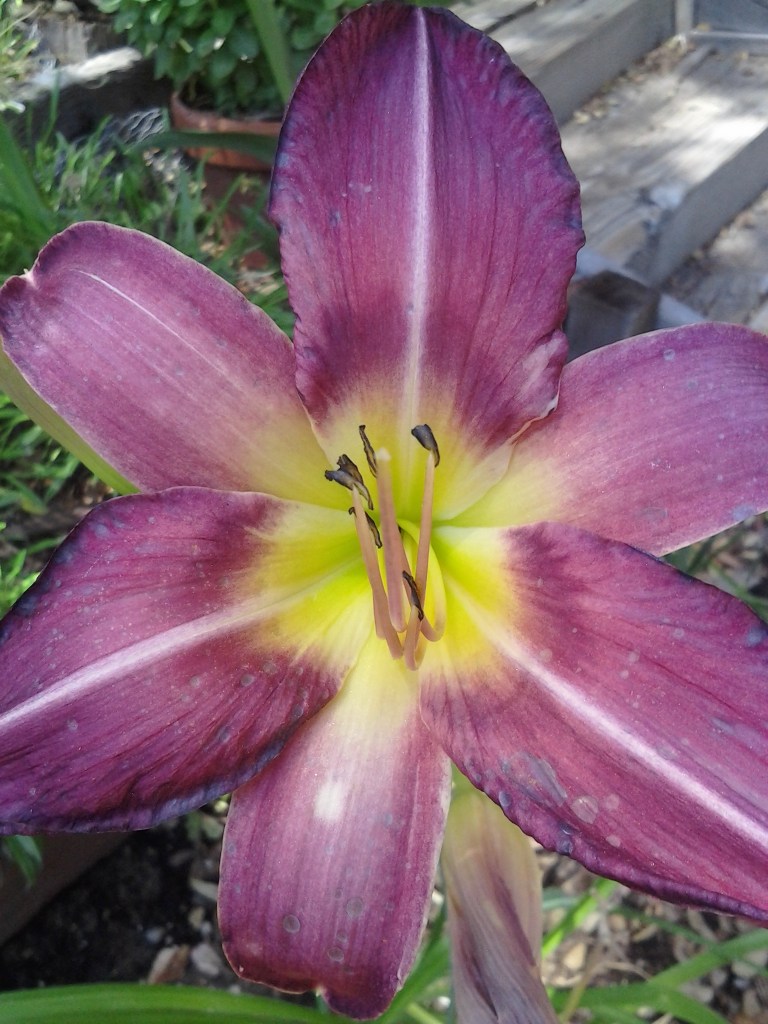
Lily-of-the-Nile, African daisy, daylily, canna, penstemon, New Zealand flax and various grasses and ferns are some of the more familiar perennials. They are too diverse to generalize about, but happen to be among the most reliable of plants for bloom and foliage. Because form and mature size is somewhat predictable, properly selected perennials are unlikely to outgrow their particular situations.

Variegation And Other Foliar Color

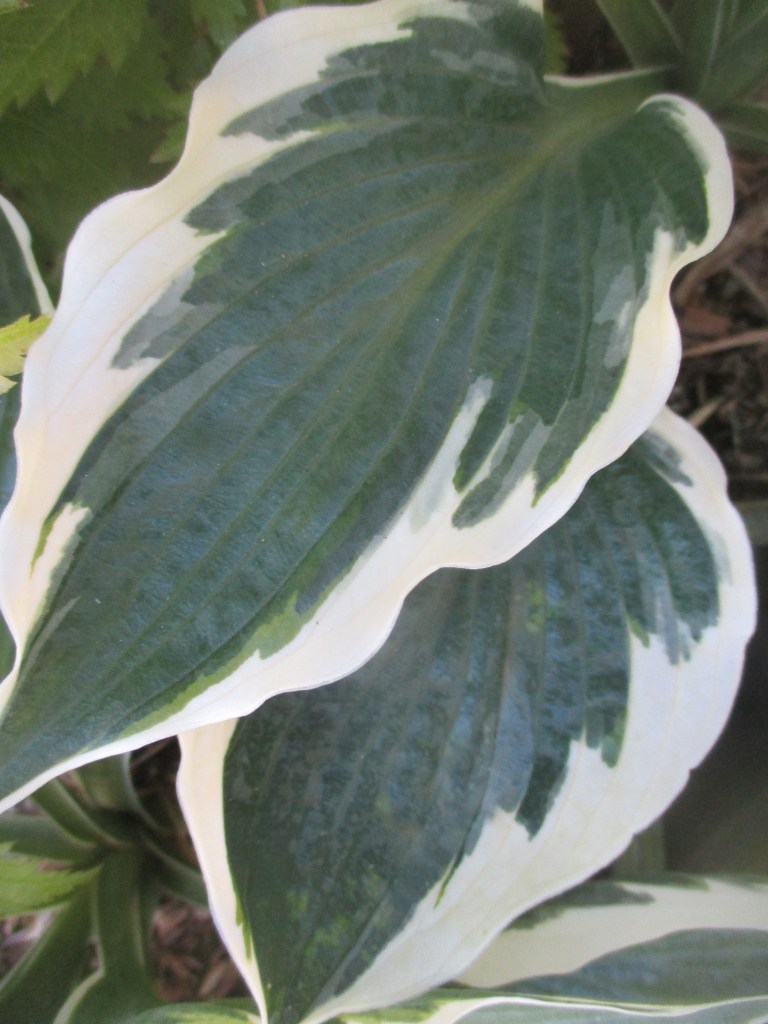
Bright white variegation brightens shady spots.

Foliar color is not limited to autumn. Some deciduous plants display colorful foliage from spring to autumn. Then, some of these change color for autumn. Some evergreen plants display colorful foliage through the year. Variegation of foliage can be more colorful than associated bloom. So can unvariegated bronze, purple, red, yellow, blue or gray foliage.

All sorts of plants exhibit variegation or other variations of color of their foliage. They can be annuals, perennials, shrubs, vines, trees, or houseplants. Although many are popular primarily because of their foliage, some provide appealing bloom as well. Blue and gray foliage is a natural advantage in harsh climates. Other colors are selections of mutations. 

Because variegation deprives portions of foliar surface area of the chlorophyll needed to perform photosynthesis, it inhibits growth. This can be an advantage for plants that grow too vigorously otherwise. However, many variegated plants occasionally develop growth that is not variegated. If not removed, it can overwhelm and displace desired variegation. 

New Zealand flax, dracaena palm (Cordyline australis), gold dust plant, euonymus, coral bells and hosta are some of the many plants that are more familiar with colored foliage or variegation than without. If simple unvariegated coleus, croton or caladium are available, they must be notably rare. Blue spruce is always blue. Purple leaf plum is always purple. 

Although both gold and gray junipers are popular, the most common are green. Bronzed and variegated cannas are likewise not quite as popular as those with simple lush green foliage. Pittosporum tobira is so much more vigorous without variegation than with it, that the two distinct types of this same species perform different functions within landscapes.

Golden honeylocust supposedly produces lighter shade than darker green honeylocust. ‘Ruby Lace’, a bronze cultivar of honeylocust, supposedly produces faintly darker shade. Some golden or variegated foliage is more susceptible to scorch; although sun exposure enhances foliar color and variegation. Fresh new spring growth gets the best foliar color, but is likely to fade through summer.

Drought Tolerance Versus Container Gardening

Drought tolerant plants loathe root confinement.

There are probably just as many reasons to not grow plants in containers as there are reasons to justify container gardening. Some potted plants consume less water than they would in the ground, but only because their demand is proportionate to their limited size. They only want more water in the ground because they can grow larger.

The most drought tolerant of plants are actually the least practical for pots or even large containers. They tolerate drought because they efficiently disperse their roots so extensively. Since they can not adequately disperse their roots in pots, they rely on what they can get from a relatively limited volume of soil. However, even if watered generously, many drought tolerant plants simply can not produce enough finely textured roots to absorb enough moisture.

For example, eucalyptus trees want to begin dispersing their roots while very young. If confined, their long and wiry roots simply go around within their limited volume of soil, trying to find a way out. They can develop a few more fibrous roots than they typically would, but probably not enough to compensate for limited root dispersion.

Wild lilac (Ceanothus spp.), flannel bush, manzanita and smoke tree are not only sensitive to confinement, but have difficulty recovering from confinement if put into the ground after their roots have circled too much within a container. Pines and many other conifers are likewise sensitive to confinement, but some types can recover if the binding roots get severed before they go into the ground.

Plants with dense and fibrous roots are more adaptable to containers. Most succulents and common yucca are good choices. Ferns and some grasses also work nicely, but need to be watered rather regularly. Some types of arborvitae and juniper work better than larger coniferous evergreens. Some small bamboos can stay potted, but not larger types.

Annuals, compact perennials and many ground covers that provide color and fill in space around larger plants are naturally adaptable to container gardening, but their need for regular watering can not be denied. There simply is no practical way of combining container gardening and drought tolerance.

Succulents For Better Or Worse

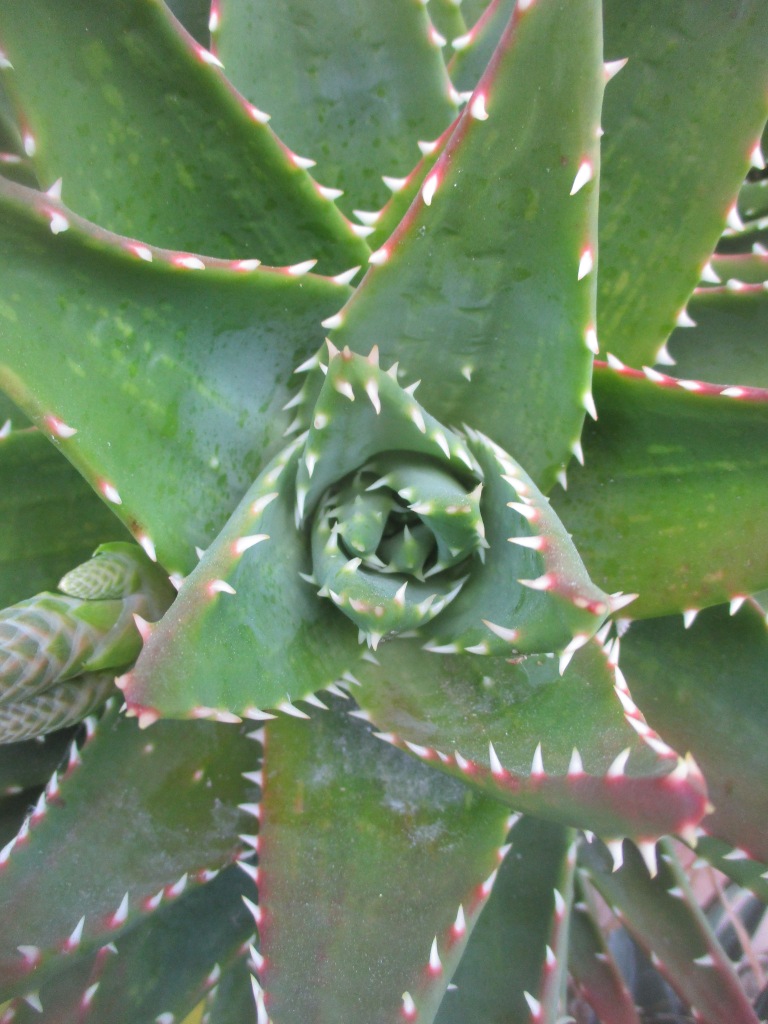
There are all sorts of succulents.

Succulents, both old and new, have been something of a fad for quite a while now. There are certainly many reasons for them to be popular. They add bold form, texture and color to the garden. Most adapt excellently to container gardening. Many types are resistant to pathogens. Succulents are generally easy to maintain and equally as easy to propagate. 

However, one of the primary premises of the increased popularity of succulents is simply untrue. Contrary to popular belief, not all succulents are drought tolerant. Only those that are naturally endemic to desert or chaparral climates can survive with minimal irrigation. They neither expect nor require any more moisture than the rain that falls through winter.

Many succulents are naturally endemic to climates that are not arid. Some are even from tropical rain forests. Such succulents rely on watering to compensate for the local lack of rain through the long and warm summers. Furthermore, many succulents from chaparral and desert climates also want water if their undispersed roots are confined to containers. 

Many popular succulents are cacti. They lack foliage, and are instead armed with spines and thorns. (Spines are modified leaves. Thorns are modified stems.) Their fat succulent stems are green to compensate for their lack of foliage, by conducting all photosynthesis. Generally, most cacti actually are tolerant of drought, although less so within containers.

However, many of the most popular and trendy succulents have succulent leaves as well as succulent stems. Some obscure their stout stems within densely set foliage. Although some are chaparral plants that are somewhat drought tolerant, many require watering for adequate hydration. Even Epiphyllum, which are tropical cacti, require regular watering.

Furthermore, many of the succulents that can survive through dry summers without water take drastic measures to do. Various species of Aeonium and Echeveria let much of their older foliage shrivel to conserve moisture for the younger foliage. Echeveria retain much of their shabby dry foliage as insulation. So many of the succulents that have potential to survive without watering are happier with it.

Be Careful With Toxic Plants

Toxic plants can be quite appealing.

Plants are so much more intelligent than they get credit for. Many use color, fragrance and flavorful nectar to get insects and animals to disperse their pollen for them. Some provide fruit for animals that inadvertently take and disperse their seeds. Others use barbs or sticky substances to attach their seeds to unknowing animals that take them away. Plants have all sorts of techniques for exploiting those who are more animated than they are. After all, immobility has certain disadvantages.

Because plants can not get away from the animals and insects that eat them, many have developed techniques for being unappealing. Plants that live in deserts where edible foliage is relatively scarce are famous for their nasty thorns and spines, like those of cacti and agave. Hellebore and poinsettia have caustic sap that make them unpalatable. The naturally aromatic foliage of many edible herbs, like rosemary and lavender, is actually intended to repel grazing animals with sensitive noses.

Some plants unfortunately rely on toxicity for protection. Many plants are only partially toxic. For example, apples are intended to be eaten safely by animals that disperse the seeds within, but their seeds are toxic enough to avoid getting eaten by rodents after dispersal. Potato, tomato, rhubarb, asparagus and elderberry plants all produce edible fruits or vegetables, but also have poisonous parts. Some edible fruits and vegetables, like grapes and onions, are edible to humans, but toxic to dogs.

Foxglove, angels’ trumpet, morning glory, yew, rhododendron, azalea, oleander and castor bean are some of the more notably toxic plants often found in home gardens. Wisteria, holly and ivy produce toxic seeds and fruits. Dieffenbachia is a popular but very toxic houseplant. Although mostly safe, toxic plants can be a problem where young children might put things into their mouths, or where puppies are in that chewing phase.

Roots Prefer To Roam Freely

Some yuccas are unhappy in pots.

Roots are innately mysterious. They consume much of the resources that plants require. They stabilize the stems above them. Few plants can survive without them. Yet, roots are very secretive about their work. Almost all are invisibly subterranean. Consequently, they get minimal consideration. A lack of consideration is a root cause of many root problems. 

Every plant species has distinct environmental preferences. Some plants require full sun exposure. Others tolerate or prefer partial shade. Some are more discerning than others. Similarly, plants that naturally disperse their roots extensively dislike confinement of their root systems. Small plants and some riparian plants are more adaptable to confinement.

Annual bedding plants and many small perennials perform well within pots, planters and small spaces because they do not need to disperse their roots extensively. Some woody plants with fibrous root systems, such as azalea, boxwood and andromeda, can adapt to confinement also. Occasional pruning can keep them proportionate to their root volumes. 

Most of the popular succulents perform remarkably well in confinement. Some types that disperse their roots extensively if necessary will adapt to confinement by dispersing their roots only as far as they must. If they get all they need within a pot, they need not go any farther. However, succulents that are endemic to dry desert regions are not as adaptable. 

Desert plants can survive warm and dry summers because they disperse their roots very extensively. They can not do so within the confinement of pots and planters. This should not be a problem that systematic irrigation can not compensate for. Unfortunately though, these same plants are too susceptible to rot if their roots are damp during warm weather.

So, some plants that are the most resilient in the ground are the least resilient in pots. Of course, this is not an absolute rule. Yuccas from tropical and temperate climates perform well either in the ground or in pots. Those from desert climates are likely to rot in pots. In general, drought tolerance and container gardening are two fads that are not compatible. 

Foliage Can Provide Color Too

There is considerable variety in variegation.

Flowers get all the credit for color. They certainly are the most colorful features in the garden, as well as the most fragrant. However, foliage can do so much more than simply provide green. It can be hued with yellow, red, blue, purple, bronze, gray, or variegated with white or yellow. Plants with colorful foliage can range in size and function from small annuals and perennials to shrubbery, vines and even trees.

Hydrangea, hosta, ivy, English holly and various pittosporum are some of the more popular plants for white variegation, and are often variegated with yellow. Euonymus can conversely be variegated with white, but is usually variegated with yellow. New Zealand flax can be variegated with pink, bronze, brown or gold. Box elder is a good sized deciduous tree that can be variegated with white, or alternatively frosted uniformly with gold as new foliage emerges in spring. There is even a variety that has slightly purplish or smoky colored new foliage.

Silver mountain gum, silver Mediterranean fan palm, lamb’s ears, artemesia and the various dusty millers have remarkably silvery foliage. Silver mountain gum can grow into a mid-sized tree with a stout trunk. Lamb’s ears is a low perennial. Olive trees, some junipers and the various lavenders have gray foliage. Colorado blue spruce and some agaves have striking blue color.

Various purple leaf plums and Japanese maples are famous for their purplish foliage. Smoke tree and some beech have even darker purplish foliage. Some New Zealand flax and cannas can be just as purple or comparably bronze.

Actually, New Zealand flax and cannas, as well as junipers known for blue or gray foliage, can alternatively be bright yellow. Golden arborvitae, golden honeylocust and golden Monterey cypress really stand out nicely against darker green.

Colorful foliage tends to be most colorful as it develops freshly in spring, and tends to fade somewhat through summer. Gold junipers can actually fade to basic green by autumn. Shade inhibits most types of coloration, but can show off variegation better. There really is so much variety with colorful foliage that it is impossible to generalize.

Shearing Can Not Fix Everything

Shearing enhances foliar density without bloom.

Mowers are for mowing lawns and shallow ground cover. Blowers are for blowing debris from pavement, decking and other flat surfaces. The names of these tools suggest these particular functions. Those of us who use such tools tend to be aware of their limitations. Why are simple concepts of shearing and the associated tools so difficult to understand? 

‘Mow, blow and go’ gardeners are not so bad if they simply mow, blow and go. They tend to the two most significant but also least pleasurable tasks in the garden, and then leave before causing problems. Most are also qualified to add bedding plants or shear hedges. However, some will shear anything that is within reach of their powered hedge trimmers.  

Shearing is for hedges or shrubbery that is strictly foliar. There are few exceptions. Such shearing should be performed properly, and only for the few plants that are conducive to it. The process promotes foliar density, but also generally inhibits bloom. For hedges that function as living fences in the background of more interesting plants, this is no problem.

Otherwise, shearing plants that are not conducive to it ruins appealing form, and inhibits or prevents appealing bloom. Privet and photinia perform well as shorn hedges because their dense evergreen foliage is their primary asset. Their bloom is actually undesirable. Their natural forms are unremarkable, but their shorn forms can be remarkably practical.

Frequent or untimely shearing prevents lemon bottlebrush and oleander from blooming. However, shearing immediately after a bloom phase stimulates new growth to bloom for a subsequent phase. New growth only needs an opportunity to mature and bloom before removal. Such potentially blooming stems need extra space to extend prior to blooming.

As practical as it is for hedges, shearing ruins the foliar texture of other plants. Heavenly bamboo is worthlessly shabby without its naturally intricate foliar texture. Juniper retains good color, but becomes boringly plain. Rhododendron and hibiscus become disfigured and can not bloom. Each of these plants and all others are discriminating about pruning. Few are agreeable to shearing.

There Are Rules To Hedging

Few plants are conducive to shearing

All the wrong plants get shorn. Mow, blow and go gardeners are known for shearing everything that they can reach into creepy and unnaturally geometric shapes, usually flared out at the top, and bulging obtrusively into otherwise usable space. Yet, functional formally shorn hedges are passe and almost never shorn properly.

First of all, a formal hedge should be uniform, which means that all the plants that comprise it should be the same, and planted at the same distance from each other. Any plants within a formal hedge that die should be replaced with the same plant. A single English boxwood plant added to a Japanese boxwood hedge will always stand out with a different shade of green and growth pattern. Seedlings of other plants that grow up into a hedge should be removed before they become part of it.

Secondly, a formal hedge should be contained within defined boundaries. It should get neither too tall, nor too deep (from front to back). A fat hedge wastes space. There is no excuse for a hedge to encroach obtrusively over walkways, driveways or patios.

The vertical faces of a hedge should be completely vertical or slope very slightly inward at the top, but should certainly not slope outward to shade lower growth. A slight inward slope is more important on a northern face of plants that are sensitive to shade.

Hand pruning hedges (with hand shears) produces the best finish, but takes quite a bit of time for big hedges. Shearing with typical hedge shears cuts leaves as well as stems, so can cause foliage with large leaves to look a bit tattered for a while. Hedges that grow fast may need to be shorn twice or more annually. Some hedges can get shorn back aggressively once annually, and then allowed to fluff out evenly through the rest of the year. Bottlebrush and escallonia hedges can bloom nicely and evenly if shorn only once annually.

Glossy and wax leaf privet are among the most traditional of formal hedges. Glossy privet can get quite tall, but wax leaf privet actually has glossier foliage. Photinia and shiny xylosma have a bit more color, but want a bit more space (from front to back). Boxwoods make very nice small hedges. Pittosporums are available in various shapes and sizes. Pittosporum eugenioides gets quite tall, and can be kept quite lean. Pittosporum tobira is shorter and wider.