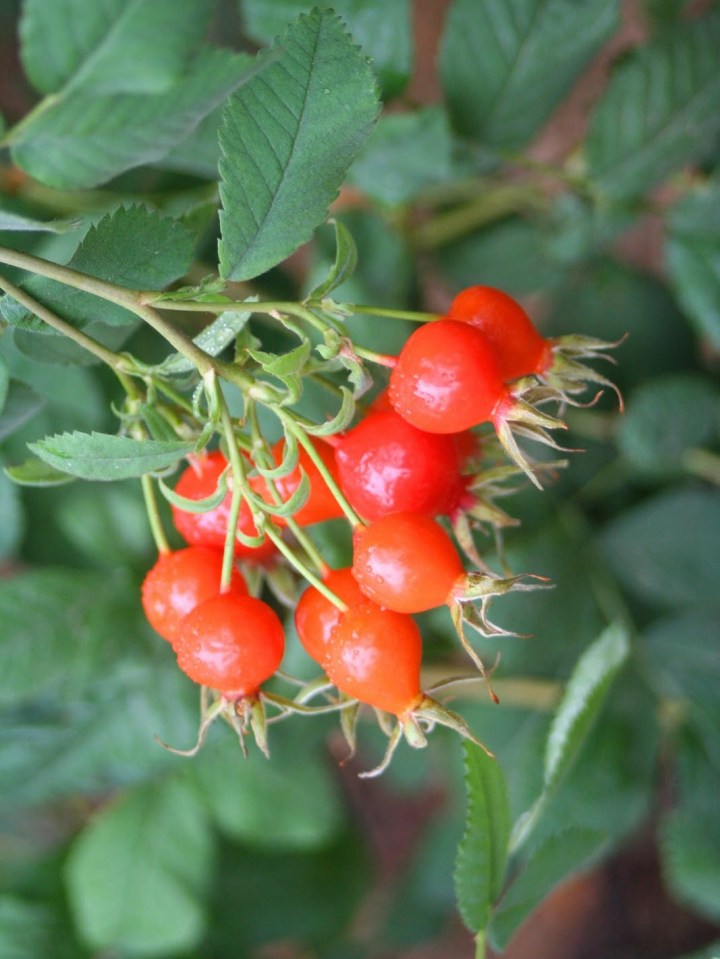
Colorful Berries Linger Through Winter

51125thumbJust as many flowers attract pollinators with color, some types of fruit employ color to get the attention of birds and other animals. Just as many flowers reward their pollinators with nectar, fruit is its own reward to the animals that eat it. The only catch is that those who want the fruit must disperse the seed within. For both the hungry animals and the fruiting plants that lack mobility, it is a rather equitable arrangement.

Much of the fruit that uses this technique ripens in autumn, and linger through winter, when there is not much other fruit. It is available to migratory birds and animals that want to fatten up for winter. Unlike nuts and large seeds that get buried locally by squirrels, the tiny seeds of winter berries typically get eaten and ‘dispersed’ more remotely. Some actually need to be scarified by digestion before they will germinate.

Because they put as much effort into attracting vectors to disperse their seed as flowers put into attracting pollinators, fruit and berries can add significant color to the home garden. Oranges, mandarins, lemons, grapefruits and other citrus are quite colorful, even though they do not expect to be taken away by birds, To attract crows, persimmon fruits get as colorful for winter as their foliage was through autumn.

Firethorn (pyracantha) is probably the most colorful and profuse of the ornamental berries. Various specie and cultivars of cotoneaster produce similar berries, but not quite so prolifically. They are popular for their resiliency. Toyon, which is the native ‘California holly’ that Hollywood is named for, is a bit too finicky for irrigated and refined gardens, but can be quite colorful with berries in wild or casual landscapes.

Firethorn, cotoneaster and toyon, as well as English hawthorn, all produce similar ‘pomme’ fruits, which are actually more like tiny apples than real berries. They are so popular with the birds that they are not very messy; although the birds may be if they loiter. English hawthorn is a small deciduous tree, so yellows and defoliates as the bright red fruit ripens.

Propagation Of Perennials By Division

80718thumbAutumn is for more than planting. It is when most of the aggressive pruning gets stared. It might be the best time to work with compost and conditioning the soil. Bulbs get planted. Gutters get cleaned. Leaves get raked. Perennials get groomed. We might think of it as a time of slowing down after such a busy summer, but in many gardens, autumn is just as busy with seasonal chores.
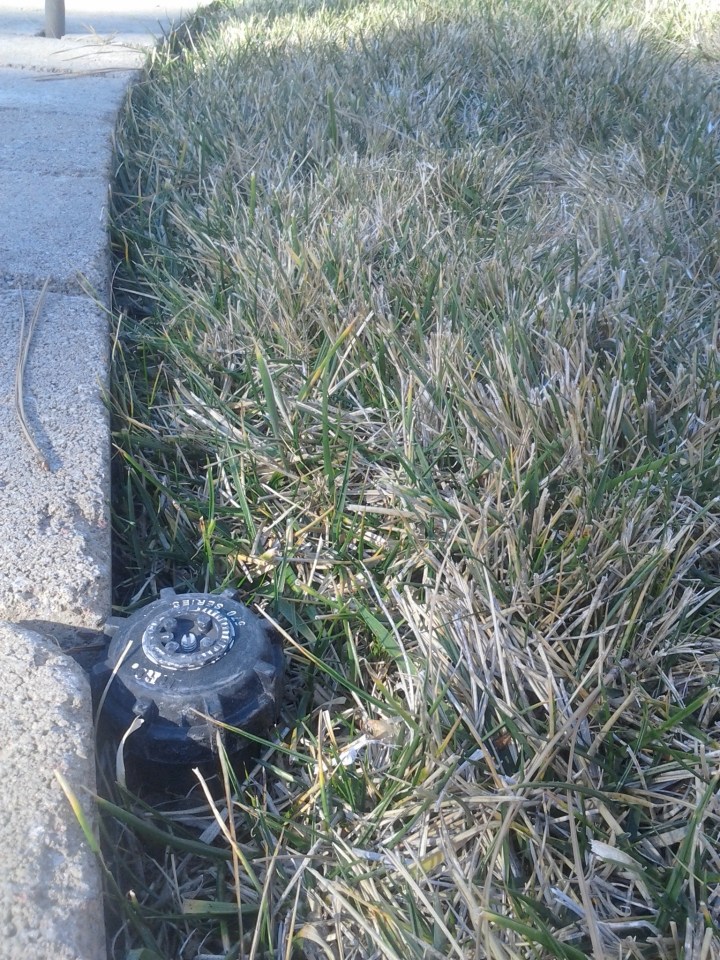
Autumn is when many of the spring, and some of the early summer, blooming perennials get divided. That means that they get dug up, split into smaller parts, and then replanted. Because there will be more smaller plants after the process than there were bigger plants before the process, some should get planted over a larger area, in other parts of the landscape, or shared with friends.

Not all perennials need to be divided annually, and some may never need to be divided at all. Perennials that bloom in autumn or winter, such as Japanese anemone and bergenia, get divided in spring, since they will have plenty of time to recover from the process to bloom on schedule. Black-eyed Susan does not likely care if it gets crowded, but can get divided simply for propagation.

Lily-of-the-Nile should be divided if it gets too crowded to bloom well. Division allows more room for the individual shoots to grow and bloom as they should. However, because it takes a while for newly divided shoots to recover, they should only be divided every few years or so, and only if they happen to be getting crowded. African iris gets divided if overgrown plants are looking shabby.

It is not always necessary to dig entire plants. If dividing New Zealand flax just for propagation, it is easier to pry the desired number of side shoots from a mature clump, without digging the main part of the clump. Agave pups might be (very carefully) pried off of larger rosettes just to keep the main rosettes neat. Black-eyed Susan and other deciduous perennials get divided while bare.

When It Rains It Pours

51118thumbFor those who do not remember ancient history, this wet stuff that fell from the sky recently is known as “rain”. It used to be more common, particularly through winter. It has an unfortunate way of getting everything exposed to it quite wet. It makes soil muddy. Yet, rain has many attributes. It is composed of water, so provides much of what irrigation systems have provided for so long in the absence of rain.

Most of us have already been using less water around the garden than in the past. Some plants have suffered, and a some may have died. Surviving lawns are probably not as green as we would like them to be. Just when we think that the garden can not get by with any less, the weather takes over. Even sporadic rain mixed in with mostly sunny weather provides significant moisture.

Not only is more moisture falling from the sky, but the plants and lawns that want it become less demanding through autumn and winter. Evergreen foliage loses less moisture to evapotranspiration (evaporation from foliar surfaces) because it is exposed to less sunlight during shorter days, and because the air is cooler and more humid. Deciduous plants drop their leaves, so do not lose moisture.

Even plants that are sheltered from rain by eaves will need less water because of the cool and humid weather, and shorter days. Some potted evergreen plants that are disproportionately large relative to their pots will likely want to be watered between the rain, only because their roots are so confined. Potted deciduous plants may need their soil moistened if the weather stays dry long enough for the soil to get dry.

Automated irrigation systems need to be adjusted for the changing weather. Some systems may need to be adjusted a few times. By the time the weather gets reliably rainy and cool later in winter, some irrigation systems can be temporarily disabled until the weather gets warmer and drier in spring. Not only does this conserve water; it also makes over-watering and soil saturation less likely.

Fall Color Is More Foliar

71122As zinnias, petunias, cosmos and other warm season annuals fade in the cooling weather, we might add a few chrysanthemums or marigolds for color through autumn, or we might go straight for pansies, violas or other cool season annuals that will provide color through winter. In the locally mild climate, there is always potential for some sort of colorful bloom. Mild weather has advantages.

It also has a few disadvantages. It is what limits the variety of apples that can be grown here. It limits the potential for bulbs that will naturalize. It is why we do not even bother with maple sugaring. Although mild autumn weather promotes colorful bloom of cool season annuals, and allows some of the warm season annuals to bloom right into winter, It subdues the color of deciduous foliage.

Sweetgum, Chinese pistache, flowering pear and ginkgo are the most reliable trees for autumn foliar color here, even in the mildest of autumns. Sweetgum and Chinese pistache exhibit the most impressive range of vibrant colors. Flowering pear can be comparable, and often displays deep burgundy red as well. Ginkgo exhibits only bright yellow, but it is probably the best of bright yellow.

There are a few more choices. Fruitless mulberry, tulip tree, black walnut and the poplars turn nice yellow if the weather is right, but they do not get quite as bright as ginkgo. If it gets cold enough, Chinese tallow turns rich purplish burgundy. Red oak turns a nice uniform brown. Most cultivars of crape myrtle can get as colorful as sweetgum, and also provide colorful bloom through summer.

Of course, it is very important to learn about the distinct personality of a particular tree before adding it to the garden. After all, no tree is perfect. Sweetgum eventually drops messy and prickly seed pods. Roots of both sweetgum and Chinese pistache can be aggressive with concrete. Flowering pear is susceptible to fire blight. Then there are a few trees that are colorful in autumn, that also have other benefits. Persimmon trees that are grown for their fruit turn the most fiery orange in autumn!

Fall For Colors Of Fall

51111thumbMild winter weather on the West Coast limits the choices for autumn color. So many of the trees, shrubs, vines and perennials that get so colorful where autumn weather is cooler do not get so colorful here. Mild weather also allows so many more evergreen plants and plants that do not get colorful in autumn to thrive here than in harsher climates. Consequently, the tougher and more colorful plants are not so common.
Fortunately for those who appreciate autumn color, there are a few choices that do not mind mild weather. The three most reliable trees for autumn color are sweetgum (liquidambar), Chinese pistache and flowering pear. All three turn yellow, orange and red. Maidenhair tree (gingko) is just as reliable, and turns bright yellow, but lacks orange and red. (‘Saratoga’ gingko turns pale yellow.)

If the weather is right, fruitless mulberry, tulip tree, black walnut and the various poplars display clear yellow foliage. Eastern redbud can do the same, but is a small tree. Smoke tree and crape myrtle are large shrubbery or small trees that can get as colorful with yellow, orange and red as Chinese pistache does. Japanese maples have the potential to turn yellow or even orange, but more often turn dingy brown.

Grapevines and wisteria are vines that can be somewhat colorful if they hold their foliage long enough to get noticed. Boston ivy, which is actually more closely related to grapevines than to ivy, is the most colorful of the vines in autumn. Unfortunately, it can be too destructive to paint, wood and whatever else it grabs hold of to be practical for home gardens. It works nicely on indestructible concrete walls.

Heavenly bamboo, which seems to have appealing but distinct foliar color for every season, turns richer shades of reddish bronze through autumn. Some cultivars turn rich brown. Others become more purplish red or burgundy. Unlike other autumn foliage that sooner or later falls through winter, heavenly bamboo is evergreen, so hold its color until it get replaced by another color in spring. Unfortunately, there are not many other evergreens that turn color in such mild weather.

Mulch Suits Autumn Quite Naturally

81114thumbIt is silly for us to think that we know more about gardening that the plants who live out in the garden full time. We can help them along by giving them a bit more of what they need to survive, such as water and fertilizer. We can prune them to help them concentrate their resources into bloom and fruit production. Through it all though, we really need to be observant of what they do naturally.

For example, we water many plants through dry summer and autumn weather because we know that they are naturally endemic to climates that provide a bit of rain throughout the year, and that they can get dry without it. We fertilize them when they are actively growing because we know that is when they want it. Most deciduous plants get pruned in winter because they are dormant then.

This time of year, deciduous plants are defoliating in a very obvious manner. Evergreen plants are more subtle about shedding some of their foliage. Defoliation and shedding happens this time of year because plants do not need so much foliage, if any, when there is not so much sunlight for foliage to exploit. The days are shorter, and the sun is at a lower angle, so sunlight is less direct.

There are other reasons why winter defoliation is sensible. It makes deciduous plants more aerodynamic, and less likely to be damaged or blown down than they would be if they kept their foliage for wintery winds to blow against. Likewise, when the weather gets frosty, defoliated deciduous plants leave little to get ruined. What does all this suggest for seasonal garden chores for autumn?

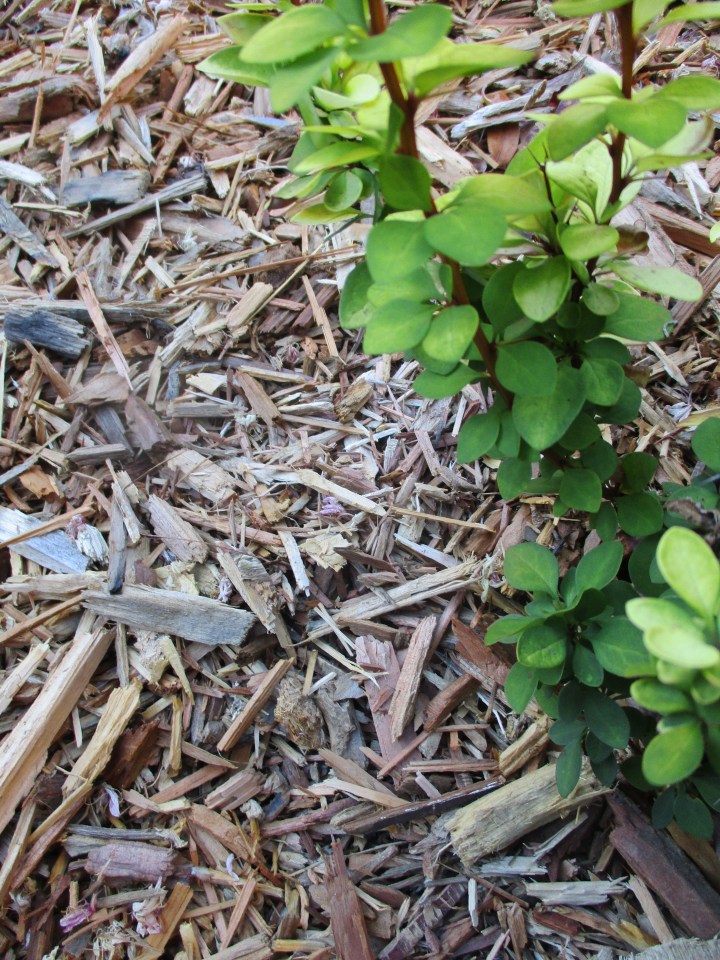
Mulch, which can be spread at any time, is particularly timely for autumn, because that is when the garden expects organic material from above. Just like fallen leaves would do in the wild, mulch settles in through rainy winter weather, and helps to retain moisture after the rain stops next spring. It inhibits weeds that will want to grow as soon as the rain starts, and insulates perennials that grow slower or go dormant when the weather gets cooler. Mulch helps an unnaturally cultivated garden do what it wants to do naturally.

Straight And Narrow For Trees

30731thumbIn the wild, trees do just fine without any help from anyone else. They certainly are not stupid. Their roots disperse for adequate stability. Their trunks grow upward as limbs spread outward for adequate structural integrity. Trees only need help in landscape situations because they are expected to perform so unnaturally. From the very beginning, their trunks are bound and their roots are confined.
While they are growing in the nursery, trees are bound tightly to stakes to keep their trunks straight. Unfortunately, this binding inhibits natural development of trunk caliper. Since they can rely on stakes for support, trees do not waste resources on developing the strength of their own trunks. The various eucalypti are particularly sensitive, and can bend over to reach the ground when unbound.

Roots are confined to cans (pots) or boxes because that is how trees are grown in the nursery. Even in regions where trees are field grown, roots must be severed when trees get dug and moved. Many types of trees do not mind much, and are eager to disperse roots into a new landscape as soon as possible. However, oaks, pines and many others do not recover as efficiently from confinement.

Once in a new landscape, most trees need to be staked to recover from being staked and confined in the nursery. New sturdier stakes that extend below the confined root system into soil below should stabilize newly planted trees. This is particularly important for evergreen trees that will be blown more by wind than bare deciduous trees, and particularly because most trees get planted in autumn and winter.

These new stakes should be installed a few inches away from the tree trunks so that they can support the trunks loosely when the tightly binding nursery stakes gets removed. To prevent abrasion, new straps should be somewhat loose, and cross over between the trunks and stakes. A pair of opposing stakes, with straps supporting in opposing directions, is sturdier than a single stake. A few straps may be necessary.

The new crepe myrtle trees in the picture above remain  bound to the stakes that they were grown with in the nursery. Sturdier stakes that can support the trunk in a less constrictive manner have yet to be installed.

Pumpkins Need Not Be Wasted

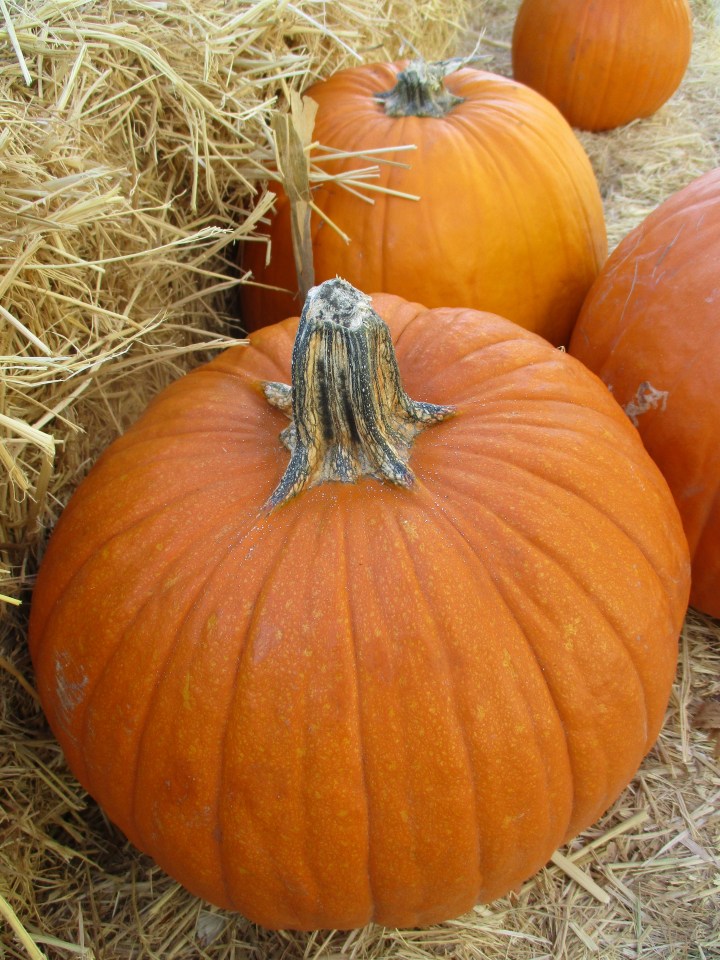
81107thumbThere is likely no other fruit that gets wasted quite like pumpkins. Almost all get hollowed and carved into Jack o’lanterns, illuminated from within for Halloween, and then discarded or added to compost within the next few days after Halloween. If they stay too long in the yard or on the porch, they mold or get partly eaten by squirrels. They were fun while they lasted, but the party is over.

Most people who use pumpkins for Halloween décor do not consider recycling them in the kitchen. Pumpkins carved into Jack o’lanterns are considered to be as disposable as cut flowers that have started to fade. Realistically, Jack o’lanterns that were carved several days prior to Halloween are probably too far gone by now to be recycled, and some are too sooty and toasted inside.

Of course, those that are not so deteriorated can be used in the kitchen like other winter squash. Sooty or toasted portions are easily cut away and discarded. The brightest orange pumpkins that were bred to make the best Jack o’lanterns, are not as meaty or as well flavored as those that are grown for culinary use, but they are not bad either. Their thinner shells are quick to bake or roast.

It seems that most pumpkins in supermarkets this year are not quite as bright orange as those that were developed specifically for Jack o’lanterns. They also seem to be more dense with thicker shells, as if bred to be recycled in the kitchen after Halloween. The smaller and more brownish pumpkins that are heavy with thick shells are probably still the best for pies, even if no fun to carve.

White, pink, green, yellow, red and bluish gray pumpkins are as variable as their colors are. Any are worth trying in the kitchen. Although some are quite bland, others have rather distinctive flavor. Those that are deeply furrowed or very lumpy are of course awkward to work with. Like other winter squash, pumpkins are very tough, so it is important to be careful when cutting them into pieces.

Falling Leaves Get Into Everything

51028thumbEven if they had been clean since they were emptied out last winter, gutters (eaves-troughs) near deciduous trees will eventually need to be cleaned again as they collect falling leaves through autumn. Leaves may continue to fall for several weeks, and will fall more abundantly as they get dislodged by rain.
Too many fallen leaves clog gutters and downspouts. If too much debris is left in downspouts for too long, it rots and settles so that it can be very difficult to dislodge. If rainwater can not adequately drain through gutters and downspouts, it can only flow over the edges of gutters. The falling water can erode the ground below, and splatter mud onto nearby walls.

This may not seem like much of a problem, but the reason that gutters and downspouts drain rainwater to the ground gently is to keep the walls dry and clean. Damp walls are likely to rot, especially if water splatters into basement vents. This is why early American homes that lacked expensive gutters were often outfitted with dense ‘foundation’ shrubbery or perennials to soften the splatter.

Leaves that accumulate in the valleys of the roof (where perpendicular slopes meet) should also be removed. Debris can also collect on the upslope side of a chimney. Homes with room additions have more awkward spots to collect debris than unaltered homes. Flat roofs and parapet roofs are of course very likely to collect debris under trees, and may need to be raked more than once.

Vines should not be allowed to climb onto roofs. They can tear apart roofing material, collect debris, and promote rot. Likewise, limbs of trees and large shrubbery should not be allowed to touch roofs, gutters, or even walls. Their motion in the breeze is abrasive to shingles, gutters, paint and siding. They can literally grind off shingles and break terracotta tiles.

Tree limbs should also be kept clear of chimneys. Even during rainy weather, hot exhaust from a chimney can dry and ignite limbs that get too close. Pine, cypress, cedar, and palms with beards (accumulated dead fronds) are very combustible.

Plan Ahead For Coniferous Evergreens

81031thumbWe all know what autumn is for. Planting, of course. Yes, it is a recurring theme; but there are so many different things to plant. Dormant bulbs need to get into the ground before cool and rainy winter weather. Deciduous plants that should be planted while dormant prefer an early start if planted as soon as they defoliate in autumn. Believe it or not, most evergreen plants are no different.

Evergreen plants do not experience the degree of dormancy that defoliated deciduous plants do, but they too are significantly less active during autumn and winter than they are during warmer weather. Therefore, if possible, they should also be planted in autumn, so that they can begin to slowly disperse roots through winter, to be ready to resume growth as weather warms next spring.

All planting should be planned. This is more important for trees, big shrubbery and other plants that are difficult to relocate once they have dispersed their roots. Some broadleaf evergreens that get bigger than expected can be pruned into submission. However, most coniferous evergreens are notoriously difficult to contain if they get too big for the situations into which they get planted.

‘Coniferous’ plants are those that produce cones. Cypress, pine, fir, spruce, cedar and redwood are the more familiar coniferous trees. Most coniferous trees, except for most of the various cypress, have excurrent branch structure, with lateral limbs extending from a central trunk. They can not be pruned down without disfiguring their central trunks. Lateral limbs can be disfigured if pruned back. Such trees should therefore be planted where they can grow unobstructed to mature size.

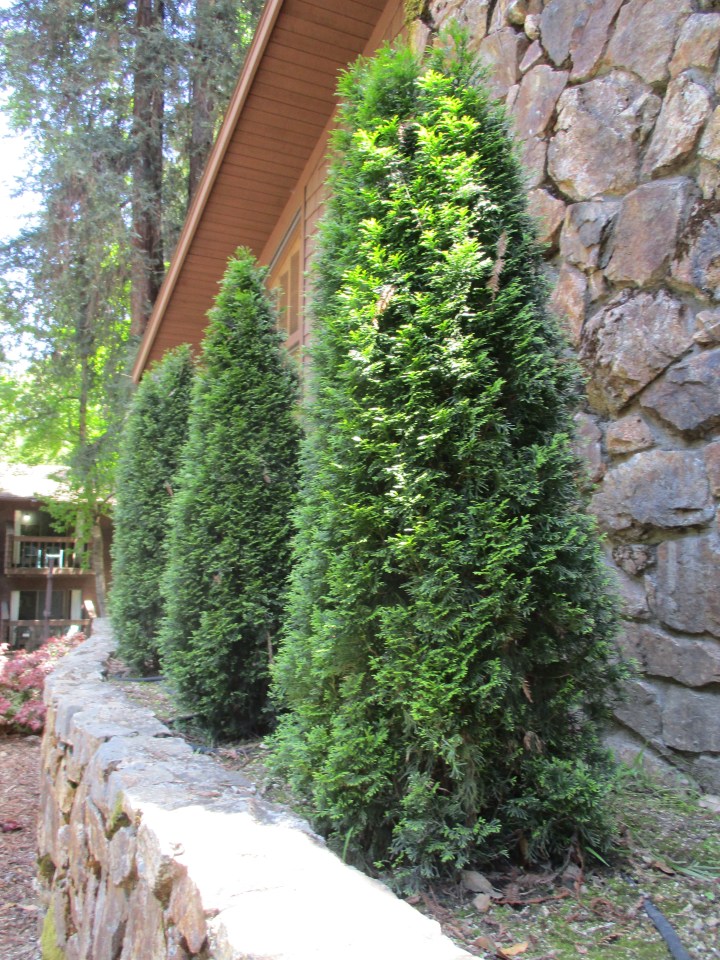
Juniper and arborvitae are some of the more familiar of coniferous shrubbery. They can be shorn even into formal hedges, but only if shorn very regularly. Their dense foliage shades out interior foliage. If they get too big for the respective situations, they can not be pruned back into submission without exposing their bare interiors. Once exposed, bare interior stems may never recover.