Saving Seed For Next Season

80718thumbThe gardens with the most flowers need the most deadheading. This involves the removal of deteriorating flowers and any developing fruiting structures and seed associated with them so that they do not divert resources from subsequent bloom or vegetative growth. Old flowers that do not produce seed because they are sterile or lack pollinators might get deadheaded too if unsightly.

Deadheading is not for everyone though. Flowers up in trees, big shrubbery or large vines are obviously out of reach. Many annuals, like alyssum and nasturtium, produce far too many flowers to be deadheaded. Most plants bloom and disperse seed without bothering anyone, or even getting noticed. Bougainvillea blooms too flamboyantly to miss, but then sheds neatly without any help.

Bougainvillea does not set seed anyway. The insects that naturally pollinate it within its native range in the Amazon River Basin probably do not live here. Yuccas that live far from their native range likewise lack the specific yucca moth that they rely on for pollination, although some get pollinated by accident. Big yucca stalks get deadheaded just because they are not appealing after bloom.

What is more fun than what gets deadhead is what does not get deadhead. The alyssum and nasturtium mentioned earlier naturally naturalize where they get watered. They toss so many seed around that they can replace themselves as readily as the old plants die out. California poppy, cosmos, calendula, campion, and many other annuals as well as a few perennials, can do the same.

Besides that, there are all sorts of seed that can be collected from old flowers for the following season. Each variety of flower finishes in its own season. Each variety likewise gets sown in its own season. It is not necessary to leave all fading flowers if only a few can provide enough seed for later. It is important to remember that hybridized and some overly bred cultivars do not produce viable seed, and that subsequent generations of the fancier varieties will revert to be more similar to their simpler ancestral parents.
Things Heat Up In Summer

70705thumbThis does not seem like such a mild climate when it is difficult to distinguish between the time and the temperature on a local bank clock tower. You know; when punctuation is the only difference between four minutes past one, and one hundred four degrees. Fortunately, like mild frost in winter, hot weather does not happen too often, which is why this climate really is milder than most.
Most of us know what to do for the garden when the weather gets warmer. Obviously, many plants want more water. What we do not often consider is that there a few things that we should ‘not’ do. Unlike us, the plants in the garden can not find shade when the weather gets warm. Those that are exposed find creative ways to provide their own shade. We really do not want to mess with that.

By this time of year, outer foliage of exposed plants is mature enough to tolerate heat. Only foliage of plants that prefer to be partly shaded is likely to be damaged. However, inner foliage of even the toughest plants is not as resilient as outer foliage is. Simply shearing a hedge exposes inner foliage that can be scorched by overexposure. Sunlight enhances the effects of heat and aridity.

If possible, it is best to delay such pruning and shearing until after unusually hot weather. No one wants to be out working in the garden on a hot day anyway. More typical seasonable weather may not seem to be much cooler, but a few degrees can be a big difference to plants. Once exposed, inner foliage should adapt, and hopefully be resilient to heat before the weather gets hot again.

While young and thin, formerly shaded bark that suddenly becomes exposed can be damaged by sun scald. (Deciduous trees do not get scalded while defoliated in winter because the intensity of sunlight is diminished at that time of year.) Sun scald of bark is much more serious than foliar scorch because it kills bark, leaving open wounds on main limbs and trunks. Decay within these wounds compromises structural integrity, and can ruin otherwise healthy trees.

Although rare, spontaneous limb failure can occur in some trees during warm weather, particularly if humidity increases and breezes remain minimal. It sounds silly, but warmth accelerates vascular activity, possibly until foliage becomes too heavy for the limbs that support it. If limbs break, they can cause major disfigurement, and detrimentally expose bark of inner limbs and trunks.

pH Has Ups And Downs

80711thumbEnvironment is what determines what plants grow where. It may sound simple enough, but environment is a combination of many different factors, including but not limited to climate, soil quality and exposure. Each of these factors is a complicated combination of other factors. For example, climate includes temperature, humidity, rainfall, frost dates, winter chill duration, wind and so on.
Home gardening, like the production of horticultural and agricultural commodities, is obviously limited by environment. Plants that want rich soil with good moisture retention are not happy in clay or inert sandy soils. Annual vegetable and flower plants that do not tolerate frost are grown after the last frost, and finish before the first frost. Annual plants that survive frost are grown in between.

Environmental modifications, such as irrigation, fertilizers and other soil amendments, make it possible to grow what would not normally grow in particular environments. However, environmental modifications are not always practical. For example, if the cost of irrigation of a particular commodity might exceed the projected revenue of that crop, an alternative crop must be grown instead.

pH (the ‘power of hydrogen’) is another one of the many limiting environmental factors. It is what makes the soil acidic or alkaline. Some plants prefer the soil to be slightly acidic with low pH. Some are more tolerant of slight alkalinity with high pH. What we choose to grow in our gardens should be adaptable to the pH of the endemic soil, whether it is acidic, alkaline or close to neutral.

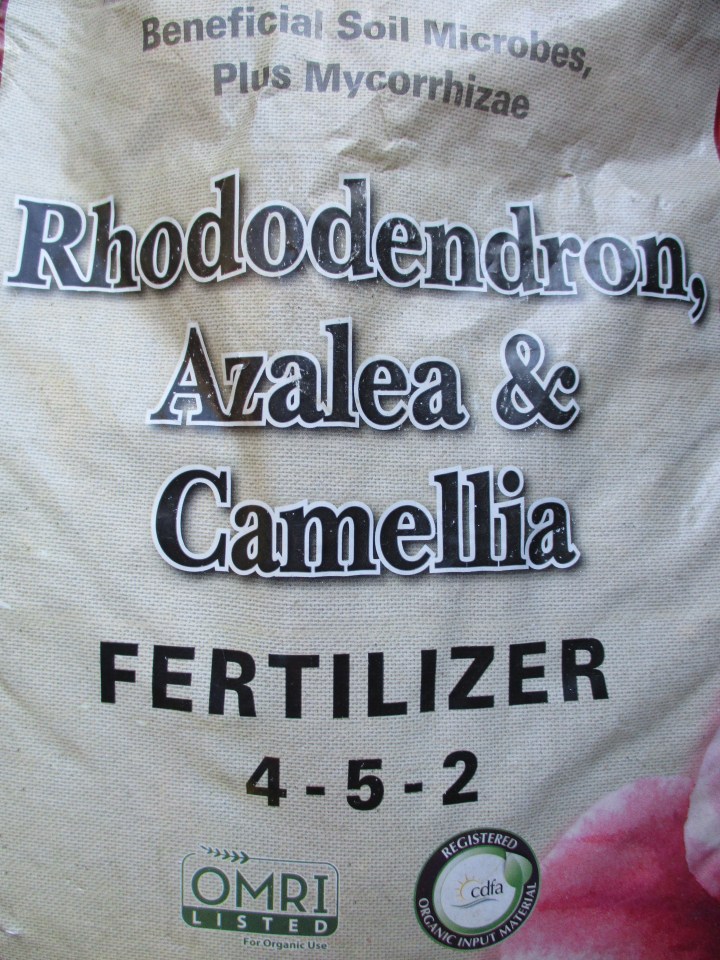
There are all sorts of fertilizers and soil amendments that can modify the pH somewhat if necessary. Such amendments make it possible to grow rhododendrons and azaleas and other plants that prefer slightly acidic soil where the soil is naturally slightly alkaline. The problem is that the adjustments of pH are not permanent, so must be maintained. In many situation, major modification of pH is impractical. It is generally more practical to select plants that will be happy with the natural endemic pH.

Good Roots Are Seldom Seen

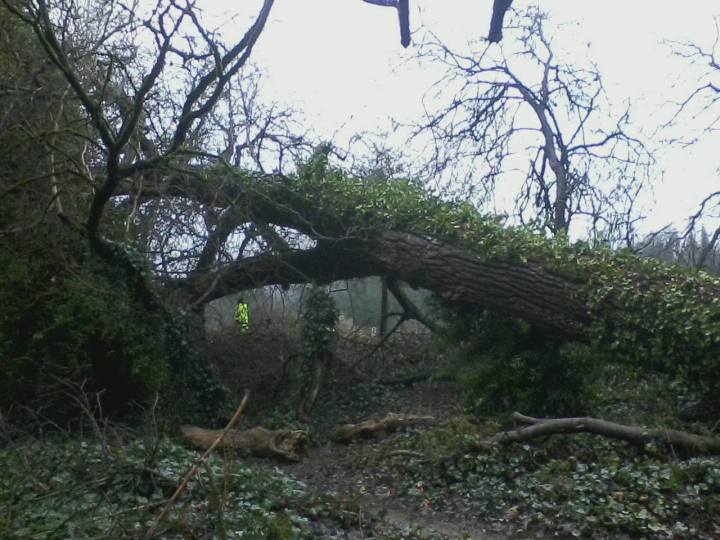
70628thumbWhen a tree falls in the forest, and there is no one around to hear it, does it make a sound? Of course it does! There is just no one to hear it. Why should that be such a profound question? A falling tree makes a mess too. Anyone who does not see or hear it in action can witness it afterward. Sometimes, roots that were inadequate to support the fallen tree become exposed as well.

There is certainly nothing unnatural about trees falling in forests. Otherwise, forests would be too crowded for new trees or anything else to inhabit. The roots of fallen trees might have been adequate for many decades or centuries, but eventually succumbed to decay and the weight of the canopies they supported and sustained. Trees falling in home gardens are completely different.

Domestic trees (in home gardens) are likely to land on homes, cars, other plants, or anything that happens to be in their way if they fall. Also, they are more likely to have problems with the roots that support them. Regular irrigation needed to sustain other landscape plants promotes rot, and also inhibits deep root dispersion. Excessive irrigation that keeps soil saturated is much worse!

The good news is that, despite their innate disadvantages, domestic trees tend to be shorter, stouter and more stable. With proper maintenance, they seldom fall; or at least they are more likely to get removed before they fall. Buttressed roots that are visible at the surface of the soil might indicate that deeper root dispersion has been inhibited. The best roots are too deep to be seen.

Whether or not buttressed or shallowly dispersed roots limit stability, they can damage pavement, lawns, septic systems, or other features on the surface of the soil. Subterranean utilities and foundations of modern buildings are typically safe, but on rare occasion, can be damaged by the largest sorts of trees. Root barriers divert roots, but those of big trees eventually get around them. Potentially damaging roots can be severed while young, but become more integral to sustaining and supporting as they grow.

Medicinal Herbs Versus Culinary Herbs

80704thumbThey are NOT the same thing! Many herbs can be useful for both culinary and medicinal applications, but the distinction between the two is very important. Culinary herbs are used to flavor foods. Medicinal herbs are used like pharmaceutical drugs; but they lack the main safety feature of standardization. That means that they are potentially toxic and seriously dangerous if used improperly!

Even standardized pharmaceutical grade herbal products that are very precisely portioned into specific doses that contain very specific rates of active ingredients have the potential to be toxic if misused, and are of course toxic to anyone who is allergic to what is being used. They must be regarded with the same sort of caution that is warranted by any other pharmaceutical medication.

Digitalis is a perfect example of a very toxic plant that is used medicinally. All parts of the plant are very poisonous! Digitalis is so toxic that it is no longer used directly as an nonstandardized and nonpharmaceutical medicinal herb. However, in a standardized pharmaceutical form, it is still sometimes prescribed for cardiac disorders. Many of us grow it just for elegantly tall flower spikes.

In our own home gardens, the strictly culinary herbs are relatively safe. Even those that can also be used medicinally are not likely used for culinary applications in quantities sufficient to be toxic. Some herbs that are used for herbal tea have more potential for toxicity, particularly if consumed regularly or excessively. Even seemingly innocuous chamomile tea, in excess, can cause nausea.

Herbs that are grown and used for medicinal applications warrant the most caution. The active ingredients as well as other chemicals in such herbs can not be accurately quantified, and are quite often variable. Doses that are measured as small volumes of plant parts might contain minimal traces of active ingredients, but could just as easily contain toxic rates. Herbalists recommend consulting with a physician prior to using any of the more potent of medicinal herbs, even if the herbs come from the garden.

Catalog Shopping Has Certain Limits

70621thumbThe temptation is unbearable. The catalog of Adelman Peony Gardens, either in print or at www.peonyparadise.com, shows how spectacular peony blossoms can be. There are one hundred and seventy-eight exquisite pictures of the cultivars available for mail order on online purchase. The only problem, and it is a big one, is that peonies are recommended for USDA Zones 2 through 8.

So maybe some of us in Zone 9 might conveniently neglect to read that part of the catalog. Maybe some of us believe that since peonies can not read that part of the catalog, they might not mind getting cheated out of the winter chill they need for good dormancy. Somehow, many of us are able to grow peonies where they have no business growing. Perhaps we should keep that a secret.

So many more plants are available online and by mail order than can be found in nurseries. Most of them are appropriate to local climates. Some are not. Catalogs from the best nurseries are careful to make that distinction obvious by describing what zones their plants are recommended for. That can be a lot of information for nurseries that have many different types of plants available.

Plants that have potential to transmit disease or become invasive might be banned from certain states. Nurseries can send plants to inappropriate climate zones for clients who really want them, but can not send plants to states where they are banned. Black elderberry plants can not be imported into California. Only black elderberry plants that were grown in California can be sold here.

Unfortunately, many plants are sold online without any regulation whatsoever. Anyone can sell any extra seeds, seedlings or cuttings online, whether or not they actually know what the seeds or plants are. Some plants are not really what they were described as when sold. Many others get sent to climates where they will not be happy, and might not even survive. Worst of all, there is serious potential for plants to be vectors of disease and insect pathogens, or to become invasive in formerly uninfested regions.

Herbs For Kitchen And Garden

80627thumbHerbs might be in our garden right now, whether we are aware of it or not. Trailing rosemary happens to be a popular and practical groundcover, and some varieties grow as low shrubbery. A few varieties of thyme also work as ground cover for small areas, or between stones. Various lavenders are popular low mounding shrubbery. Quite a few common landscape plants are also herbal.
It is important to be aware though, that some varieties of herbal plants are better for landscape applications, and others are better for herbal applications. All cultivars of rosemary can be used for culinary applications, but some happen to be grown specifically for that purpose because of superior flavor. Cultivars with the best flavor may not be as useful for groundcover or as low shrubbery.

The same goes for the lavenders. French lavender may be the best for culinary applications, but the various Spanish and English lavenders might be better options for landscape applications, cut flowers or for their aroma. California bay that grows wild as a big tree is actually a completely different genus than the shrubbier culinary Grecian bay, and can ruin a recipe if used as a substitute.

As if that were not complicated enough, once the preferred herbal plants are identified, it is important to know how to use them. Chive, cilantro, parsley, mint and most others are usually preferred fresh. Lavender and bay leaf are more often used dried. Rosemary, oregano and sage can be used fresh or dried, depending on the desired flavor. Almost any herb can be dried for convenience.

Drying herbs is convenient for those that are only available within certain seasons, even if they can be used fresh while in season too. For example, chamomile is not a foliar herb like most, but is unbloomed floral buds that must be harvested at a very specific time. They should be plump, but not completely open. Once harvested and dried, they are useful for herbal tea throughout the year.

Herbs can be flowers, seeds, bark or any part. Most are foliage of the family Lamiaceae.

Annuals Just Might Be Perennials

70614thumbAnnuals come and annuals go. There are cool season annuals for winter. There are warm season annuals for summer. Really though, there are all sorts of annuals that are not annuals at all. Most are some sort of perennial that has the potential to last longer than a single season. Only a few popular ‘annuals’ would necessarily die after blooming and producing seed, within a single year.

To be clear, true annuals last only a single year. They probably germinate from seed early in spring, and grow quickly. They then bloom in spring or at least by summer, and subsequently produce seed. Once their seed has matured and been dispersed, their job is done. They finally die in late autumn or winter. Annuals from deserts are even faster because of the harshness of the weather.

Many large-flowered sunflowers are true annuals. They are finished once their seeds mature. They will not bloom again. Even if they wanted to, they would not survive through winter. Petunias should be annuals, because they also die over winter. However, it is possible for them to survive winter in a semi-dormant state, and regenerate and bloom again the following spring and summer.

Realistically, it is not practical to salvage petunias for a second year. It is easier and more efficient to plant new ones. Yet, it sometimes happens, particularly in mixed plantings where old plants can get cut back while cool season annuals dominate in winter. Alternatively, lanky old stems can get buried with only their tips exposed. These tips might grow as new plants the following spring.

Cyclamen are cool season annuals that have been dieing back for summer. They usually get removed by now. However, in mixed plantings, some of their fat tubers can survive through summer to regenerate next autumn. For what they cost, they are worth salvaging! Primrose, chrysanthemum, impatiens and the various fibrous begonias are all worth salvaging through their off seasons.

Fibrous begonias may not know what their off season is. Those that bloomed through winter might be looking tired by now. If pruned back, they could regenerate as warm season annuals. Those planted in spring might look tired by the end of summer. If pruned back early enough in autumn, and protected from frost, they might grow enough before winter to work as cool season annuals. Cutting them back and waiting for regeneration may not be much more effort than replacing old plants with new ones, and is less expensive.

Concrete And Jungle Can Be Compatible

80620thumbConcrete is one of the most common of landscape materials. There are probably more landscapes that include concrete of one form or another than there are landscapes that include lawn, and most landscapes include lawn. There are more landscapes that lack shade trees than there are without concrete. We do not notice it much because, once it is installed, we do not do much to it.
Concrete gets poured into our gardens as a liquid like slurry of cement and sand and gravel aggregates that cures into a stone-like solid. It is not ‘cement’, but cement is the component that binds it all together. Almost all modern concrete is reinforced with steel of some sort to prevent it from breaking as easily as old unreinforced pavement does. It can be as permanent as we want it to be.

Concrete is used to pave patios, driveways and sidewalks, and gets molded into stairs, curbs, and the foundations and slabs for our homes and garages. The visible surfaces of concrete can be colored, textured or outfitted with stone to look better in the landscape than simple bare concrete. It is relatively ‘low-maintenance’, but should sometimes get swept or blown if debris accumulates.

Concrete is a versatile and durable material, but is no more perfect than anything else in the garden. It inhibits percolation of moisture and gas exchange in the soil below. Because it is inflexible, it fractures if displaced by roots or settling soil. Glare from paved surfaces can enhance sun exposure enough to roast sensitive foliage and exposed bark. Certain foliar debris can stain concrete.

Concrete limits plant selection. Conversely, the presence of mature trees limits the location and quantity (surface area) of concrete to be installed. Trees with aggressive roots or big trunks should not be planted so close to concrete that they will have no choice but to displace it. Root barriers help with mid sized trees, but are not always effective forever. Dogwoods,Japanese maples and other plants with sensitive foliage or bark, are more vulnerable to exposure if concrete around them is also exposed.

Watering Starts Where Rain Finishes

70607thumbFor a while last winter, it seemed like the rain would never stop. Obviously, it did. The warm spring weather that followed helped plants to take advantage of the rare surplus of moisture. Desert wildflowers were more colorful than they had been in many years, and maybe since 1983 in some areas. Now the weather is back to normal for here, and we must water our gardens accordingly.

There is nothing natural about irrigation (watering); but then, there is nothing natural about gardening or landscaping. Most of the plants in common landscapes are not native. They were imported from vastly diverse regions with very different climates. Because this happens to be a semi-arid ‘chaparral’ climate, most plants want more moisture than they would get here naturally from rain.

Adapting unnatural irrigation to unnatural landscaping sounds easy enough. The problem is that the many different types of plants from so many different climates each want something different. Also, some plants need unnaturally frequent irrigation to sustain unnatural behavior. For example, lawn grass that would naturally go dormant after a dry summer needs water to stay green all year.

Lawn grasses have finely textured roots near the surface of the soil, so want frequent irrigation. Trees within lawns might want larger volumes of water to reach lower roots, but do not like frequent irrigation that keeps the surface of the soil moist. The sort of regular irrigation that is good for lawn promotes shallow tree roots that ruin lawns and pavement, and are not exactly ideal for stability.

Automated irrigation is usually set to operate very early in the morning, and finish before anyone in the home is likely to be outside, or using much water inside. (Other water use can compromise pressure.) Less water evaporates before the sun comes up. Watering before midnight might seem like a better idea, but keeps foliage wetter longer, so might promote fungal diseases such as mildew. Frequency and duration (volume) of irrigation require occasional adjustments to adapt to the weather.