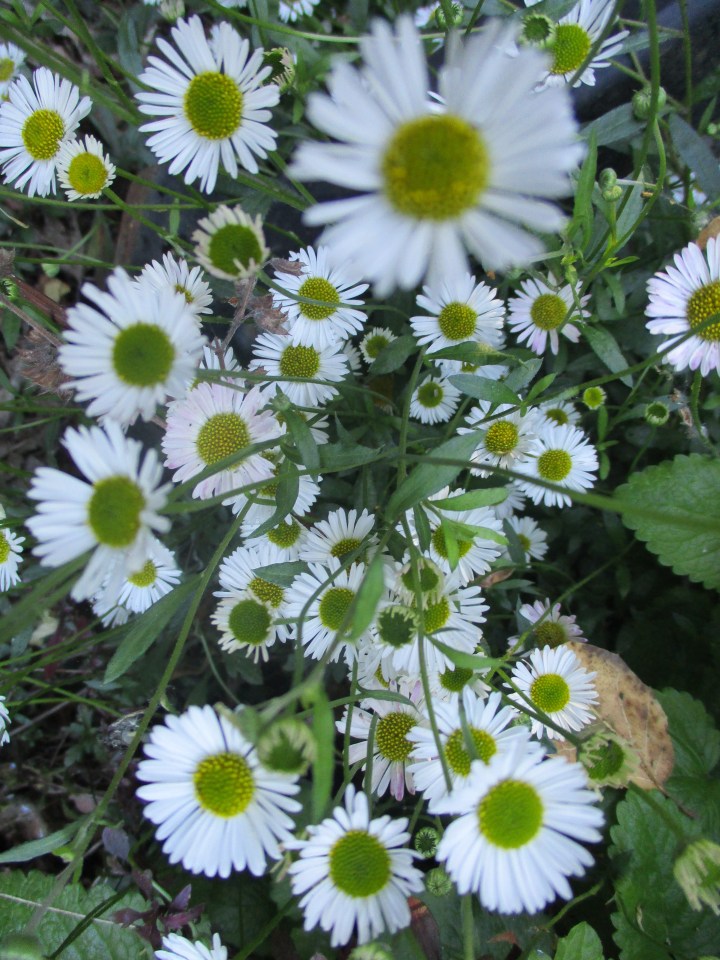
 There is so much more to gardening than mere horticulture. There is so much more to horticulture than mere plant life. Plants get eaten by insects and animals, and also take advantage of insects and animals for pollination and dispersion of seed. Some of us who enjoy gardening also like to attract some types of animals and insects to our gardens because they are nice to have around.
The birds and the bees, as well as butterflies, squirrels, lizards, snakes and other small animals add color, motion and vibrancy to the garden. Destructive animals like gophers, rats and deer, and cumbersomely big animals like moose and bears, are not so popular. Mosquitoes and flies are the sorts of insects that we would like to repel with aromatic herbs. Some but not all are welcome.
‘Pollinator’ flowers have become a fad recently, not only to attract bees, but also to provide them with more of what some believe they are lacking out in the wild. There is certainly nothing wrong with attracting bees. Those who are enslaved in honey production are best! Children learn as much about nature from bees as from other wildlife. The soft hum of big herds of bees is quite nice.
Beyond that, we should think outside the box of our home gardens. The unnatural disruption of local ecology can not be repaired by throwing more unnatural resources at it. Honeybees who were imported to make honey are not native, but displaced and interbred with natives enough to interfere with their natural pollinating behavior, as well as their resistance and susceptibility to disease.
Almost all plants in urban as well as agricultural areas were imported too. They were perpetuated until they dominated the localized ecosystems. There is now much more flora in places like the Los Angeles Basin and the Santa Clara Valley than there has ever been before! There is no shortage of bloom for bees. In fact, there is an overabundance of bloom potentially distracting bees from pollinating native specie who need them. Invasive exotic eucalypti might enjoy their popularity at the expense of California poppy.
 Anyone can plant a grapevine. With a bit of work, almost anyone can make a grapevine grow. Most who put forth the effort can figure out how to prune and cultivate a grapevine. Yet, grapevines so often get very out of control. They easily escape confinement, overwhelm nearby plants, climb into trees and overburden their trellises or arbors. It is easy to forget how aggressive they can be.
 Of course, to the plants who do it, naturalizing is an advantage. To the rest of us, it is often a problem. The advantage to the plants who do it is that they move into new territory, make themselves at home, and probably do quite well with the new place. The disadvantage to everyone else is that naturalizing plants may not play well with others, and consequently interfere with the ecosystem.
 There is a difference. Hybrid tea and grandiflora roses were bred to be excellent cut flowers for the home. They bloom on long stems, and last well once cut. However, the rigid and thorny plants that produce these excellent blooms are realistically not much to look at. Floribunda, polyantha and climbing roses are more of a compromise with less ideal (perhaps) flowers on friendlier plants.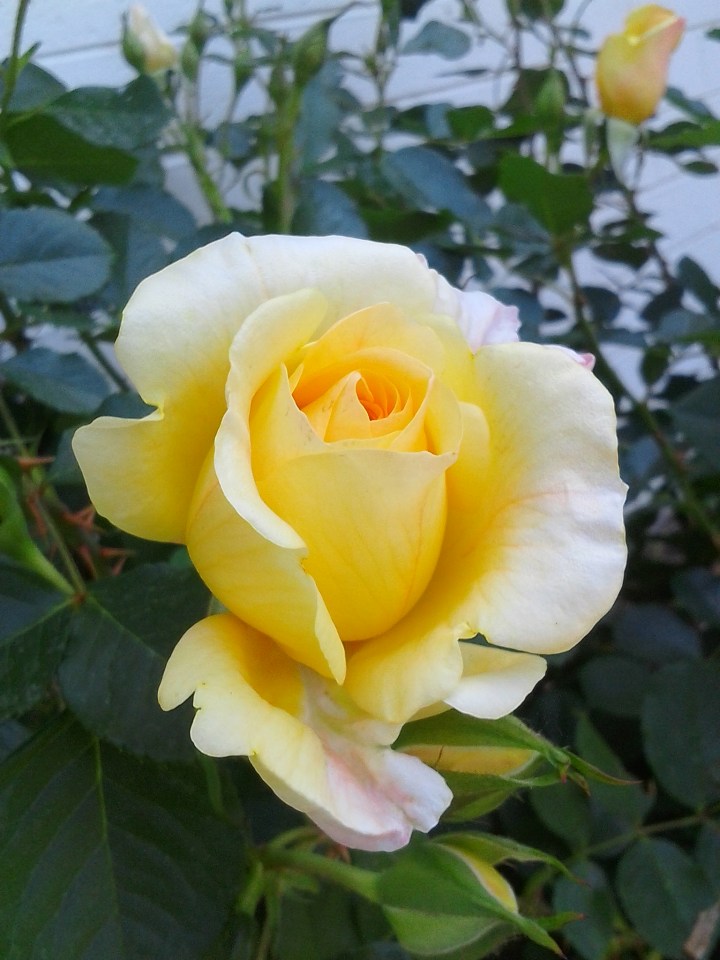
 Those of us with ‘maintenance gardeners’ are likely aware of how rare it is to find someone who knows how to maintain hedges properly. It seemed so simple years ago. Several identical plants could simply be planted in a row, and then somewhat regularly shorn for confinement to a prescribed space. They were not allowed to exceed a specific height or width for long between shearing.
 If good fences make good neighbors, what about hedges? If only it were that simple. There are all sorts of evergreen hedges to provide privacy, obstruct unwanted views, disperse wind, define spaces, or muffle noise. They can do much of what fences do, and muffle sound better. The problem is that they are composed of living plants, shorn into submission and very unnatural shapes.
 When a seed germinates, the roots know that they want to go down, and the new stem knows that it wants to go up. Going up sounds simple enough. Stems just go towards the light. How do they know where the light is while they are still under the soil? Well, new stems go upward for the same but opposite reason that roots go downward; gravity. Roots go toward it. Stems go away from it.
 Flowers were originally colorful only to attract pollinators. Breeding has improved the color and quality of many garden varieties of flowers, to make them more appealing to the people who grow them. Some have been bred so extensively that they are sterile, which defeats the original function of flowers. Now their function is merely to look good in the garden. Improvements are relative.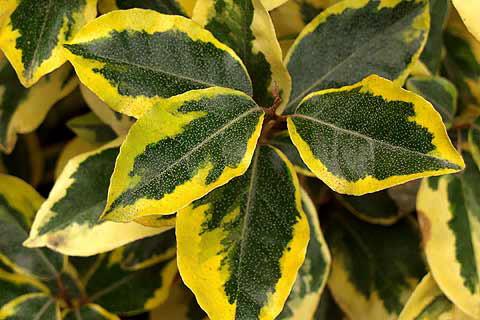
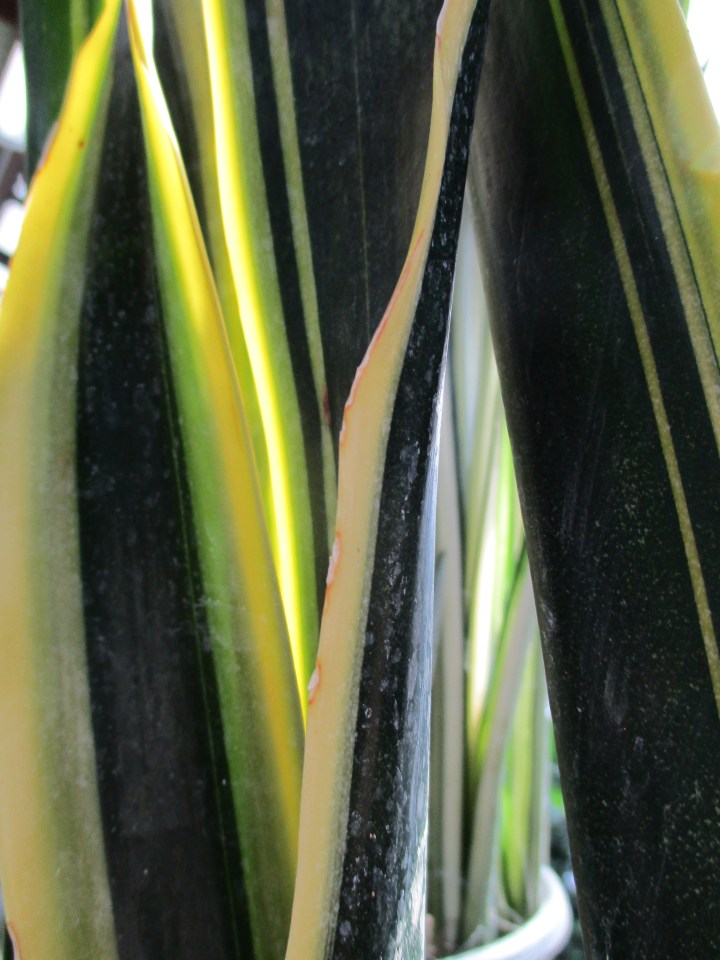 It is not science fiction. It involves neither ninjas nor turtles. Cultivars really are mutant plants that can only be propagated by cloning. The word ‘cultivar’ is a portmanteau (two words combined into a single word) of ‘cultivated’ and ‘variety’. Unlike other varieties of plants that can be perpetuated by seed, cultivars must be cultivated by unnatural techniques to maintain their genetic distinction.
 Lawns composed of turf grasses are the most functional, but also the most demanding forms of groundcover. That is old news. There are so many other less demanding low growing plants that that can cover the ground in areas that are not used like lawns are. Sometimes they work nicely just to control weeds. Sometimes they help to control erosion on otherwise unlandscaped hillsides.
 Tony Tomeo