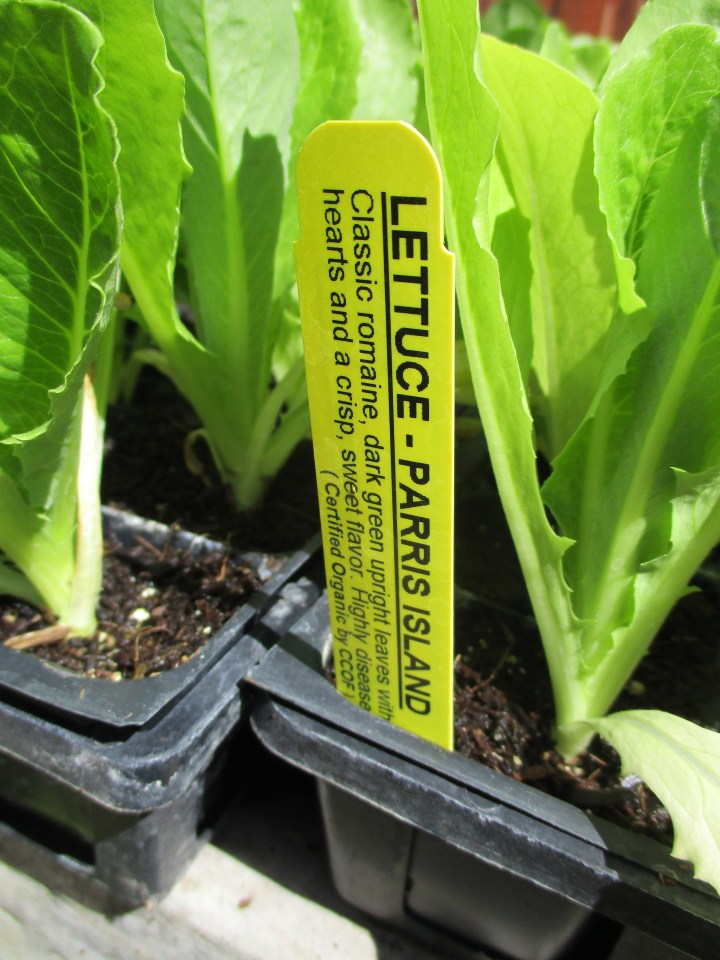
Cool Season Vegetables Are Coming

80926thumbIt is getting close to one of those two unpleasant times of year for the vegetable garden. It happened last spring, and it will happen again this autumn. Plants that so dutifully produced vegetables through the last season must relinquish their space for plants that will produce vegetables for the next season. In autumn, it will be cool season vegetables that replace warm season vegetables.

They are all on their own distinct schedule. Pulling up corn stalks is not so distressing because we know when they are finished. Pole beans, bell peppers and summer squash might make it easy as well, if they start to look shabby as their season ends. Tomatoes are the more unpleasant ones to pull up, since they can continue to produce right up to the end, even as the nights get cooler.

If they were planted on the edge of the vegetable garden, and allowed to grow outside of the space needed for incoming cool season vegetables, winter squash can stay until their vines succumb to frost. Fruits that get harvested just prior to frost last better in the cellar. Those exposed to a bit of frost attain better flavor. Winter squash really are summer vegetables. They just finish in autumn.

Seed for beets, carrots and various root vegetables that are grown this time of year should be sown directly into the garden. Root vegetables do not transplant well. Besides, too many relatively expensive seedlings would be needed to grow a substantial quantity of such vegetables. Seed should be sown in phases every few weeks so all the vegetables do not mature at the same time.

Peas, spinach and leafy (non-heading) lettuces should likewise be grown from seed sown directly into the garden. However, it is more practical to grow broccoli, cauliflower and cabbage from seedlings rather than seed. Because only a few plants of each are needed, they are not terribly more expensive than seed. One or two six packs might suffice. Another option that is useful for those who grow varieties that are unavailable in nurseries, is to grow seedlings from seed in small pots or flats, to plant out later.

Start Cool Season Annuals Early

30925Twice a year, it becomes necessary to discuss the unpleasantries of pulling up the flowering annuals (as well as vegetable plants) of one season, to relinquish space for those of the next season. Just a few months ago, cool season annuals got replaced with warm season annuals. Now, those same warm season annuals will get replaced with cool season annuals for the next few months.

It is unpleasant because the outgoing annuals are probably still blooming when it is time for them to go. It might be easier to wait for cool season annuals to get roasted by hot weather, or for warm season annuals to get frosted. Unfortunately, by that time, the incoming annuals would be at a disadvantage. Hot or cold weather is also uncomfortable for plants that are not yet established.

Sure, warm season annuals like warmth, but only after they have sufficiently dispersed their roots to sustain their growth during warm weather. This is most efficiently accomplished while the weather is still mild earlier within their season. Cool season annuals likewise do not mind cool weather, but do not grow as well as they do during the warmer weather earlier within their season.

This is why it is better to plant pansy, viola, sweet William, Iceland poppy, stock, calendula and the various primroses earlier rather than later if possible. There is no exact science here. A forecast for warm weather certainly justifies delay. Cyclamen and ornamental cabbage and kale are a bit more sensitive to warmth, so could wait a bit longer. They grow well through cold weather anyway.

Chrysanthemum, alyssum and nasturtium are odd ones. Chrysanthemum, although perennial, is most often planted as a short term autumn annual while it is already blooming or is just about to bloom. It rarely gets a second chance if it finishes bloom before winter. Alyssum and nasturtium can be both warm and cool season annuals. They only gets replanted this time of year because individual plants perform through one season or the other, but probably not both. Nasturtium should be grown from seed.

New Canes Replace Old Canes

50916thumbHeavenly bamboo, or simply ‘nandina’, is one of those many plants that almost never performs like it should. The intricately lacy foliage is so appealing while plants are young, and changes color with the seasons. The red berries can be comparable to those of holly. Unfortunately, healthy plants grow, and then ultimately get shorn into globs of disfigured leaves and stems.

The same abuse afflicts Oregon grape (mahonia), mock orange (philadelphus), forsythia, lilac, abelia and all sorts of shrubby plants that really should be pruned with more discretion. Their deteriorating older stems should be pruned to the ground as new stems grow up from the roots to replace them. It is actually not as complicated as it seems.

This pruning process, known as ‘alternating canes’, prunes the plants from below. It is a standard pruning technique for maximizing production of blackberries, raspberries and elderberries. It is similar to grooming old stalks from bamboo and giant reed, even if it does not prevent them from spreading laterally.

The deteriorating older stems, or ‘canes’, are easy to distinguish from newer growth. Old canes of Heavenly bamboo and Oregon grape become heavy on top, and flop away from the rest of the foliage. Old canes of mock orange and lilac get gnarled and less prolific with bloom. Aging abelia and forsythia canes become thickets of crowded twigs.

The newer stems are likely a bit lower, but are not so overgrown. Since the foliage is not so crowded, it is displayed on the stems better. Their blooms or berries are more abundant. By the time new growth becomes old growth, there will be more newer growth right below it. In fact, the regular removal of aging canes stimulates growth of new canes.

This is the time to prune Heavenly bamboo and Oregon grape, just because the oldest foliage is as bad as it will get after the warmth of summer. Mock orange, forsythia and lilac should get pruned while dormant through winter, but are commonly pruned just after they finish bloom early in spring. Abelia should probably wait until spring because new growth can look sad through winter.

Indian Summer Is The Norm

70920thumbThe popular definition of ‘Indian summer’ suggests that it is unseasonably warm and dry weather in spring or autumn, and that it typically happens after frost. Well, that definition just does not work here. It makes about as much sense as our so-called drought, which is actually the normal weather for our chaparral climate. Weather that repeats annually is neither unseasonable nor abnormal.
There are certainly years with more or less rain, and years with warmer or cooler weather in late summer and early autumn. Weather is naturally variable. It does not work like the thermostats in our homes, or the automated irrigation systems in our gardens. It is impossible to predict precisely how this summer will end, but it will likely have some characteristics of a normal Indian summer.

The one characteristic of the popular definition of Indian summer that will be notably absent is frost. That will not happen until after autumn. Locally, Indian summer can either be what seems to be a continuation of summer weather, or a resumption of warm summery weather after a bit of cooler weather. The main difference from earlier warm weather is that the nights are significantly cooler.

That is more important than it sounds. We do not notice the cooler nights as much as the plants that are outside all night do. While the days are as warm as they had been, some deciduous plants will begin to defoliate. Eventually, those that get colorful in autumn will begin to do so. Roses can be fertilized one last time, but even as they continue to bloom, they should not be fertilized again.

Indian summer prolongs the summer growing season significantly, but also has the potential to interfere with the winter growing season. Warm days keep warm season vegetables and flowering annuals performing so nicely that we do not want to remove them to relinquish their space for the cool season plants that will be needing it soon! In other climates, frost ends the summer season for us, and necessitates the transition to cool season crops. Indian summer can be too much of a good thing.

Propagation Is No Big Mystery

Layer_(PSF)All plants propagate. Otherwise, they would go extinct. They all have the potential to propagate by seed or spores. However, some are more efficient at vegetative propagation from stems or roots. Of the later, a few propagate by seed so rarely that it is a wonder that they can evolve, since vegetatively propagated plants are clones, or genetically identical copies, of the original plants.
A single coastal redwood can live for thousands of years. Before such a tree dies, it clones itself by producing adventitious stems from its aging root system. These stems mature into new trees that can live for thousands of years more, only to repeat the process indefinitely. There is no opportunity to generate and share any slight genetic variations that are necessary to natural selection.

Well, this is probably more information than any of us need for our home gardens. It is only relevant to demonstrate than many plants are happy to propagate themselves vegetatively, or are at least conducive to simple vegetative propagation techniques. This is why most nursery plants are grown from cuttings, which are merely pieces of stem stuck into media and forced to grow roots.

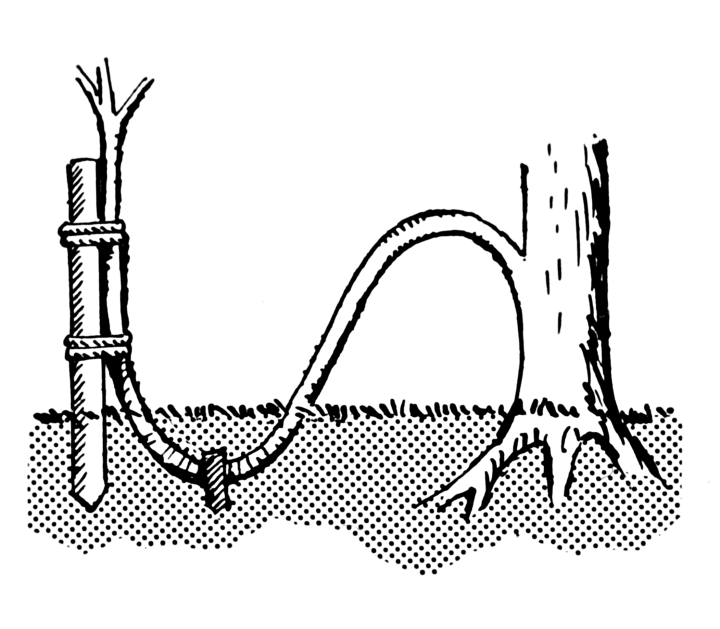
For those of us who are not in the nursery industry, there is a more practical way to propagate a few copies of certain favorite plants. Sprawling groundcovers and vines like iceplant, knotweed, jasmine and ivy know all about it. So do many low growing succulents. Their lower stems develop roots where they lay on the ground, and grow into new plants. The process is known as ‘layering’.

Some low shrubby plants that might not layer naturally might be coerced to do so simply by getting a few of their lowest stems buried just below the surface of the soil, with a few inches of the tips sticking up. It helps to scratch off a patch of bark about a third of the way around the buried section of stem, and apply rooting hormone. Sturdy stems can be held down with rocks if necessary.

For most plants, layered stems can be buried about now, left through winter, and should be ready to be separated from the parent plants by next summer, just after any new growth matures. New plants will of course need to be watered generously until they develop enough roots to be self sufficient. Most plants with pliable stems that reach the soil can be layered. Junipers, euonymus, euryops, marguerites, boxwoods and carpet roses are some of the more popular candidates.

It Will Soon Be Autumn

71004thumbFrom the time they get planted in early spring, tomato plants are expected to perform a bit better than they did earlier in the season. They start out with only a few early tomatoes, but quickly become prolific. Production continues to increase as the plants grow all through summer . . . until now. Newer leaves on top are not staying so far ahead of fading leaves below.

While the weather is still warm, it is difficult to say how tomato plants know that autumn will soon replace summer. They do not seem to be intelligent enough to realize that every day is imperceptibly shorter than the one before. Nor do they seem to be sensitive enough to notice if the nights get slightly cooler. They just know, and they tell all their friends.

If zucchini plants have not started to fade and sag, they will soon. As weather cools, they no longer grow faster than the mildew that they tolerated all summer. Any fruits that are present now should have time to finish developing, but there probably will not be many more after that. (Zucchini fruits are eaten before mature anyway.) Other warm season vegetables are in a similar state.

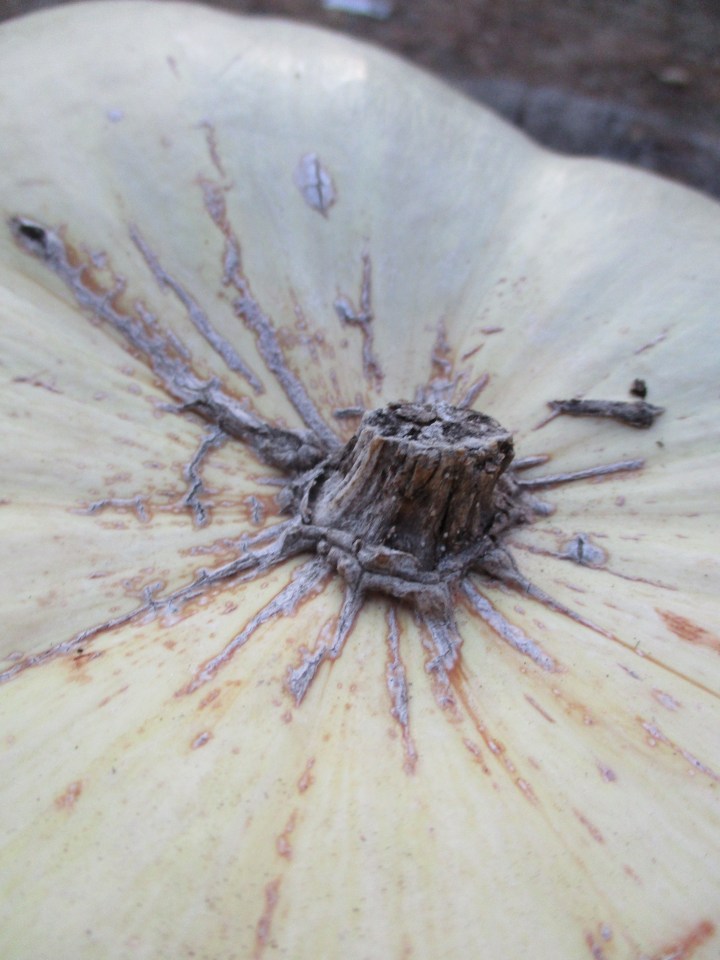
Acorn, Hubbard, butternut and other winter squash grow through summer just like summer squash do, but are not harvested until the vines wither in autumn and winter. Unlike summer squash that continue to produce many tender juvenile fruit to replace what gets harvested through summer, winter squash plants put all their effort into one or two large ripe fruit.

Warm season vegetable plants still need to be watered as the foliage slowly deteriorates. They only begin to need less water as they lose foliage and the weather gets cooler. They may like to be fertilized one last time, but will not not need it again. Any last phases of corn will stay thirsty later than other vegetable plants because they deteriorate slower, and are rather thirsty anyway.

Seed for broccoli, cauliflower, cabbage, kale and certain other cool season vegetables can be sown in flats or cell packs now so that their seedlings are ready to go when the warm season vegetables relinquish their space in the garden. If space allows, seed for beet, turnip and turnip greens can be sown directly into the garden. Carrot seed should still wait for cooler weather.

Groundcover Is Carpeting For Landscapes

80912thumbIf shade trees are the ceilings, and hedges and shrubbery are the walls, then turf and other groundcover plants are the floors of some of our outdoor living spaces. Except for turf grasses, most groundcovers are not as useful as hardscapes like pavement and decking, but they perform other functions in areas that do not get such use. Groundcovers inhibit weeds, erosion, dust and mud.

Turf grasses used for lawn are of course the most popular groundcovers, and are a separate topic from other groundcover plants that grow over unused or lightly used ground. Because they need not tolerate traffic, these other groundcover plants need not be as resilient, or as flat as turf grasses are. They can be perennials, vines or low sprawling shrubbery. Most, but not all are evergreen.

Groundcover plants work something like mulch, although most want to be watered. They inhibit weed growth by occupying the space that weeds want. Many hold soil together with their roots. They may seem like they would compete with other plants, but groundcover plants insulate the soil, which makes it more comfortable for other plants. Many retain more moisture than they utilize.

Gazanias and iceplants are two of the most popular perennial groundcovers. They tend to replace their own growth regularly as old stems decompose below new growth that spreads over the top. They therefore do not get very deep. Some gazanias eventually develop bald spots. When they get trimmed around the edges, the scraps can be plugged back into bald spots as cuttings.

Cultivars of myoporum, cotoneaster, ceanothus, rosemary, juniper and other low and sprawling shrubbery that make good groundcover must not be confused with cultivars that grow as upright shrubbery or even trees. There is a big difference between creeping myoporum that stays less than a foot deep, and shrubby myoporum that can get almost thirty feet tall! Also, vines used as groundcover, like ivy and honeysuckle, should be maintained as such, and not allowed to climb trees, shrubbery and other landscape features, like vines naturally want to do.

Flowers Might Be Getting Scarce

70830thumbIt makes sense for flowers to bloom in spring. Winter is too cool, windy and damp for both flowers and the insects that pollinate many of them. By summer, successfully pollinated flowers have faded, are busy making seed to disperse in autumn. Some plants produce fruit to get birds and other animals to disperse their seed. There are certain advantages to blooming early in the spring.

Native plants that are endemic to chaparral climates are quicker with bloom, so that they finish before the air gets too arid. Desert plants might bloom for less than a week. Some tropical plants might bloom whenever they want to because they do not understand the concept of seasons, but they are not the prominent plants in our gardens. Therefore, flowers get scarce this time of year.

Besides the few perennials and annuals that bloom as long as the weather stays warm, there are not many plants that bloom reliably so late in summer. Belladonna lily, which is also known as naked lady, might be one of the flashiest, as its bright pink flowers bloom on top of bare stalks before the low basal foliage develops. It was actually dormant through the warmest part of summer.

Billowy and bold pampas grass flowers bloom this time of year, but are uncommon. The boldest type of pampas grass is too big and difficult to manage for home gardens. The smaller type has dingy tan flowers, and is so invasive and weedy that it is unavailable in nurseries. Those of us who have it in our gardens did not plant it. Other grasses with nice late flowers are not very colorful.

Russian sage has become one of the more popular late blooming perennials. More traditional Japanese anemone, goldenrod, lion’s tail and showy stonecrop all seem to have lost popularity over the years. Mexican blue sage should bloom best late in summer, but often finishes sooner than expected. Yarrow often blooms later than expected, until summer ends. Marigold, blanket flower and some sunflowers bloom until frost. Chrysanthemums, whether grown as annuals or perennials, are just beginning late in summer.

Flowers For Late Summer Bloom

80905thumbNo mater how much work we put into our roses to sustain bloom all through the season, and not matter how successful we are with that endeavor, the first spring bloom is always the best. Some roses continue to bloom in floriferous phases afterward, while others bloom sporadically but continually; but there is nothing like the first bloom phase. The last blooms are just waiting for autumn.

Of course, concentrating resources into early bloom is very sensible. That is why so many plants bloom only once in spring. It gives them time to get pollinated, develop seed and fruit structures, and finally disperse their seed or fruit structures, all before winter. Plants that bloom in summer or autumn are either from regions where winters are not too harsh, or where summers are harsher.

Because summer weather in most regions tends to be warmer and drier than spring weather, flowers that prefer to bloom in summer tend to be more prolific but smaller and less colorful. By this time of year, they are more reliant on wind for pollination rather than insects anyway. Therefore, they do not need to be big and colorful to attract pollinators, although some are fragrant just in case.

Sunflower, blanket flower, cone flower, zinnia, cosmos, delphinium, dahlia and of course rose, are some of the favorite flowers in the garden as well as for cutting in late summer and into autumn. Cut dahlia flowers should get their water changed daily so that they do not rot and smell bad so soon. Canna blooms about now, but does not last so well as cut flowers. Lily-of-the-Nile is finished.

Believe it or not, lemon bottlebrush is a delightful cut flower for those who are not allergic to it or repelled by the aromatic foliage. So are some of the showier eucalyptus, such as the red flowering gum, Eucalyptus ficifolia. Mexican blue sage that was cut back to the ground over winter blooms a bit in spring, takes a bit of time off through summer, and then starts to bloom as summer ends, ultimately blooming spectacularly early in autumn. A few other sages bloom as late, but few are good for cutting.

Herbs Are For All Seasons

70823thumbThere are only four seasons in which to grow herbs, but herbs are used for all sorts of seasonings. Most herbs are aromatic evergreen foliage. Some might be flowers, flower buds, stems, bark, seeds, roots or really any plant part. Those with the strongest flavors might be classified as spices. Herbs are used for culinary purposes. Many might be used medicinally. Some just smell pretty.

Most herbs are best fresh, like mint, chive, cilantro and parsley. Bay leaf and lavender are herbs that are more commonly used dried rather than fresh. Sage, rosemary and oregano can be used either dried or fresh, depending on the desired effect. Yet, for many of us, dried herbs are used merely because of convenience. They are available when their fresh versions are out of season.

Many gardening texts suggest that herbs that need to be dried should be collected and dried about now. That is true in the sense that most happen to be ready about now. Some might have been better earlier in the year. A few might need to mature a bit more. There are probably many that get collected and dried when it is convenient for us, or when overgrown plants need to be pruned.

Vegetative rosemary stems should be collected before they bloom again. Obviously, that might not be right now. It blooms in random phases. The trick is to catch it between phases. Lavender flowers get collected as they finish bloom. Oregano is an odd one, since the vertical stems with flower buds on top get cut for drying while the sprawling growth on the ground is good for fresh use.

Because rosemary is available throughout the year, it is not often dried. Even while in full bloom, there is plenty of foliage to go around. When it gets dried, it is probably because the dried flavor is preferred for a specific recipe. Other herbs are likely to be dried because they are not available during part of the year. Many herbs are annuals or perennials that die back through the winter. Drying the last bits of cilantro may not seem like a good idea now, but might be useful in winter.