Foliage Shows Its True Colors

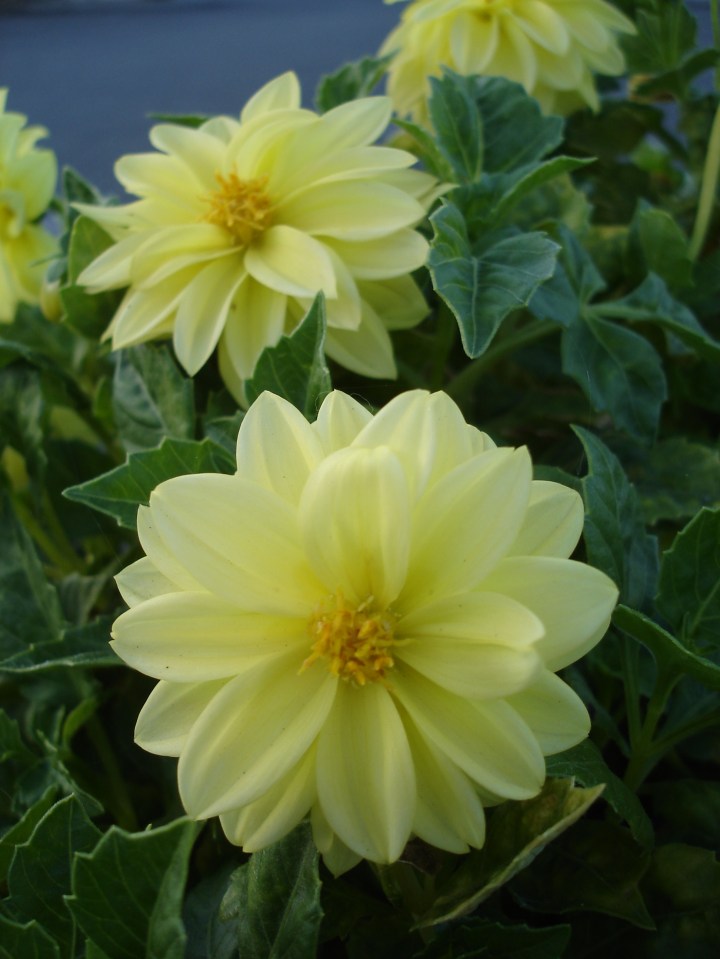
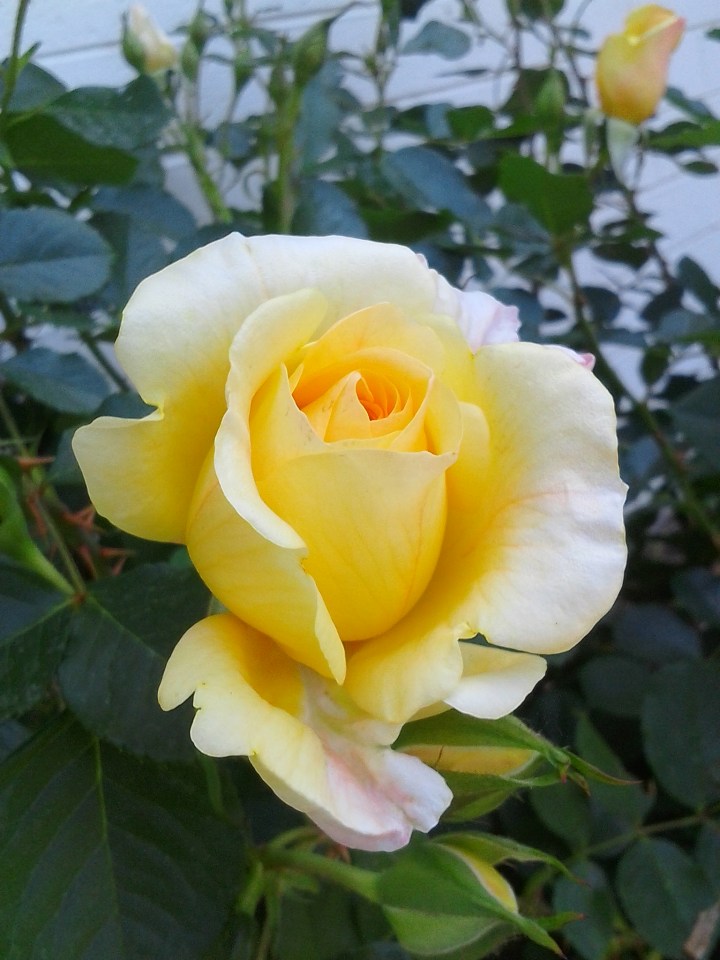
70510thumbFlowers were originally colorful only to attract pollinators. Breeding has improved the color and quality of many garden varieties of flowers, to make them more appealing to the people who grow them. Some have been bred so extensively that they are sterile, which defeats the original function of flowers. Now their function is merely to look good in the garden. Improvements are relative.

Foliage is green because it is photosynthetic. Chlorophyll, which is necessary for photosynthesis, happens to be green. Yellow, red, blue, purple, bronze, gray and variegated foliage might not be as efficient at photosynthesis as green foliage, but can be appealing in home gardens. Many plants with colored foliage are inferior to their greener counterparts, but are somehow more popular.

Gray and blue foliage absorbs less sunlight, which can be an advantage in harsh environments. Blue hesper palm and the various blue agaves are from arid deserts. Colorado blue spruce is from high elevations of the Rocky Mountains. Arizona cypress, silver mountain gum, artemesia, lambs’ ears, lavenders, dusty millers and blue junipers all provide distinctively gray or blue foliage.

Golden arborvitaes and junipers can be strikingly gold as new foliage develops in spring, even if the color does not last long. Most plants with gold foliage fade to yellowish green through summer. Golden honeylocusts do not fade as much, so are still mostly yellow by the time they defoliate in winter. Purplish or reddish foliage of purple leaf plum and red Japanese maple holds color better.

Euonymous, English holly, osmanthus, silverberry, hosta and various pittosporums can be variegated with white or yellow. Ivy, and hydrangea can be variegated with white. New Zealand flax and mirror plant can be variegated with gold or bronze, . . . or red or pink. Any unvariegated mutant growth (known as ‘sports’) that appears on variegated plants should be pruned away. Because it has more chlorophyl, it grows more vigorously, so can overwhelm and replace the more desirable variegated foliage.70510thumb+

Cultivars Are The Real Cloned Mutants

80516thumbIt is not science fiction. It involves neither ninjas nor turtles. Cultivars really are mutant plants that can only be propagated by cloning. The word ‘cultivar’ is a portmanteau (two words combined into a single word) of ‘cultivated’ and ‘variety’. Unlike other varieties of plants that can be perpetuated by seed, cultivars must be cultivated by unnatural techniques to maintain their genetic distinction.

For example, ‘Alamo Fire’ is a variety of Texas bluebonnets with maroon flowers. The original seed were collected from a few naturally occurring variants with maroon flowers, and grown into more plants with maroon flowers, which provided more seed. No seed was collected from those that bloomed blue. By repeating this process of selection a few times, the variety was developed.

The variety ‘Alamo Fire’ is now sufficiently genetically stable to perpetuate itself, which means that subsequent generations will also bloom with maroon flowers. However, a few blue flowers might bloom in any generation; and unless they are weeded out before producing seed, they will eventually dominate until the entire colony reverts from maroon back to the more genetically stable blue.

‘Meyer’ lemon is an example of a cultivar. It must be propagated vegetatively by cuttings, or perhaps grafted onto understock. In other words, it must be cloned. It is a genetically unstable hybrid of a lemon and an orange, so plants grown from their seed would be very different from the parent. Many hybrids are so genetically unstable that they are sterile, and unable to produce viable seed.

Many variegated or dwarf cultivars of all sorts of plants are not hybrids, but are mutants. It is common for some arborvitaes to produce ‘sports’, which are simply mutant growth that is somehow different from the original growth. If a sport has a desirable characteristic, such as densely compact growth, variegation, or golden foliage, it can be cloned as a cultivar. Just like ‘Meyer’ lemon, a dwarf golden arborvitae is very unlikely to produce genetically similar seedlings.

Get The Lowdown On Groundcover

1Lawns composed of turf grasses are the most functional, but also the most demanding forms of groundcover. That is old news. There are so many other less demanding low growing plants that that can cover the ground in areas that are not used like lawns are. Sometimes they work nicely just to control weeds. Sometimes they help to control erosion on otherwise unlandscaped hillsides.

Like all other plants in the garden, groundcover plants must be appealing. There is no point in growing plants that look no better than the bare soil they are intended to obscure, or the weeds they are intended to control. Some provide good foliage. Some bloom nicely. Many do both. Although not as resilient to wear as turf grasses, some groundcover plants tolerate some degree of traffic.

There are of course all sorts of groundcover. Only a few want as much water as lawns need. Some need no watering at all once established. Some are low growing shrubbery like sprawling forms of ceanothus, coyote brush, cotoneaster, coprosma and juniper. Others are vines like honeysuckle and ivy. Some of the best are creeping low perennials like iceplant, gazania and African daisy.

Low growing shrubberies may not be practical for confined spaces. When they run out of room to grow laterally, they tend to pile up on themselves, and some types can eventually get quite deep. Some types look silly if pruned around the edges for containment. Vines however need to be pruned around the edges, as well as out of trees and shrubbery. Some vines eventually get deep too.

Sprawling perennial groundcovers are the lowest and tidiest of groundcovers. They might not be as practical as shrubbery or vines for large areas, but are more often the better options for tight spaces. They do not mind getting pruned around the edges, and generally do not need any other pruning, although some look better if mown annually. Periwinkle and Saint John’s wort can get deep enough to get sloppy. Many other perennial groundcovers stay low enough to barely get disheveled by light trampling.2

Gophers Go For Roots And Lawns

80509thumbWho do they think they are?! This ain’t ‘Caddy Shack’! They have such attitude! Gophers move into our gardens and lawns, take what they want, and build their messy volcanoes of loose soil. They do not care how much work we put into our gardens, or how much we spend on nice plants, or how much we crave our first zucchini of the year. They are safe in their subterranean tunnels.

Or so they think. There is more than one way to . . . well, you know. There are also several methods that either do not work, or are not practical. For example, gasoline poured into a tunnel may volatilize, and then explode if ignited, killing gophers below, but can very easily start a fire anywhere the fumes happen to seep from the tunnel, and there is no way of knowing where that might be!

Poisons are dangerous either because gophers do not eat them, leaving them to be dug up by someone else later, or because gophers do eat them, and then stagger from their tunnels in search of water, and then get eaten by someone else who gets poisoned as well. Putting razor blades in the tunnels is just plain wrong. Even if it actually kills gophers, who wants to dig up razors later?

Traps are still the most efficient way to eliminate gophers. This is of course more easily said than done. It must be done properly and VERY carefully. Gopher traps are dangerous! It is safest to learn how to set traps from someone who is experienced with them. Safer modern types that fit into holes that gophers are expelling soil from only work if gophers happen to be active at the time.

Conventional gopher traps are set and placed in a pair, with one trap in each direction of an excavated and cleared main run. A main run is found by following a surface tunnel below the freshest volcano of expelled soil, to where it splits into two direction. The paired traps should be attached by wire to a stake that stays visible at the surface. A bit of crushed vegetation can be placed behind the traps before the run gets buried firmly. If set properly, a gopher springs a trap as it returns to clear the run.

Shade Is Not For Everyone

70426thumbThere is no way around it. Just about every garden has some degree of shade. Even low profile single story houses without eaves or fences are shaded on the north side. Eastern exposures get the cooler morning sun. Western exposures get only the warmer afternoon sun. There are vacant and treeless parcels out in the desert that lack shade, but not many of us are gardening out there.

Shade is very often an asset, which is why shade trees are so popular for shading both gardens and homes. Eaves and awnings are architectural features that shade windows and doorways. Arbors, lath roofs and patio umbrellas provide shade for patios where trees are lacking or insufficient. Without shade, garden spaces can get too uncomfortably warm to be useful during summer.

The problem with too much shade is that, although it makes the garden more comfortable and useful for some things, it also makes the garden less useful for gardening. Roses, vegetable plants and most flowering annuals need good exposure. Lawn, the carpeting for some of the more useful of garden spaces, can be sparse where it is too shaded. Sunlight is as important as shade is.

This is one of the many reasons it is so important to select the proper trees for each application. Big trees are nice, but might shade too much area. Evergreen trees that are good for obscuring unwanted views at a distance, will prevent warming sunlight from reaching parts of the home through winter if they are too close. Neighboring gardens and homes need to be considered as well.

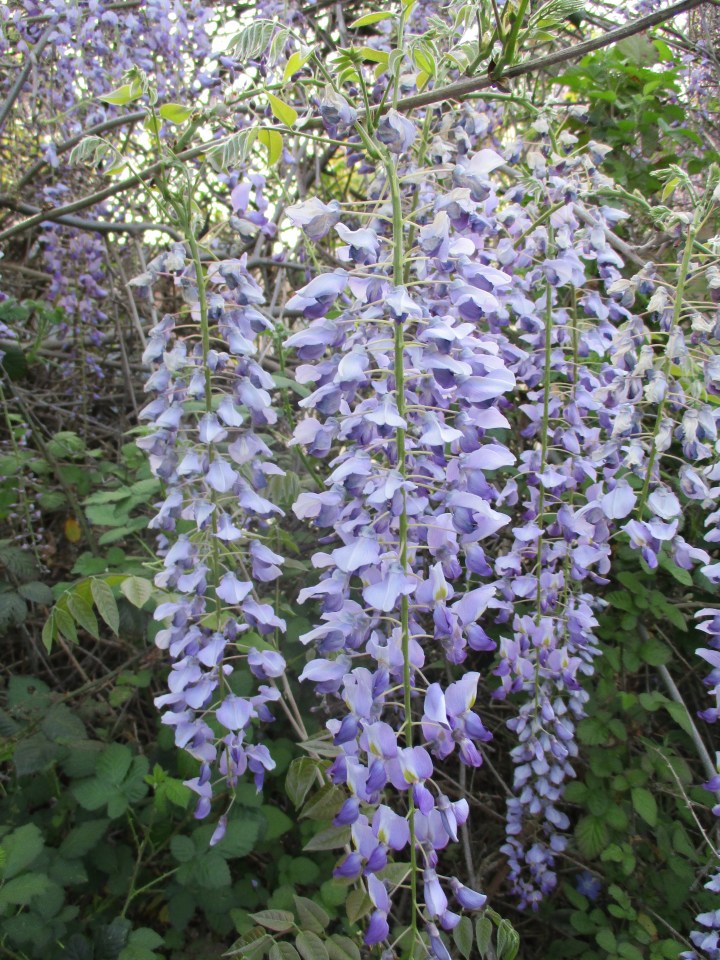
Planning functional gardens is of course not always simple. Most of us contend with trees, shrubbery and vines that are too big and shady, either in our own gardens or in neighboring gardens. Climbing vines like wisteria, honeysuckle and trumpet vine, are notorious for growing far beyond their intended applications. It sometimes becomes necessary to remove overgrown or crowded plants, or prune them for confinement. Big plants that can not be contained will limit the choices for other plants that share their space.

Hedges Are Like Green Fences

80502thumbHedges are a complicated topic! Like lawns, they are among the more functional features of a landscape. They can be used to provide privacy within, obscure unwanted views beyond, or merely to separate a large landscape into cozier or more functional spaces. Except for hedges that are grown for spring flowers or autumn color, most hedges are evergreen with finely textured foliage.

Informal screens, which might also be know simply as informal hedges, can function like hedges, but are a bit different. They are not regularly shorn, so do not need such finely textured foliage. They are either compact plants that stay proportionate to their particular situations, or are grown outside of a refined landscape, where they have plenty of space to grow wild to their natural size.

Although they do the work of fences and walls, hedges do not substitute for them. Fences are relatively ‘low maintenance’. Hedges are quite ‘high maintenance’. They need everything that other plants need, as well as dutiful shearing. Espaliers, trellised vines or vines clinging to fences or walls are also very different, with their own intense maintenance requirements and innate problems.

Most hedges were shorn late last summer or early autumn, but have not done much since then. They should have been shorn early enough for new growth to toughen up a bit to not look shabby or sparse through winter. Now that hedges are growing again, they will need to be shorn again. If space allows, shearing of photinia hedges can be delayed until the red new foliage fades to green.

While hedges get shorn, any volunteer plants that have self sown into them must be removed. Different species of shrubs or vines that sneak in will ruin the symmetry. This is also very important when adding new shrubs to replace any that might be missing. Even different cultivars of the same species will exhibit different color and growth rates. The sides of hedges should be sloped slightly inward at the top to allow more sunlight to reach the bottom, and to compensate for faster upper growth.

The Lawn Is Always Greener

70419thumbTurf grasses are the ultimate in groundcover. They are very durable, and useful for covering large areas in a very user friendly manner. The toughest varieties are used for athletic fields because they withstand the wear and tear. In home gardens, all sorts of varieties are grown as lawns. Like other groundcovers, lawns limit erosion, and are cleaner than bare summer dust and winter mud.

Yes, turf grasses and lawns are the most useful of plant materials; but they are also the most demanding. They require more water than almost anything else, except only aquatic plants and some bedding plants. A healthy lawn must be mown and edged regularly, and as often as weekly in warm weather. Weeds are difficult to control once established. Gophers can cause serious damage.

Regardless, for all sorts of landscapes ranging from athletic fields to home gardens, a lawn is worth the work it takes to grow it. Only Trona High School has a dirt athletic field; and only because the soil is too saline and the weather is too scorching for turf grass. At least home garden lawns are more modest than they were years ago, with larger patios and decks, and other groundcover.

Artificial turf still has a bad reputation. The first AstroTurf of the late 1960s was nothing like real turf grass. It had a coarse texture, and eventually faded and deteriorated. Its main problem was that it was so regularly compared to real turf grass instead of recognized for its own attributes as an alternative to lawn, like carpeting for outdoor spaces. Yet, it was popular for certain applications.

Modern artificial turf looks and feels a bit more convincing, and is more resistant to wear and weathering. It might be more convincing if it were not so perfectly uniform. It is already more popular than old fashioned AstroTurf was, even for playgrounds and athletic fields. Artificial turf is expensive to purchase and install, but not as expensive as the maintenance and watering of real grass.

Compared to the installation of real turf grass that needs irrigation and soil amendment, the installation of artificial turf necessitates less excavation. It is therefore less invasive to the shallow roots of established trees and shrubs that are already in the landscape. However, plants that are accustomed to generous lawn irrigation might need to be watered through newly installed artificial turf.

Squash For Summer And Winter

80425thumbConsidering that some of the winter squash can last right through winter and into spring, there really is a squash for every season. By the time the last of the winter squash run out, the first of the summer squash will be ready later in spring. They get an early start here, and continue until frost. By that time, the earliest of the winter squash will be ready for autumn, and will last through winter.

However, they all get planted about now. There is no such thing as cool season squash. They are all warm season vegetables (actually fruits). The vines and foliage all grow like weeds while the weather is warm, and then succumb to frost at the end of their season. They all grow very easily from seed, but because each garden needs only a few plants, they are often planted as seedlings.

The main difference between summer and winter squash is that summer squash plants continue to produce many smaller fruits while the weather is warm, and winter squash plants produce only a few larger and firmer fruits that develop slowly while the weather is warm, and then finish ripening as the vines that produce them die in autumn and winter. One begins where the other finishes.

Zucchini is the most familiar summer squash here. It is most productive if regularly deprived of its tender juvenile fruit, and is notably less productive if the fruit is allowed to get bigger and tougher. Pumpkin is the most familiar winter squash here. It is expected to produce only a few big and firm fruit that take all season to develop. Extra juvenile fruit may get plucked to favor one or two fruits.

Summer squash deserve more prominent locations in the garden because the fruit gets harvested regularly. Zucchini grows as a large plant, but stays somewhat confined. Winter squash want the same sort of rich garden soil and watering, but can be put out of the way. Except for plucking a few extra fruit, not much more needs to be done to them. Some like to climb fences. Pumpkin vines can be directed to the edge or just outside of the garden.

A Tree Falls In The Forest

70412thumbThe Great Basin bristlecone pine of the eastern Sierra Nevada can live more than five thousand years. The giant sequoia of the western Sierra Nevada can live more than three thousand years. The familiar coastal redwood from the Coastal Ranges can live more than two thousand years. Besides impressive longevity, one thing that they all have in common is that they all eventually die.

Most trees in home gardens do not live much more than a century. Some oaks can last a long time. Willows, poplars and acacias do not. Trees typically do not live as long in landscape situations as they do naturally in the wild because their life cycles are accelerated by watering and fertilizing, and also because watering promotes rot. Some trees get removed because they grow too big.

While trees are young and growing, they sometimes need help with structural problems. They might need pruning to eliminate limbs that are likely to break away and fall. On rare occasion, trees might need pruning to reduce weight and resistance to wind if stability becomes a concern. Falling limbs or falling trees are very natural in the wild, but can be serious problems around the home.

As trees age, they develop more structural deficiencies, which are increasingly difficult to repair or accommodate. Most big old hardwood trees have some degree of decay within their main trunks, even if no such damage is visible from the outside. Although perfectly natural, this decay eventually compromises structural integrity. Stability is slowly compromised as aging roots decay.

It is true that most trees that fall or drop limbs are more likely to do so while getting thrashed by winter storms. However, there are other factors that can bring down limbs or entire trees. Warming spring weather promotes growth of new foliage, which significantly increases the weight and wind resistance of structurally deficient limbs and destabilized trees. Warmth also accelerates decay. Even after winter storms, there are many other reasons to be aware of the health of trees.

Bulbs Foliage Lingers After Bloom

80418thumbDaffodils, freesias, lilies, snowdrops and the various early spring blooming bulbs and bulb like perennials will be finishing soon if they have not finished already, leaving us with the annual question of what to do with the foliage after bloom. The plants will not bloom again until next year, and the remaining foliage might be unappealing without bloom. Much of it slowly deteriorates into summer.

Bulbs that were forced have probably exhausted their resources, so are not likely to recover. Formerly forced daffodils and narcissus can go into the garden, but after the foliage dies back, they will probably never be seen again. Regeneration is possible though. Forced hyacinths and tulips are not likely worth the effort. They do not get enough chill here to bloom reliably in spring anyway.

Daffodils and narcissus (and for those who insist on growing them, hyacinths and tulips,) that bloomed out in the garden will need to retain their foliage long enough to sustain regeneration of new bulbs that will bloom next spring. As long as the foliage is still green, it is working. When it withers and turns brown, it is easy to pluck from the soil, leaving new but dormant bulbs in the soil below.

Some of us like to tie long daffodil, narcissus and snowdrop foliage into knots so that it lays down for the process; but this only makes it more prominent in the landscape than if it were just left to lay down flat. Freesias are experts at laying down, which is why they might have needed to be staked while in bloom. The foliage of many early spring bulbs is easier to ignore in mixed plantings.

It is even easier to ignore if overplanted with annuals or perennials that are just deep enough to obscure the foliage. Shallow groundcover might work for some of the more aggressive bulbs. Bulb foliage will need to be tucked under. Flower stalks should be pruned away from bulb foliage, not only because they are the most unsightly parts (if not concealed), but also because developing seed or fruit structures divert resources from bulb development.