Six on Saturday: Amiss

Heather worked ‘VERY’ late. Labels got switched on two cultivars of passion flower vine. We got another banana tree with no plan. A walnut replaced a palm. Palms did nothing. Oh my!

1. Musa acuminata ‘Popoulu’ banana ‘tree’ arrived in the mail as this tissue culture plug with a crease across it. It will recover, but its blemish is annoying. What is more amiss is that this is the twentieth cultivar of banana here, but we have plans for none of them yet.

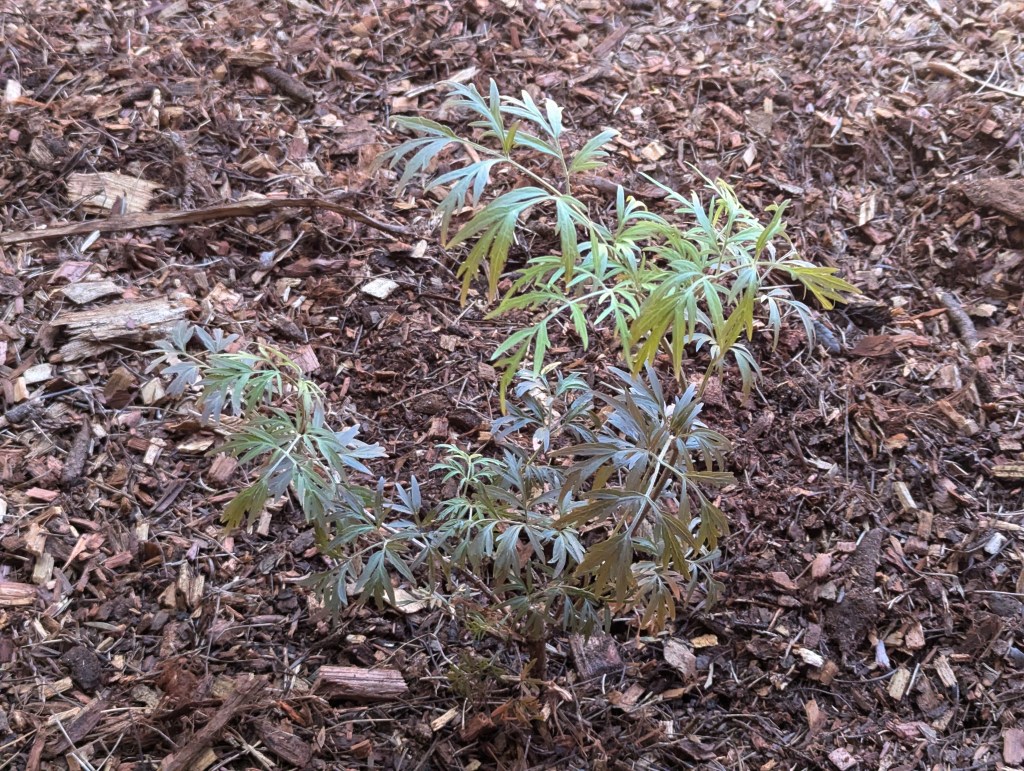
2. Juglans nigra, black walnut was a typical understock for the English walnut orchards of the Santa Clara Valley. It is somewhat naturalized nearby, but not here. Where are all these seedlings coming from? Why did this grow in a can for Costa Rican bamboo palm?

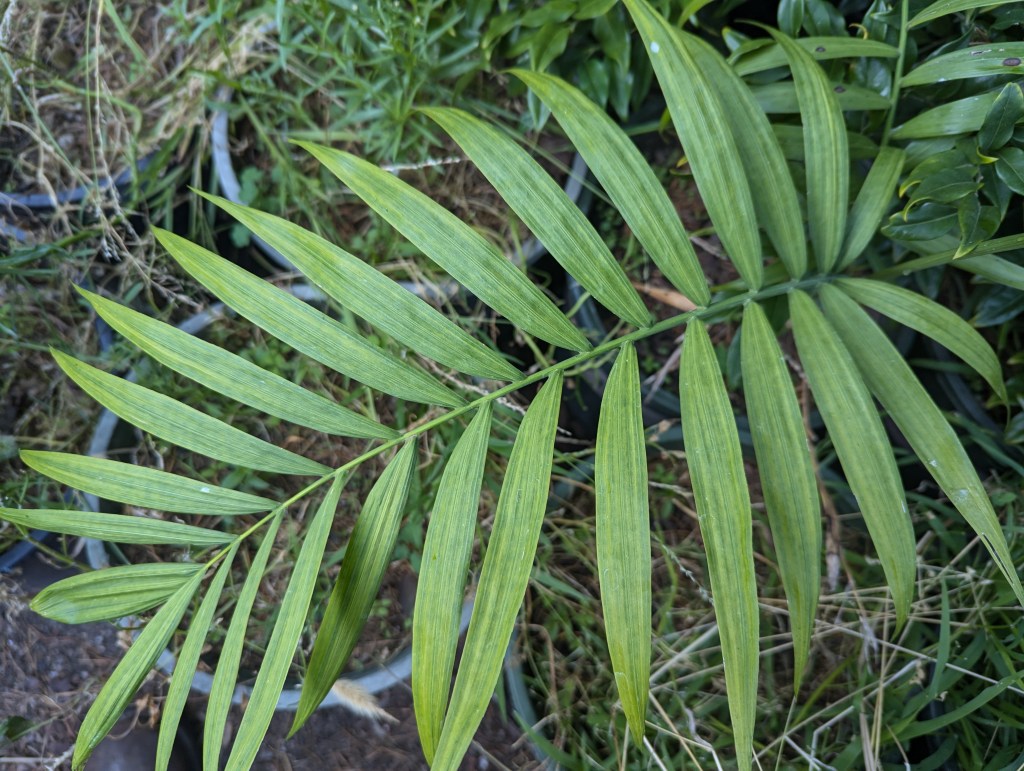
3. Chamaedorea costaricana, Costa Rican bamboo palm is what should be in the can of the black walnut seedling. I brought enough rhizomes from Brent’s garden for about ten #5 cans and about as many #1 cans, but after a year, this is the only specimen that grew.
4. Hakonechloa macra ‘Aureola’ Hakone grass had never performed particularly well. A few other small perennials were added nearby to compensate. Now, the Hakone grass is growing lushly enough to overwhelm some of the perennials that were added to assist it.

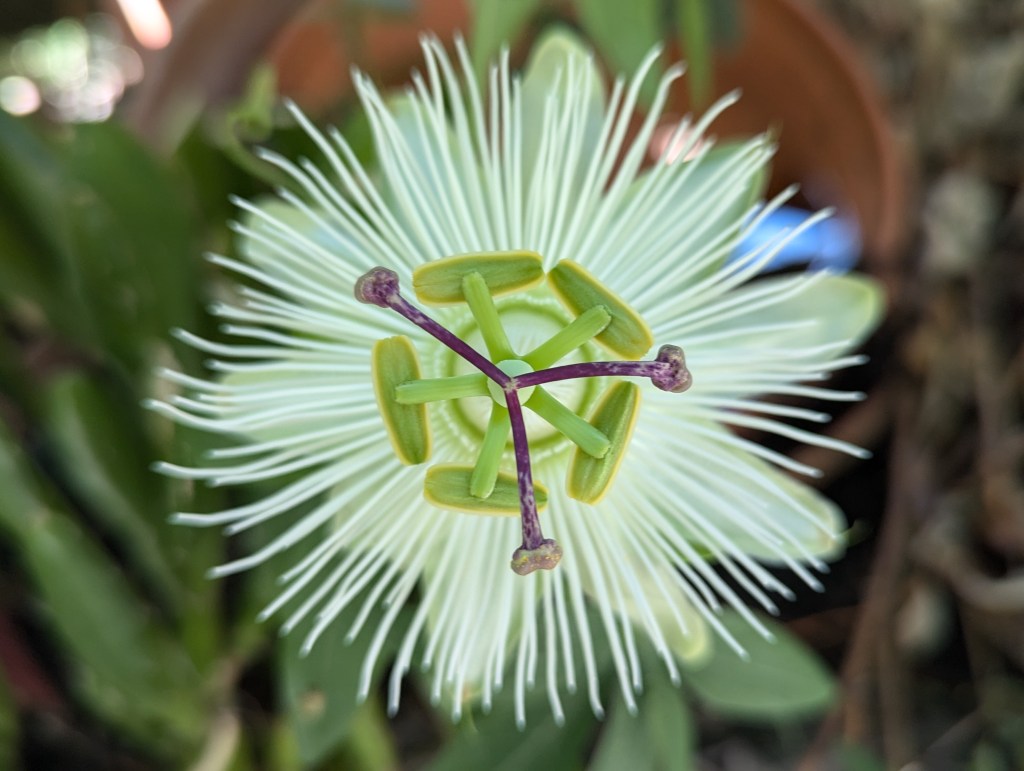
5. Passiflora caerulea ‘Constance Eliot’ passion flower vine went into a landscape after it impressed with purple bloom. Of course, it was expected to bloom white like the original that provided the cuttings. This specimen was expected to bloom purple like its original.
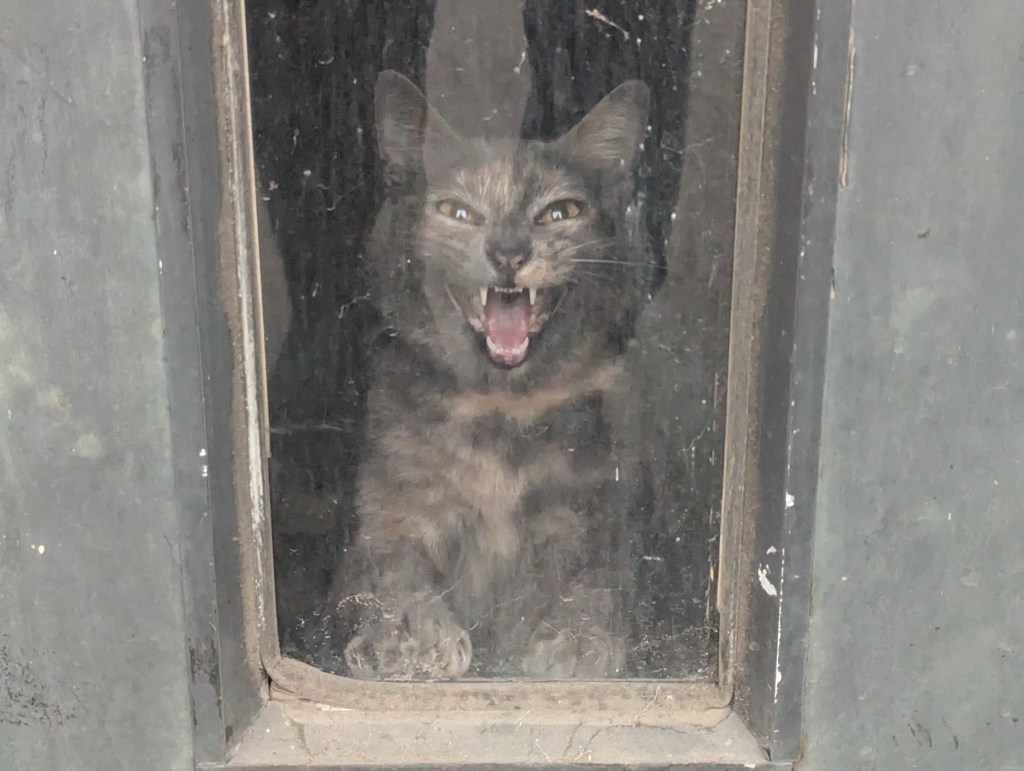
6. Heather is a very proficient mouser. Rodents had been a major annoyance prior to her arrival. They are now no bother at all. However, a rat was observed within this particular shop. Heather apparently went in to investigate, and consequently spent the night there.
This is the link for Six on Saturday, for anyone else who would like to participate: https://thepropagatorblog.wordpress.com/2017/09/18/six-on-saturday-a-participant-guide/
Santa Cruz

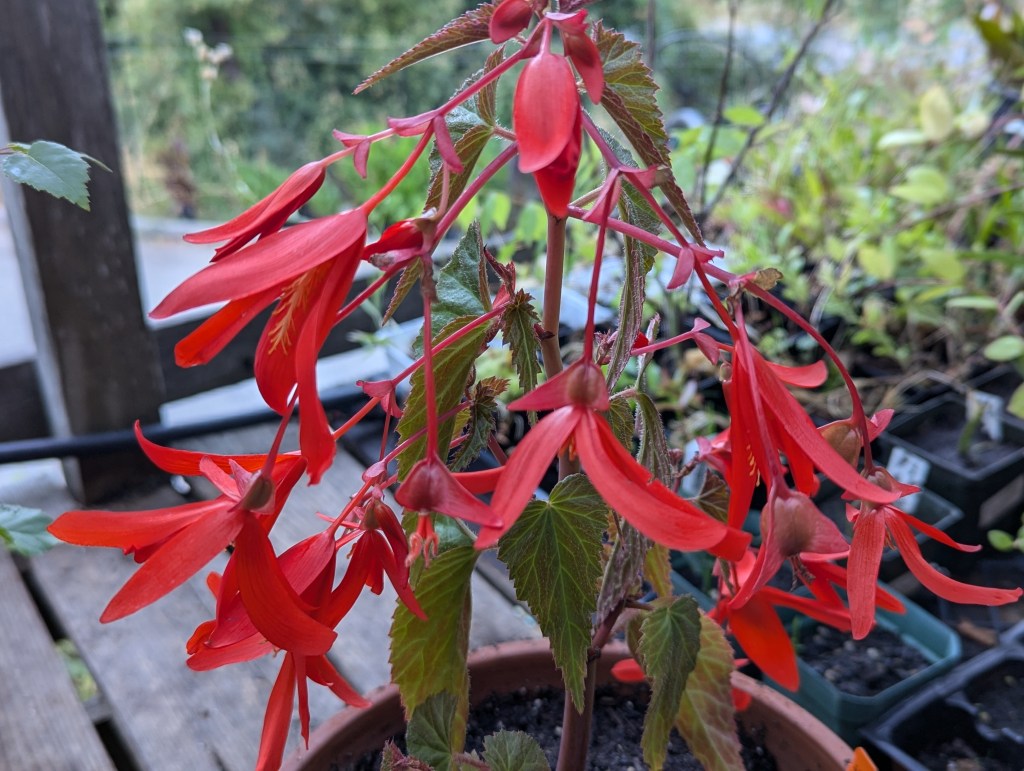
Begonia boliviensis ‘Santa Cruz’

Begonia boliviensis ‘Santa Cruz’ is one of those modern cultivars that I am typically not so keen on. It grows vigorously with abundant red bloom. ‘San Francisco’ is similar but with abundant pink bloom. ‘Santa Barbara’ is similarly similar but with abundant white bloom. All perform splendidly, like so many formerly modern cultivars that were trendy before them. I am not so keen on them merely because they are both modern and trendy. Their names do not help either. My colleague purchased ‘Santa Cruz’ from a nursery in Santa Cruz. It now lives here in Mount Hermon, which is a few miles away from Santa Cruz, but still in Santa Cruz County. I suspect that it is more popular locally because of its name. For the same reason, I suspect that ‘Santa Barbara’ is more popular in Santa Barbara, and ‘San Francisco’ is more popular in San Francisco. I also suspect that I would be less resistant to these modern cultivars if they had more appealing names, such as ‘Los Gatos’, ‘San Jose’ or ‘Palo Alto’. Perhaps the names are for the counties rather than the cities within the counties. All three of my recommendations are within Santa Clara County.

4:00

Mirabilis jalapa is known more commonly as four o’clock. It is spelled with letters rather than as 4:00 with numbers. This refers to the time in the afternoon when its bloom should be at its best. These pictures were taken prior to nine in the morning though. Apparently, it does not adhere to a strict schedule. I took these pictures because I was so impressed with the performance of these particular specimens. Those with yellow bloom above are so large that I came from across the road to confirm their identity. I do not expect this species to grow so large. They are about as big as small oleander! Those with white and pink bloom below are actually the same plant. The species commonly blooms with flowers of different colors, but such colors are typically not so divergent as clear bright pink and clear white. They are more typically blotched with colors of each other, such as white flowers with a few pink blotches in conjunction with pink flowers with a few white blotches. This species is somewhat naturalized here, but politely so. Although it generates copious seed, it is not migrating very far from where it is established.

Khartoum

‘Khartoum’ (Agapanthus orientalis ‘Khartoum’) is a blend of Blue Nile and White Nile.

Khartoum is located where the Blue Nile River merges with the White Nile River to become the Nile River. Lily of the Nile, contrary to its name, is neither a lily nor native to any of the three Nile Rivers. It is in the Amaryllidaceae Family, and is native to Southern Africa. Coincidentally though, it naturally blooms either blue or white. It really seems like it should be native to at least two of the Nile Rivers, with those that bloom white inhabiting the floodplains of the White Nile River, and those that bloom blue inhabiting the floodplains of the Blue Nile River. Perhaps both should inhabit the floodplains of the primary Nile River. Like a few other species that bloom exclusively true blue or white, lily of the Nile sometimes exhibits sports, which are mutant growth, that bloom with the other of the two options. In other words, those that bloom blue sometimes produce a shoot that blooms white, and conversely, those that bloom white sometimes produce a shoot that blooms blue. As if genetically unstable, such sports may revert to their original floral color by the following season, and before they divide into several shoots that bloom prominently with aberrative floral color within their otherwise florally monochromatic colonies. When I noticed a single white bloom within an exclusively blue blooming colony, I did not want to wait for the following season to see what its intentions were. Then, as bloom faded and I separated it from the colony, I found that it was blushed with blue, as if already trying to revert. Because it is impossible to confirm its intentions, I canned it and set it aside to see what it does in the future. If blue, it can return to the landscapes with the random mix of blue lily of the Nile that has been accumulating as long as they have inhabited landscapes here. If white, it will be given to neighbors, because I want to maintain the genetic purity of the single white cultivar that is here. If it remains white with pale blue blush, it might get a separate but prominent position within a landscape.

Six on Saturday: Firsts

The first and last may potentially suggest that this is an episode of the Red Green Show.

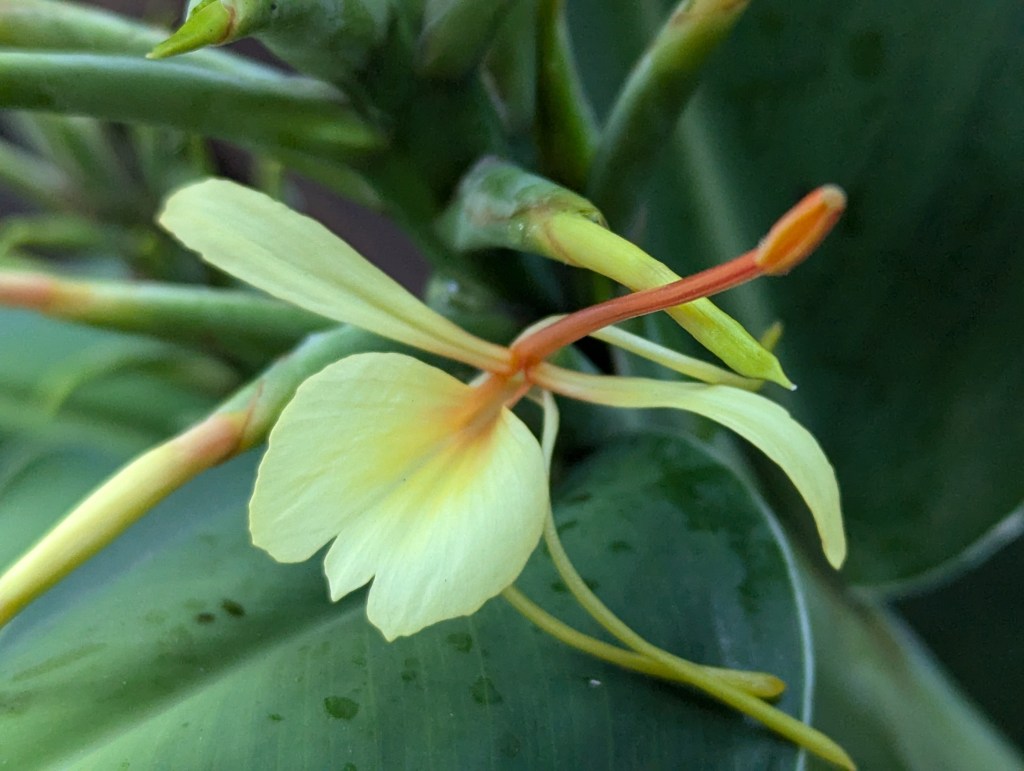
1. Hedychium greenii, red butterfly ginger, which I accidentally took from Brent Green’s garden with a bunch of crowded out Heliconia psittacorum, is now about to bloom here. I was totally unaware that it was here until Brent mentioned that it was no longer there.

2. Hedychium gardnerianum, kahili ginger bloomed during the pandemic, while no one was here to see it. Then, gophers ate it. I canned the remnants, which are blooming now. This is the first of several florets to bloom on the first tall floral spike. It smells like 1986.

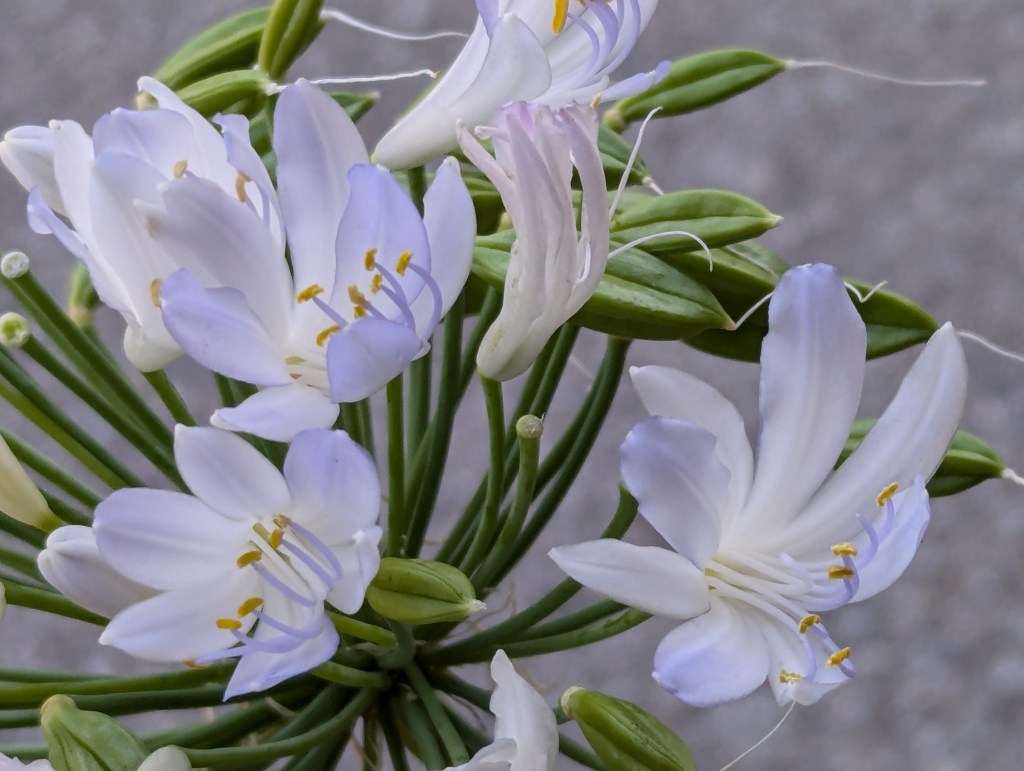
3. Agapanthus orientalis, lily of the Nile suddenly bloomed with this single white umbel within an exclusively blue colony. I removed the offending shoot as bloom began to fade, but found that it is not completely white. I canned it to observe how it blooms next year.

4. Begonia boliviensis ‘Santa Cruz’ begonia was not my idea. Another horticulturist here just procured it from a nursery in Santa Cruz, a few miles away. It is quite happy here in Santa Cruz County. It deserves a more appealing name, such as ‘Los Gatos’ or ‘San Jose’.

5. Canna ‘Cannova Mango’ canna was not my idea either. Brent sent it to me. I am not at all keen on modern cultivars, particularly this color. I nonetheless divided it too much to bloom well. This is its first opportunity to demonstrate how profuse its bloom should be.

6. Canna that was a gift from friends of a friend last winter is now blooming here. I have no idea what cultivar it is, and I do not care. Gifts are always better than nursery surplus from Brent’s projects. It is elegantly tall with simple red bloom and simple green foliage.

This is the link for Six on Saturday, for anyone else who would like to participate: https://thepropagatorblog.wordpress.com/2017/09/18/six-on-saturday-a-participant-guide/

Madonna & Black Lace

Sambucus nigra ‘Black Lace’ European black elderberry

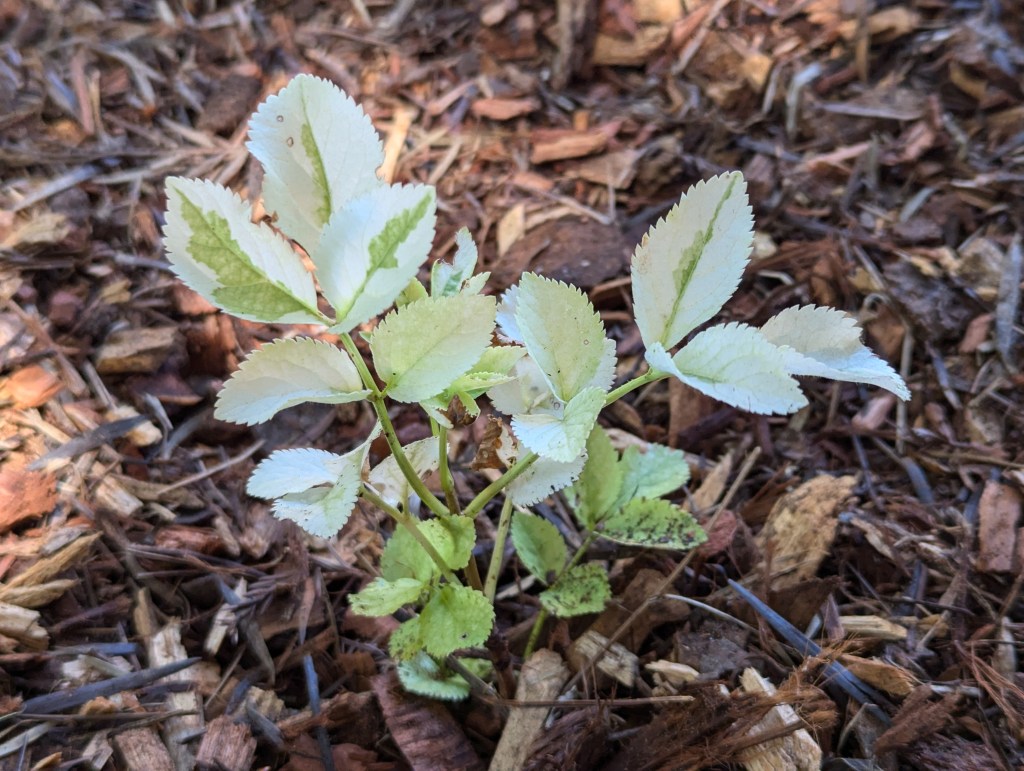
1984 was four decades ago. This is happening right now. Sambucus nigra ‘Black Lace’ European black elderberry, with intricately lacy and richly bronzed foliage, and flaring upright form, has inhabited one of the landscapes here for a few years. I was initially not so keen on it, but eventually learned to appreciate it as others who saw it expressed fondness for its distinctive texture and color. It was so popular that I grew a few too many copies from pruning scraps two winters ago, with the intention of adding a few more to other landscapes. I plugged a few more last winter, as if I did not know better. Several were shared with neighbors, but so far, only one was added to another landscape here, and only a few days ago. It may not look like much in the picture above, but should be a bit bigger and more richly bronzed next year. Sambucus nigra ‘Madonna’ European black elderberry, with simpler and yellowish variegated foliage, and somewhat more rounded form, was a more recent acquisition. Although I am not so keen on its yellowish color, it happened to become available while I was considering acquisition of a pollinator for ‘Black Lace’, which has not produced berries yet. Although each can self pollinate somewhat, different cultivars pollinate each other more effectively. Doves enjoy the resulting berries; and people enjoy seeing happy doves. The original specimen of ‘Madonna’ was thrashed when I acquired it, but provided more than sixteen rooted side shoot copies before going to live in a colleague’s garden. The first of these copies was installed adjacent to and in conjunction with the first copy of ‘Black Lace’. It may not look like much in the picture below, but it is just a dinky copy from a four inch pot.

Sambucus nigra ‘Madonna’ European black elderberry

Weed Eater

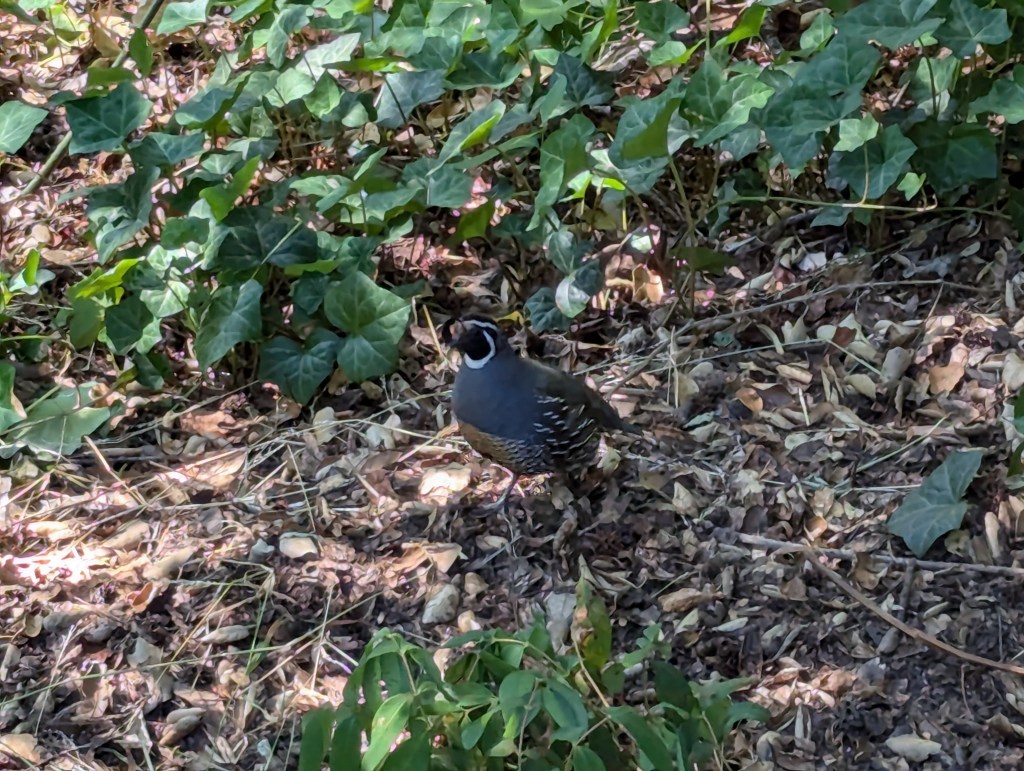
California quail are the Official State Bird of, as one might guess, California. They are delightfully plump but small game birds that are on the ground more than anywhere else. They fly only when necessary, and seem to avoid landing in trees or shrubbery. They effectively avoid predators by running into thickets of vegetation that their predators can not follow them into. Some believe that they sound like they say “Chicago” when they talk to each other. Actually though, they say “Hey Paco!”, in a politely mellow tone. They are a chaparral species that venture into adjacent forests such as the redwood forests here. Relatively colorful males, such as this, are typically followed by their visually subdued female mates after spring, and by now are likely to be followed by a herd of tiny and fuzzy chicks. Their motion on the ground is fluid, although most of a small herd can angularly and suddenly change direction, as if the Papa quail follows his silly apostrophe shaped topknot to the left or right, and the rest follow. They run about pecking at exposed soil, and often stop to scratch at forest debris where soil is not so exposed. Not only do they eat insects and mollusks, but most of their diet is seeds. Since only a negligible minority of seeds within our landscapes of desirable vegetation, such as naturalized wildflowers, almost all of the seeds that California quail eat here are those of weeds. They proactively eat weeds before they happen.

Cicada

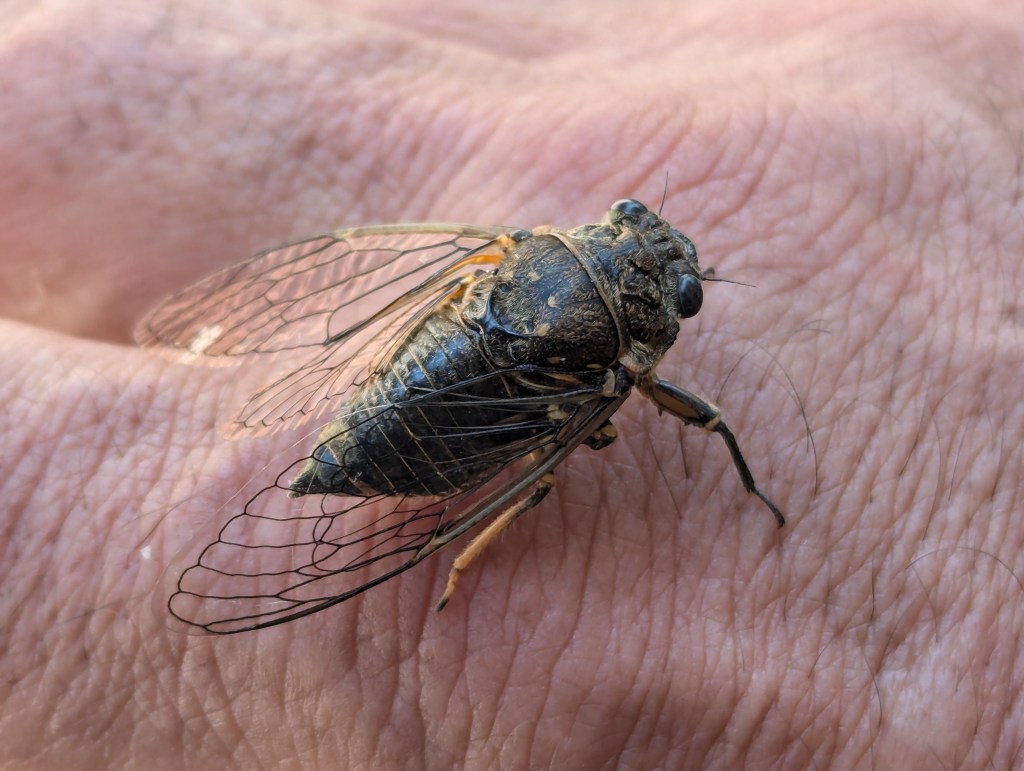
The left wing seems to be injured.

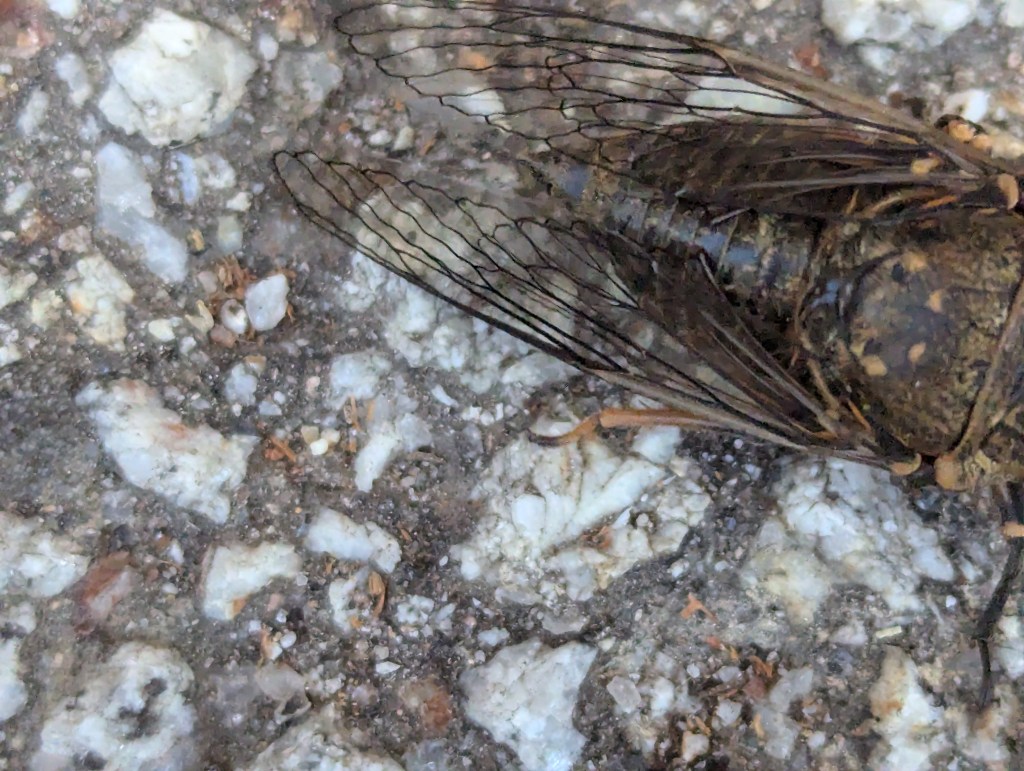
Contrary to common belief, cicadas are native to California. There are actually more native species here than in any other state. Of course, that is partly because California is so big, with so many distinctly diverse ecoregions. Cicadas are merely less prominent here because they are less numerous than they are within dense hardwood forests farther east. Within most regions here, they are somewhat rare. Even where they are most numerous, they do not congregate to form obnoxiously loud populations as they do elsewhere. Some native species are content to share their relatively mixed western forests with relatively few individuals of their own kind, and perhaps a few individuals of other cicada species. They are loud enough to find each other over significant distances. This cicada found its way to where I was enjoying the garden last Thursday. It was quite intimidating when it arrived with loud buzzing of its wings. It flew awkwardly before bashing into a steel building with a loud ‘PING’ that sounded more like a fat acorn falling onto the roof. I should have fled. It circled on the ground briefly before getting airborne again, and coming after me! It landed on my collar. I managed to maintain my composure as I removed it. I could see that one of its wings was impaired, as is evident in the picture above. That did not stop it from trying to fly again. It did not get far before landing on the asphalt driveway. It did not cooperate for the second picture below, which, although not of good quality, demonstrates that the impaired wing is not so impaired. It was likely merely out of whack from crashing into the wall. Before we could get acquainted, this no longer so intimidating cicada flew away as awkwardly as it arrived.

Both wings seem to be fine now. (This cicada did not want its picture taken.)

Six on Saturday: Early or Late

Some of these six are early. Some are late. Some merely seem to be one or the other, but are actually right on schedule. Only the banana pup, which is the only of these six that is not blooming, was influenced intentionally.

1. Hymenocallis latifolia, Peruvian daffodil is actually right on schedule. I expected it to remain dormant through summer to bloom for autumn, after naked lady. It may still do so if it foliates first. Otherwise, it should naturally bloom for summer. These are my first.

2. Musa acuminata ‘Cavendish’ banana was divided earlier and allowed to grow for two months, but then lopped and sent by mail. It must now grow new foliage before autumn. It is actually less likely to rot with this technique. I am quite pleased to have procured it.

3. Hedychium gardnerianum, kahili ginger surprised me with what initially seemed like early floral trusses. However, they have since grown so slowly that they might bloom for later summer or autumn, which is when I previously thought that they normally bloom.

4. Gladiolus hybridus, gladiola has been unexpectedly reliably perennial, and is actually slowly multiplying. A sport of an orange and yellow variety now blooms yellow. Another blooms red. This one seems to be trying to extend its bloom season by blooming so late.

5. Amaryllis belladonna, naked lady is doing the opposite. It should not bloom for about another month. This bulb might be blooming early as a result of distress associated with crowded confinement with too many other bulbs within a big pot. It is pretty regardless.

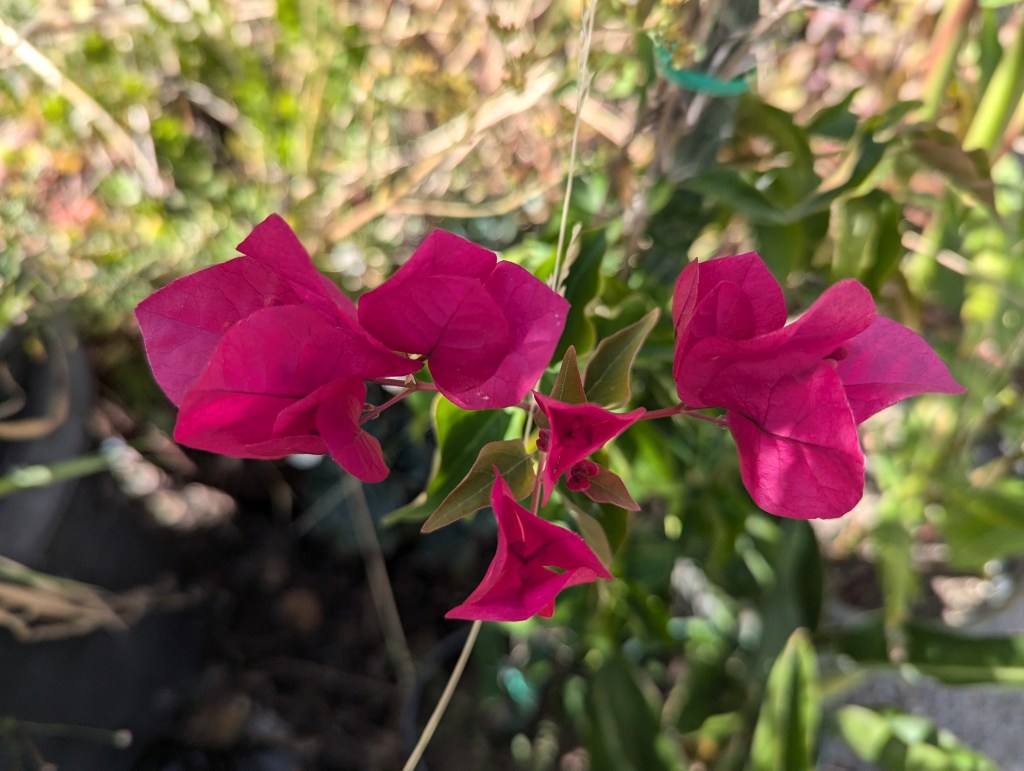
6. Bougainvillea, which lacks a common name that is actually common, could have been blooming since the weather began warming at the end of last winter. It recovered slowly from minor frost damage, though. It still seems to be rather lean, but at least it is trying.

This is the link for Six on Saturday, for anyone else who would like to participate: https://thepropagatorblog.wordpress.com/2017/09/18/six-on-saturday-a-participant-guide/
Change of Scenery

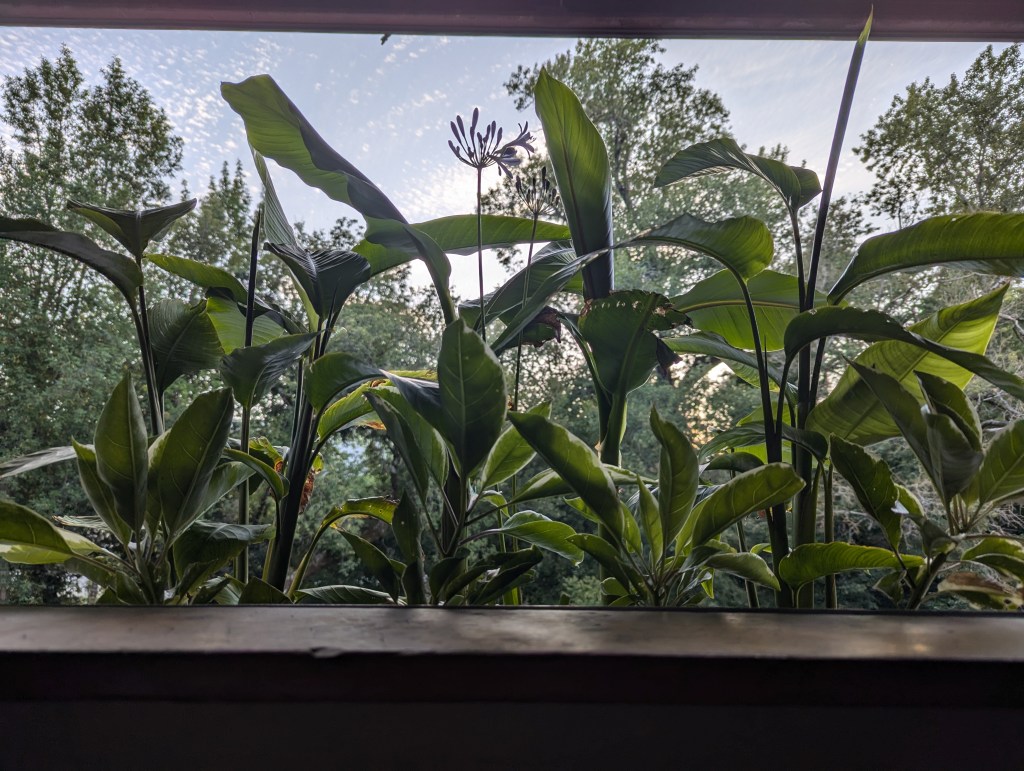
I am certainly no landscape designer, but I think that I sort of dig this.

Window boxes annoy me. They were originally developed to contain aromatic herbs that dissuaded mosquitoes from entering small windows, likely before the invention of window screens. They remained popular while window screens were expensive, and to grow culinary herbs where garden space was limited in old European cities. None of that is useful to me. Mosquitoes are not much of a problem here, and if they were, window screens are not expensive. There is plenty of space for herbs in the garden. Furthermore, window boxes eventually rot as a result of the irrigated medium within, and share their rot with the wooden walls that support them.

The small shelf that I suspended below this window was intended for eleven small tissue culture plugs of various cultivars of banana. I wanted to shelter them from minor frost last winter. I intended to remove the shelf after winter. Obviously, I did not.

Without a plan, I moved eleven small specimens of various species from the nursery onto the shelf just to see how their composition could develop. I typically do not like to obscure scenery or obstruct sunlight from windows, but thought I could make an exception for this window. The scenery is not particularly appealing, with a busy roadway nearby. Through summer, a bit of shade from the warm late afternoon sun might be nice.

I did not want the grassy texture or bronzed foliar color of the sugarcane right outside the window. Nor did I want the disorganized texture of any of the gingers. I am rather pleased with how these few other species work though. They are nearly half as high as the window, but as I mentioned, for this window, I do not mind. They look rather jungley.

The eleven small specimens here are in eight #1 cans and three 4″ pots. The three 4″ pots are nestled into the gaps in between two rows of four #1 cans. A pair of young plugs of Cucurma longa, turmeric, in two of the three 4″ pots are not visible to the left and right. Only two blooms of a small specimen of Agapanthus africanus ‘Peter Pan’ lily of the Nile in the middle 4″ pot are visible. Four rooted cuttings of Solandra maxima ‘Variegata’ cup of gold vine are in the closer row of #1 cans. A pair of large specimens of an unidentified cultivar of Heliconia psittacorum, parakeet flower, are to the left and right in the rear row. A pair of pups of Musa acuminata ‘Golden Rhino Horn’ banana are in the middle of the rear row. This is so very inconsistent with my style, but I am getting to like it.