Mousers

Kitties are very proficient with mind control techniques.

Rodents have become a problem at home without Darla the mouser kitty. I do not know if Darla actually caught many rodents, or merely deterred them from inhabiting her territory. It is irrelevant. The absence of rodents was more important. Now that she has gone to live a domestic lifestyle in Santa Clara, rodents of various types are damaging some of the vegetation within the nursery, particularly young perennials.

A pair of feral kitties are supposed to be relocating to our facility. They do not need to stay within the main building, although they will have adjacent shelter. I do not care how they intend to eliminate rodents and prevent them from returning. I only care that they do so. If they are half as effective as Darla was, I will be pleased.

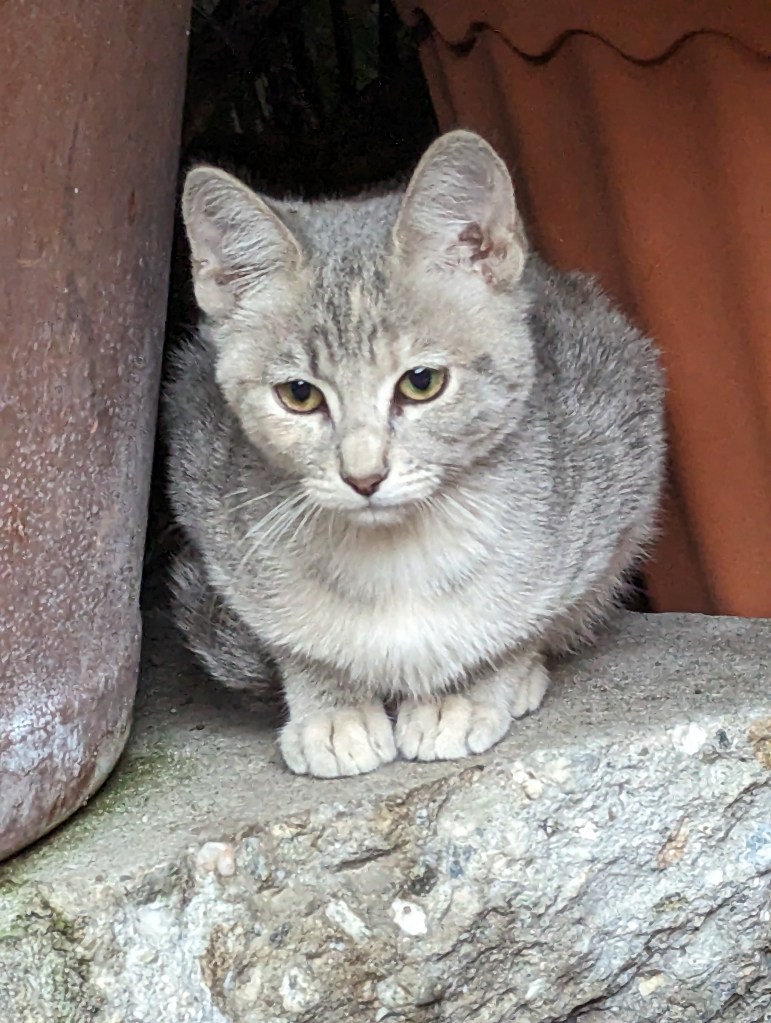
Brent, my colleague down south, recently procured three little kittens, supposedly to work as mousers like Darla did. They seem to be too friendly and playful though. I can not imagine them catching rodents. They certainly do not seem like the sort of kitties who rodents would fear. They are too playful and too nice.

If rodents avoid situations that are occupied by kitties, then any kitty could be effective. If rodents must be exterminated, then more diligent mousers would be necessary. I have no idea how instinctive mousing is for kitties. I suspect that it is different for each kitty, which is why some are better mousers than others.

At least these three little kittens are delightful. I mean, who would not appreciate such cute kitties in the garden? I regularly remind them that I am none too keen on kitties, but like all other kitties whom I have ever met, they do not care. They know how to get me to do whatever they demand.
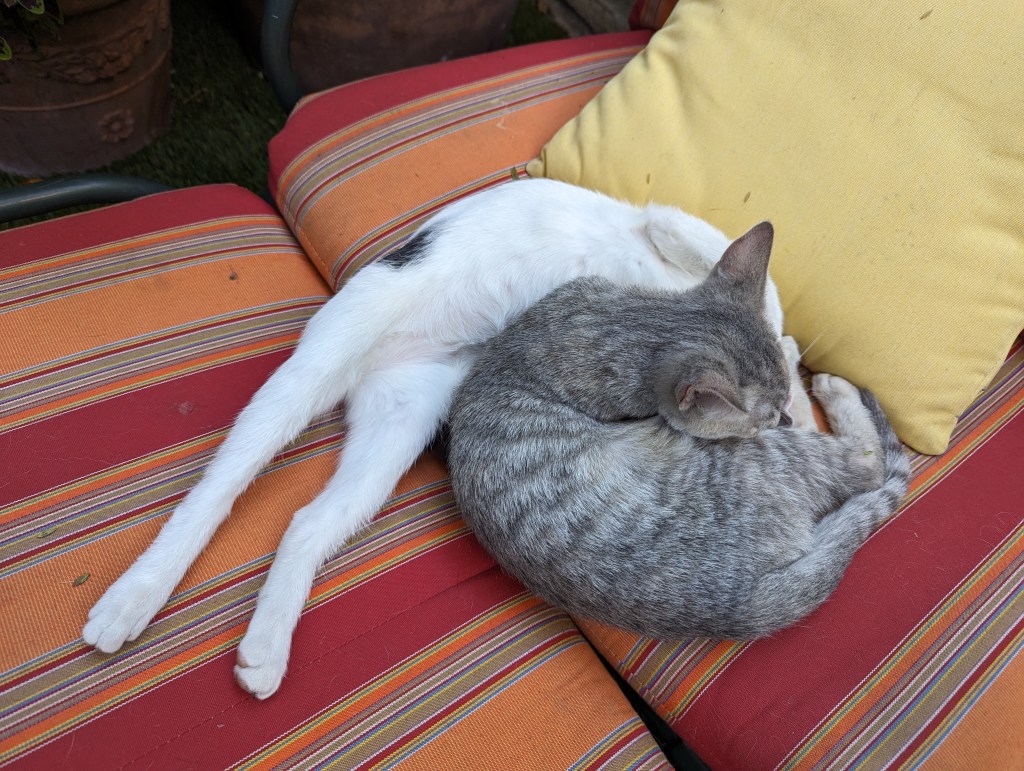
Regardless of how weird kitties can be, they always seem to be dangerously cute.

Six on Saturday: Los Angeles to Los Gatos

Six on Saturday is hasty for me this Saturday. The last few days have been rather hectic. It is now about midnight on Friday. I am presently in Los Angeles, and will be returning to Los Gatos in a few hours. It is a long story. I did not get many pictures.

1. Washingtonia robusta, Mexican fan palm is the most familiar palm of the Los Angeles skyline. This one is very unique though. It grew under the onramp from the northbound Harbor Freeway to the westbound Santa Monica Freeway, on top of an embankment on northbound Toberman Street. It grew vertically until it encountered the underside of the onramp. It then crept along the underside of a merge lane toward the south. It resumed vertical growth after reaching the edge, and escaping from below. Countless commuters who drive past it, and perhaps also over it, are unaware of its extraordinary contortions.

2. Coleus scutellarioides, coleus is still performing nicely within Brent’s garden. Autumn is a bit later and significantly milder within Los Angeles than within Los Gatos or Felton.

3. Coleus scutellarioides, coleus is familiar among my generation because it was popular as a houseplant through the 1970s. It is likely more popular in home gardens nowadays.

4. Nephrolepis exaltata ‘Variegata’, variegated Boston fern or tiger fern is one of several species that I will bring back from Los Angeles because I can not procure it in Los Gatos.

5. Three little kittens are new residents of Brent’s garden. I doubt that they are related to those that Los Gatos is named after. They will eventually help with rodent management.

6. Rhody is normally terrified of kittens. He does not seem to be aware that they are just small cats. Now that we are about to leave, he is much more tolerant of their playfulness.

This is the link for Six on Saturday, for anyone else who would like to participate: https://thepropagatorblog.wordpress.com/2017/09/18/six-on-saturday-a-participant-guide/

Horridculture – White California Poppy

White California poppies are naturally very rare.

California poppy is the official State Flower of California. Most Californians are familiar with it. We certainly know what color it should be. With few exceptions, it is bright and clear orange. Some, particularly within desert climates, are golden or more yellowish. White and pastel purple California poppies are rare aberrations. When I was a kid, finding one or the other was comparable to finding a four leaf clover for kids in Ireland. They were even a bit better though, since plants that bloomed with variant color bloomed with more than a single flower.

When I was about a freshman in high school, I found both a white and a purple California poppy just a few feet apart from each other. They happened to be at the Portola Monument in Montara, near where the Portola Expedition discovered San Francisco Bay. It was too early for seed, and I did not return for seed later. Besides, most of such seed produces plants that bloom with typical orange floral color. Nonetheless, at the time, I was very pleased to have found two very rare aberrations.

In more recent years, varieties of California poppy were developed. Some bloom with white or purple bloom. Others bloom with pink, red or yellow flowers. Some have double flowers. They are readily available from mail order catalogues and nurseries, as well as online. White or pastel purple California poppies are no longer rare or special. This sort of takes the fun out of finding one.

I suspect that the white California poppy in this less than exemplary picture is natural. Poppy seed was not likely sown here intentionally. Nonetheless, I do not know. Now that it is no longer special, its source is not so important. Realistically, their typical bright orange floral color is the best anyway.

‘Borrowing’

This particular situation is both too compact and too shady for these items.

Yellow and purple ‘Karma’ iris did not work out so well. To be brief, Brent and I ‘borrowed’ rhizomes of pink bearded iris after their bloom, and prior to their removal and disposal, but they bloomed yellow and purple for the following spring. Apparently, we ‘borrowed’ the wrong rhizomes, and were victims of ‘karma’ that was appropriate for the manner in which we ‘borrowed’ them.

Of course, that experience has never dissuaded me from ‘borrowing’ what I want to grow in my own garden. I am a horticulturist. I can grow just about anything that will grow here from seed, cutting or other sources of propagation material. Some is from situations from which it must be removed anyway. Some is from greenwaste piles. Some is from seed or cuttings that I find while out and about. I purchase almost nothing from nurseries.

Much of what we grow for the landscapes at work is recycled from other landscapes at work. This particular portion of a landscape is in front of a residential staff cabin. The Australian tree fern and elephant ears were installed here by a former resident who no longer resides here. Unfortunately, this situation is both too confined and too shady for them. Not only do the leaves extend over the adjacent walkway and steps, but, in response to the shade, they also grow larger and therefore more obtrusive than they otherwise would be. Because it would be impractical for them to remain within this landscape, I am not at all hesitant about recycling them into other landscapes. I am merely waiting for cooler and rainier winter weather, when they will be more conducive to relocation. The elephant ears should be dormant. I know which landscape the fern will relocate to. The elephant ears may remain canned for propagation.

Monocarpic?

Agaves refuse to die.

Monocarpic species bloom only once. They die afterward. Many annuals are monocarpic by default. After bloom and production of seed, they have served their purpose of perpetuating the next generation. Some may bloom more than once within their respective season, but realistically, do not expect to live for long after doing so.

Agaves are monocarpic. Unlike annuals, some grow for many years before maturing enough to bloom. In fact, the century plant is known as such because, in the wild, it supposedly takes a century to mature enough to bloom and finally die. Of course, they do not take nearly so long to bloom within cultivation.

That could be either an advantage or a disadvantage. Their bloom is awesome, but their death is ugly. Removal of their deteriorating but wickedly thorny foliage is a horrid chore. The sap from their foliage causes a rash that can be comparable to the allergic reaction from poison oak. What is worse is that they are not really monocarpic!

Again, that can be either an advantage or a disadvantage. They provide more than enough pups to replace their deteriorating carcass. However, these prolific pups must be divided from each other and the deteriorating carcass of their parent. They are too numerous to accommodate within the same garden or share with neighbors who likely do not want them. Furthermore, they continue to generate pups long after the parent and first litter of pups is gone. Without intervention, they seem to never die completely. Even with diligent intervention, they can linger for many years.

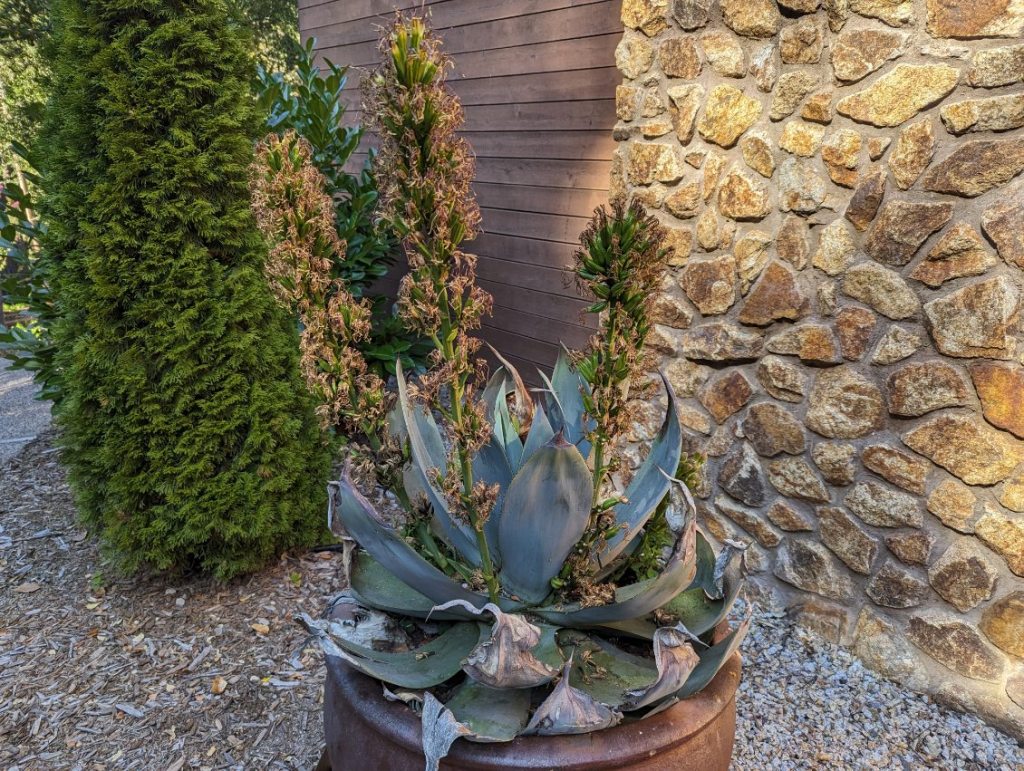
This particular agave should have remained vegetative for many years, but bloomed after only two or three years. The first litter of pups bloomed immediately afterward, as this picture demonstrates. Ultimately, we would like only a single pup to replace the parent.

Six on Saturday: No Hunting

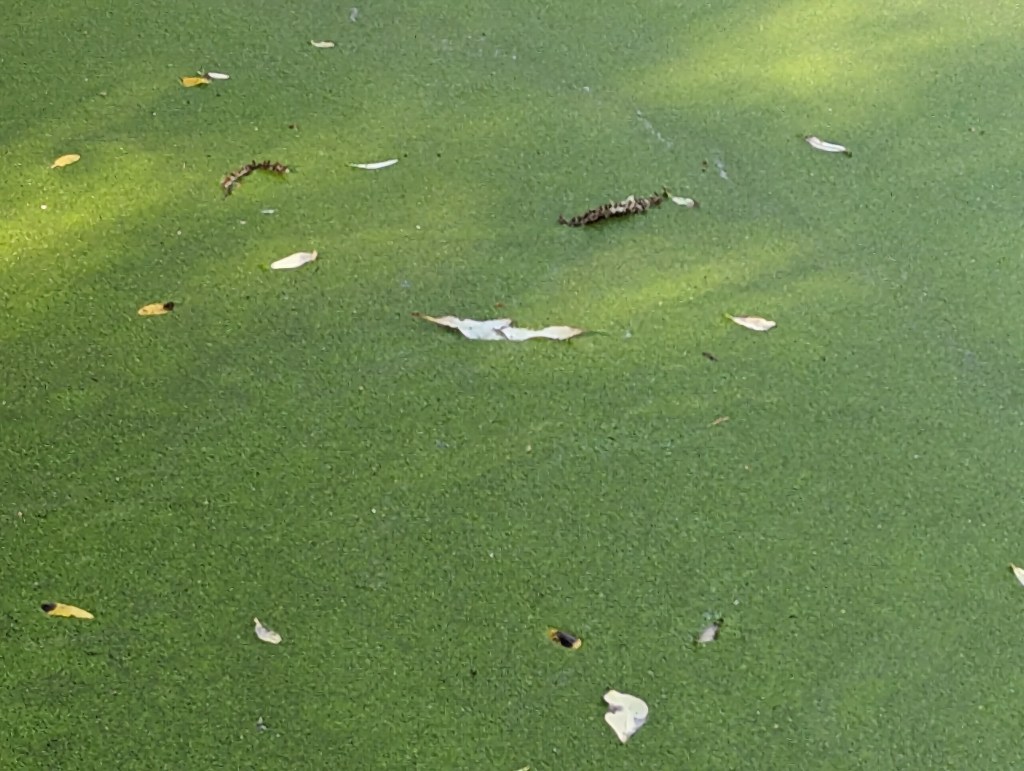
Wildlife is fortunately not too much of a problem within the landscapes here. Deer have complete access but strangely avoid refined landscapes, which includes roses. We would be unable to defend the landscapes otherwise. With so many people in the area, hunting is not possible. Even if it were, I do not like the local options much. Turkeys must know, which is why they are so blatant with their minor but annoying transgressions. Ducks at least try to be helpful by eating snails and the overwhelmingly prolific duckweed in their pond. Actually, I would not mind if they invited some of their friends over to help, since the pond looks more like a lush green lawn than water. Increasingly cooler weather may change that somewhat soon.

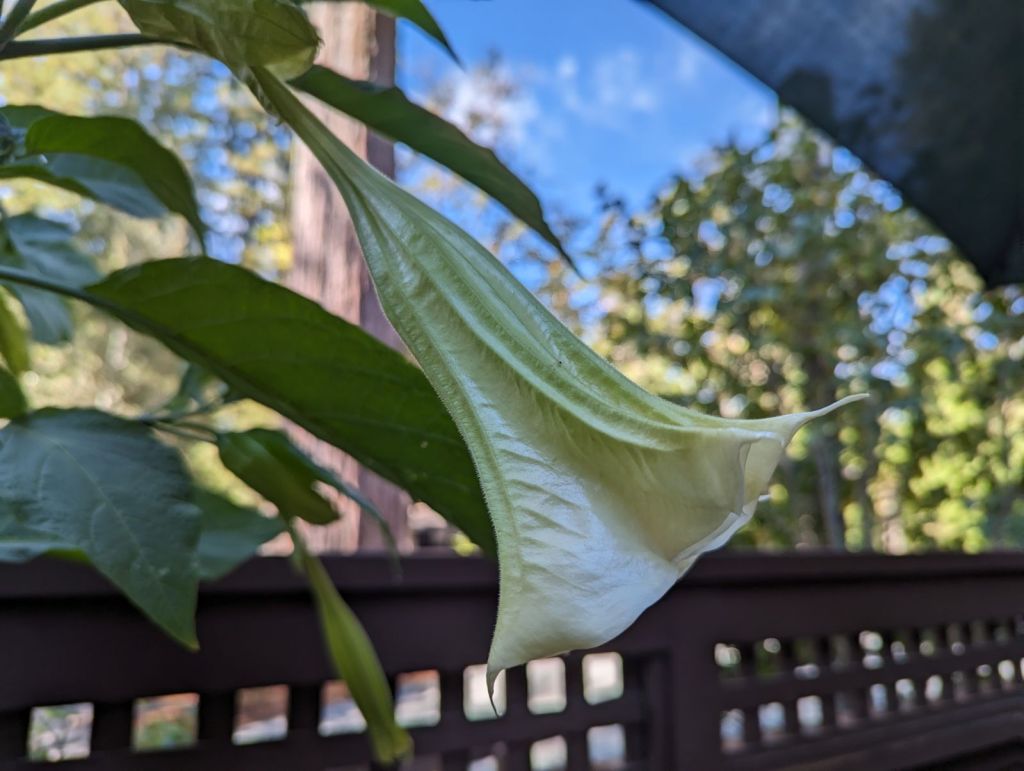
1. Single white angel’s trumpet is irrelevant to wildlife, but is blooming too splendidly to ignore. It was #6 last week, while beginning to bloom. It grew from a cutting last spring.

2. Ducks enjoy the pond without becoming too annoyingly numerous. Only this nice pair seems to be permanent residents. Another pair occasionally stops by but lives elsewhere.

3. Duckweed might otherwise be less bothersome if only they invited their friends over a bit more often. Even in this small pond, a single pair of ducks can not control duckweed.

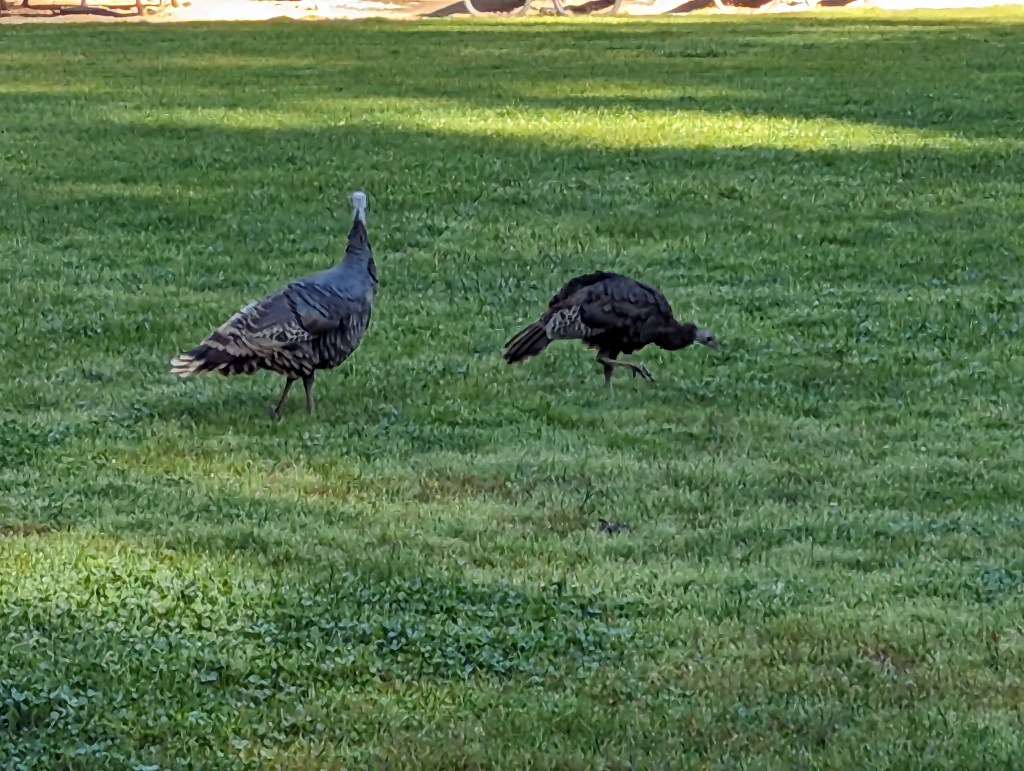
4. Turkeys are the opposite. They are annoyingly numerous, but do not help much. They glean insects, but also thrash colorful flowers and berries, whether they eat them or not.

5. Pyracantha berries should remain colorful while small birds eat them through winter. Instead, turkeys shake most of them from their branches, and leave them on the ground.

6. Rhody is a terrier of some sort. His ancestors pursued burrowing animals who lived in the ground, or ‘terra’. Fortunately, he is uninterested, and is even less interested in fowl.

This is the link for Six on Saturday, for anyone else who would like to participate: https://thepropagatorblog.wordpress.com/2017/09/18/six-on-saturday-a-participant-guide/

Horridculture – Long Stem Rose

I grew a nearly exemplary long stem rose!

Well, I did not exactly do it myself. One of three specimens of ‘Proud Land’ hybrid tea rose that I installed into the rose garden in about 1984 did all the work. I was quite pompous when I found it though. After all, I maintain this particular specimen in a can here until it relocates into another rose garden.

I certainly did not expect such a bloom only a week before November. Although roses can bloom until winter dormancy, the latest are generally on short stems. Increasingly cool weather decelerates formerly vigorous growth.

This particular rose bloomed on a stem that was more than three feet long! It would have been ideal for Miss Piggy of the Muppet Show! Goodness, it could have been too good for Miss Piggy!

‘Proud Land’ hybrid tea rose

The flower might have lacked perfect form, and the foliage might have been slightly blemished, but with such an awesome stem, they were inconsequential. Perhaps I should have stripped the foliage and cut the flower off, in order to most effectively display the near perfection of this most astounding stem!

After cutting it, I removed the thorns and lower foliage, and put it in water outside the lounge at work. According to tradition, unless someone else is presently experiencing marital tension of some sort, the first of the gentlemen with whom I work to find roses there takes them to his wife. This was only a single rose, but was very special. It was gratifying to know that someone with whom I work was about to experience a very special evening, although I gave it no more thought than that.

Then, the gentleman who claimed it mentioned that it was too long, and before I could protest, he cut the stem in half.

the discarded half

a Tale of Two Jacarandas

Jacaranda seedlings from this year will be ready to grow next year.

Los Angeles is about three hundred and fifty miles to the southeast of Los Gatos. Relative to the number of different climates between here and there, the climates of the two specific locations are surprisingly similar. Nonetheless, they are not completely similar. Winter weather is somewhat milder within the Los Angeles region, with only minimal frost. Some coastal climates there lack frost. Also, spring weather there is a bit warmer than here.

Jacaranda mimosifolia perform spectacularly with such mild winter weather and warm spring weather. Without frost, or even with minimal frost, they can grow taller than thirty feet, and eventually grow broader than tall. After defoliating for the end of winter or beginning of spring, they bloom for late spring, immediately prior to refoliation. Their awesomely vivid blue bloom is almost as profuse as their subsequent foliage. No other tree of comparable size compares to their floral color or floral profusion. That is why jacaranda are so much more popular within the region of Los Angeles.

Here, occasional moderate frost inhibits comparable performance. Trees are generally smaller and more compact, with more globular form. Vigorous growth that develops after frost damage can be structurally deficient, but heavy with lush foliage. Bloom is more sporadic amongst such vigorously vegetative growth. Although very pretty by local standards, jacaranda is not quite as exquisite as it is within the region of Los Angeles.

Nonetheless, I am growing some. A colleague brought me a seed pod from which I extracted seed. Fortunately, only a few more than two dozens seedlings survived a late frost last winter. Otherwise, many more would eventually be in need of homes. A few will likely inhabit our landscapes. A neighbor wants a few. Any extra jacaranda trees can be shared with other neighbors, like so much other surplus.

Perennial Annual Dahlias

Annual dahlias are expected to be, as their designation implies, annual. In other words, they grow in the spring, perhaps from seed, bloom through summer, and then succumb to frost during their first winter. Some are likely grown from cuttings or division of nursery stock tubers, in order to be ready for spring earlier than seedlings. Regardless, they are not expected to survive for more than one year.

Most other dahlias are expected to be perennial. That is how their expense is justified. Most are sold while they are merely dormant tubers, and are generally more expensive than annual dahlias. Some, especially the trendy sorts, are significantly more expensive.

‘Cafe au Lait’ was a trendy dahlia a few years ago, and is still trendy. We procured one at work. It performed somewhat well for the first season, and was then dug and stored for winter. It did not perform well for the second season, and was then dug and stored again, but did not survive through winter.

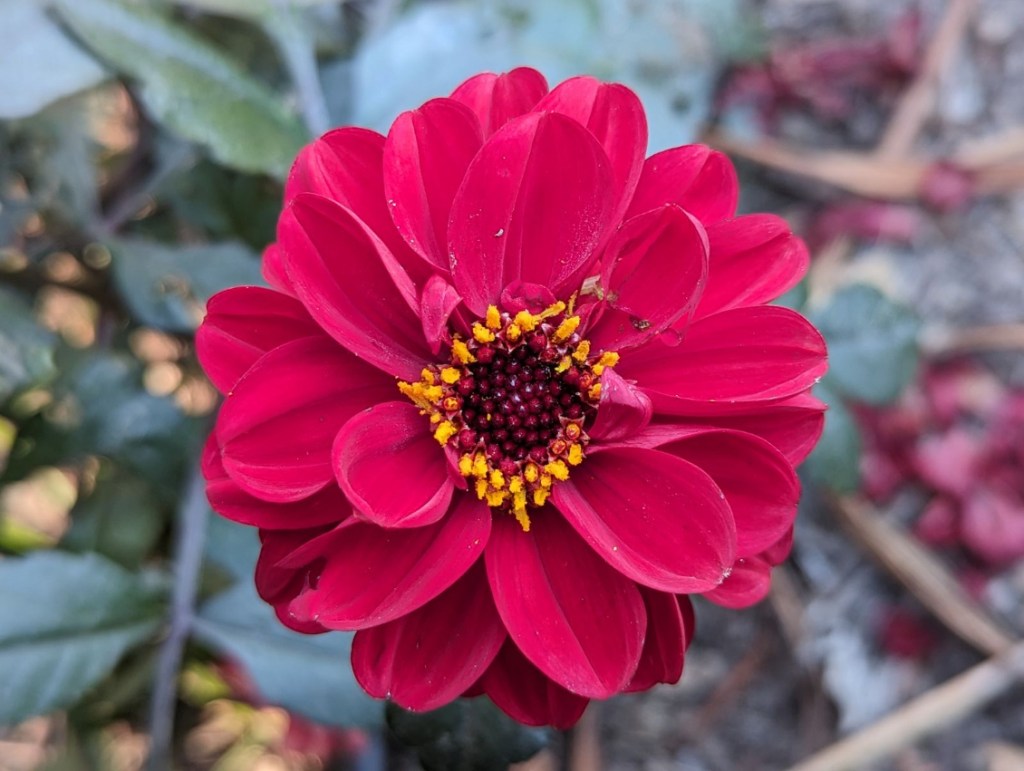
Four smaller annual dahlias were procured in conjunction with the single ‘Cafe au Lait’ dahlia. They were relatively inexpensive, but delightfully colorful. They bloomed nicely around the larger ‘Cafe au Lait’ dahlia. They were also dug and stored for winter after their first season, although we knew that we should likely merely discard them. One had actually divided into two. These annual dahlias bloomed better than ‘Cafe au Lait’ for their second season, and then again, were dug and stored for winter. Unfortunately, three, including one that divided during the previous winter, did not grow for long after last spring. However, two of the original four annual dahlias continue to bloom, and will be dug and stored as they succumb to frost this winter. These annuals have been more perennial than the perennials.

Six on Saturday: Good News

Horticulture occasionally involves some degree of disappointment. However, more than occasionally, it is surprisingly gratifying. After the mysterious disappearance of a colony of Louisiana iris, I remembered how much I enjoyed growing them. Unplanned bananas will be fun to grow in the future. Unseasonable bloom is at least as gratifying as seasonal bloom.

1. ‘Black Gamecock’ Louisiana iris was a gift from Tangly Cottage Gardening. Therefore, they were VERY important to me. I split and plugged them into a thirty foot long row on the edge of a pond at work. Sadly, after growing happily through summer, they suddenly and inexplicably disappeared. I am determined to not be unrealistically saddened about this, though. They were intended to be enjoyed, and I enjoyed growing them all summer. The good news is that Tangly Cottage Gardening offered replacement when I return this winter. Also, I found these four surviving plugs! I canned them here for their protection.

2. Iris unguicularis, Algerian iris was another of several prized gifts from Tangly Cottage Gardening. I split and plugged them into a row that is about twenty feet long last winter.

3. Musa acuminata, banana ‘trees’ are getting to be rather excessive. With these pairs of four new cultivars, there are now fourteen cultivars! There are no plans for any of them.

4. Brugmansia candida, double white angel’s trumpet failed to impress this year. Bloom was limited. Now that summer is over, it decided to bloom! I suppose this is good news.

5. Brugmansia X cubensis, ‘Charles Grimaldi’ continues to bloom late, and with this odd peachy color. Although I know that it should be simple yellow, I rather prefer this color.

6. Brugmansia, angel’s trumpet of an unidentified cultivar with single white flowers also decided to bloom late. This is impressive because it grew from a cutting from last spring!

This is the link for Six on Saturday, for anyone else who would like to participate: https://thepropagatorblog.wordpress.com/2017/09/18/six-on-saturday-a-participant-guide/