Richmond Begonia

Richmond begonia is very easy to propagate by cuttings.

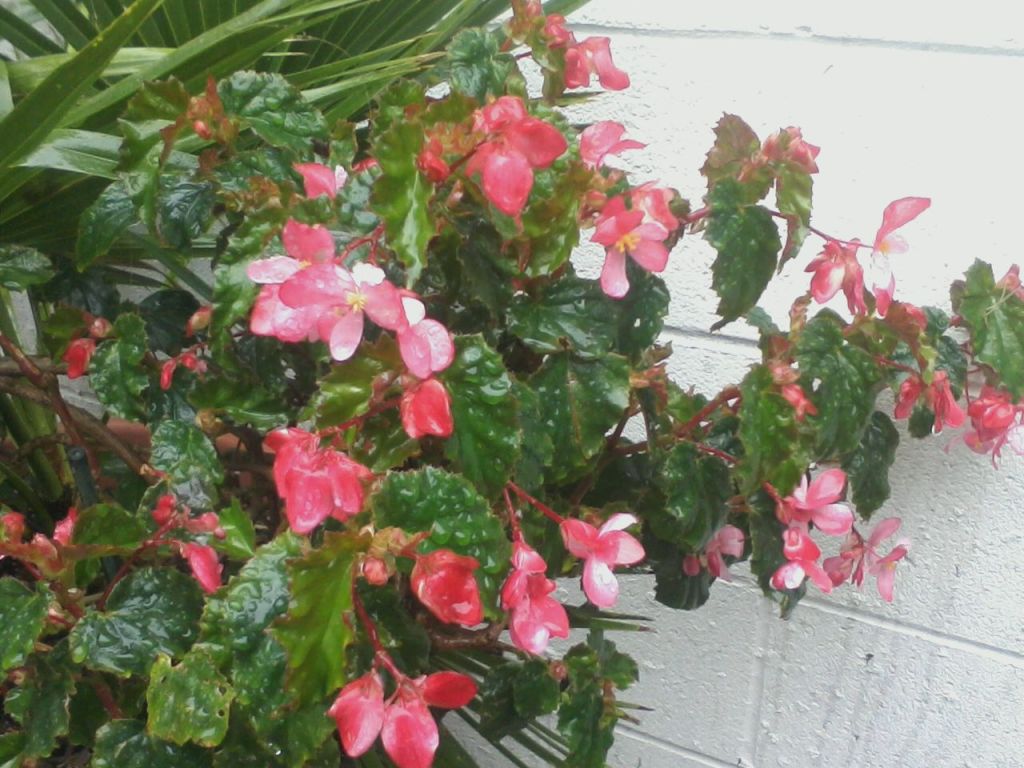
It is difficult to say whether Richmond begonia, Begonia ‘Richmondensis’, is grown more for unusual waxy pink flowers that bloom throughout the year, or rich glossy green leaves with bronzy red undersides. Perhaps it is the distinctive combination of both characteristics. Perhaps it is because Richmond begonia is so easy to grow in partial shade near porches or atriums where other flowering plants would want more sunlight. It only wants relatively rich soil and regular watering, and is quite happy in pots. Mature plants eventually grow to two feet tall and broad. Lanky branches that get cut back to promote dense growth can be rooted elsewhere in the garden.

Star Magnolia

Star magnolia insists it is springtime.

Unusually wintry weather did not seem to delay star magnolia, Magnolia stellata, bloom. Such bloom can begin immediately prior to March, or finish immediately afterward. Yet, it typically occurs at about the same time annually within any particular situation. Few here were notably later than they were last year. Bloom lasts only for about two weeks though.

Nonetheless, bright white bloom is spectacular prior to foliation of otherwise bare stems. Formerly rare cultivars with blushed or pastel pink bloom are becoming popular. Delicate floral fragrance is proportionate to profusion of bloom. Individual flowers are about three inches wide with many narrow tepals. Deciduous foliage appears as bloom deteriorates.

Star magnolia may be more comparable to large shrubbery than small trees. Most do not grow much taller than six feet. Some of the largest may be twice as tall and broad, with a few trunks. Old trunks and branches can be somewhat sculptural. Bark is pallid, like that of fig trees. As their plump floral buds begin to burst, bare stems are conducive to forcing.

Holly Olive

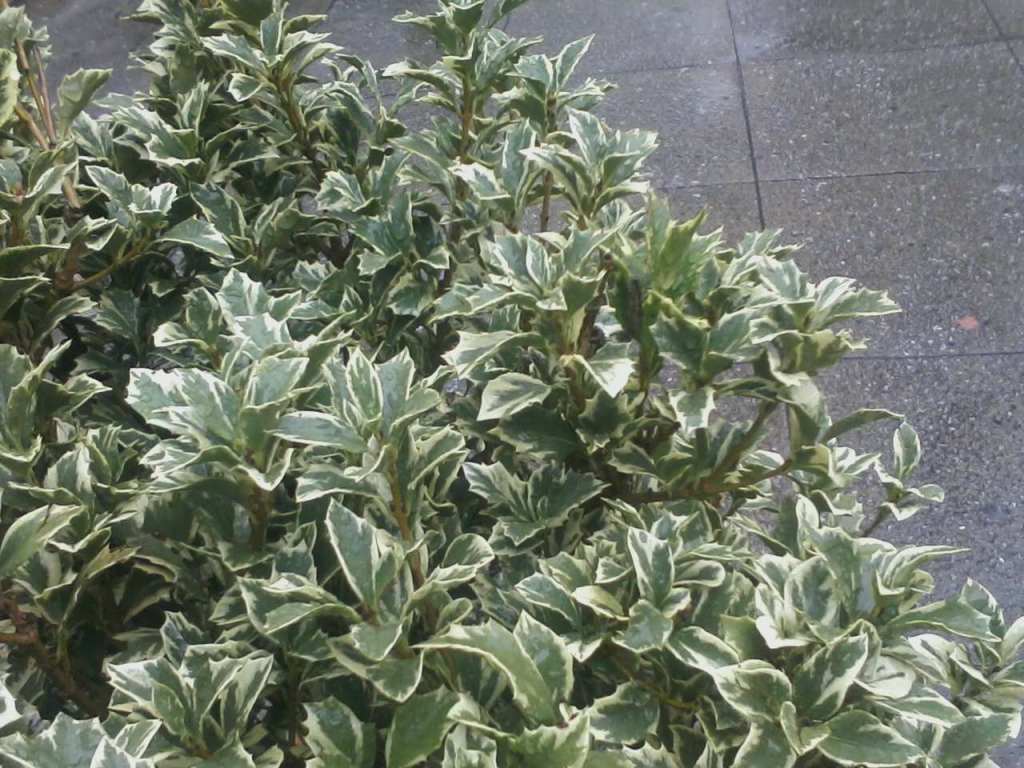
Holly olive resembles English holly.

If the foliar spines (teeth on the margins of the leaves) of English holly are too nasty, holly olive, Osmanthus heterophyllus, might be a more docile option. It lacks the occasional bright red berries and the very glossy finish on the leaves, but is much easier to handle than real holly is, since the spines are not nearly as sharp. If you look closely, you can see that the one to two and a half inch long leaves have opposite arrangement (are in opposing pairs along the stems) instead of alternate arrangement (are single along the stems) like those of holly.

The more popular varieties of holly olive have some sort of variegation of white or gold. Variegation can be spots, blotches or more refined margins. Most of the modern variegated varieties prefer to stay less than six feet tall. The old fashioned unvariegated holly olive can get more than twenty feet tall when very old, but the upper foliage lacks the distinctive foliar spines of lower foliage. The tiny and mostly unnoticed flowers are pleasantly fragrant.

Flowering Quince

Flowering quince blooms prior to foliation.

Flowering crabapples are the same genus as fruiting crabapples. Flowering cherries are the same genus as fruiting cherries. Flowering quince, Chaenomeles spp., though, is not the same genus as fruiting quince. Available cultivars are generally floriferous but sterile hybrids. Only four basic species produce small fruit that are good for little more than jelly.

They bloom magnificently though, on bare stems, prior to foliation. Profusion of bloom is comparable to that of flowering crabapple and flowering cherry. It begins early enough to finish before some flowering cherries begin. Flowering crabapples start even later. Floral color ranges from bright white to deep red. This includes orangish pink and orangish red.

Unlike flowering cherry trees and flowering crabapple trees, flowering quince is shrubby. The largest might grow no higher than ten feet, with irregular branch structure. Some old cultivars are thorny. Modern cultivars are more compact, shaplier and thornless. Younger trunks should methodically replace older trunks. Pruning can happen after spring bloom.

Sage

Some cultivars of culinary sage are more colorful for home gardens.

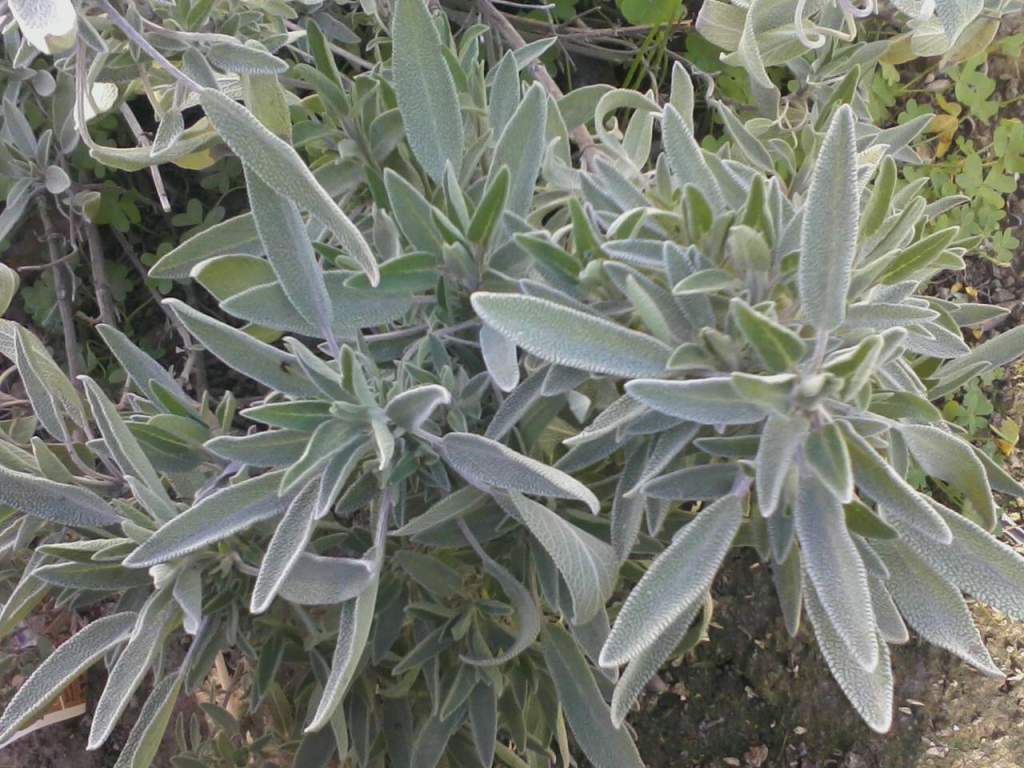
The sage that is most popularly grown for herbal and culinary uses (Salvia officinalis) is originally from the Mediterranean region, so is right at home in much of California. Like the various lavenders and some of the other related herbs, it is a shrubby perennial that behaves like a woody shrub, but lives only a few years like some perennials. Lower stems can be layered (buried where they touch the ground so that they form roots and grow into new plants) to replace older plants before they die.

Modern cultivars are quite variable with purplish, pink, pale yellow or pale white coloration or variegation to new foliage, as well as lower growth habit. The original sage gets almost two feet tall and broad, with very aromatic gray foliage.  The narrowly oblong leaves are nearly two and a half inches long and one inch wide. The flowers that bloom in late spring or summer are typically pale blue, but can be purple, pink or white.

Douglas Iris

Douglas iris can interfere with grazing.

California poppy, sky lupine and many favorite coastal wildflowers are annuals. Douglas iris, Iris douglasiana, blooms with the best of them as a perennial. It is persistent enough to be a noxious weed within rangelands. Of course, that is only because it competes with forageable vegetation. Douglas iris is actually tame enough for cultivated home gardens.

Douglas iris bloom is mostly the color of faded blue denim. It can alternatively be slightly richer lavender blue or very pale bluish white. Purple with yellow centers is rare. Flowers stand only about a foot to a foot and a half tall. Their deep green foliage is about as high. Individual leaves are narrow and arching. New leaves displace deteriorating old leaves.

Wild Douglas iris colonies can be impressively expansive. They generally mingle nicely with other low vegetation and wildflowers. With occasional irrigation, they can get dense enough to exclude most other vegetation. However, such colonies are not evenly dense, so develop bare zones. They crave good sun exposure, but tolerate a slight bit of shade. Excessive fertilizer might inhibit bloom. Excessively frequent or generous irrigation might cause rot.

Primrose

These sorts of primrose almost seem to be synthetic because of their bright but simple color.

The cartoon shades of red, yellow, blue, purple and nearly orange of primrose, Primula acaulis (or Primula vulgaris) are still partying strong. They do not seem to be aware that, although perennials that could regenerate next autumn, they are likely to be replaced with warm season annuals soon. The cute flat-topped trusses of half inch to inch and a half wide flowers are short, but stand up above the even shorter two to five inch long leaves.

Jalapeno Pepper

Jalapeno peppers are harvested before ripening.

Pecan is the State Tree of Texas. Bluebonnet is the State Flower of Texas. Less natively, jalapeno pepper, Capsicum annuum, is the State Pepper of Texas. It is naturalized there from Central and South America. Jalapeno pepper is merely one of countless varieties of the species though. Furthermore, it comprises several and various culinary subvarieties.

Jalapeno pepper typically grows as a warm season annual vegetable. It has potential to be perennial. Overwintering is likely more work than annual replacement though. Mature plants can grow almost three feet tall. They may produce nearly two dozen fruits through summer. They crave sunny and warm exposure, rather rich soil, and consistent watering.

Mature fruits, or jalapeno chile peppers, are firm and crisp. They should be between two and four inches long, and as wide as an inch and a half. Their smooth and glossy skin is deep green, but can ripen to red, orange or rarely yellow. Red fruit is preferable for some culinary application. Jalapeno pepper may be the most familiar of the ‘hot’ chile peppers.

Carolina Jessamine

It is the Official State Flower of North Carolina!

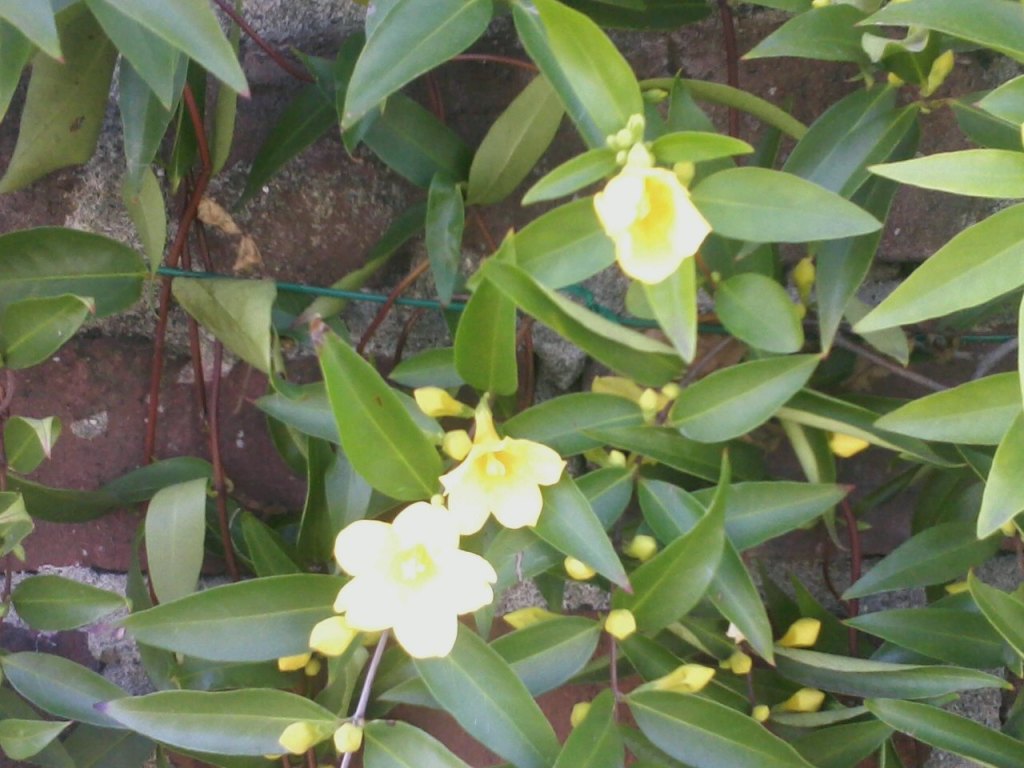
Along with lilac vine (Hardenbergia), daffodil and some acacia trees, Carolina jessamine, Gelsemium sempervirens, is one of the first flowers to bloom late in winter. The small, loose clusters of  inch long and wide tubular flowers are as bright yellow as those of the various acacia and daffodil, though not nearly as abundant, and actually barely abundant enough for their pleasant fragrance to get noticed. They provide nice contrast for the deep purple of lilac vine, particularly since both are complaisant vines that are often grown together. These twining vines can be kept below first floor eaves, but barely reach second floor eaves if allowed to grow wild. Leaves are about half an inch wide and two or maybe three inch long. Because Carolina jessamine is toxic, it should not be grown where children or inquisitive puppies might eat it. Incidentally, Carolina jessamine is the state flower of South Carolina.

Sweet Corn

Corn takes space, water and diligence.

Almost all corn that grows in home gardens is sweet corn (Zea mays convar. saccharata var. rugosa). It is among the most popular of the warm season vegetable plants. Popcorn remains uncommon for home gardening. Other types of corn are mostly grains and other agricultural commodities that are rare within home gardens. Some corn becomes biofuel.

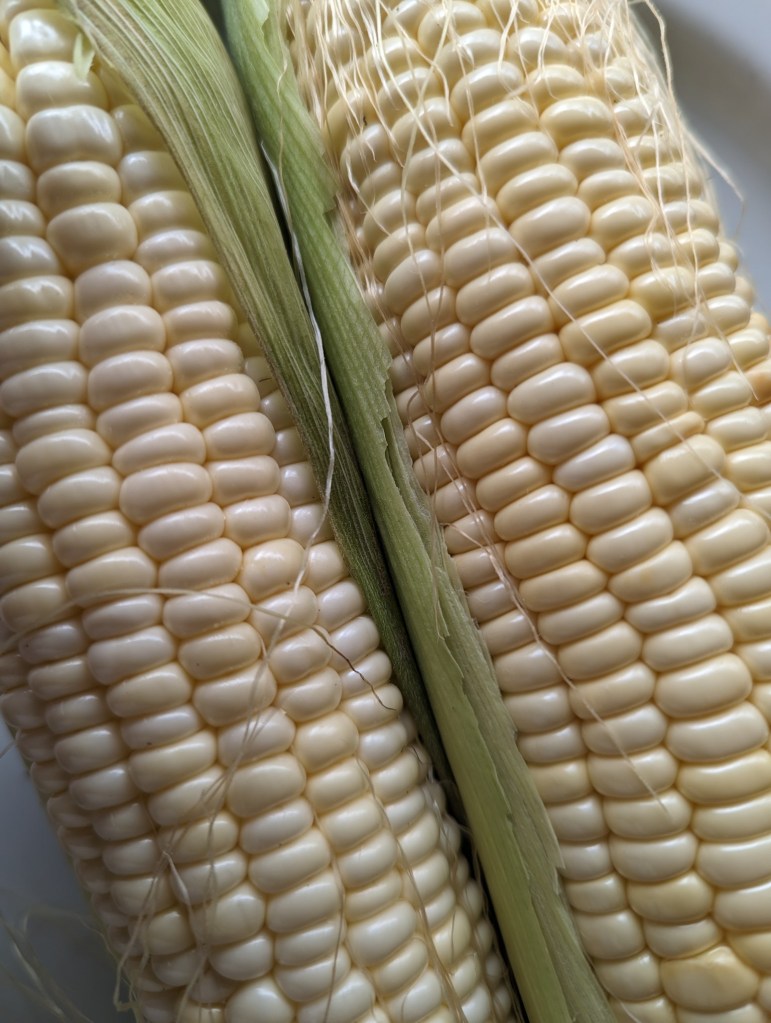
Corn stalks can grow as high as twelve feet! Most popular varieties grow only about half as high. Each stalk should produce one or perhaps two ears of corn. Each ear produces many kernels of corn in very neat formation on a central cob, all within a tight foliar husk. Male blooms protrude from the tops of stalks like antennae. Foliage is coarse but grassy. Stalks resemble giant reed, except smaller.

Of the various warm season vegetable plants, corn is one of the more consumptive sorts. It occupies significant area. It requires methodical and generous irrigation. Also, it craves rich soil, but depletes nutrients. Corn grows best from seed sown directly into the garden. Squared orientation, rather than typical rows, improves pollination and ear development.