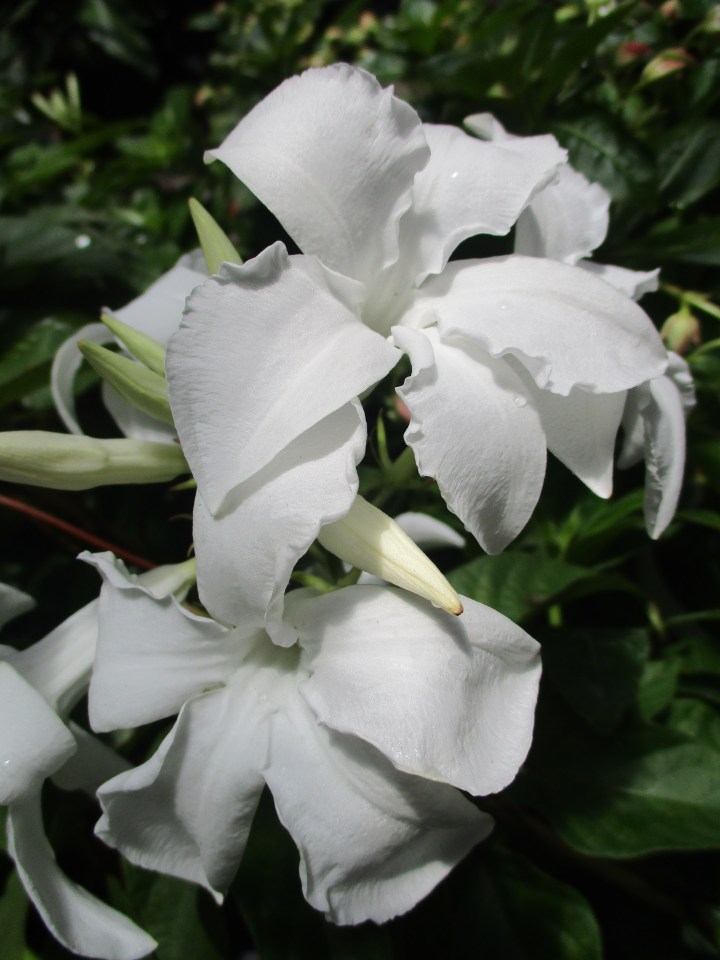
 This is not just another mandevilla. Well, maybe it is. Mandevilla laxa is special though. It is known as Chilean jasmine because, unlike other mandevillas, it is so delightfully fragrant, particularly on warm summer evenings. Some say the fragrance is similar to that of gardenia, but not as strong. Others say it has a bit of vanilla mixed in. Sporadic bloom continues through most of summer.
The two inch long pure white flowers flare out to be a bit wider than long, and are a bit more relaxed than the neatly tailored flowers of other mandevillas. They bloom sequentially in small groups, with new flowers replacing the old for quite a while. The glossy rich green leaves can get almost twice as long at the flowers. Foliage last better on the coast, but is mostly deciduous elsewhere.
Chilean jasmine grows fast in spring, especially if pruned well after winter, but is surprisingly tame. It can grow past downstairs eaves, but should not reach upstairs eaves. It is satisfied with a light duty trellis. If carefully pruned out and removed each winter, it is one of the few vines that is complaisant enough for lattice. Light frost can kill stems to the ground, but they usually recover in spring.
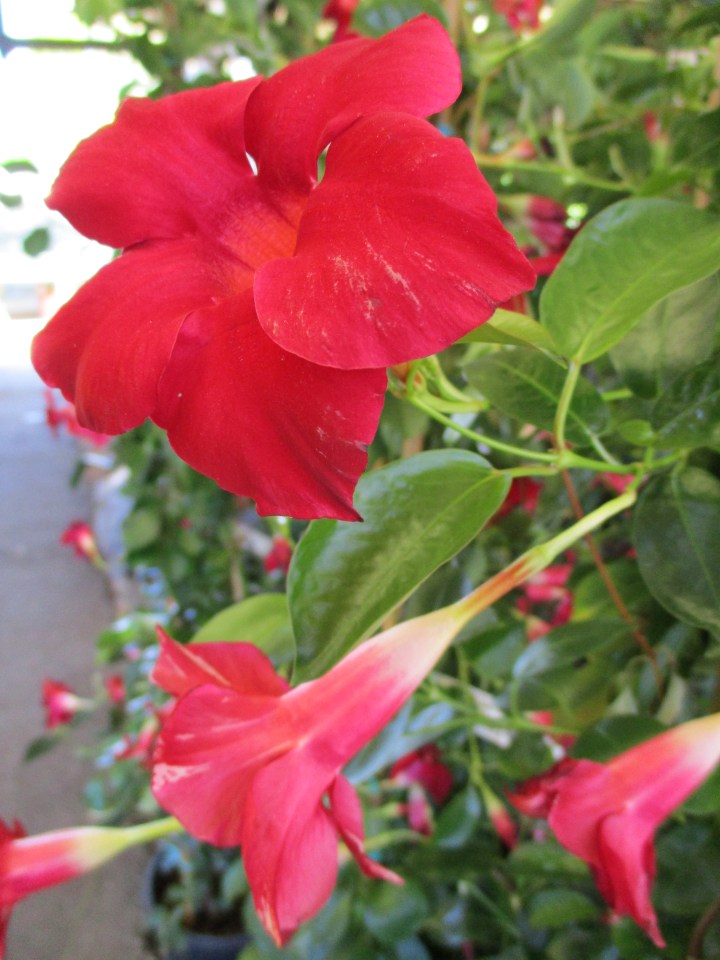 ‘Alice Dupont’ mandevilla that was so popular through the 1980’s was already a cool vigorous but not too overwhelming vine, with big clear pink radial flowers. It grows rather vigorously to upstairs eaves, and tends to get bunched where it reaches the top of its support. Modern cultivars with red, white or bright pink flowers are more compact and tame, and can stay below downstairs eaves.
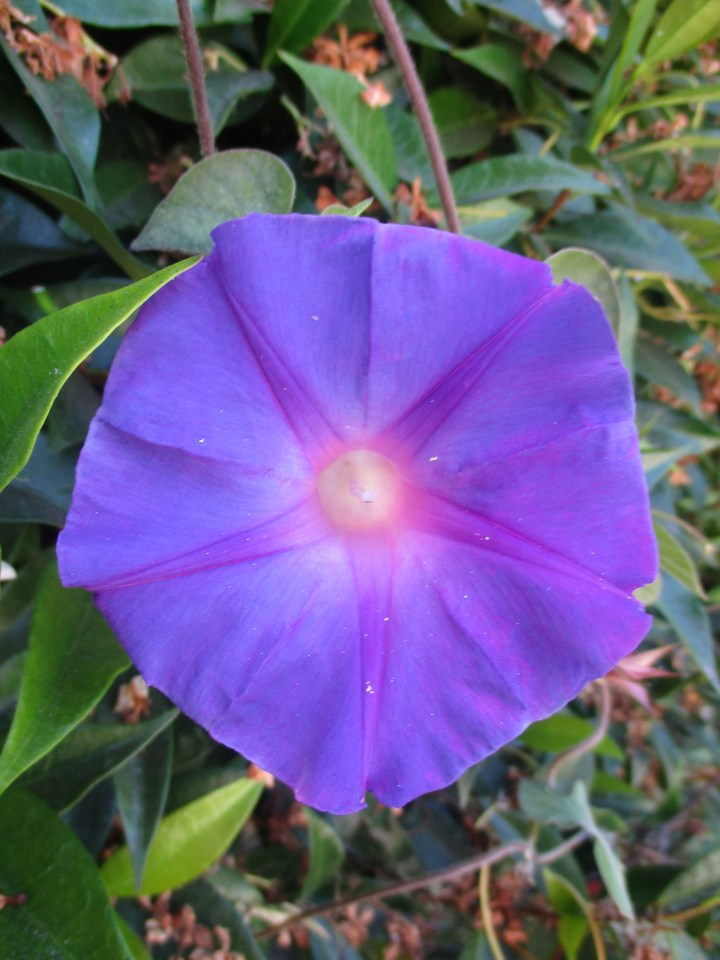 A landscape designer would have more fun describing both the modern and the good old fashioned varieties of morning glory. Their vivid colors are so resplendent. Their rich green foliage is so luxuriant. Their delicate vines are so elegant. Hey, perhaps this is not so difficult. Anyway, the popular garden varieties of morning glory are descendents of various species of the genus Ipomea.
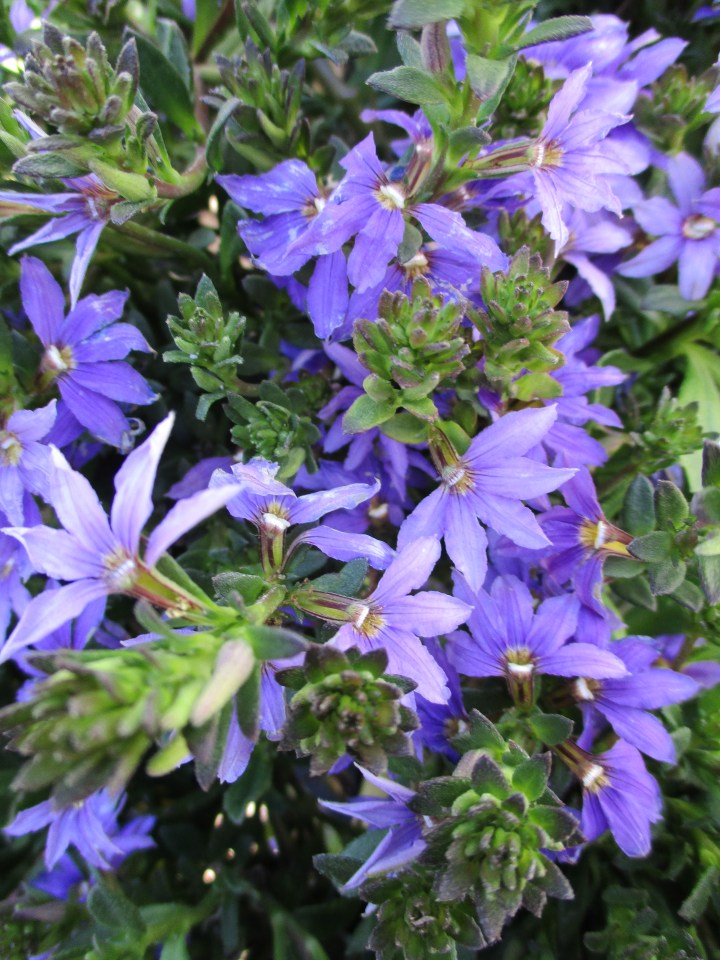 Only a few flowers are true blue. A few more are nearly blue, but slightly blushed with lavender. Of the latter group, fan flower, Scaevola albida, which is usually more lavender than blue, can be quite convincingly blue if conditions are just so. The semi-circular flowers (which are actually wide bilateral flowers) are most abundant in spring and summer, but can bloom sporadically all year.
 It is gratifying to see renewed interest in this old fashioned flower. Naturally occurring varieties of some of the nearly three dozen species of Iochroma were popular decades ago. Some might actually be naturally occurring hybrids that have yet to be identified. Many modern cultivars (cultivated varieties) were intentionally bred or hybridized for more compact growth and profuse bloom.
 Unlike the common bird of Paradise that is grown for striking bright orange flowers, the giant bird of Paradise, Strelitzia nicolai, is grown for strikingly lush foliage. The big rich green leaves get nearly six feet long, and flare outward from leaning trunks that can eventually reach upstairs eaves. Foliage is healthiest if sheltered from harsh sunlight (such as hot reflected glare), wind and frost.
 Several native species and varieties of poplar are known collectively as cottonwood. Not many are actually planted. They just have a sneaky way of appearing in well watered parts of the garden that are as damp as the riparian areas that they naturally inhabit. Only Fremont cottonwood, Populus fremontii, gets planted, rarely, and only in big spaces that can accommodate its grand scale.
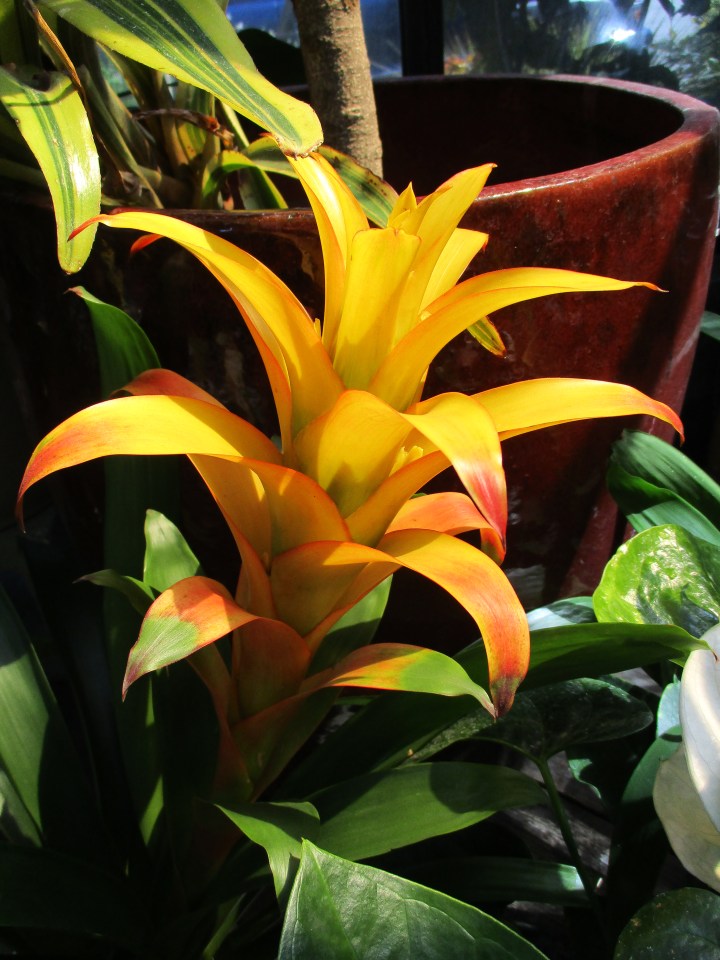 Just like potted chyrsanthemums, azaleas, hydrangeas and poinsettias, potted specimens of Guzmania magnifica are popularly purchased while beginning to bloom, enjoyed as house plants through a long bloom cycle, but then discarded as bloom eventually deteriorates. They are rarely allowed to produce new pups that can be divided and grown into fresh new plants to bloom later.
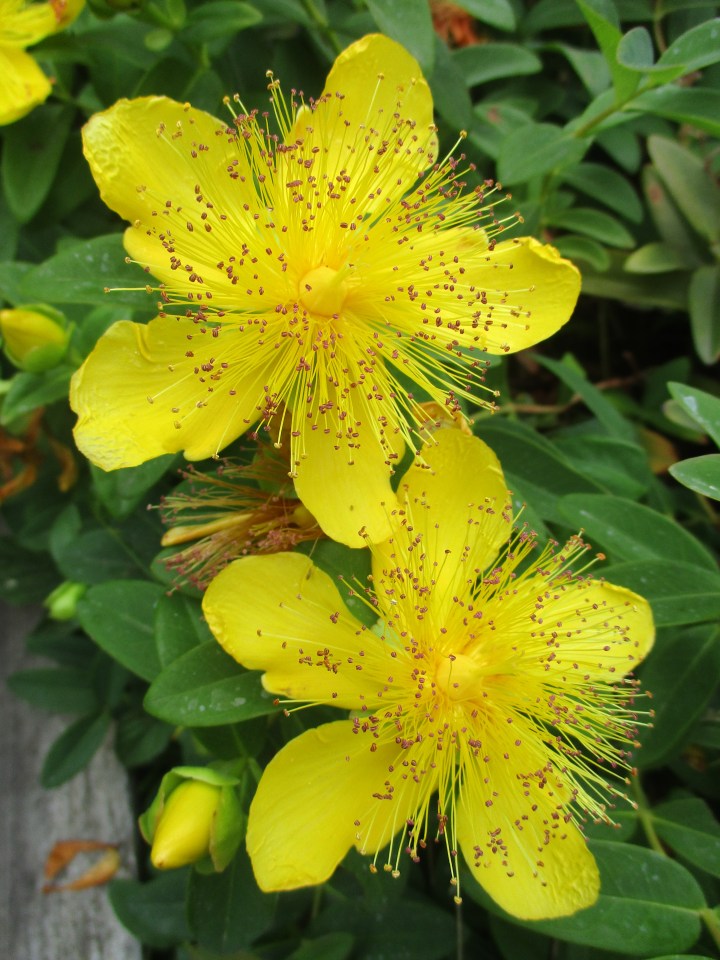 This is not the dreaded aggressively invasive Saint John’s wort that has naturalized in other regions. Nonetheless, creeping Saint John’s wort, Hypericum calycinum, does precisely as the name implies. It creeps, and has naturalized to a less aggressive degree in many spots near the coast. Its vigor is an advantage to many landscapes, but might eventually displease adjacent neighbors.
 The Nile River floods annually, inundating everything in its floodplain. Lily of the Nile, Agapanthus africanus, survives by hanging on firmly with a thick network of rubbery roots. It grows and blooms in warm weather as floodwater recedes, and then survives through a long, warm and dry season until the river floods again. It tolerates both drought and flooding, although it prefers more stability.
 Tony Tomeo