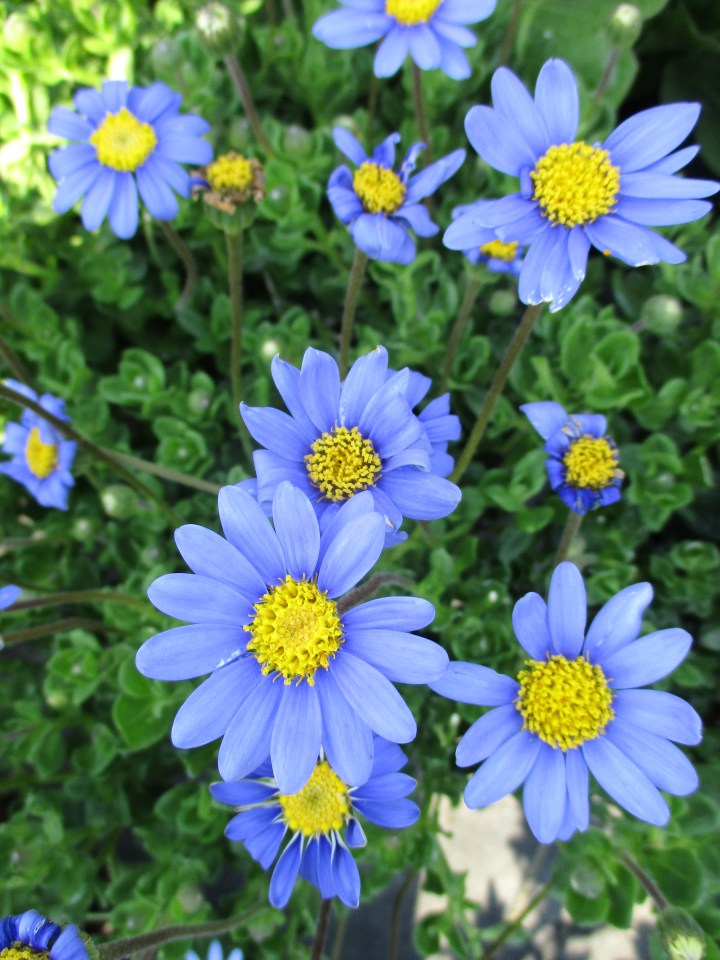
 Most blue flowers are blushed with purple to some degree. Except for lily of the Nile, true blue flowers are quite uncommon. Even with their yellow centers, the tiny daisy flowers of blue marguerite, Felicia amelloides, seem to be too blue to be real. They are almost expected to fade to lavender. Bloom may not be as full as it was a month ago, but continues as long as the weather is warm.
Mature plants are usually less than a foot and a half tall, and not much wider, with a symmetrically rounded form. The branches are rather fragile, and can be broken by something as trivial as a clumsy cat. They really are not strong enough for bouncy dogs or children. Yet, their tiny oval leaves are just raspy enough to deter deer. Unfortunately, blue marguerite plants live only a few years.
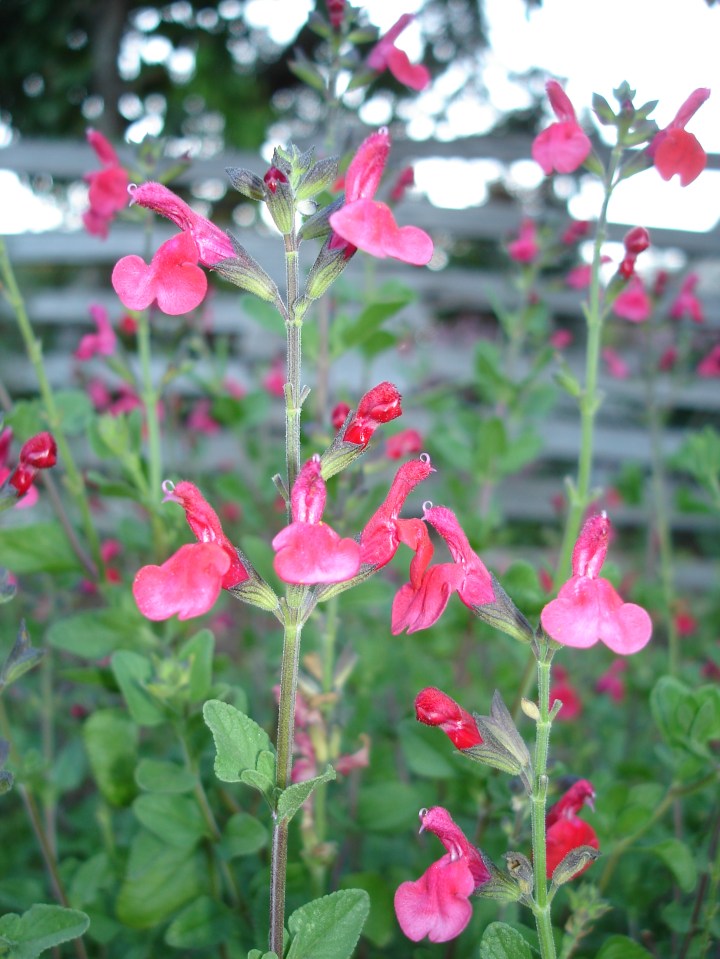 Perhaps in the wild, it blooms in autumn. Where it gets watered in home gardens, even if watered only occasionally, autumn sage, Salvia greggii, blooms all through summer as well. If pruned back severely over winter, it starts to bloom even sooner in spring. The tiny flowers are red, rose, pink, peach, very pale yellow, lavender or white. Some poplar cultivars have bi-colored flowers.
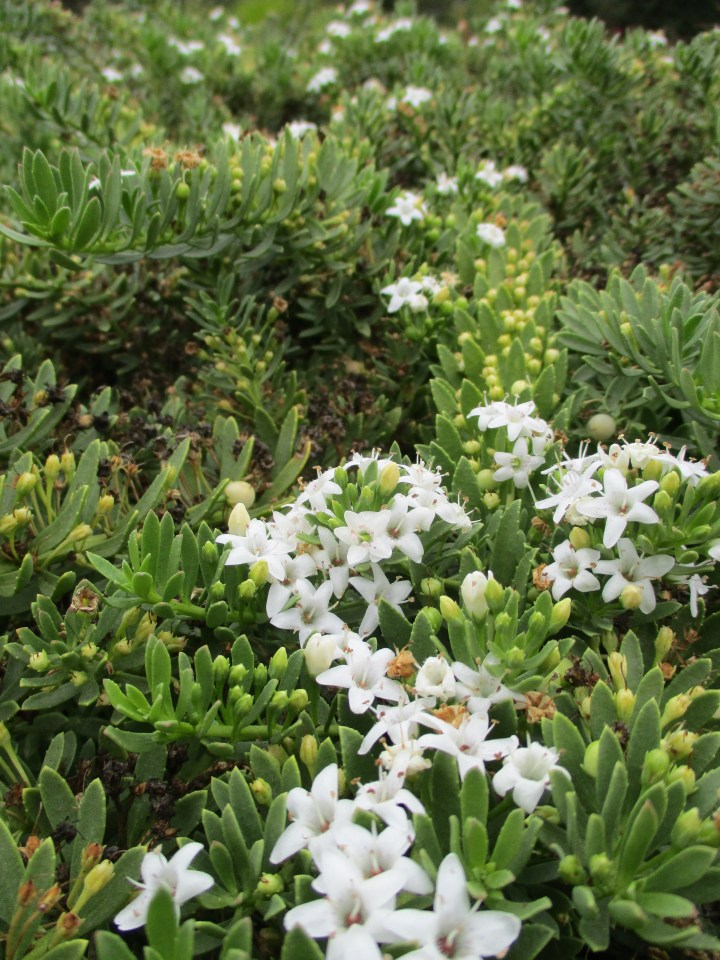 The familiar sandalwood, Myoporum laetum, that is such a resilient small tree or big shrub in windy coastal climates, might make the wrong impression for the less familiar creeping myoporum, Myoporum parvifolium. Creeping myporum does not get much more than a foot high unless it climbs over stones or other obstacles, and it might stay less than six inches deep in exposed spots.
 ‘Moonshine’ is probably the epitome of fernleaf yarrow, Achillea filipendulina, even though it is technically a hybrid. From the middle to the end of summer, its three inch wide corymbs (flat-topped trusses) of tiny bright yellow flowers stand as high as three feet above ferny and gray basal foliage. Bloom is best in full sun and warm exposure. Established plants do not need too much water.
 Their pastel hues and blends of pink, lavender, near red and white are so perfect for the middle of spring when cosmos, Cosmos bipinnatus, begin to bloom. They are just as perfect as bloom continues right through summer and almost to autumn, when the tall and airy plants finally begin to wear themselves out. If they continue through autumn, they eventually succumb to frost in winter.
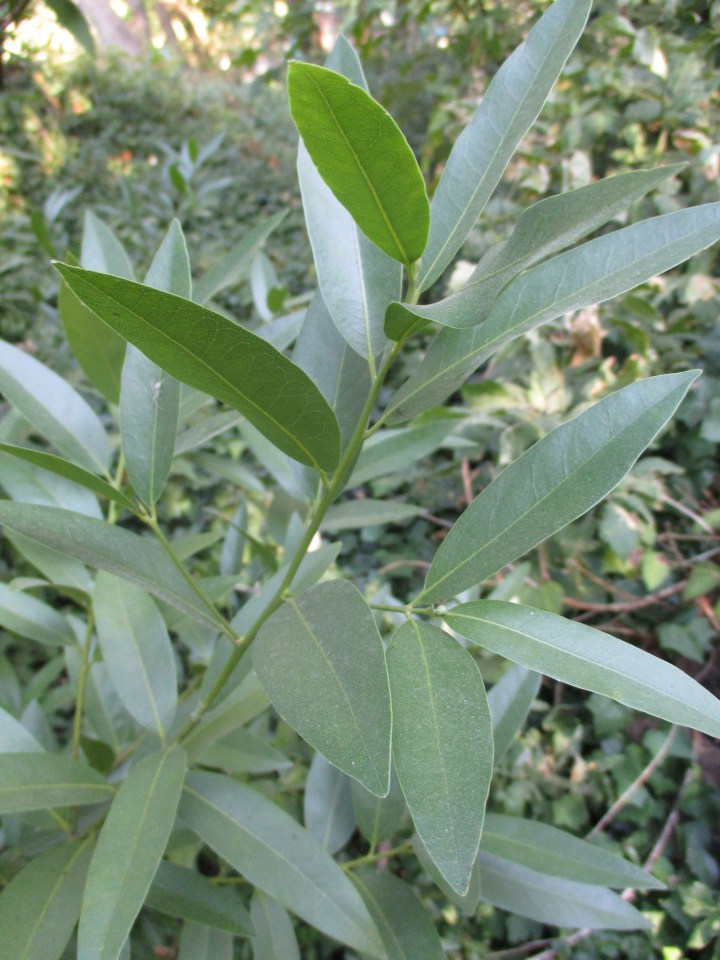 Just because California bay, Umbellularia californica, can be used like Grecian or sweet bay for culinary purposes does not necessarily mean that it should be. California bay has a stronger and much more pungent flavor and aroma. Some might suggest substituting less than half California bay for Grecian bay. However, even if the intensity is adjusted accordingly, the flavor might be off.
 Ferns tends to be . . . well, ‘ferny’, with divided or intricately lobed foliage. Staghorn ferns and bird’s-nest ferns are the more familiar of the rare exceptions. Staghorn ferns have two types of simple undivided fronds, and both types lack rachi. Bird’s-nest ferns have weirdly simple fronds that, although equipped with prominent rachi, lack any distinctive division or lobes that make ferns ‘ferny’.
 If it has bark like a coastal redwood, and foliage like a coastal redwood, and a slender conical structure like a coastal redwood, it is most likely a coastal redwood. If it turns orangish brown in autumn and defoliates through winter, it is the much less common dawn redwood, Metasequoia glyptostroboides. It is one of only a few distinctive genera of coniferous trees that are deciduous.
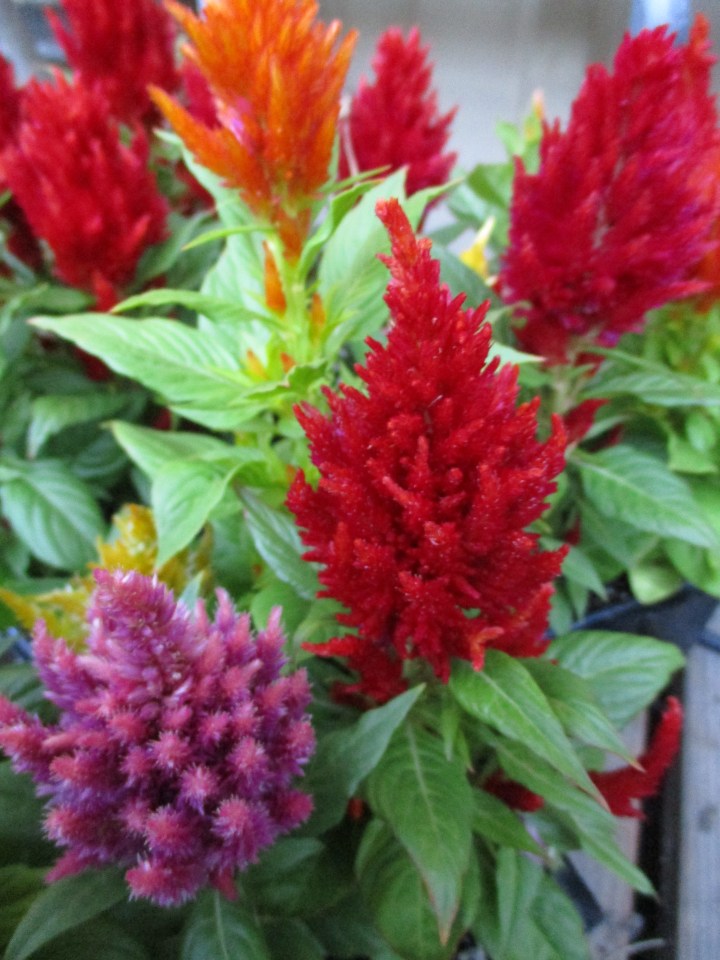 Not all annuals last as long as petunias do through summer, or pansies do through winter. Some fill in for the in between seasons, or if longer term annuals do not last quite as long as they should. Cockscomb, Celosia plumosa, blooms best now that it is about halfway through summer, and then finishes as weather gets too cool for it in late autumn, not so much more than two months later.
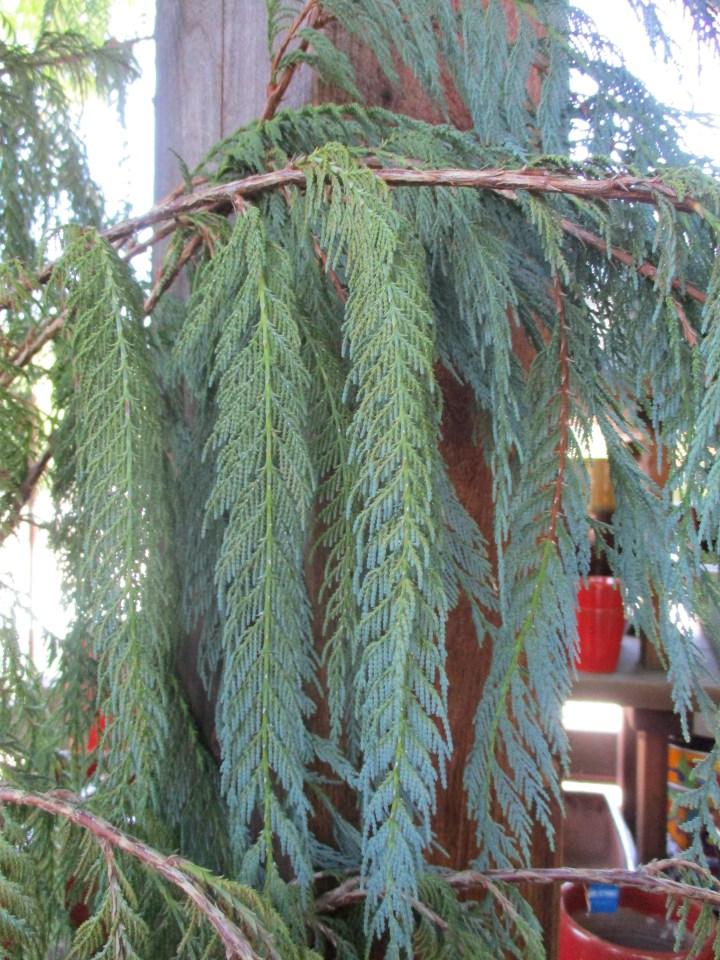 Plants are usually well suited to the climates that they are native to. Glaucous (slightly reflective grayish) foliage is more common in harsh climates where darker green foliage might get cooked by the sun. Pendulous growth is more common among plants that want to shed heavy snow efficiently. Kashmir cypress, Cupressus cashmeriana, has both, but is from a tropical monsoonal climate.
 Tony Tomeo