 Boston ivy is not really ivy at all; but is more closely related to grape. Along with creeping fig, it is one of the two best vines for freeway sound-walls. It protects the walls from graffiti and muffles sound. Unlike creeping fig, which is evergreen, Boston ivy is surprisingly colorful through autumn. Unfortunately, it clings to whatever it climbs with holdfast discs, so ruins paint, stucco, and any other surface it gets a hold of.
Then there is ornamental grape, Vitis vinifera. It is about as colorful as Boston ivy, and can climb almost as aggressively to thirty feet, but lacks the damaging holdfast discs. It is nearly fruitless, which may seem like a waste of an otherwise perfectly good grape vine; but it will not make much of a mess until it defoliates. If any of the tiny fruit actually matures, it will almost certainly get eaten by birds before anyone notices.
Since it does not grip so tightly to what it climbs, ornamental grape can get rather shrubby. Outer growth can overwhelm and shade out inner growth, and can eventually produce a thicket of dead canes. Pruning back superfluous shrubby growth while bare in winter promotes more vigorous new growth the following spring and summer. Ornamental grape likes full sun exposure.
 Some of us may remember deodar cedar, Cedrus deodara, from the opening scene of the Andy Griffith Show. They were in the background as Andy Taylor and his son Opie skipped stones on Myers Lake near Mayberry in North Carolina. Those well established and naturalized trees and the pond are actually in Franklin Canyon Park in the Santa Monica Mountains above Beverly Hills.
 Of all the colorful berries that ripen in autumn, firethorn, Pyracantha coccinea, is the most colorful, and also the most familiar. The berries are almost always bright red, deep red or reddish orange. Cultivars with orange berries have become rare. Those with yellow berries are even more rare, and are weaker plants anyway. The berries can linger through winter, but typically get eaten by birds half way through.
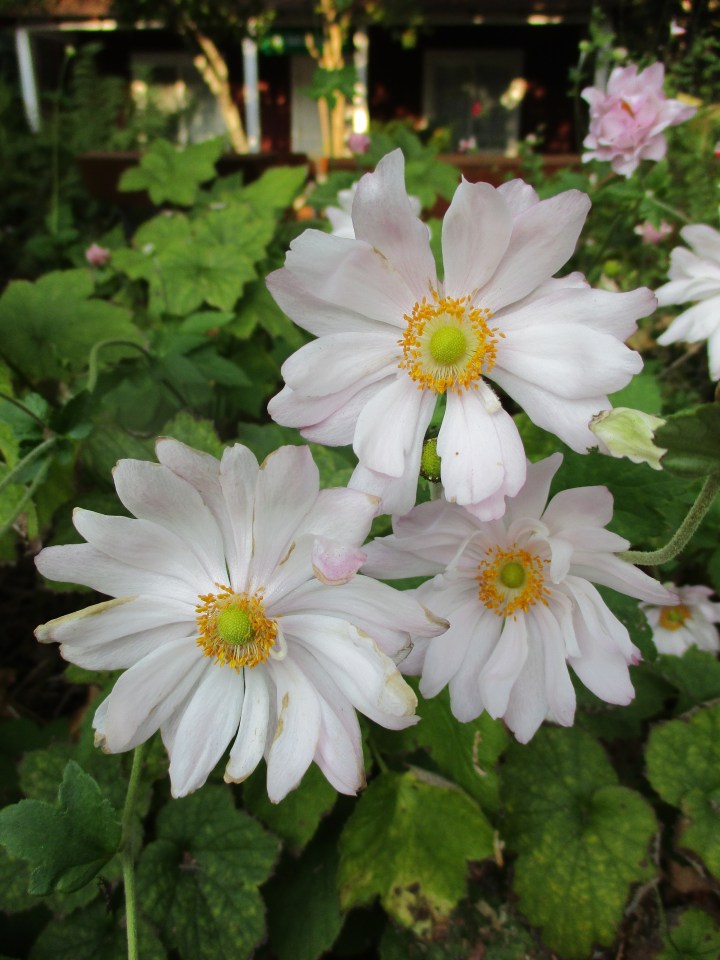 Here it is, three quarters of the way through November, and this Japanese anemone, Anemone hupehensis or Anemone X hybrida, is finally finishing bloom. It should have finished a month ago, but does not always stay on schedule here. Each cultivar exhibits a distinct responsiveness to the seasons, so others finished a while ago. The deciduous foliage will eventually succumb to frost.
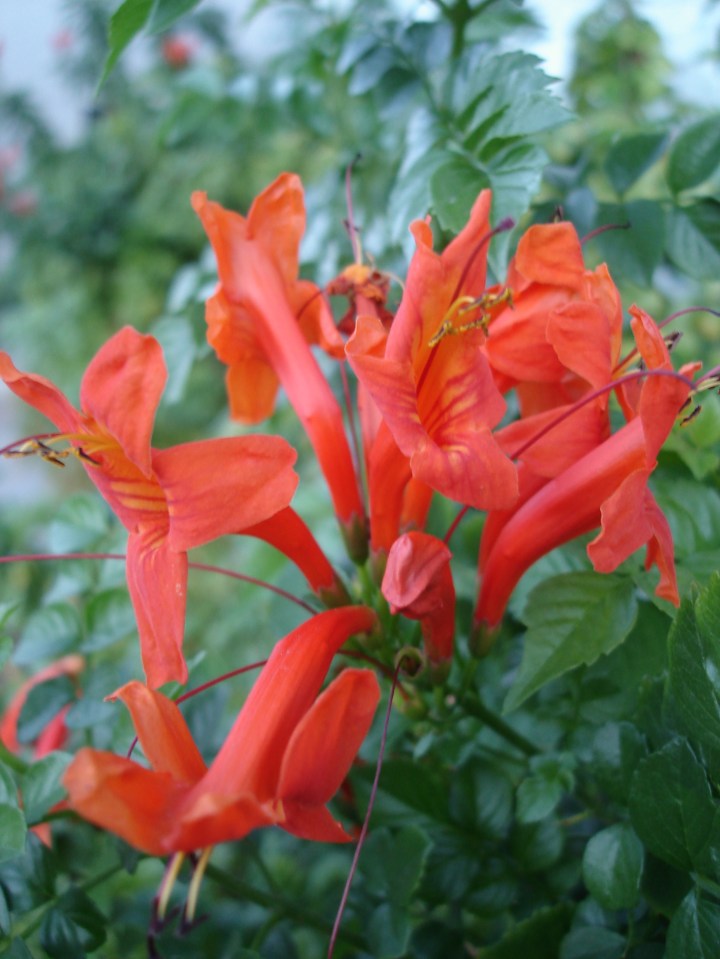 It may not bloom profusely, but cape honeysuckle, Tecoma capensis, blooms sporadically at random times throughout the year, and often while not much else is blooming. The bright reddish orange flowers contrast nicely against glossy evergreen foliage. Some blooms are slightly more reddish, while others are slightly more orangeish. A somewhat more compact cultivar blooms with light yellow flowers.
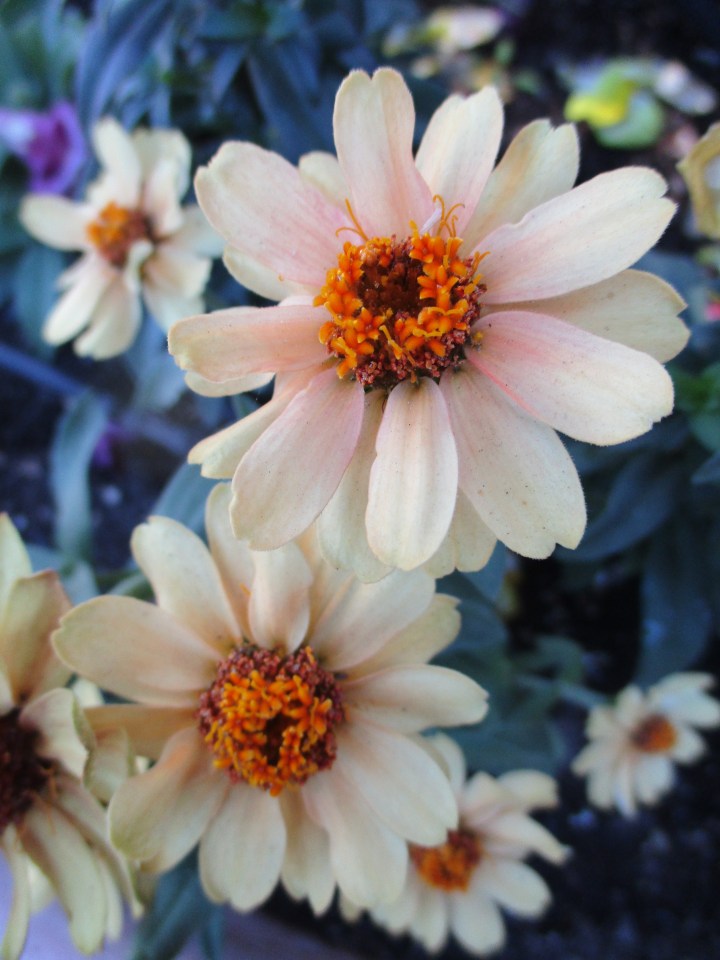 The same cooling weather that is initiating fall color is what finishes the zinnias that bloomed so colorfully through summer. Like tomatoes, they can stay out in the garden until they succumb frost if they continue to perform, and if the space they occupy is not needed for something else. There should be no guilt with replacing them sooner. After all, they are technically warm season annuals.
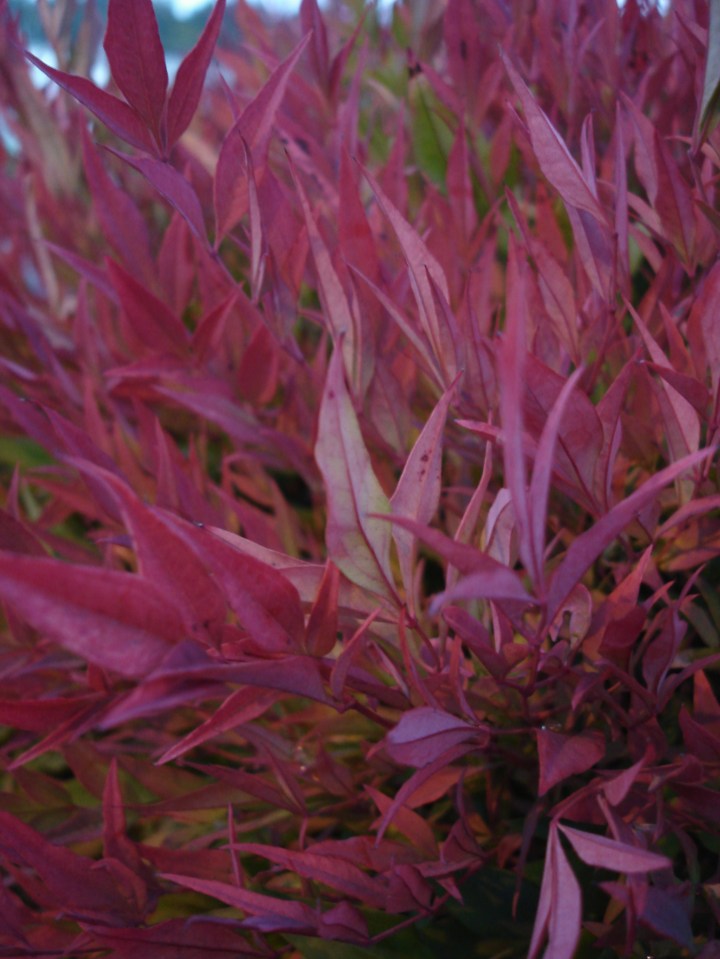 Good old-fashioned Heavenly bamboo, Nandina domestica, which can almost reach the eaves, can be difficult to obtain nowadays. More compact modern cultivars do not get much more than six feet tall, and some stay less than three feet tall. Foliage is airier in partial shade, but more colorful where more exposed.
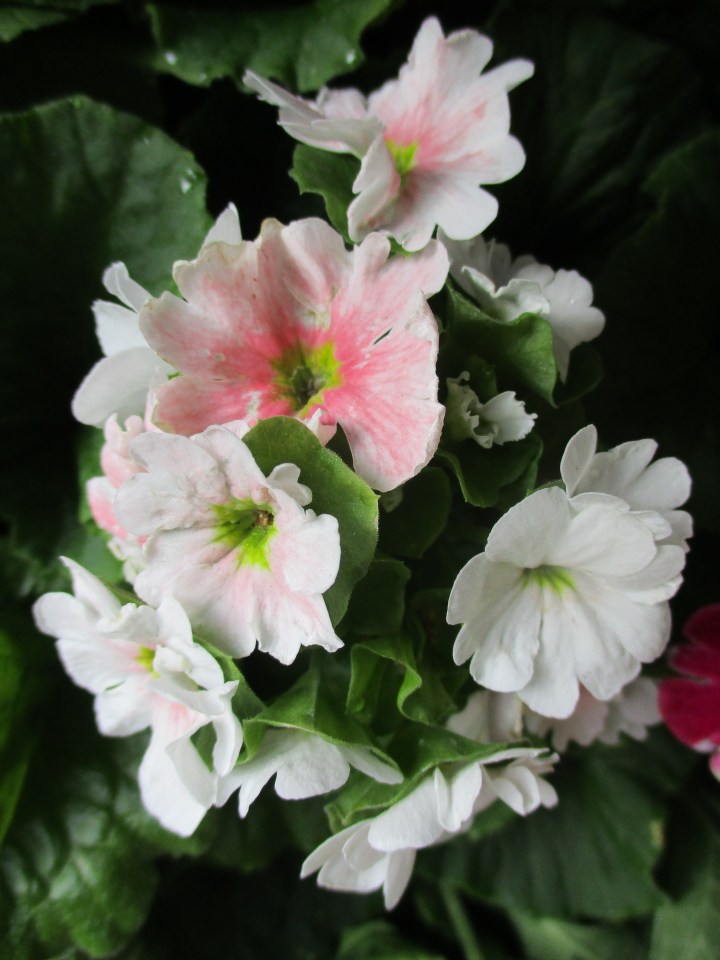 Just like African marigold that was featured earlier is actually Mexican, German primrose, Primula obconica, is actually Chinese. As odd as it is, the common name is an improvement from the former name of ‘poison primrose’, which was derived from the potentially irritating sap of the unimproved species before it was bred to be less toxic, as well as more colorful and prolific in bloom.
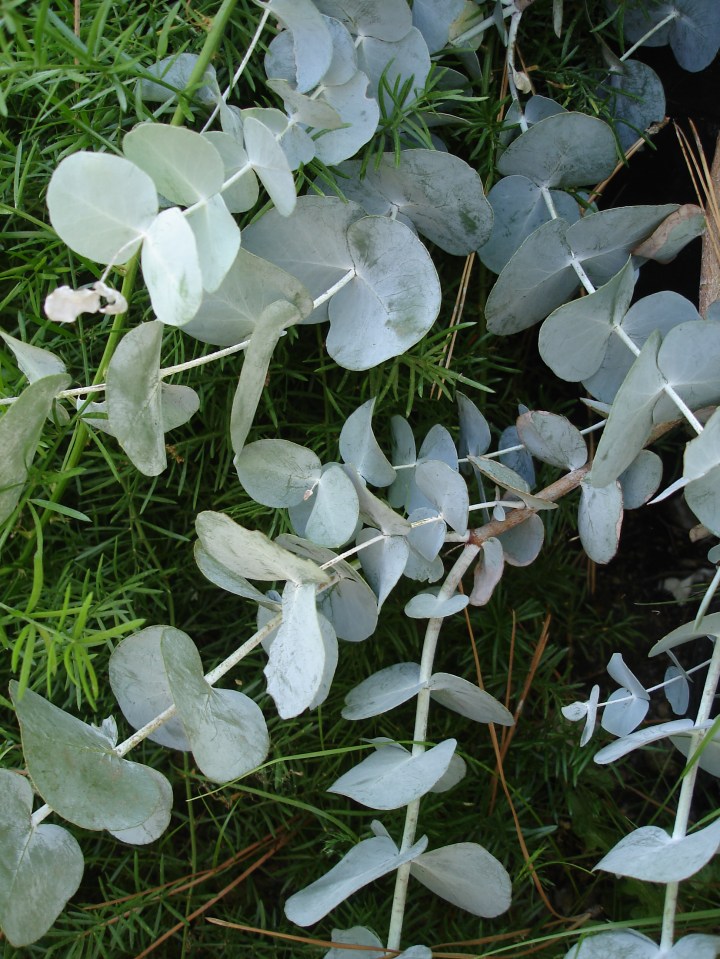 What an odd name. It sure sounds interesting, like some sort of exotic fruit tree. Alas; argyle apple is a eucalyptus; to be specific, Eucalyptus cinerea. Compared to most other eucalypti, it stays rather low. It barely gets as tall as a two story house, even if it gets broad enough to shade most of the backyard. The rusty brown bark becomes roughly furrowed. The irregular branch structure can be quite sculptural.
 French Marigold might have been a more appropriate choice. It is the official flower of Dia de los Muertos on November 2. Some might say that the bigger and bolder African marigold, Tagetes erecta, is just as official. Both are Mexican, but as the names imply, most varieties of French marigold were developed in France, and most varieties of African marigold were developed in Africa.
