Wow, this storm was more than a decade ago, but I can remember how wicked it was.


The weather in the parts of California that most of us are familiar with is generally rather mild. Some of the hottest temperatures every recorded were in the Mojave Desert, but not many of us even know how to get there. Some of the heaviest snowfall ever recorded was near Tahoe, but many of us think of that as almost Nevada. San Jose, Los Angeles and the most populous regions enjoy mostly comfortable weather throughout they year.
‘Drought’ is often an inaccurate description of the naturally prolonged dry chaparral and desert weather, as if it is abnormal. There would be no chaparral or desert if it rained here as much as it does in other climates. What is considered to be normal rainfall in some regions would be disastrous to regions that do not normally get so much precipitation. Drought does happen here sometimes, but it is not as common…
View original post 150 more words
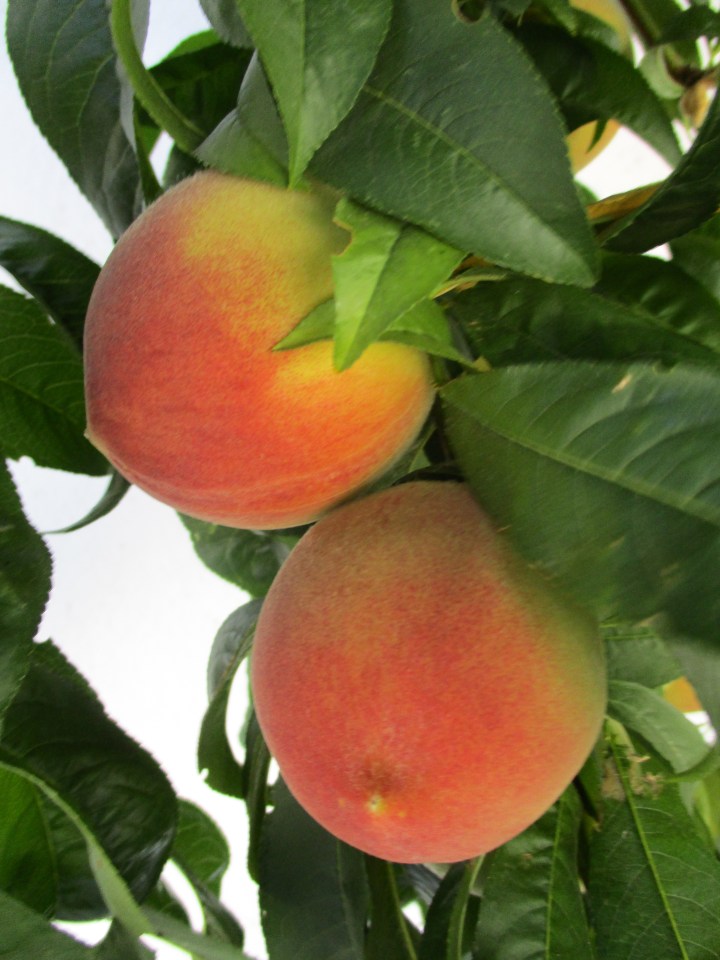 Growing fruit trees is quite a bit of work. While producing, some of the fruit trees need nearly as much attention as annual vegetable plants in the vegetable garden. Then, while dormant, they need meticulous and specialized pruning. Some fruit trees get damaged by insect or disease infestation, or severe weather. Some fruit can get taken by wildlife. Yet, for most of us, the reward of fresh fruit is worth all the hard work that goes into growing it.
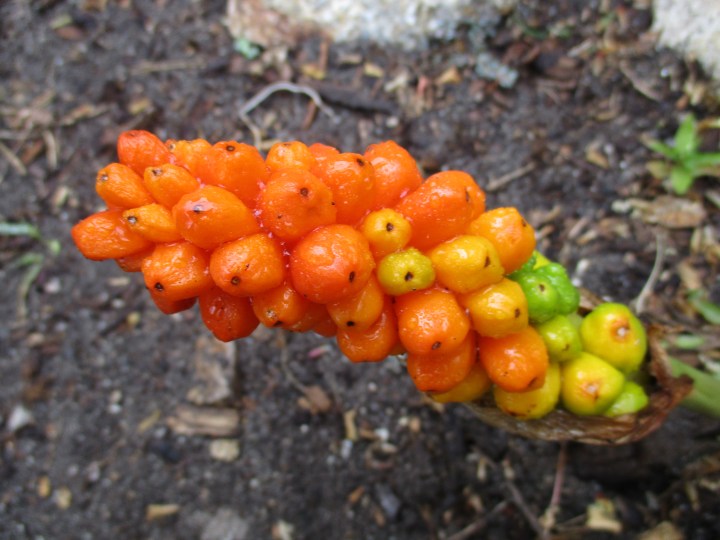 Just a short distance from the
  Because redwoods live for centuries, their bark gets very thick. They do not shed their bark as they grow. Old giant redwoods in the Sierra Nevada have bark that is a few feet thick and thousands of years old. Their bark is thicker than the trunks of what most of us consider to be large trees! Even much younger coastal redwoods that have regenerated here since clear cut harvesting about a century ago have bark that is a few inches thick.
 Many municipalities enforce tree preservation ordinances. Whether we agree with them or not, these ordinances are designed to preserve significant trees that are assets to the community. For the greater good, local governments have made it their business to limit what we can do with our own trees on our own properties. There are many advantages. There are many disadvantages. We arborists see it all.
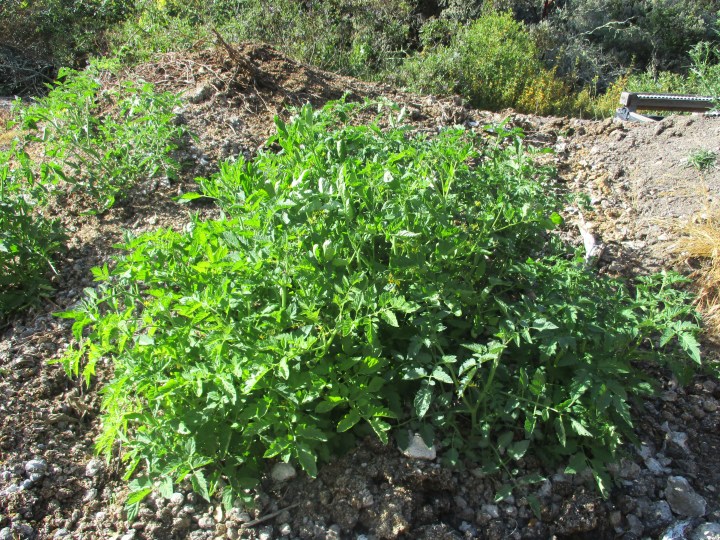 We don’t put much effort into our compost piles. In the first pile, we dump horse manure, green waste from two cafeteria type kitchens, and a bit of the finer textured green waste from the landscapes. It eventually gets turned over into the second pile. By the time the second pile gets turned over into the third pile, it is almost ready for use. The third pile really does not last long. Neighbors take it as fast as we can.
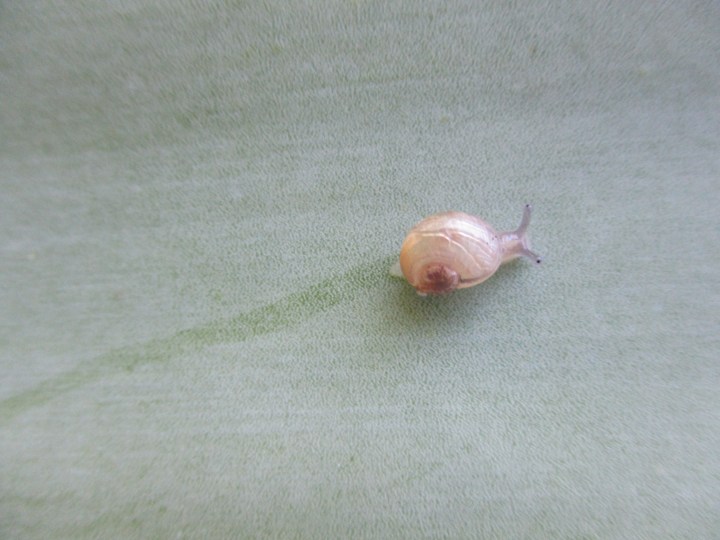 These are two pictures that did not make the grade for my ‘
 What a waste of space! What a waste of water! What a waste of time for the mow-blow-and-go ‘gardener’ who charges money to mow and edge it, but are too inept to suggest planting something that might actually be pretty, or shade the parking lot. There are a few of these between parking spaces marked for ‘compact’ cars, because it is cool to discriminate against full size cars that can not pull far enough forward to get out of the way.
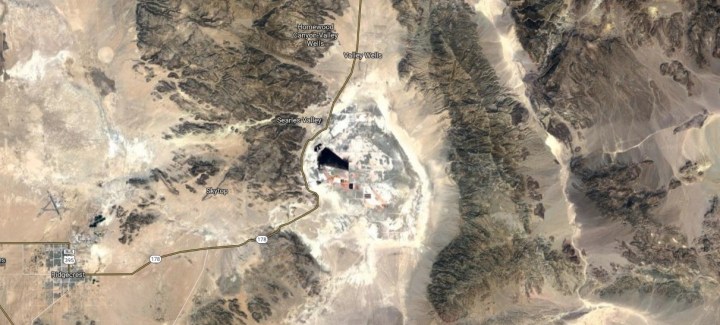 Trona is not as obscure as it seems. I would have needed to zoom in a bit more for it to appear on ‘Google Maps’, but it is there, just to the northwest of what seems to be a big crater of some sort in the middle, right where the map is labeled ‘Searles Valley’. You might have seen Trona before, from more flattering, or at least more realistic perspectives, in movies such as ‘Star Trek V’, ‘Planet of the Apes’ (2001), ‘Land of the Lost’ and ‘Holes’.
 Tony Tomeo