Due to an inability to locate some of my old articles from nine years ago, I will recycle articles such as this, which already posted to this blog four years ago, through June and at least part of July.

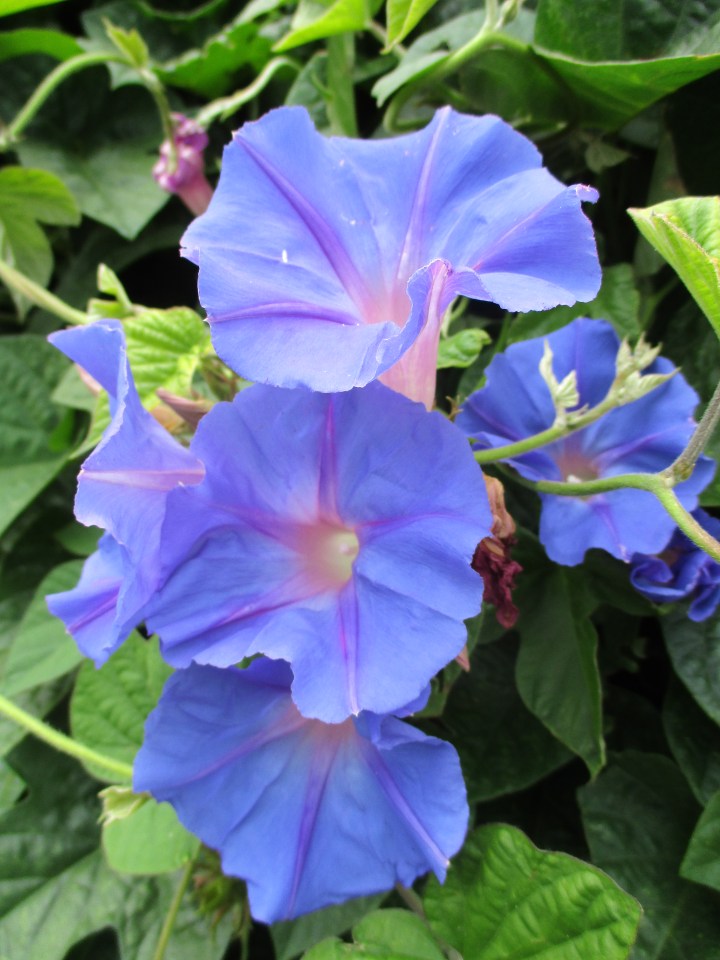 Even within its native range, blue dawn flower, Ipomoea indica, can be a problem. There are not many other plants in some coastal regions of Peru that can avoid getting overwhelmed by the aggressive wiry vines. These vines grow roots where they touch soil, so can spread indefinitely over the ground. Vines that succumb to frost over winter regenerate as if nothing ever happened.
Three inch wide flowers are rich purplish blue when they open at dawn. They then fade through the day, only to be replaced by fresh new flowers the following morning. Bloom continues from spring until autumn, and can get profuse at times. The lush rich green leaves are cordate (heart-shaped) or lobed (with only three lobes). Too much fertilizer promotes growth but inhibits bloom.
Blue dawn flower’s main weakness is a dependency on water. If it gets too dry briefly in summer, it can die…
View original post 51 more words
 Annuals come and annuals go. There are cool season annuals for winter. There are warm season annuals for summer. Really though, there are all sorts of annuals that are not annuals at all. Most are some sort of perennial that has the potential to last longer than a single season. Only a few popular ‘annuals’ would necessarily die after blooming and producing seed, within a single year.
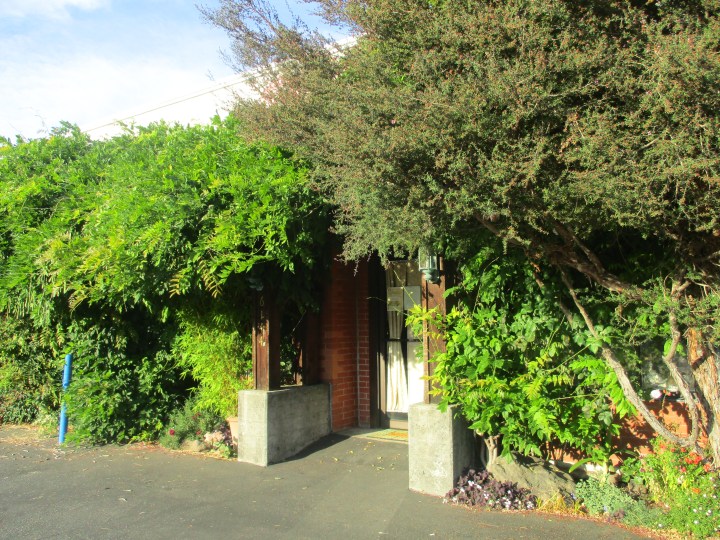 A well designed landscape should be an asset, not a liability. It should beautify and enhance the function of outdoor space, while harmonizing with associated indoor spaces. In order to continually do so, even a very well designed landscape requires maintenance so that it does not become so overgrown that it becomes unsightly and obstructive.
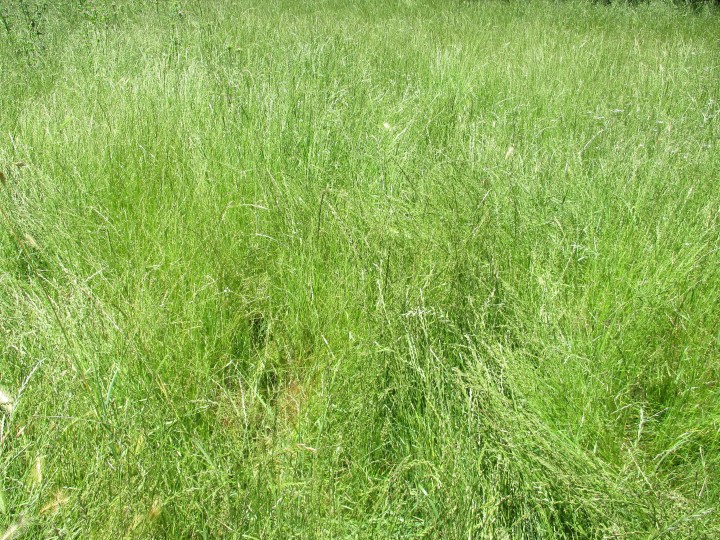 These are perfect conditions for crop circles. Even without any convenient grain crops, there is plenty of tall grass in unmanaged and ungrazed fields. All this grass needs is to be crafted into crop circles.
 We think of rhododendrons and azaleas as being from cooler and moister climates. After all, that is where they do best. Yet, there does happen to be a native western azalea, Rhododendron occidentale, that lives in the Sierra Nevada and coastal ranges from San Diego County to just southwest of Portland, Oregon. (Azalea and Rhododendron are varied specie of the same genus.)
 For a while last winter, it seemed like the rain would never stop. Obviously, it did. The warm spring weather that followed helped plants to take advantage of the rare surplus of moisture. Desert wildflowers were more colorful than they had been in many years, and maybe since 1983 in some areas. Now the weather is back to normal for here, and we must water our gardens accordingly.
 ‘Cide’ as a suffix that designates something to be killed. ‘Insecticide’ kills insects. ‘Miticide’ kills mites. ‘Molluscicide’ kills molluscs such as snails and slugs. ‘Herbicide’ kills herbaceous plants, which are presumably weeds. These examples and other chemicals that kill things that are considered to be pests are collectively known as ‘pesticides’. Many are potentially useful in the garden, since that is where so many familiar pests are problematic.
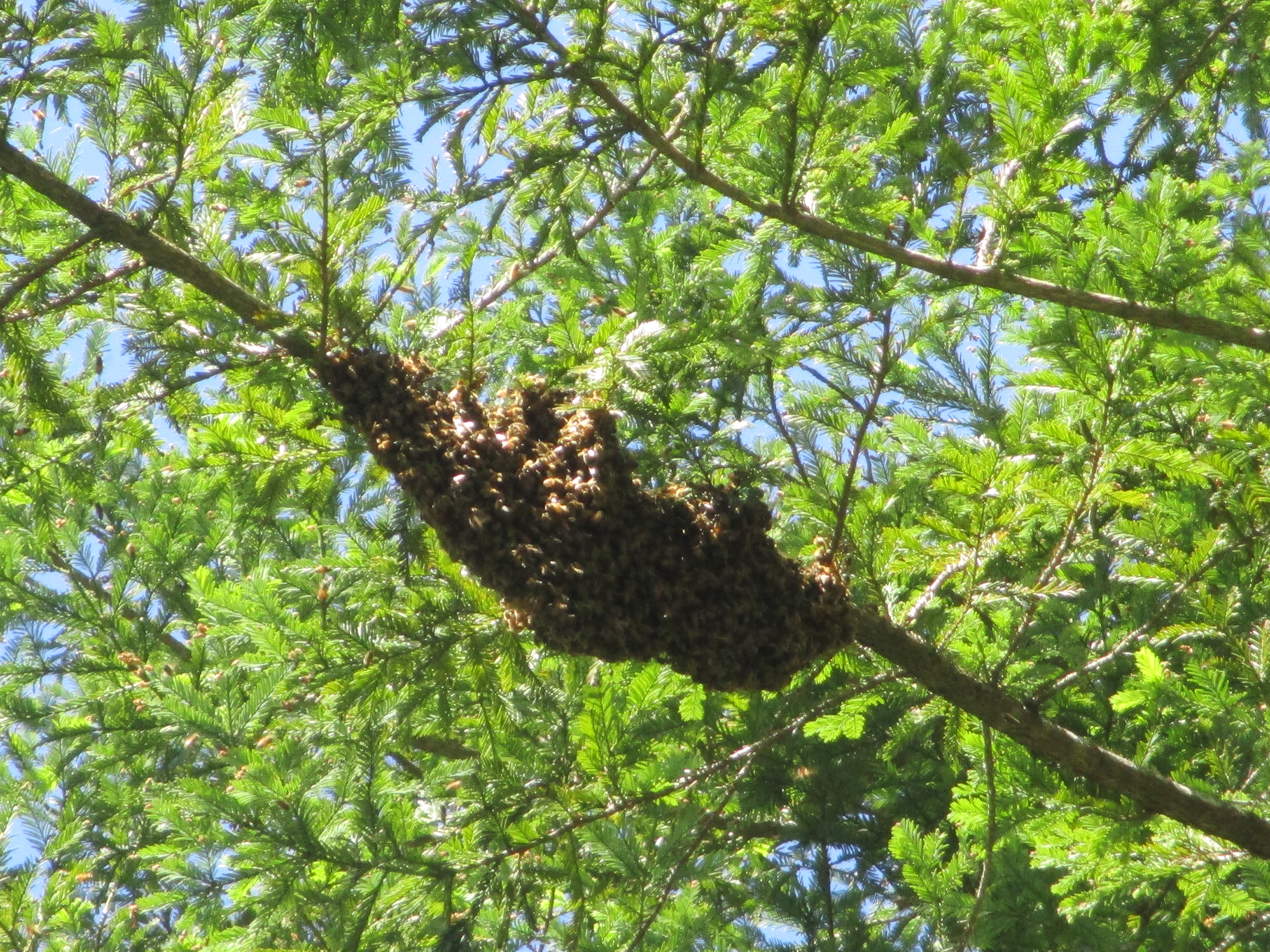 They were impossible to miss. They came at a weird time too.
 Tony Tomeo