Incidentally, after an exceptionally dry rainy season, we got some nice rain just prior to the reblogging of this post.

 There are a few consequences to all this excellent rain. Gutters are flooding. Trees are falling. Mud is sliding. As much as we should be grateful for what we are getting while we are getting it, it is getting rather old. Clear and sunny weather that is forecast after today will be a welcome relief from all this muddy sogginess.
Almost all of the flowering cherries have somehow postponed bloom. It has not been unusually cold. It is as if the trees somehow know better than to bloom while so much unusually heavy rain is falling. Otherwise, they might have bloomed only briefly before the blossoms got knocked off. The buds are so fat that I expect they will begin to bloom by the middle of the week.
Only one flowering cherry that always blooms significantly earlier than the others bloomed on time, and is already finished. Considering how heavy…
View original post 150 more words
 There are thousands of them, these weird motionless caterpillar like ‘things’, in big herds under all the cottonwood trees. They make a squishy mess in the rain, and stain concrete. They may not look like much from a distance, and are merely ignored as a minor nuisance that must be swept from pavement, but on closer inspection, they really look unworldly, like something from another planet, or a bad Japanese science fiction movie.
 English ivy, Hedera helix, is probably the nastiest and most aggressively invasive exotic species that I work with. It climbs high into redwood trees and overwhelms understory plants (that live below the trees). It invades many of the landscapes, and worst of all, it climbs building where it ruins paint and causes rot. It grows faster than we can keep up with it.
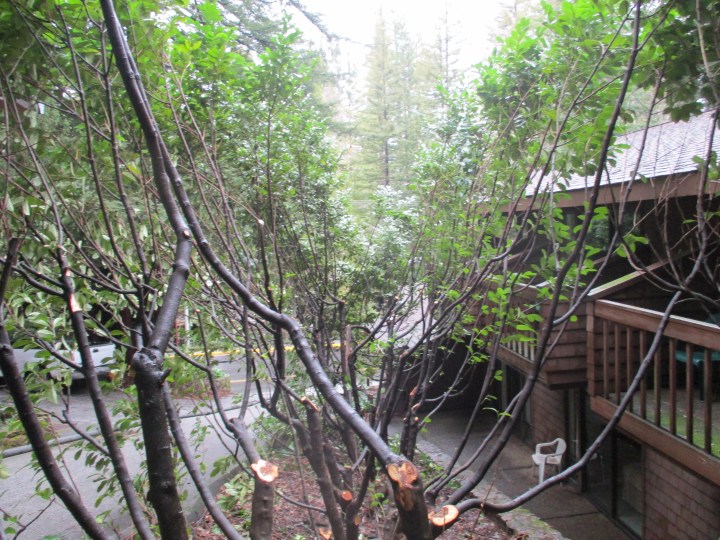 What makes this Bullwinkle worse than most is that I pruned it like this myself. What makes it worse than worse is that it did not need to be pruned in this disfiguring manner for clearance from utility cables like the last one I wrote about was.
 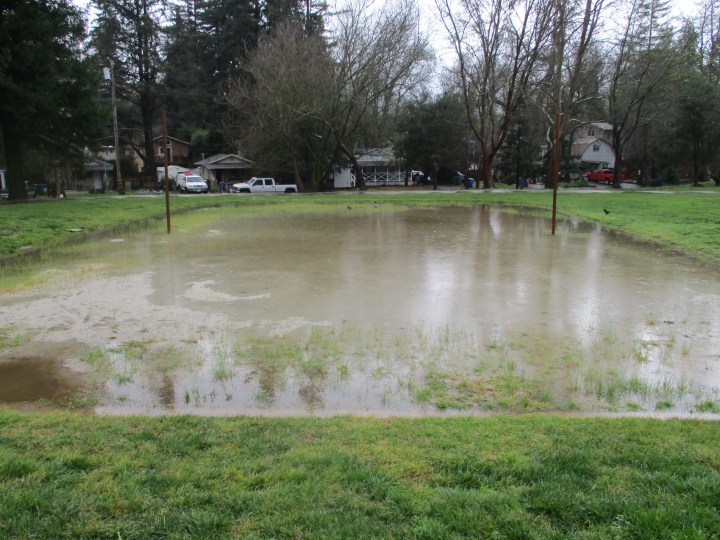 Supposedly, all this rain has not been too terribly excessive. It seems to have been raining more frequently than it normally does, with only a few days without rain in between, and more often, many consecutive days of rain. The rain also seems to be heavier than it normally is. Yet, the total rainfall is not too much more than what is average for this time of year, and well within a normal range.
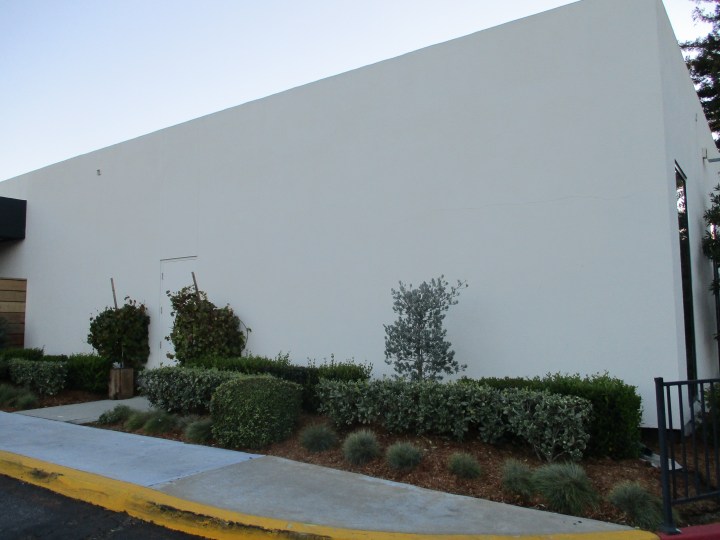 From a distance, this landscape does not look so bad. It seems to have been only recently installed, and features the sort of material that was likely intended to not necessarily obscure the sleek architecture of the building behind it, but to eventually soften the starkness of it.
 Coastal redwood, Sequoia sempervirens, are remarkable stable trees. They rarely fall, which is how they get to be thousands of years old. They prefer to live in groups, where they mesh their roots together, and shelter each other from wind. Those that live outside of a group stay shorter than forest trees, and typically develop multiple trunks that function as a group.
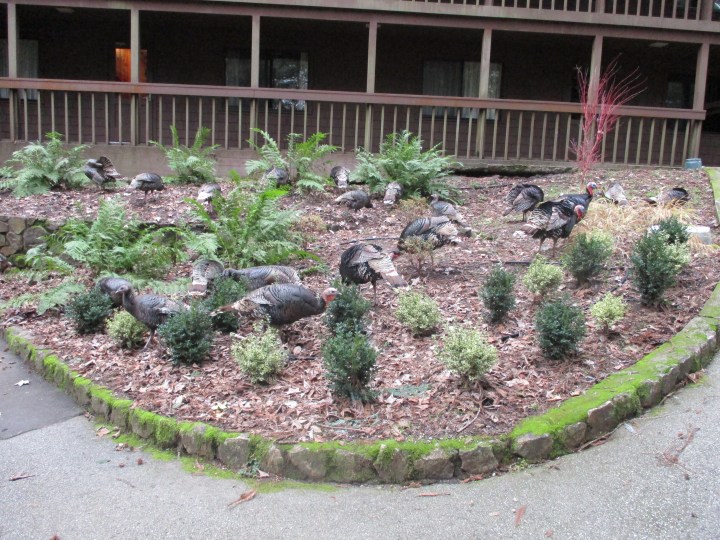 This is a relatively new development. The first few arrived here only two years ago. By last year, a few more arrived to make a significant herd that split into two smaller herds. Now these two smaller herds are quite significant. If they continue to proliferate as they have been, they will become more of a problem. They are already shredding flowers and colorful berries that are within their reach, and digging up flexible irrigation hoses.
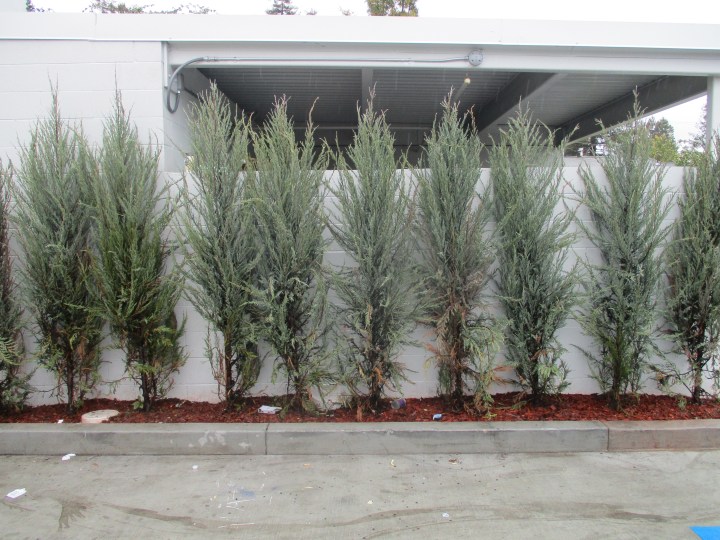 Back when horticulture was still respected, a very long time ago, dense shrubbery with finely textured foliage, such as Japanese boxwood, could be purchased already shorn into cubes that only needed to be installed in a closely set row to become an ‘instant hedge’. For some small hedges composed of small plants that recovered efficiently from transplant, it actually worked reasonably well, even if they did not look so great at first. It also worked for a few larger shrubs that happened to transplant very easily, such as glossy privet. Tall arborvitaes happen to work exceptionally well as instant hedges, although the best spacing for them leaves temporary gaps in between.
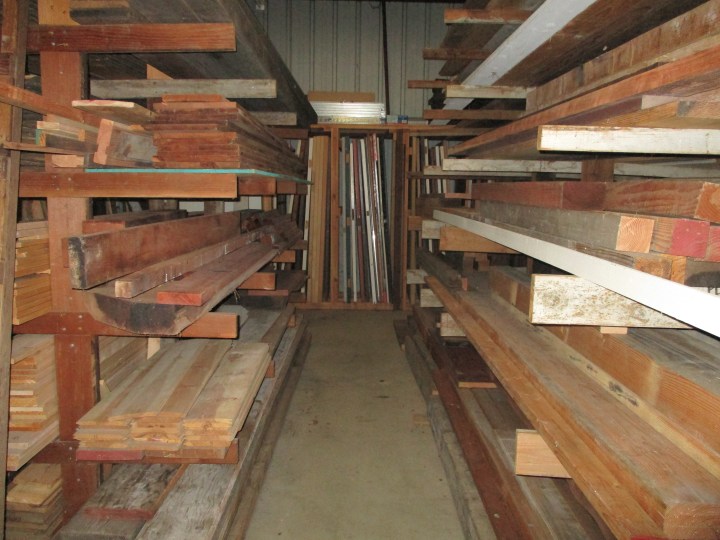 Saint Joseph did not have it so good. He is still the most famous carpenter, and somehow got the most excellent city in the World named after him, but he did not work in a shop like this one. The most well outfitted carpentry shops back then lacked modern power tools, and the selection of woods that are now so easily imported from all over the World.
 Tony Tomeo