Oh my! I forgot about this one. Weirdly, another photinia did the same nearby, without root pruning.

 Root pruning is nothing new. It is done more commonly than we think about for many aggressive perennials like lily-of-the-Nile, that like to disperse their roots into areas where we want to grow more docile annual bedding plants or vegetables. We might do it halfway, or more, around a shrubby plant during spring or summer if we plant on digging and moving it the following autumn. For most small and low profile plants, root pruning is sort of tolerable. The plants that we do it to may not like it, but it is sometimes necessary, and better than not doing so.
Trees are not like most small and low profile plants. Most are very sensitive to root pruning when mature. They are not so proficient at replacing the portions of their root systems that they are deprived of. Large roots that get severed are very susceptible to decay, which slowly…
View original post 447 more words
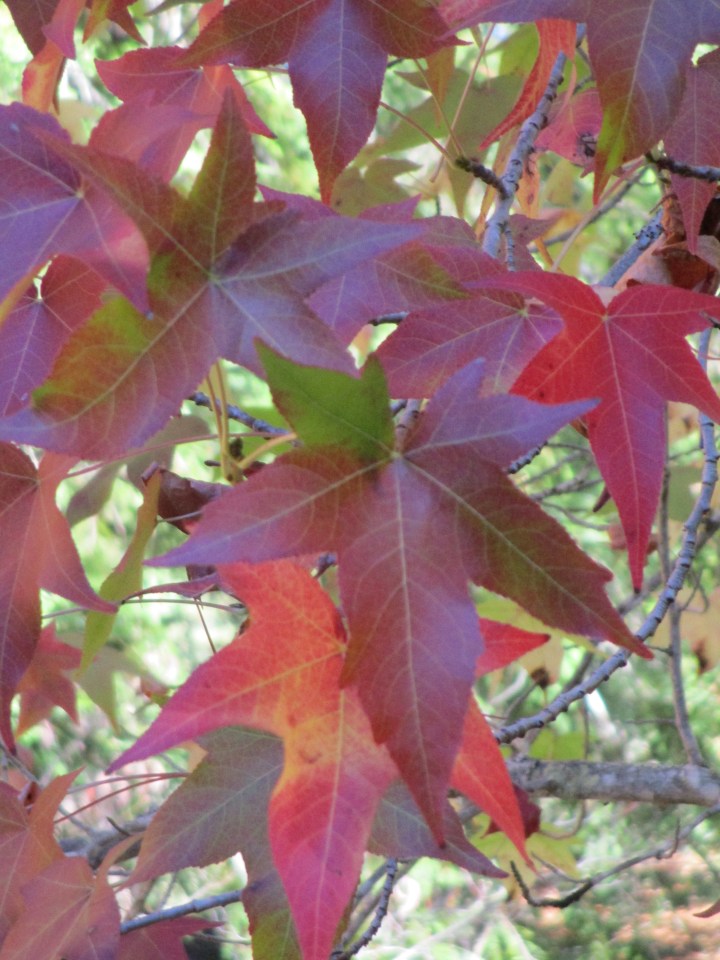 We may not get much foliar color in autumn here, but we get enough. Sweetgums do not need much cool weather to color well. They would probably have colored better and held their foliage a bit better if the weather got cooler faster, but we can not complain about what we got. Most of the crape myrtles are still completely green. Cottonwoods are defoliating, but without much color. Maples are rare here. The three best trees for color in autumn here are sweetgum, pistache and flowering pear. Of these, we happen to have several sweetgums here.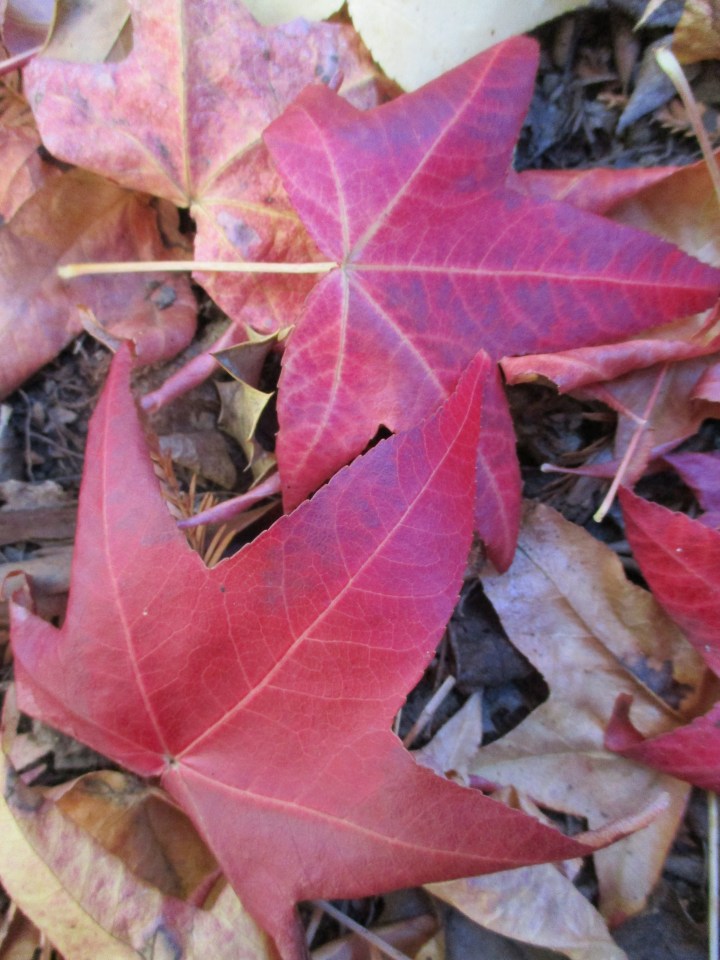
 There are many different types of horticulturists. We are all unique, both individually as well as collectively within our respective professional group classifications. For some of us, individuality interferes with conformity to the collective generalizations that are so commonly associated with our collective groups. For some of us, the stereotypes are a perfect fit.
 By ‘big trees’, I don’t mean the various ficus trees that can grow up to the ceiling, and be quite happy inside. I am referring to the shade trees that live out in the yard, or forest trees that live beyond that. They are outside for a reason . . . or actually, several reasons. They are too big to bring inside. They probably would not like the climate inside. No one wants to rake fallen autumn leaves inside. Well, you get the point.
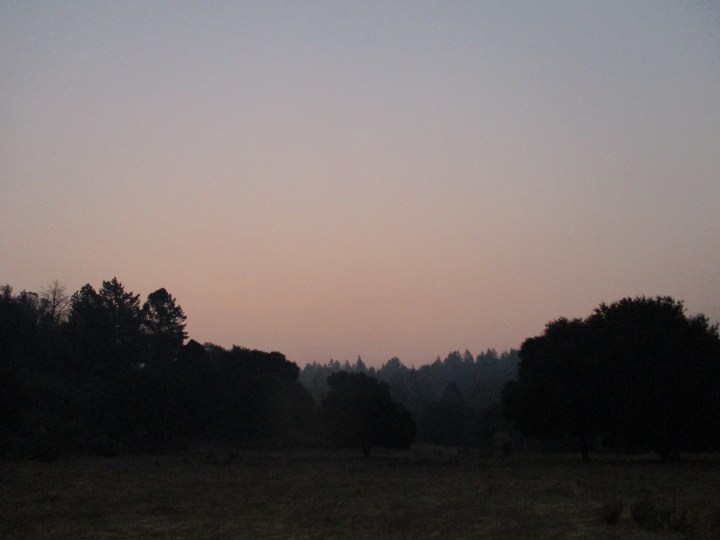 Fire has always been a part of life in most of California. That is why almost all native flora benefits from it, and has developed an efficient system and schedule for not only living with it, but exploiting it.
 Junipers have a bad name. So do eucalypti. Too many of the wrong types were planted back at a time when they were too trendy. Those that were planted into inappropriate situations grew up to cause problems. The names of all junipers and eucalypti are now synonymous with those problems, even though there are many types of both genera that are quite practical for landscape purposes.
 Is it coming or going? Autumn that is. It normally gets here last. We are typically only beginning to see the first foliar color of autumn while other parts of America get their first snow. We typically get a few more tomatoes out of our vegetable gardens long after most everyone else has pulled out their frosted tomato plants.
 That is a myth. They do not hate all cars. They just hate particular cars.
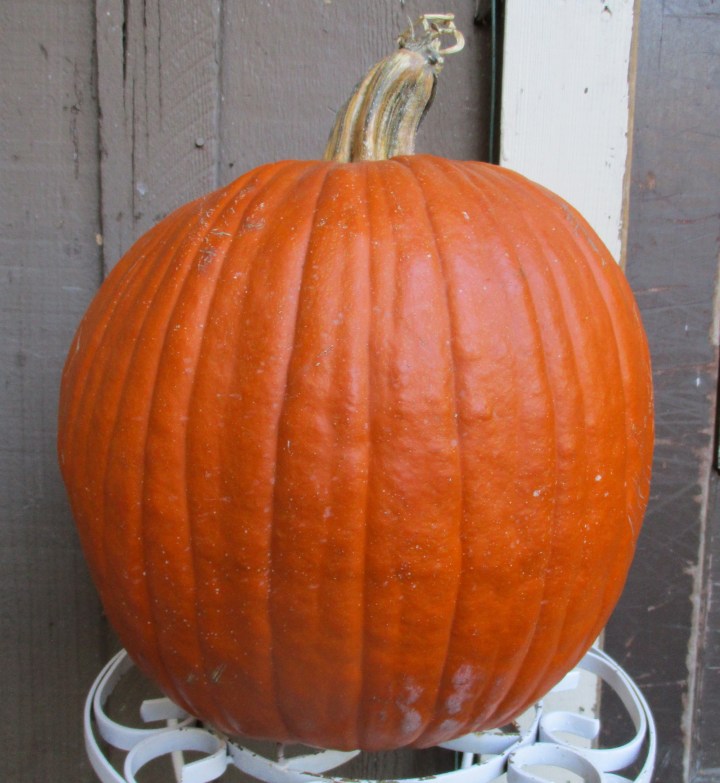 All Saints’ Day is November 1. As the name implies, it is a feast day that honors all Saints. It is one of the most important Holy Days of the Catholic Church. Yet, not many of us know about it.
 Tony Tomeo