It is a way of life in much of California. Many of us grew up with it, or at least believing in it. Many of us never heard the end of it. That is how it lost its meaning.
Drought is a weather condition. It might last one year or a few. Drought can even continue for several years. For us, it entails less than normal rainfall through winter, only because winter is when rain is supposed to fall here. As a weather condition, drought is not permanent. There have been a many during the past few centuries of recorded history here, and a few of those have been in just the last half century that I can remember. They happen frequently enough that I can not remember the exact years that were drought years, although I can remember a significant drought in the middle of the 1970s. No drought…
If the flower on the left is a four o’clock, is the flower on the right a five o’clock, or perhaps a three o’clock? Is one a.m. and the other p.m.? What about the flower of the same species that I featured twelve hours ago? What about those in another picture that I will share next Saturday?
Of course, only the colors are different; not the name . . . or the time.
What is odd about these two seemingly different flowers is that they are on the same plant. In fact, they are on the same stem, separated only by a few inches.
Four o’clocks can be odd that way. Individual plants typically bloom with exclusively pink, red, white, yellow or orange flowers. The shades and hues of these colors are variable, but are typically homogeneous throughout each entire plant. Some plants bloom with flowers of one color that…
Today, September 1, was the Feastday of Saint Fiacre, the Patron Saint of gardeners. I would not have known if I had not earlier seen this very thorough and informative article written by Doctor David Marsh of the Gardens Trust;
In all my writing, I had mentioned Saint Fiacre only once, and only in regard to garden statuary. I described how Saint Francis, who happens to be the patron saint of animals, is popularly believed to be the patron saint of gardeners because his statue is so popular in gardens, often in conjunction with statues of frolicking animals, but that statues of Saint Fiacre are very rare.
Besides the Feastday of Saint Fiacre, this September 1 also happens to be the first year anniversary of my blog. I have now been posting articles from my weekly gardening column, as well as other elaborations, for an entire year. With the…
Pruning should not leave bark of inner stems exposed during such warm weather.
For gardening, this is one of those in between times of year, when summer chores are under control, but it is a bit too early for much of the work that will need to be done in autumn. Automated watering systems have already been adjusted for the longest and warmest days of summer, so will only need to be adjusted the other way as days eventually get cooler and shorter. Growth of most plants slows; and some of the plants that will later be the earliest to show fall color begin to fade from bright green to paler green.
The last of the summer fruits should be gone, leaving the trees that produced them looking somewhat tired. The weight of large fruit, particularly peaches, might have pulled stems downward where they may now be obtrusive. Pruning a few minor stems should not be a problem. However, trees are still too vascularly active for major pruning. That needs to wait for dormant pruning while trees are bare in winter.
A few plants with sensitive bark are susceptible to sun scald if pruned to expose too much bark on interior stems while the sun is still high and warm. This is not so likely to be a problem if pruned during winter because the sun is lower and cooler, and foliage grows back before the following summer. Actually, that is why English walnut and various maples are able to defoliate during winter, even though their smooth bark needs to be shaded.
Pruning of plants that are potentially sensitive to frost should likewise be delayed. Otherwise, pruning is likely to stimulate development of tender new growth that will be even more sensitive to frost during winter. Besides, new growth develops slower this time of year, so plants look freshly pruned for a longer time than if pruned late in winter, just prior to spring.
Some types of pittosporum are more susceptible to disease if pruned in late summer or autumn because their open pruning wounds heal slowly and stay open to infection during rainy winter weather. However, slow recovery from pruning can be an advantage to formally shorn hedges that are not so sensitive to frost or disease, such as the various boxwoods, or glossy or wax privets. If shorn now, they might stay trim until spring.
The dried foliar remains of any summer bulbs that are finished blooming can now be plucked and disposed of. Gladiolus and montbretias that are still green can be deadheaded (pruned to remove deteriorated flower stalks), but should be allowed to turn completely brown before getting plucked. Watsonias are not so easy to pluck without also pulling up the bulbs, so should instead get their dried foliage pruned off.
Weeds outside of landscaped areas may not seem to be a problem, but many are now producing seed that gets blown into the garden. Even if such weeds do not need to be pulled, their flowers and seeding stalks should still be cut off and removed if possible.
Skyscrapers are already very efficient. They fit more usable floorspace into their ‘footprint’ than any other type of building does. They conserve energy that gets used for heating and cooling by exposing less of that floorspace to the outside weather. For all that usable floorspace, they need only a single roof. Think about it. A relatively short ten story building contains as much floorspace as ten single story buildings that occupy the same area individually, but collectively occupy ten times as much area! Nine of those stories loose heat during cold weather, and collect heat during hot weather, only around the exterior walls. Only the top floor loses and collects heat through the roof, and only if there is not an upper utility ‘attic’ floor that insulates it. Ten single story buildings of the same area are all exposed on top, as well as all the way around. Of course…
When they became a fad in the 2000s, it was one of the very few fads that was actually sensible for California. Agaves certainly are not for every landscape, and certainly do not suit everyone’s taste, but they are ideal for the climate here. In some regards, they are more practical than the more popular of the native specie that tend to be scrubby looking and short lived. Agaves really should have become trendy a long time ago. The problem with the fad, like so many other fads, is that it caused the object of desire to be overly popular for a while. Many agaves consequently got planted into situations where they did not belong. Landscape designers often forced them into the gardens of clients who did not know what they were, or did not even like their bold style. To show them off most prominently, designers often put the…
It is quite natural. Death, I mean. Every living thing does it at one time or another. Even the oldest bristlecone pines that live for thousands of years eventually do it. The Monterey pine in this picture did it quite efficiently. The three crows perched on top make it look extra dead. You know, not merely dead, but very dead. If this tree were in my own garden, I would be totally saddened by its death, but there is nothing that I could do about it. The smaller dark objects suspended in the now dead limbs are pine cones. Monterey pine starts to produce pine cones at a young age, and of course, produces more with age and increasing size. As mature trees begin to deteriorate, they produce even more cones as they concentrate their resources into seed production for the next generation. This elderly tree knew that death was…
This rant may not go in the direction you expect it to. The pictures suggest that this would be about the bad vegetation management crews who severely disfigure trees that get too close to utility cables. It is not.
This is about horticultural ‘professionals’ who plant trees where they will encroach into utility cables, with no regard to what might eventually be done to them in order to keep electrical service reliable and safe. The native oak in these pictures likely grew from seed, so unless someone knows the squirrel who buried the acorn, there is no one to blame. Many of us who enjoy home gardening are sometimes not aware of how tall and wide particular trees can get when we plant them. Horticultural ‘professionals’ should know better! That is what they charge so much money for when they design a landscape. Palm trees are the worst! They grow…
They are the biggest. Giant redwoods are revered for their age and size. It was not always like that.
Many of the biggest giant redwoods were killed merely for bragging rights. Whoever discovered the biggest got to arrange to get it cut down, and then pose on the stump for photographs. Some trees were cut down just so the rings could be counted. Many felled trees were just left to rot where they fell. It was not practical to transport the lumber out of the remote regions of the Sierra Nevada where the trees lived. That was at a time when ‘sportsmen’ shot from trains into herds of wild buffalo, only to pose with the biggest dead carcass they could find in the aftermath, and then leave all of the deceased to rot on the prairie. So, at about the same time in history that the related coastal redwood was…
It is pretty but pervasive. Actually, I do not really find scarlet pimpernel to be all that appealing, but this is how someone who reads my gardening column in the Santa Ynes Valley News describes it. Embarrassingly, she requested that I discuss scarlet pimpernel while it was more of a problem back on June 7, but I only recently read the message. By now, it is already dying back for autumn, and is completely deteriorated in dry and hot exposed areas. It will be back next spring, and will bloom with tiny peachy orange flowers so that it can throw tiny but ridiculously abundant seed by summer before anyone notices. Flowers can be other colors in other regions. The sprawling stems can spread more than a foot wide, and can get up to about ten inches high if sprawling over other weeds. The tiny and soft leaves are arranged in…

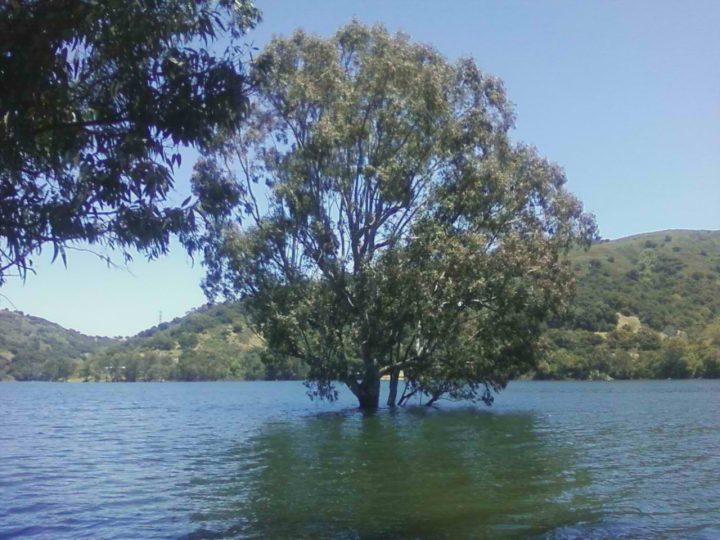 It is a way of life in much of California. Many of us grew up with it, or at least believing in it. Many of us never heard the end of it. That is how it lost its meaning.
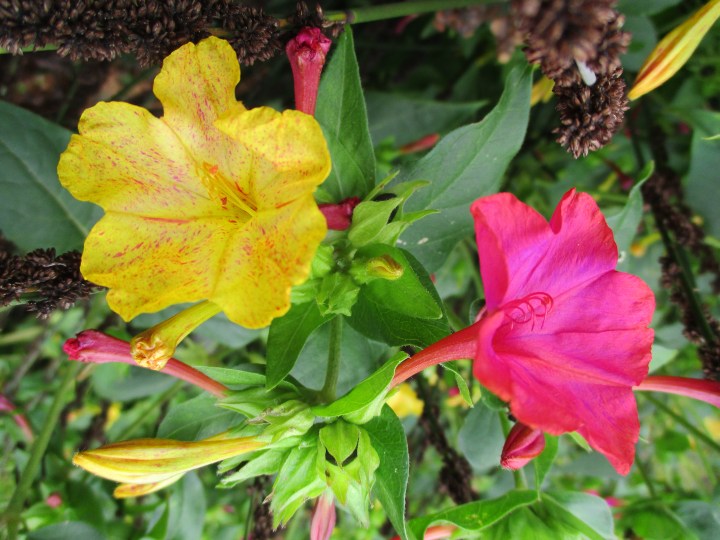 If the flower on the left is a four o’clock, is the flower on the right a five o’clock, or perhaps a three o’clock? Is one a.m. and the other p.m.? What about the flower of the same species that I featured twelve hours ago? What about those in another picture that I will share next Saturday?

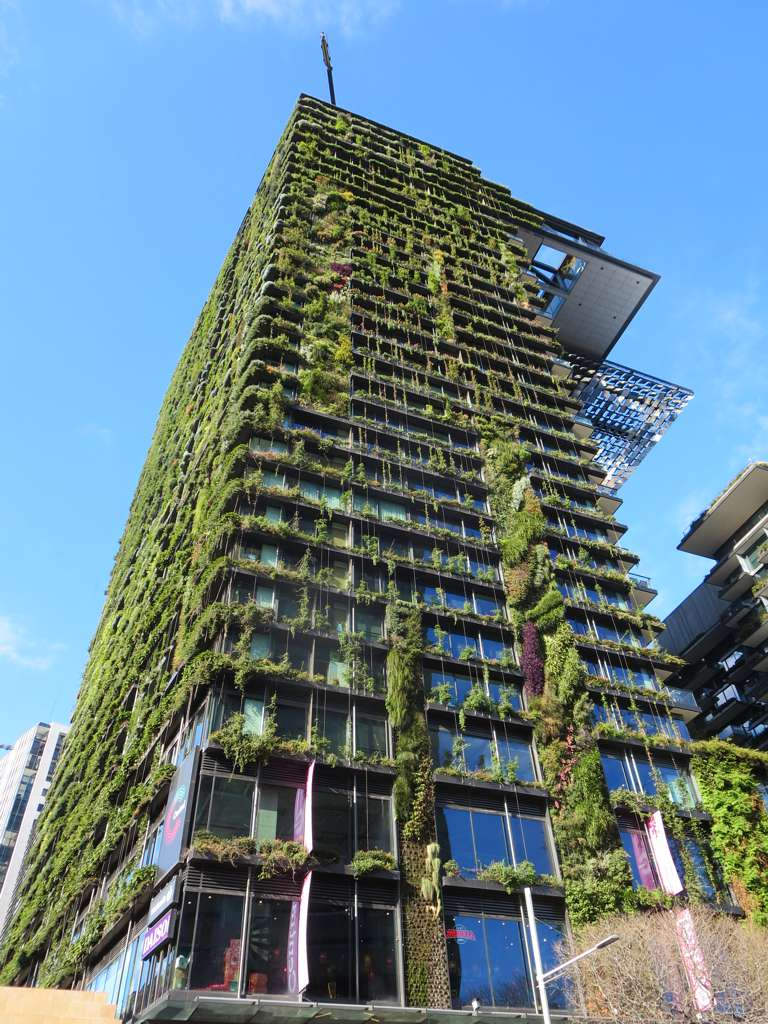 Skyscrapers are already very efficient. They fit more usable floorspace into their ‘footprint’ than any other type of building does. They conserve energy that gets used for heating and cooling by exposing less of that floorspace to the outside weather. For all that usable floorspace, they need only a single roof.
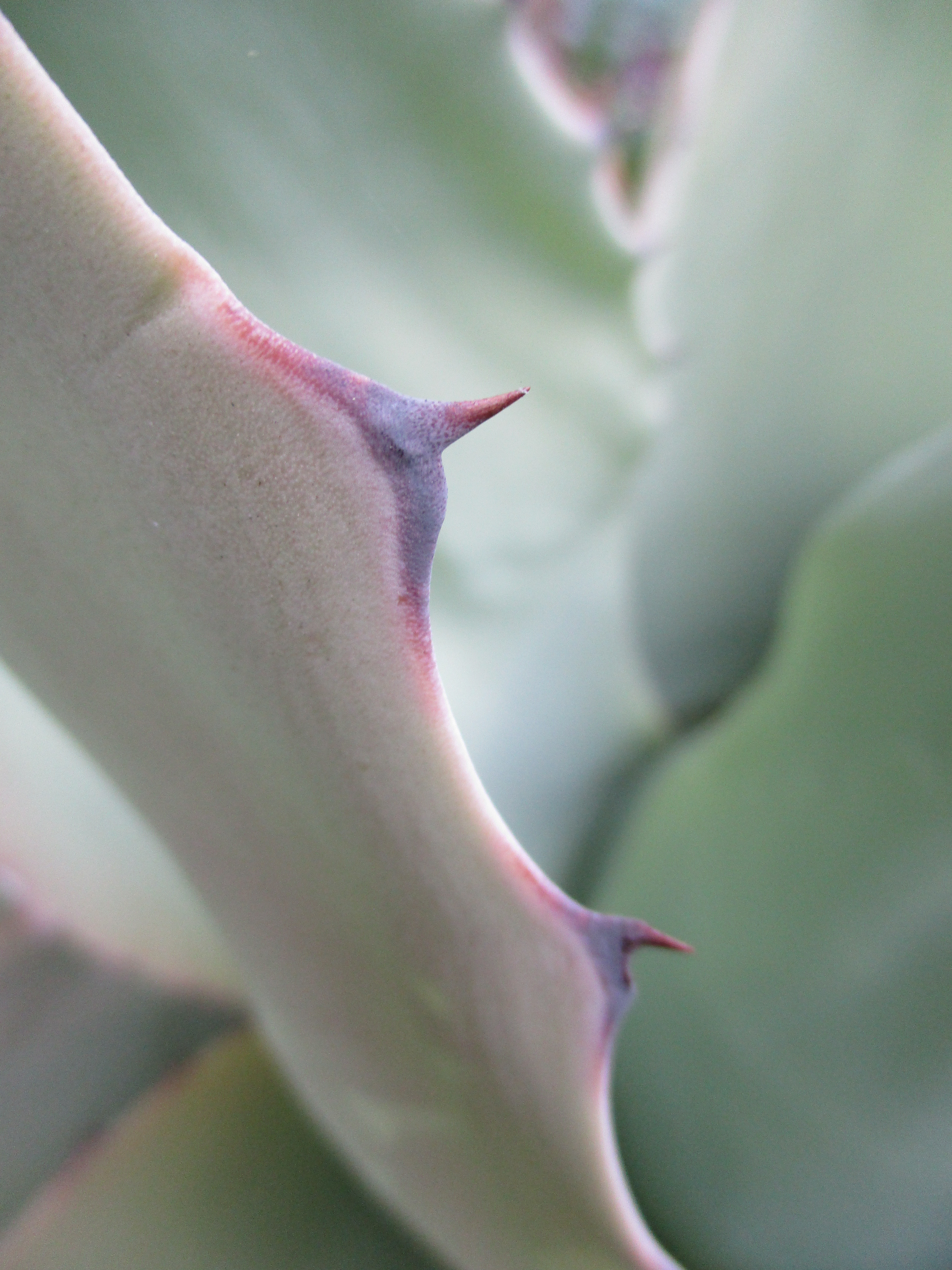 When they became a fad in the 2000s, it was one of the very few fads that was actually sensible for California. Agaves certainly are not for every landscape, and certainly do not suit everyone’s taste, but they are ideal for the climate here. In some regards, they are more practical than the more popular of the native specie that tend to be scrubby looking and short lived. Agaves really should have become trendy a long time ago.
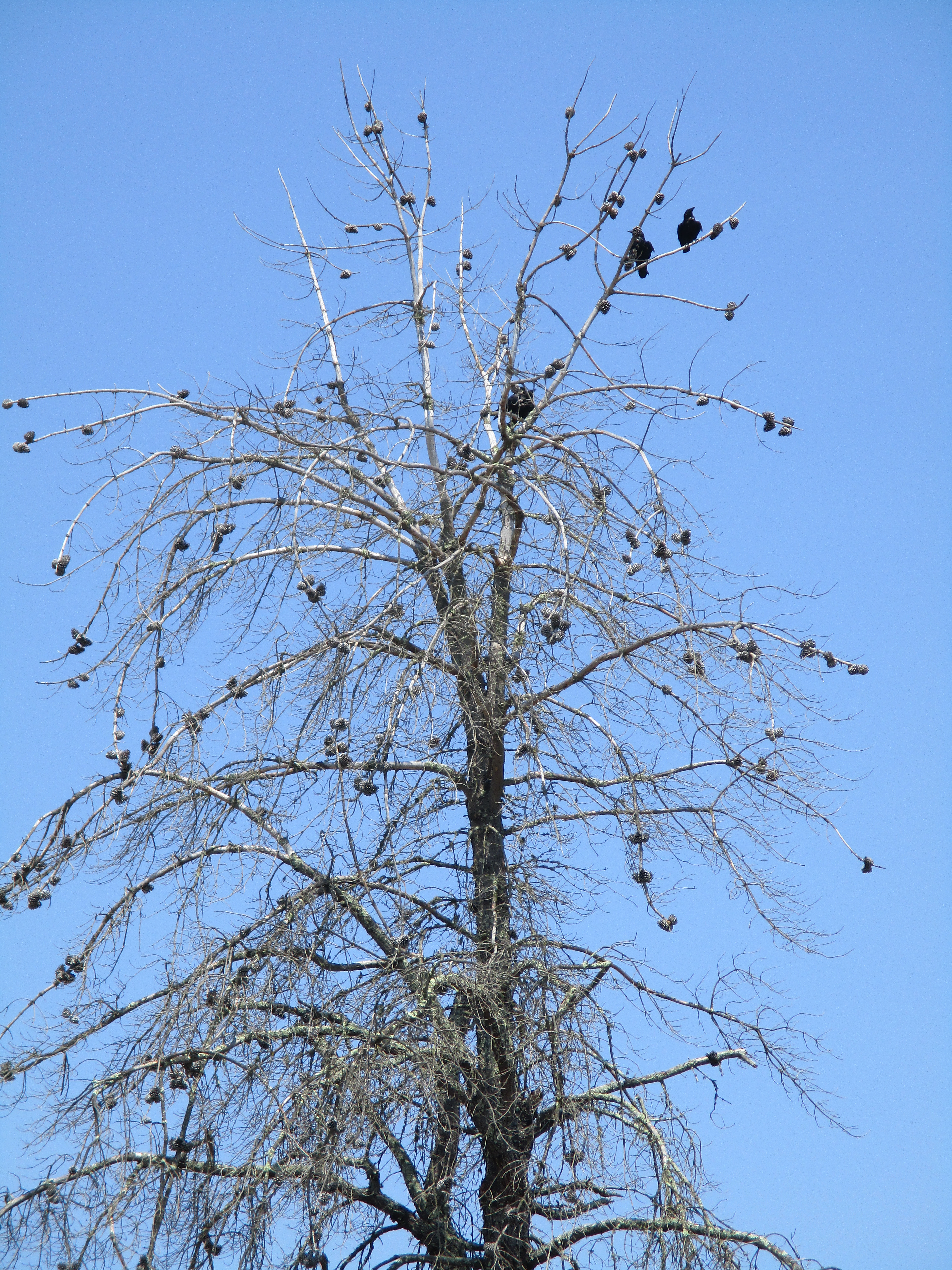 It is quite natural. Death, I mean. Every living thing does it at one time or another. Even the oldest bristlecone pines that live for thousands of years eventually do it. The Monterey pine in this picture did it quite efficiently. The three crows perched on top make it look extra dead. You know, not merely dead, but very dead. If this tree were in my own garden, I would be totally saddened by its death, but there is nothing that I could do about it.
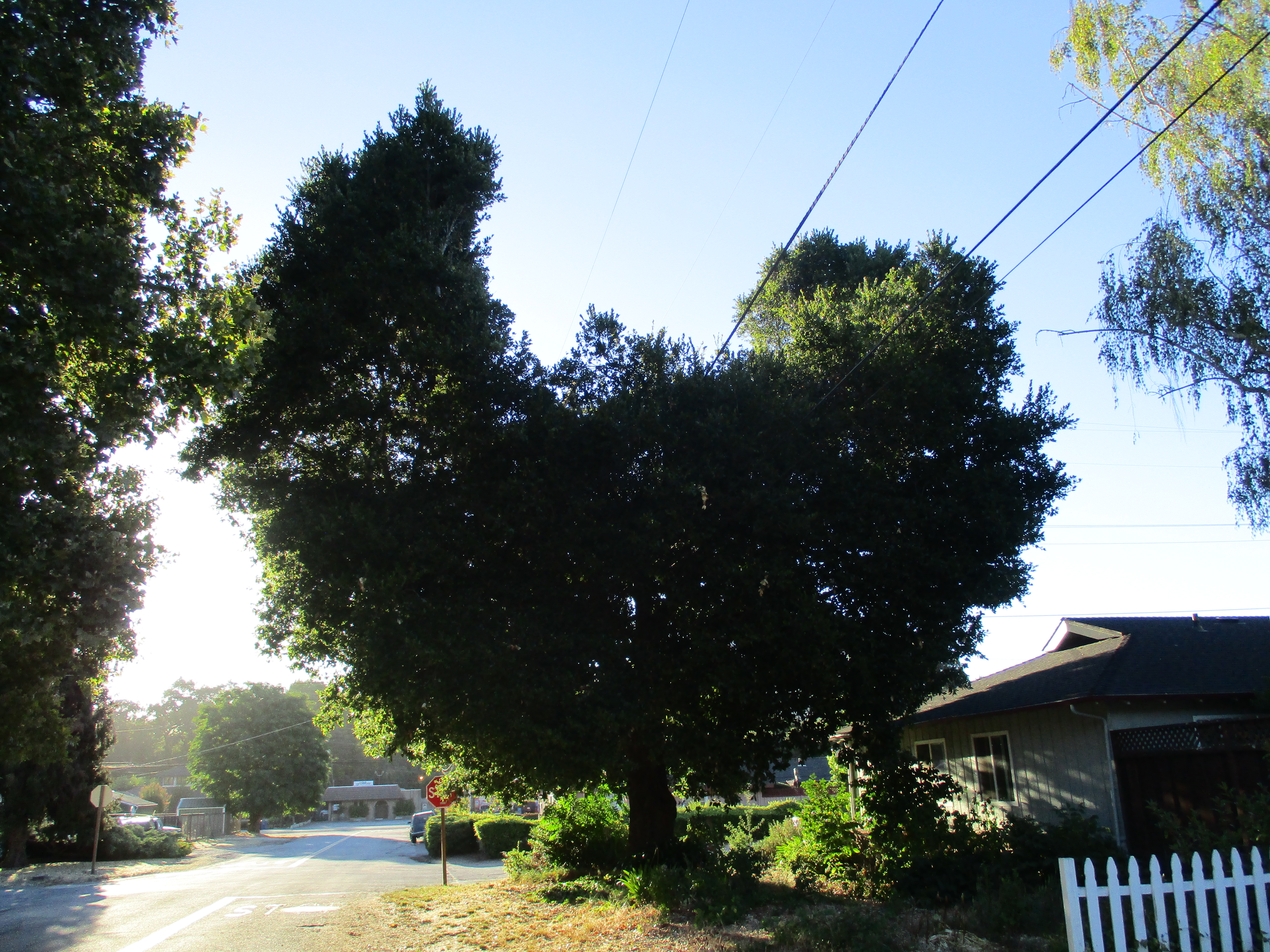 This rant may not go in the direction you expect it to. The pictures suggest that this would be about the bad vegetation management crews who severely disfigure trees that get too close to utility cables. It is not.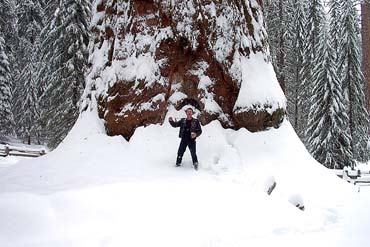
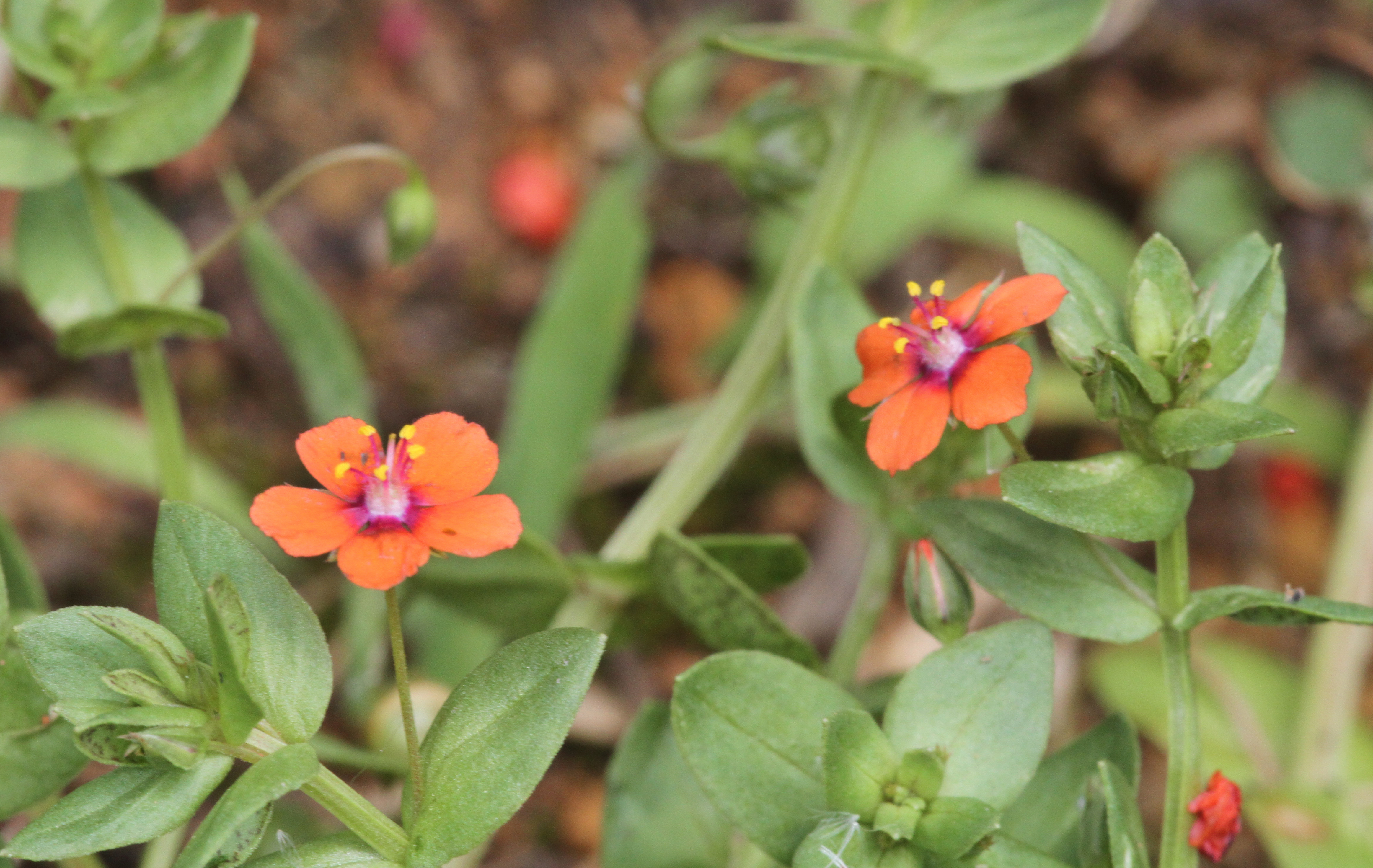 It is pretty but pervasive. Actually, I do not really find scarlet pimpernel to be all that appealing, but this is how someone who reads my gardening column in the Santa Ynes Valley News describes it. Embarrassingly, she requested that I discuss scarlet pimpernel while it was more of a problem back on June 7, but I only recently read the message. By now, it is already dying back for autumn, and is completely deteriorated in dry and hot exposed areas. It will be back next spring, and will bloom with tiny peachy orange flowers so that it can throw tiny but ridiculously abundant seed by summer before anyone notices. Flowers can be other colors in other regions. The sprawling stems can spread more than a foot wide, and can get up to about ten inches high if sprawling over other weeds. The tiny and soft leaves are arranged in…
 Tony Tomeo