Six on Saturday: 2022 Ends

The year ends with the day, but bad habits continue. I make no resolutions. I continue to collect too much seed, plug too many cuttings and divide too many perennials. Common weeds are not off limits. Canna were already too abundant before more were canned last week. More will be divided later! Cymbidium is not proliferating yet, but has potential to do so after bloom. For now, there is no need to irrigate any of this surplus, since the rain will not stop.

1. Lunaria annua, money plant or honesty, is not quite naturalized within unrefined but damp zones of our landscapes. We collect seed to toss where we think it should perform well. It has become a tradition. The name implies that it is native to the Moon, and that, like 2022, lasts only one year. These seed in key envelopes are for whomever takes them.

2. Canna ‘Australia’ are bloomed canes that I groomed from the downtown planter box, as seen last week. There are a dozen #5 cans of four canes, and six #1 cans of two canes! More pups must be thinned later! Also, I will soon dig even more cannas for a neighbor!

3. Bellis perennis, English daisy is naturalized in the vast lawn at Felton Covered Bridge Park. I have no use for it, but plugged a dozen solitary rosettes in with the Canna canes.

4. Sambucus nigra ‘Black Lace’, black elderberry should generate a bit of fruit without a pollinator, but is merely pretty here. I plugged a few cuttings because its darkly bronzed foliage works so well for our landscapes. Native blue elderberry produces plenty of fruit.

5. Cymbidium orchid is extending quite a few floral spikes. I have not counted them yet.

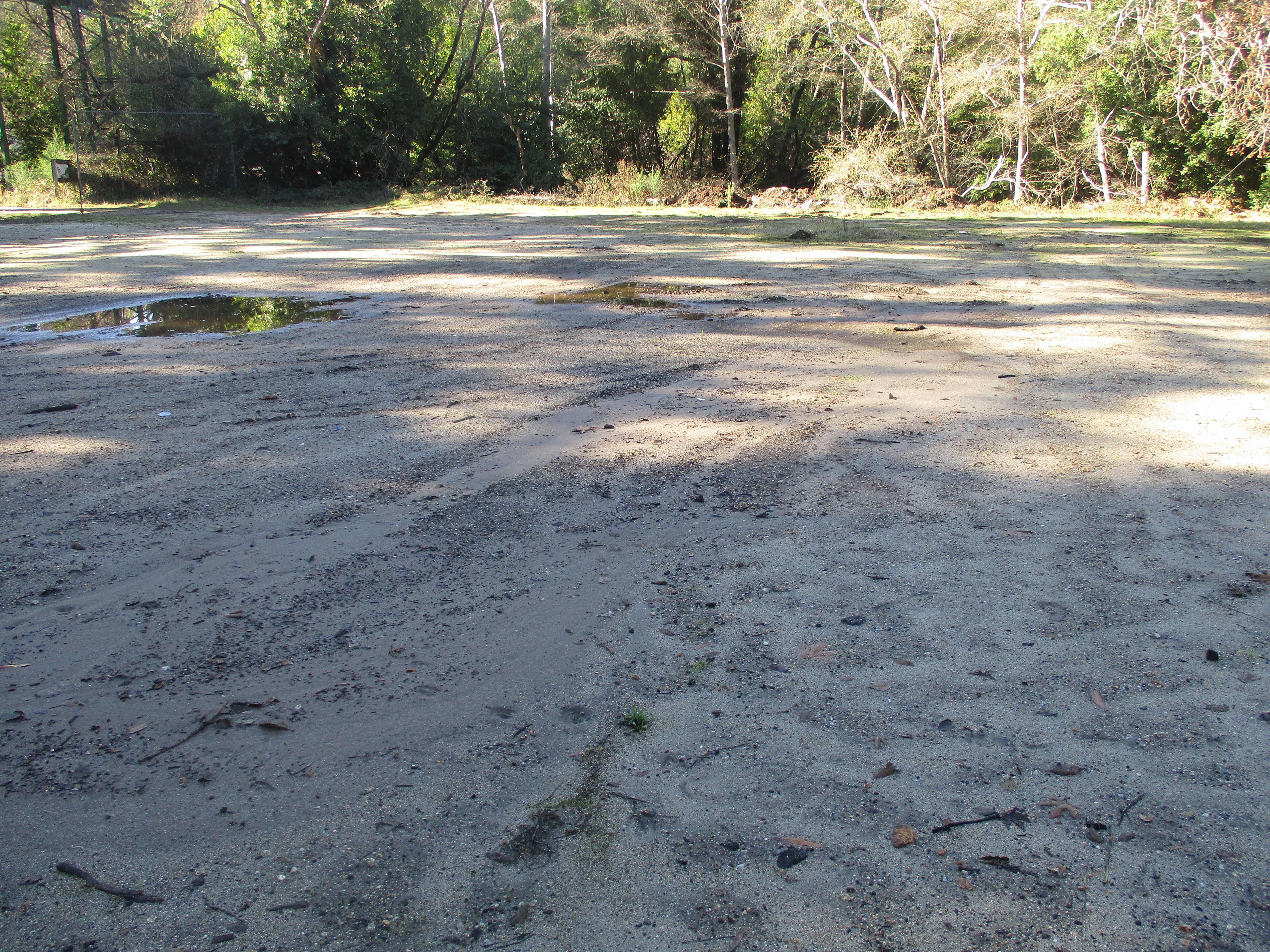
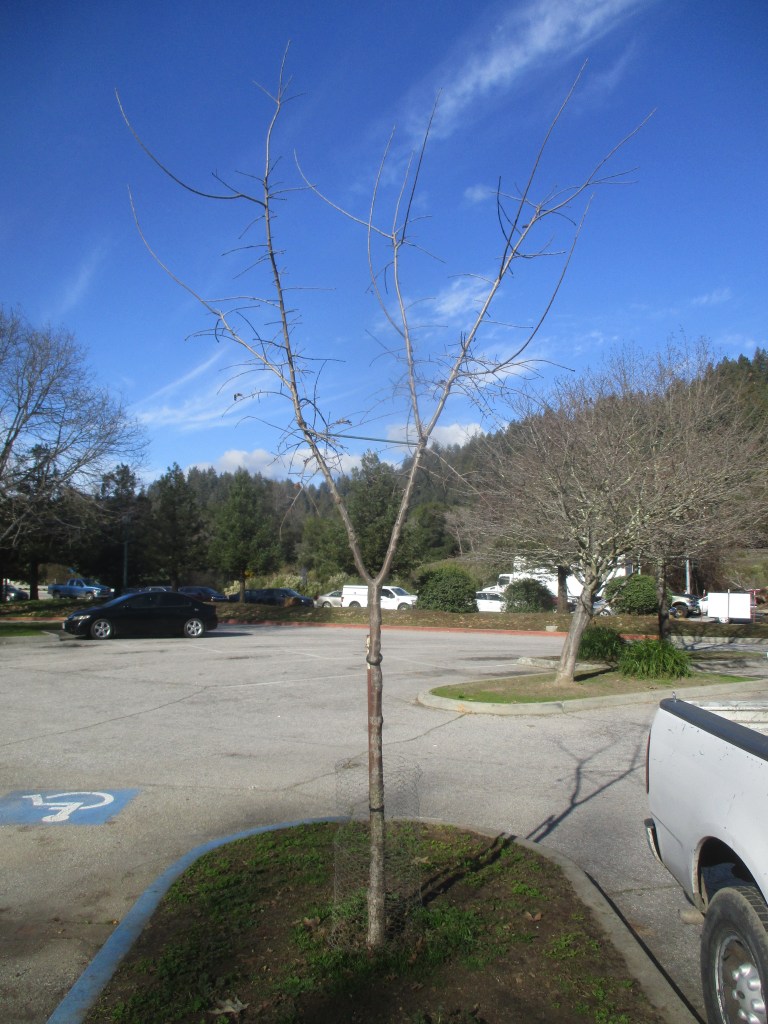
6. Morgan was reminded why no one craves his parking space. Rain is splendid though!

This is the link for Six on Saturday, for anyone else who would like to participate: https://thepropagatorblog.wordpress.com/2017/09/18/six-on-saturday-a-participant-guide/

White Alder

White alder is mostly defoliated by now.

During the summer, the native white alder, Alnus rhombifolia, is a nice shade tree that looks bigger than it really is. By late winter, the bare deciduous canopy has an appealingly picturesque silhouette. This time of year is actually when white alder is typically less appealing, with dead foliage that provides no interesting fall color, but lingers until knocked down by rain or late frost. Yet, even now, it sometimes surprises with these funny looking floral structures that are interesting both in the early winter landscape, and with cut flowers.

In past decades, white alder was an ´expendable’ tree that was put into landscapes for quick gratification while slower but more desirable trees matured. By the time the desirable trees matured, the alders were removed to make more space for the desirables. This technique was practical because, like many fast growing trees, alders do not live very long, so start to deteriorate after about twenty five years anyway. However, alders often live longer than expected.

Mature alders are usually less than fifty feet tall where they are well exposed. They can get at least twice as tall where shaded by other trees or big buildings. Their plump trunks with mostly smooth silvery gray bark make them seem larger than they really are though. Too much water promotes buttressed roots which can displace pavement.

Winter Is Bare Root Season

Plant a bare root peach tree now for peaches like this later.

Now that nurseries and garden centers are no longer selling Christmas trees, they have plenty of room for bare root stock. All sorts of deciduous fruit trees, a few deciduous shade trees, shrubs and vines, and even a few perennials can now be purchased while dormant and without the cumbersome media (soil) that the roots need at all other times of the year. Not only is bare root stock easier to handle and transport in small cars, but it is also much less expensive than canned stock (that has roots contained in media, which is contained in nursery cans). Bare root stock typically costs about a third of what canned stock costs.

Bare root stock also has the advantage of adapting to new garden easier, since it does not need to leave the comfort zone of the media that it would have grown into (within a can) in order to venture out into unfamiliar soil. Instead, it starts to disperse roots into the new home soil immediately as it emerges from dormancy in late winter. Without cans, bare root stock can not get root bound. Instead of developing branch structure that is appealing to nursery marketing, bare root stock can get an early start on developing branch structure that is most practical and efficient for the gardens that it gets installed into.

It seems that all of the ´stone’ fruit can be found as bare root stock. These include apricot, cherry, plum, prune, peach, nectarine, almond (which is the seed, or ´stone’, of a peach like fruit) and the odd hybrids of these. The pomme fruits, apple, pear and quince, are perhaps the second most popular of bare root stock, although quince is still rather rare. Ornamental trees, shrubs and vines include flowering crabapple, flowering cherry, flowering quince, alder, poplar, willow, lilac, forsythia, wisteria and clematis. Perennials include rhubarb and artichoke.

Bare root stock can be purchased as soon as it becomes available, but does not do much until it starts to grow in spring. It should get planted quickly and soaked in, but will get more water than it needs from rain afterward. It should not need water again until after it blooms or gets new leaves in late winter or early spring. Despite guarantees of fruit in the first year, none should be expected. The few fruit trees that might set fruit will probably produce only useless underdeveloped fruit because new plants are busy producing new roots and growing. Actually though, this apples to canned stock as well, except only for citrus, olives and other evergreen fruit trees.

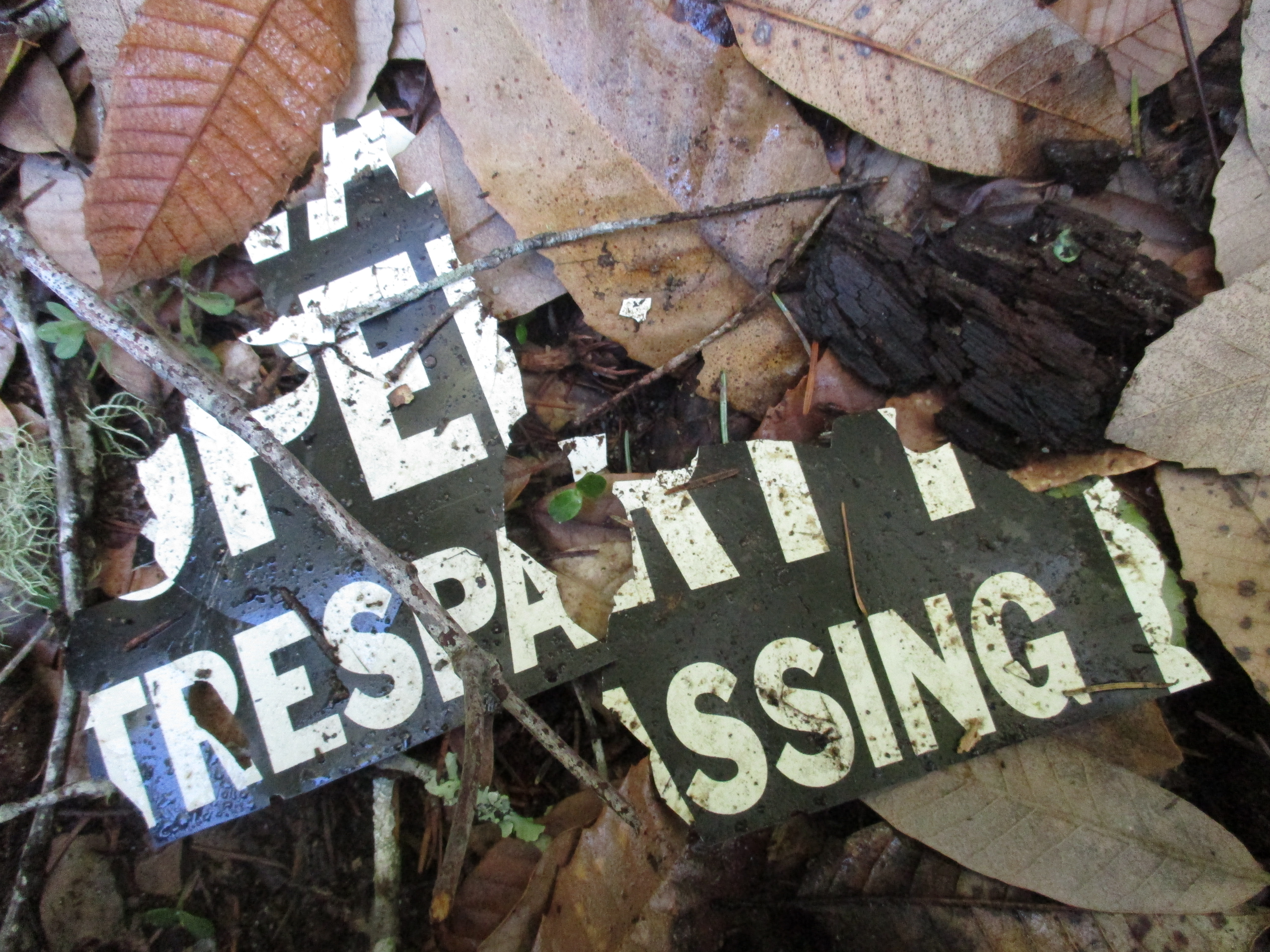
Horridculture – NO TRESSPASSING

A common problem with recycling these old articles is that it reminds me of these incredibly frustrating topics.

tonytomeo's avatarTony Tomeo

P00115 NO TRESPASSING? . . . No respect!

Growing fruit takes a bit of effort. Trees that produce the fruit must be planted and maintained for all the many years that they produce. They might need to be irrigated through summer. Most need specialized pruning every winter.

Canning surplus fruit takes a bit of effort too. All the jars must be cleaned. All the fruit must be collected, processed and cooked. The jars must be packed and boiled and so on.

Drying fruit is less work than canning, but takes a bit of effort nonetheless.

Where I lived in town, I grew a peach tree closer to the apartment building to the north, and a fig tree closer to the apartment building to the south. I maintained both trees meticulously. Many of the neighbors appreciated the fresh fruit. At the end of their season, there was (almost) always surplus peaches for…

View original post 341 more words

Cherry

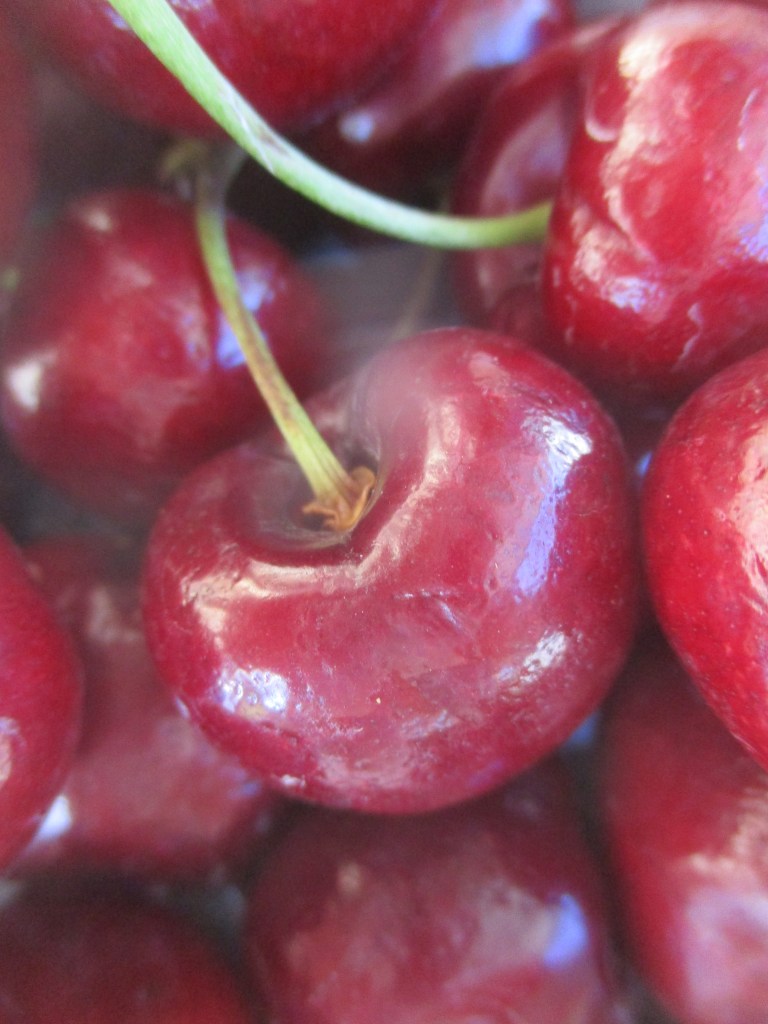
Cherries are fruit of early summer.

Cherry, Prunus avium, is one of the more popular fruits of summer. However, winter is the season for planting new trees and pruning mature trees. Pruning is comparable to that of other stone fruits, but to a lesser degree. Their sweet fruits are typically less than an inch and a half wide, so are relatively lightweight. Docile trees may not need annual pruning.

Home garden trees with dwarfing rootstocks should grow no taller than about fifteen feet. Some stay less than ten feet tall. Orchard trees with standard rootstock grow significantly taller. Wild or feral trees can grow forty feet tall, with their fruit beyond reach. Old cultivars mostly require another compatible cultivar for pollination. Some modern cultivars do not.

Cherry fruits are mostly rich deep red, but can be dark blackish red or pale orangish pink. Early spring bloom is brief but profuse and splendidly clear white. Three to four inch long leaves that are deep green through summer become bright yellow or golden yellow prior to defoliation during autumn. Even the silvery young bark of some cultivars is appealing.

Dormant Pruning Enhances Fruit Production

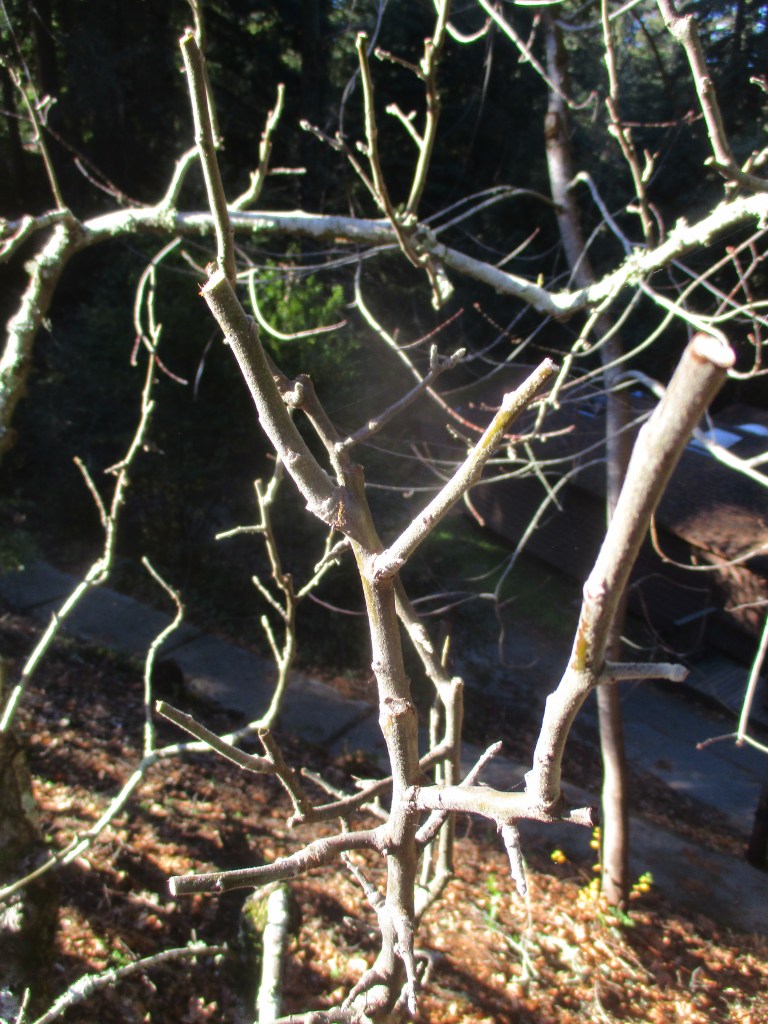
Dormant pruning may not be pretty.

Adding new fruit trees to a garden is reasonably easy. Maintaining them properly as they mature is more of a challenge. Centuries of extensive breeding to enhance production of such trees has also increased their reliance on horticultural intervention. Most deciduous fruit trees consequently need specialized dormant pruning during their winter dormancy.

Without adequate dormant pruning, most deciduous fruit trees are unable to support their unnaturally large and unnaturally abundant fruit. Dormant pruning actually enhances the size and quality of fruit. However, it also limits the weight of excessiveness, and confines it to sturdier branch structure. It concentrates resources into fewer fruit of superior quality.

Dormant pruning, or winter pruning, likewise concentrates resources into more docile but healthier vegetative growth. It eliminates or at least diminishes the 4 Ds, which are dead, diseased, damaged and disfigured growth. Confinement of potentially rampant stems not only improves structural integrity, but also limits wasteful production of unreachable fruit.

Almost all deciduous fruit trees, and most nut trees, require specialized dormant pruning. So do grapevines, kiwi vines, berry canes and roses. Evergreen fruit trees, such as citrus and avocados, are exempt for now though, since such pruning promotes new growth that is vulnerable to frost. Most of such trees do not require such aggressive pruning anyway.

Almonds, apricots, cherries, nectarines, peaches, plums, prunes and all their hybrids are stone fruits of the genus Prunus. Almonds are actually seeds, or stones, of leathery fruits that are merely hulls. Various stone fruits need various degrees of similar pruning. Heavy peaches need aggressive pruning. Lightweight cherries might need only minor trimming, or no pruning at all.

Apples, pears and quinces are pomme fruits that, like stone fruits, need various degrees of similar pruning that conforms to their distinct characteristics. Persimmons, mulberries, pomegranates and figs each need specific types of pruning as well. Familiarity with each of the dormant pruning techniques that each fruit tree in the garden requires is essential.

Poison Oak Tree

What was worse is that after severing poison oak that was climbing a nearby but more visually prominent redwood tree, the poison oak needed to be removed. ICK!

tonytomeo's avatarTony Tomeo

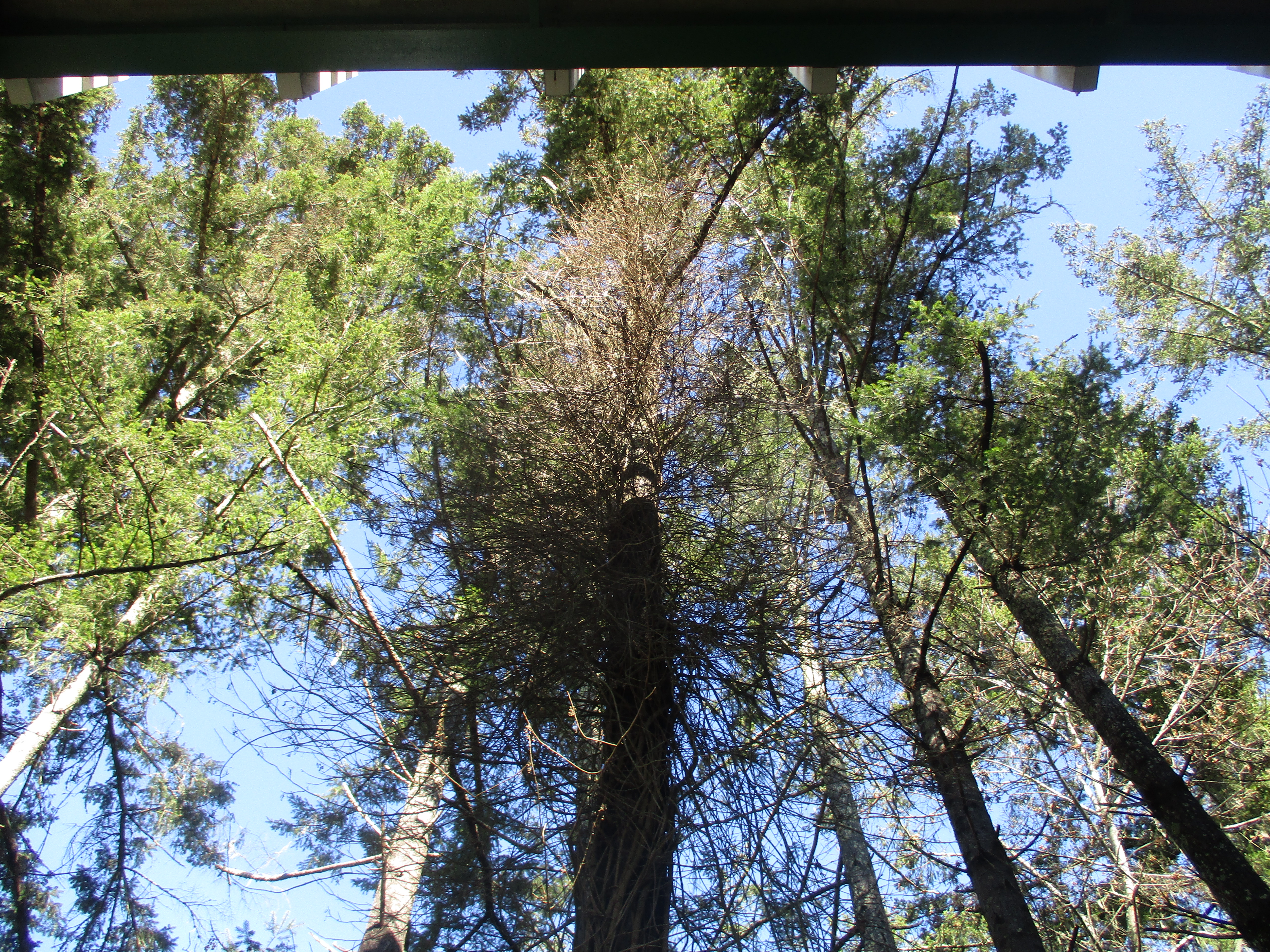
P91229From below, this looks like a shrubby deciduous tree. It is really just a Douglas fir, like those around it. All the defoliated thicket growth is overgrown poison oak. It has likely been climbing the fir tree since it was quite young. Poison oak is not very proficient at climbing bare trunks. It typically climbs into lower limbs, and then into higher limbs before the lower limbs are shed.

No one has bothered to cut this poison oak out of the fir tree because it is not within a landscapes area. That dark margin at the top of the picture is the underside of a bridge, from which, not much of the thicket growth below is visible. The area from which this picture was taken is used for piling greenwaste and parking, where no one is concerned about wild vegetation beyond.

However, now that I sometimes park in that…

View original post 200 more words

Field Of . . . ?

Actually, we made good use of this unrenovated ball field during the past three years.

tonytomeo's avatarTony Tomeo

P91228KThis . . . was a ball field. It might eventually be one again. The old backstop at the upper left corner of the picture is almost completely obscured under a thicket of blackberry brambles and a fallen boxelder. It would need to be replaced. So would the decommissioned irrigation system, all the bases, the basepath, the turf . . . and everything else that goes into a functional ball field.

The turf had naturalized and overwhelmed the basepath long before last year. I collected wild mustard, radish and turnip greens from around the perimeter last spring and summer. By the time they were finishing, the blackberries were ready. I got stinging nettle from the bank of Zayante Creek in the background of this picture. Dock is already regenerating off to the far right.

There are naturalized wildflowers here too. I got pictures of perennial pea, purpletop vervain, Saint John’s…

View original post 156 more words

Six on Saturday: Memorial Trees +

Goodness! Not only did I not get good pictures of these Memorial Trees, but I needed to add two unrelated pictures for a total of Six on Saturday. Perhaps fewer Memorial Trees are better than more. Sadly, another must be added as space becomes vacated. Anyway, the first picture is something I am quite pleased with. The sixth complies with tradition. Links have more information about the Memorial Trees at my other blog, Felton League.

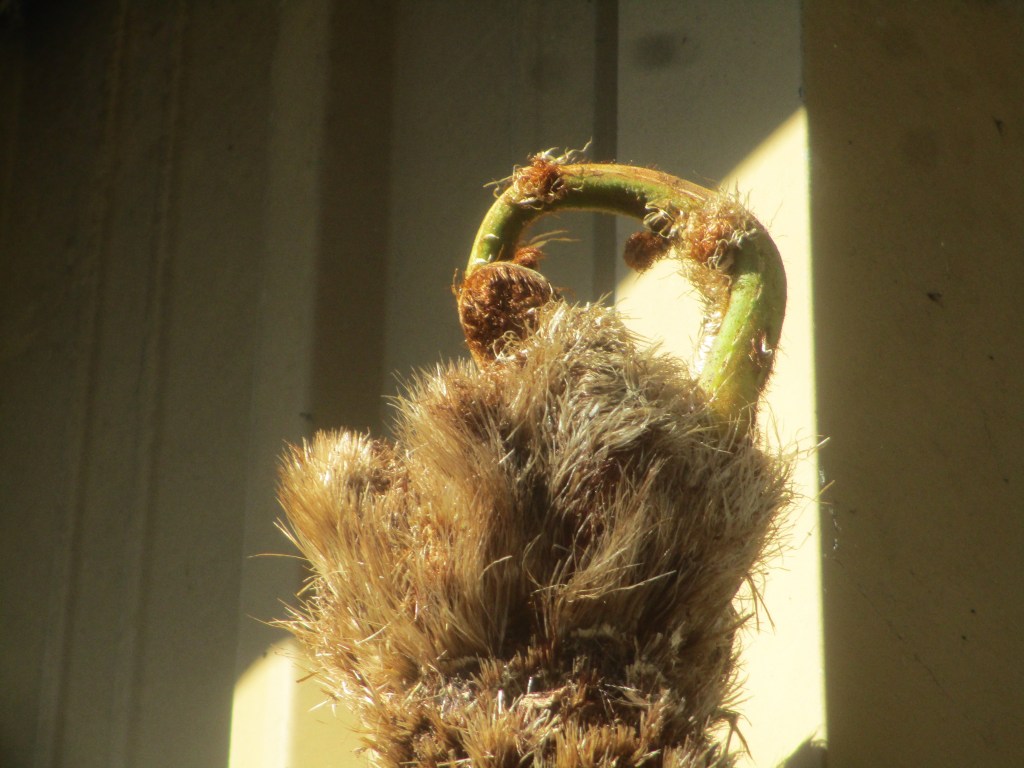
1. Australian tree fern, Cyathea cooperi, was relocated from my former neighborhood in town. It may not look like much, but the trunk, which is not visible here. is nine feet tall!

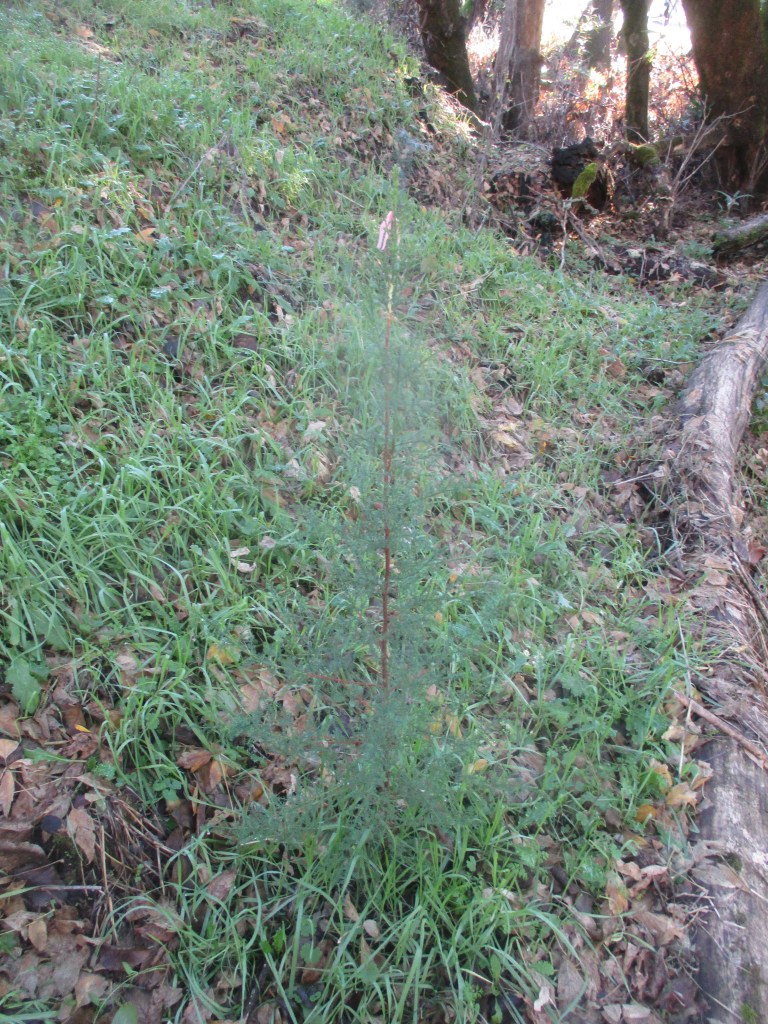
2. Steven Michael Ralls Memorial Tree was the first Tree of the Memorial Grove when it was installed on May 2, 2020, the third anniversary of his death. It is now about six feet tall, and inhabits a site that was formerly inhabited by Mr. Ralls while he was unhoused.

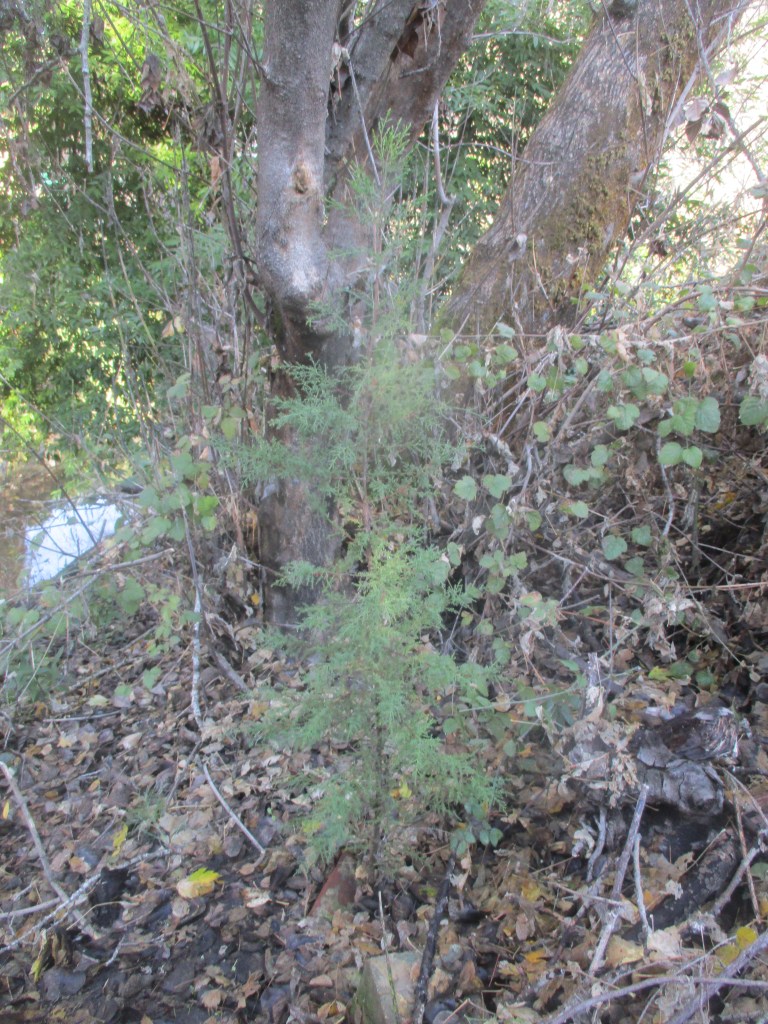
3. David Noel Riddell Memorial Tree was installed quite a while after Mr. Riddell passed away, so it is only about three feet tall. Incidentally, Mr. Riddell is a direct descendant of some of the first Spanish people to arrive in Monterey where Monterey cypress is native.

4. David Fritiof Lindberg Memorial Tree was installed shortly after Mr. Lindberg passed away on November 13, 2021, and in conjunction with The David Noel Riddell Memorial Tree. It is only about four feet tall. All three of those Memorialized were mutual friends.

5. Jeffrey Dale Scofield Memorial Tree became The Memorial Tree after a few friends of the Memorialized passed away within only a few years afterwards. It is maturing nicely!

6. Canna ‘Australia’ in the downtown planter box remain lush after harsh grooming, and after those at work were frosted. Of course, this picture is not actually about this Canna.

This is the link for Six on Saturday, for anyone else who would like to participate: https://thepropagatorblog.wordpress.com/2017/09/18/six-on-saturday-a-participant-guide/

Valley Oak

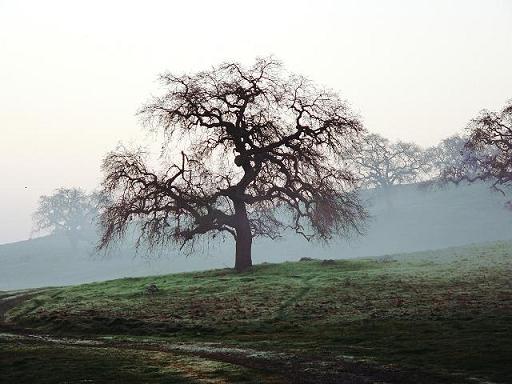
‘Foggy Oak Morning’ by Karen Asherah

‘Foggy Oak Morning’ by Karen Asherah, is another example of the local scenery that I miss while not taking a bus or walking. I drove past this scene for years on my way to work outside of San Martin without ever bothering to take a look at it. This happy tree is a native valley oak, Quercus lobata, like those that had been common throughout the Santa Clara Valley until only about two centuries ago. It is not exactly the sort of shade tree that everyone wants in a compact suburban garden, but is grand enough for large spaces like parks.

Mature specimens may not seem to get as tall as oaks in the Appalachian Mountains, but are actually the largest oaks in North America, and live more than five centuries. The tallest trees are mostly less than seventy feet tall, but can get taller. Trunks of the oldest trees are commonly six feet wide or wider. The distinctively and uniformly furrowed bark is as classically ‘oakish’ as the rounded prominent lobes of the deciduous leaves, and the sculpturally irregular branch structure. Odd stem galls, commonly known as ‘oak apples’, are home to the larvae of tiny wasps that rely on valley oaks for everything they need. Incidentally, Paso Robles, or ‘El Paso de los Robles’ is named for the valley oaks in the area, which Spanish immigrants thought resembled the ‘robles’, the European oaks that inhabit Spain.

More information about ‘Foggy Oak Morning’ can be found at the website of Karen Asherah at karenasherah.com.