Watch your step . . . while there is one to watch!
This is . . . odd. It is like something of the Winchester House. It seems that these steps in the picture above should go down to a lower deck, but there is no indication that there had ever been such a deck down there. The steps are well maintained and swept mostly clean of forest debris, so whatever happened to whatever should be down there must have happened recently.
Actually, these steps are for what is above rather than what is not below. The picture below shows that there is a deck associated with these steps, but that it is a considerable distance away, and that the only way to get there is by the cable that extends to it from the upper right corner of the picture, over Zayante Creek. The deck is rather sloped to…
Modern technology annoys me. Firstly, the electronics industries are what destroyed the idyllic culture of the Santa Clara Valley. Secondly, it complicates things. If I try to rely on it as the rest of society does, it does not function. It is a long story, so to be brief, I could not download pictures that I sent from the telephone. These six are random, but became available
1. Monstera deliciosa, Swiss cheese plant is in Brent’s garden, four hundred miles away. He wanted to get it into the Canyon News, but sent me this uselessly shabby image of it.
2. Billbergia nutans, queen’s tears was blooming well enough for ‘Six on Saturday’ three weeks ago and is blooming a bit more now. Perhaps I should have taken a better picture.
3. Olea europaea ‘Arbequina’, olive trees were gifts for participants at a conference here. This is one of several surplus that we acquired. It is a little but exemplary rooted cutting.
4. Viola tricolor, Johnny jump up demonstrates that some plants that enjoy more wintry weather than they typically experience here perform well after the atypically wild winter.
5. Tulipa X gesneriana, tulip is not reliably perennial here. I therefore would not bother to grow it. This one came with my iris from the old garden, and got planted only because I could not bear to discard it while it was still alive. It somehow survived and bloomed! As if that were not impressive enough, It bloomed again this year! I will take better care of it now, and I hope that it establishes. I have no idea what it is, or where it came from.
6. Crazy weather finally relinquished spring to more appropriate weather this last week. This was the last hail. I can not remember so much incessant rain within a single season.
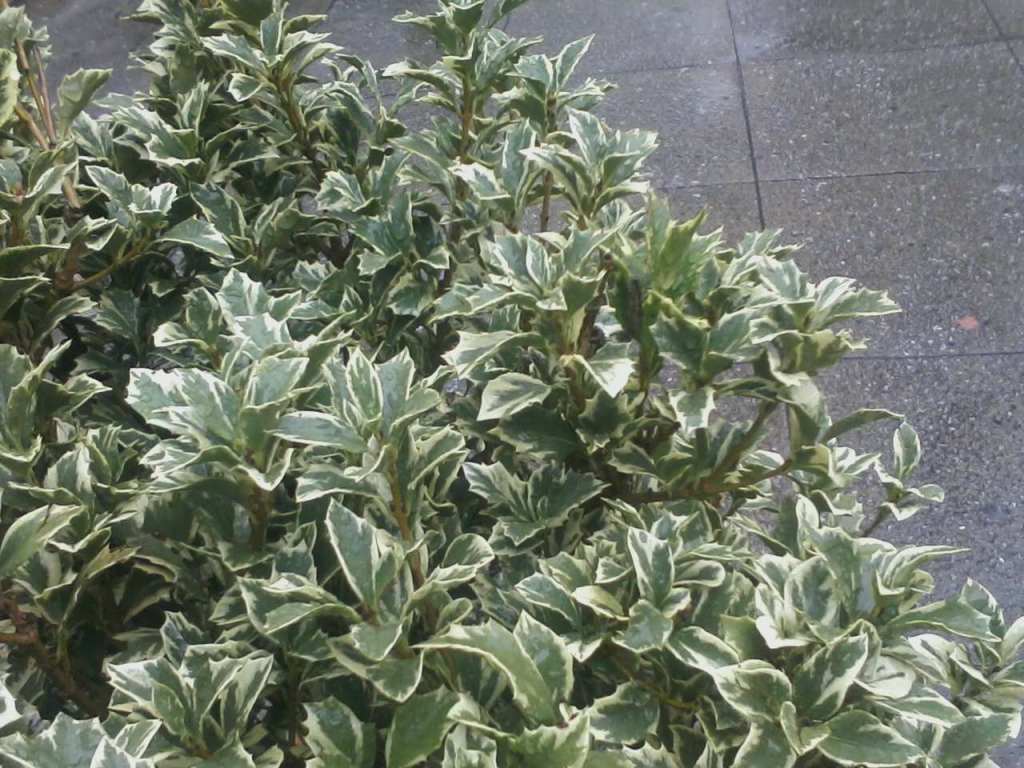
If the foliar spines (teeth on the margins of the leaves) of English holly are too nasty, holly olive, Osmanthus heterophyllus, might be a more docile option. It lacks the occasional bright red berries and the very glossy finish on the leaves, but is much easier to handle than real holly is, since the spines are not nearly as sharp. If you look closely, you can see that the one to two and a half inch long leaves have opposite arrangement (are in opposing pairs along the stems) instead of alternate arrangement (are single along the stems) like those of holly.
The more popular varieties of holly olive have some sort of variegation of white or gold. Variegation can be spots, blotches or more refined margins. Most of the modern variegated varieties prefer to stay less than six feet tall. The old fashioned unvariegated holly olive can get more than twenty feet tall when very old, but the upper foliage lacks the distinctive foliar spines of lower foliage. The tiny and mostly unnoticed flowers are pleasantly fragrant.
Variegation can be neatly symmetrical, or strikingly irregular like this.
With spider plant, croton, pothos, dracaena and the various ficus, variegated foliage seems to be very popular among house plants. Remember the wildly colorful variegations of coleus when it was a popular houseplant in the 1970’s? Variegation is most commonly white or some sort of yellow; yet can be just about any color.
In the landscape, variegated shade tolerant plants brighten shady spots even without bloom. Variegated acanthus, Japanese aralia, andromeda, hydrangea, aucuba and angels’ trumpet show up nicely, especially when they can contrast with the darker green of other plants; although andromeda and hydrangea do not bloom as well in darker shade. Variegated periwinkle and English ivy are nice ground covers, (but potentially invasive).
Variegated trees, like tulip tree and certain maples, stay smaller than their unvariegated relatives, so can be proportionate to large atriums that could use their brighter foliage. Some of the variegated pittosporums likewise function like the unvariegated forms used for informal hedges, but work better in tighter spots.
Even if there is no need to brighten areas that are already sunny, variegated holly, lily-of-the-Nile, bougainvillea, pampas grass and silverberry add nice contrast where there is an abundance of rich green foliage. (However, some people who grow variegated pampas grass are not too impressed by it.) New Zealand flax presently happens to be one of the most popular variegated perennials, with many different personalities of color to choose from. Variegated varieties of several specie of agave and yucca are striking big perennials for the sunniest and even inhospitably hot spots, as long as they are kept at a safe distance. (Many have dangerous spines and teeth!)
Some variegated plants, particularly New Zealand flax, andromeda, Pittosporum tobira and the various maples, try to produce unvariegated mutant growth that grows faster and bigger, and overwhelms the desirable variegated parts. It is therefore important to watch for and prune out unvariegated growth as it appears. For New Zealand flax, this involves diligent digging and splitting to removed unvariegated shoots from the variegated parent plants.
Okay, so I felt slightly guilty about not posting anything of any horticultural interest today. Okay, perhaps a bit more than slightly. Okay, perhaps guilty enough to post a few pretty flowery pictures . . . and the last one, which some might find objectionable.
‘Coral Bells’ is not one of my favorite azaleas, but is reliable and profuse.
I will not put much effort into this. I did not even take these pictures for any particular article. I am only sharing them here and now because I have no use for them, but did not want to just file them away unseen forever. Hey, these flowers work hard to bloom!
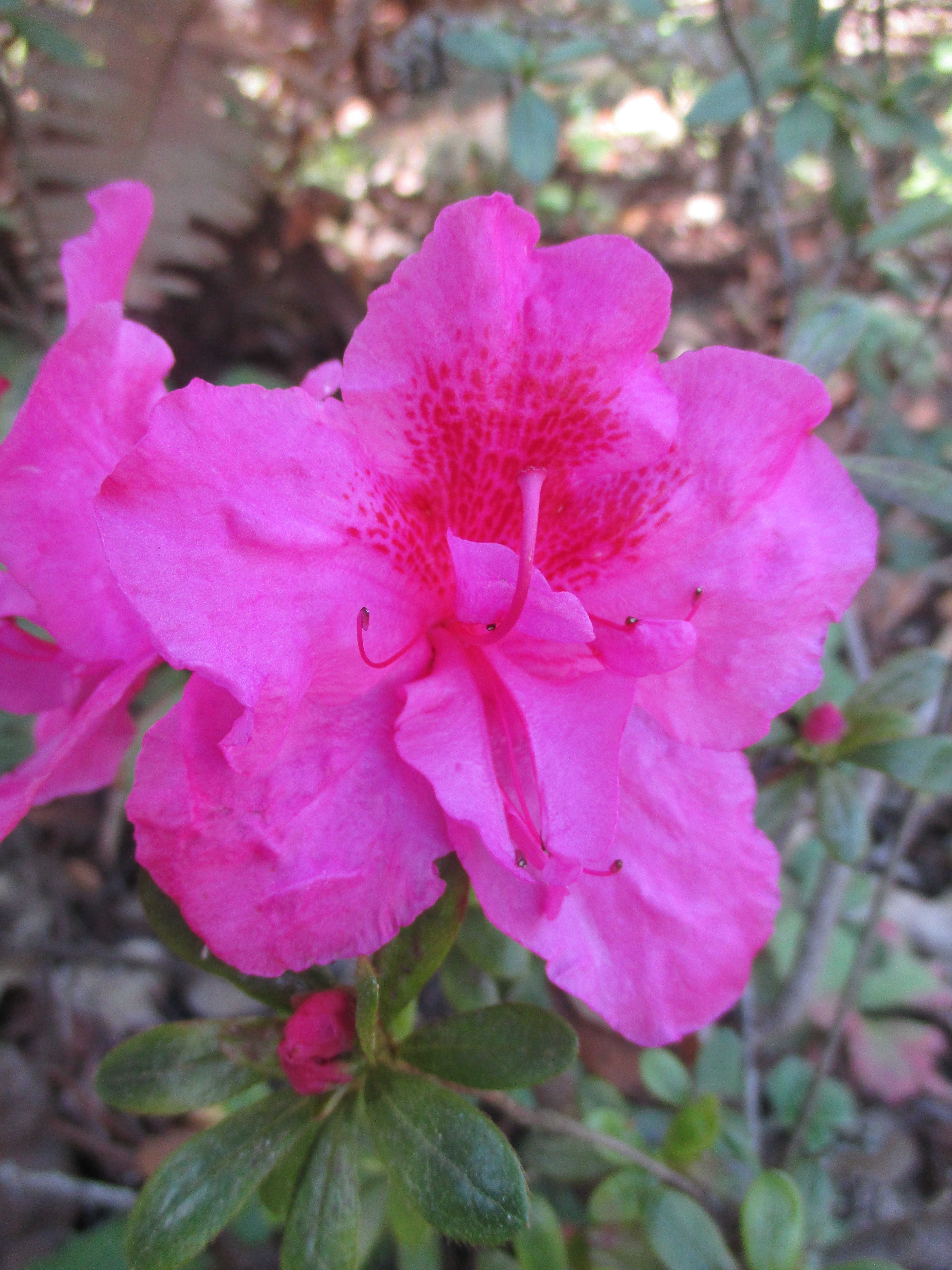
I have no idea what this azalea is, but I am impressed.
Actually though, except for the last picture, all are about a month old. The last picture is half as…
This recycled article is from a time when Rhody’s crew was unable to come to work back in 2020. It is a major deviation from my Horridculture rants on Wednesday, but I know that no one will mind. After all, it is about Rhody.
Wednesday has been my day for ranting about aberrations of horticulture. I certainly have plenty to rant about. However, there is plenty of other ranting going on nowadays without my help. Therefore, for this Wednesday only, I will forego the ranting. Furthermore, I will forego the horticulture too. I can not remember ever doing that before. This could be something totally new for me.
After Rhody photo bombed one of my pictures that was featured on Saturday, others suggested that I feature more pictures of Rhody. Everyone loves Rhody.
Most of these pictures are devoid of vegetation. The minimal vegetation that is visible in the other pictures is mostly unrecognizable in the background. There are a few redwoods, a few firs, some English ivy and all that riparian mess around Zayante Creek behind the abandoned ball field. They are unimportant in this post.
Flowering crabapples are the same genus as fruiting crabapples. Flowering cherries are the same genus as fruiting cherries. Flowering quince, Chaenomeles spp., though, is not the same genus as fruiting quince. Available cultivars are generally floriferous but sterile hybrids. Only four basic species produce small fruit that are good for little more than jelly.
They bloom magnificently though, on bare stems, prior to foliation. Profusion of bloom is comparable to that of flowering crabapple and flowering cherry. It begins early enough to finish before some flowering cherries begin. Flowering crabapples start even later. Floral color ranges from bright white to deep red. This includes orangish pink and orangish red.
Unlike flowering cherry trees and flowering crabapple trees, flowering quince is shrubby. The largest might grow no higher than ten feet, with irregular branch structure. Some old cultivars are thorny. Modern cultivars are more compact, shaplier and thornless. Younger trunks should methodically replace older trunks. Pruning can happen after spring bloom.
Some of the earliest of spring flowers are done blooming. More are just beginning. Then, a few early spring flowers barely qualify as early. Their fresh color is especially pleasing after such an atypically wintry winter. Many are delightful cut flowers. A few that bloom on bare deciduous stems are conducive to forcing. Even the earliest bloom could be earlier.
Bare stems are simpler and less wasteful to force to bloom than bulbs and potted plants. Most bulbs and some potted plants do not survive long after forcing. Dormant deciduous plants easily replace a few forceable stems. Forcing such stems is as simple as bringing cut flowers into a home. The difference is that it is premature, immediately prior to bloom.
Flower buds on dormant deciduous stems begin to swell during warming spring weather. Such stems are ready for forcing when these floral buds are about to pop open. Ideally, a bit of floral color should be visible through some of the bud scales. A few flowers may be blooming. Collective bloom accelerates within the warmth of a home interior after cutting.
Flowering but fruitless counterparts of popular fruit trees are some of the best for forcing. These include but are not limited to flowering cherry, plum, apricot and other stone fruits. Flowering pomme fruit trees, such as quince, crabapple and pear are almost as popular. Related fruiting stone and pome fruit trees are as conducive to forcing, but not as garish.
Of course, there is nothing wrong with simpler bloom. Some fancy flowering cherry trees bloom with single white flowers like fruiting cherries. However, cutting stems from fruiting trees decreases fruit production. With a bit of planning, dormant pruning can allow a few undesirable stems to remain. These stems are then available for cutting and forcing later.
Witch hazel cultivars are exemplary for forcing, but are done blooming. Flowering quince and forsythia are now finishing within most climates. Redbud, lilac, wisteria and perhaps weigela are still conducive to forcing. Dogwood and deciduous magnolia can perform as well if humidity is not too minimal. So should some acacias, although their fragrance and pollen may be distasteful.
Updates get complicated as they link back to previous updates to previous updates to previous updates and so on. Linking and reblogging from another blog adds more complication. The last update for the Memorial Tree was reblogged from Felton League on August 10. It and previous updates should link back to preceding updates chronologically. At least it sounds simple.
Another brief update that will reblog here from Felton League at noon will describe more of the social significance of the Memorial Tree rather than horticultural concerns. It really is special.
This little Memorial Tree has certainly been through some difficult times. Despite reassurances that it would not happen again, and that the tree would be outfitted with an ‘approved’ trunk guard, the trunk base has been gouged by weed whackers on more occasions than I can remember. That is an unfortunate consequence of efficient but unaware…
Goodness, I neglected to post updates on this garden. It did not produce much, but it produced more zucchini that we knew what to do with. We left it for neighbors at the Post Office.
Even though I know they are slightly purplish, periwinkle look blue to me.
Clearing space for a new small vegetable garden is more work than it will be worth. It took more than a day to remove the thicket of bramble from a triangular area that is only about forty feet from front to back, and not much more than twenty feet wide. After so many years of getting trash dumped on top of them, the brambles were unusually prolific with gnarly root burls.
There is still significant work to do. I still need to condition the soil and groom the adjacent junipers before sowing seed for the warm season vegetables for this summer. Now that I can see that the junipers that were formerly concealed by brambles are worthy of salvage and grooming, I will need to clear a bit more garden space across the road, and cut back…

 Watch your step . . . while there is one to watch!




 I believe that this azalea is ‘Phoenicia’.
 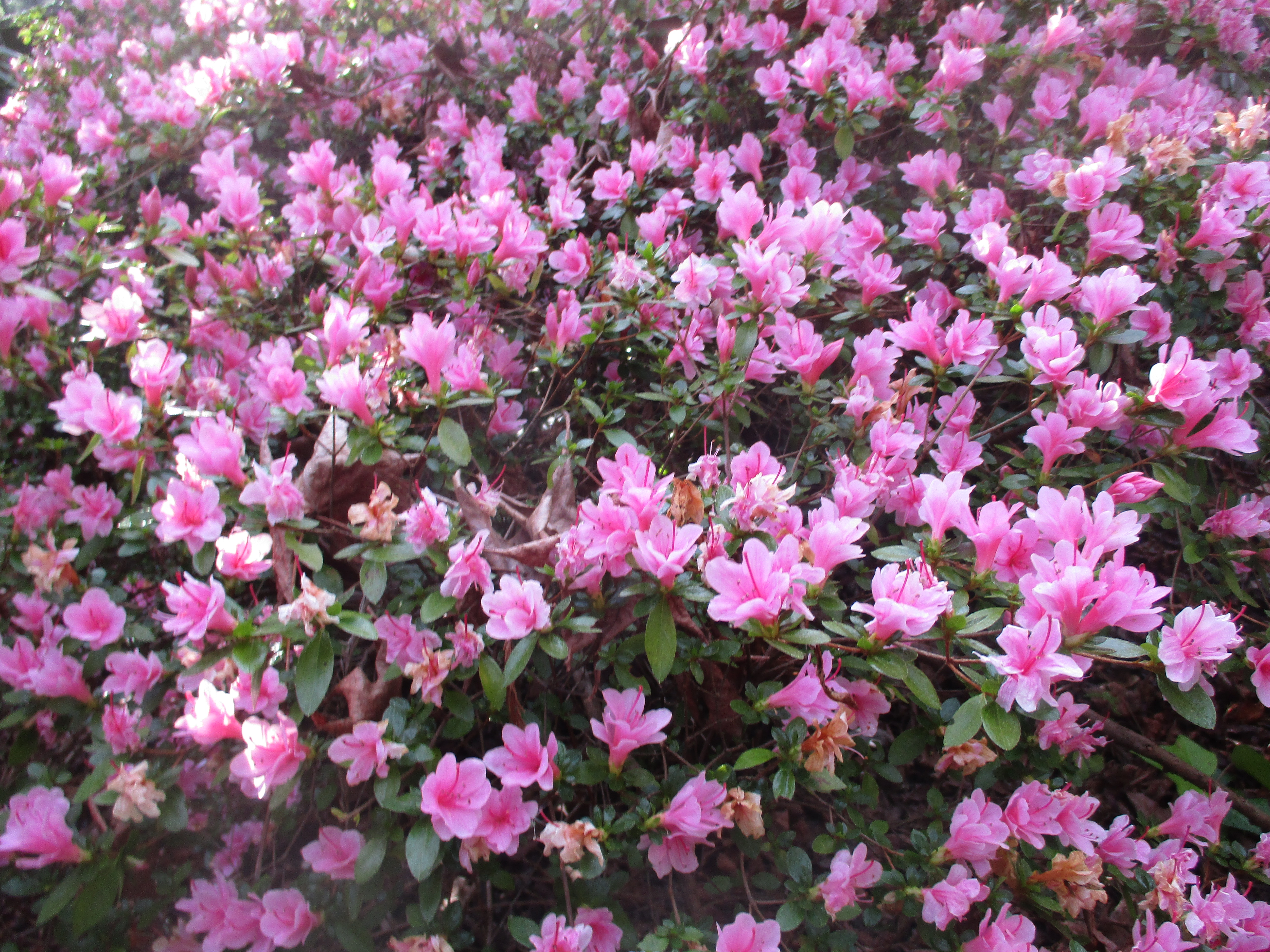 ‘Coral Bells’ is not one of my favorite azaleas, but is reliable and profuse.
 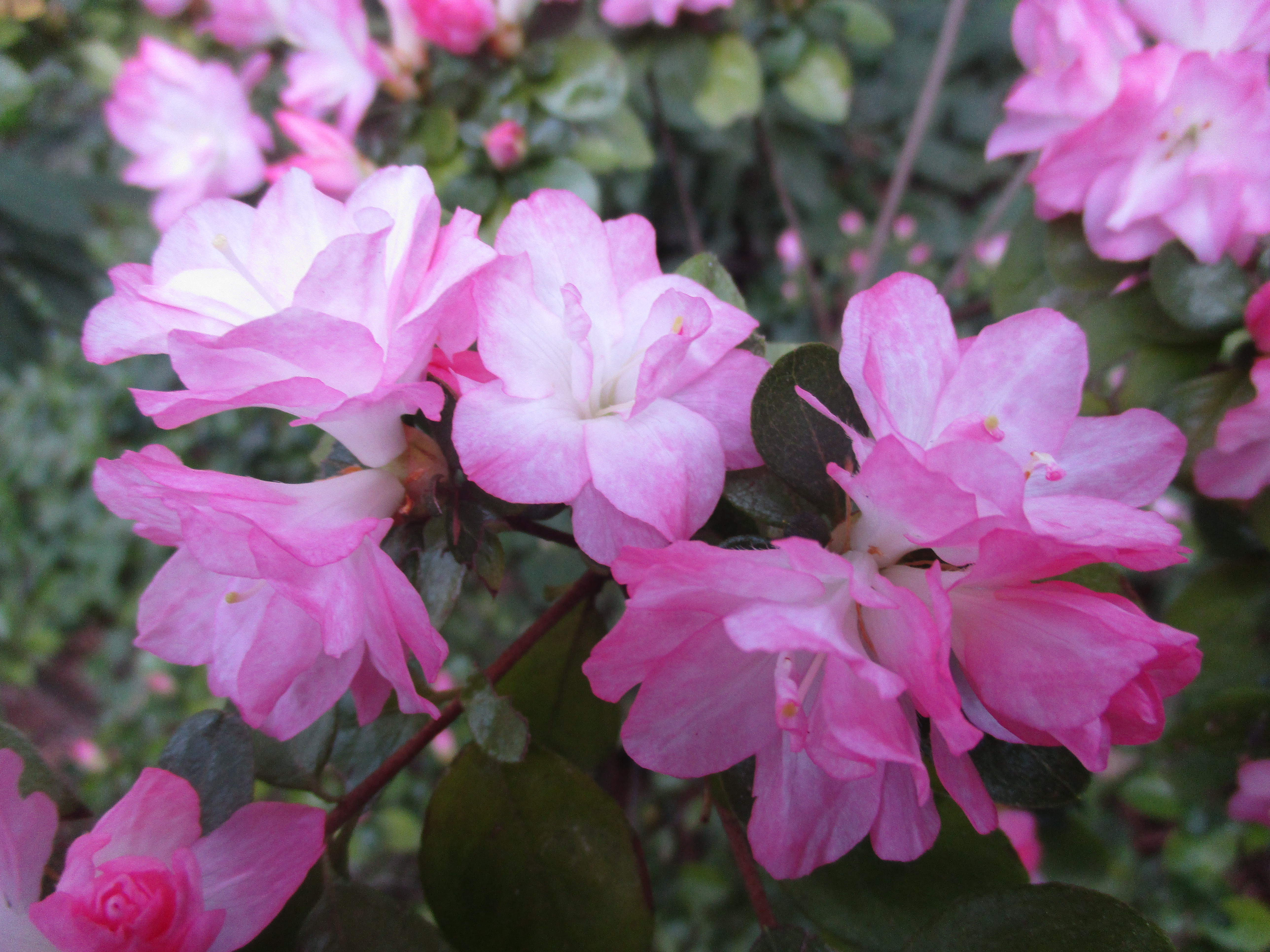 I have no idea what this azalea is, but I am impressed.

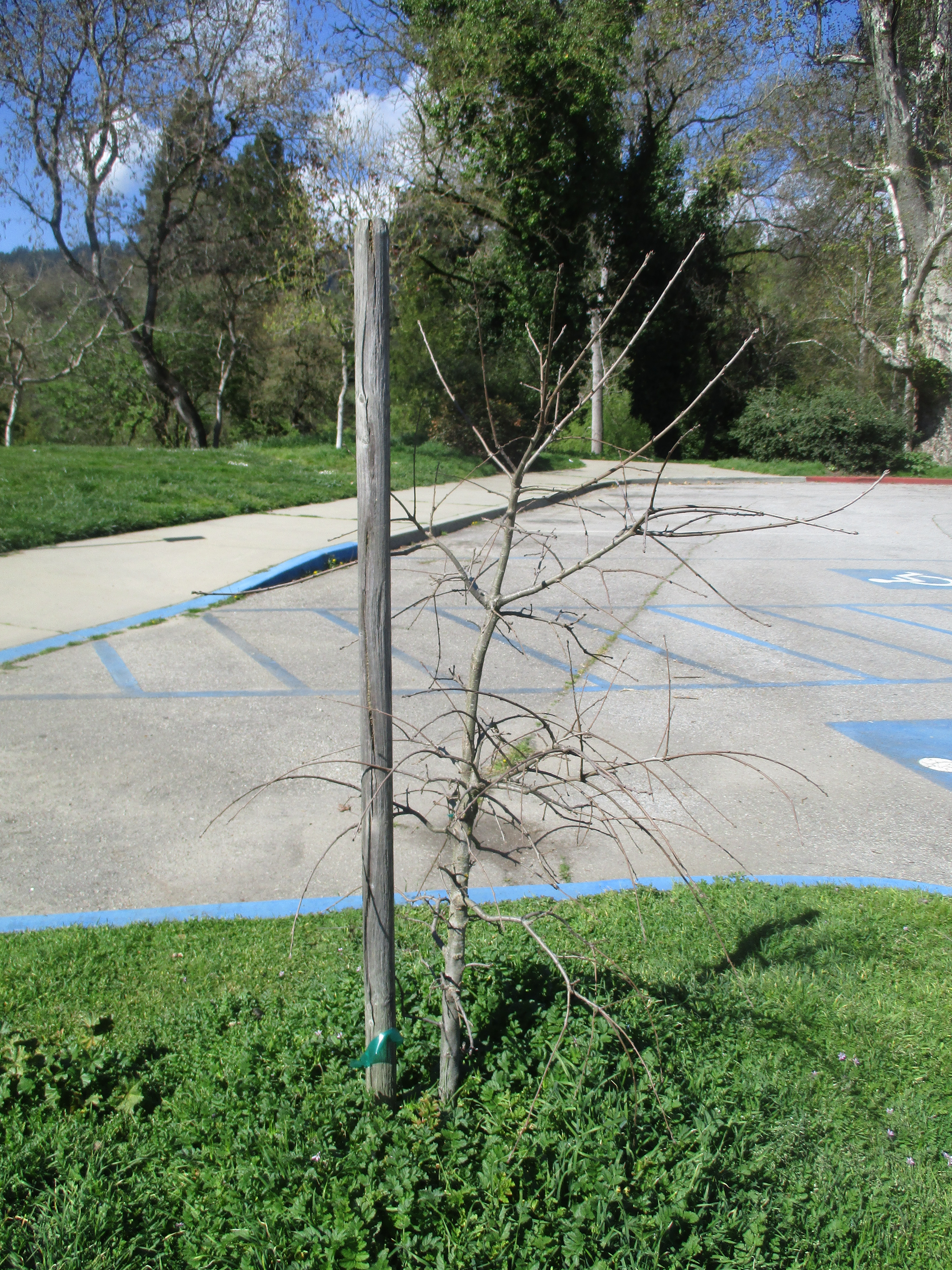 Memorial Tree – Before
 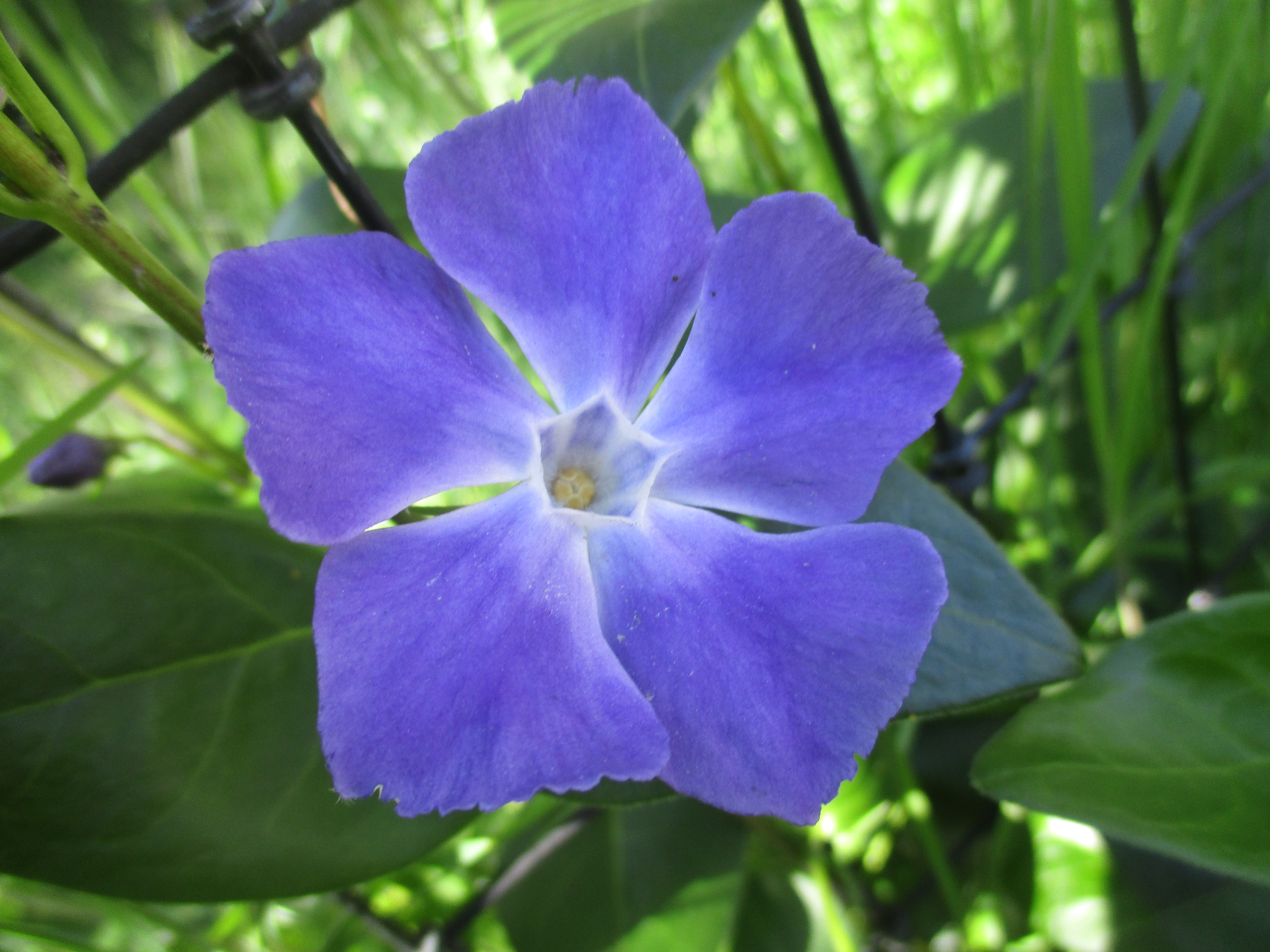 Even though I know they are slightly purplish, periwinkle look blue to me.
