Six on Saturday: New Photinia

Renovation of an old photinia hedge on the main road at work has been more work than it should have been. It was too overgrown for simple shearing. I pruned it up as a row of small trees, with the intention of eliminating their upper canopies as basal watersprouts grew upward from the newly exposed trunks below. Well, water sprouts did not grow as readily as I hoped for. The trees were cut down while the hedge below was still scrawny. As planned, I layered a tall water sprout as a replacement for one of two missing shrubs, but needed to replace the other with the naturally layered specimen from another hedge. (Layers develop roots where they touch soil, while attached to their original specimens.)

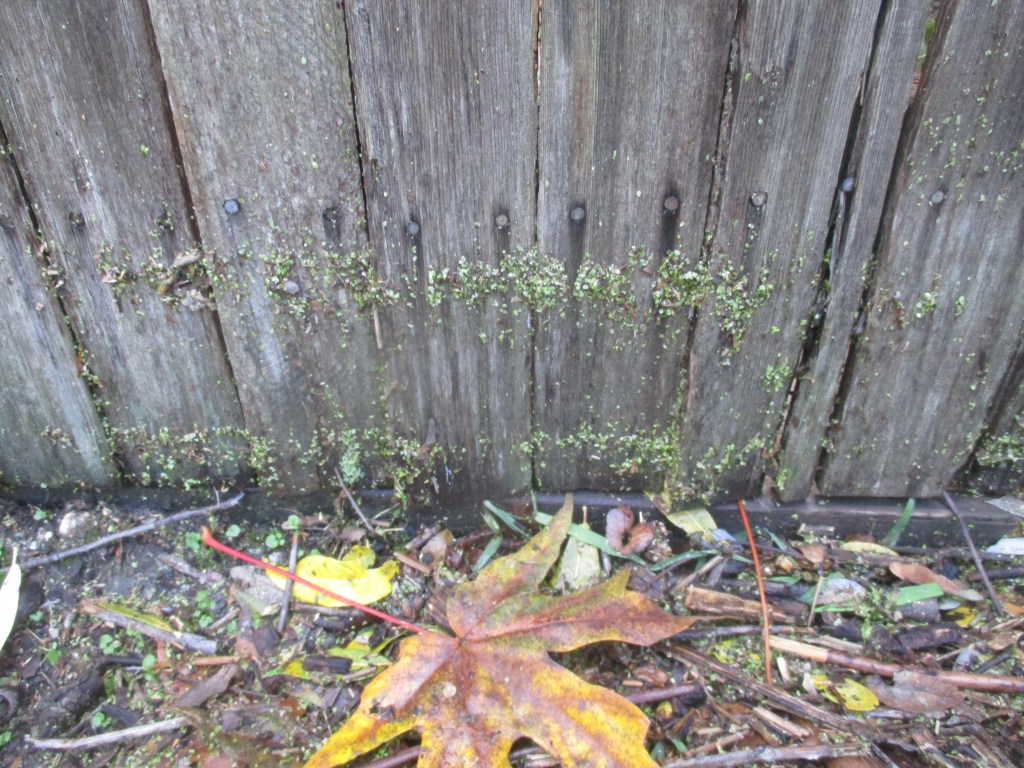
1. Rain! The first storm of the season came and went about two weeks ago. The drainage pond flooded about two feet over its spillway! This duckweed was left on a nearby fence.
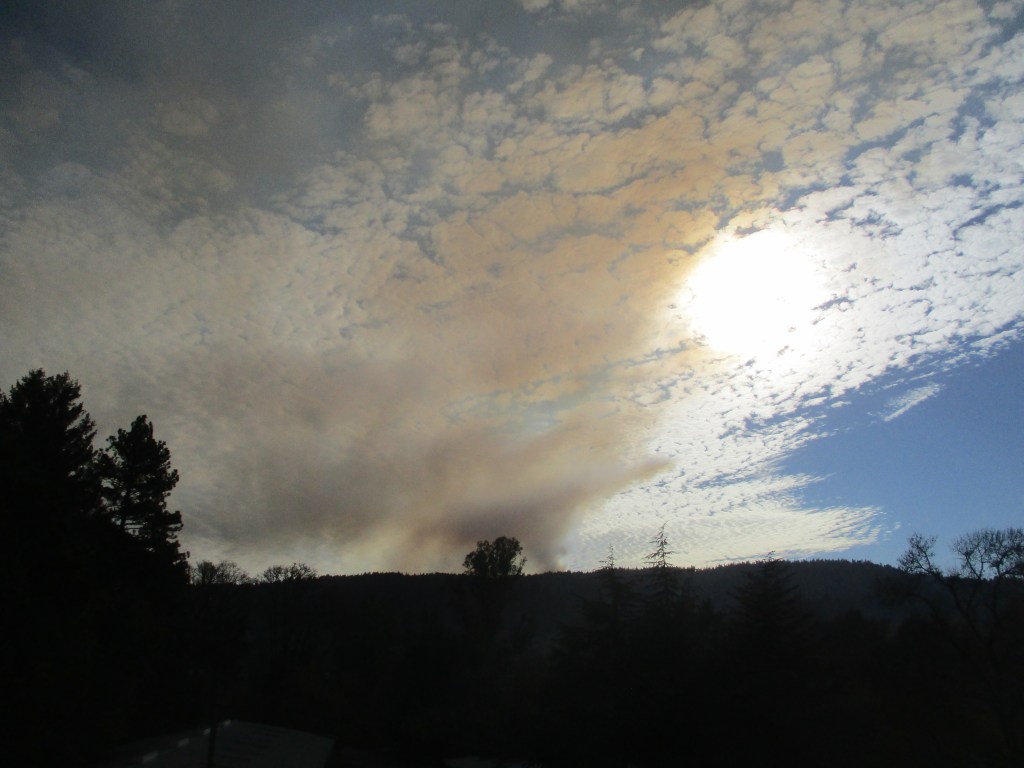
2. Controlled burns resume now that the beginning of the rainy season is also the end of the fire season. There has been no more rain since the first storm, but forests are damp.
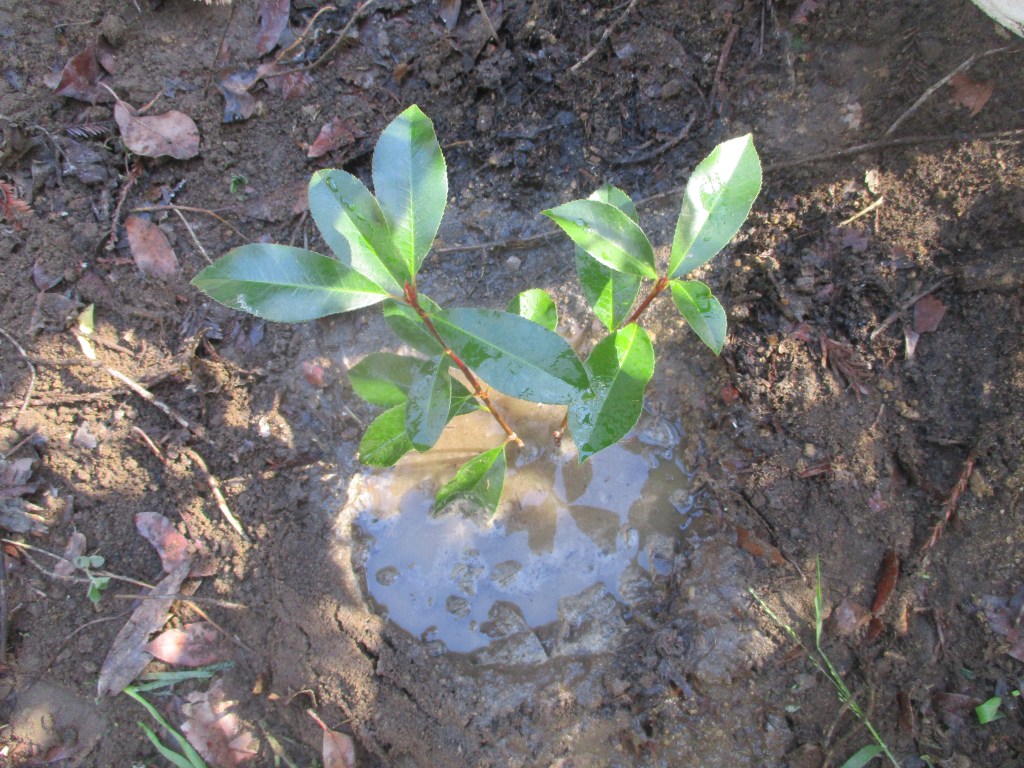
3. Damp ground and cooler weather facilitate planting within areas that lack automated irrigation. This layered photinia stem got relocated from one old hedge to patch another.
4. It was not enough though. To compensate for lack of another, I simply made a second layer by bending over and mostly burying a vigorous water sprout of an adjacent stump.
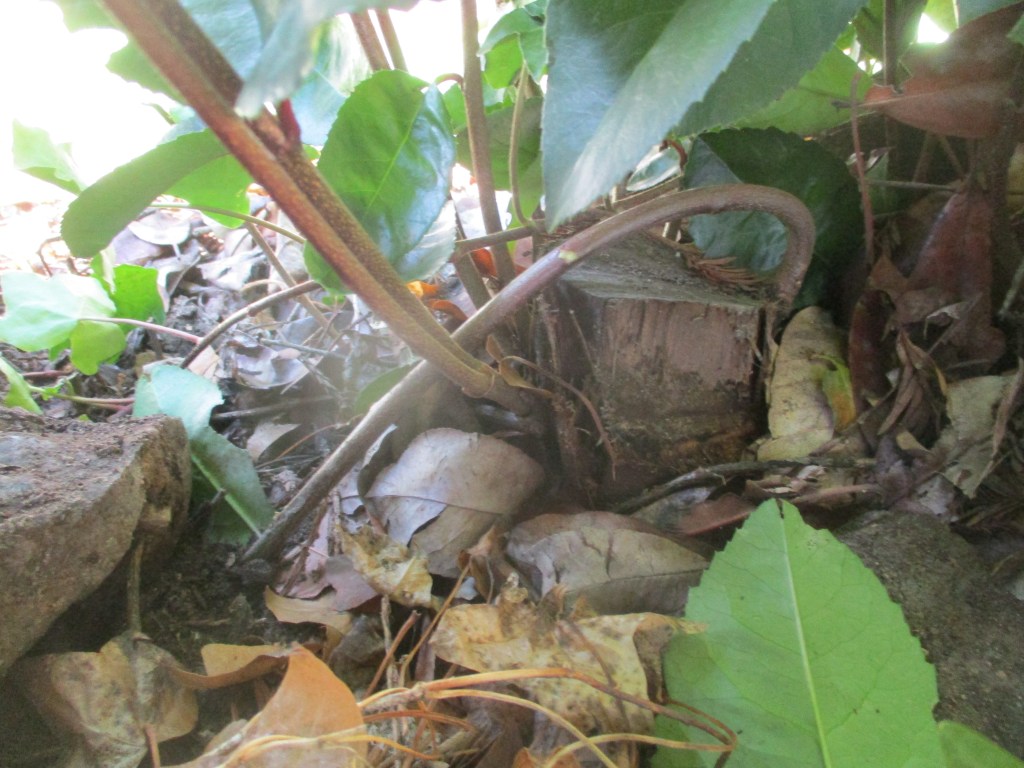
5. A new photinia can now grow where the tip of the mostly buried water sprout emerges from the soil. I am very pleased with the very uniform spacing of all specimens involved.

6. Meanwhile, I plugged a rooted sucker of an ungrafted historic flowering cherry within the decayed center of the stump of the now deceased original tree. It could replace itself!

This is the link for Six on Saturday, for anyone else who would like to participate: https://thepropagatorblog.wordpress.com/2017/09/18/six-on-saturday-a-participant-guide/

Bald Cypress

Although very rare here, bald cypress is prominent enough in the South to be the state tree of Louisiana.

There are very few coniferous (cone bearing) trees that are deciduous; and because most prefer cooler winters, very few are ever seen in local gardens. The bald cypress, Taxodium distichum, happens to be one of the few deciduous coniferous trees that really could be more popular than it is, since it seems to be right at home in mild climates. It is native to coastal riparian regions from Maryland to Florida to eastern Texas, and up the Mississippi and Ohio Rivers as far as Indiana.

The soft foliage resembles that of coastal redwood, but is more finely textured. It is still mostly light green, but will soon be turning paper bag brown before trees go bare. The tiny individual leaves are shaped like flat pine needles, and are not much more than half an inch long. The ruddy or grayish brown bark is finely shaggy.

In the wild, mature bald cypress trees can get more than a hundred feet tall with trunks more than five feet wide. Some of the largest trees have buttressed trunks as wide as fifteen feet! Trees in swamps develop distended growth from their roots known as ‘knees’, which can stand several feet tall! Fortunately, bald cypress rarely get half as tall or develop such massive trunks locally.

Bald cypress is one of the few deciduous conifers; so the finely textured light green foliage will soon be gone.

Getting an early start to winter pruning may have certain advantages

Without specialized pruning, fruit trees become sloppy and unable to sustain all of their fruit.

As long as it gets done well before buds begin to swell late in winter, the meticulous and specialized pruning that deciduous fruit trees and roses require during winter dormancy does not need to be done immediately. Here where the climate is so mild, some roses may still be blooming. The main advantage to getting an early start is that those of us who have many fruit trees and roses in need of pruning have more time to get them all done within the proper time.

If it helps to start pruning early, it is best to prune fruit trees and roses in the same order that they go dormant and defoliate. The ‘stone’ fruits (those of the genus Prunus, that have large pits known as ‘stones’), like apricots, cherries, nectarines and peaches typically defoliate earlier than the ‘pomme’ fruits, like apples, pears and quinces. Modern ‘carpet’ roses may not defoliate completely, so can be delayed until after all the bare roses get pruned, but may eventually need to get pruned while still partially foliated.

The specialized pruning that deciduous fruit trees and roses need is serious business. Those who do not know how to do it properly should learn about it before actually doing it. Improper pruning of fruit trees can inhibit production and damage the trees. Roses are not so easily damaged, but will get overgrown and not bloom as well if not pruned aggressively enough. (This sort of pruning will be a topic later in the season.)

Like fruit trees and roses, other trees and shrubs that need pruning prefer to be pruned while dormant through autumn and winter. Deciduous trees and shrubs are obviously dormant while bare, but realistically, are ready to be pruned when their foliage is no longer green.

Evergreen plants are not so obviously dormant, but will be as dormant as they get through winter. This would therefore be a good time to prune to eliminate pine limbs that are too low. If pruned a bit early, the pruning wounds will get weathered more through winter and consequently bleed less through spring.

Horridculture – Multi-Grafts

You know, as much as I dislike multi-grafts, I feel compelled to prune the multi-grafted roses in such a manner that one scion does not overwhelm another.

tonytomeo's avatarTony Tomeo

P91116+++Bare root fruit trees will be available in about a month. It is probably my favorite time of year for going to nurseries. (Since I grow just about everything I want from bits of landscape debris, I do not often go to retail nurseries.) It is also rather frustrating to see what sorts of bare root material are popular nowadays, and what sorts are not. Horticulture has gotten so ridiculous!

Most of the formerly common cultivars of fruit trees that I remember are no longer available. They were common for a reason. They perform well here. Retailers used to select cultivars for their respective regions, instead of pimping out weird new but unproven cultivars, or just taking the same faddish cultivars that get sent to other stores within a vast chain of big box stores.

One of the weirdest of fads are multi-grafted fruit trees and roses.

Multi-grafts are certainly…

View original post 328 more words

Firethorn

Firethorn is a familiar wintry berry.

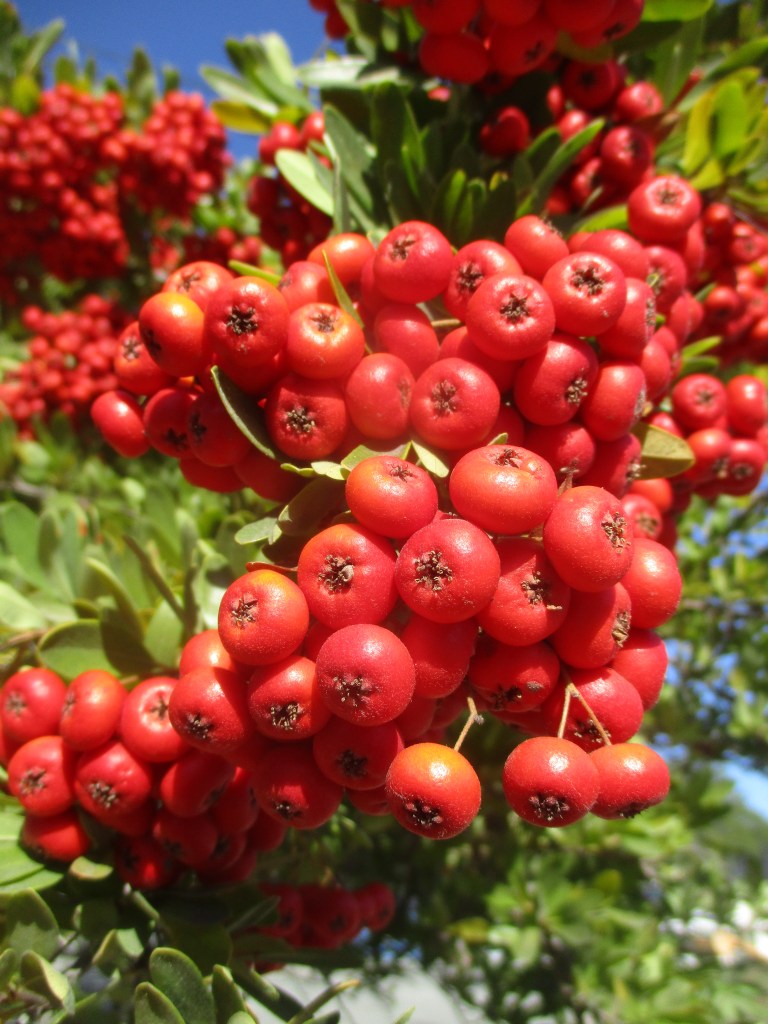
Its name says it all. Firethorn, Pyracantha coccinea, produces an abundance of fiery red berries on unavoidably thorny stems. A few old fashioned cultivars produce equally fiery orange berries. Cultivars with fiery yellow berries are now rare. Berries ripen for autumn, in time to feed migratory birds. Late berries can last longer after migratory birds are gone.

The rigid and wickedly thorny stems of firethorn work well as impenetrable hedges. They are rather difficult to prune and handle without impalement though. Unfortunately, simple shearing deprives formal hedges of some of their new growth that blooms and fruits most abundantly. Selective pruning is tedious and more hazardous, but might enhance bloom.

Shrubby cultivars of firethorn can grow higher than first floor eaves. Mature and vigorous hedges with hefty interior trunks at such height can generate spirelike growth that almost reaches second floor eaves. With pruning, some cultivars that sprawl close to the ground can stay quite low. Without pruning, some slowly form thickets that are several feet deep.

Winter Berries Attract Migrating Birds

English hawthorn is like deciduous firethorn.

Bloom and colorful foliage provide most of the color besides green within home gardens during spring and summer. Deciduous foliage becomes more colorful for autumn. Winter berries and a few other lingering fruits become more colorful as deciduous foliage sheds through winter. All this color adheres to precise schedules within a collective ecosystem.

Many plants exploit wildlife. It is how they compensate for their immobility. Many provide incentive for the services that they desire from the wildlife that they exploit. For example, after enticing pollinators with fragrance or color, flowers happily exchange extra pollen or nectar for pollination. Many plants provide edible fruits in exchange for seed distribution.

It is no coincidence that so many different winter berries ripen through autumn for winter. They provide sustenance to many migratory birds who rely on them. Overwintering birds who compete with migratory birds appreciate their efforts as well. Such winter berries are small but abundant, for ‘grab and go’ convenience. Bright color is the best advertisement.

Some people appreciate how winter berries attract birds and squirrels into their gardens. Some appreciate the seasonal color of such berries more than the wildlife. Unfortunately, wildlife decides the outcome, and such outcomes are variable. It is impossible to predict if berries will disappear as they ripen, or linger as they deteriorate through most of winter.

Firethorn is likely the most familiar of the winter berries here. It seems to be more prolific with its brilliant red berries than any other species. Some old fashioned cultivars produce bright orange or perhaps even bright yellow berries. Some sorts of cotoneaster resemble firethorn, but with subdued rusty or orangish red display for less refined woodsy gardens.

Toyon, or California holly, is most prolific with winter berries where it grows wildly without pruning. It gets big though. Real hollies, which are more popular in other regions, do not produce many berries locally, particularly since male pollinators are uncommon. English Hawthorn is a small deciduous tree that displays berries that resemble those of firethorn, but on bare stems.

Street-Smart Gingko

While in the Los Angeles region a month or so ago, it was gratifying to see some of the trees that we installed within the median of San Vicente Boulevard years ago.

tonytomeo's avatarTony Tomeo

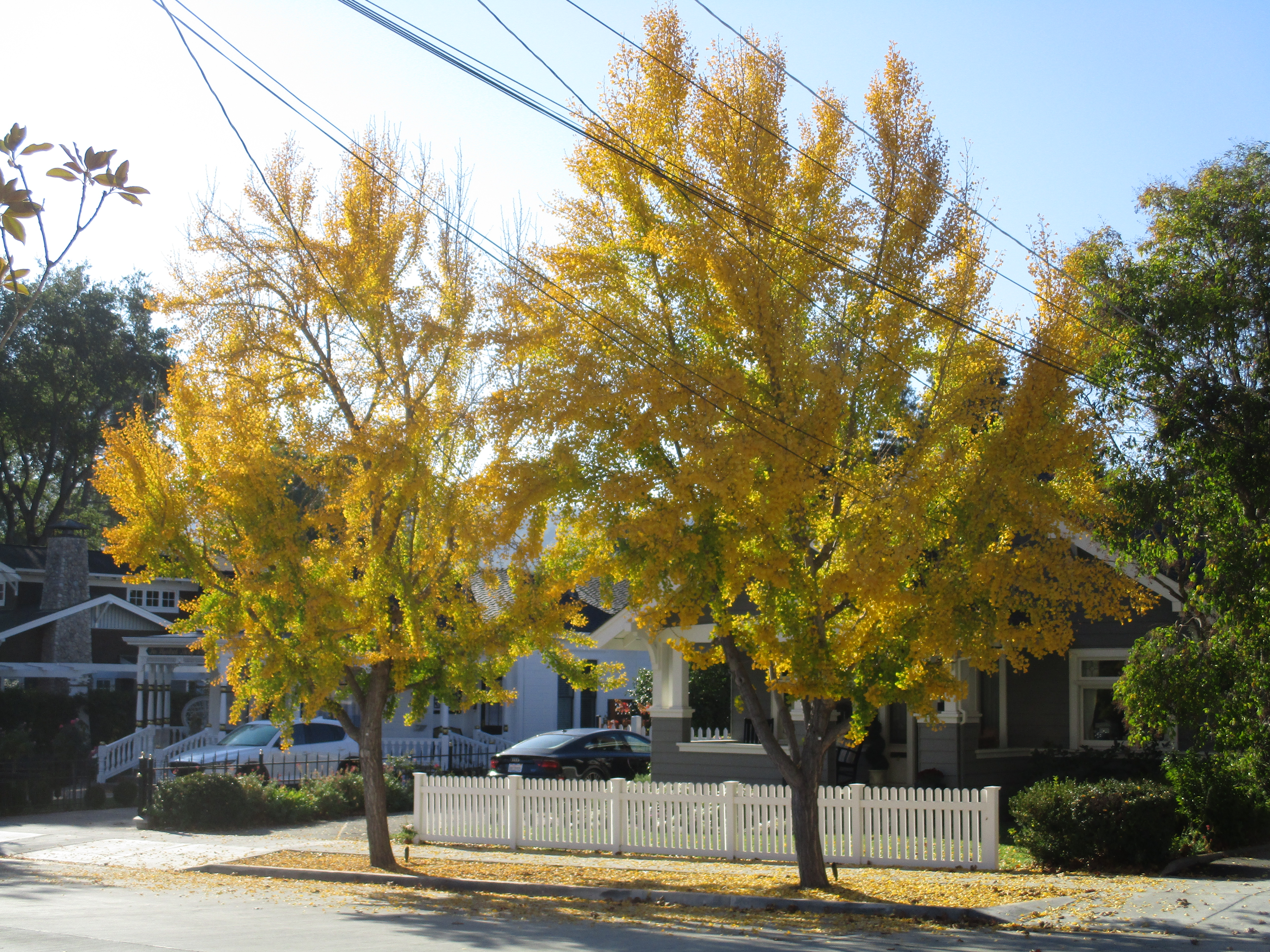
P91124Much of my work involves street trees. They need more of my kind of attention than most other trees. They must conform to more restrictive limitations. They endure more abuse. They are the most prominent trees on urban properties. Because some are assets of their respective municipalities, they are more stringently protected by local ordinances than other trees are.

I planted quite a few street trees too. While selecting trees for the medians of San Vicente Boulevard in Los Angeles, we considered the clearance of the lowest limbs above the highest truck traffic, the docility of roots under curbs and pavement, the potential for foliar debris, the resiliency to neglect, and the resistance to pathogens. Those were just some of the major concerns.

We sort of wanted them to look good too.

Ginkgoes, at least modern (fruitless) cultivars, work well as street trees. They are tall and slender, and can…

View original post 201 more words

Almost RAIN!

Goodness, this rainy season started a month earlier than it did three years ago. I suppose that it is still within the normal range.

tonytomeo's avatarTony Tomeo

P91123KThere have been only three hints at precipitation since last spring.

The (sideways) picture above shows the same dampened hood of a Chevrolet that provided the illustration for a post on another blog on September 30.

The picture below shows a similarly dampened but different windshield from that which provided the illustration for a post on November 16, regarding a bit of precipitation two days prior, on November 14.P91123K+

All four pictures here were actually taken just after a very brief rain shower that happened just after midnight on November 19. I tried to be artistic with them, but I am not a photographer.

The picture below demonstrates how difficult it is to hold the camera steady while getting a close up picture of rain dripping from a lumber rack at night. Do digital cameras automatically extend exposure to accommodate for the darkness? Is it blurred or merely…

View original post 155 more words

Six on Saturday: Zinnia

Zinnia are enviable. They seem to perform exemplarily for everyone else and everywhere else. They have never done well for me though. I can not explain why. I stopped trying to grow them many years ago, but I encounter them at work, where the other horticulturist grows some as warm season annuals. This year here, some performed reasonably well as bedding plants, and a few more bloomed impressively within a pair of half wine barrels. They are done now that the weather is cool, but I got a few pictures of them as they were removed and replaced with pansies for winter.

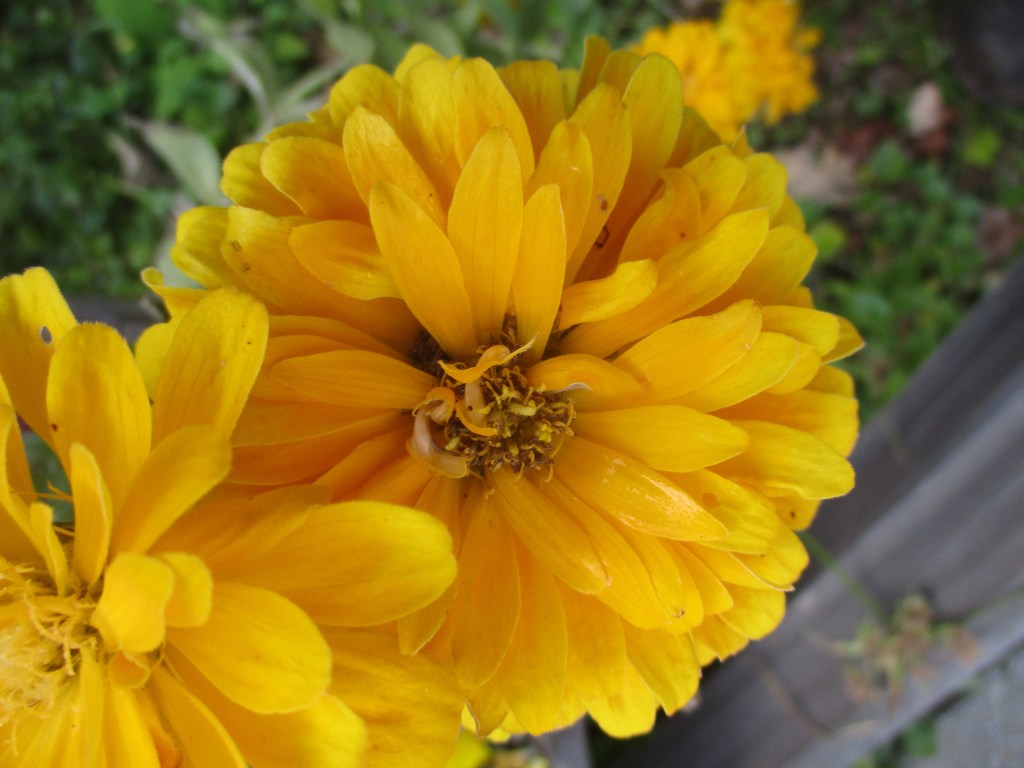
1. Yellow is a primary color, but the scarcest among the few prolific zinnia that grew in a pair of half wine barrels through summer. Only one of the ten zinnia here bloom yellow.

2. Orange is a secondary color between yellow and red, but is a bit more abundant in our barrels than either yellow or red. Maybe three or so of the ten zinnia here bloom orange.

3. Red is another primary color, which is beyond orange from yellow. Perhaps two or so zinnia bloom red, but they are less profuse than those that bloom pink, orange or white.

4. Pink is not really a color, but is merely a tint of red, or red mixed with white. Only two of the ten zinnia here bloom pink, but they are bigger and more profuse than the others.

5. White should be my favorite, but to me, seems to be mundane relative to other colors. Two of the ten zinnia bloom white, but they are neither prominent nor prolific in bloom.

6. Rhody is as unimpressed with our unusually florific zinnia as he is uncooperative with my attempts for a good picture of him. Fortunately, even a bad picture of Rhody is good.

This is the link for Six on Saturday, for anyone else who would like to participate: https://thepropagatorblog.wordpress.com/2017/09/18/six-on-saturday-a-participant-guide/
Colorado Blue Spruce

With such densely foliated low limbs reaching the ground, Colorado blue spruce functions as much as large shrubbery as a small tree.

Colorado and Utah share the same stately state tree; the Colorado blue spruce, Picea pungens, which is native to the Rocky Mountains between Arizona, New Mexico and southern Idaho. Colorado blue spruce are stoutly conical trees that grow slowly to eventually get more than seventy five feet tall. Where they need to compete with other trees in forests, the biggest are nearly twice as tall with trunks nearly five feet wide. However, because they grow so slowly, and do not get much bigger then they need to, well exposed trees stay proportionate to home gardens for many decades. Many shrubby compact cultivars actually stay less than ten feet tall. Foliage can be grayish green to silvery pale blue. The stiff and sharply pointed needles are about three quarters to an inch and a quarter long, and densely set on relatively rigid stems.

The elegant silvery blue foliage of the Colorado blue spruce is striking either in front of or behind darker evergreen foliage, like that of redwoods or junipers. These stout and densely foliated trees make any garden look a bit more woodsy.