‘Lily’ is such a vague designation. So many of the popular flowers that are known as ‘lily’ are not even remotely related to real lilies, which are of the genus Lilium. It is no wonder that many of them are confused about their obligations to the gardens that they inhabit. Some bloom unseasonably. Some develop unusual floral or foliar color. Their confusion can be contagious to flowers that are not even classified as lilies, such as #3 of these Six. Fortunately, the weird behavior of these flowers that live in denial of their true identities has been harmlessly and undeniably delightful. Such aberration is how new cultivars are sometimes discovered.
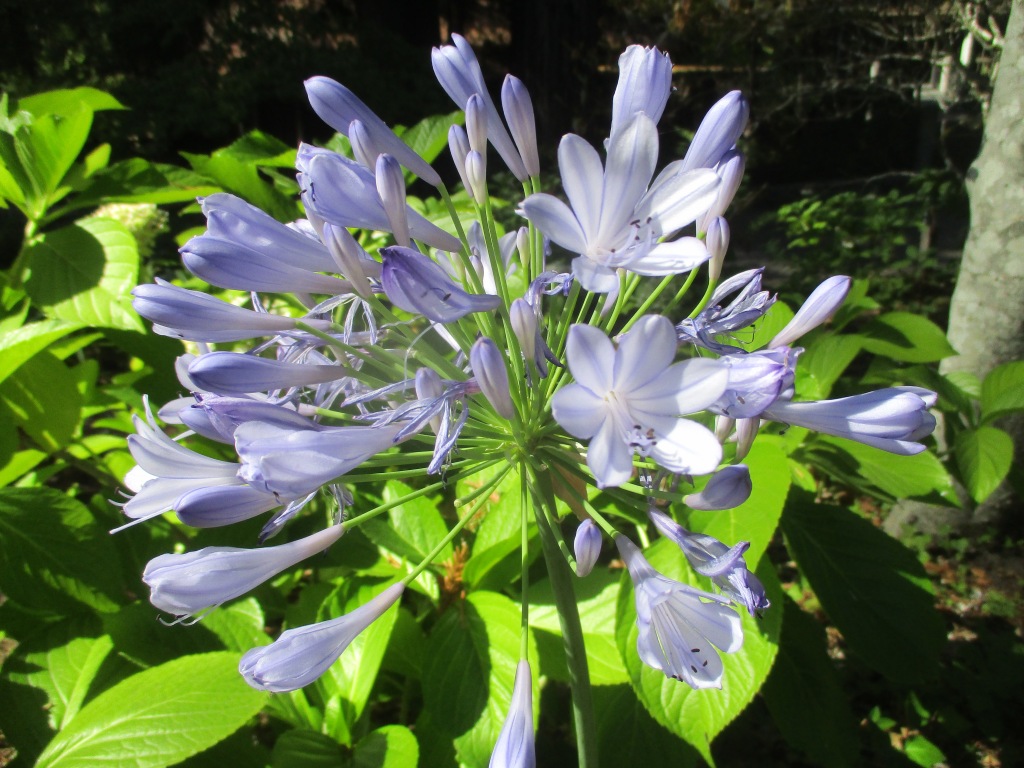
1. Lily of the Nile is in denial of its bloom season. After all others have been deadheaded, this one continues to bloom. It should be copied if its delayed bloom schedule is genetic.
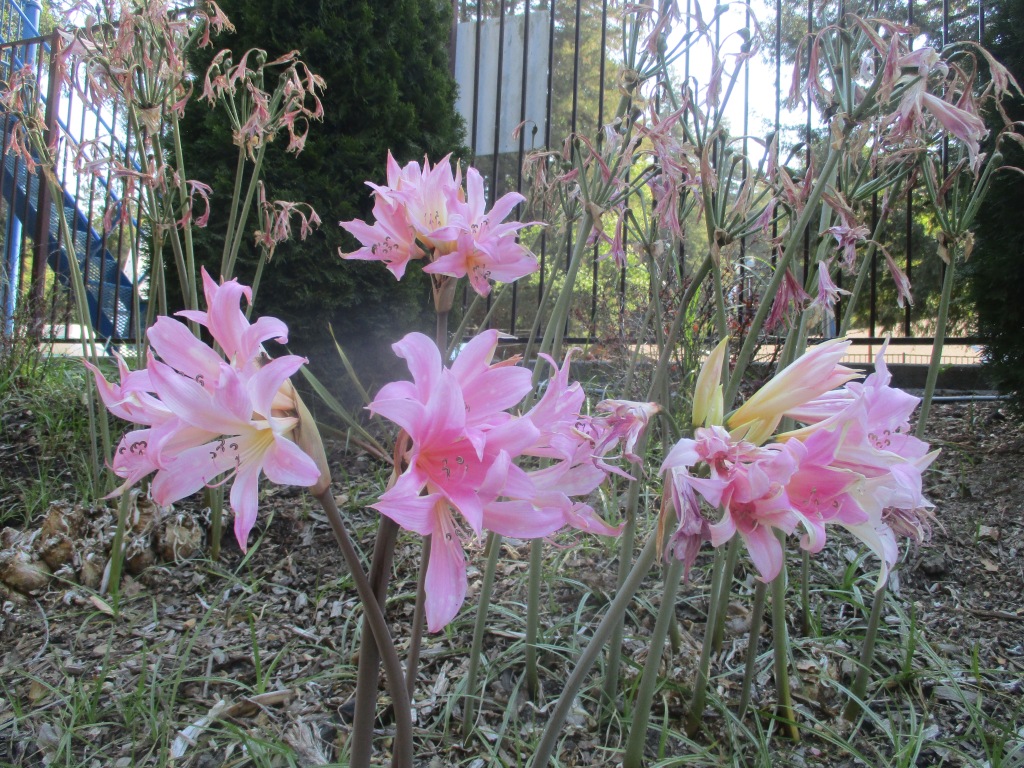
2. Belladonna lily, or naked lady, followed its lead. Mr. Stephens of Garden Ruminations explained that it may be another variety or species. Other naked ladies have gone seedy.
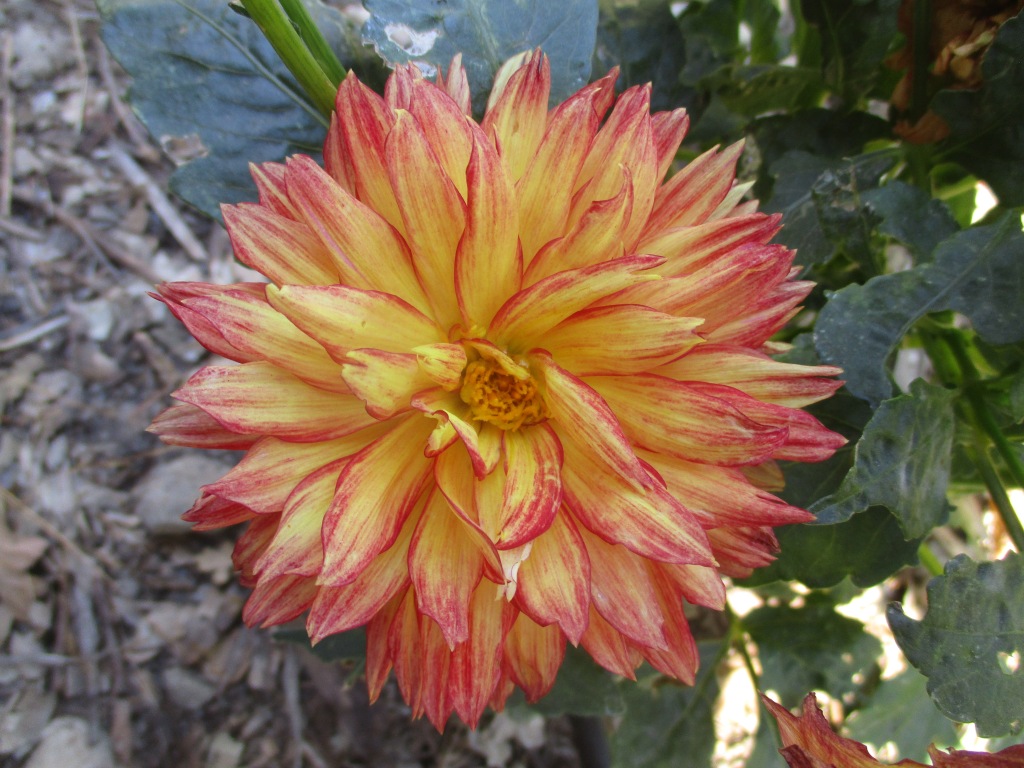
3. Dahlia is the one of these Six that does not try to be a lily. However, it is trying to be a new color. It was simply yellow last year. Perhaps it got this idea from ‘Cleopatra’ canna.
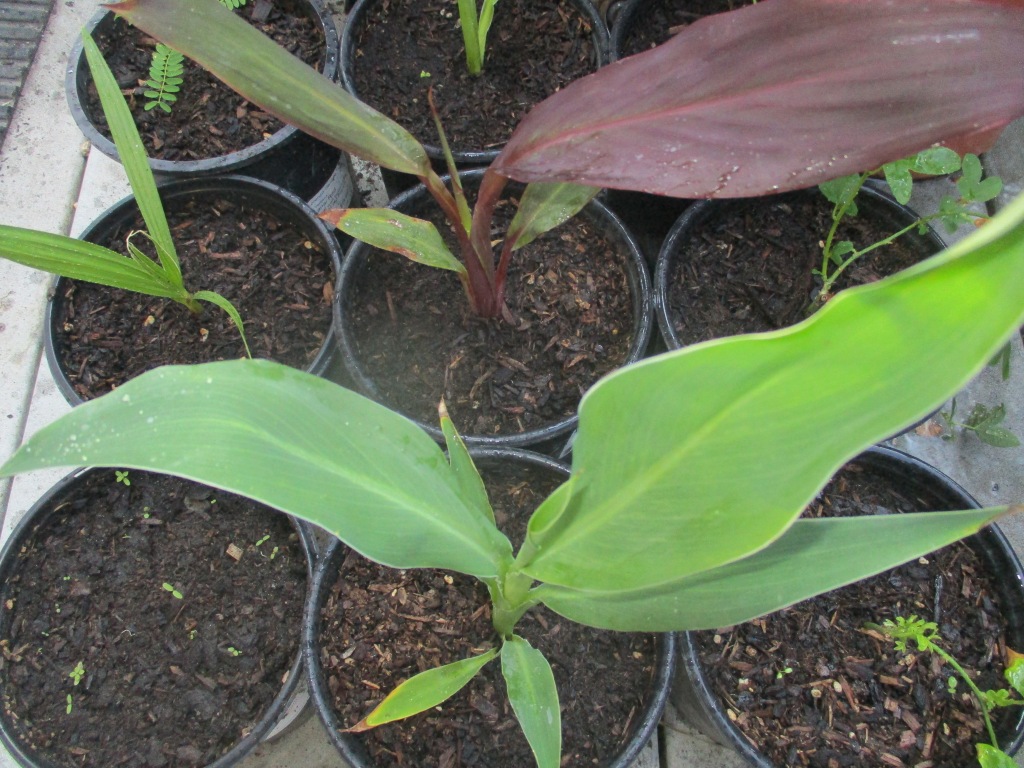
4. Canna lily, or canna, is trying an unexpected foliar color. Its parent is a bronze Canna musifolia, like the other seedling at the top of the picture. I anticipated genetic stability.
5. ‘Cleopatra’ canna generally, although not always, displays weirdly random red stripes on spotty yellow blooms. It seems to have shared much of its red with the yellow dahlia.
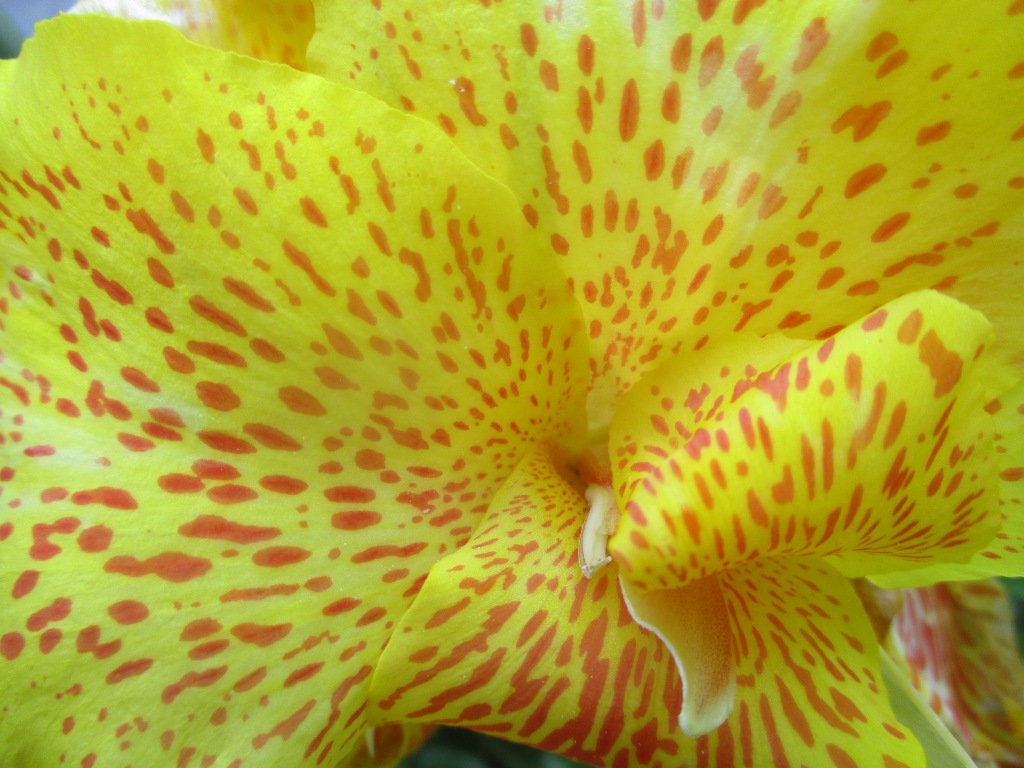
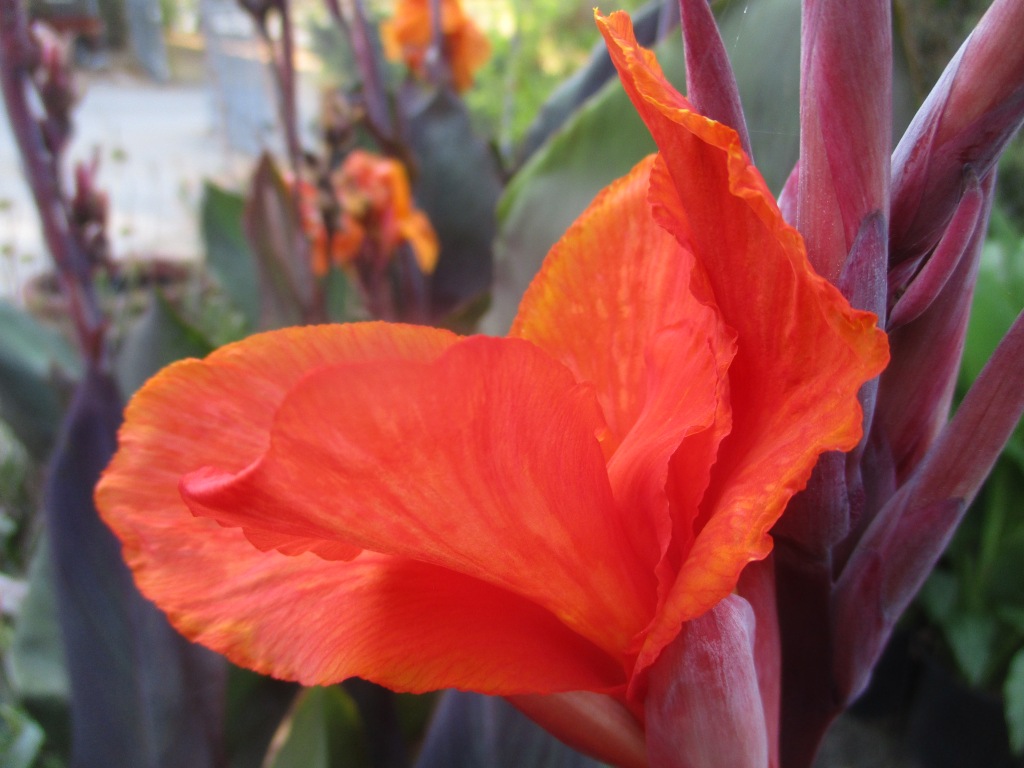
6. ‘Wyoming’ canna bloomed exclusively orange until this richly orangish red appeared. Perhaps ‘Cleopatra’ of the Nile was seedier than naked ladies with more than the dahlia.
This is the link for Six on Saturday, for anyone else who would like to participate: https://thepropagatorblog.wordpress.com/2017/09/18/six-on-saturday-a-participant-guide/


 This is no way to get the dirt on someone. There is no dirt involved. If there were, it would be referred to as ‘soil’. ‘Dirt’ is a term used by those who do not know any better.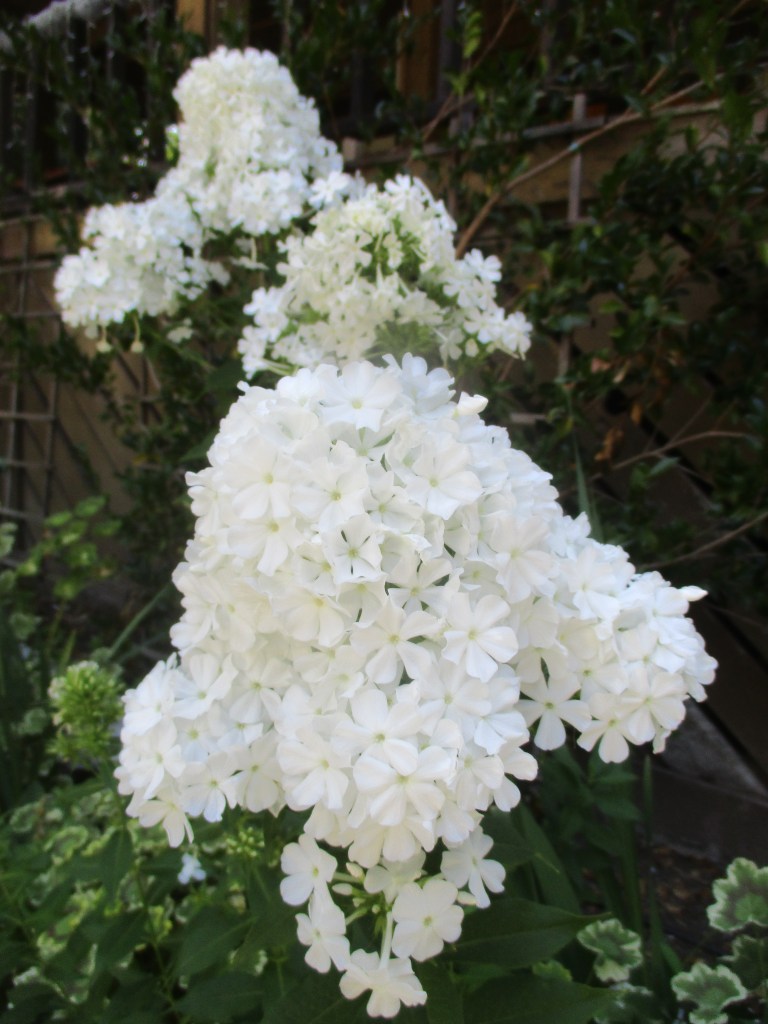
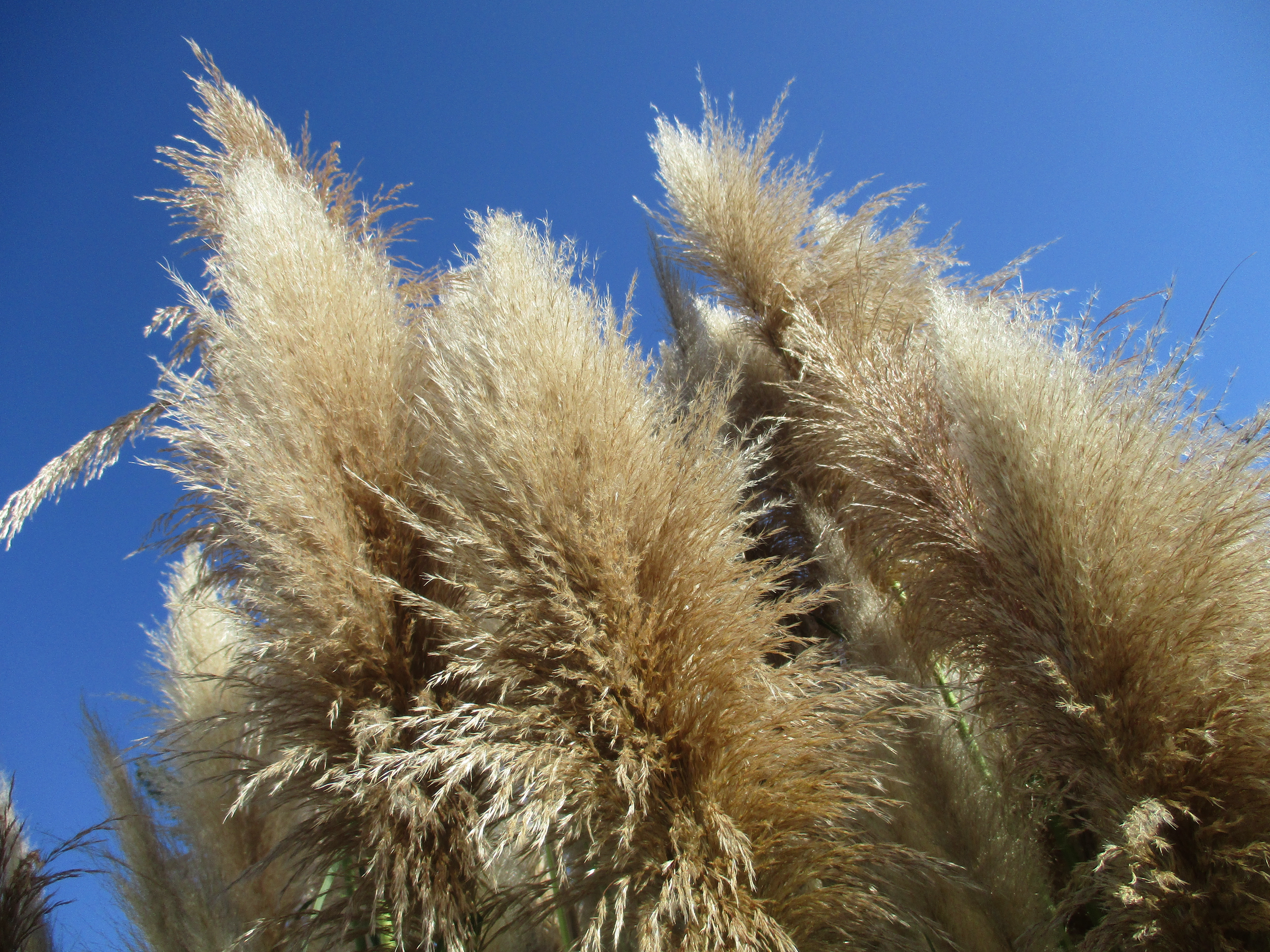 It is known by a few different common names, including ‘Andean pampas grass’, ‘purple pampas grass’, and simply ‘pampas grass’. ‘Andean pampas grass’ sounds almost like an oxymoron, since the Andes Mountains are in a separate region to the west of the pampas region of Uruguay and eastern Argentina. ‘Purple pampas grass’ is even sillier, since it is devoid of any purple.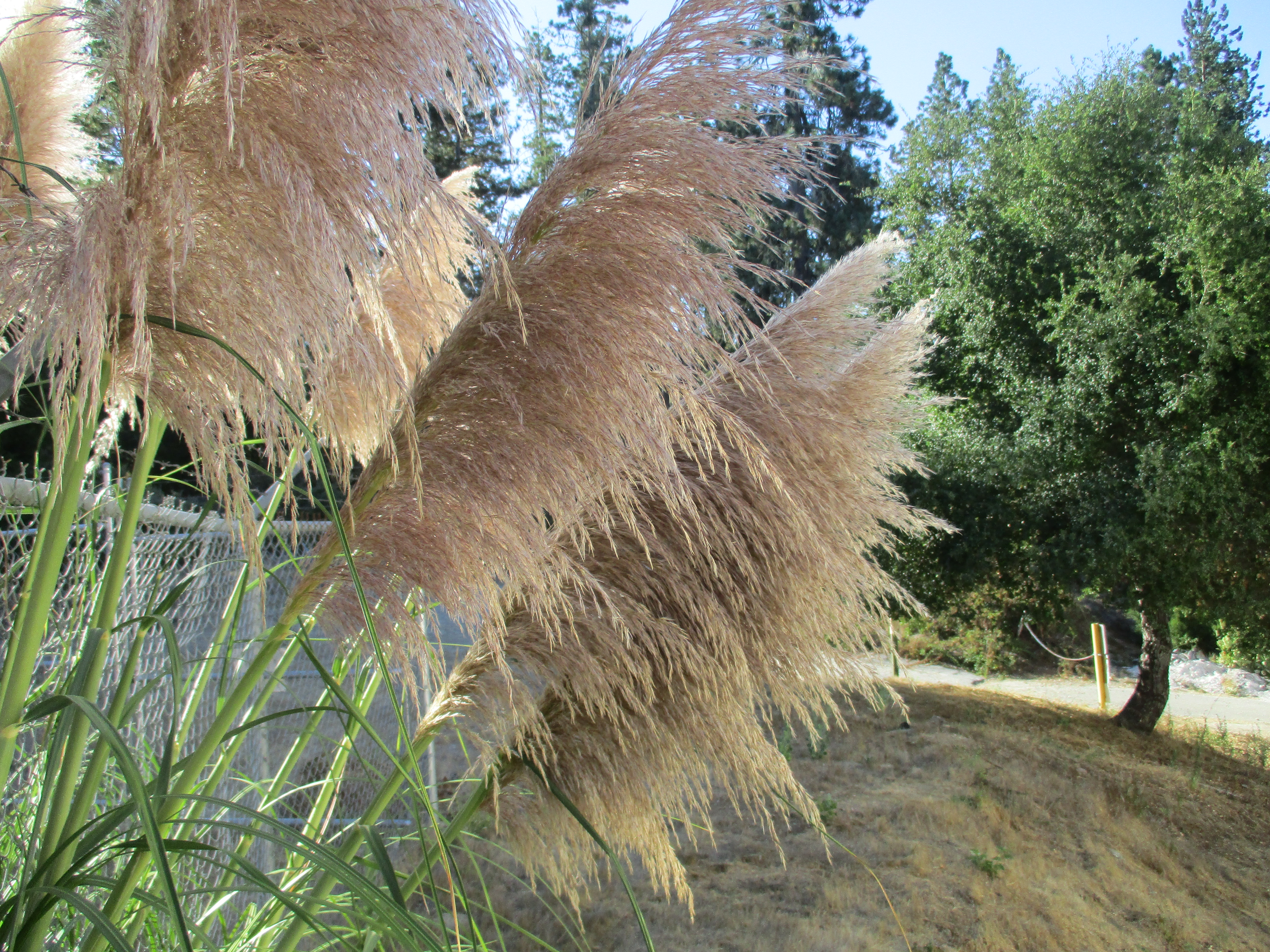
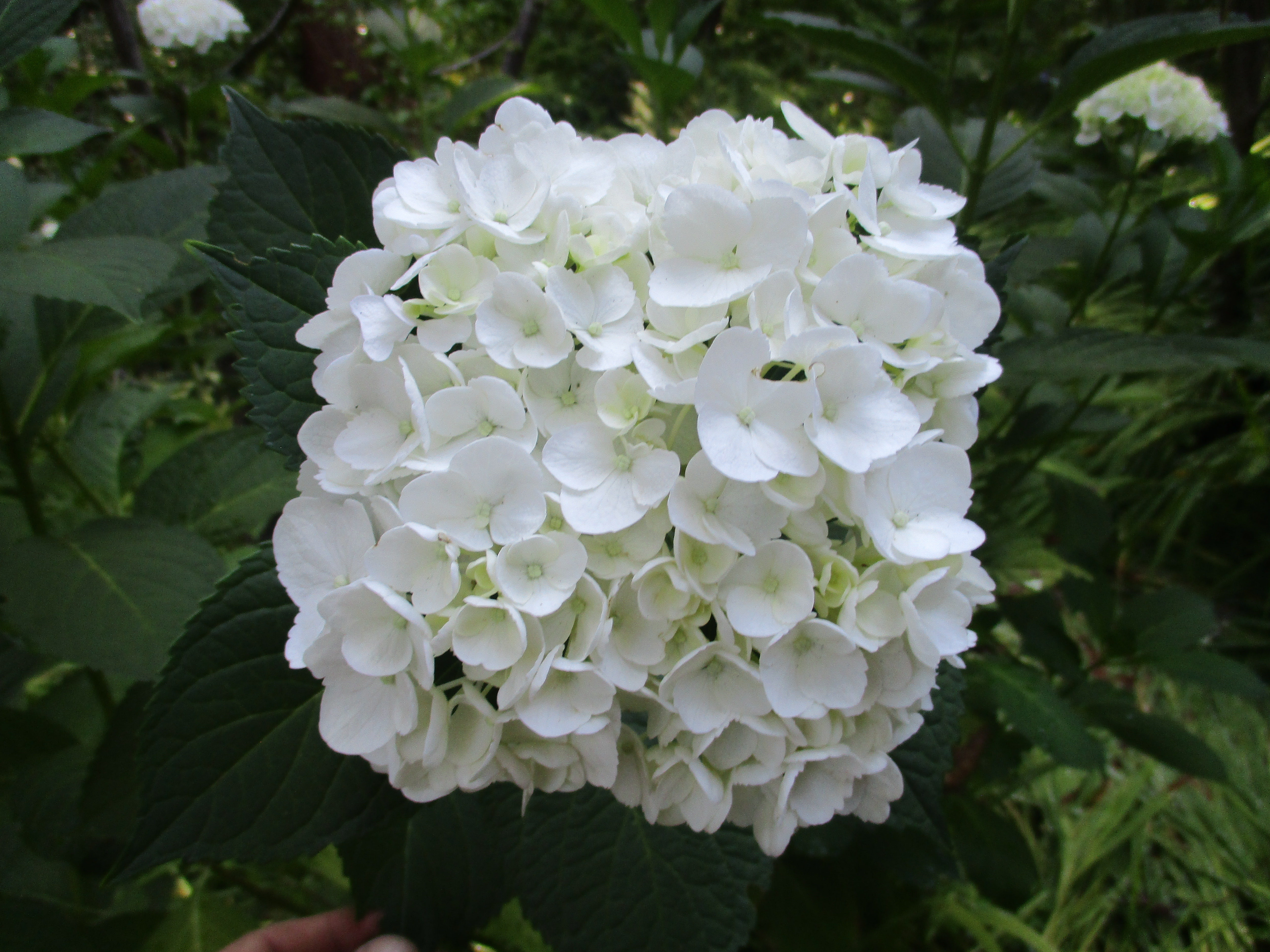 What ever happened to the formerly common white hydrangea? It used to one of the three standard types of hydrangea; and the other two were really variants of the same sorts of ‘pink or blue’ hydrangea that I wrote about in ‘



 Tony Tomeo