Not All Plants Like Fads.

Ornate pots and planters can be as decorative as the plants within them, and provide extra accommodation for more plants.

Like so many fads too often are, container gardening is overrated, and is actually contrary to the currently most faddish of fads; sustainability. Plants in containers need more regular watering than those that can disperse their roots more extensively into the ground. Those that are so indulged also want fertilizer to be applied more regularly, but are more likely to be damaged if fertilized too generously. Because confinement is stressful, plants in containers are innately more susceptible to disease and pests. Some plants need more pruning for confinement.

Then there are the problems with the containers. If exposed to sunlight, thin plastic containers get warm enough to cook roots within. Pots that do not drain adequately or that sit in their own drainage basins can stay saturated enough to kill roots. Water in drainage basins allows mosquitoes to proliferate. Seepage from large pots can rot decks and stain pavement. Self watering containers work nicely for houseplants (if used properly!), but lack drainage, so can not be used out where they are exposed to rain.

The advantages to container gardening are actually quite limited. Containers are obviously needed for houseplants, and where exposed soil is not available, like on balconies. They are also convenient for plants that want better soil than they can get in the garden, especially if the rest of the garden is responsibly landscaped with sustainably undemanding plants that do not require soil amendment or regular watering. Frost sensitive plants can be moved easily to sheltered locations if contained. Flashy plants like orchids and tuberous begonias that get displayed prominently while blooming can be concealed while not so impressive.

Of course there are many pendulous plants like Boston fern, spider plant, string or pearls and burro’s tail that really are at their best in hanging pots. It is also hard to deny that there are all sorts of artsy containers, like colorfully glazed pots and sculptural concrete urns, which are appealing enough to justify growing plants in them, even if just to show off the fun containers. Bonsai requires containers, but that is another big topic!

Horridculture – True Colors

Good old fashioned hydrangeas with pastel bloom are rare nowadays.

tonytomeo's avatarTony Tomeo

P90821Bearded iris can bloom in almost any color. It is expected of them. There is not much they can do to surprise us.

Dahlias exhibit a remarkable range of both color and floral form. Only a few colors are beyond their range.

Roses, gladiolus, freesias, tulips, hyacinths, petunias, pansies, primroses and several of the most prolific bloomers are expected to provide many choices of color.

Other flowers are not so diverse. Forsythia blooms only in bright yellow, or perhaps a lighter hue of yellow. Mock orange blooms only in white, either single or double. Until recently, before purple was invented, the common species of lily-of-the-Nile were either blue or white. We tend to appreciate such flowers for their simplicity, and do not expect anything more from them.

Decades ago, hydrangeas were either white or pink or blue. I say ‘either’ because what seems to be three choices is actually only…

View original post 205 more words

Ivy Geranium

Ivy geranium cascades splendidly from planters.

Venice in Italy is an ideal situation in which to demonstrate the potential of ivy geranium, Pelargonium peltatum. Because garden space is so minimal, potted plants that cascade from balconies above the canals are quite popular. Ivy geranium cascades so splendidly that some eventually reach the tops of downstairs windows from their upstairs balconies.

Ivy geranium can sprawl over shrubbery to seemingly climb a few feet high. Otherwise, it is unlikely to stand much more than a foot and a half high on the ground without support. If cascading over the edge of a planter, upward growth may be only several inches high. In window boxes, it obstructs minimal sunlight. However, it may hang six feet downward!

Ivy geranium propagates somewhat easily by cuttings of the almost succulent stems, but not as easily as zonal geranium. Its lobed, rounded and quite fragile leaves are about an inch long and two inches wide. Sporadic but continual bloom becomes more profuse for late summer and autumn. Flowers might be white, pink, red, lavender, purplish or striped.

Utilitarian Garden Features Became Aesthetic

Nasturtium used to be more utilitarian.

Gardening is fun. Furthermore, gardens are pretty. Some gardens also produce fruits and vegetables. Not very long ago, production of fruits and vegetables was more of a priority for more gardens. Some big gardens generated firewood and a bit of forage for livestock. Contemporary abundances allowed gardening to become more aesthetic than utilitarian.

Such abundance may not seem so apparent while so many of society could benefit from a bit more. People work more than ever to earn resources to purchase produce that they can not grow in their gardens while working so much. It has become more feasible to do so. Landscape maintenance is just another expense that many would prefer to eliminate.

Nonetheless, some popular features within modern home gardens evolved from formerly utilitarian features. Many such utilitarian features were common within the infrastructures of home gardens prior to the development of any modern technology that replaced them. Some were popular only because such technology was either expensive or uncommon.

Shade trees are among the most traditional and perhaps more recognizably utilitarian of landscape features. Although, even they have evolved. With modern air conditioning and insulation, their shade is less important than their aesthetic appeal. Window screens and rain gutters are also modern technologies that made particular garden features obsolete.

Window boxes, which are now mere ornamental features, were originally popularized for aromatic vegetation, to repel insects from windows. Rosemary, nasturtium, ivy geranium and petunia had always been some of the more popular repellent plants for this purpose. They do not obscure much sunlight as they cascade delightfully outward and downward.

Foundation plantings, which now merely soften the perpendicularity of vertical walls and horizontal garden spaces, were also utilitarian features. Compact and resilient shrubbery or perennials inhibited erosion caused by rain falling from eaves above. They obstructed splattering mud from below also. Indian hawthorn and lily of the Nile were quite effective. They could survive through summer without much irrigation, but then survive excessive moisture through winter.

Can’t See The Tree For The Forest

This old article reminds me that our work here is never done.

tonytomeo's avatarTony Tomeo

P90818Big trees get big problems. Part of our job is to tend to these problems before they become dangerous. Many of these problems are somewhat easy to identify. A deteriorating ponderosa pine with browning foliage it difficult to ignore if it is tall enough to be seen above the rest of the forest more than a mile away.

There are a few problems that are not so easy to identify. Some are caused by the weather, without prior warning. Others are hidden in the forests. One might think that those in the forests would not concern us. However, our landscape and facilities are so intricately mixed with the forests.

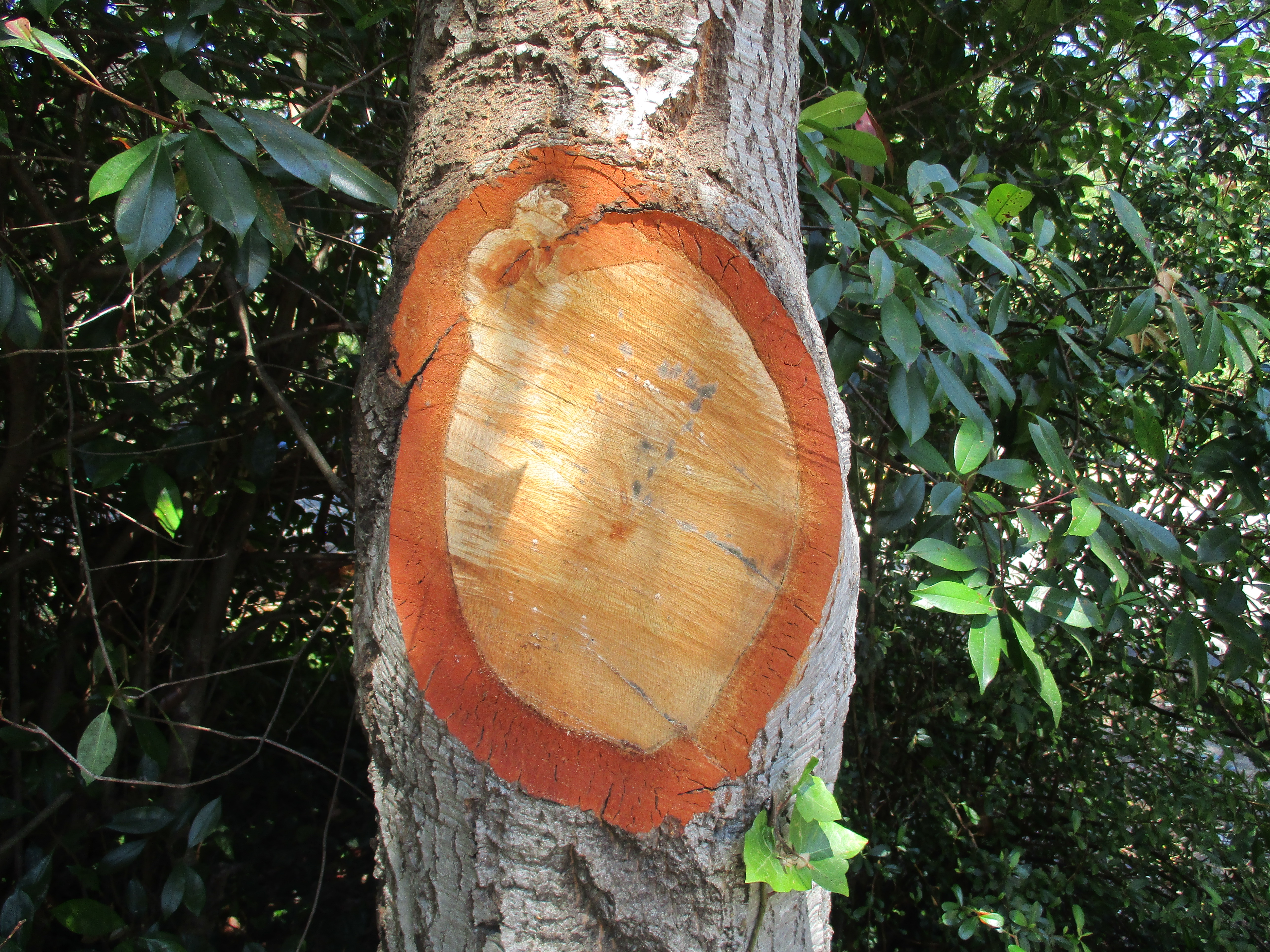
The shiner in the picture above was where a big broken limb needed to be cut from a big fir tree. It may not look big in the picture, but the limb was probably more than nine inches wide, and long…

View original post 150 more words

Fasciated Lily-of-the-Nile

Three years later, this particular lily of the Nile bloomed with several more similarly fasciated flower stalks. (It split during the past three years.) Others within the same colony also exhibit fasciated bloom though. They all may be genetically identical.

tonytomeo's avatarTony Tomeo

P90817K

Floral fasciation is a rare developmental disfigurement of a bloom, supposedly caused by the fusion of two or more blooms. Many fasciated blooms really do look like two blooms stuck together, like double daisies. Alternatively, fasciation can cause distention of a single flower of many on a foral spike of foxglove.

Fasciation of lily-of-the-Nile bloom is typically expressed merely as a few stray florets on the otherwise bare stalk below the main floral truss. A smaller subordinate stalk may seem to be fused to the main stalk below the stray florets.

The specimen in the picture above is exceptional. It really does look like a double bloom, with one stacked on top of the other. The atypically short and stout stem looks like a tightly fused bundle of several smaller stems. Those who do not know better might find the more billowy and more colorful fasciated bloom to be more…

View original post 152 more words

Six on Saturday: Canna flaccida?!

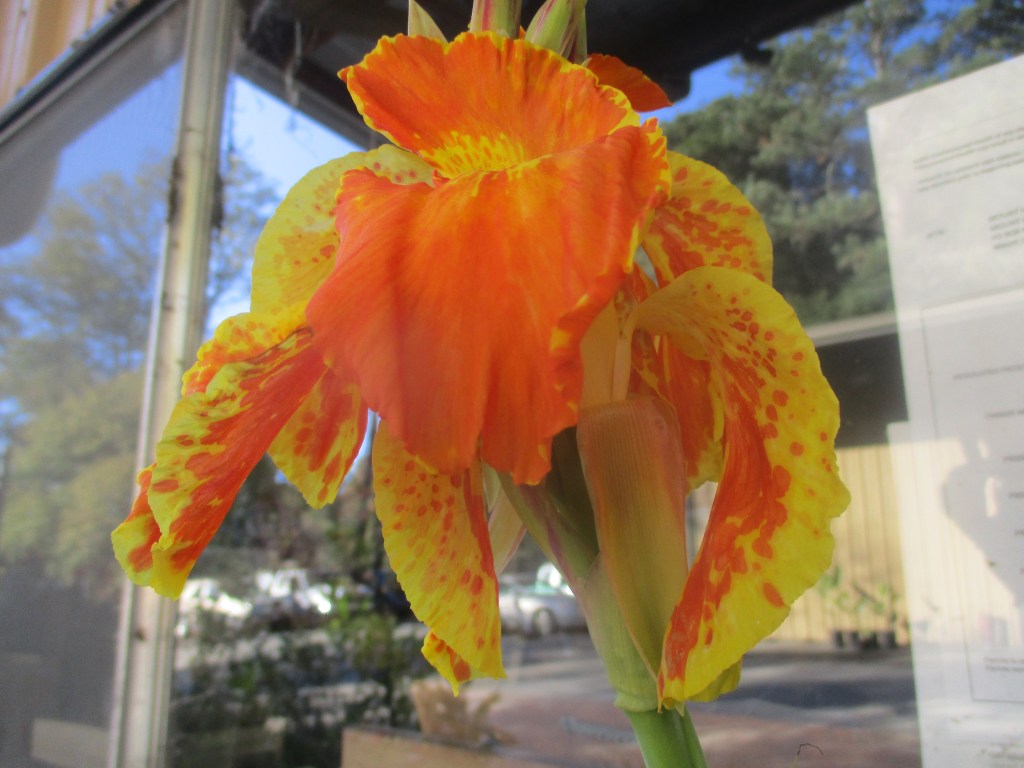
Canna have been so extensively hybridized that very few modern cultivars are identified by species. They are known merely by their generic designation of Canna with a cultivar name. Canna flaccida is an ancestor of many hybrids, and the only species that is native north of the Rio Grande, but seems to be rare here. I want it! NOW! I should be satisfied with flashier modern cultivars, but I prefer simpler species, especially one from Florida.

Well, it may be here already. Late last spring, at the worst time to dig Canna, I dug a big colony of it from a site that was about to be landscaped. Even after most were recycled to other gardens, the remnants were canned into two dozen #5 cans. One dozen contained three rhizomes each of ‘Wyoming’. The other dozen cans contained five rhizomes each of an unidentified cultivar with narrower green leaves and yellow bloom. That is enough to plant thirty-six linear feet of ‘Wyoming’ and sixty linear feet of the yellow sort! Now that they are blooming, the unidentified yellow sort seems to be the rare Canna flaccida. I do not know for certain, but it keys out accordingly. If so, it is much more than I hoped for!

Two other Canna that live here were omitted from these pictures because there are only Six on Saturday rather than eight. Without its billowy red bloom, the foliage of a cultivar that remains unidentified is indistinguishable from #1 anyway. ‘Cleopatra’ is normally a hot mess of color, but is sharing only green foliage at the moment. Its foliage is typically randomly striped with broad and narrow bands of green like #1 and dark bronze like #2. Its weird bloom is randomly blotched with bright red and bright yellow, like condiments that squirt out the far side of a hamburger, or Pikachu on the grill of a Buick.

1. ‘Edulis’ was a gift from a neighbor. I wanted it for its fat rhizomes, which are like small potatoes. The slender flowers are red. (‘Edulis’ is a group of many cultivars and hybrids.)

2. ‘Australia’ is one of very few plants that I actually purchased. It cost nearly six dollars! A neighbor of my downtown planter box requested bronzed foliage; but I still feel guilty.

3. ‘Musifolia’ may have inhabited one of our landscapes since its construction in 1968. It gets so tall that I bend it down for deadheading. It and ‘Edulis’ produce viable seed. The slender flowers are peachy orange. (‘Musifolia’ is a group of many cultivars and hybrids.)

4. ‘Pretoria’ lived with ‘Musifolia’, but in spring, was dug and canned for protection from gophers. Only four #1 cans of its rhizomes survive. The billowy flowers are vivid orange.

5. ‘Wyoming’ is recovering from relocation while actively growing last spring. Most went directly to new homes. The billowy and vivid orange flowers resemble those of ‘Pretoria’.

6. Canna flaccida remains unidentified. It arrived with ‘Wyoming’, so is also recovering from untimely relocation. The elongated foliage is simple light green. Flowers are mildly fragrant at night. Apparently, only one other extremely rare species of Canna is fragrant.

This is the link for Six on Saturday, for anyone else who would like to participate:

Montbretia

Bright orange montbretia is quite reliable and resilient, but can easily become a weed if not groomed of fading flowers.

Once they get into the garden, montbretia, Crocosmia X crocosmiiflora, may never leave. They sometimes survive the demolition of their original garden to emerge and bloom in the garden of a new home built on the same site. Bulbs (actually corms) multiply surprisingly efficiently to form large colonies that should eventually be divided if they get too crowded to bloom. Ungroomed plants sow seeds that may be invasive.

The one or two inch wide flowers are almost always bright orange, but can sometimes be reddish orange, yellow or pale yellow. The branched flower stems are two or three feet tall or a bit taller, and stand nicely above the grassy foliage. The narrow leaves are about half and inch to an inch wide.

Catch Weeds Before They Go To Seed.

Seed pods not only look unkempt and inhibit continued bloom, but can disperse too many seeds of otherwise worthy plants.

It may seem futile to pull certain weeds this late in the season. Those in unrefined parts of the garden that get little or no irrigation might be so dry that they only deteriorate and scatter their abundant seeds when pulled. The soil may be so dry that roots are difficult to extract, especially since the drying foliage now separates from the roots so easily. The only hope is that removal of dying weeds might eliminate at least some of the seeds for the next generation of weeds.

Foxtail and burrclover are not only annoying, but are also dangerous to dogs and cats as their seeds mature and dry. After all, the seeds rely on animals for dispersion, so intentionally stick to fur. The problem is that seeds can get stuck in more than fur, and sometimes get into ears, eyes, nostrils and elsewhere. Seeds from a few other weeds can do the same.

Cheeseweed is not a dangerous weed, and is relatively easy to eradicate. The roots even stay attached to the stems when they get pulled. The problem with leaving them to mature is that they become infested with rust (a fungal disease) that spreads to other desirable plants. Saint John’s wort, snapdragons and roses are particularly susceptible to rust.

Feral Jupiter’s beard and montbretia that grow where they were not intentionally planted are often allowed to bloom before getting pulled. However, after bloom, stems separate so easily from roots that most of the roots remain to regenerate as soon as they are able. If left long enough after bloom, both Jupiter’s beard and montbretia sow seeds to infest even more.

Fortnight lily (or African iris) are not often a weed, but can get that way if their seed capsules are not removed before they mature and pop open. Besides, development of these capsules diverts resources from continued bloom. It is best to remove the capsules before they get floppy, and to remove as much of the finished flower stem as possible without removing stems that have not yet bloomed.

Both dusty miller and coleus are grown for their distinctive foliage but not their bloom. Flowering stems stretch and exhibit inferior foliar color and texture, so can actually get snipped before they bloom.

Horridculture – Stumpy

Working for some of the best arborists in Santa Clara County has certain disadvantages. It has made me intolerant of hackers.

tonytomeo's avatarTony Tomeo

P90814Among pines, firs, redwoods and most excurrent trees (with central leader trunks), stubs or stumps of limbs that were shed are common and more apparent than they are among decurrent trees (which branch into many main limbs). The older lower stubs slowly but eventually decay and fall away as the trunks compartmentalize (heal over) where they were formerly attached.

However, wild trees are rarely completely without such stubs. As the older lower stubs are shed, newer stubs develop higher up. The worst of their stubs get pruned away only when more refined landscapes are developed around such trees, and they get pruned accordingly. If the trees get groomed regularly every few years or so, not many new stubs get a chance to develop.

When pruning out viable limbs, they must be cut cleanly from the trunk or supporting limb, without stubs. Since they do not deteriorate slowly before falling away…

View original post 150 more words