Oh, there were certainly more of these when this posted three years ago. Since then, much of the overgrowth was removed, and remaining vegetation was pruned back accordingly.
Chopped dried rose hips can be purchased from a supermarket in town that stocks an impressive variety of useful bulk herbs. They are used as a dietary supplement and remedy for several minor ailments. Although most of the copious vitamin C they contain while fresh is ruined by drying and storage, they are still popularly used as a remedy or preventative for colds and flu.
It would be reasonable to assume that the rose hips that are available in markets would be from a species that has been cultivated and developed for a few centuries. After all, rose hips have been used as an herbal supplement for a very long time. Surprisingly, those that are available in the local market here are from the common and native California wild rose, Rosa californica.
That means that those that grow wild on the outskirts of the landscapes here produce the same…
Most of us here agree that the minimal bit of precipitation that fell from the sky on Thursday was not real rain. There are a few different theories about what it actually was though. It could be considered to have been drizzle. It alternatively could have been heavy fog or mist. Some of us make up silly names for what it was, such as fine rain, dusting, spritzes, sprinkles or mizzle.
Is it just me, or do those last three sound like inane kitten names? ‘Dusting’, sounds dirty and dry, which it was not.
Whatever it was, it was the second occurrence of such precipitation since the rainy season ended last spring. Something similar happened on the last day of September. I wrote about it in my other blog, with a picture of it on the hood of a parked car, rather than the windshield. I think it…
Like my Six on Saturday from last week, these Six are described in reverse chronology of their approximate acquisition. My first two were acquired only within the last two years, so do not yet have much history with me. The last was actually acquired prior to the first of last week, and in conjunction with the second of last week, so is not exactly compliant with chronology. The fourth and sixth would have been more interesting in bloom. They all represent memories for me regardless, like almost all of the inhabitants of my simple garden. I notice them more at this time of year, while I work with them more.
1. 2021 Cycas revoluta, sago palm is another of several excellent items that I got for free on Craigslist. It got cut into too many pieces for relocation. All but a few are now rooted.
2. 2020 Gladiolus murielae, Abyssinian gladiolus is native to Abyssinia, not an abyss. It came here from the garden of a neighbor though. I had wanted to grow it for a few years.
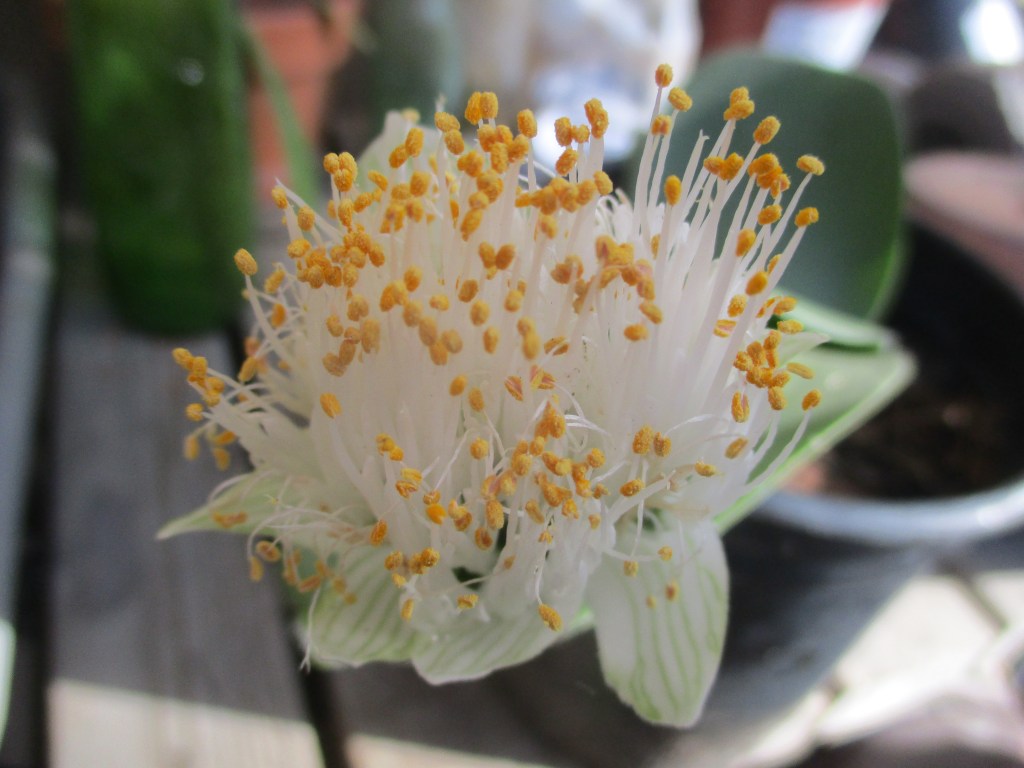
3. 2015 Haemanthus albiflos, white blood lily came from a garden of an elderly client in Santa Clara who was quite fond of it. That is why I am so fond of it, even if unimpressed.
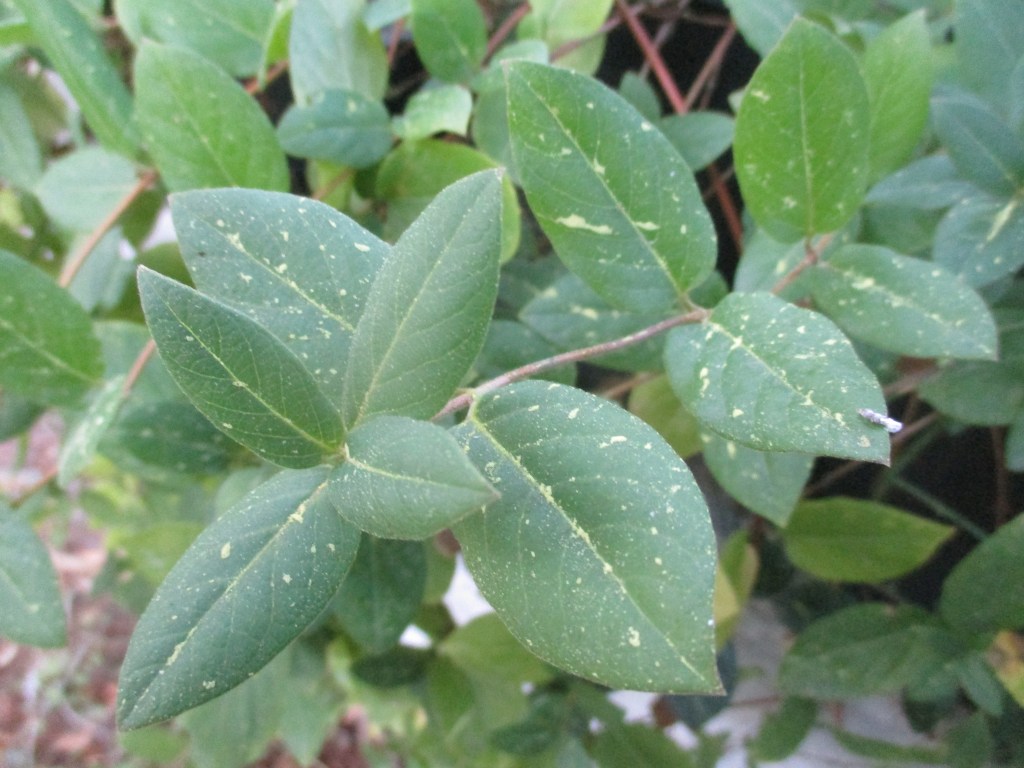
4. 2012 Lonicera albiflora, white honeysuckle is one of many souvenirs from Oklahoma. Most were seed. This and only a few others were live plants. It has grown very well here.
5. 1990 Chamaedorea seifrizii, bamboo palm was one of the first houseplants that I took from Brent when I moved into my apartment in town after the Loma Prieta Earthquake.
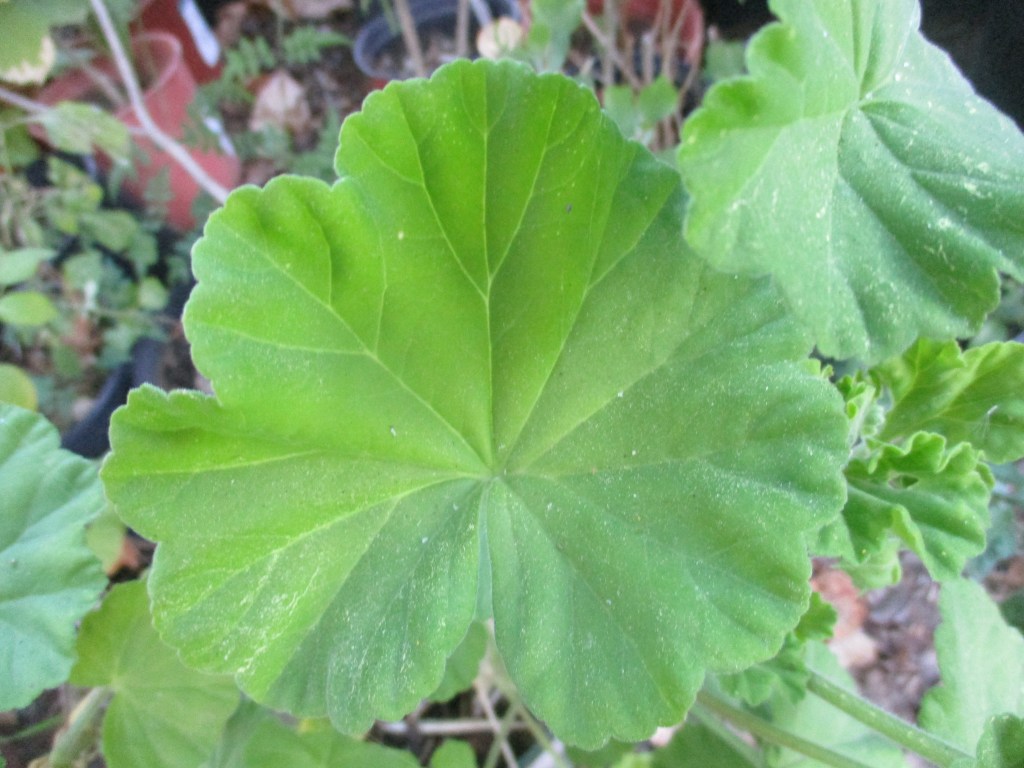
6. 1982 Pelargonium hortorum, zonal geranium without a zone gets big and weedy with hideously bright pink bloom. It grew wild with the crocosmia #2 of the Six for last week.
Holly leaf cherry fruit looks better than it is. The flavor is good; but there is very little pulp around the big seeds.
Since it is native to coastal chaparral between Monterey and the middle of the Baja California Peninsula, holly leaf cherry, Prunus ilicifolia, is right at home in local gardens of the central and south coasts. Although it can be a nice refined hedge if not shorn too frequently, it is better where it has space to grow wild into a mounding shrub, and can eventually grow into an undemanding informal screen as high and broad as fifteen feet. Width is easier to limit with selective pruning than with shearing. Besides, unshorn plants bloom with clusters of minute white flowers in spring, and produce interesting deep red or purplish red cherries in autumn. Unfortunately, the cherries have very big pits with only minimal sweet pulp. The small glossy leaves have somewhat bristly teeth almost like those of some hollies.
The most common problem with landscapes that are maintained by maintenance gardeners is excessive irrigation. In fact, with very few exceptions, the only lawns that are maintained by gardeners that are not also irrigated excessively are too dry because the irrigation systems are not operational. Excessive irrigation is not only unhealthy for the landscapes, but costly.
Wasted water is obviously expensive, but also causes all sorts of expensive damage. Saturation of soil inhibits deep dispersion of roots, causing shallow roots to displace pavement. Shallowly rooted trees that are easily destabilized by wind can cause expensive damage, and are expensive to remove. Smaller plants that do not cause damage as they succumb to saturation and rot are still expensive to replace. The gardeners who get paid to maintain the landscapes should assume liability for the damages they cause, but instead charge to repair it! If they can not repair the damage, they typically happen to know someone who can.
Fortunately, those of us who maintain our gardens, or are at least involved with the maintenance, are not so generous with water. Although lawns need quite a bit of water, they also need adequate drainage. Besides, we tend to be more aware of the expense of water than gardeners are.
Now that it is autumn, irrigation needs to be decreased for various reasons. Rain will be providing more moisture as the seasons progress. While the weather gets cooler and more humid, and the days get shorter (less sunlight) not so much moisture evaporates. Most plants are either dormant or at least less active, so consume less moisture.
There are unfortunately no accurate formulas for decreasing frequency and duration of irrigation as the weather changes. It must be done by trial and error, by providing enough irrigation during dry spells without keeping conditions too wet. Of course, no irrigation is necessary during rainy weather, except only for plants that are sheltered by eaves. Hanging pots should be monitored because they are both sheltered from rain (if hanging from eaves), but also exposed to drying wind.
Also during autumn and winter, dormant plants need no fertilizer. That can wait until they wake up early in spring. Raking falling leaves from lawns, ground cover and low shrubbery is important though, since such debris shades the plants below while sunlight is already less abundant, and can also promote rot.
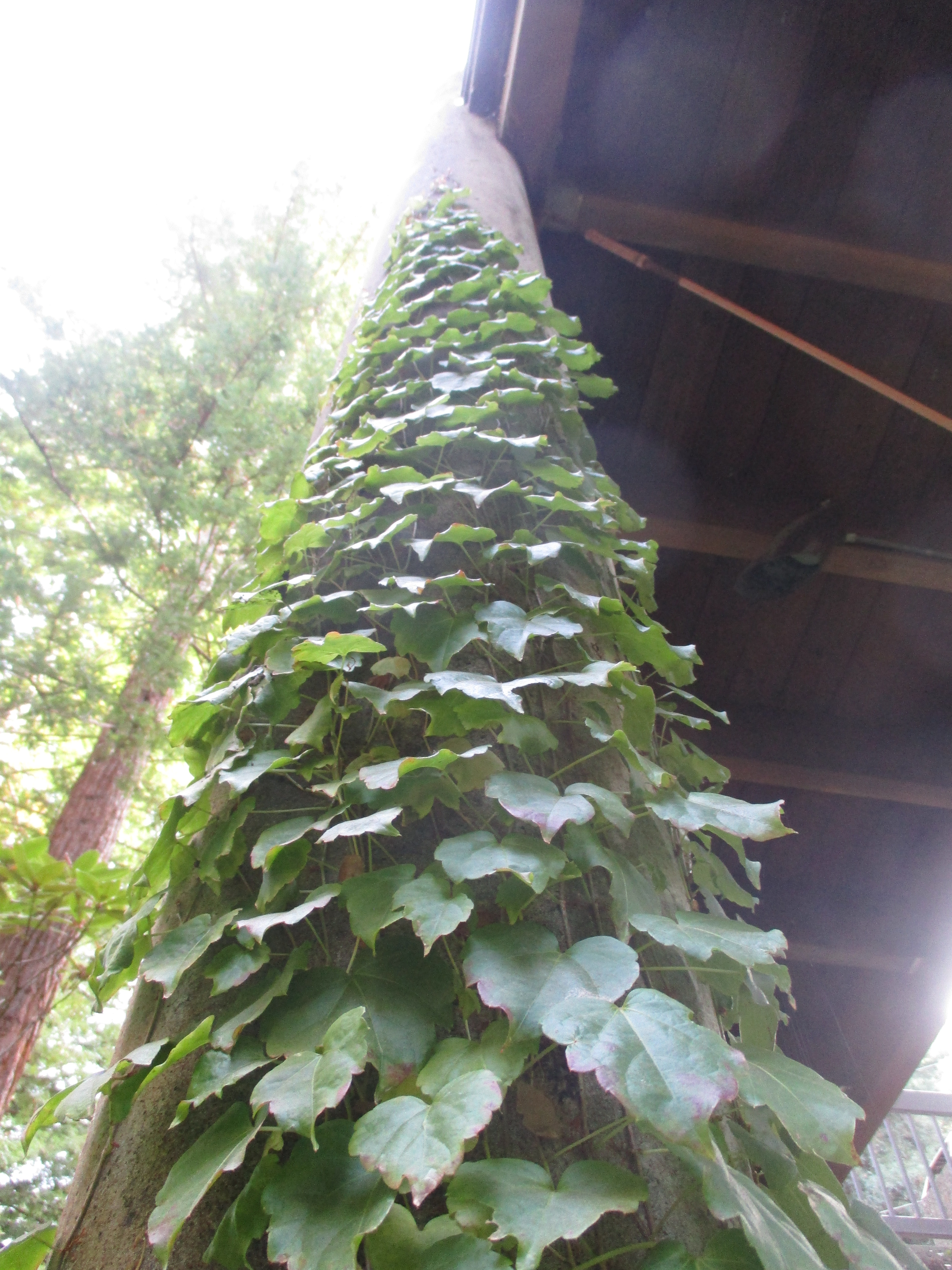
What is worse than how this Boston ivy was growing three years ago is that . . . someone actually grew more from cuttings, and added one to each of another pair of concrete pillars of the same bridge. They are surprisingly complaisant so far.
Ivy often climbs into trees, buildings and all sorts of other situations where it becomes problematic. It might have been planted intentionally. It might have grown from seed left by birds. When it gets into trouble, we can easily blame it on the ivy. Even that which was planted was intended to be mere ground cover. It only climbs out of control because that is what ivy does.
BAD IVY!!!
This Boston ivy that . . . ‘someone’ planted almost a year ago was actually expected to climb. That is what Boston ivy does. Even if it would be willing to grow as a ground cover, it would not work well as such because it is deciduous. As a climber, it covers freeway sound walls and any associated graffiti with vibrant green foliage that turns fiery orange and red this time of year.
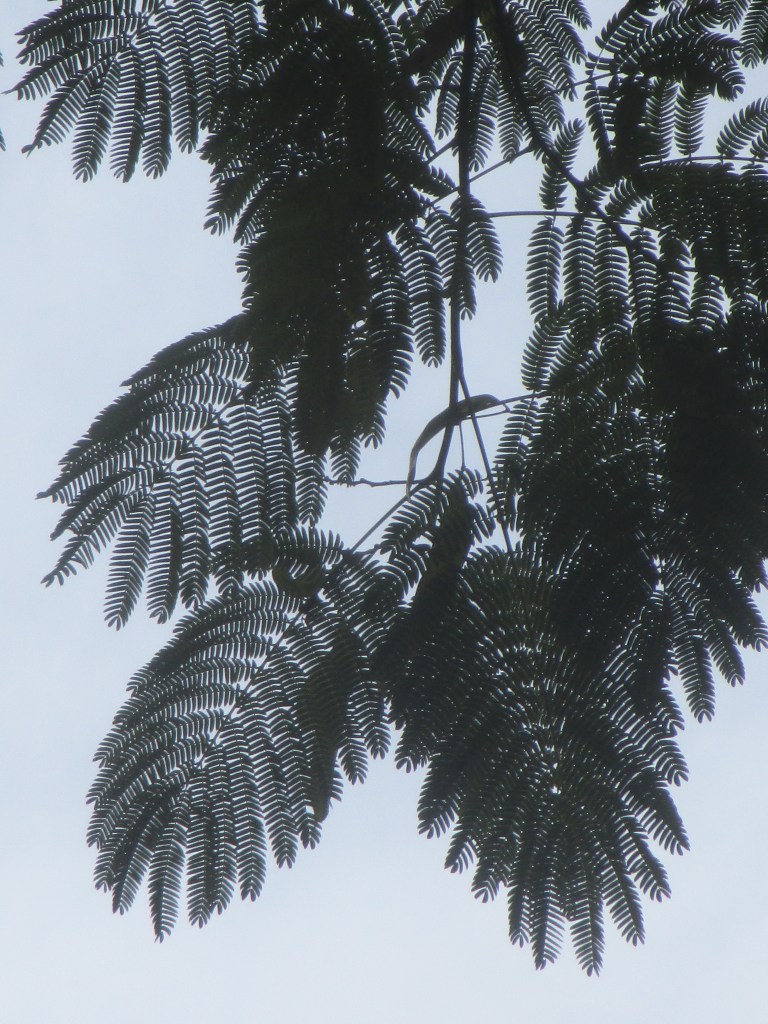
Resiliency is typically an attribute. It is how silk tree, Albizia julibrissin, adapts to various urban landscapes. Unfortunately, it is also how it naturalized within a few ecosystems of North America. It grows easily from seed, whether or not it is appropriate to where it does so. Many naturalized specimens somehow find good situations in which to grow though.
With good exposure, most mature silk trees develop rather low but broad canopies. They have potential to grow taller than forty feet, but if not competing with taller trees, may stay half as tall. Their arching limbs flare elegantly outward in low mounding form. Their finely textured foliage provides appealingly uniform shade that is neither too dark nor too light.
The lacy and bipinnately compound leaves of silk tree are between half a foot and a foot long. Each leaf divides into as many as a dozen pairs of pinnae (leaflets). These pinnae divide into about twice as many pairs of pinnulae (leaflets of leaflets). Such minute foliar components disintegrate during autumn defoliation, and can disappear into groundcover.
The pink and fluffy summer bloom can actually be messier than the deciduous foliage. It does not disintegrate as it falls, so may accumulate on top of vegetation below. Cultivars generally bloom with richer pink color, although at least one blooms with white. ‘Summer Chocolate’ exhibits richly bronzed foliage that contrasts strikingly with pastel pink bloom.
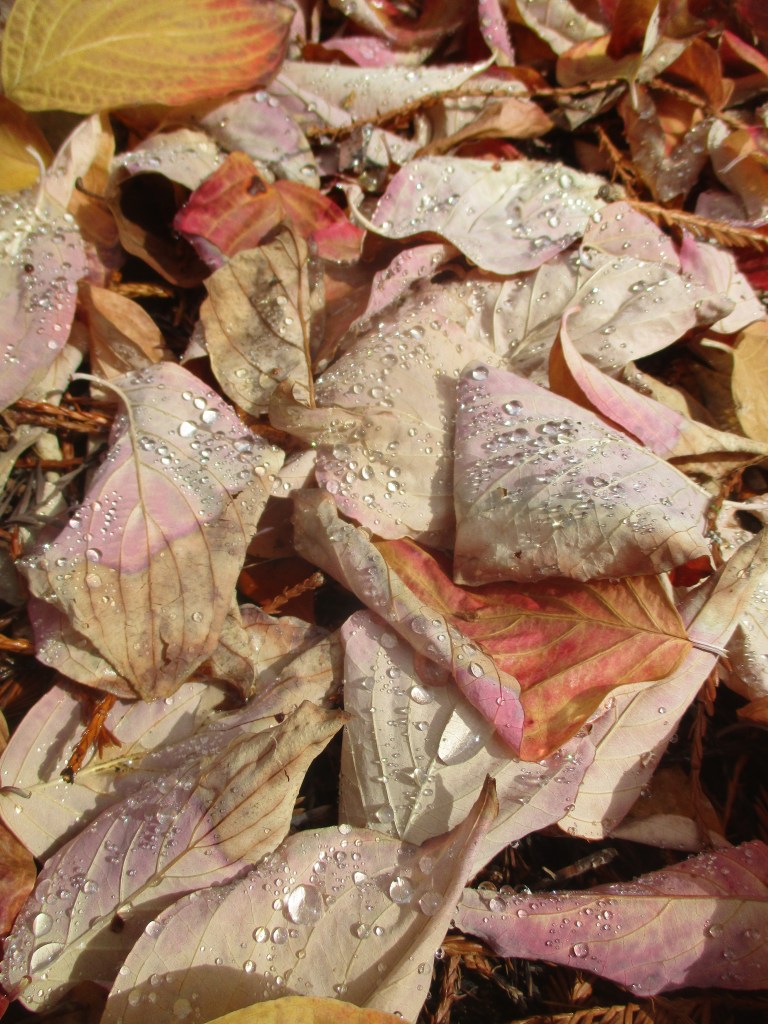
Falling leaves eventually become abundantly messy.
Autumn foliar color certainly is pretty while it lasts. Although less prominent locally than it is where cooler weather begins earlier, it is an asset to many home gardens. It generally appears a bit later within mild climates here, but might also remain suspended a bit later. Ultimately though, with enough wintry wind and rain, it eventually becomes foliar debris.
Evergreen foliage also contributes to the mess. It is likely less abundant than deciduous foliage is during autumn, but only because it sheds through more extensive seasons. For example, Southern magnolia sheds mostly through spring, as new foliage replaces older foliage. It then continues to shed additional debris throughout the year, including autumn.
Regardless of its various origins, foliar debris becomes more of a concern during autumn for two simple reasons. Firstly, and obviously, more of it accumulates during autumn than during any other season. Secondly, since autumn is the beginning of the rainy season, it is the most inconvenient time of year for such debris to accumulate within home gardens.
Roadside gutters, eavestroughs and their downspouts should drain efficiently. However, foliar debris can interfere with their drainage when it becomes most important. Roadside gutters are more accessible, so are easier to observe and clean. Eavestroughs and their downspouts may be beyond reach, but may need more cleaning if defoliation continues.
Foliar debris is unhealthy for turf, groundcover and shrubbery that it accumulates over. It inhibits photosynthesis by obstructing sunlight. It can also promote proliferation of fungal pathogens. This is why prompt raking is very important. Foliar debris can stain pavement and decking, and may be hazardously slippery. Behind chimneys, it can promote decay, and possibly become a fire hazard.
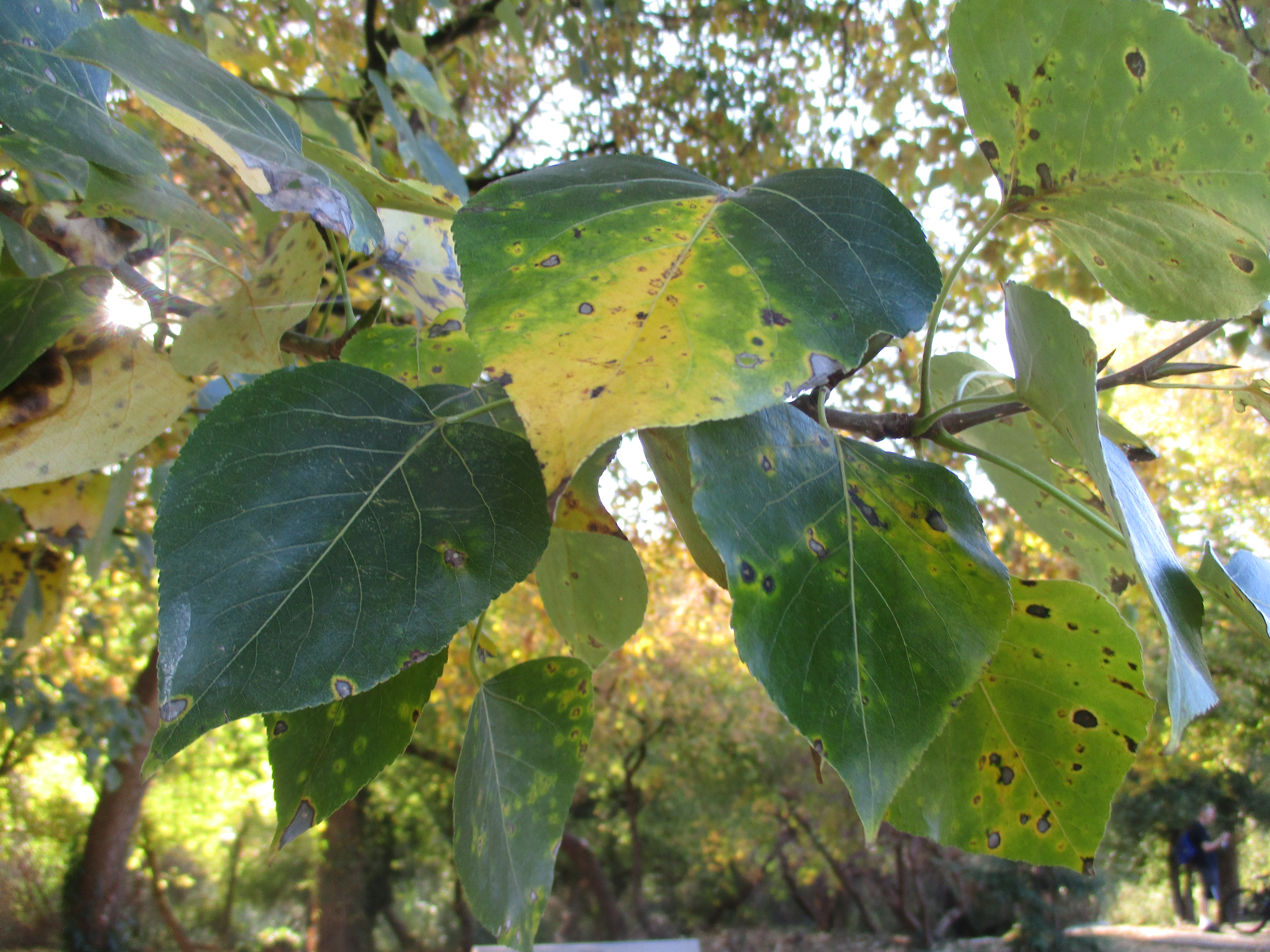
Autumn is not much to brag about here. It supposedly got just cool enough at night for the minimal requirement of frost, at 32 degrees, but no one noticed. It has been getting to the low 80s during the day. There has been no rain yet, and none is in the forecast. As bland as such weather seems, it is not at all out of the ordinary. Autumn often arrives later than it does elsewhere.
Consequently, autumn foliar color is not much to brag about either. There are only a few trees that reliably develop good color, such as sweetgum, pistache, flowering pear, crape myrtle and maidenhair tree (ginkgo). As reliable as it is, maidenhair tree provides only bright yellow, without the oranges and reds that the others exhibit. None are exhibiting significant color just yet.
There are several other trees that have potential to develop good color, but are…
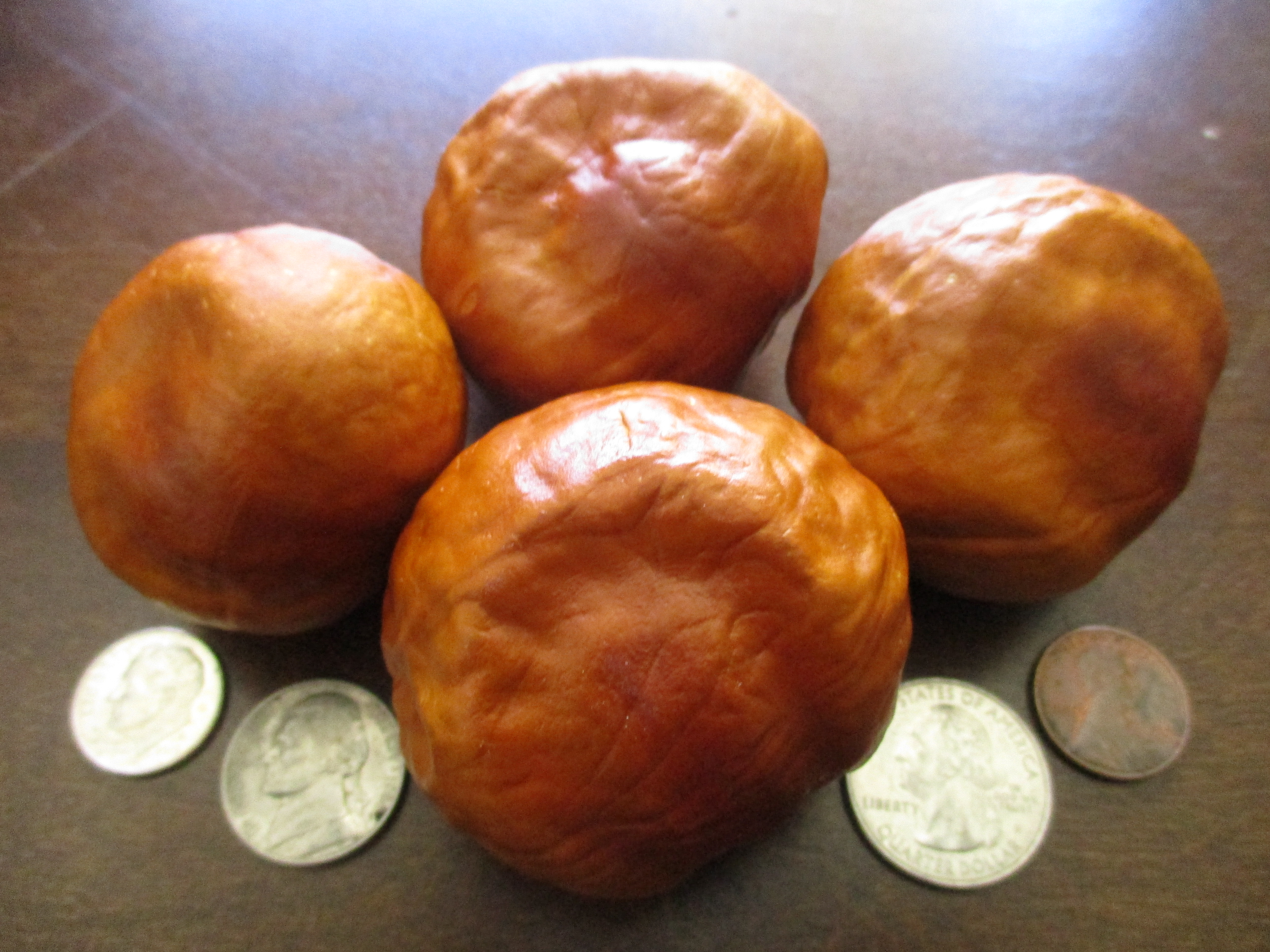
During the past three years since the picture here was taken, two of the four seed grew into stout seedlings that, after their second season, went to live in Ilwaco!
California flora is remarkable. It all does what it must to live comfortably in every ecosystem, climate and geographical region here.
California horsechestnut or California buckeye, Aesculus californica, is one of the more unusual native species. It is so in tune with the climate that it makes other deciduous trees seem to be inexperienced. Of course, to those who are unfamiliar with it, it just looks dead right now.
In chaparral climates of California, some deciduous trees start to defoliate early, before the weather starts to get cool in autumn. California sycamores, for example, can start to defoliate late in summer if the weather gets too warm and dry for them to want to hold their foliage any later. Such defoliation is more the result of minimal humidity than the result of chill.
California horsechestnut takes this technique one step further, by shedding spring foliage even earlier in summer…

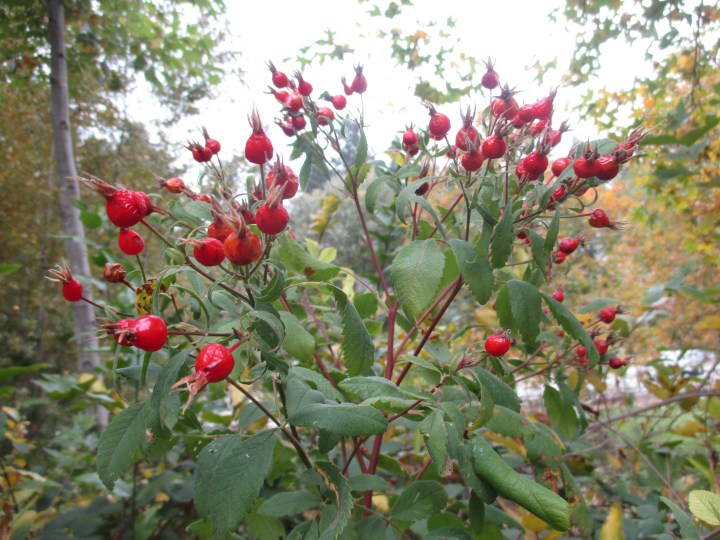 Chopped dried rose hips can be purchased from a supermarket in town that stocks an impressive variety of useful bulk herbs. They are used as a dietary supplement and remedy for several minor ailments. Although most of the copious vitamin C they contain while fresh is ruined by drying and storage, they are still popularly used as a remedy or preventative for colds and flu.
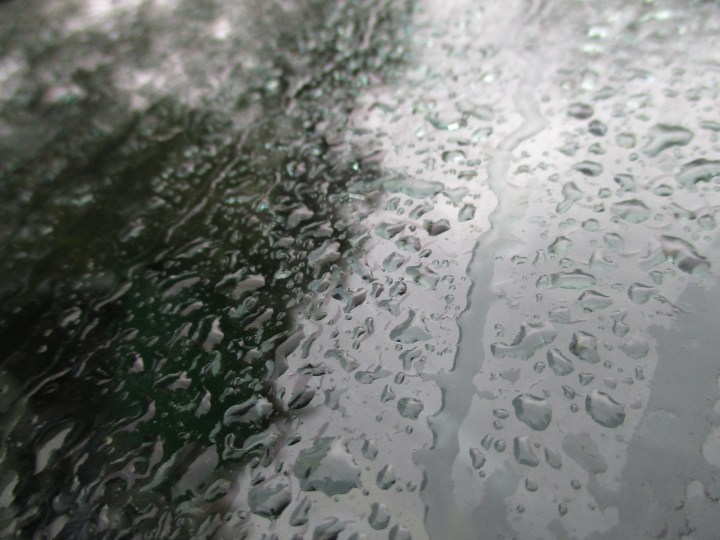 Most of us here agree that the minimal bit of precipitation that fell from the sky on Thursday was not real rain. There are a few different theories about what it actually was though. It could be considered to have been drizzle. It alternatively could have been heavy fog or mist. Some of us make up silly names for what it was, such as fine rain, dusting, spritzes, sprinkles or mizzle.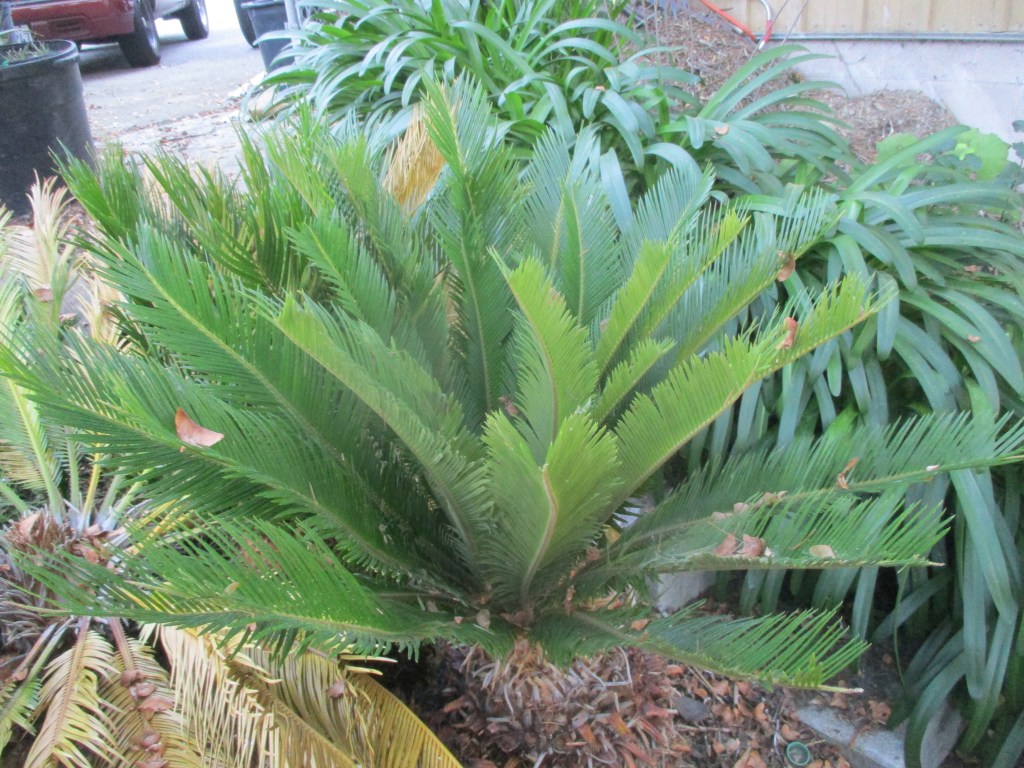



 Autumn is not much to brag about here. It supposedly got just cool enough at night for the minimal requirement of frost, at 32 degrees, but no one noticed. It has been getting to the low 80s during the day. There has been no rain yet, and none is in the forecast. As bland as such weather seems, it is not at all out of the ordinary. Autumn often arrives later than it does elsewhere.
 California flora is remarkable. It all does what it must to live comfortably in every ecosystem, climate and geographical region here.
