Hosta

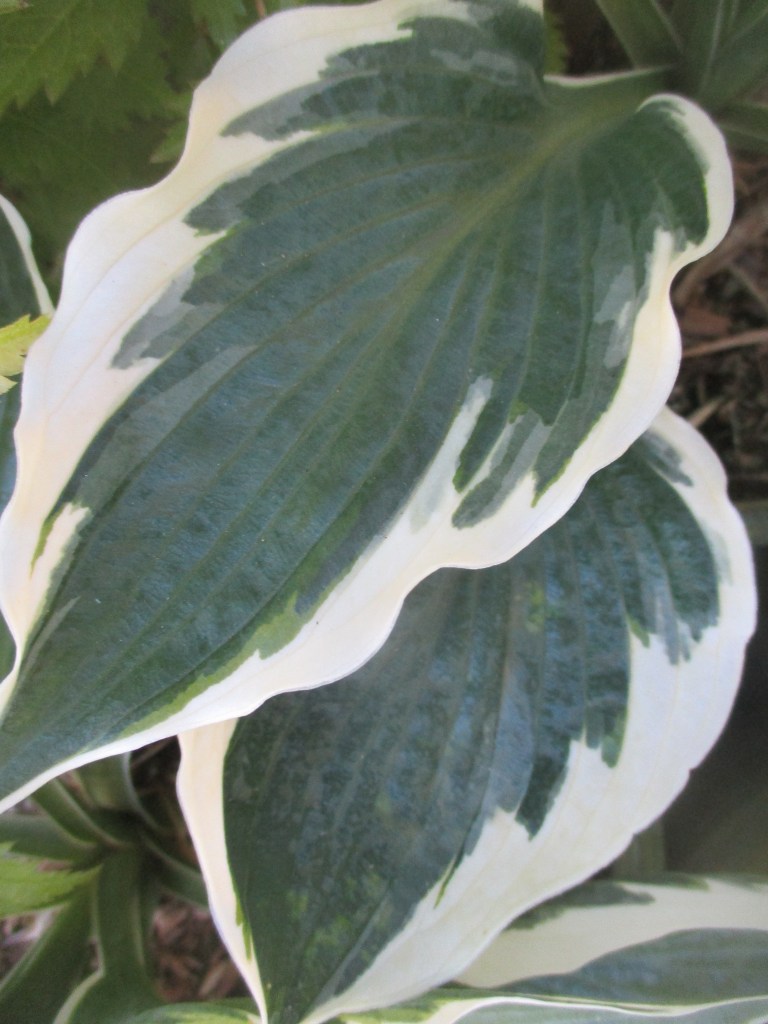
Hosta is more foliar than floral.

As they bloom later in summer, slender floral stalks of Hosta might be more prominent as cut flowers than in gardens. The white or lavender flowers hang in loose clusters, so are more visible if elevated in vases rather than hovering just over their low foliage. Besides, their foliage seems to be more lush without them. Flowers are about an inch or two long.

Lush and colorful, albeit deciduous foliage is really the primary allure of Hosta. In cooler and more humid climates, the biggest plants may get more than three feet tall and nearly twice as broad! In local arid or semiarid climates, the more popular cultivars get no wider than about two or three feet. Of course, all growth dies back to the ground through winter.

The big and broad leaves are remarkably variable among the many cultivars. A few have wavy margins. Most are round, but some are notably narrow. Variegation may be yellow, chartreuse or white. Some cultivars have bluish glaucous foliage. Hosta require frequent watering and partial shade to avoid desiccation. They are vulnerable to snails and slugs, and can roast in arid and warm weather.
Foliar Color Goes Beyond Green

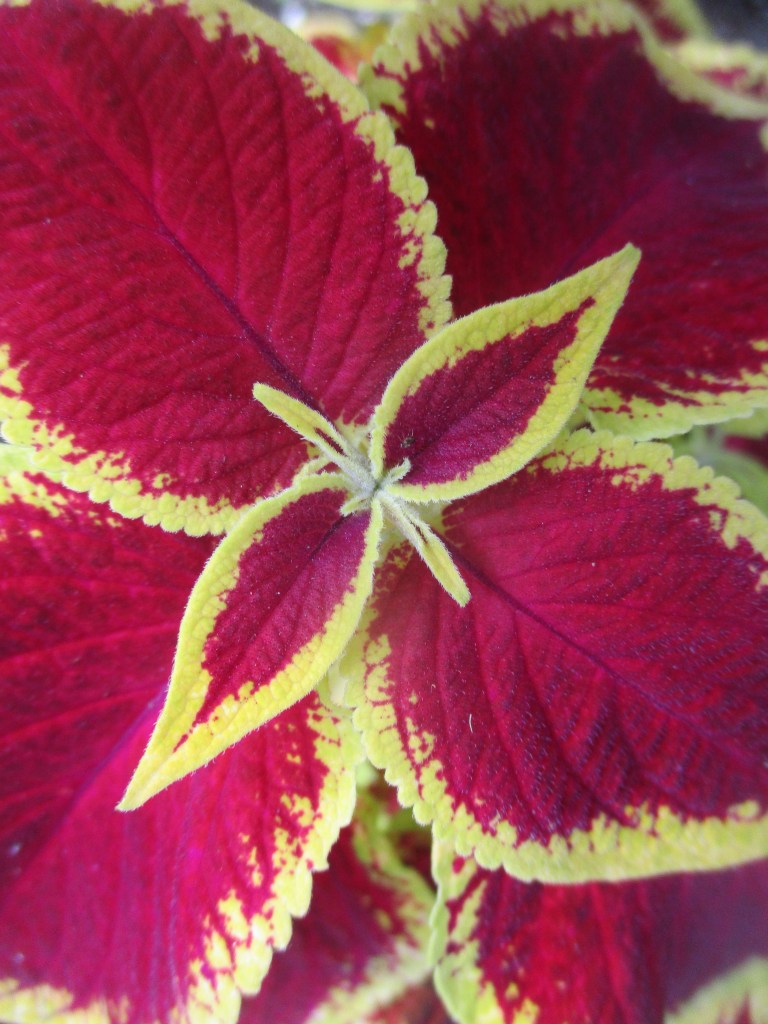
Foliar color can exceed floral color.

New England is famous for spectacular foliar color through autumn. Such color is merely seasonal though, and almost exclusive to deciduous vegetation. With few exceptions, its color range is limited to variations of yellow, orange, red or brown. It happens thousands of miles away, and is difficult to replicate on such a grand scale with locally minimal chill.

For smaller scale home gardens, there are many options for foliar color at any time of the year, regardless of chill. Some are deciduous. Most are evergreen. Colorful foliage might exhibit variegation or monochromatic coloration. Variegation might involve stripes, spots, borders, veining, or any combination of divergent colors. Some might entail a few colors.

Besides autumnal yellow, orange, red or brown, foliage can be pink, purple, blue or gray. Variegation can feature any of these colors, as well as white. The size and form of plants with foliar color ranges from small annuals and perennials to vines, shrubbery and trees. A few of such plants that are deciduous might change to different colors through autumn.

Various Hosta, Euonymus, Coprosma, Pittosporum, Hedera and Bougainvillea are some of the more popular plants with white or yellow variegation. New Zealand flax is popular for bronze, brown, gold or pink variegation. Canna can display evenly bronze or purplish foliage, white patches on green foliage, or neat yellow and pink stripes of varying widths.

Purple leaf plum and some cultivars of smoke tree, beech Eastern redbud and Japanese maple have the best purplish foliage. Other cultivars of smoke tree, as well as arborvitae, juniper, Monterey cypress and honeylocust, generate impressively yellow foliage. Agave and blue spruce contribute soft blue. Coleus impresses with various color combinations.

Whether deciduous or evergreen, most colorful foliage displays its best color while fresh and new in spring. For some, color fades through summer. Junipers that are gold through spring may be plain green by summer, particularly in dry conditions. Although light colors and variegation are appealing within shady situations, shade can inhibit such coloration.

A Bee See

It left while no one was watching, and was never seen again.

tonytomeo's avatarTony Tomeo

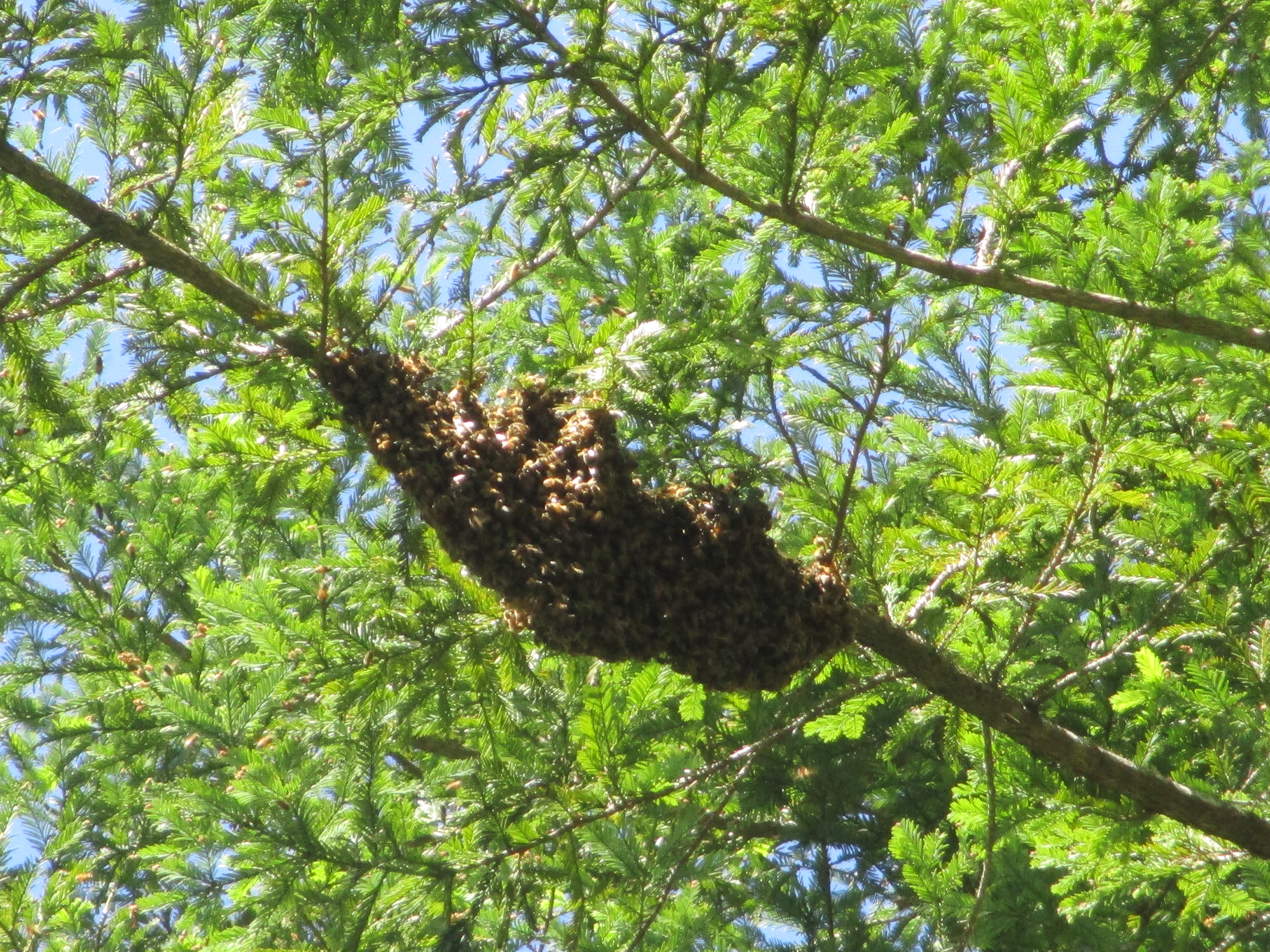
P90609They were impossible to miss. They came at a weird time too.
As guests were arriving for a big event, a fire alarm was activated, and compelled everyone to leave the building that they were gathering in. The swarming bees met the guests as they came outside. The bees just happened to show up in the same place and at the same time as the guests were forced outside. Fortunately, no one seemed to mind, and some found the swarming bees to be compelling enough to stop and take pictures.
Initially, all the bees were flying in a big swarm. Those closest to the middle of the swarm were flying fast, sort of like angry wasps. No one saw the queen that the swarm was centered around, but she apparently landed on this redwood limb about forty feet up. The swarming bees slowly collected in this mass around the queen…

View original post 150 more words

Paris Daisy

Well, I did not get to Southern California in time. Since this recycled article originally posted, the Paris daisy was installed into a landscape project. Brent must now sneak a piece of it.

tonytomeo's avatarTony Tomeo

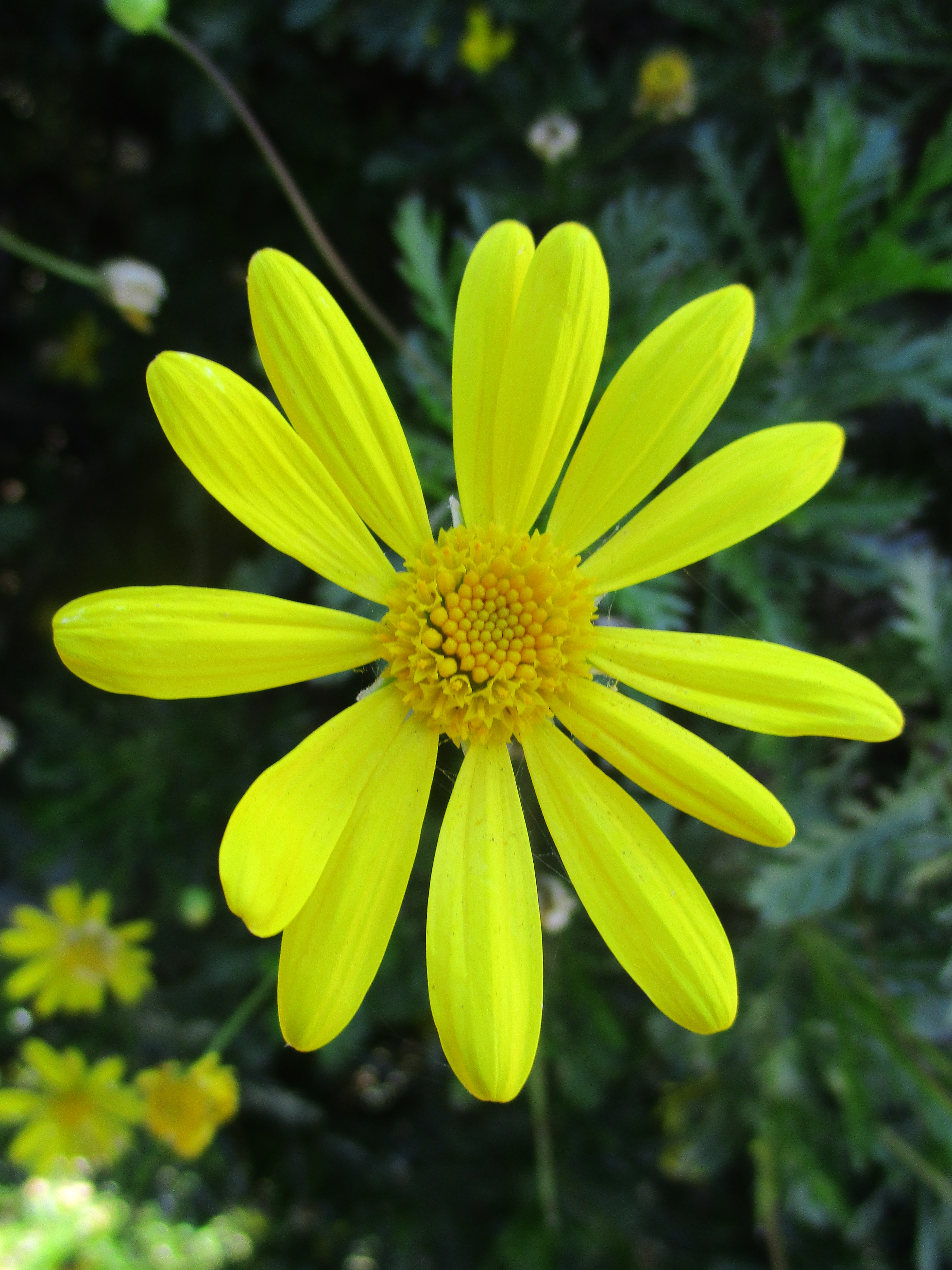
P90608KNo, this is not a Paris daisy. It is a common euryops daisy, Euryops pectinatus. It is obviously related, but the flowers are bright yellow rather than clear white with yellow centers, and the foliage is darker green. It is more resilient, so became more common in landscapes as quickly as mow, blow and go ‘gardeners’ replaced real gardeners who actually know something of horticulture. There is certainly nothing wrong with it. It is just cliché.

The few remaining Paris daisies are fancier cultivars of the old fashioned traditional sort anyway. Some bloom pale pink. Some bloom pale yellow. Flowers might have fluffy centers of the same color. Foliage might be pale grayish green. Plants are more compact. The cultivar that most closely resembles the old Paris daisy has more profuse, but smaller flowers. The cultivars are all quite nice, but are not quite the same as what we…

View original post 198 more words

Six on Saturday: My First Allium!

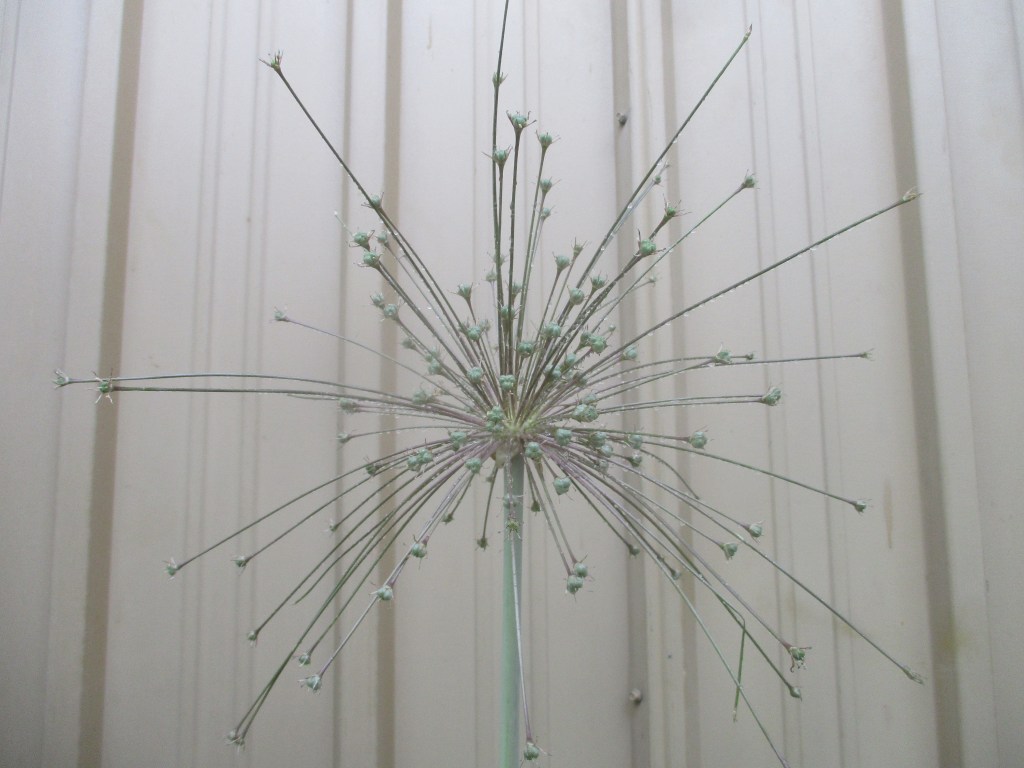
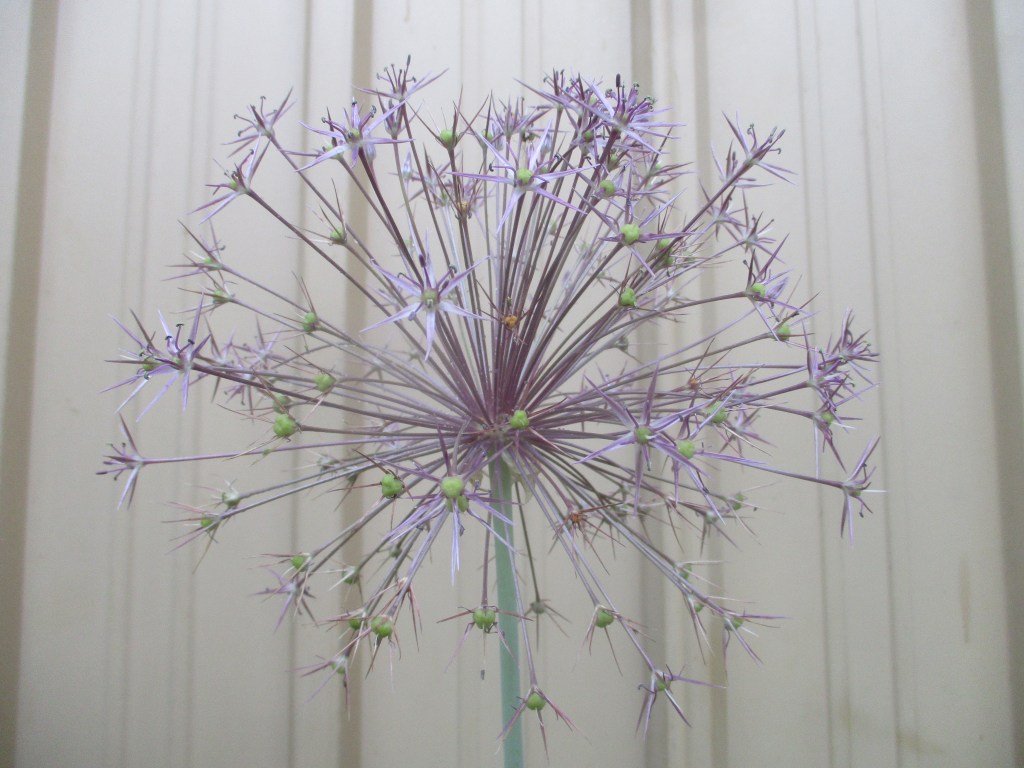
Allium species have been somewhat elusive. I had seen only pictures of them from other gardens. By the time I finally decided to try them in my own garden, they were no longer available from local nurseries. When I found them online, there were too many cultivars to choose from. It was baffling. Tangly Cottage Gardening sorted it all out for me by giving me my first two, Allium schumbertii and Allium christophii. They are exquisite, and are now generating seed. I should have gotten better pictures of them while they were in the middle of bloom, rather than before and after bloom. Since there are only three pictures of them here, three pictures from work were added, for a total of Six on Saturday.

1. Robinia pseudoacacia, black locust, is a horrible weed. This one had been falling for a long time before it landed in this motorpool yard. At least it warned us to avoid damage.

2. Gunnera tinctoria, Chilean rhubarb, regenerates efficiently after winter dormancy. It was completely bare only a few weeks ago. It should get much grander through summer.

3. Lilium asiaticum, Asiatic lily, was a gift from a neighbor two winters ago. Its dormant bulbs were unimpressive at the time. They were splendid last year, and are more so now!

4. Allium schumbertii, Persian onion, is one of two species of Allium that were gifts from Tangly Cottage Gardening! This unfinished bloom was more than a foot and a half wide!

5. Allium schumbertii, Persian onion, is also known as tumbleweed onion because these seeded trusses break off to disperse seed as they tumble about the deserts they inhabit.

6. Allium christophii, star of Persia, is the other of the two species of Allium from Tangly Cottage Gardening. I hope that both species are reliably perennial, and their bulbs multiply.

This is the link for Six on Saturday, for anyone else who would like to participate: https://thepropagatorblog.wordpress.com/2017/09/18/six-on-saturday-a-participant-guide/

Blanket Flower

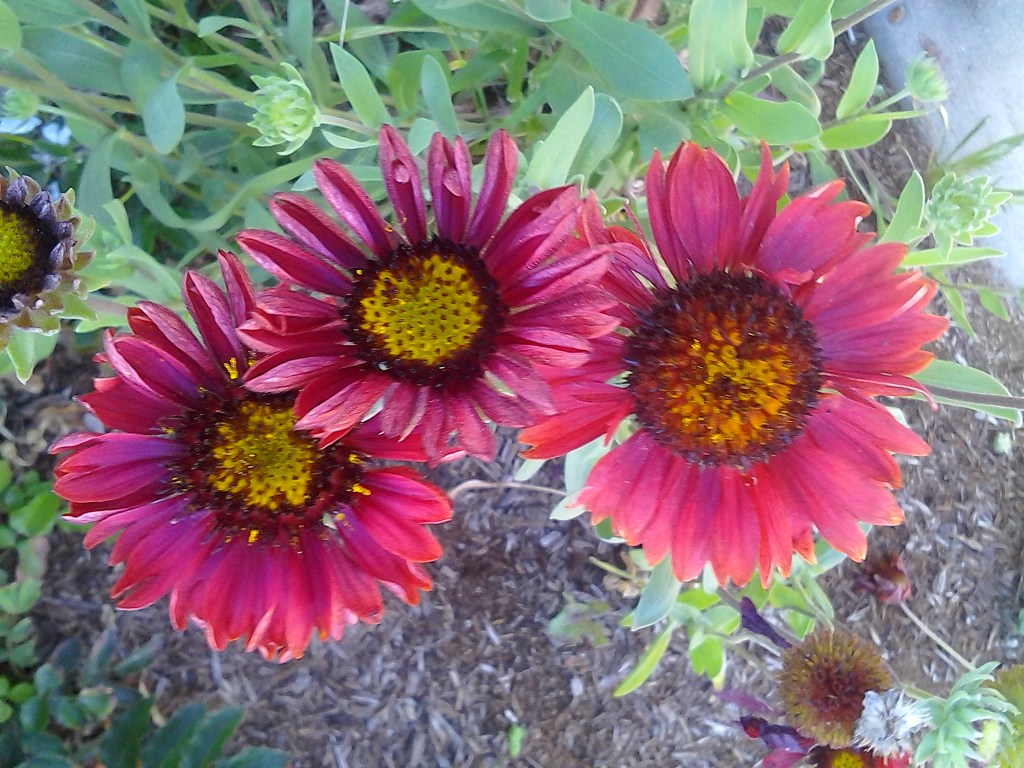
Blanket flower covers a flower bed.

The bright colors and patterns of blanket flower, Gaillardia, resemble those of blankets made by native American Indians. The daisy flowers are typically two different shades of red, orange, yellow, brown or yellowish white. Not many varieties bloom with single colors. Taller varieties can get almost two feet tall, with slender but sturdy stems that are good for cutting. The narrow leaves are mostly basal, so do not crowd bloom.

The more popular varieties of blanket flower are perennial. Healthy plants can slowly get quite broad, and can self sow their seed to spread a bit farther. Annual varieties can not get as broad, but often self sow more efficiently than perennial types do. Once it gets growing, blanket flower does not need much water. However, regularly watered plants are already blooming. Modestly watered plants wait until summer.

Simplicity Is Best For Parkstrips

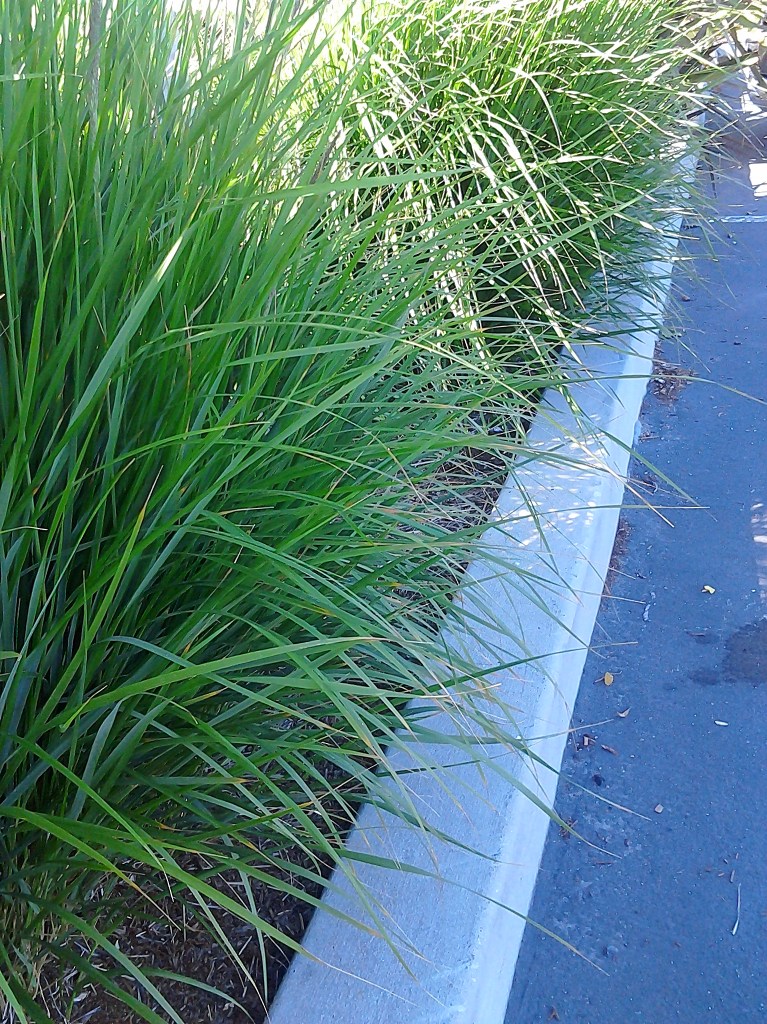
Clumping grasses hang out over curbs.

Parkstrips, those narrow spaces between curbs and sidewalks, are among the most awkward spaces in the garden. In urban areas with significant traffic, they are commonly paved over. Some neighborhoods, especially downtown neighborhoods, do not have parkstrips at all. Suburban neighborhoods though, often have wider parkstrips.

The difficulty with parkstrips is that there is so much happening around them. Cars get parked on one side. Pedestrians pass by on the other side. Driveways need to be kept clear at each end. Water meters and perhaps other subterranean utilities must be accessible.

Street trees are common features in parkstrips. They should have complaisant roots that will be less likely to displace the surrounding pavement and curbs, and high branch structure for adequate clearance above truck traffic on the roadways below. Ideally, street trees should conform with the neighborhood, and are often quite uniform. Selection of street trees should be a community effort where practical.

All other plants that go into parkstrips should be adaptable to confinement within the limited space available. They should not extend over curbs or sidewalks where they can scratch parking cars or be obtrusive to pedestrians. Parkstrip landscapes must also stay low enough so that they do not obstruct the view from cars backing out of driveways.

Because people regularly walk past or through parkstrips, thorny plants like cacti and roses should be kept back from the edges, or preferable not put into parkstrips at all. Large agaves and yuccas (with rigid leaves) are simply too big and dangerous for narrow parkstrips.

Contrary to the trend of planting vegetables in weird places, parkstrips are not good places for them either. The main problem is what dogs like to do in parkstrips. The second problem is that the good produce that might be out reach of dogs is within reach of everyone else walking or driving by. Reflected glare from all the surrounding pavement is a problem for plants that do not like harsh exposure.

Really, there are far more limitations on parkstrip landscaping than there are options. Turf grasses or tough ground cover that tolerates traffic, like trailing gazania, may seem to be a mundane, but they are practical. At least ground cover can be punctuated with clumping perennials like African iris, lily-of-the-Nile or blanket flower.

Pots are overrated, especially for curbsides.

Horridculture – Fruity Fads

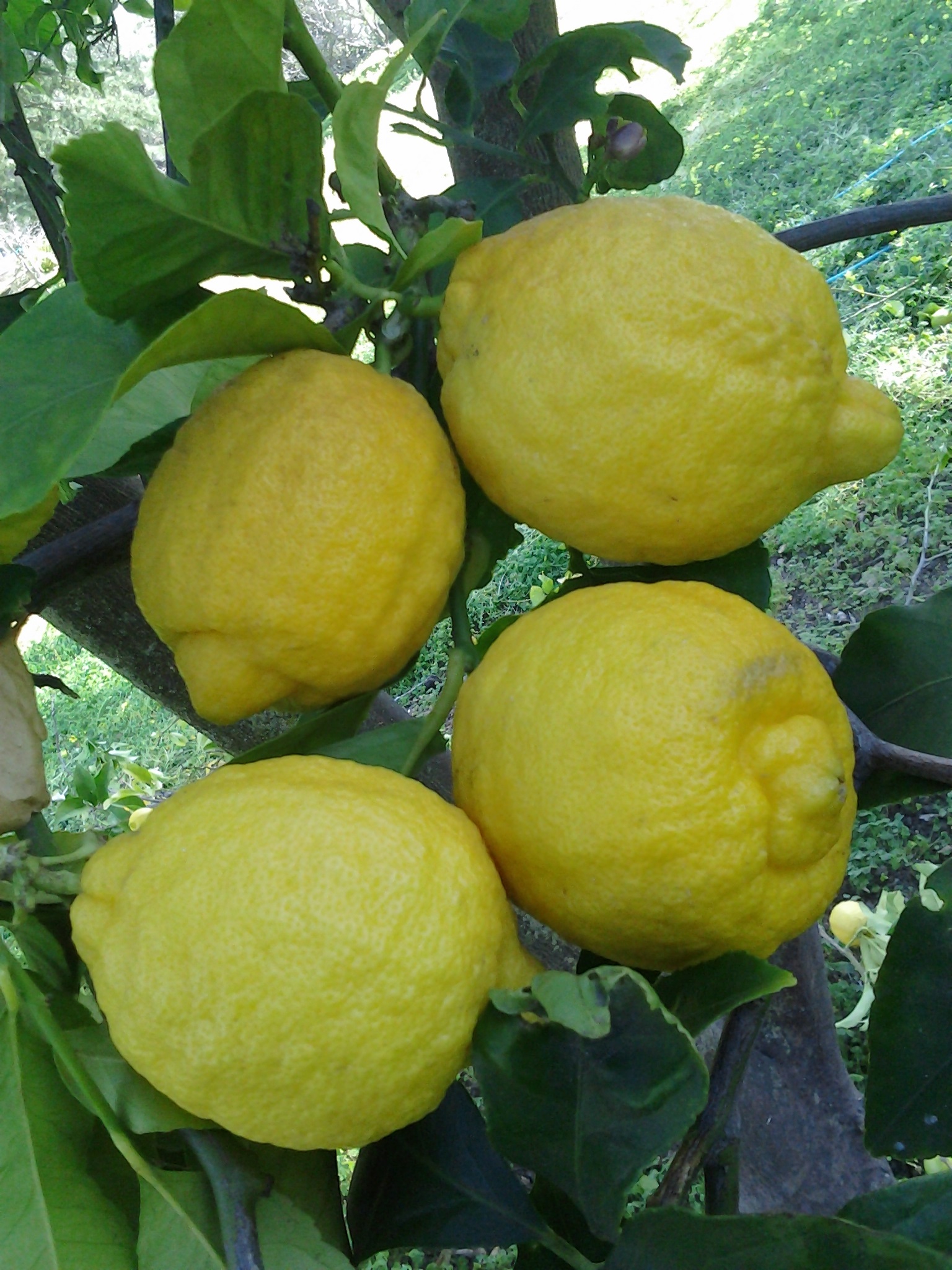
This was three years ago. Is ‘Cara Cara’ orange still a fad?

tonytomeo's avatarTony Tomeo

90417Pluots, plumcots, apriums and peacharines! Who comes up with this stuff?! Aren’t good old fashioned plums, apricots, peaches and nectarines good enough? Who decides that these weird hybrids are somehow better than their parents? Some of them are actually quite weird, or downright ugly. Several do not even look like they would taste good. It may be an acquired taste; but I have all the good taste that I need without acquiring any more.
Some old classic cultivars (cultivated varieties) of fruit were develop centuries ago. More have been evolving from those ancestors since then. Some were intentionally bred from parents with desirable qualities. Others just grew incidentally where their seed fell, and were found to be somehow better than their parents. Some were merely discovered as natural occurring mutants, and perpetuated for their superior qualities. It is a slow process.
So, putting two different kinds of fruits together, or…

View original post 210 more words

Japanese Boxwood

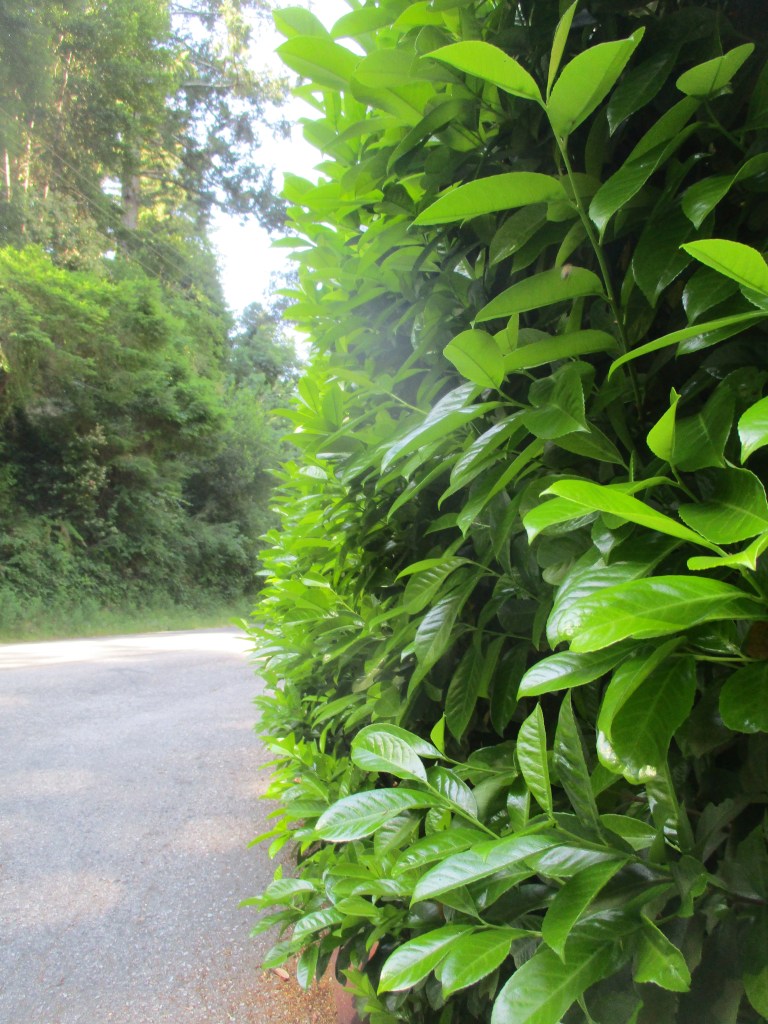
Small leaves adapt well to hedging.

Strictly formal boxwood hedges are traditional components of old formal rose gardens. In California, Japanese boxwood, Buxus microphylla, had always been more popular than English boxwood, which may be more common where winter is cooler. Although it grows too slowly for high hedges, it gets high enough to obscure gnarled lower growth of roses.

Mature plants are generally less than three feet tall and wide, although they can get a bit larger if they get a chance. The oval and glossy evergreen leaves are only about half an inch or an inch long, but relatively thick, so are very conducive to formal shearing. Foliar texture is nicely dense but not too congested. Gray or pale brown bark is seldom visible.

Old fashioned Japanese boxwood, which remains the most common in old gardens, has a somewhat light or yellowish green color. Modern cultivars are darker green. A common problem with old formal hedges is the addition of modern cultivars or even other species to fill gaps. The darker foliage will not conform to the lighter foliage, so ruins the formality.

Shear Hedges Seasonably And Properly

Scheduling is important to hedging too.

There are rules to hedging. For example, hedges should be uniform and exclusive to just a single cultivar. A modern ‘Green Beauty’ boxwood will never conform within a hedge of more yellowish old fashioned boxwood. Hedges should also remain within confinement. It is important to shear them back from obtrusion into walkways and other usable spaces.

It is not as simple as it seems to be. That is why so few hedges get proper maintenance. Almost all occupy and therefore waste more space than they need. Most have wide tops that shade out narrower lower growth. Moreover, many plants that are not components of hedges all too commonly succumb to inappropriate shearing too. It is sheer shear abuse!

Even if done properly, only hedges and a few other plants are conducive to shearing and hedging. It is an aggressive procedure that compromises form, texture and bloom cycles of involved plants. For hedges, that is not a problem. They need not bloom, and adapt to a refined hedged form, which is more desirable than their natural shrubby form would be.

However, it is important to not unnecessarily shear plants that bloom, or provide intricate foliar texture or form. Shearing deprives rhododendron of young floral buds. It ruins foliar texture of Heavenly bamboo, and foliar form of Japanese maple. It is acceptable to shear boxwood only because it responds by generating such appealingly uniform foliar growth.

With proper scheduling, it is possible to shear only a few blooming plants without ruining all of their bloom. Aggressive shearing after the early bloom of oleander and bottlebrush leaves them with space to grow enough to bloom again during autumn. Without sufficient space to grow, they will require subsequent shearing, which will ruin subsequent bloom.

It is better to shear some of the simpler hedges, such as privet and boxwood, shortly after winter. They regenerate lush growth immediately afterward, and do not mind two or three annual shearings. The last shearing should be early enough to allow a bit of growth prior to autumn. Photinia generates appealingly bronzed new growth in response to shearing. Also, frequent shearing inhibits potentially undesirable bloom.