Regardless of their individual innate requirements for water, new plants need to be watered very regularly immediately after they are installed into a landscape. As they mature and disperse their roots, the regularity of supplemental watering becomes less important, and ‘drought tolerant’ plants may not need to be watered at all. Maturing larger trees generally get what they need from the landscape around them.
Automated irrigation systems that are designed for new landscapes are designed for what the plants need while the landscapes are new. As the landscapes mature, the irrigation systems may need to be adjusted accordingly. Drip irrigation or bubblers that were needed to water new trees while they were young and confined should be moved farther from the trunks of the trees as roots disperse, and should eventually be removed and capped. This is very important, since water applied directly to the trunks of some maturing trees…
This is the primary eucalyptus that earned a bad reputation for all other eucalyptus. Blue gum, Eucalyptus globulus, arrived in California in the 1850s, and grew on plantations for timber. As its timber proved to be of inferior quality, and demand for wood pulp dwindled, the plantations succumbed to abandonment. Feral trees naturalized into adjacent areas.
Although once a common timber and wood pulp commodity, and effective as windbreaks for agricultural purposes, blue gum was never popular for landscapes. Those that inhabit urban or suburban situations were generally there prior to urban expansion around them. They are far too massive, messy and combustible, and inhibit the growth of other plants.
Mature blue gum trees can be significantly taller than a hundred feet, with elegantly high branched form. Limbs that fall freely from such heights are very dangerous. The aromatic foliage is evergreen. Adult leaves are stereotypically lanceolate and curved. Silvery blue juvenile leaves are blunt, sessile (lacking petioles) and more aromatic than adult foliage. Strips of smooth tan bark shed to reveal paler bark.
Exotic species are not native. It is that simple. There is nothing fancy about it. They came from elsewhere to live here. They are not necessarily rare, unusual or innately desirable. Most plant species within most refined landscapes and home gardens are exotic. Native species that inhabit unrefined areas, although trendy, remain unpopular for landscaping.
Not only are exotic plant species not necessary rare or desirable, many are too common or undesirable. With few exceptions, the most aggressively invasive of weeds are exotic. For a variety of reasons, they proliferate faster than native species. Some are aggressive because they are endemic to competitive ecosystems. Most lack natural pathogens here.
A weed is merely any undesirable plant. Some might be desirable in some situations but not others. English ivy, for example, which is a practical ground cover within landscapes, is also an aggressively invasive weed within coastal forests. Most weeds are annuals or biennials, but others are perennials, shrubbery, vines, aquatic plants or substantial trees.
An unfortunate reality about exotic weeds is that they are not here by mistake. Generally, their importation was justifiable at the time. Most were ornamental plants for gardens and landscapes. Some came as fruits, vegetables, herbs, cover crops or forage for livestock. Some came as timber. Species that escaped cultivation and naturalized became weeds.
Such weeds compete for the same resources that desirable plants utilize, and are mostly visually unappealing. Some enhance the combustibility of landscapes and forests. A few weeds produce seed structures that are hazardous to pets and wildlife. Even if problems are not directly obvious, weeds disperse seed to share their innate problems elsewhere.
This is typically the best time of year to pull or grub out weeds, although more weeds will grow later. Annual weeds are mature enough to get a good grip on. Soil should be damp enough from winter rain for roots to pull out relatively easily. Weeding will likely require a bit more effort this year because of the extended dry and warm weather since December.
Gardening is unnatural. Yes; quite unnatural. So is landscaping. It all involves planting exotic plants from all over the World that would not otherwise be here, including many that are too extensively and unnaturally bred and hybridized to survive for long even in the natural ecosystems from which their ancestors were derived.
Unless they grow on their own, even native plants are not natural. Those that are native to the region may not be native to the specific site. Many that are grown in nurseries are unnaturally selected varieties or cultivars. To complicate matters, much of what seems to be natural out in forests and wild lands are invasive naturalized exotics. The weather above and most of the soil below are natural, but both are commonly enhanced for our gardens. We water our gardens and landscapes as if the weather is insufficient. Soil amendments and fertilizers compensate for what we…
Birds do some odd things. They seem to know what they are doing. The odd things that they do make sense. Nonetheless, some of what they do out there is just plain odd.
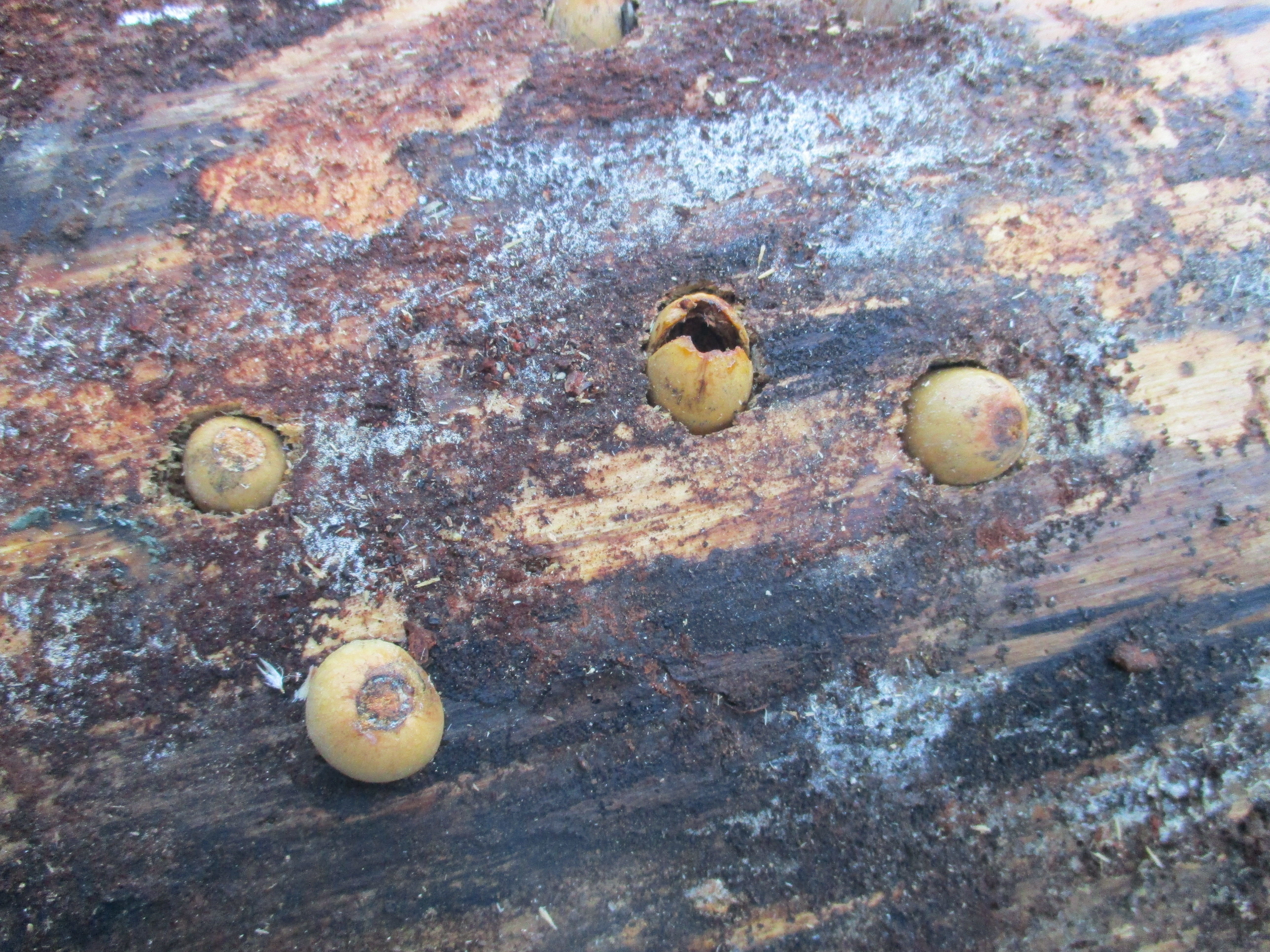
I mean, who was the first woodpecker who thought it might be a good idea to bang his head against a tree? What prompted the first sapsucker woodpecker to bore through bark of a healthy tree to lap up the sap from the cambium within? Why do other woodpeckers bore into rotting dead trees for grubs, and to make nests? The different types of woodpeckers seem to be related, but they are after different things. Did one just accidentally bore into the wrong sort of tree, and discover something more than what was expected? Various species of woodpeckers are surprisingly omnivorous. Those who eat termites also eat other insects, nuts, acorns, berries and fruit. Sapsuckers also eat…
Goodness! For the first time in a very long time, I neglected to collect six pictures for Six on Saturday. Furthermore, after frantically assembling these random pictures that I had no use for otherwise, I posted them later than typical. I have a good excuse though. I am on vacation. Actually, I happen to be in Ilwaco in Washington. I will be meeting with the blogger of Tangly Cottage Garden later in the morning, so should have more interesting pictures for next week. I realize that I said that last week in regard to Rhody’s Roady, but as I mentioned, I presently have other very important priorities. By the way, I do intend to explain Rhody’s Roady!
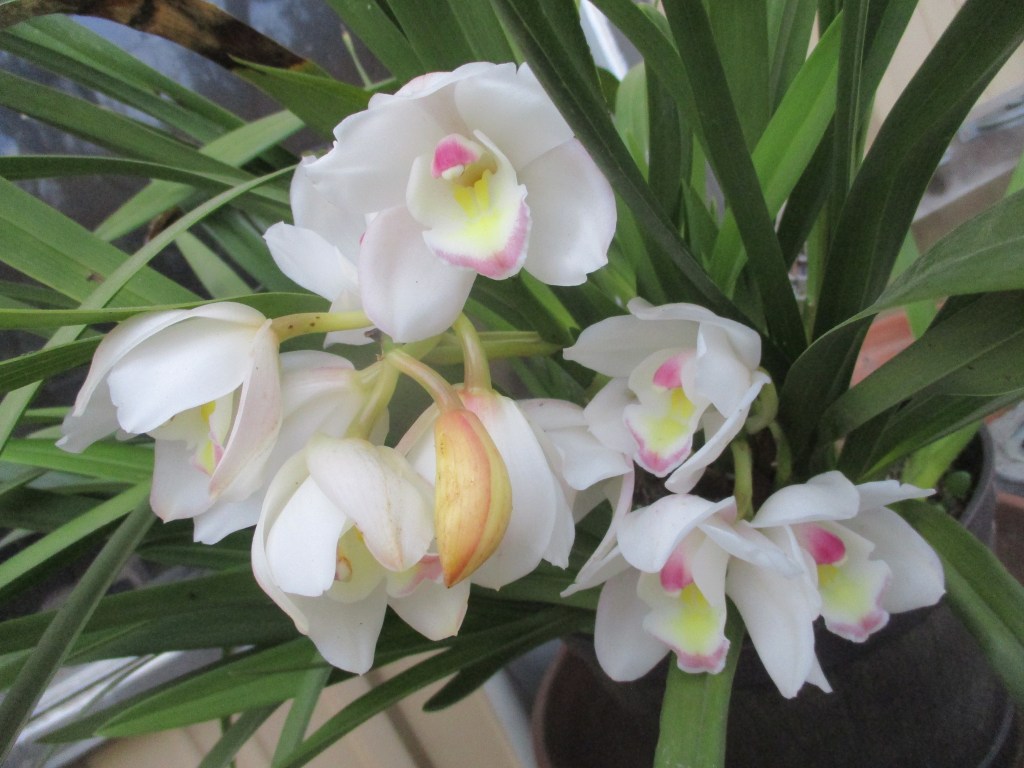
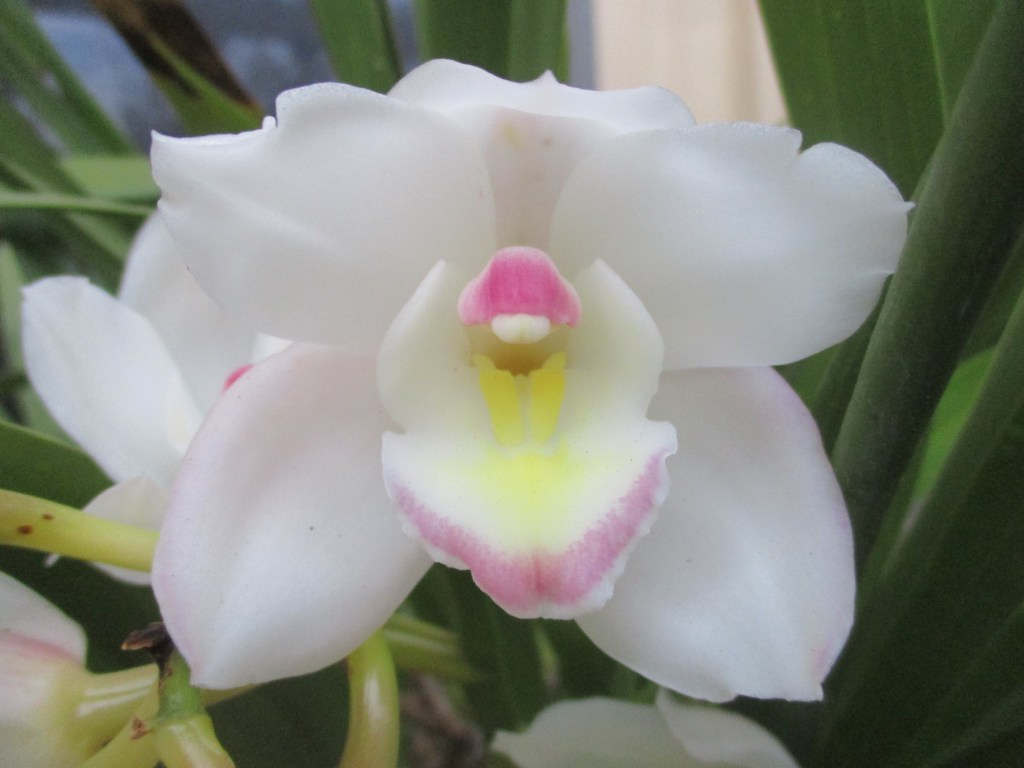
1. After clearing away thickets of Himalayan blackberry and cattail, this drainage pond is allowed to fill for the first time in years. We might add lily pads and other aquatic plants.2. Conical conifers that were available for live Christmas trees from nurseries go on sale after Christmas. This happy blue spruce, although expensive, was discounted by a third.3. Flowering cherry continue to bloom. This picture was taken quite a while ago, but the particular tree and others like it were still in bloom on Wednesday. One was still in bud.4. Camellia continue to bloom as well. Of course, many or perhaps most finished a while ago. Nonetheless, several often bloom rather late, or at different times from year to year.5. Cymbidium orchid bloomed right on schedule, but its flowers last for such a long time that it seems to be right in the middle of the process. There are four spikes on this plant.6. Collective bloom is spectacular, and individual flowers are compelling. It is pleased to bloom like this for minimal attention. I merely water it, then display it proudly in bloom.
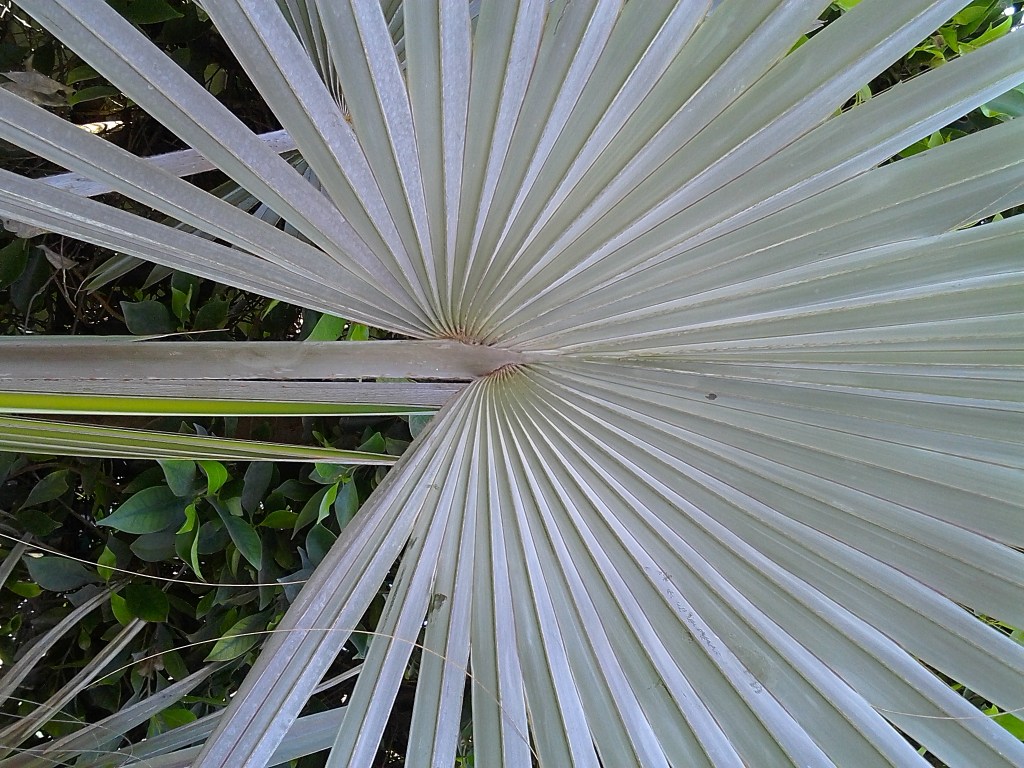
Silvery gray that is almost comparable to blue spruce is even more striking from a palm, like the Bismarck palm.
Most palm enthusiasts believe that the distinguished Bismarck palm, Bismarckia nobilis, is rare because it does not like local climates. It can be damaged by frost in winter, and prefers warmer weather in summer. Another concern is that they get too broad for compact urban gardens, since their shady foliar canopies can get more than twenty feet wide. However, a few seemingly happy specimens are sometimes seen about town.
Foliage of this rare palm is strikingly silvery gray. Green Bismarck palms are even more scarce, both because they are less tolerant to frost, and because they are not so striking. The big and rather rounded leaves are more than six feet wide, and maybe up to eight feet wide, on petioles (stalks) about six to eight feet long!
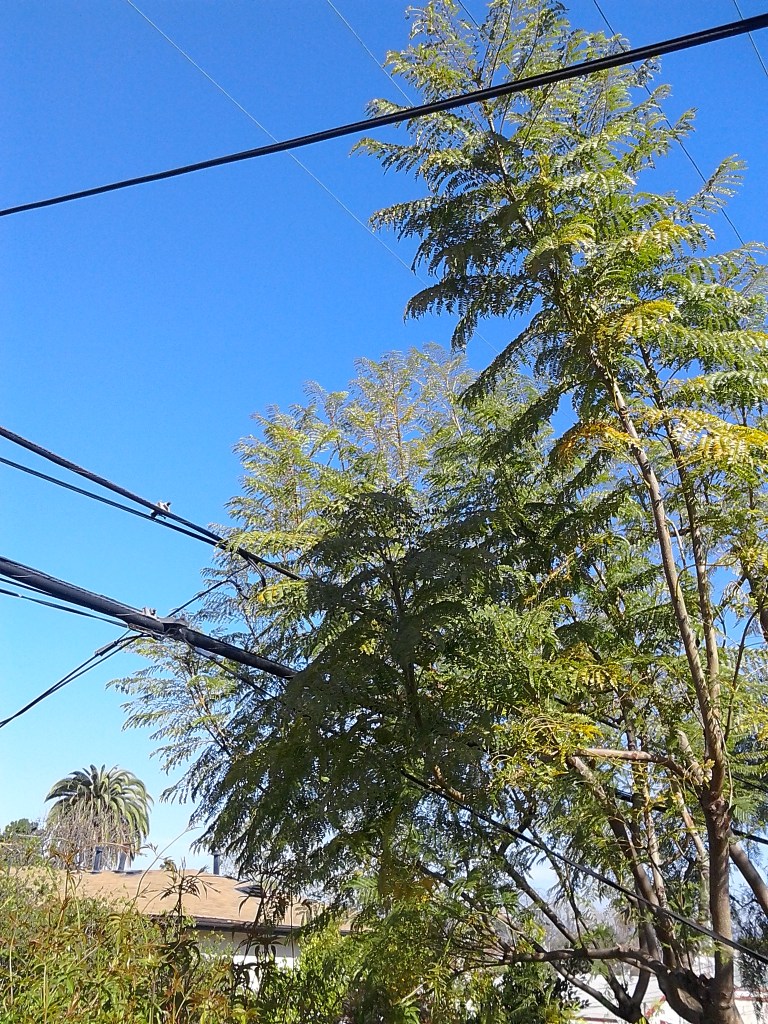
With all the cables coming and going, this unfortunate tree does not have much room to grow without causing trouble.
Since I did not make the drive up or down the coast very often, the rare silvery-gray Bismarck palm that I could see slowly climbing into the skyline near the edge of Highway 101 through Santa Barbara seemed to be slightly taller every time I saw it. It grew slowly, but enough to notice since I only saw it less than annually. Then, when I drove by about a month ago, it was gone.
This exemplary specimen had been quite healthy and happy (even though Bismarck palms are not supposed to be happy on the coast). There was only one problem. It was under high voltage utility cables. As it grew, it got too close to the cables, so needed to be removed in order to maintain the minimal clearance required for high voltage.
Unlike other trees, palms have only single terminal buds that grow upward. They can not develop branches to grow around cables, so only die if the single bud needs to be pruned away. Complete removal is therefore the only option when palms begin to grow into high voltage cables.
Sadly, palms often get planted under utility cables. Many Mexican fan palms grow under cables because birds that eat their fruit drop the seed there. Queen palms are popularly planted around the perimeters of back yards, and along the back fence lines that are very often directly below and parallel to high voltage cables.
Trees that are not palms can get disfigured by pruning for clearance around high voltage cables, but generally survive. Trees with central leaders (single trunks) and strict form, such as spruces and redwoods, can get be so disfigured that removal may be more practical than pruning. Trees with more irregular form, like sycamores and elms, are somewhat easier to salvage. Unfortunately, crews hired to maintain clearance are unable to prioritize the health and structure of trees that get too close to high voltage cables.
Lower cables for telephone, television and house-drops (lower voltage cables that extend from utility poles to homes and other buildings) do not often justify pruning for clearance like upper high voltage cables do. However, these lower priority cables can still be damaged if too many limbs sag onto them or become abrasive as they blow in the wind. Really, it is best to avoid problems with utility cables by selecting and planting trees that are not likely to become too obtrusive. Palms, large trees and trees that are likely to be severely disfigured by pruning to maintain clearance should be kept at safe distances.
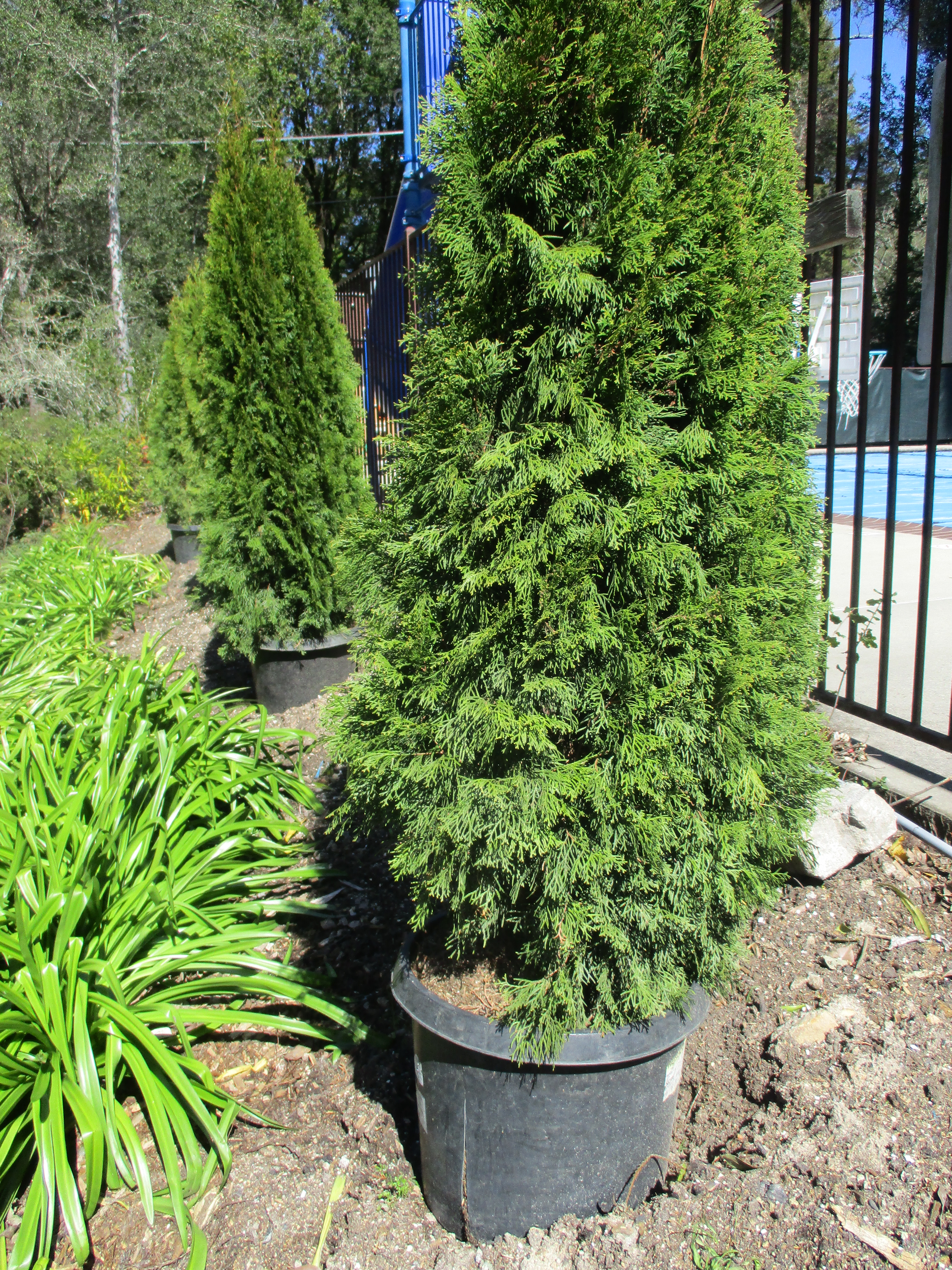
B & B, formally known as ‘balled and burlapped’ nursery stock, was expected to be the next big ‘thing’ in nursery commodities here in California back in the late 1980s. As those outside of California know, it is field grown plant material that gets dug and marketed with its roots wrapped in burlap. It was more common in other regions, so was expected to become more common here as more nursery stock was to be imported from Oregon.
However, growers in Oregon started growing more of their stock in cans like we do in California, and then did not send as much of their B & B stock to California as predicted. Only certain slow growing commodities and large items are still field grown, and then dug and ‘balled and burlapped’ for export. Of these, arborvitaes, rhododendrons and various deciduous shade trees are the more commonly available locally. B &…
Alyssum is popular because of its lightly fragrant and lacy white bloom that lasts through most of the year. It seems to be more perennial than it actually is because it sows seed to replace aging plants. Candytuft, Iberis sempervirens, is a bit less prolific with bloom and fragrance, but otherwise resembles alyssum. Without seeding, it can be nicely perennial.
Candytuft does not get much larger than alyssum although it supposedly has potential to get almost a foot high and a foot and a half wide. Shearing after bloom phases enhances foliar density and subsequent bloom. Primary bloom occurs during late winter, spring, or perhaps early summer. Minor random bloom is possible at any time, particularly autumn.
Plants propagate readily by division of small tufts of rooted stems from within established plants. Alternatively, creeping outer stems develop roots if simply pressed into the soil or held down with stones. Pruning scraps are tiny and awkward to handle, but can grow as cuttings. When disturbed, candytuft exudes an aroma similar to that of related cabbages, which might be objectionable to some.

 Regardless of their individual innate requirements for water, new plants need to be watered very regularly immediately after they are installed into a landscape. As they mature and disperse their roots, the regularity of supplemental watering becomes less important, and ‘drought tolerant’ plants may not need to be watered at all. Maturing larger trees generally get what they need from the landscape around them.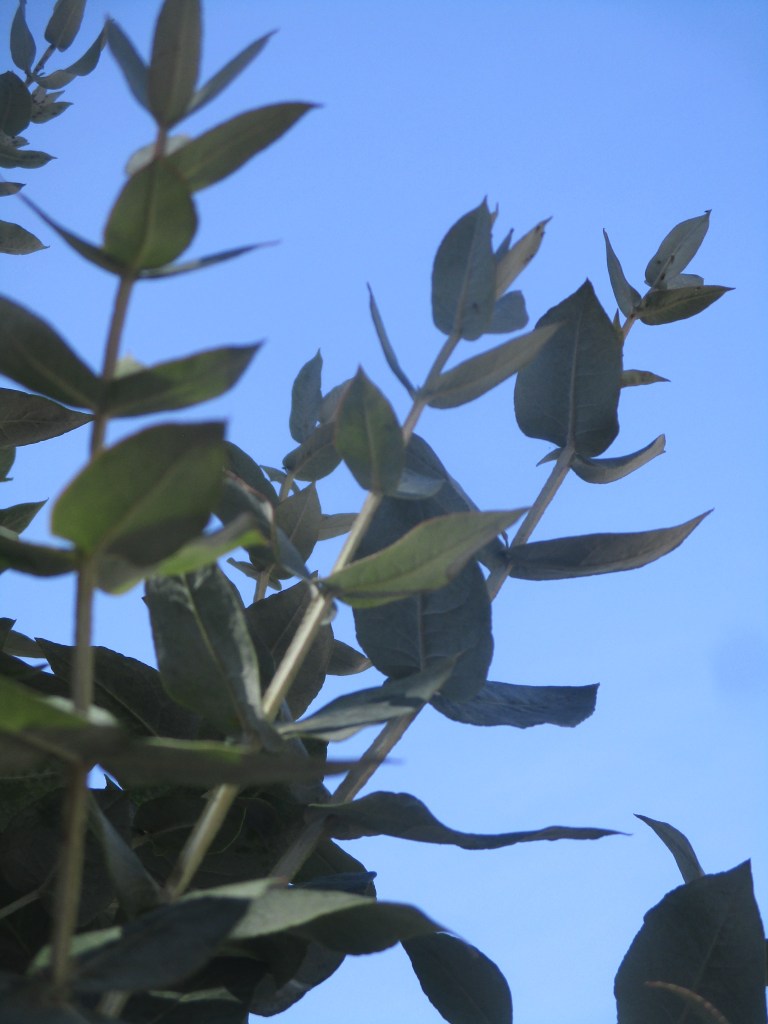

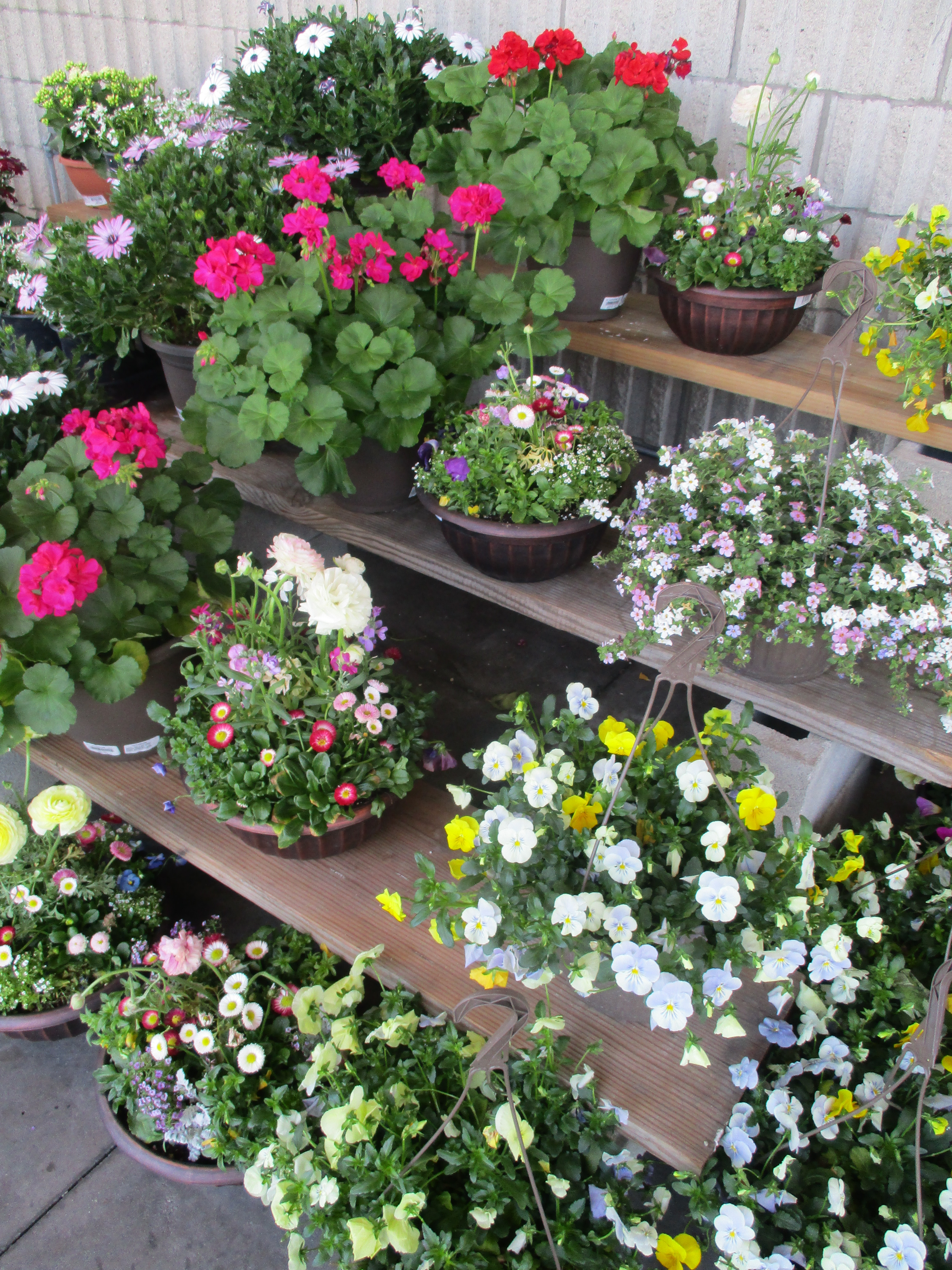 Gardening is unnatural. Yes; quite unnatural. So is landscaping. It all involves planting exotic plants from all over the World that would not otherwise be here, including many that are too extensively and unnaturally bred and hybridized to survive for long even in the natural ecosystems from which their ancestors were derived.
 Birds do some odd things. They seem to know what they are doing. The odd things that they do make sense. Nonetheless, some of what they do out there is just plain odd.


 B & B, formally known as ‘balled and burlapped’ nursery stock, was expected to be the next big ‘thing’ in nursery commodities here in California back in the late 1980s. As those outside of California know, it is field grown plant material that gets dug and marketed with its roots wrapped in burlap. It was more common in other regions, so was expected to become more common here as more nursery stock was to be imported from Oregon.
 Tony Tomeo