Six on Saturday: Lumpy Lecter

This Six on Saturday did not go as planned. I intended to finally share six pictures of the esperanza and poinciana (pride of Barbados) seed from Crazy Green Thumbs, since they were sown shortly before I shared more of Brent’s pointless pictures last week. However, the file of those pictures was somehow deleted! It is too dark to get a picture now. When I get a picture later, it will show only flats of unseen seed! Since reminding Brent to NOT send more pointless pictures, he responded by sending a profusion of pointless pictures! However, if I can not share the six pictures that I very much wanted to share this week, I will most certainly not share six more pointless pictures that I do not want to share. So, I ultimately decided to share six pictures of an exemplary Mediterranean or European fan palm, Chamaerops humilis, that we relocated more than two weeks ago. However, since I had not planned to share these pictures just yet, I had neither procured a picture of the palm at its new home, nor copied a picture of it prior to departure from its former home.

1. From beginning to end, and even after the intensive grooming of the trunk, only three of these many healthy fronds got pruned away, and only because they hung too low. For most palms, I prefer to remove most foliage for transplant. So far, this one sustains it all. This is the view of the top of the canopy as the dug tree was laying in back of the pickup.

2. Female specimens have fewer and more pliable teeth on their petioles than the males. This was one of the most tame of females I have ever engaged. I had expected far worse.

3. Only a few aborted berries were observed. Since this species in unpopular here, it may lack a male pollinator. However, it has potential to sneakily provide its own male bloom.

4. Gads! I almost never see this palm pruned and groomed properly. Petioles should get cut below the thorns and as closely to the trunk as possible. These long stubs are thorny.

5. The upper left quadrant of this picture demonstrates what this trunk should look like, after the thorny petiole stubs were cut away. It looks like Lumpy, the son of Chewbacca.
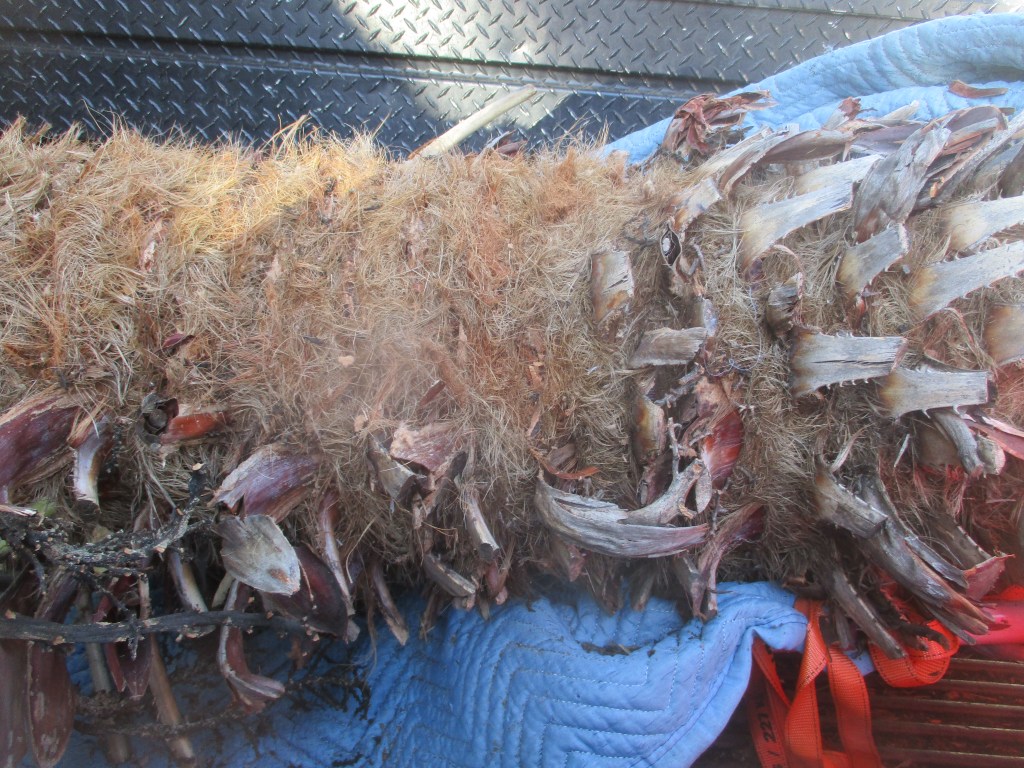
6. Here, it looks like Doctor Lecter of ‘Silence of the Lambs’, strapped into a dolly. It was much easier to handle after grooming, but still weighs about a hundred and fifty pounds. This species typically develops a few curving trunks. Such a straight single trunk is rare.

This is the link for Six on Saturday, for anyone else who would like to participate: https://thepropagatorblog.wordpress.com/2017/09/18/six-on-saturday-a-participant-guide/

‘Marjorie Channon’ Pittosporum

Finely textured and variegated foliage is the main attribute of ‘Marjorie Channon’ pittosporum. The small leaves are only slightly undulate.

Pittosporum tenuifolium (or nigricans) has been employed as a resilient shorn or unshorn hedge for decades. The more contemporary cultivar ‘Marjorie Channon’ though, is grown more for variegated foliage. The light green leaves have creamy white borders and undulate margins. Mature unshorn shrubs get only eight feet high and broad, and are not quite as dense as the straight species. They may not be so useful as large hedging, but can provide striking contrast and depth to deep green foliage.

Not all weeds are unwelcome.

Unplanned acacias certainly put on a show when they bloom. It is not easy to dislike something so impressively colorful.

Even the best tended gardens get weeds. Most weeds, particularly annual and perennial weeds, meet a quick demise by getting pulled out or sprayed with herbicide. A few shrub and tree weeds though, are sometimes allowed to mature into functional members of the landscape.

Many sneak into the garden by growing within overgrown or otherwise concealing shrubbery, where they can hide long enough to get established. Others are left to grow because they are recognized as desirable plants. The main problems is that many end up in situations where they eventually become problematic.

Mexican fan palms are distinctive trees. Unfortunately, many grow below utility cables, because that is where birds drop the seed as they eat the fruit. Unlike other trees, palms can not be pruned around utility cables, so must be removed when they get too tall.

Silk tree, black locust, tree of Heaven and various oaks, pines, acacias and eucalypti are some of the more common trees that can sneak into gardens. Sometimes, they happen to land in good situations. More often though, they get too close to foundations, eaves, pavement or other features that they damage as they grow. Like Mexican fan palms, they are easier to remove while young, before they become problematic.

Pittosporums, cotoneasters and privets are commonly seeded shrubbery with less potential for problems. The main problem with glossy privet is that it can be too prolific and aggressive, so that it can crowd out more desirable plants. Most pittosporums and cotoneasters that get seeded are from plants that are ‘straight species’ (not cloned cultivars or varieties). Those that happen to be from cultivar or variety plants will not be ‘true to type’, which means that they will be more like the straight species than like their parents.

The few fruit trees that can sometimes grow from seed have the same problem, since only some of the more genetically basic types may resemble their parents. Fancier types and (non-sterile) hybrids probably will not. Fruit trees that grow from root suckers of grafted trees instead of from seed will be nothing like the parents, and may produce useless fruit.

Pampas grass is a prolific and sometimes welcome perennial weed near untended parcels or forested areas where pampas grass has naturalized. Broom is a shrubby weed that is even more prolific, but never welcome.

Algerian and English ivy rarely grow from seed, but can be really nasty weeds if they get where they are not wanted. Bear’s breech (or breaches), Jupiter’s beard, calla, mint and various yuccas that were planted may be very difficult to eradicate if they are no longer desirable, or if they migrate into areas where they become problematic.

Horridculture – Good Design / Bad ‘Maintenance’

Somehow, bad maintenance of a good landscape is worse than bad maintenance of a bad landscape.

tonytomeo's avatarTony Tomeo

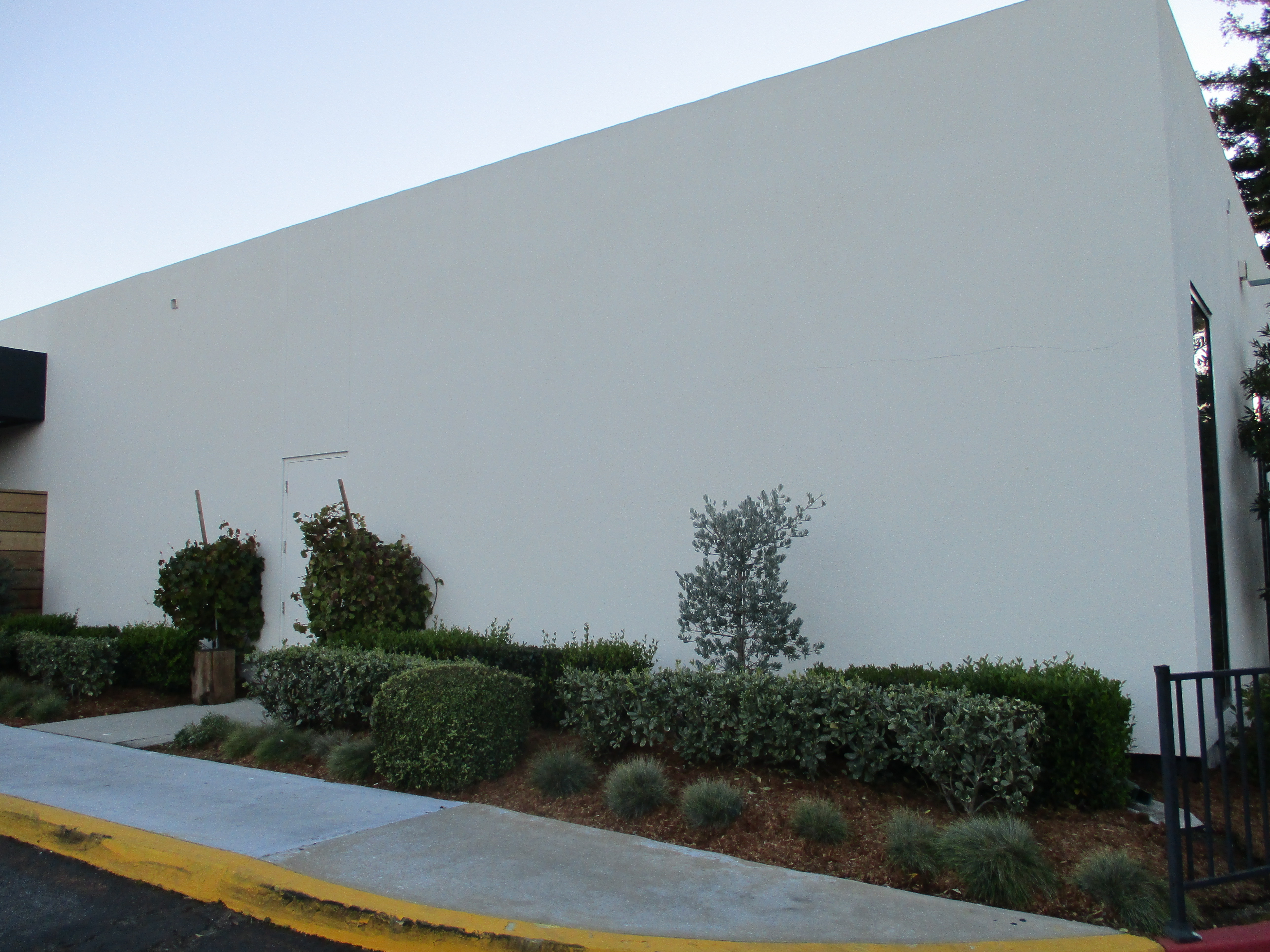
P90227From a distance, this landscape does not look so bad. It seems to have been only recently installed, and features the sort of material that was likely intended to not necessarily obscure the sleek architecture of the building behind it, but to eventually soften the starkness of it.

Let’s analyze the landscape. A glossy privet hedge in back should grow up into an informal screen to provide some substantial green against the wall, but with a bit of proper pruning, should not become too obtrusive. A lower hedge of variegated tobira (Pittosporum tobira ‘Variegata’) in front can be pruned into a semi-formal hedge to obscure the bases of the trunks of the glossy privets, which will undoubtedly shed lower growth as they mature. The lightly colored variegated foliage of the tobira contrasts nicely against that of the dark green privets. The blue festuca in front of the variegated tobira…

View original post 631 more words

Camellia

Many camellias have already finished bloom.

While other bloom might be lacking through late winter, camellia, Camellia japonica, can help compensate. Although generally not as profuse as spring and summer bloomers, its individual flowers display elegantly against luxuriantly glossy evergreen foliage. Lack of sturdy stems for cutting is no problem for a few flowers simply floating in a shallow bowl.

Centuries of breeding has produced more than two thousand cultivars of camellia. Floral form can be single, semi-double, double, formal double, paeony, anemone or rose, so is quite variable. Floral color ranges from pure white to deep red, with many hues of pink in between. Stripes, speckles, blotches or picotee margins are within the same color range. 

Camellia generally develops as nicely dense shrubbery that stays lower than the eaves. Some cultivars stay even lower. A few slowly mature as small and perhaps sparse trees. Individual flowers are about three inches wide. Some are smaller. A few are comparably bulky. Camellia sasanqua is a separate species with smaller but more abundant flowers.

Late Pruning For Early Bloomers

Deciduous magnolias get pruned after bloom.

Winter is generally the best season for pruning. Obviously, it is when a majority of plants are dormant, and therefore most complaisant to such potentially invasive procedures. Of course, there are exceptions to this generalization. A few plants are dormant during other seasons. Some simply prefer late pruning to accommodate their bloom or fruiting cycles.

Late pruning is important for some of the same reasons that dormant or winter pruning is important. It controls growth and directs resources. Removal of superfluous or unwanted growth reallocates resources that such growth would otherwise consume, to more useful or productive growth. The primary difference is that late pruning happens after dormancy. 

Flowering cherry trees are very similar to fruiting cherry trees, but generate only copious bloom without fruit. Flowering crabapple trees likewise produce only their unique bloom, but without much fruit. Technically, both would prefer dormant pruning during winter. Yet, late pruning immediately after bloom allows them to first bloom as profusely as they can.

Fortunately, flowering but fruitless counterparts of fruitful trees require pruning that is less severe than what their fruitful relatives require. Comparably severe pruning would be too stressful for them after dormancy. However, flowering peach trees can endure harsh late pruning to stub their bloomed shoots. Stubs generate more shoots for bloom next spring.

Late pruning begins as early as spring blooming trees and shrubs finish bloom. Because of warm weather this winter, many are blooming early. Stems of some types work well as cut flowers, either while in bloom or immediately prior to bloom. Once the first few flower buds begin to show color, most buds on the same stem should continue to bloom inside.

Camellias supposedly prefer pruning during their bloom cycle, since they resume growth immediately afterwards. Because such pruning would ruin some of the bloom that is their primary asset, most camellias must tolerate late pruning after bloom. Dogwood, forsythia, redbud, and flowering quince, as well as flowering cherry and flowering crabapple, are likewise tolerant of these technically untimely techniques.

Redwoods Are Family Oriented

Redwoods really are very remarkable trees. We are so fortunate to be able to work with them here.

tonytomeo's avatarTony Tomeo

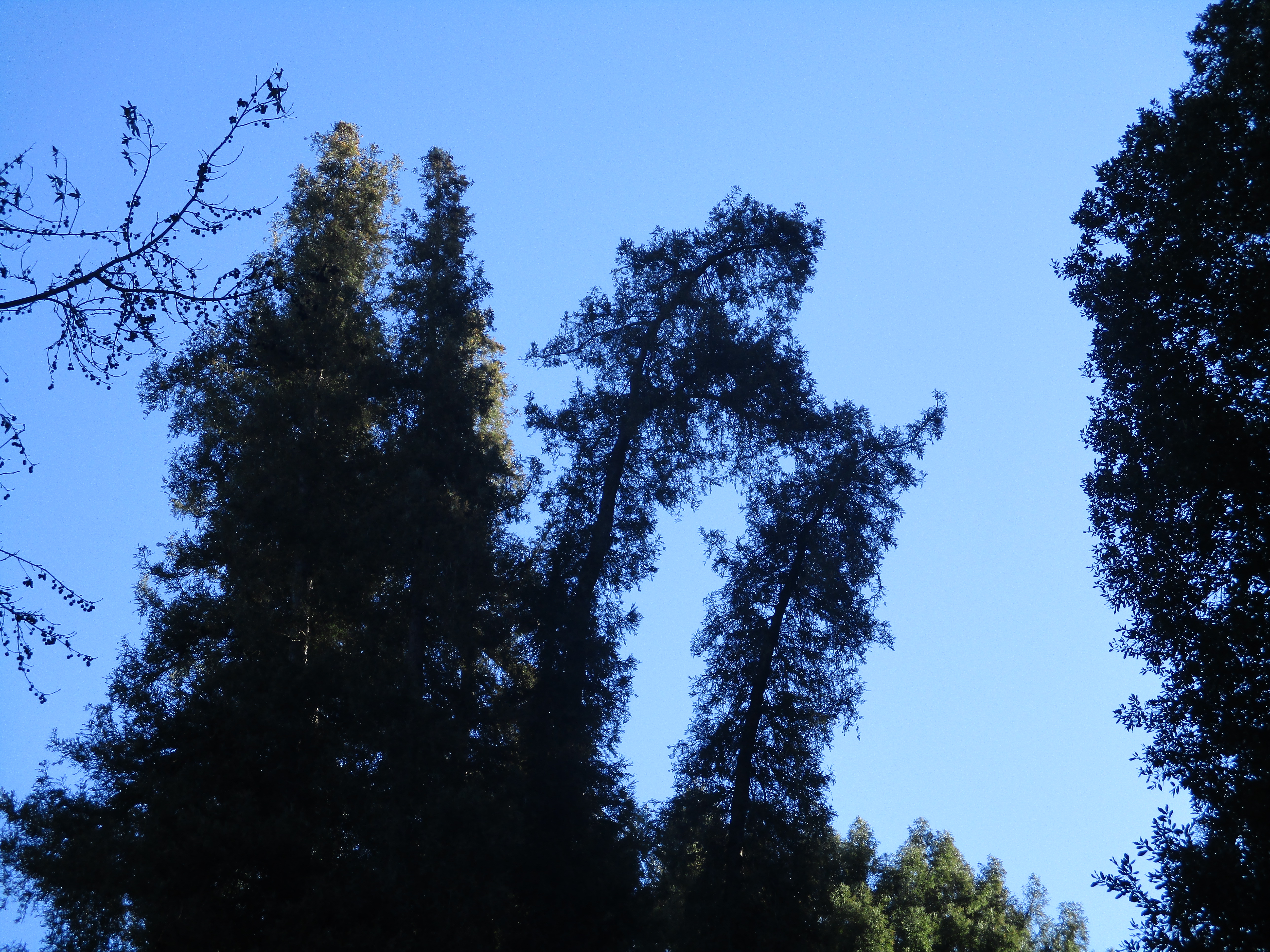
P90223KCoastal redwood, Sequoia sempervirens, are remarkable stable trees. They rarely fall, which is how they get to be thousands of years old. They prefer to live in groups, where they mesh their roots together, and shelter each other from wind. Those that live outside of a group stay shorter than forest trees, and typically develop multiple trunks that function as a group.

However, they are also remarkably weak in regard to their structural integrity. Limbs are easily broken away from their vertical trunks by wind. Snow, which is rare within their natural range, causes significantly more damage than wind, which is probably why their natural range does not extend into snowy climates. Trees with co-dominant leaders (double trunks that divide from single trunks above grade) have potential to split at the union of the double trunks. Such unions are typically at such acute angles, that the trunks press against…

View original post 223 more words

Wild Turkey

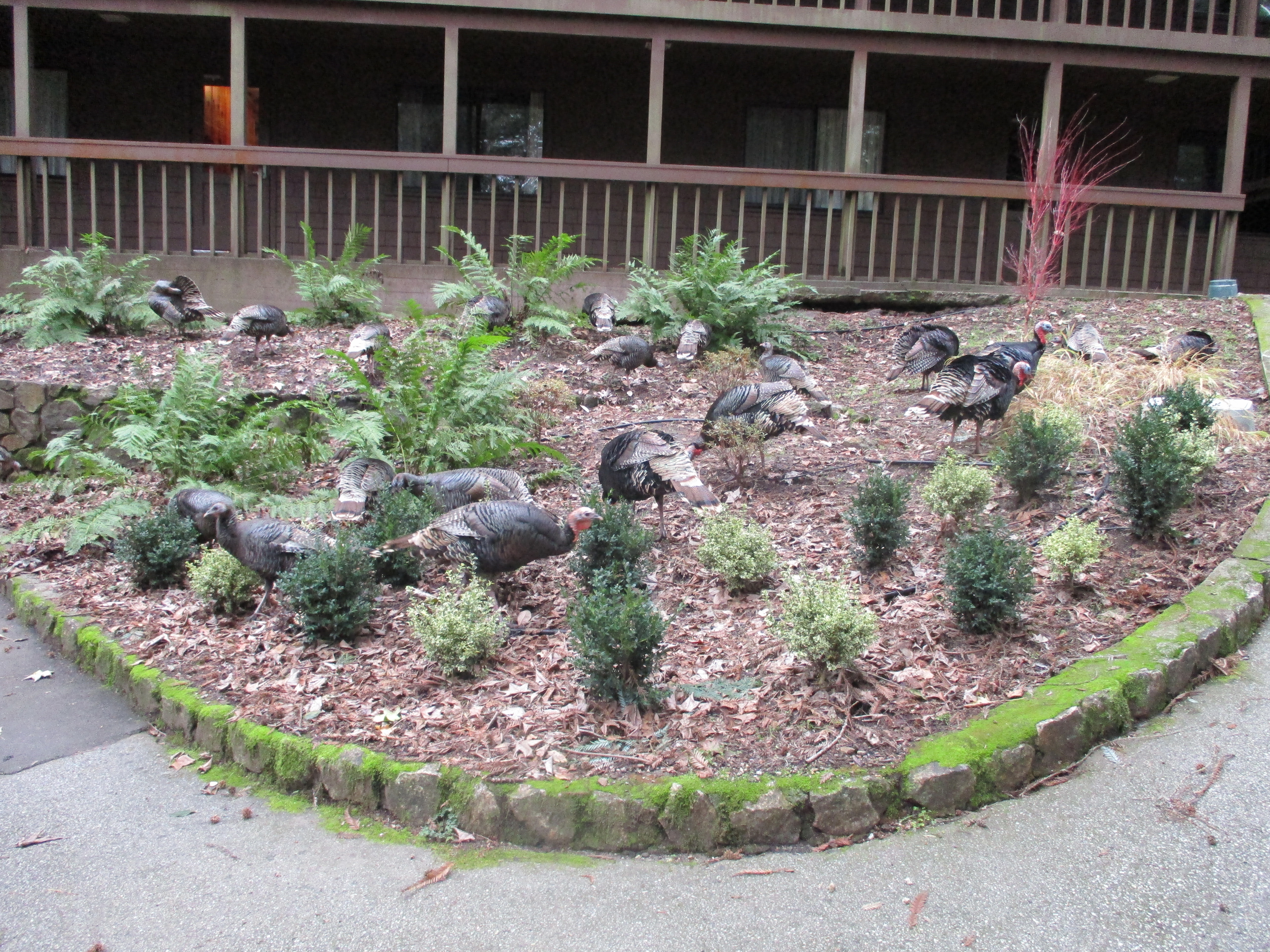
Three years later, these wild turkeys have not become a major problem as we were concerned they might. Their population seems to have reached an equilibrium.

tonytomeo's avatarTony Tomeo

P90224This is a relatively new development. The first few arrived here only two years ago. By last year, a few more arrived to make a significant herd that split into two smaller herds. Now these two smaller herds are quite significant. If they continue to proliferate as they have been, they will become more of a problem. They are already shredding flowers and colorful berries that are within their reach, and digging up flexible irrigation hoses.
They are not really wild turkeys, since they are not native here. They are actually feral turkeys that escaped into the wild and naturalized. They may have moved in from surrounding areas, or they may have escaped locally. Turkeys have been roaming parts of Scott’s Valley and my neighborhood in the Los Gatos Hills for a few years. Much larger herds roam other regions, particularly the Diablo Ranges east of the San Francisco Bay…

View original post 150 more words

Six on Saturday: Brent’s Pointless Pictures III – Watts Towers

Only two or perhaps three of these six pictures were taken in Watts. Furthermore, those towers in the backgrounds of pictures #3 and #4, although only a few blocks west of the Watts Towers, and supporting massive volumes of wattage, are merely electricity pylons. It is unimportant. Actually, these five images and one video are assembled together here only so that I need not discard them unused. Brent will not stop sending them. Now that these are the last for the moment, I can post more interesting or at least relevant images next week. I must share pictures of the esperanza and poinciana seed getting sown. Also, we moved a Mediterranean fan palm.

1. Brent can not stop taking selfies. Carly Simon sang about this sort of behavior in 1972; ‘You’re so vain.’ Here, he wants to be seen in a hard hat like my arborist colleagues wear. 

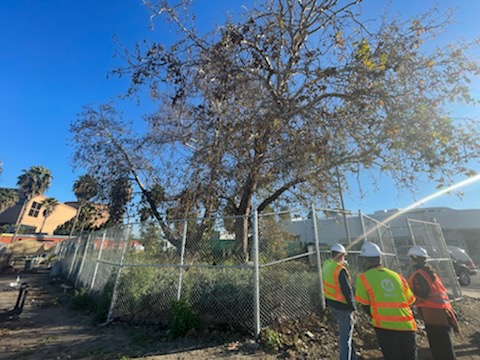
2. Old sycamores that Brent saved from certain doom are a much more important topic. Developers who want them out of their way said that the bare deciduous trees had died.

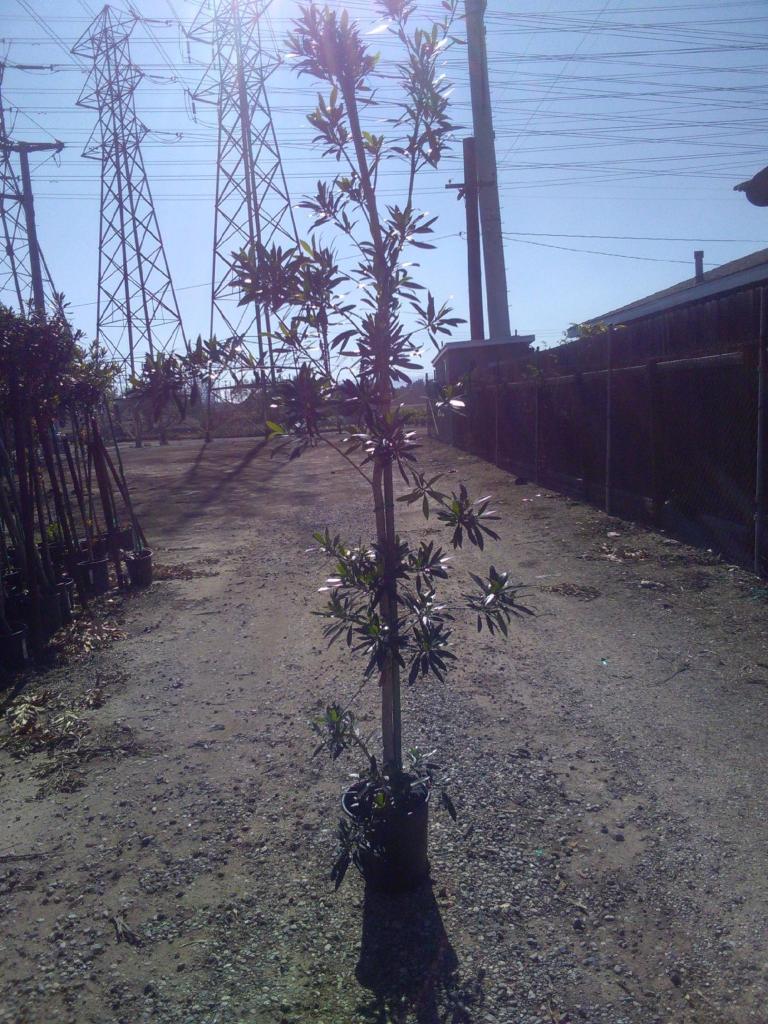
3. Tristania laurina is an exemplary small street tree for many of the narrow streets that Brent installs street trees on. This matured crop are exemplary #5 (5 gallon) specimens.

4. Minor lower growth that got pruned away promoted caliper growth. Those are not the Watts Towers, although they are only a few blocks to the west, and support many watts.

5. Brent wants to show off a new publication that features his home garden, or his work, or some such nonsense. I did not write the particular article, so it must not be very good. 

6. Brent’s home garden is SO crowded with SO much vegetation and other ‘stuff’. What a mess! It could be a hazardous situation during an earthquake. This one was very minor.

This is the link for Six on Saturday, for anyone else who would like to participate: https://thepropagatorblog.wordpress.com/2017/09/18/six-on-saturday-a-participant-guide/

Ranunculus

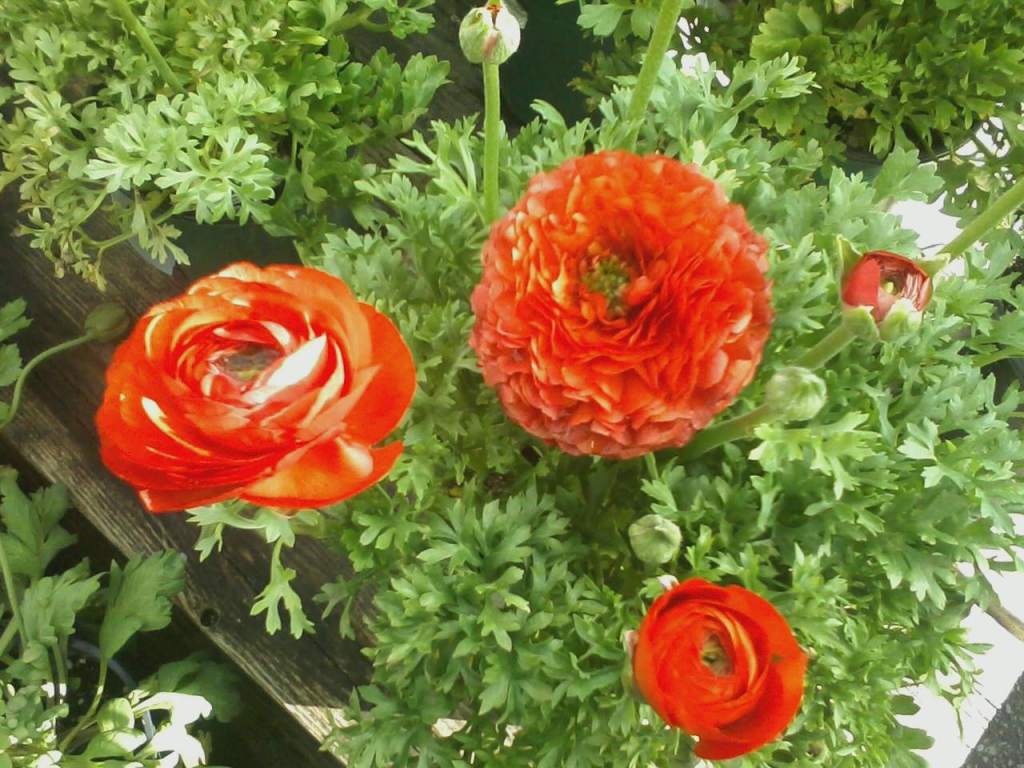
These potted ranunculus in a nursery are already blooming. Those planted while dormant last autumn may not have started yet.

If their dormant bulbs were planted back in October or November, ranunculus will soon be blooming. Those of us who missed the bulbs last autumn can already find blooming plants in nurseries. The bright yellow, orange, red, pink or white flowers are about three inches wide and seem to be outfitted with too many petals. They stand about a foot to a foot and a half tall, a few inches above the basal foliage that can get half a foot to a foot deep. The light green leaves resemble parsley, but are not as finely textured. Although perennial, ranunculus are most popularly grown as annuals because they tend to rot soon after bloom. They perform best with no more than a bit of shade, and rich but very well drained soil. They are more likely to survive as perennials if allowed to get rather dry as their foliage deteriorates after bloom.