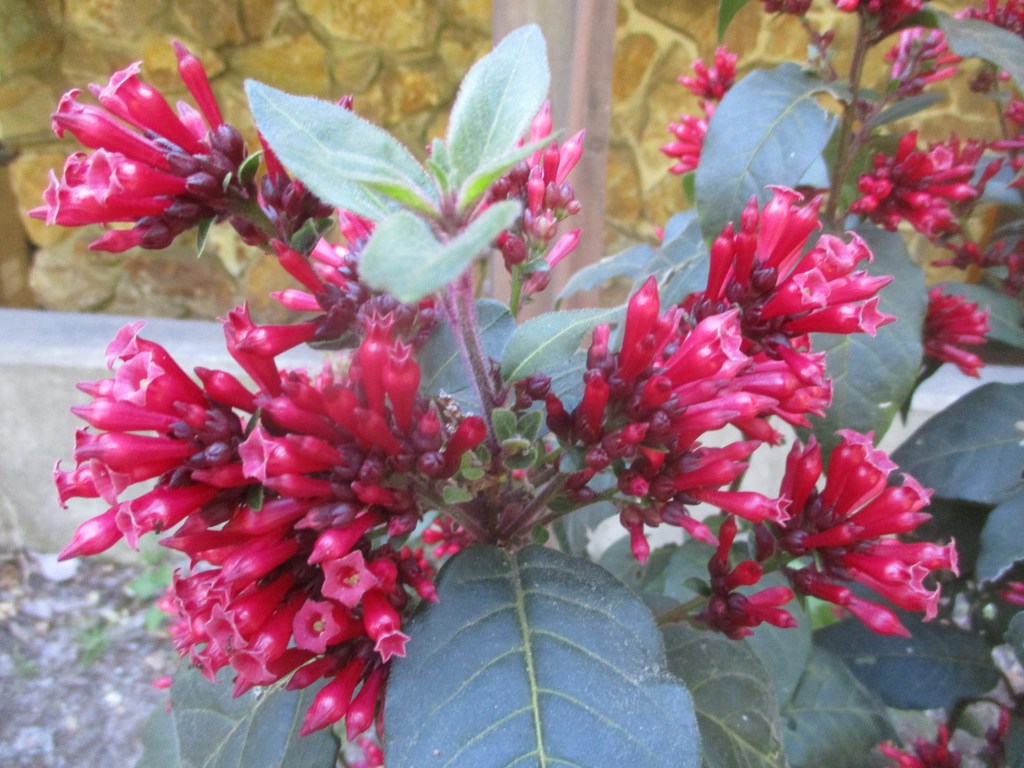
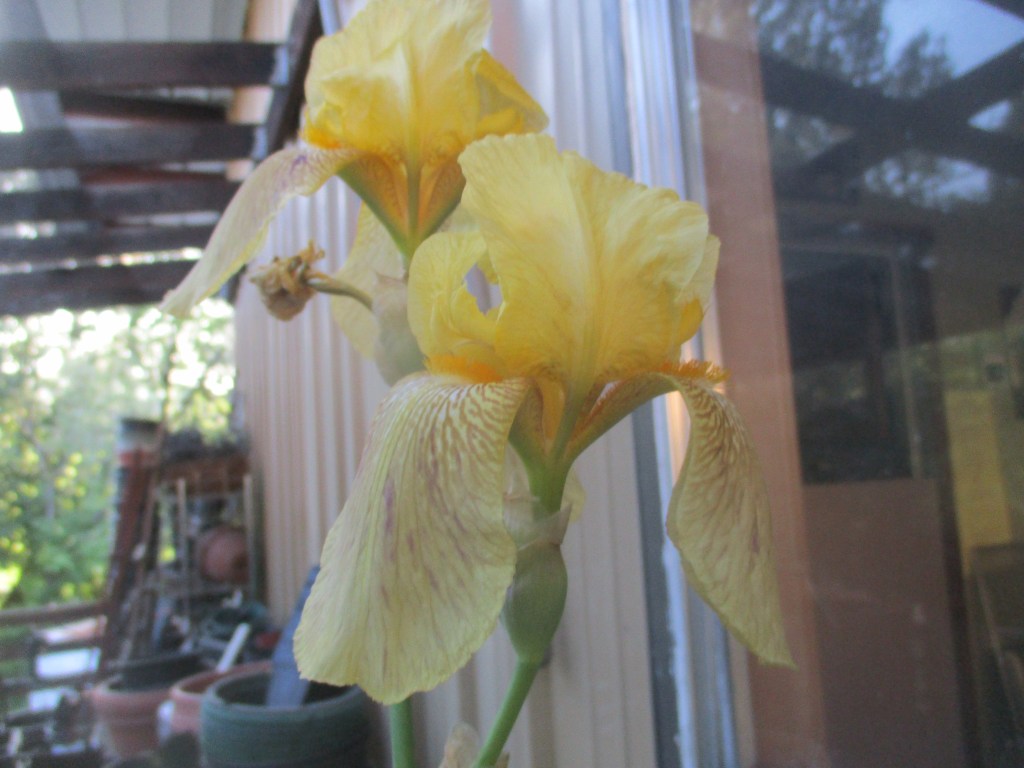
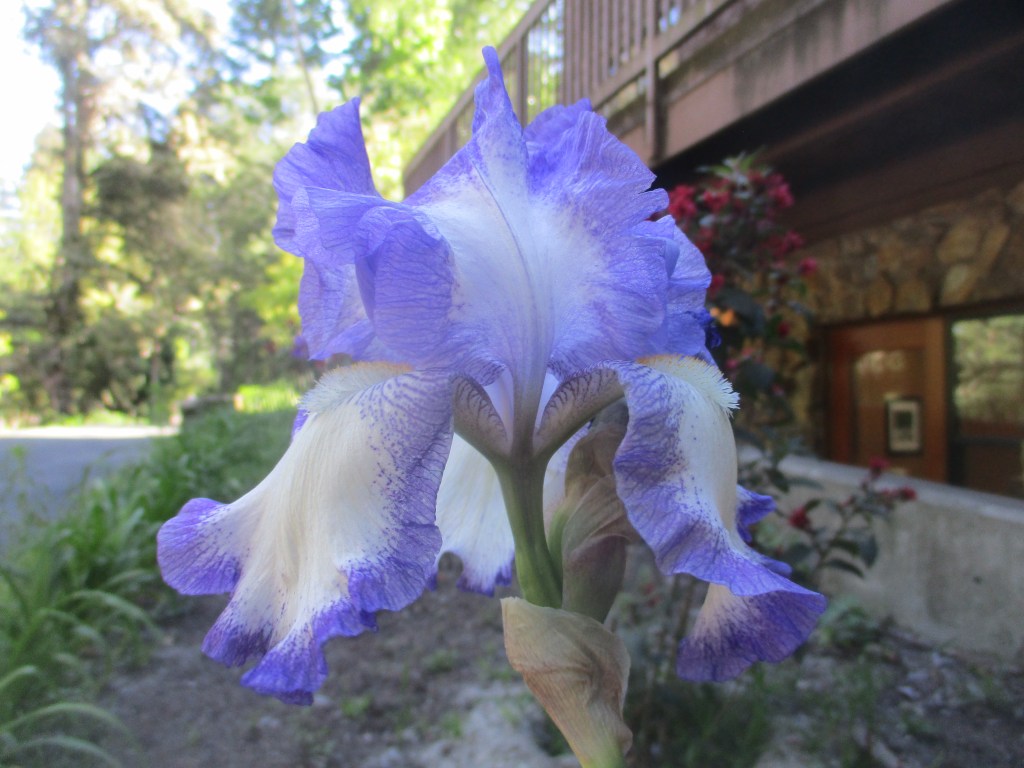
Allium species have been somewhat elusive. I had seen only pictures of them from other gardens. By the time I finally decided to try them in my own garden, they were no longer available from local nurseries. When I found them online, there were too many cultivars to choose from. It was baffling. Tangly Cottage Gardening sorted it all out for me by giving me my first two, Allium schumbertii and Allium christophii. They are exquisite, and are now generating seed. I should have gotten better pictures of them while they were in the middle of bloom, rather than before and after bloom. Since there are only three pictures of them here, three pictures from work were added, for a total of Six on Saturday.
1. Robinia pseudoacacia, black locust, is a horrible weed. This one had been falling for a long time before it landed in this motorpool yard. At least it warned us to avoid damage.

2. Gunnera tinctoria, Chilean rhubarb, regenerates efficiently after winter dormancy. It was completely bare only a few weeks ago. It should get much grander through summer.

3. Lilium asiaticum, Asiatic lily, was a gift from a neighbor two winters ago. Its dormant bulbs were unimpressive at the time. They were splendid last year, and are more so now!

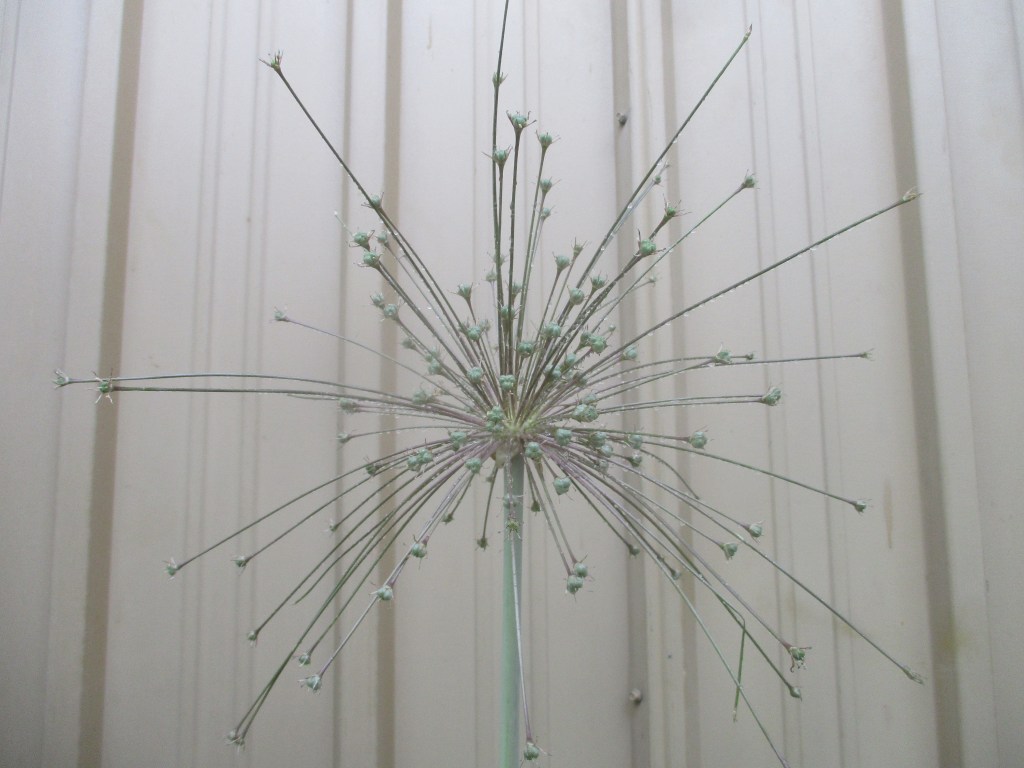
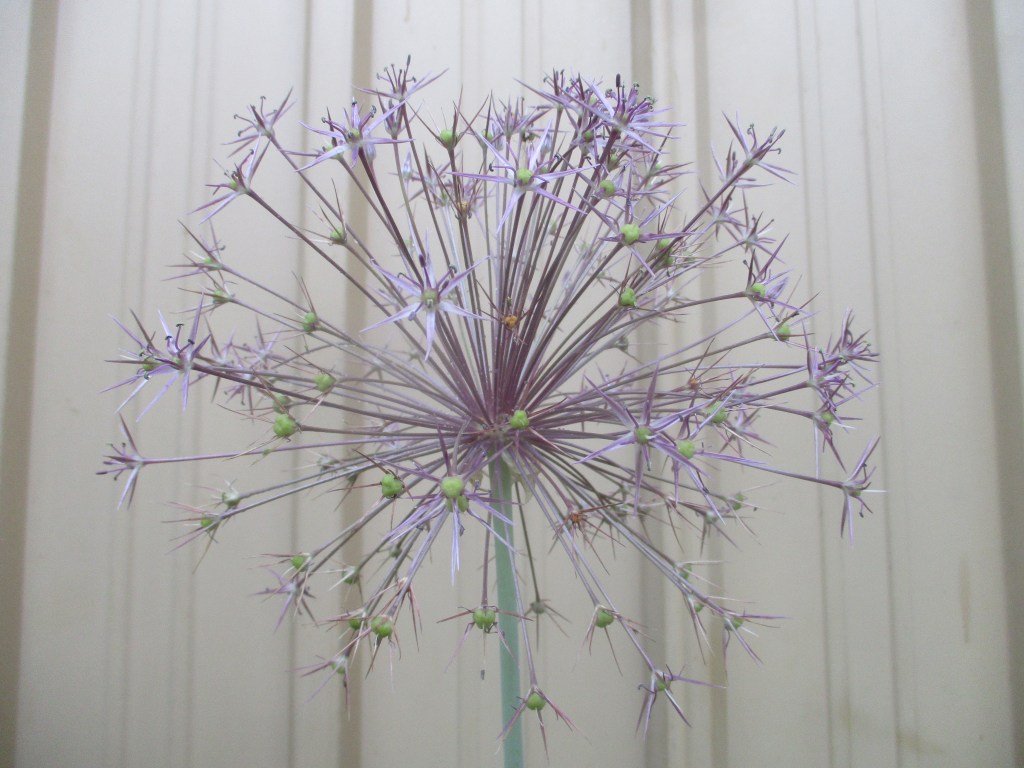
4. Allium schumbertii, Persian onion, is one of two species of Allium that were gifts from Tangly Cottage Gardening! This unfinished bloom was more than a foot and a half wide!

5. Allium schumbertii, Persian onion, is also known as tumbleweed onion because these seeded trusses break off to disperse seed as they tumble about the deserts they inhabit.
6. Allium christophii, star of Persia, is the other of the two species of Allium from Tangly Cottage Gardening. I hope that both species are reliably perennial, and their bulbs multiply.
This is the link for Six on Saturday, for anyone else who would like to participate: https://thepropagatorblog.wordpress.com/2017/09/18/six-on-saturday-a-participant-guide/


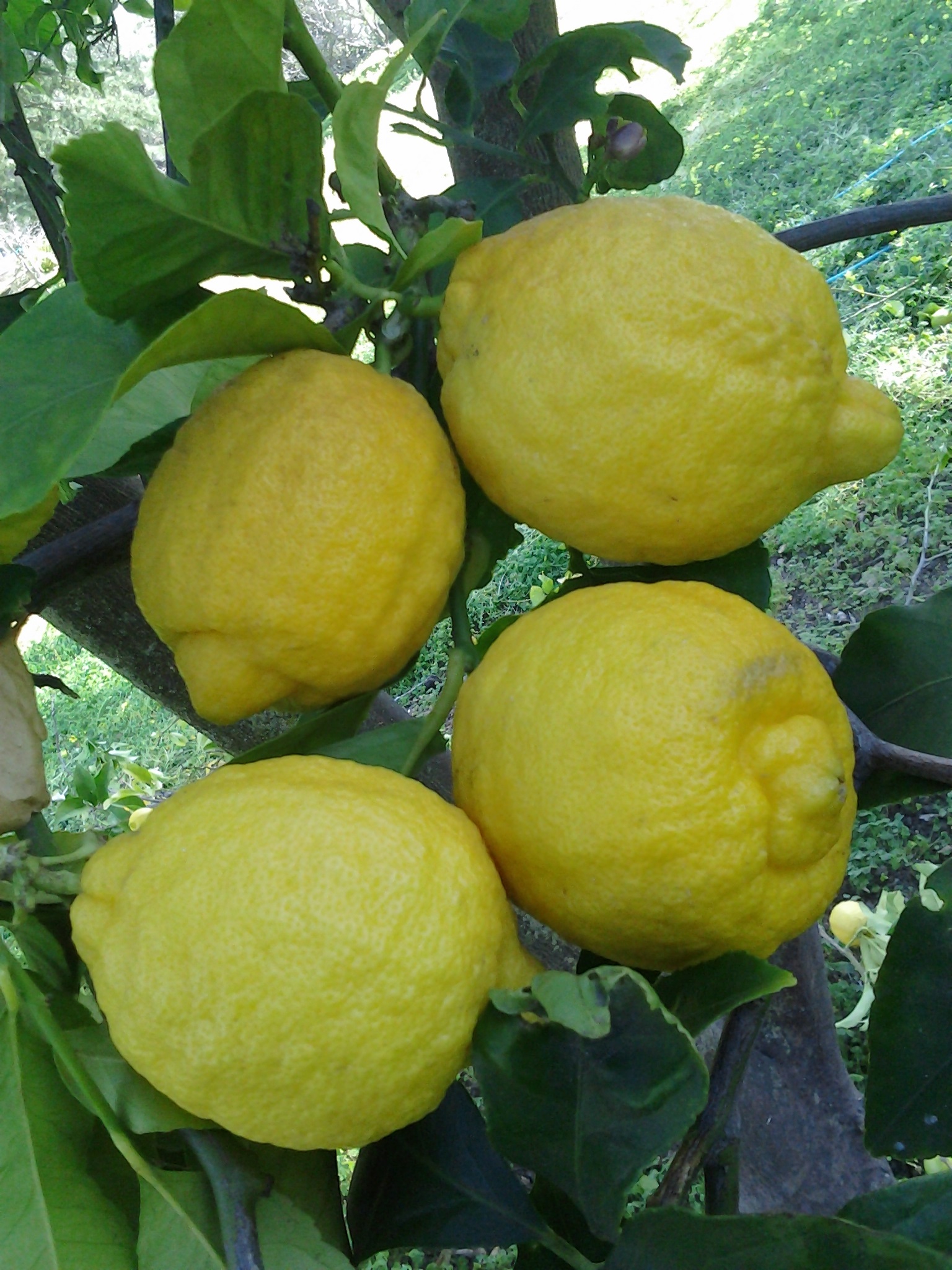 Pluots, plumcots, apriums and peacharines! Who comes up with this stuff?! Aren’t good old fashioned plums, apricots, peaches and nectarines good enough? Who decides that these weird hybrids are somehow better than their parents? Some of them are actually quite weird, or downright ugly. Several do not even look like they would taste good. It may be an acquired taste; but I have all the good taste that I need without acquiring any more.
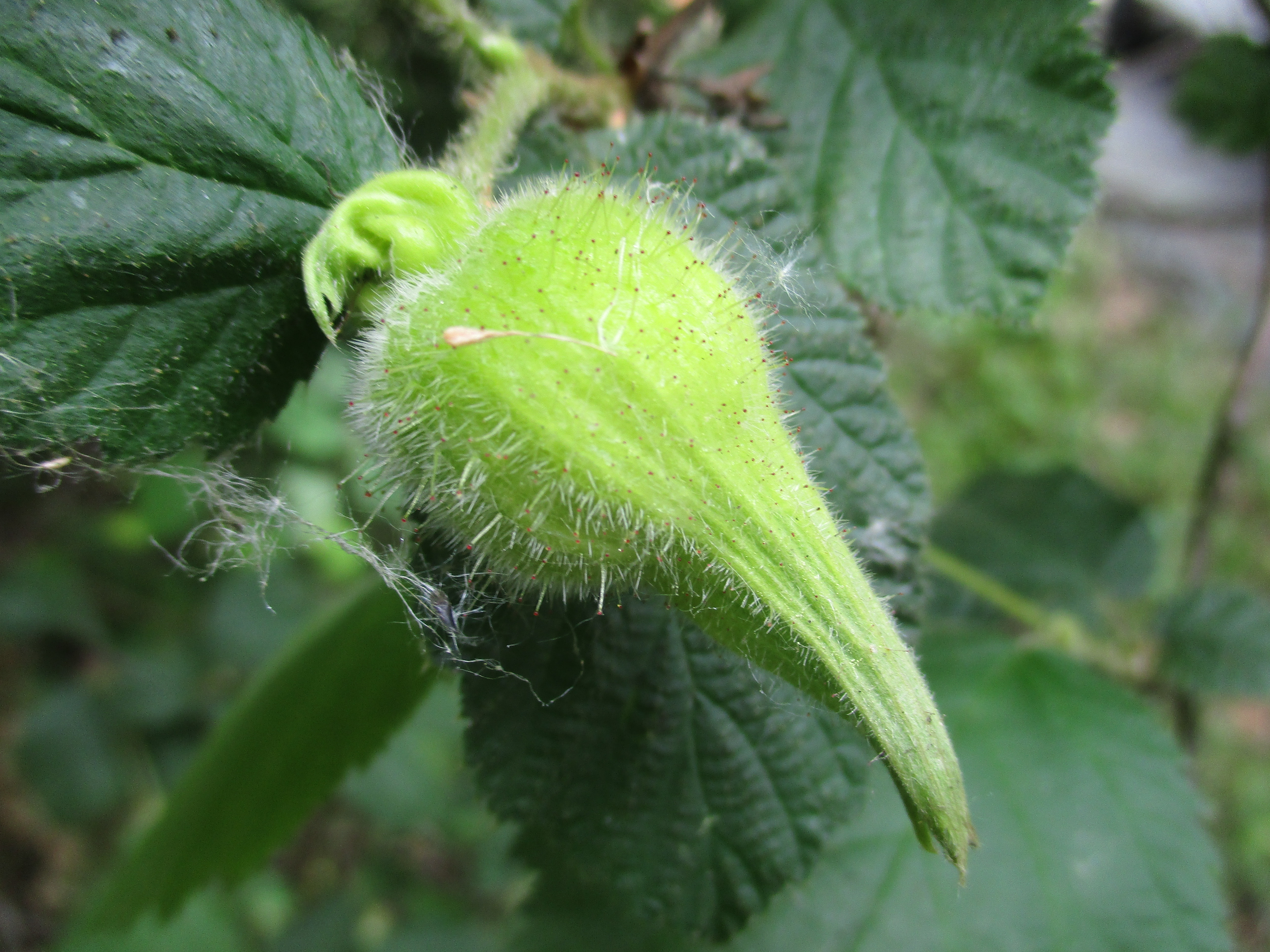 Not just any nuts, but precisely the sort that I recently discussed with a colleague, as I explained how they do not grow here. The nuts that is. The big thicket forming shrubs that are supposed to produce them not only grow here, but are a relatively common native. I just rarely see even a single nut on them. I sort of wondered how they mange to procreate with such rare seeds that invariably get taken by unconcerned rodents or birds.
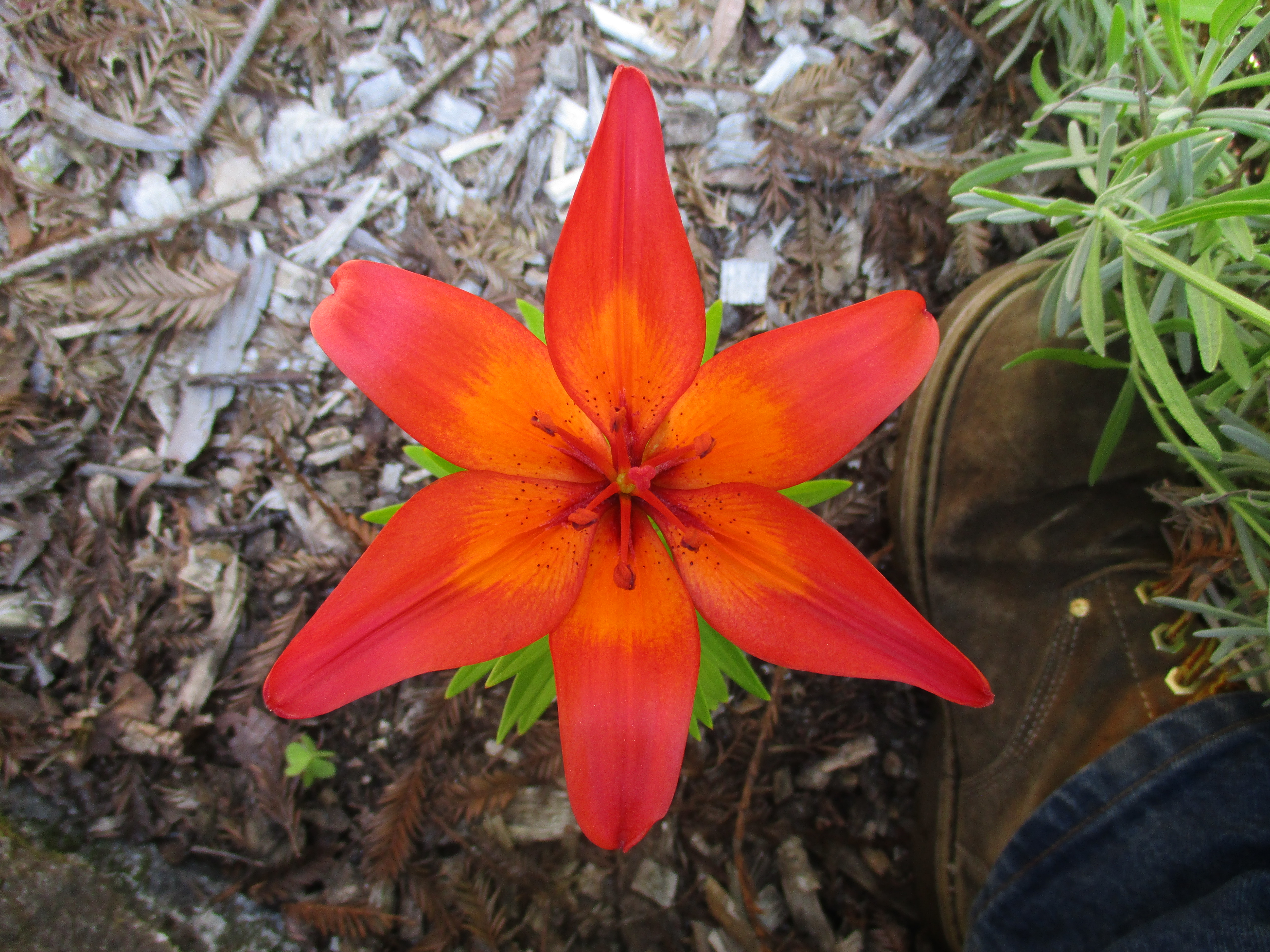 What a delightful surprise! It happens sometimes here in the rose garden. It may not look like much, as a short stemmed single lily floret that is mostly overwhelmed by the English lavender that I held back with my boot for this picture. It should be three feet tall or so, with several florets. The surprise is that no one planted it. Well, at least no one planted it recently. This rose garden has more history than is obvious from what blooms here now.